
Prewar Imperial Medical Doctrine and Pacific Realities
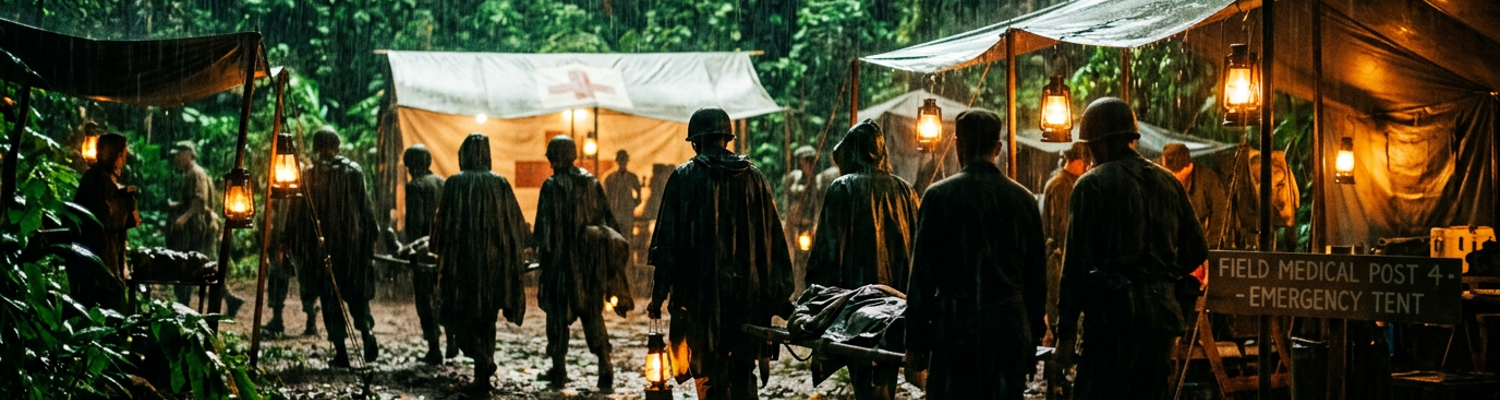
Rainwater poured through the dense jungle canopies of the South Pacific, drowning footpaths in knee-deep mud and soaking infantrymen days before they ever made contact with enemy forces. Searing heat and relentless humidity pushed temperatures past one hundred degrees, turning closed valleys into steam baths where uniforms never dried and skin rotted beneath sweat-soaked webbing. Swarms of anopheles mosquitoes rose from stagnant mangrove swamps at sunset, injecting malarial parasites into thousands of exhausted soldiers while they hacked through razor-sharp kunai grass and volcanic boulder fields. Dense tropical molds coated leather boots, weapons harnesses, and cartridge pouches in fuzzy green film within forty-eight hours of landing. Jagged coral reefs tore through canvas boot soles, opening deep lacerations that quickly festered in saltwater and tropical filth. Battalion medics watched dampness dissolve paper bandage wrappers, while continuous moisture rusted carbon-steel scalpels inside sodden canvas pouches.
Scalpels, clean linen sheets, and carbolic acid washes were explicitly required by the theoretical medical doctrines taught in Tokyo military academies. Standard prewar imperial medical regulations mandated sterile surgical environments, strict nutritional standards, and prompt rearward casualty evacuation to fully equipped base hospitals. Imperial Japanese Army field manuals presumed brief continental campaigns supported by functional rear-area depots and intact maritime supply lines, drawing directly on historical lessons from the Russo-Japanese War and wide maneuvers across the dry plains of Manchuria. Military staff officers designed these standing orders around operational railways, motorized ambulance columns, and specialized hospital ships that could ferry wounded soldiers away from the fighting within hours of injury. Medical personnel packed standard wooden supply crates with drugs meant for temperate zones, fully expecting that merchant freighters would dock at deep-water harbor piers every two weeks to replenish their stores.
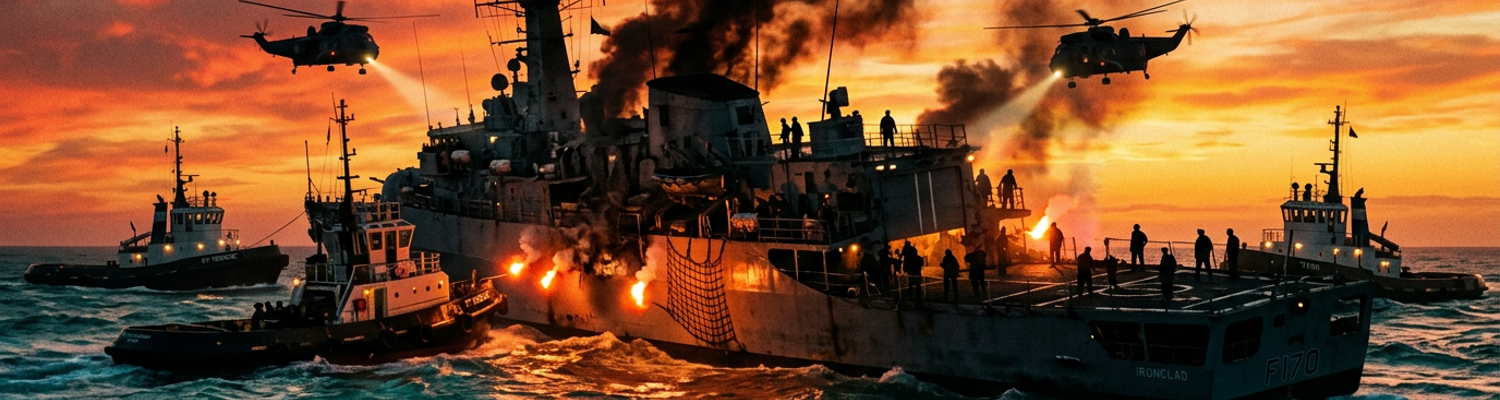
Torpedoes fired from American submarines shattered those expectations by sinking cargo convoys and severing maritime lifelines across the wider Pacific. Theoretical logistics planning completely failed to anticipate prolonged operational isolation on bypassable tropical Pacific atolls and jungle archipelagos. Allied commanders simply bypassed heavily fortified island bases, cutting off peripheral garrisons from all operational support while leaving hundreds of thousands of Japanese troops stranded without food, clean water, or replacement medicines. Garrison doctors burned through their small stocks of quinine tablets within weeks, leaving entire battalions helpless against recurring malaria and dengue fever. Severe vitamin deficiencies including beriberi and scurvy quickly paralyzed frontline troops who had been reduced to foraging for tree fern roots, cycad nuts, and swamp snails. Sterile field stations envisioned in peacetime doctrine vanished into humid, hand-dug hillside caves where blowflies swarmed over untreated compound fractures and gangrene spread rapidly through crowded subterranean bunkers.
Boulders and shattered logs sealed the entrances to these subterranean bunkers during heavy naval bombardments, trapping gangrenous patients inside and severing physical access to fresh drinking springs. Medical officers washed soiled cotton dressings in stagnant mud puddles, boiled bandages over smoky driftwood fires, and sawed through infected bones with dull carpentry tools. Sick and wounded soldiers who were entitled to immediate rearward evacuation under formal army regulations instead rotted in total darkness on decaying bamboo mats. Frontline commanders cut off from headquarters directives abandoned standard medical protocols completely, ordering orderly staff to issue lethal doses of potassium cyanide or leave primed fragmentation grenades in the hands of dying men.
Intercepted Communications and Garrison Warnings
Potassium cyanide vials and unpinned fragmentation grenades marked the end of an operational collapse that defense counsel Major Ben Bruce Blakeney traced back to the earliest communication failures of the war. Blakeney summoned United States Army Military Intelligence Division officer Colonel Rufus S. Bratton to the witness stand between August 21 and August 26, 1947, filling transcript pages 26,396 to 26,889 with exhaustive questioning on the handling of prewar intelligence. Bratton had served as the head of the Far Eastern Section of the military intelligence division throughout late 1941, supervising the receipt and internal routing of deciphered Japanese diplomatic dispatches. Blakeney pressed the intelligence officer to describe the exact physical path that raw radio intercepts traveled after interception stations plucked foreign signals from the air. Bratton took the courtroom through the secure rooms where cryptanalysts broke machine codes and translated foreign text before courier satchels departed for the highest offices in Washington. Blakeney entered courier receipt logs into the court record to show that frontline outposts sat without warnings while capital desks collected urgent dispatches.
Receipt logs documented how Bratton focused his examination on intercepted diplomatic traffic, decrypt processing timelines, and the delivery of the final fourteen-part message. Bratton explained that cryptographers worked around the clock to reconstruct Tokyo secret transmissions, transcribing the multi-part diplomatic cable that rejected American negotiations. Translation specialists assembled thirteen parts of the critical transmission on the evening of December 6, but processing of the decisive fourteenth section stalled during the early morning hours of December 7. Bratton delivered copies of the incomplete message to War Department staff sections, yet key recipients remained away from their desks without designated deputies authorized to open the pouches. Clerks locked the finished transcripts inside steel safes while waiting for General George C. Marshall to finish a morning horseback ride and arrive at his office. Marshall finally read the completed intercept hours after dawn, discovering that Japanese envoys were ordered to deliver the diplomatic break at precisely one in the afternoon Washington time.
General George C. Marshall drafted an urgent alert dispatch on lined notebook paper, but the warning collided with severe transmission delays. Bratton exposed systemic intelligence distribution bottlenecks and warning delays between central strategic command in Washington and frontline Pacific garrisons during his testimony. Radio transmitters operated by the War Department failed to reach Hawaiian command posts due to atmospheric conditions, prompting staff officers to route the message through Western Union commercial channels. Enciphering machines in Washington processed the warning at a sluggish crawl, adding further mechanical delays before the text ever entered commercial cables. Commercial telegraph operators in Honolulu received the encoded alert without an urgent priority flag, placing the dispatch into a canvas mailbag carried by a motorcycle messenger. Messenger Tadao Fuchikami navigated bomb craters and strafing aircraft across Oahu roads, delivering the warning envelope to headquarters long after Japanese dive-bombers had decimated the Pacific Fleet.
Runways littered with burning aircraft debris proved that frontline bases had received none of the real-time strategic intelligence promised in peacetime defense plans. Blakeney led Bratton through cross-examination to establish that similar distribution failures kept garrisons in the Philippines and Guam completely in the dark regarding incoming assaults. Garrison commanders who were trained to anticipate regular intelligence updates and operational supply convoys instead confronted overwhelming enemy landings with severed communications and depleted medical stores. Field surgeons and line officers improvised defensive perimeters in isolated terrain, cut off from strategic high command by the very distribution bottlenecks Bratton confirmed on the witness stand. Blakeney concluded his examination by entering the timeline charts into evidence, leaving the military tribunal with official records showing that central headquarters sent alert cables hours after frontline forces were already engulfed in battle.
Allied Maritime Blockades and Supply Interdiction
Garrisons trapped on those bypassed islands endured an immediate and total logistical breakdown across isolated Pacific outposts, leading the tribunal to examine hundreds of supply records during proceedings between August 27 and August 29, 1947, spanning transcript pages 26,890 to 27,116. American fleet submarines established patrol lines across Japanese sea lanes, tracking convoy routes with surface radar and firing torpedo spreads into slow-moving merchant transports. Allied aircraft flying from newly constructed island airstrips swept across shallow coastal waters, sinking wooden supply barges and bombing harbor facilities until cargo vessels could no longer unload in daylight. Extensive Allied submarine and aerial blockades completely severed transit of staple grain rations, quinine reserves, and sterile surgical dressings to frontline commands. Supply ships that attempted the journey burned and sank in open water, dumping thousands of tons of medical crates and rice sacks onto the sea floor hundreds of miles from their intended destinations. Perimeter commanders watched the sea horizon day after day without seeing a single friendly transport vessel emerge from the smoke and open ocean.
Quartermasters opened their final remaining ration bins only to find weevil-infested rice dust and rotten beans. Defense exhibits contrasted administrative defense directives issued from Tokyo with the physical reality of encircled garrisons forced into subsistence scavenging. Staff officers in Tokyo continued to send written regulations specifying standard daily diets of polished rice, dried fish, and pickled vegetables for every enlisted soldier. Encircled garrison units on islands such as Bougainville, New Britain, and Halmahera had no access to these depot foods and had to send search details into the dense jungle to dig up wild fern roots and harvest bitter cycad palm nuts. Soldiers spent their remaining physical energy stripping tree bark, catching river crabs, and trapping swamp snails under heavy rain rather than strengthening their defensive gun pits. Starvation edema caused limbs to swell and skin to crack, leaving troops so physically weak that whole squads could no longer lift heavy artillery shells or haul timber for fortifications.
Battalion doctors attempted to treat these malnourished soldiers while their cabinets ran completely out of essential pharmaceuticals. Quinine reserves disappeared within the first months of operational isolation, allowing vivax and falciparum malaria strains to circulate uncontrollably through entire battalions. Soldiers suffering from shivering chills and high fevers lay in crowded dugouts alongside men with bleeding tropical ulcers that ate through muscle tissue down to the shin bones. Medical corpsmen washed old, blood-caked bandages in muddy streams and hung the tattered strips on thorn bushes to dry because replacement shipments of sterile surgical dressings never arrived. Blowflies deposited egg clusters directly into these damp recycled rags, introducing maggots and aggressive bacterial infections into open surgical incisions. Surgeons operated without ether or local anesthesia, using unsterilized kitchen knives and hand saws to amputate blackened, gangrenous arms and legs before the rot spread into the chest cavity.
Bunkers filled to capacity with delirious, amputated patients as frontline regiments abandoned their outer coastal defensive lines. Regimental commanders pulled their remaining troops deep into mountainous jungle interiors, dispersing combat companies into scattered squads that spent all their time hunting edible plants rather than maintaining military cohesion. Soldiers threw away their steel helmets, heavy packs, and rusted rifles to lighten their march up muddy mountain ridges, keeping only bayonets and digging tools to harvest wild roots. Isolated units completely lost contact with adjacent battalions as telephone wire rotted in the damp jungle and radio batteries went dead without dry-cell replacements. Officers divided their last handfuls of uncooked rice among the walking wounded, ordered all remaining heavy artillery pieces spiked with explosives, and sent their starving men into the hills to forage until the war ended.
Subdivision Five Evidence on Tropical Epidemics
Infantrymen foraging through those isolated mountain slopes succumbed to explosive bacterial infections before Allied patrols ever located their positions. Defense counsel formally opened Sub-Division 5 of Division V before the International Military Tribunal for the Far East on September 1 and 2, 1947, filling transcript pages 27,117 to 27,385 with medical logs recovered from those mountain retreats. Attorneys presented these records to demonstrate that the physical collapse of bypassed garrisons resulted from uncontrolled disease rather than deliberate command neglect. Allied judges examined daily strength returns showing that entire companies ceased to exist as combat formations while wandering through the brush in search of food. Prosecutors listened as defense lawyers described thousands of sick men lying exposed to heavy rain in unroofed jungle camps without basic sanitation.
Rainwater pooled across those unroofed camps, washing human waste into shallow drinking holes and triggering catastrophic medical crises across the theater. Sworn medical depositions and unit field journals entered into the record proved that military medical corps were overwhelmed by explosive epidemics of bacillary dysentery and wet beriberi. Unit field journals revealed that soldiers passed bloody stools dozens of times each day, losing essential body fluids and salt within forty-eight hours. Sworn depositions from surviving battalion surgeons detailed how wet beriberi, caused by severe thiamine starvation, created massive fluid retention in the lower limbs, abdominal cavities, and hearts of starving infantrymen. Medics watched helpless as swollen legs split open and heart failure suffocated young soldiers inside their sodden sleeping hollows. Corpsmen lacked sterile saline solutions, cardiovascular stimulants, and thiamine injections, leaving dying men lined up along muddy trails beside overflowing latrines.
Latrines overflowed during daily downpours, washing raw sewage directly into drinking streams and sleeping pits. The introduced evidence established that relentless disease outbreaks rendered adherence to standard imperial care doctrine physically impossible under frontline combat conditions. Peacetime field regulations had ordered medical corps to enforce rigid water purification, isolate infectious patients in screened wards, and provide prescribed therapeutic rations. Frontline reality invalidated these paper rules when troops possessed no fuel to boil contaminated creek water and no canvas tents to shield infected men from swarming insects. Doctors recorded in their sworn statements that frontline hospitals became primary transmission vectors because healthy soldiers and dying dysentery patients shared the same dirt floors. Orderlies could not maintain sanitary isolation when clean water ran dry, sterilizing autoclaves stood cold, and dysentery discharges seeped into company command bunkers.
Bunkers deteriorated into crowded holding pens where surviving officers abandoned standard medical evacuation procedures. Doctors dispensed their remaining camphor and morphine vials to squad leaders before medical personnel themselves collapsed from identical infections. Garrison commanders drove wooden marker stakes into the mud to quarantine infected perimeter zones, barring delirious stragglers from reentering operational gun positions. Unit ledgers submitted to the tribunal proved that deaths from dysentery and circulatory collapse outnumbered combat casualties by margins of ten to one on islands like Bougainville and New Guinea. Medics who survived the campaigns testified that dead bodies accumulated along jungle footpaths faster than remaining personnel could dig graves in the saturated clay. Defense counsel concluded the presentation of this medical evidence by delivering the tattered field notebooks and signed affidavits directly to the court clerk for official docketing.
Medical Field Logs on Dysentery and Beriberi
Clerks stacked those damp, mud-stained paper notebooks on the courtroom evidence tables as the tribunal turned its attention to specific clinical entries from isolated jungle stations. Military physicians testified to treating hundreds of acute bacillary dysentery cases without basic oral rehydration salts, sulfonamides, or clean water supplies. Frontline doctors described how contaminated stream water entered aid stations without any purification because fuel shortages prevented boiling and chemical water-purification tablets had run out months earlier. Sick soldiers suffered continuous, violent abdominal cramps and explosive bowel evacuations, voiding blood and mucous linings dozens of times each day until their vascular systems collapsed. Orderlies had no sterile intravenous saline solutions to counter hypovolemic shock, forcing them to watch bedridden patients slip into fatal comas on bare bamboo slats. Medics watched these bacterial pathogens sweep unimpeded through damp, overcrowded defensive dugouts, stripping combat companies of their physical strength and exposing surviving men to severe nutritional breakdown.
Rice rations stripped of essential nutrients accelerated this metabolic collapse across every defensive sector. Submitted medical field logs documented total exhaustion of thiamine supplements, resulting in catastrophic peripheral neuropathy and cardiac failure from wet beriberi. Starving soldiers lost sensory feeling in their toes and fingers as damaged peripheral nerves decayed, leaving hundreds of men unable to walk along jungle trails or grasp their rifle stocks. Massive fluid retention bloated their lower legs, distended their abdominal walls, and pushed watery effusion into the protective sacs surrounding their hearts. Battalion surgeons testified that failing heart muscles expanded under the pressure of continuous circulatory congestion until young soldiers suffocated inside their sodden sleeping hollows. Orderlies could offer neither cardiovascular stimulants nor vitamin injections to slow this internal fluid buildup, leaving dying infantrymen lined up shoulder to shoulder along aid station paths.
Aid station paths led directly to field hospital registers that recorded mortality rates exceeding fifty percent purely from gastrointestinal pathogens and severe nutritional collapse rather than direct ballistic trauma. Japanese medical officers took the witness stand to confirm that shrapnel tears, gunshot wounds, and blast concussions caused only a minor fraction of the deaths tallied in frontline casualty ledgers. Intestinal bacteria and systemic vitamin starvation killed whole combat battalions long before Allied ground forces advanced within rifle range of their fortified positions. Stretcher bearers carried fewer wounded combatants each week, hauling instead skeletal infantrymen whose bodies had deteriorated into skin and bone under the combined assault of dysentery and beriberi. Ledger pages presented to the judges proved that in dozens of bypassed island garrisons, disease and hunger destroyed operational strength far more completely than any naval shellfire or aerial bombardment. Surviving medical personnel could not maintain standard quarantine wards when incoming patients overwhelmed the available floor space and contaminated the remaining dry ground.
Corpsmen struggled to clear the dead from crowded field wards because surviving soldiers lacked the physical stamina to dig deep graves in the rain-soaked volcanic clay. Medics dragged wrapped corpses through the perimeter mud and stacked them in shallow drainage ravines behind the treatment shelters. Torrential rains washed dirt away from these communal trenches, exposing rotting remains and further contaminating the ground water near regimental headquarters. Regimental commanders faced with total garrison disintegration ordered their remaining officers to burn surplus equipment and scatter into the jungle canopy to forage for survival. Medical officers closed their daily logs, buried their surgical instruments in oilcloth packets, and abandoned their aid station bunkers to retreat into the central mountain ridges.
Command Responsibility and Defense Medical Evidence
Mountain trails scattered these retreating medical personnel across roadless ravines where neither orders nor supply trucks could reach them. Defense attorneys placed these evacuation logs directly before the courtroom in Tokyo to explain why frontline care broke down. Defense attorneys argued that frontline medical failures and prisoner care deficiencies stemmed directly from unavoidable Allied encirclement rather than deliberate command neglect. Encircled garrisons lacked basic rations for their own combat soldiers, leaving field commanders with no rice, clean water, or medicine to administer to captured personnel or their own dying men. Allied naval blockades tightened around these island perimeters, trapping both prisoners of war and imperial troops inside identical conditions of physical starvation. Defense counsel presented merchant marine delivery schedules to show that Allied submarines had cut off every resupply convoy long before garrison medical stores ran completely dry.
Torpedoes and carrier dive-bombers methodically smashed incoming transport convoys, leaving garrison quartermasters with bare warehouse shelves across the entire theater. The September 1947 proceedings forced judicial review of theater-wide supply interdiction as a primary contributor to mass wartime mortality across Pacific outposts. Judges examined supply statistics that contrasted the thousands of tons of grain and medicine dispatched from Japanese ports with the handful of shattered crates that actually reached frontline beaches. Prosecution attorneys had characterized the high death tolls inside island compounds as intentional murder caused by deliberate administrative apathy. Defense exhibits directly challenged this claim by documenting how theater commanders sent frantic radio messages requesting supply freighters and hospital ships that naval headquarters could not provide. Tribunal members inspected maritime maps marking hundreds of sunken cargo hulls along Pacific reefs instead of unloading critical surgical packs at garrison anchorages.
Judges weighed these naval charts against official military handbooks to understand why the frontline medical system disintegrated so rapidly. The tribunal assessed the doctrine disconnect between the legal duty of care codified in Tokyo directives and the practical impossibilities experienced by bypassed island commanders. Written regulations issued from prewar government ministries explicitly ordered field officers to feed, house, and treat all personnel according to formal international standards. Real combat conditions across bypassed atolls invalidated these peacetime instructions because isolated commanders lacked tools, fuel, and food to keep human bodies alive. Line officers responsible for sick bays could not draw clean water from local streams without bringing down heavy Allied artillery barrages on their positions. Defense witnesses confirmed that field commanders stood accused of war crimes for failing to execute administrative rules that no isolated officer on a starving island could physically carry out.
Attorneys submitted final bundles of garrison casualty reports and radio logs into the court record before resting their medical defense argument. These exhibits revealed that regimental commanders lost operational communication with their own forward squads as radio batteries died and damp jungle mold ruined telephone wiring. Officers trapped in mountain pockets could not direct medical aid to their own surviving companies, much less maintain organized distribution to distant prisoner compounds. Defense counsel concluded by arguing that the physical severance of sea lanes and local command channels made standard hospital operations an utter impossibility. Allied judges accepted these verified battle diaries, radio transcripts, and hospital registers into evidence to evaluate whether criminal command responsibility applied when physical control over frontline conditions had been totally eliminated.