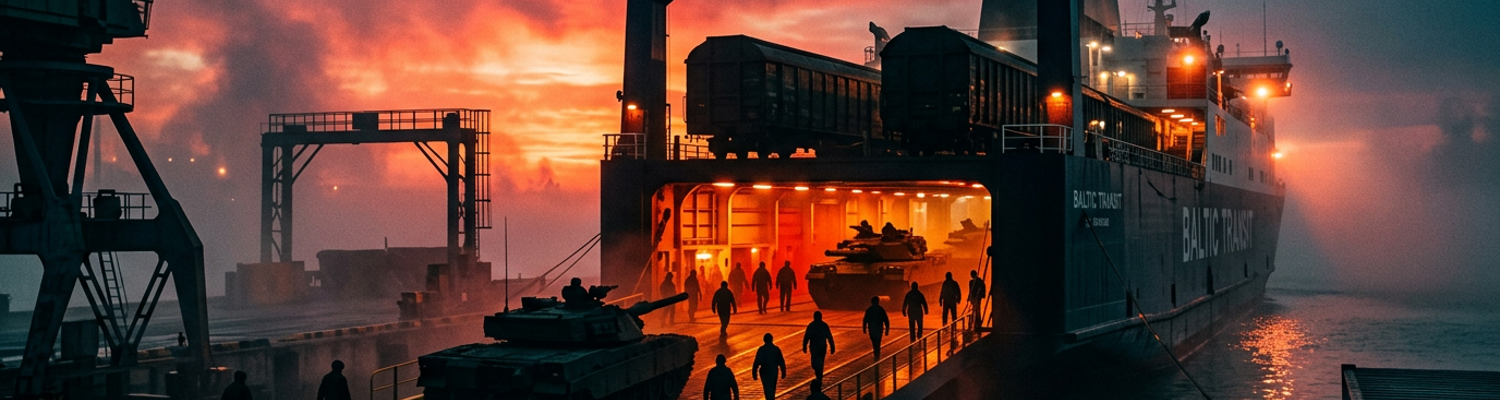

Polish Rail Disruptions and Soviet Evacuation Bottlenecks
Locomotives idled across frost-covered border sidings as Polish customs officials halted eastbound Soviet military convoys at the frontier in late 1990. Warsaw demanded immediate payment in Western hard currency for all military rail traffic crossing its newly sovereign borders. This demand broke completely with the socialist accounting systems that had guaranteed free transit for decades. Mechanical crews at the Malaszewicze border yard stopped work, leaving hundreds of flatcars stranded because there was no agreement on who would pay for changing wheels between European standard tracks and wider Soviet broad-gauge tracks. Soviet logistics officers watched as miles of freight trains backed up throughout eastern Germany, filling every available depot until the entire overland evacuation grid ground to a standstill.
Convoys of loaded wagons remained trapped in these crowded rail yards while military planners in Moscow frantically looked for an alternate exit route. Commanders ordered tank regiments across the former East German interior to reverse their headings, turning tracked columns away from Poland and aiming them toward the northern shoreline. Train masters diverted thousands of open flatbeds carrying T-80 main battle tanks, infantry fighting vehicles, and mobile radar systems onto northern spur lines leading through Brandenburg and Mecklenburg. Supply sergeants worked around the clock loading continuous shipments of artillery shells, aerial bombs, and tank ammunition onto rolling stock designated for the Baltic coast.
Cargo trains packed with these volatile armaments converged on northern ports that had never been designed to serve as primary evacuation hubs. Commercial docks at Rostock and small naval anchorages quickly ran out of reinforced berths capable of supporting forty-ton armored fighting vehicles without collapsing pier walls. Civilian dockworkers lacked the heavy-duty lifting equipment required to hoist Soviet military hardware directly into commercial cargo holds, leaving hundreds of tanks parked bumper-to-bumper along civilian wharves. Explosives inspectors warned Soviet commanders that tons of artillery ammunition and solid-fuel rocket motors sat unprotected on open quays next to civilian fuel storage tanks.
Harbor masters recognized that these dangerous waterfront jams could only be resolved by funneling the entire sealift through specialized ferry terminals. Mukran on Rügen Island stood out as the single coastal installation engineered with dual-gauge track complexes capable of transferring Soviet-gauge rail wagons directly onto the cargo decks of massive sea ferries. Rail crews redirected incoming freight lines straight onto the narrow land spit leading to Mukran, shoving thousands of tank-laden railcars into holding yards carved into the Baltic bluffs. Naval logistics officers worked through freezing coastal winds to establish armed perimeter controls and arrange continuous ferry rotations across the Baltic Sea to the Soviet port of Klaipeda.
Mukran Harbor Operations and Railcar Staging
Mukran port on Rügen Island served as the sole terminal engineered with Russian broad-gauge track installations to bypass non-Soviet territory. East German rail workers had built the deep-water complex in the mid-1980s specifically to establish a secure Baltic supply route to the Soviet Union that did not rely on Polish transit lines. Diesel locomotives shunted endless lines of flatcars into the coastal terminal, funneling heavy combat vehicles away from locked Polish border stations directly to the Baltic shoreline. Soviet transport officers pushed trains loaded with forty-ton battle tanks and boxed artillery rounds onto sidings built over soft sandy subsoil. Crushed gravel ballast washed away under steady autumn rains, leaving unsupported steel rails to sag beneath the extreme weight of railcars carrying thousands of tons of volatile explosives.
Cranes rumbled along the damaged sidings to hoist toppled boxcars upright before the volatile munitions inside could ignite from friction or structural failure. Railroad repairmen struggled with manual jacks and replacement timber ties in freezing coastal winds, working without pause to clear jammed switch points so trapped trains could creep forward. Soviet logistics sergeants inspected incoming cars by flashlight, attempting to identify cargo contents because retreating units had loaded crates of artillery rockets, mines, and aerial bombs without standard paperwork. Switch tracks jammed repeatedly when heavily loaded flatcars jumped the rails, blocking the throat of the yard and halting train movements for miles down the island line. Soviet commanders ordered track crews to spike broken switches into fixed positions and drive loaded wagons directly toward the harbor quays.
Steel ramps lowered their massive bridge spans onto the sterns of arriving vessels to connect the shore tracks directly to the waiting ship decks. Five massive double-deck rail ferries maintained continuous eighteen-hour open-water crossings to the port of Klaipeda. Yard switchers shoved strings of broad-gauge railcars across the twin-level bridges, loading the upper and lower train decks simultaneously to keep the ferries on an exact operating timetable. Deck crews used heavy steel chains and screw jacks to anchor each wagon against the violent roll of the open sea, securing tons of uninspected munitions against sudden shifting during heavy weather. Vessel masters pulled their loaded ships away from the Mukran piers the moment the final lashings were tightened, steaming directly past shadowing Western naval vessels in international waters.
US Navy Maritime Pickets and Allied Baltic Surveillance
Ferries returning westward from Klaipeda steamed directly into an expanding web of Western surveillance patrols positioned across the Baltic Sea. US Navy intelligence teams and NATO maritime patrol aircraft established clandestine reconnaissance pickets across the Arkona Basin and Bornholm Channel to observe the massive flow of departing Soviet military equipment. American specialists aboard auxiliary support ships and converted cargo vessels operated sensitive radio receivers, intercepting tactical communications between Soviet ship captains and coastal controllers on Rügen Island. German maritime reconnaissance crews flew long-range sorties in Breguet Atlantic aircraft, sweeping their search radars across the grey surface water to log every departing hull. Shore-based radar stations along the Danish coastline tracked each vessel as it negotiated the shallow waters north of Rügen, logging precise departure times down to the minute.
Radar consoles inside Danish and German operations centers displayed continuous track lines that exposed the exact tempo of the Soviet evacuation. Allied naval units tracked Soviet vessel movements under severe winter fog conditions to establish precise transport timetables and transit corridors. Dense freezing fog settled over the western Baltic throughout the late autumn and winter months, reducing visual visibility to zero and covering ship antennas in heavy sheets of sea ice. American and European naval crews maintained their positions despite these hazardous conditions, using surface-search radars and low-light optical devices to pierce the dense white mist. Combat information centers logged every speed alteration, course correction, and anchorage delay as heavily loaded Soviet ferries crawled past Bornholm Island.
Turbines and propulsion shafts failed under the continuous strain of the sealift, yet Soviet harbor masters kept sending damaged rail ferries back across the stormy sea lanes. Western signals intercept teams picked up frantic radio transmissions from Soviet engineers struggling to control bilge flooding and repair overheated drive motors while underway in heavy seas. Tactical naval intelligence units discovered that dozens of ferry crossings carried completely undocumented ammunition crates stacked next to unvented fuel tankers. Sonar operators aboard submerged Allied surveillance submarines mapped the underwater transit corridors, listening to the distinctive acoustic signatures of ferry propellers while confirming that Soviet attack submarines were patrolling nearby to protect the vulnerable sealift. Naval intelligence officers correlated these acoustic profiles with satellite imagery, identifying which specific armored divisions were boarding each vessel at Mukran.
Diplomats in Bonn and Washington studied these verified unit identifications within hours of each ferry departure to evaluate the true pace of the Soviet withdrawal. American national security officials realized from the surveillance data that Moscow was executing an orderly retreat under extreme logistical pressure rather than staging a surprise redeployment. German chancellery officials used the verified shipping manifests to hold Soviet negotiators strictly accountable to the troop withdrawal timelines established in the Two Plus Four Treaty. Cabinet ministers in unified Germany reviewed the daily transit reports before authorizing transit compensation and infrastructure payments to Moscow. Reconnaissance squadrons maintained these vigilant surveillance pickets through the coldest months of the winter, documenting each departing vessel until the last broad-gauge rail ferry cleared the waters of Rügen.
Thermal and Acoustic Signatures of Tactical Nuclear Transports
Hydrophones and infrared sensors mounted on Allied patrol aircraft scanned every ferry hull as the transport ships steamed eastward through international corridors. Specialized maritime intelligence sensors monitored thermal, acoustic, and visual signatures to verify whether unsecured tactical nuclear warheads were present on ferry train decks. Thermal imaging cameras searched for the unmistakable heat profiles generated by refrigerated transport containers, which Soviet units typically used to keep solid-fuel missile rocket motors and delicate nuclear components within safe temperature ranges. Acoustic arrays listened for the mechanical hum of specialized ventilation pumps and auxiliary generators that normally powered mobile warhead maintenance vans. Western naval surveillance teams discovered no active refrigeration systems or specialized security details on the weather decks, confirming that Soviet missile brigades had already transferred their warheads under prior secretive operations or were moving them in unpowered freight cars.
Cameras mounted on low-flying reconnaissance aircraft captured clear evidence of dangerous storage practices across the crowded ship decks. Reconnaissance imagery revealed hazardous open-air stowage of mixed artillery munitions lashed haphazardly alongside armored combat vehicles. Heavy wooden crates containing unshielded high-explosive artillery shells sat tied to flatcar railings with frayed hemp ropes, resting only inches from the hot exhaust louvers of idling diesel tanks. Deck crews had packed unguided artillery rockets and landmine canisters onto open rail wagons next to armored personnel carriers without installing blast barriers or fire-suppression equipment. A sudden shift in cargo during rough sea swells risked crushing sensitive percussion fuses against heavy armor plating, threatening an explosion that could easily rupture the thin hull plates of the rail ferries.
Analysts at NATO operational headquarters reviewed these surveillance photos alongside intercepted communications to assess the physical condition of the retreating Soviet regiments. Western intelligence analysts flagged significant breakdowns in Soviet chain-of-custody protocols for sensitive ordnance amid accelerating troop demoralization. Conscript soldiers stationed at railhead checkpoints abandoned their guard posts to trade surplus military gear and fuel for local currency, leaving unattended rail wagons loaded with explosive stores on open sidings. Soviet depot officers failed to sign transport manifests, falsified ordnance transfer sheets, and bypassed mandatory security inspections to speed up train departures before their own units were disbanded. Western technical agencies gathered mounting evidence that local Soviet commanders could no longer account for all conventional explosive stockpiles moving through the Baltic bottleneck.
Diplomats in Washington and Bonn used this photographic and sensor evidence to confront Soviet authorities over the hazardous handling of military cargo in the Baltic. Chancellor Helmut Kohl and American security officials presented Moscow with detailed maritime tracking data showing that disorganized troop movements threatened civilian shipping corridors and regional safety. German negotiators leveraged the intelligence findings during bilateral financial talks, demanding that the Soviet General Staff enforce strict accounting over all departing munitions as a condition for continuing economic assistance and housing subsidies. Soviet defense officials responded by dispatching senior inspection officers from Moscow directly to Mukran to restore military discipline and supervise train-deck lashings. American surveillance vessels and patrol aircraft maintained continuous sensor coverage across the Bornholm Channel, logging every ferry crossing to verify that Soviet loading crews complied with the newly enforced safety standards.
Classified Intelligence Dispatches and Strategic Washington Deliberations
Dispatches from US Navy surveillance units quickly revealed that Soviet rail yards on Rügen remained dangerously disorganized despite promises of tighter compliance. These alarming naval dispatches regarding maritime accident risks and explosive yard hazards reached the National Security Council and the Joint Chiefs of Staff, triggering intense concern among senior military planners. Duty officers in the Pentagon reviewed raw reconnaissance folders showing rail tracks buckling under overloaded munitions wagons and ferry decks packed with unvented fuel tankers. Joint Chiefs Chairman Colin Powell and White House defense aides realized that a single collision in the narrow sea lanes or an accidental spark in the Mukran switching yards could trigger an uncontrollable chain reaction. Military specialists informed the administration that the sheer volume of high explosives concentrated along the German coast turned the entire evacuation corridor into an immediate hazard for catastrophic accidental detonations.
Maps displayed during classified briefings alerted policymakers to the peril of catastrophic munitions explosions occurring within miles of newly reunified German population centers. Analysts traced potential blast radiuses from Mukran that extended directly into nearby Baltic resort towns like Sassnitz and Binz, where thousands of German citizens lived and worked. National security officials warned that hundreds of tons of deteriorating Soviet artillery shells and loose rocket motors sat on open sidings without basic firebreaks or blast walls. Damage estimates prepared for executive branch leadership showed that an accidental detonation on a loaded double-deck ferry could shatter windows across Rügen Island and release clouds of toxic fumes over populated coastal valleys. Secretary of State James Baker and his crisis teams recognized that keeping the Soviet evacuation moving safely was no longer just a naval tracking problem, but an urgent threat to European stability.
Washington initiated urgent back-channel consultations with West German Chancellor Helmut Kohl and his defense advisors to address these coastal hazards before public panic erupted. American diplomats worked through secure telephone lines with Kohl and his national security advisor, Horst Teltschik, sharing photographic evidence of the precarious rail yards at Mukran. German officials expressed deep alarm at the satellite and aerial reconnaissance images showing unstable explosives piled near residential districts and busy ferry slips. Chancellery advisors realized that German municipal emergency services had no technical plans or specialized gear to fight a chemical or conventional explosion inside an active Soviet military facility. Diplomats decided to quietly offer German technical logistics teams, firefighting equipment, and additional infrastructure funds to reinforce the sagging rail beds on Rügen Island.
Chancellor Helmut Kohl approved these discreet measures and immediately dispatched his top defense aides to meet Soviet military commanders at their headquarters in Zossen-Wuensdorf. German negotiators placed the American intelligence findings directly onto the conference table, showing Soviet generals the precise surveillance photographs of their crumbling rail yards and hazardous ship lashings. Chancellery officials offered to finance railway ballast repairs and provide modern cargo-handling machinery on the strict condition that Soviet depot units separate volatile munitions from troop trains. Soviet commanders accepted the technical assistance and agreed to enforce round-the-clock safety patrols along the Mukran rail corridor to avoid an international scandal. Work crews from the German federal railway soon arrived at the coastal terminals with heavy track-tamping machines and fresh gravel to stabilize the sinking broad-gauge lines.
Diplomatic Interventions and Western Transitional Financing
Helmut Kohl brought the latest Baltic reconnaissance folders into cabinet sessions in Bonn to show ministers how close the coastal sealift had come to complete physical collapse. The Baltic naval surveillance findings directly shaped high-level deliberations surrounding the implementation of the Two Plus Four Treaty framework. Diplomats from the four wartime Allied powers and the two German states realized that political signatures alone could not move hundreds of thousands of heavily armed soldiers across cold, broken transit routes. American and German officials recognized that the Soviet military had exhausted its operational funds, leaving entire tank divisions stranded at muddy Baltic rail junctions without rations, coal, ship fuel, or housing for their families. Cabinet leaders in Bonn quickly drafted emergency legislation to replace empty Soviet military budgets with Western financial power, preparing billions in state credit to keep the Baltic ferry slips operating.
West Germany expedited transitional financing packages totaling over twelve billion Deutsche Marks to stabilize Soviet troop departures and finance Russian housing construction. Federal banking officials established direct electronic transfers to pay for Soviet shipping bunker fuel, rail switching fees, harbor pilot services, and daily food rations for divisions waiting along the Baltic coastline. German construction firms mobilized engineering teams and heavy machinery to build forty-five thousand modern apartments across Russia, Ukraine, and Belarus so that demobilized officers would return to furnished homes instead of snowbound tents. West German trade ministries also funded specialized retraining programs to help discharged soldiers transition into civilian jobs once their transport ships reached home soil. Ministry staff in Moscow quickly released additional cargo vessels and authorized harbor masters at Sassnitz to run around-the-clock embarkations without fear of running out of money for operating crews.
Dockworkers at Mukran loaded flatcars onto the waiting ship decks without the administrative delays and supply shortages that had previously crippled the Baltic staging grounds. Reconnaissance aircraft that once scanned the Arkona Basin for invasion flotillas now provided daily proof that the commercial sea bridge was working and that Soviet armored regiments were leaving German territory for good. Western defense attaches and harbor inspectors verified that every loaded ferry departing Sassnitz roads carried the heavy artillery, armored combat vehicles, and munitions of a shrinking military empire rather than a threat to European borders. Soviet transport officers stamped shipping manifests alongside German customs agents on the windy docks, securing railcar couplings and checking deck lashings under bright shipyard spotlights. German civil engineers and railway workers maintained the broad-gauge tracks on Rügen alongside their Soviet counterparts, ensuring that heavy transport trains rolled steadily toward the ferry slips through the final stages of the historic evacuation.