
Long Wharf Conversion and Inshore Patrol Infrastructure
Machinists collapsed against oil-slicked workbenches as grueling sixteen-hour shifts drained maintenance crews of strength in the cold coastal dampness of late 1941. Freezing salt winds penetrated drafty repair sheds where essential bronze bolts, electrical wire, and marine engine gaskets remained in critically short supply. Shore personnel serving the First Naval District struggled through these physical privations while executing the emergency conversion of the former Fall River Steamship Line piers near Long Wharf into Newport Section Base. Construction parties demolished rotted ticket offices, hauled away decaying passenger platforms, and drove heavy creosoted pilings deep into the harbor floor to support naval traffic. Supply officers transformed old wooden freight warehouses into ammunition lockers, machine shops, and parts depots to handle the swelling volume of operational patrol equipment. Heavy mooring bollards bolted along the perimeter piers soon anchored the constant influx of combat and support craft arriving from regional boatyards.
Subchasers measuring one hundred and ten feet in length occupied those inner berths, bringing constant mechanical emergencies to the overburdened waterfront mechanics. Shipwrights crawled inside damp bilges to replace fractured hull ribs and caulk leaky seams, as hard pounding in open ocean waters routinely shook the wooden planks loose around the propeller shaft struts. Engine specialists worked through the night under dim utility bulbs to rebuild worn diesel injectors, often hand-filing salvaged metal parts when factory replacements failed to arrive. Fueling teams wrestled stiff, salt-caked hoses across slippery decks in the dark, pumping hundreds of gallons of diesel fuel into hull tanks while deckhands loaded drums of lubricating oil. Torpedo men and gunners simultaneously serviced depth-charge racks and forward deck guns, readying each wooden-hulled vessel for immediate return to open water.
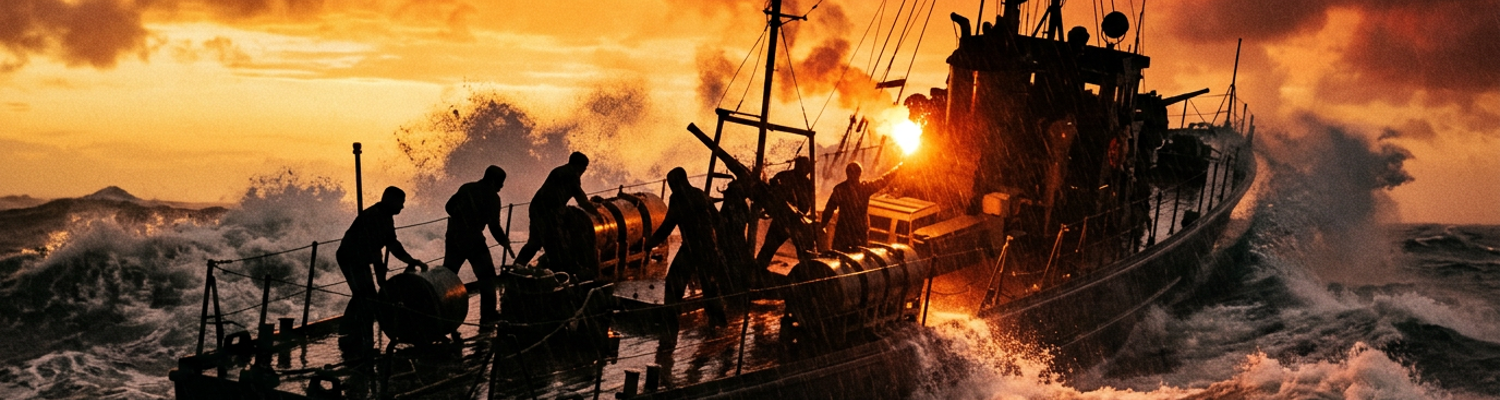
Riggers aboard auxiliary net-laying vessels worked beside these armed subchasers, loading massive spools of steel mesh and heavy concrete anchor blocks onto open work decks. Harbor craft crews maintained the deep-water gate vessels and steel indicator nets that stretched across passage points to physically block submerged enemy submarines. Mechanics on the Long Wharf piers overhauled the heavy deck winches and boom hoists that lifted waterlogged nets from the seabed whenever tidal currents or drifting debris damaged the underwater wire mesh. Deckhands spliced frayed steel cables by hand with marlinspikes, braving freezing rain and pitching decks to replace rusted flotation buoys before nightfall. Base supply personnel pushed emergency shipments of replacement shackles and sinker weights directly to the pier edges so that net tenders could restore breached barriers without returning to distant naval shipyards.
Watchstanders steered these maintained craft past the barrier gates into open water, establishing defensive harbor surveillance covering Narragansett Bay and approaches across Rhode Island Sound. Sonar men stared at listening equipment inside darkened pilot houses, tracking underwater acoustic contacts while surface lookouts monitored offshore grid sectors through driving mist and rain. Harbor defense posts integrated these boat patrols with coastal radar stations, lighthouse visual towers, and shore-based hydrophone arrays along the outer coastline. Operational officers inside the Long Wharf command station plotted every friendly convoy and suspicious radar blip on glass tracking boards, relaying course corrections to the subchasers by encrypted radio and blinker light. Patrol craft rotated through continuous thirty-six-hour offshore sweeps across Rhode Island Sound, holding defensive boundary lines against German U-boats despite rough seas and exhaustion. Base dispatchers continuously fueled and reassigned inbound vessels the moment they touched the Long Wharf bulkheads, maintaining an unbroken ring of detection around the naval facilities.
Anti-Submarine Defenses in Block Island Sound
Gate vessels anchored at the narrow East Passage entrance to Narragansett Bay received these refreshed patrol boats as the inner harbor cordon extended into open water. Mooring crews anchored heavy wire-rope submarine nets between the shore points of Conanicut Island and Fort Adams, holding the mesh upright with submerged steel floats and heavy concrete clump weights to block submerged German craft from penetrating the harbor. Heavy diesel winches on the gate vessels hauled the center net sections open whenever friendly convoys needed clearance, then dragged the heavy wire gates shut against the ripping outgoing tide. Riggers and commercial hard-hat divers struggled in the icy water to inspect the underwater shackles, clearing seaweed and river silt that weighed down the cables until the steel floats pulled beneath the surface. Deck crews repeatedly spliced severed cables and reset displaced sinkers under freezing ocean spray, keeping the East Passage gate closed to unauthorized traffic through day and night watches. Net tenders continuously dropped spare steel cables and counterweights onto the seabed whenever ocean surges shifted the underwater barriers off their alignments.
Hydrophone arrays and magnetic indicator loops laid directly onto that seabed formed the outer electronic detection line across key ingress routes leading into Block Island Sound. Civilian cable-laying ships and Navy technicians had rolled miles of heavy armored copper cable across the ocean floor, routing the electrical lines past Point Judith and around the eastern approaches to channel all underwater movement. These magnetic indicator loops detected any iron hull moving overhead by registering tiny changes in the natural magnetic field, while submerged acoustic listening arrays picked up the faint mechanical rhythm of turning submarine propellers. Navy sound technicians sat inside cramped, windowless concrete huts on shore, pressing bulky earphones to their heads for hours as they tracked faint clicks, surface waves, and mechanical hums across the underwater microphones. Water leakage through cracked lead cable sleeves and intense wave action over shallow rocky shoals often grounded the sensor circuits, forcing shore electricians to test individual line segments with handheld multimeters while cold seawater dripped through bunker vents. Galvanometer needles flickered on the monitoring panels whenever metal hulls crossed the submerged lines, triggering immediate telephone alerts to coastal air stations.
Catalina flying boats launched immediately from coastal runways into low overcast skies to investigate these sensor contacts alongside local surface pickets. Pilots maintained constant radio contact with the wooden subchasers and converted offshore trawlers that held picket stations across the shipping lanes, establishing a tightly coordinated search grid across the sound. Cockpit observers scanned the gray water for periscope wakes or telltale diesel exhaust slicks, firing colored recognition flares and signaling with focused Aldis lamps whenever low cloud ceilings forced them to observe radio silence. Surface picket crews responded by swinging their deck guns toward marked sectors, dropping smoke pots, and lowering sound-ranging hydrophones into the water to confirm whether the detected target was a hostile U-boat or a friendly merchantman straying off course. Tactical coordinators in base plotting rooms matched the sightings of the pilots with the real-time position reports from the surface pickets, vectoring faster patrol craft to box in any suspicious underwater contact before it could slip into coastal shipping channels. Flight crews banked their aircraft low over the choppy gray water to guide the charging subchasers toward the datum point with hand signals and directional flares.
September 1944 Great Atlantic Hurricane Landfall
Magnesium flares hissed into churning sea foam as the outer rain bands of a Category 3 hurricane swept across the coastal approaches, making direct landfall along southern New England on September 14, 1944. Screaming gusts rapidly escalated into sustained winds over 90 knots, violently shaking the airframes of low-flying patrol planes and tearing heavy sheets of spray off forty-foot ocean swells. Pilots wrestled their control yokes against violent downdrafts that repeatedly threatened to slam the twin-engine flying boats straight into the water while wooden subchasers pitched uncontrollably beneath them. Saltwater drenched the aircraft windscreens, blinding cockpit observers and turning routine formation maneuvering into an immediate fight for survival. Flight commanders realized that visual tracking over the datum point had become impossible, so they ordered their crews to break off the search and turn toward the mainland just as collapsing cloud ceilings swallowed the offshore outposts. Wind-driven seawater surged inland across the low-lying shoreline, ripping away coastal radar towers and snapping wooden utility poles along the waterfront roads.
Telephone lines snapped under falling timber and surging seawater, causing the total severance of commercial landlines and naval teletype links to Eastern Sea Frontier headquarters at 90 Church Street in Manhattan. Teletype printers inside the Newport Section Base communications office chattered wildly before going completely dead, cutting off all operational orders, convoy routing schedules, and offshore weather warnings from regional command. Communications watchstanders repeatedly flipped breaker switches, tested emergency backup batteries, and checked patch panels, but no electrical signals could bridge the ruined land network. Base commanders found themselves entirely cut off from the central naval command structure, forced to direct local harbor defenses without any higher-echelon intelligence or regional tactical coordination. Radio operators attempted to establish high-frequency wireless contact with Manhattan, but severe atmospheric static from the hurricane completely drowned out long-distance transmissions and rendered base transmitters useless.
Headsets crackled with deafening electrical interference that obliterated routine voice traffic, forcing maritime patrol aviators and coastal stations to operate under localized visual and radio blackout protocols. Flight crews shut down their high-frequency transmitters to maintain strict operational security, relying entirely on hand-held Aldis lamps, mechanical shutter signals, and colored recognition pyrotechnics to communicate with surface craft. Lookout posts at Fort Adams and Point Judith peered through sheets of driving rain, using directional blinker lights to challenge passing patrol boats that suddenly loomed out of the gray murk. Coxswains on the wooden subchasers held their vessels into the crushing waves by manual helm alone, reading flickering light pulses from shore towers without receiving a single word of spoken radio guidance. Pilots navigated by dead reckoning and visual landmarks, skimming over the whitecap-strewn bay to spot pier moorings before fuel reserves ran dry.
Mechanics dashed into waist-deep water along the seaplane ramps to grab mooring lines from the taxiing flying boats as howling gusts threatened to flip the aircraft onto their wings. Shore parties hauled heavy manila ropes and wedged timber chocks against the hull carriages, fighting the relentless undertow to anchor each Catalina to heavy concrete hardstands before the slipways washed away. Waterfront mechanics then turned toward the inner harbor, where subchasers and net tenders were pitching violently against the battered pilings of Long Wharf under the rising storm tide. Shipwrights and deckhands scrambled across slippery, water-covered decking to loop double mooring lines around cast-iron bollards and slip heavy hemp fenders between grinding wooden hulls. Harbor craft commanders ordered all engines kept warm at idle to prevent drifting, holding the inner defensive ring in complete darkness while hurricane winds battered the isolated base facilities.
Waterfront Flooding and Net Defense Destruction
Floodwaters from the accelerating hurricane surge spilled over the Long Wharf seawall beside those idling patrol boats, completely inundating maintenance machine shops, battery charging stations, and dry storage facilities. Saltwater rose four feet above the concrete workshop floorboards, submerging heavy metal lathes, precision drill presses, and sensitive electrical test benches. Supply personnel and mechanics waded through the oily, freezing current to drag wooden crates of replacement carburetors, gaskets, and radio parts up to the highest storage rafters. Battery bank terminals crackled under the sudden aquatic intrusion, sending plumes of acrid chemical smoke into the shop air before short-circuiting entirely. Wet storage bins surrendered boxes of dry uniforms, paper service manuals, and spare navigation charts to the murky tide, ruining irreplaceable logistical stores that the base needed to sustain daily combat patrols.
Waves driven by the storm tide repeatedly slammed those combat patrol craft against the slips, violently shearing off dockside utilities, shoreside electric feeds, and pier mooring cleats across the inner harbor. Heavy cast-iron cleats pulled free from waterlogged stringers as thirty-ton hulls rolled violently on the crests, leaving vessels dangling by single frayed hawsers. Overhead power cables and freshwater supply lines ripped away from their bulkhead hangers, whipping across exposed decks and plunging into the foaming seawater. Shoreside electrical junction boxes exploded in blue arcs of flame when water reached their live terminals, eliminating all remaining auxiliary power to the berths. Crewmen jumped between bucking deck plates and splintered walkways with axes, cutting tangled utility lines before the live wires could ignite fuel tanks or electrocute sailors struggling in the foam.
Steel anti-submarine nets guarding the harbor entrance took the full fury of the same breakers that were tearing apart the inner moorings, suffering catastrophic structural parting and physical displacement under severe wave action. Immense oceanic swells rolling through the East Passage between Conanicut Island and Fort Adams exerted thousands of tons of dynamic pressure on the wire mesh. Submerged steel flotation buoys ruptured or dragged under, while heavy concrete clump weights shifted across the rocky seafloor and failed to hold the barrier on its tactical axis. Stressed diagonal cables groaned and then parted under the immense strain with loud, sharp cracks, throwing tangled coils of high-tensile wire into the swirling surf. The resulting rupture tore open wide sections of the defensive gate, leaving the vital entrance to Narragansett Bay completely unsealed against potential enemy submarine infiltration.
Aviators peering through rain-streaked cockpit glass tracked those torn net sections and displaced floats as the wreckage drifted helplessly toward the rocky shoals of Brenton Point. Flight observers signaled the position of the breach to coastal defense lookouts using handheld Aldis lamps, confirming that the main channel lay completely exposed. Tactical officers at the base reacted immediately, ordering exhausted subchaser crews to steer their battered craft into the gap and establish an emergency surface picket across the open water. Mechanics ashore labored through freezing, waist-deep brine in the drowned machine shops to assemble portable bilge pumps and salvage hand tools for the frontline vessels. Exhausted sailors lashed fresh manila hawsers directly around surviving timber pilings to replace the destroyed mooring cleats, securing the remaining subchasers so they could maintain the cordon through the height of the gale.
Autonomous Operations Under Communications Blackout
Commanders assembled the skippers of those newly secured patrol vessels to establish ad-hoc picket formations without centralized vectoring from regional headquarters. Telecommunications lines to the Eastern Sea Frontier in New York remained completely dead, leaving local officers with no radar reports, shipping updates, or high-echelon tactical directives. Tactical officers spread grease pencils across damp navigation charts on a salvaged mess table, carving the approaches between Point Judith and Brenton Reef into small, self-contained patrol boxes. Each vessel received a designated patch of open water and strict instructions to patrol back and forth along its boundary, effectively replacing the destroyed submarine net with an improvised ring of armed surface vessels. Skippers memorized their assigned sector limits and emergency rendezvous codes before shouting orders to cast off into the dark, surging waters of the East Passage.
Subchasers with wooden hulls and inshore patrol vessels maintained seaward stations via dead reckoning in blinding rain squalls that completely obscured the Rhode Island coast. Ocean swells exceeding thirty feet repeatedly lifted the 110-foot wooden craft onto steep crests before dropping them into deep wave troughs with violent impacts. Navigators worked in cramped, dimly lit pilot houses, calculating ship positions by measuring propeller revolutions, elapsed time, and estimated tidal drift across hand-drawn paper charts. Rain lashed through cracked bridge windows and shorted out electronic compass lights, forcing watchstanders to verify their headings with shielded flashlights and mechanical compass cards. Helmsmen braced their feet against bucking deck plates and wrestled the steering gear against heavy rudder kickback, preventing their rolling vessels from broaching broadside into the breaking surf.
Signalmen and small-craft crews executed close-range visual signaling to maintain the integrity of the offshore cordon despite sixty-knot wind gusts and towering waves. Sailors lashed themselves to bridge railings with safety lines, aiming focused Aldis lamps and mechanical shutter boxes into the storm to flash short recognition codes at neighboring boats. Blinker light beams penetrated only a few hundred yards through the driving gray squalls, requiring vessels to maneuver close enough to see the white foam of each other bow waves before exchanging tactical positions. Watch officers read these flickering light patterns through salt-crusted binoculars, using Morse code pulses to align their patrol boxes and close accidental gaps created by storm drift. Crewmen also utilized colored pyrotechnic hand flares and directional searchlights to challenge unrecognized silhouettes that suddenly emerged from the dense sheets of rain, ensuring no hostile vessel could penetrate the outer bay undetected.
Gunners manned deck weapons behind spray shields while sonar operators inside darkened compartments listened for submarine propeller cavitation through waterlogged hydrophone receivers. Depth-charge crews stood by on slippery aft racks, securing safety forks with hand lanyards while strapping three-hundred-pound canisters against rolling deck surges. Engine machinists nursed auxiliary bilge pumps with handmade canvas gaskets, pumping tons of seawater out of flooded compartments to keep the wooden patrol hulls buoyant. Vessel commanders sustained this unbroken perimeter hour after hour through the worst conditions of the hurricane without receiving a single radio transmission or logistical update from the outside world. Daylight gradually illuminated the battered approaches to Narragansett Bay, revealing that the improvised picket line remained fully intact across every designated defense sector.
Nighttime Salvage and Logistics Turnaround
Patrol vessels steered through the churning channel chop toward Long Wharf to rotate off their offshore stations and undergo immediate dockside overhauls. Shore personnel initiated continuous twenty-four-hour repair operations along the splintered piers to return each battered wooden hull to the outer cordon as fast as possible. Shipfitters worked around the clock under strict coastal blackout illumination discipline, draping heavy canvas tarpaulins across open companionways and engine room hatches to prevent any stray beam of light from escaping into the night. Crews relied on shielded red-lensed lanterns and dimmed flashlights to illuminate their work areas while coastal lookouts watched the seaward approaches for suspicious enemy submarine silhouettes. Night shifts blended directly into day shifts as maintenance teams scrambled across slippery decking, patching punctured hulls and rigging temporary shoreside pump hoses to stabilize the returning boats without pausing for meals or sleep.
Harbor mechanics dropped into the flooded bilges of those docked vessels to tackle catastrophic machinery breakdowns caused by the hurricane pounding. Machinists waded through waist-deep mixtures of seawater and fuel oil to clear clogged strainer baskets, rebuild flooded bilge systems, and unfreeze submerged electric sump motors. Saltwater contamination had seized the auxiliary diesels that powered internal lighting and emergency pumps, forcing technicians to strip down carburetors, purge fuel lines, and replace ruined spark plugs entirely by feel in the dark. Team members also confronted sheared shaft seals where heavy wave action had bent propeller shafts and torn rubber packing out of the stern stuffing boxes. Machinists drove wedges of oakum and fresh flax packing into the leaking sleeve joints, tightening retaining flanges with heavy wrenches until the incoming saltwater ceased flowing into the aft hull compartments.
Supply personnel converged on the damp berths the moment those mechanical repairs concluded, undertaking manual ordnance replenishment to rearm empty deck racks. Shore workers endured severe sleep deprivation after working two days straight through the storm, their eyes burning from salt spray and their hands blistered from wet manila line. Saltwater flooding in the waterfront storehouses had disabled mechanical hoists and electric cranes, requiring men to restage depth-charge inventories across muddy staging grounds entirely by muscle power. Working parties wrestled three-hundred-pound metal canisters across slippery planking, rolling each depth charge onto heavy timber skids before lifting it into the stern release tracks. Exhausted sailors checked pistol settings and hydrostatic firing mechanisms under hooded red lamps, locking safety forks into place before securing the heavy explosive cylinders against the bucking motion of the harbor swell.
Deckhands cast off mooring lines from the iron pier cleats as soon as the final depth charges locked into their release catches. Subchaser commanders throttled up their newly serviced engines, easing away from the Long Wharf bulkheads to take up relief stations across the bay entrance. Blackout curtains remained pinned tightly across bridge windows while lookouts took position behind bow guns, scanning the dark water for navigational hazards and submarine periscopes. Base dispatchers logged each vessel out through the harbor gate, confirming that the turnaround cycle had replenished the offshore patrol screen without leaving a gap in the anti-submarine perimeter. The newly refitted boats pushed into the rolling Atlantic surf off Point Judith, re-establishing continuous defensive coverage across the shipping channels before the next tide.
Snorkel Submarine Threats and Perimeter Restoration
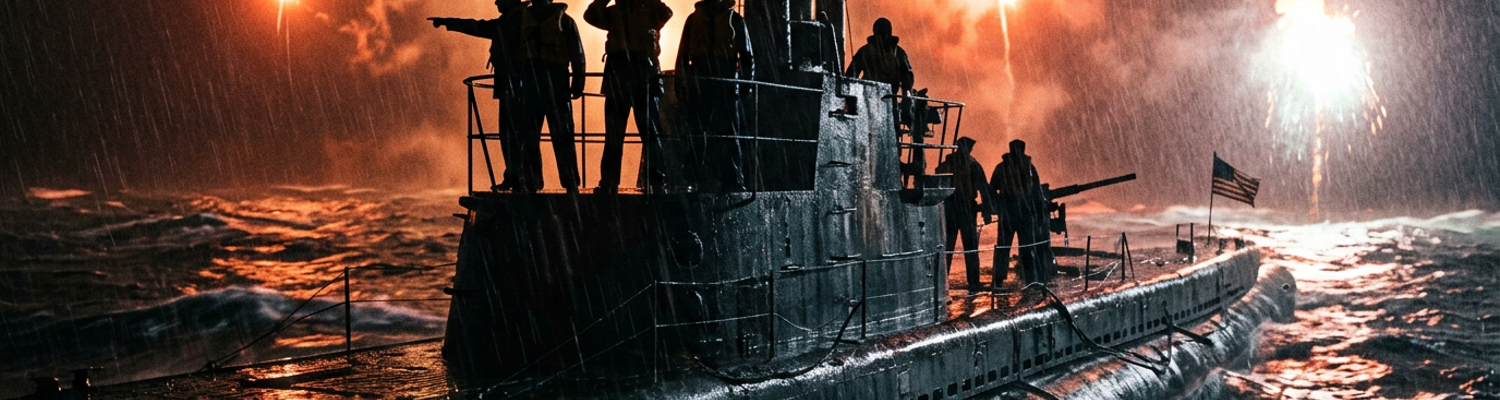
Sonar operators aboard those plunging subchasers tuned their receivers against urgent intelligence alerts warning that late-war Kriegsmarine Type VII and Type IX U-boats equipped with newly fitted engine snorkels were entering coastal waters. German crews used these folding intake and exhaust pipes to run their diesel engines while running fully submerged, recharging their electric battery banks without exposing their hulls above the surface. This mechanical innovation eliminated the telltale silhouette of surfaced U-boats at night and severely degraded the effectiveness of shore radar sweeps. Aviators scanning offshore approach sectors realized that an enemy commander could navigate beneath the storm-churned waves and penetrate deep into coastal shipping channels undetected. Base commanders treated every suspicious hydrophone whisper as an active enemy threat and ordered auxiliary vessels to close the physical breaches in the outer harbor barrier immediately.
Net tenders deployed into the East Passage channel under emergency orders to restring and re-anchor the ruptured anti-torpedo and anti-submarine barriers. Winch crews on the auxiliary craft worked in heavy tidal swells, wrestling heavy reels of high-strength steel wire rope over deck rollers to replace the barrier sections torn apart by the hurricane. Mooring teams lowered twenty-ton concrete sinker blocks and steel flotation buoys into deep water to anchor the underwater mesh firmly against the seabed between Conanicut Island and Fort Adams. Riggers balanced across wet pontoon walkways to splice replacement steel cables into shredded anti-torpedo netting, joining the severed sections link by link against powerful outgoing currents. Divers slipped over the side in heavy canvas gear to untangle fouled bottom chains and verify that the weighted skirt of the net rested securely on the harbor floor. Deckhands dogged down tension winches and tested structural cable catches until the entire barrier net hung suspended across the deep-water passage once more, securing the channel against subsurface penetration while shore bases remained cut off from command networks.
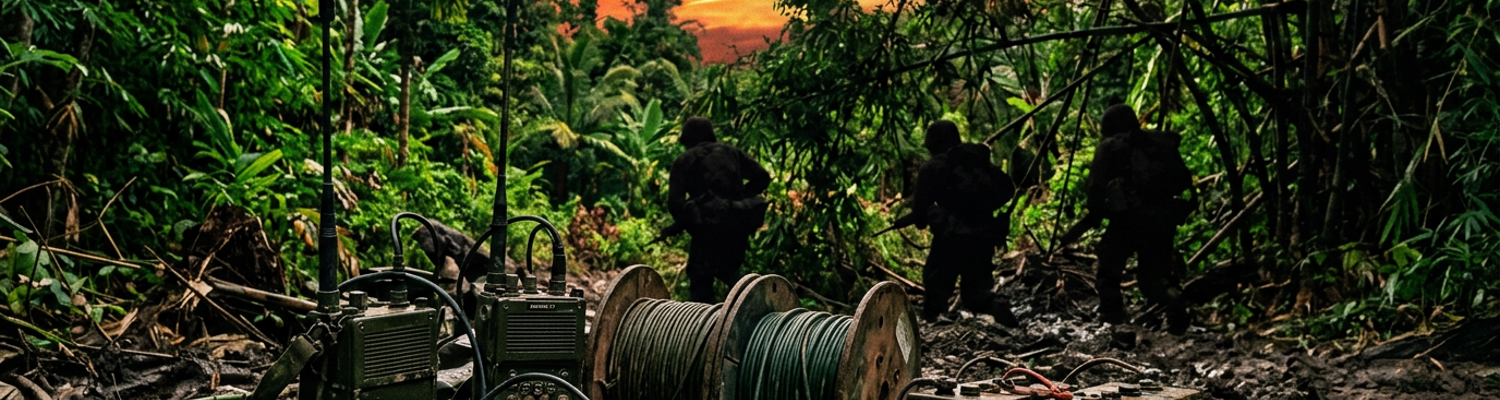
Linemen tackled that communication void by splicing severed cables across waterlogged shoreline roads to restore permanent telephone and teletype links between Newport Frontier Base and regional headquarters. Technicians climbed splintered utility poles and worked through muddy ditches, clearing fallen pine branches and hauling fresh insulated copper wire along coastal highway corridors. Work parties reconnected the primary military teletype trunk directly to Eastern Sea Frontier headquarters at 90 Church Street in Manhattan, ending two days of near-total operational isolation. Base dispatchers at Long Wharf immediately used these restored wire connections to transmit harbor readiness reports, download regional shipping schedules, and access central submarine tracking plots. Plotting room personnel fed updated U-boat intelligence directly to harbor defense units, allowing local commanders to synchronize small-craft movements with broader regional convoy movements. Command staffs transformed the emergency surface picket into an organized surveillance network across the southern approaches to Narragansett Bay.
Patrol aviators flying twin-engine flying boats and coastal bombers integrated their offshore sweeps with surface subchasers into coordinated air-sea patrol corridors guarding the Narragansett Bay entrance. Flight crews maintained continuous daytime and nighttime search patterns above designated approach lanes, scanning the gray swells for periscope plumes, snorkel wakes, or diesel exhaust slicks. Subchaser commanders steered their wooden vessels along parallel tracks directly beneath the flight paths, sweeping underwater sound beams through deep shipping channels under visual guidance from overhead lookouts. Aviators carried smoke markers and magnesium flares to flag any unusual surface turbulence, enabling nearby subchasers to alter course and bracket potential subsurface contacts with ready depth charges. Harbor defense controllers routed inbound merchant ships and military convoys exclusively through these protected lanes while gate vessels kept the inner net barriers locked tight against all unescorted traffic. Picket ships and patrol aircraft maintained continuous watch across every coastal sector, holding the restored defense perimeter firm against German submarine incursions.