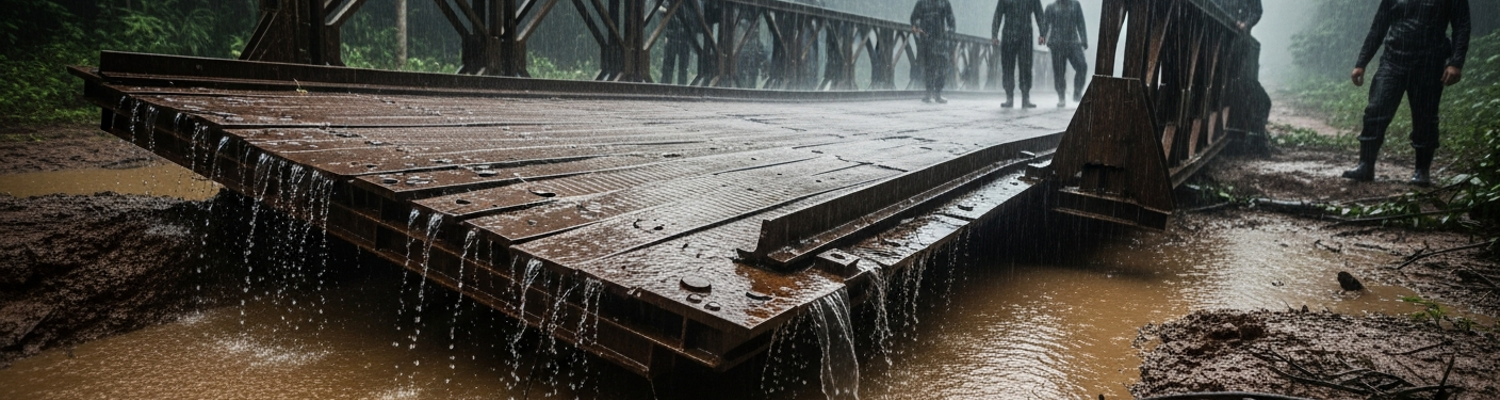

Guadalcanal’s Strategic Bridge Imperative
By late 1943, Guadalcanal was a congested rear-echelon base, a logistical hub for campaigns pushing north into the Solomon Islands. It was into this environment of supposed consolidation that XIV Corps Headquarters received a directive from the South Pacific Area command. The order concerned the 95th Naval Construction Battalion. A review of operational logs (NARA Record Group 38) shows the 95th was a unit suffering from significant material and personnel exhaustion. Its heavy equipment, including Caterpillar D7 and D8 bulldozers, Northwest Model 25 cranes, and LeTourneau scrapers, was worn from months of airfield construction. Spare parts were a constant issue. Cannibalization of damaged machinery was standard practice.
A significant portion of the battalion’s original skilled tradesmen, the experienced volunteers from 1942, had been rotated out. Their replacements were largely younger, conscripted men with far less experience in the improvisational work demanded by jungle construction.
The directive was unequivocal: a two-lane, heavy-load Bailey bridge was to be constructed in fourteen days.
This timeline, conceived in a headquarters hundreds of miles from the island, failed to account for any variables of jungle engineering. An after-action report by the 95th NCB’s commander detailed how a preliminary survey team, dispatched upon receipt of the order, estimated that clearing a path for heavy equipment to the build site would take ten to twelve days alone. This involved felling massive triple-canopy trees and bulldozing a temporary corduroy road over miles of swampy terrain. The official schedule from SOPAC assumed the bridge components could be delivered to a prepared, graded, and cleared site. That assumption bore no resemblance to the situation on the ground. The construction of a Bailey bridge, while rapid under ideal conditions, required a sequence of demanding preparatory tasks. The fourteen-day mandate compressed site survey, jungle clearing, access road construction, riverbank grading, pile driving, and final assembly into an impossible window.
The location was the upper gorge of the Lunga River.
Far from the placid mouth of the river near the coast, this inland site presented extreme engineering obstacles. The river, fed by constant mountain rainfall, flowed through a 150-foot-wide chasm with sheer, unstable rock walls. The current was dangerously swift, prone to flash floods that could raise the water level by several feet in under an hour. Geological surveys revealed the riverbed was not soft mud but a treacherous combination of volcanic rock and deep silt, a composition that would make driving foundation piles an exercise in equipment failure. Each 10-foot-long, 570-pound Bailey panel, along with steel reinforcement beams, timber decking, and the pile driver itself, had to be hauled from the main supply depots at Lunga Point. The route consisted of crude dirt tracks that turned to impassable mire with every downpour. The plan required a Northwest crane to lift and place bridge sections, but the machine itself weighed over 20 tons and repeatedly bogged down in the saturated jungle soil.
The Distant Headquarters Bubble
Operational logs from the South Pacific Area (SOPAC) command in Nouméa, New Caledonia, reveal an organization under extreme duress. By late 1943, the command, under Admiral Halsey, was orchestrating the multi-pronged Operation CARTWHEEL, a complex series of amphibious assaults designed to isolate the Japanese base at Rabaul. The pressure from the Joint Chiefs in Washington for a sustained, rapid offensive was unrelenting. Every piece of intelligence, shipping schedule, and construction request was viewed through the lens of this grand strategic acceleration. Planners at SOPAC were not managing a single island campaign; they were feeding a dozen concurrent operations across a theater spanning thousands of square miles. Archival evidence shows that XIV Corps on Guadalcanal was just one of many subordinate commands submitting constant requests for men and materiel. In this hothouse of strategic urgency, any unit not actively engaged in direct combat was seen as a pool of available assets. The 95th Naval Construction Battalion, sitting in the supposed rear-area of Guadalcanal, appeared on organizational charts as an underutilized resource, its exhaustion invisible to those 1,200 miles away.
The view from Nouméa was a map.
This physical and psychological distance created a profound informational vacuum. Communication between Guadalcanal and New Caledonia was not instantaneous. It was a multi-stage process reliant on courier aircraft and heavily encrypted radio transmissions that, for security, were kept brief. A detailed report from the 95th NCB’s commander about the failing hydraulic seals on his unit’s bulldozers would be condensed by a staff officer at XIV Corps, then summarized again at the island command level. It would finally be transmitted to SOPAC as a single line item in a weekly logistics summary. Such a figure concealed a catastrophic decline in capability. It failed to communicate that the functional equipment could break down after an hour of work, or that the lack of specific spare parts, like D8 tractor final drive pinions, rendered entire machines useless. The planners at SOPAC were not reading the desperate, grease-stained field reports; they were analyzing spreadsheets that presented a deeply misleading picture of readiness.
The fourteen-day directive for the Lunga River bridge was the direct result of this systemic blindness. The decision was not born of malice but of strategic pressure and ignorance of conditions. The engineers at SOPAC headquarters, working with standard manuals and topographical charts, calculated the project’s requirements in a sterile, academic fashion. They saw a 150-foot gap on a map and cross-referenced it with the known capabilities of a Bailey bridge and the on-paper strength of a Seabee battalion. Their calculations presumed the existence of graded access roads, stable soil for foundations, and available construction machinery. The formula had no variable for flash floods, for the volcanic rock substrate of the riverbed, or for a Northwest crane sinking into unseen mud pits.
Impossible Jungle Engineering Challenges
The environment of Guadalcanal was an active participant in the failure at the Lunga River. Medical logs from the period paint a grim picture of an engineering force dismantled by disease before a single steel panel could be put in place. Malaria was the principal threat. By late 1943, even with dedicated malaria control battalions on the island, the annual infection rate for some units had previously soared to over 1,500 cases per 1,000 troops. For the men of the 95th Naval Construction Battalion, this was a daily reality. The Anopheles mosquito thrived in the stagnant pools created by heavy equipment, turning construction sites into breeding grounds. Medical reports from the South Pacific Area reveal that for every two men lost to combat, five were lost to disease. The illness inflicted a cyclical, relapsing fever, chills, and weakness that rendered an experienced crane operator useless for weeks. Thousands of soldiers were evacuated from the theater not for wounds, but for recurring bouts of Plasmodium vivax malaria. This biological attrition meant the effective strength of the 95th NCB was always a fraction of its on-paper roster.
The jungle was a physical barrier as much as a biological one. The route to the upper Lunga gorge was a 15-mile track through ravines, steep ridges, and triple-canopy jungle that blocked out the sun. Constant, torrential rain turned the volcanic soil into a quagmire that swallowed equipment. Engineer reconnaissance reports noted that carving a preliminary jeep track, a prerequisite for moving heavy machinery, would be a monumental effort. The Seabees had to contend with a landscape where the ground itself was an unstable enemy. The hot, humid air accelerated decay, causing fungal growth on personal gear and the vital rubber seals and gaskets on engines.
The operational history of the 95th NCB is punctuated by the sound of straining engines. The unit’s primary earth-movers, Caterpillar D7 and D8 bulldozers, were robust machines, yet they were not invincible. Archival maintenance logs from engineering units in similar theaters show these tractors were highly susceptible to undercarriage problems when operated in constant mud and grit. The abrasive mixture of soil and volcanic rock would work its way into rollers, idlers, and drive sprockets, grinding them down and causing failures. A thrown track on a D8 in the middle of the jungle was not a simple repair; it was a multi-day recovery operation. The 20-ton Northwest Model 25 crane, essential for lifting the 570-pound Bailey panels, repeatedly bogged down. Its narrow tracks were ill-suited for the low-bearing capacity of the muddy ground. Each time it sank, it became another casualty, demanding other machines be pulled from road-clearing to haul it out. Hydraulic systems failed as contaminated water seeped past worn seals. Engines overheated, their radiators choked with jungle debris. These were not isolated incidents but a constant war of mechanical attrition.
Critical Supply Chain Disruption
The backbone of the Lunga River bridge project was a specific list of steel components. An examination of the 95th Naval Construction Battalion’s initial requisition, filed with XIV Corps headquarters, details the precise tonnage required. The order specified 180 standard Bailey panels, the 10-foot-long, 570-pound lattice sections that formed the core trusses. It called for hundreds of specialized steel pins, dozens of 19-foot-wide transoms, and long steel stringers. The total request amounted to over 120 tons of prefabricated steel.
This document began a bureaucratic marathon that guaranteed failure.
From the 95th NCB, the requisition traveled to the XIV Corps G-4 (logistics) office, where it was consolidated with countless other requests. A staff officer, balancing demands for everything from ammunition to medication, translated the detailed engineering request into a summarized cable for the South Pacific Area command in Nouméa. Here, the request for bridge components entered a brutal competition for resources. Planners at SOPAC were juggling supply requirements for the ongoing Operation CARTWHEEL. Shipping manifests from this period show that vessels leaving American ports were prioritized for the upcoming invasions of New Georgia and Bougainville. Ammunition, fuel, and combat-ready units took precedence. A request for Bailey bridge parts for a rear area like Guadalcanal was de-prioritized. Archival evidence of shipping schedules reveals that a Liberty ship carrying some of the 95th NCB’s steel was diverted mid-voyage to the Russell Islands to offload supplies for a new PT boat base, delaying its arrival at Guadalcanal by over a week. Other components, like the specialized transom clamps, were accidentally offloaded at Espiritu Santo and sat on a dock for nineteen days before the error was identified.
For the engineers of the 95th NCB waiting in the Lunga gorge, this bureaucratic friction translated into an open-ended delay. Radio communications with XIV Corps yielded only frustratingly vague responses. The fourteen-day construction timeline expired with not a single steel panel having arrived at Lunga Point. Morale plummeted. A review of the unit’s operational logbook shows that after completing the arduous task of clearing the access trace to the river, the battalion entered a state of forced idleness. Men were put on make-work details, clearing brush and running drainage ditches that the daily rains would undo. The carefully graded riverbanks, prepared for the bridge abutments, began to slump and erode. In a desperate attempt to maintain momentum, section chiefs had their crews build wooden mock-ups of Bailey panels from felled timber, practicing assembly drills that only served as a bitter reminder of the absent steel.
Command and Communication Breakdown
An examination of XIV Corps’ signal logs from late 1943 reveals a command and control apparatus stretched to its breaking point. The procedural chain linking the 95th NCB in the Lunga gorge to the SOPAC planners in Nouméa was a multi-layered filter designed for brevity, not clarity. A detailed report from the Seabee commander on the ground, outlining specific mechanical failures and the geological impassibility of the riverbed, began a process of radical condensation. At XIV Corps headquarters, a G-4 logistics officer reduced the exhaustive field report to a few standardized lines in a weekly summary. That summary, once cabled to SOPAC, would be further distilled by staff officers preoccupied with the resource demands of Operation CARTWHEEL. A plea for D8 tractor final drive pinions and the warning that the riverbed was solid volcanic rock became a sterile data point on a readiness chart. The command structure was not just blind; it was actively blinding itself.
The radio traffic between the Lunga gorge and the island’s command centers was a study in technological failure. A forward team from the 95th NCB, attempting to provide real-time updates, would have relied on equipment like the SCR-284 radio set. The SCR-284 was a heavy, cumbersome piece of equipment ill-suited to the humidity and rough terrain. Its AM voice transmissions, operating in the 3.8 to 5.8 MHz range, were highly susceptible to the region’s notorious atmospheric conditions. Constant tropical rainfall and high humidity created significant signal attenuation and static. The dense jungle canopy absorbed and scattered radio waves, drastically reducing the set’s effective range. A call from an engineering team, reporting that their sole Northwest Model 25 crane was sinking into a mud pit, would often be met with a wall of static. Even when a signal got through, it entered a congested net where operators at the rear echelon, overwhelmed with traffic, would often fail to grasp the urgency of a construction unit’s logistical crisis.
The inability to communicate compounded every hardship on the ground. For the men of the 95th NCB, the silence from headquarters was a form of abandonment. With no clear updates on the delayed shipment of Bailey bridge components, a state of corrosive idleness set in. The graded earthworks on the banks of the Lunga River were left unprotected. Daily torrential downpours began to wash away the exposed soil, causing the banks to slump. Each day of radio silence meant another day of watching their labor dissolve back into the jungle. Morale, already crippled by malaria, cratered. The unit’s operational logbook from this period ceases to show progress and instead records a grim cycle of make-work details and equipment recovery. Bulldozers that could have been serviced were instead used to haul other bogged-down machines from the mud, a pointless exercise that increased wear on the failing equipment.
Combat Engineer Psychological Toll
A review of the 95th Naval Construction Battalion’s logs during the delay at the Lunga River reveals a unit in decomposition. The primary emotion was futility. After the ten-day effort to carve an access road to the gorge, the battalion entered a state of forced paralysis, waiting for 120 tons of steel that never arrived. The men watched as daily tropical downpours erased their labor. The graded abutments slumped into muddy slurry. The corduroy road, built from thousands of felled logs, began to sink into the swamp. The project was not just stalled; it was visibly regressing. Unit cohesion began to fray. To combat idleness, command assigned make-work details: clearing brush that would regrow in a week, digging drainage ditches that immediately flooded, and running assembly drills with wooden mock-ups of the steel panels they did not have. These tasks only deepened the sense of despair.
They had been abandoned to perform a task that was both impossible and forgotten.
The psychological erosion was a steady accumulation of miseries that medical officers termed “long-term exposure.” It was a condition born of physical and mental exhaustion. Malaria and dysentery were endemic, but medical logs show a marked increase in vague complaints: persistent headaches, stomach pain, uncontrollable tremors, and a profound lethargy that Atabrine could not touch. These were the physical manifestations of shattered hope. Men who once took pride in operating their machinery with precision now showed a dangerous apathy, resulting in stripped gears and snapped winch cables. A sudden loud noise could send veterans of heavy construction diving for cover, their nervous systems frayed. Disciplinary reports, once rare in the Seabee units, began to fill with minor infractions: insubordination, unexcused absence from duty, and brief, bitter fights. The men were not mutinous; they were disintegrating.
Guadalcanal was officially secure, but the mountains and ravines surrounding the Lunga gorge still concealed scattered remnants of the Japanese Imperial Army. These were not organized units, but desperate holdouts who became a source of unique psychological terror. For the engineers of the 95th NCB, the harassment was sporadic and unpredictable. A single sniper shot from the dense canopy would halt all work for a day as men scanned the unmoving wall of green. Patrols checking the supply track would discover tripwires connected to unexploded ordnance, placed not to cause mass casualties but to instill fear. The enemy was a ghost, heard but never seen. A rustle in the undergrowth at dusk. A strange call in the night. The discovery of a discarded ration tin miles from any known American position. This low-grade warfare turned the jungle into a hostile entity, layering a constant, primal fear of ambush on top of the existing despair and disease.
Inspector General’s Damning Findings
The Inspector General’s final report on the Lunga River Bridge affair (File 7-B-44), classified until 1948, was a methodical deconstruction of a multi-echelon failure. Investigators from the IG’s office, arriving on Guadalcanal in early 1944, impounded years of signal logs, requisition manifests, and unit operational diaries from both the 95th NCB and XIV Corps. Their primary finding was not one of individual incompetence but of a systemic breakdown in command, a process of “informational filtration” that rendered senior leadership blind. The report detailed how urgent, reality-based reports from the 95th NCB’s commander were progressively stripped of their vital context. A five-page assessment detailing the impassable riverbed, the exhaustion of specific D8 bulldozer models, and soaring malaria rates was first condensed by a XIV Corps staff officer into a single paragraph. By the time it was encoded for radio transmission to Nouméa, it was reduced to a misleading metric. The IG report concluded this was a procedural flaw, a system designed for battlefield brevity that was incapable of transmitting complex engineering and logistical truths.
A substantial section of the report focused on the “headquarters bubble,” the disconnection between the South Pacific Area planners and the units executing their directives. Investigators cross-referenced SOPAC’s strategic timelines for Operation CARTWHEEL with theater shipping manifests. They discovered that the fourteen-day directive for the Lunga bridge was issued the same week that planners were allocating all available heavy transport shipping to the upcoming New Georgia and Bougainville campaigns. An appendix to the IG report demonstrated that even if the 95th NCB had been at full strength with brand-new equipment, the components for their bridge were never scheduled to arrive in time. The steel panels and transom clamps were listed on tertiary shipping manifests, repeatedly bumped for ammunition and combat troops. SOPAC’s planning staff, working from topographical maps and standard engineering formulas, had created a plan that was theoretically sound but bore no connection to the operational limitations of the theater.
The report identified the Lunga River project as a “critical operational failure,” quantifying the loss in stark terms. Investigators calculated over 45,000 man-hours were expended for zero gain. This figure included the initial road clearing, the subsequent make-work details, and the hours spent recovering bogged-down machinery. The material cost was just as severe. Two Caterpillar D8 bulldozers, their final drives destroyed, were officially written off. The unit’s sole Northwest Model 25 crane suffered a cracked boom during a recovery attempt and was rendered inoperable. The report also correlated the project’s timeline with a sharp increase in disciplinary infractions and stress-related medical evacuations within the 95th NCB, concluding that the impossible task had led to a quantifiable collapse in unit effectiveness.
Legacy of a Bridging Fiasco
The Lunga River bridge project was not formally cancelled. It simply ceased to exist. XIV Corps records show that after weeks of idleness and mounting equipment failures, the 95th Naval Construction Battalion was quietly reassigned in its entirety to the Russell Islands to begin construction of a new fighter airstrip. There was no final report, no official notice of termination. The request for 120 tons of Bailey bridge components was withdrawn from SOPAC’s logistics queue without comment. The half-finished access road, carved at great cost through fifteen miles of jungle, was abandoned. The prepared abutments on the riverbank dissolved in the daily rains. Within a year, the jungle had completely reclaimed the site.
The legacy of the fiasco was one of lasting operational consequences. The bridge was not an arbitrary project; it was a designated critical path for the redeployment of XIV Corps' heavy assets for the next phase of Operation CARTWHEEL. A review of the operational planning for the Bougainville Campaign, which began in November 1943, reveals the direct impact of the bridge’s absence. The plan had called for the movement of the corps’ heavy artillery, specifically several battalions of 155mm “Long Tom” guns, from their positions on Guadalcanal across the Lunga bridge to a new embarkation port. Their firepower was considered essential for neutralizing the formidable Japanese defenses anticipated there. Without the bridge, these guns could not be moved. They were trapped by the same impassable terrain the bridge was meant to conquer. Consequently, the initial landings on Bougainville were conducted with significantly less artillery support than planned, forcing a greater reliance on less precise naval gunfire and air support.
The ultimate legacy of the Lunga River bridge is found in the pages of the Inspector General’s 1944 report. Investigators provided a forensic accounting of a systemic command failure, tracing how desperate reports from the 95th NCB were filtered into uselessness by a bureaucracy designed for brevity. The report became an internal, classified case study in the dangers of the “headquarters bubble,” detailing how SOPAC planners in Nouméa had scheduled an offensive based on the availability of artillery that their own shipping priorities made impossible to move. While its findings were not widely circulated, the report was influential in post-war efforts to reform military logistics and command communication, arguing for the placement of liaison officers with technical expertise directly within planning staffs to prevent theoretical plans from diverging so disastrously from the physical world. Two Caterpillar D8 bulldozers and a Northwest Model 25 crane were officially written off as total losses.