
The enemy in early 1945 had no front line. It was a ghost network, its power measured in whispers, informants, and concealed radio transmitters. This web of German influence was woven into the fabric of a supposedly neutral Spain, a constant source of anxiety for Allied planners.
Francisco Franco’s regime was a study in precarious opportunism. It owed its existence to German and Italian military support during the Spanish Civil War. That debt was partially repaid with the División Azul, a volunteer force of 18,000 men sent to fight alongside the German Army on the Eastern Front. Economic entanglement was just as strong. Archival evidence (NARA Record Group 59) shows that between 1941 and 1943, Spain supplied Germany with over 1,100 metric tons of wolfram ore annually, a material essential for hardening steel in armament production. As the war turned against the Axis, Franco began a slow pivot.
Allied economic pressure, specifically an oil embargo that began in January 1944, forced a concession. A secret deal signed in May 1944 saw Spain agree to drastically limit wolfram exports, close the German consulate in Tangier, and expel known German agents. Yet, operational logs indicate that Spanish cooperation with German intelligence did not entirely cease. Authorities often turned a blind eye to smuggling and continued information sharing.
American strategic concerns were direct. The primary fear was the potential for Spanish ports to become clandestine bases for German U-boats threatening the Strait of Gibraltar, the chokepoint of the Mediterranean. Allied intelligence records detail the extensive German intelligence apparatus that made this threat plausible. The Abwehr, Germany’s military intelligence service, operated a sophisticated network of ship-watching stations along the Spanish coast as part of Operation Bodden. With the cooperation of Spanish authorities, observation posts at Algeciras, Tarifa, and as far east as Cap de Gata tracked Allied warship and convoy movements, radioing reports directly to Berlin. The Algeciras station alone transmitted over 20 reports daily. The intelligence they provided was used to direct U-boat attacks on Allied shipping. The Abwehr presence was formalized through Kriegsorganisationen attached to the German embassy and consulates, with major hubs in Madrid, Seville, and Barcelona. These offices coordinated espionage, sabotage, and radio-intercept operations, with German personnel sometimes wearing Spanish uniforms to conceal their activities.
Initial intelligence directives for the US Navy’s Office of Naval Intelligence (ONI) in early 1945 reflected this complex threat environment, with a particular focus on the Murcia coast. The region’s port of Cartagena was a primary Spanish naval base, sitting directly astride important Allied sea lanes connecting to the ongoing campaign in Italy. The directives were unambiguous. Field operatives were tasked with identifying and profiling all known and suspected Abwehr personnel operating in the Cartagena-Murcia sector. A second priority was a thorough assessment of the Spanish naval command at Cartagena. ONI needed to know the political leanings of its senior officers and determine the likelihood of any clandestine collaboration with German naval assets. Operational plans called for the detailed mapping of the entire Costa Cálida, identifying coves and isolated beaches that could serve as resupply points for U-boats.
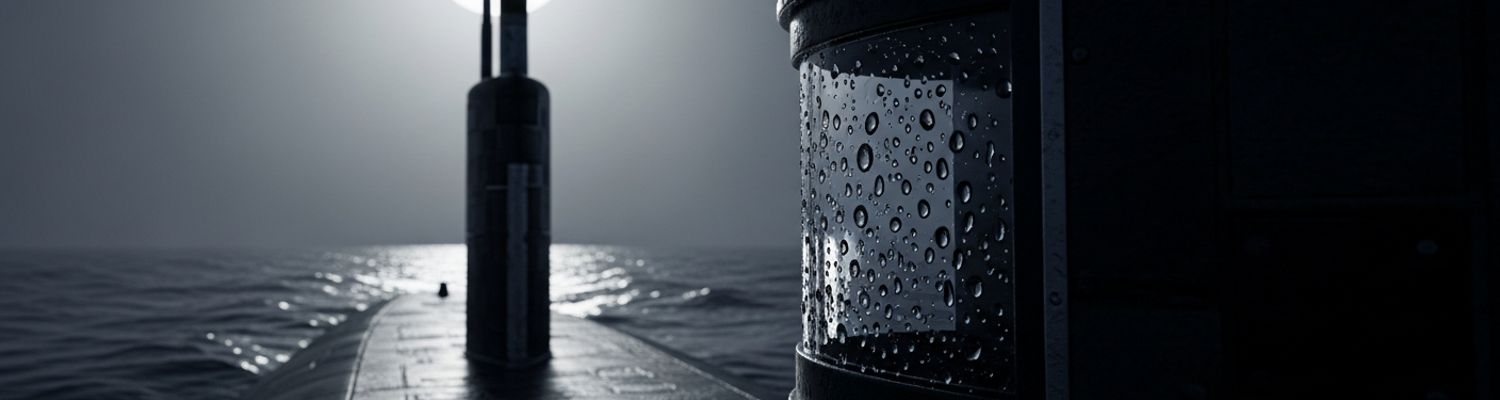
By early 1945, the war of shadows along the Iberian coast required direct action. Archival evidence from the Office of Naval Intelligence details the authorization of high-risk reconnaissance missions by US submarines, specifically targeting the heavily fortified coast of Murcia. Gato-class submarines, proven workhorses of the Pacific, were tasked with slipping past Spanish neutrality patrols to operate within sight of the naval base at Cartagena. The core of these missions was information. Each submarine carried a small team of specialists, including photographers and signals intelligence technicians, whose job was to document Spanish coastal defenses and hunt for any sign of lingering German naval activity. Periscopes were fitted with high-magnification Fairchild K-20 cameras, allowing the crew to capture detailed images of shore installations from several miles out. A submarine would spend days submerged in a designated patrol box, often just a few square miles in area, surfacing only at night to recharge batteries and ventilate the boat. The pressure on the crew was a constant state of tension, fueled by the proximity of potentially hostile forces and the claustrophobic reality of life inside a steel tube.
The primary intelligence objective was a thorough assessment of the Spanish coastal defense network protecting Cartagena. From the submerged submarine's perspective, the coastline revealed a formidable array of fortifications built up under the 1926 Defense Plan. On either side of the bay, massive gun batteries were dug into the cliffs. To the west, at Cabo Tiñoso, was the Castillitos battery. To the east, the Cenizas battery. Each housed two enormous 381mm Vickers-Armstrong guns, capable of firing a nearly one-ton projectile up to 35 kilometers. These were supported by smaller caliber batteries, like the 152.4mm Vickers guns at Jorel, designed to engage closer targets. The submarine’s intelligence team would methodically raise the periscope for brief, timed intervals, sketching the gun emplacements, calculating their fields of fire, and mapping the locations of observation posts and searchlight towers. Every Spanish patrol vessel leaving the harbor was logged, its type and patrol pattern recorded to build a pattern-of-life analysis for the port.
A second, more elusive target haunted these missions: the ghost of the German U-boat. Although Allied victory in the Battle of the Atlantic was assured, reports suggested the potential for last-ditch U-boat operations in the Western Mediterranean. The German intelligence network known as Operation Bodden, though officially dismantled by Spanish authorities in 1944, had established a system of ship-watching stations along the coast to guide U-boats. ONI feared that remnants of this network, possibly with quiet local cooperation, could still support a submarine. The American Gato-class boats were not just observation platforms; they were hunters. Hydrophone operators worked in shifts, listening intently for the acoustic signature of a submerged vessel. They had to filter out the sounds of fishing boats and Spanish naval traffic from the distinct beat of a U-boat’s propellers. The introduction of the German snorkel, a device that allowed a U-boat to run its diesel engines while remaining at periscope depth, made acoustic detection significantly more difficult. Torpedo rooms remained on high alert, ready to transition from intelligence gathering to combat in an instant.
The hunt for ghosts along the Spanish coast could not be managed from the sea alone. A close review of operational logs from 1945 reveals early attempts by the US Navy to establish a form of airborne command and control. With no dedicated command aircraft in existence, the task fell to the workhorse of maritime patrol: the Consolidated PB4Y-2 Privateer. These aircraft, navalized derivatives of the B-24 Liberator bomber, were packed with additional radio equipment and sometimes an extra officer whose sole job was to process intelligence in real-time. Flying long, 12-hour patrols out over the Bay of Biscay or the approaches to the Strait of Gibraltar, these modified bombers functioned as the brain of the operation. They were tasked with taking disparate reports from submerged submarines, other patrol aircraft, and ship-based lookouts, plotting them on a physical chart board in the vibrating fuselage, and building a coherent intelligence picture to relay back to fleet command.
It was a system built on failure-prone technology.
The primary sensor for this entire effort was the AN/APS-15 search radar, a system known to its operators as H2X. Mounted in a retractable radome behind the nose wheel, this microwave radar’s limitations defined the operational ceiling. The radarman sat hunched over a flickering green Plan Position Indicator scope, a circular screen on which a sweeping line was supposed to paint a picture of the sea below. His enemy was not just the U-boat snorkel, a target barely larger than a trash can, but the sea itself. In anything above a calm sea, the scope would bloom with sea return, a blizzard of false signals created by wave crests that could easily mask a real contact. Archival analysis of radar performance from the era shows that against a small target like a periscope, the effective detection range might be less than five miles, and only in ideal conditions. The strain on the operators was severe; hours of staring into the hypnotic green swirl, where a moment’s inattention could mean missing the one faint paint that mattered, led to fatigue and frequent false alarms that sent hunter-killer groups on fruitless chases.
Even when the radarman found a credible contact, communicating that information was another battle. The Privateer was a flying radio station, but its channels were unreliable. For long-range reporting back to a shore-based headquarters in England or North Africa, the crew depended on High-Frequency radio. A radio operator had to translate the contact report into Morse code, a slow process, and then transmit it through a channel often degraded by atmospheric static. For communicating with nearby destroyers or other aircraft, the crew used Very High Frequency radio, which provided clear, line-of-sight voice communication. VHF’s line-of-sight dependency was a major weakness. A patrol bomber flying at a typical search altitude of 1,500 feet had a radio horizon of only about 50 miles. A destroyer just beyond that distance would be in a communications black hole, deaf to any urgent call. This forced the Privateer to act as a physical relay, flying towards friendly forces to get within VHF range, a time-consuming maneuver that surrendered precious minutes to a potentially submerged enemy.
A close review of operational logs from the Office of Strategic Services (OSS) Maritime Unit (MU) reveals the strain placed upon its smallest, most isolated teams. By 1945, the primary mission set along the Galician coast of Spain had shifted from simple observation to proactive, high-risk reconnaissance. Four-man teams, designated Operational Groups, were tasked with objectives that were strategically important but tactically perilous. One such objective was the infrastructure supporting the German wolfram trade. Archival evidence shows teams like Operational Group ‘Mako’ were ordered to conduct covert shoreline surveys near ports like Vigo, identifying rail lines and electrical transformers that supplied German-controlled mining and shipping concerns. Insertion was almost exclusively performed by submarine, with the team launching in two-man collapsible kayaks, often referred to as folbots, several miles offshore in the dead of night. Their equipment was a study in minimalism: suppressed Sten submachine guns, Fairbairn-Sykes fighting knives, several dozen pounds of limpet mines, and a suitcase-sized SSTR-1 radio set whose effective range was perilously short. The mission was not just to plant explosives; it was to map patrol routes of the Spanish Guardia Civil, sketch the defenses of the 17th-century Castro Fortress overlooking Vigo, and assess the loyalty of local fishermen.
The operational plan was built on a knife’s edge.
The constant threat of discovery was a palpable entity. These teams operated without a front line or the possibility of immediate reinforcement. Extraction was a luxury, not a guarantee. Standard operating procedure called for a submarine to return to a pre-arranged point on a specific night, but this was entirely contingent on weather, Spanish naval patrols, and the submarine’s own operational priorities. A team that missed its extraction window was, for all practical purposes, abandoned. Field notes from the period detail the experience of one such team that was forced to scuttle its kayaks and retreat inland after being spotted by a fishing vessel near Cape Silleiro. Their submarine, unable to wait in the face of increased patrol boat activity, was forced to depart. The team was now stranded, hunted not only by the residual German Abwehr network, which still maintained spotters in the area, but also by the unpredictable and often brutal Guardia Civil. Communication with any command element was nearly impossible. The portable radio required them to remain stationary for an extended period to deploy its long wire antenna, an exposure that risked detection by German direction-finding teams that were known to still be active. Survival devolved into a primitive state of existence: hiding in barns, foraging for food, and viewing every civilian as a potential informant.
This sustained, high-wire tension exacted a profound cost. The pressure was not the explosive shock of artillery but the slow, corrosive drip of constant vigilance. The fight-or-flight response, designed for brief encounters, became a permanent state of being, leading to tremors, hyperventilation, and an erosion of cognitive function. After-action reports speak of operators losing the ability to perform fine motor tasks essential for disarming sentry traps or setting the delicate timers on limpet mines. Sleep offered no respite, fragmented into hour-long shifts punctuated by the sound of a dog barking or a distant vehicle. One debriefing describes a veteran operator who, after three weeks stranded, became fixated on cleaning his weapon, disassembling and reassembling it for hours until his raw fingers could no longer manipulate the parts. This was the logical endpoint of a human nervous system pushed far beyond its designed limits.
The true value of the Iberian operations was not in battles won, but in threats neutralized before they could materialize. The exhaustive intelligence gathered by submarine patrols, airborne reconnaissance, and OSS field agents painted a definitive picture of Spanish capabilities and German limitations. The detailed photographic mapping of Cartagena’s 381mm coastal gun batteries and the systematic logging of Spanish naval patrol patterns provided a clear, actionable understanding of the strategic situation. This intelligence confirmed that while Franco’s regime remained politically sympathetic to its former Axis benefactors, its military was in no position to actively intervene against Allied interests. More importantly, the constant surveillance yielded a key negative result: the absence of German U-boat activity. By confirming that the remnants of Operation Bodden were defunct and that no clandestine submarine bases were active, these missions allowed Allied naval planners to confidently re-allocate hunter-killer groups from the Mediterranean approaches to more active fronts.
Post-mission medical debriefings from field officers paint a grim picture of the psychological erosion suffered by the men involved. OSS operatives and submarine crews were systematically broken down by the nature of their work. For the OSS teams inserted by kayak, the constant, low-level dread of discovery by the Guardia Civil or betrayal by a local informant created a state of hypervigilance from which there was no relief. Sleep was fractured, decision-making impaired, and paranoia became a survival mechanism that could not be switched off. Debriefing notes describe men exhibiting uncontrollable tremors, an inability to focus, and a profound emotional detachment. The war for them was not one of explosions, but of unrelenting silence and suspicion.
Out of this crucible of exhaustion and trauma, the modern doctrine for clandestine operations began to form. The high rate of psychological breakdown among elite operatives forced a radical rethinking within the ONI and the newly formed CIA. The primary lesson was that human endurance was a finite resource that had to be managed as carefully as fuel or ammunition. This led to the formal development of personnel rotation policies and the establishment of mandatory post-deployment decompression periods, as outlined in post-war directives like ONI 46-2. Psychological screening for recruits became more rigorous, attempting to identify individuals with the specific resilience needed for long-duration, low-visibility missions. The frequent failure of rigid extraction plans led to new, more flexible protocols, incorporating multiple pre-planned contingency rendezvous points and signals. The experiences in Spain directly influenced the foundational principles of unconventional warfare that would define the special operations community for the rest of the 20th century.