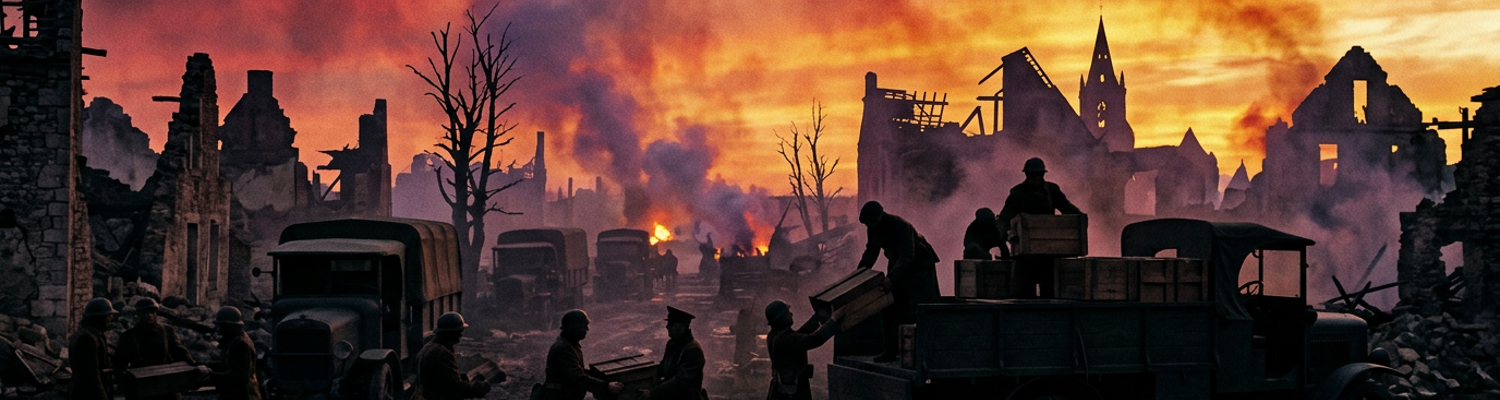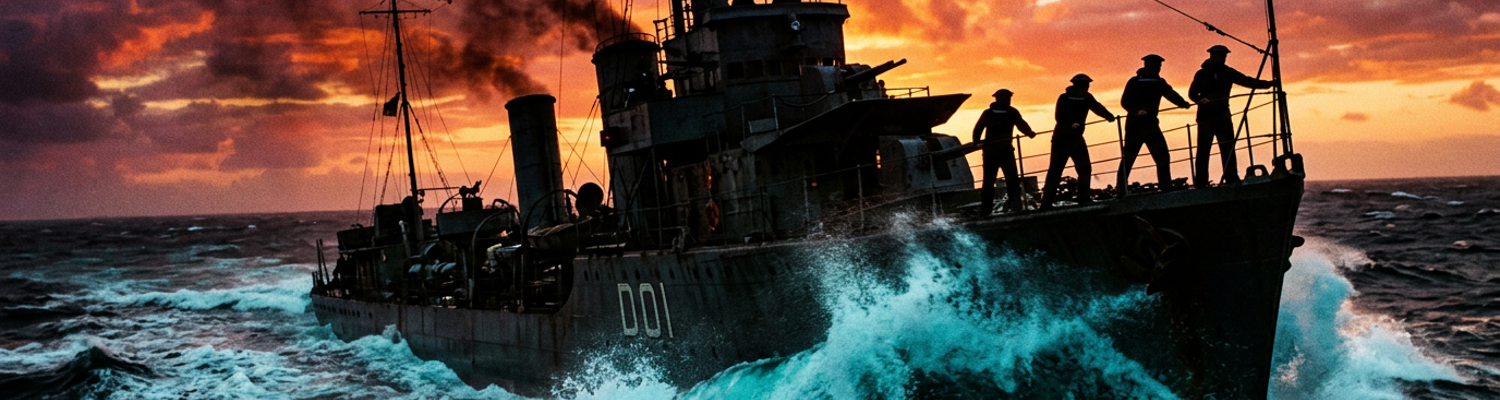

Arrival of Destroyer Division Eight at Queenstown
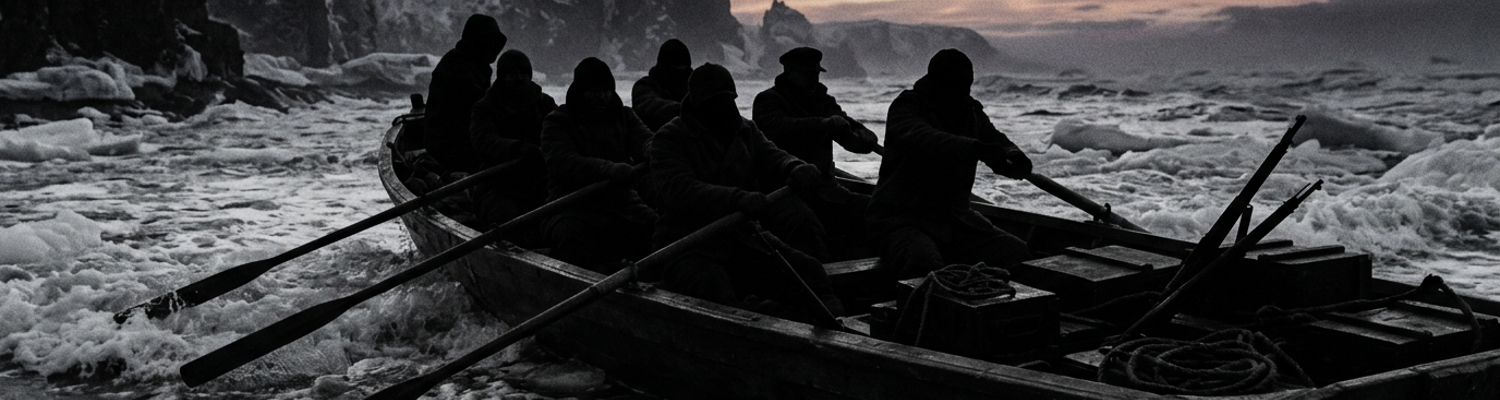
Steel U-boats of the Imperial German Navy patrolled the Western Approaches off southern Ireland, waiting along busy shipping lanes where merchant vessels converged toward British ports. German torpedoes slammed into unescorted cargo hulls, leaving merchant crews to freeze in open lifeboats. Cold North Atlantic gales, heavy fog, and steep fifteen-foot swells battered this patch of ocean daily. White sea foam hid periscope wakes and turned navigation into a constant hazard. Great Britain stood within weeks of running out of grain and fuel oil because German torpedoes sank hundreds of thousands of tons of cargo every month. Commander Joseph K Taussig led six destroyers of Destroyer Division Eight into Queenstown, Ireland, on May 4, 1917, aboard flagship USS Wadsworth to contest these dangerous waters. Exhausted American lookouts stood on salt-caked watch platforms with red, windburned eyes as their ships finally passed the harbor entrance fortifications at Roches Point.
Deckhands secured thick hemp mooring lines to the harbor buoys while oily harbor water lapped against the thin steel hulls of the six destroyers. The transatlantic crossing had battered the ships, causing oil lines to leak and hull rivets to drip seawater into crew berths. Sailors had lived on cold canned food for ten days because seawater flooded the galleys. The men expected a week at anchor to scrape salt from the machinery, patch steam leaks, and sleep in dry bunks. Royal Navy Vice Admiral Lewis Bayly summoned Taussig to Admiralty House on the hill overlooking the anchorage and asked when the destroyers would be ready for sea duty. Taussig informed the British commander that his division required only fuel and provisions before getting underway. Royal Navy Vice Admiral Lewis Bayly granted the American destroyers four days of rest in harbor to overhaul and refuel before commencing their patrol rotations, giving the exhausted crews time to recuperate.
Firemen deep in the boiler rooms reopened the fuel valves and ignited fresh oil burners to build steam pressure for the outbound voyage. Working parties hoisted heavy canvas bags of bread, crates of canned meat, and fresh rounds of ammunition onto the decks through rain and coal soot. British officers provided chart packets marking recent submarine attacks, but they offered no training on local hydrophone gear or antisubmarine depth charges. American sailors had trained for fleet gun battles against German battleships in calm water, not blind escort patrols across stormy, submarine-infested waters. Mechanics worked through the night to replace sheared pins and pack leaky pumps by the yellow light of battle lanterns before the ships cast off their mooring buoys.
Helmsmen swung the steering wheels of USS Wadsworth and its sister destroyers toward the harbor mouth as the division turned back into the open sea on May 8. Heavy green water crashed over the low forecastles immediately upon clearing the harbor headlands, flooding the forward mess compartments and forcing lookouts to lash themselves to the bridge railings. The four-day rotation forced each crew to spend ninety-six unbroken hours scanning the wave troughs for periscope wakes while the ships rolled forty degrees from side to side in the Atlantic swell. Lookouts on Wadsworth gripped the bridge stanchions as the first patrol began, peering through blinding rain squalls for the German hulls that waited along the merchant approaches.
Living Conditions in North Atlantic Gale Patrols
Saltwater spray hammered the exposed lookouts as enlisted watchstanders endured forty-foot North Atlantic swells and hypothermia-inducing open bridge watches without wheelhouse glass to block the wind. Early American destroyers featured only low canvas dodgers around their steering platforms, leaving the helmsmen and signalmen directly exposed to freezing rain, sleet, and breaking wave crests. Enlisted men lashed themselves to the bridge railings with heavy hemp lines so sudden rolls of forty degrees would not pitch them over the side into the churning foam. Four-hour watches stripped the body heat from every sailor, freezing their salt-caked gloves and numbing their fingers until they could barely adjust their brass binoculars or grip the voice tubes. Helmsmen fought the steering wheel with stiffened shoulders as thirty-foot walls of green water buried the low forecastle and smashed against the forward superstructure.
Seawater forced its way past bent hatch seals and ventilation cowls with every wave impact, causing continuous flooding across the forward mess decks. Berthing compartments remained ankle-deep in icy brine that sloshed violently across the steel deck plates as the ship rolled from beam to beam. Sailors tried to rest in saturated canvas bunks that dripped condensation from the uninsulated hull frames, gripping the iron pipe frames in their sleep to avoid being thrown onto the slippery deck. Galley ranges could not burn fuel while water swashed across the cooking compartment, forcing the men to eat cold canned corned beef and hard sea biscuits with salt-crusted hands. Electric bilge pumps and manual bucket brigades operated around the clock to keep water away from the ammunition lockers while the isolated destroyer pressed deeper into its assigned patrol sector.
Destroyer crews operated without established Allied convoy doctrines during early 1917, relying on standalone sweeps through heavy sea states rather than escorting assembled merchant vessels. British Admiralty planners maintained that merchant captains could not maneuver in formation during Atlantic gales, leaving cargo steamers to sail along isolated tracks where German submarines ambushed them. American captains steered their ships through designated ocean patrol boxes covering hundreds of square miles, hunting for periscope wakes without the aid of radar or reliable underwater listening devices. Radio operators sat locked in damp wireless shacks, listening through shrieking atmospheric static for Morse code distress calls from merchantmen under torpedo attack. Captains plotted interception courses toward the reported distress coordinates, ordering maximum revolutions as the destroyers turned directly into the teeth of the gale.
Throttlemen spun their brass handwheels to feed high-pressure steam into the turbines, driving the twin propeller shafts to combat speed through the violent head seas. Hull plates groaned under the immense strain as forty-foot swells repeatedly lifted the stern, causing the bronze propellers to break the surface and shake the entire ship with violent vibration. Firemen worked in boiler rooms where temperatures reached one hundred and twenty degrees, tending pressurized fuel burners and balancing draft air while their boots slid across oily, water-slicked floorboards. Mechanics crawled along hot steam pipes to replace ruptured packing glands and lash down shifting spare parts, working by the dim yellow glow of emergency battle lanterns. Lookouts scanned the empty wave troughs until fuel oil reserves dropped to the safety margin, forcing commanders to break off the hunt and set course back toward Queenstown harbor.
Mechanical Breakdowns and Flush Deck Structural Stress
Helmsmen swung the steering wheels to bring the destroyers around toward the Irish coast, but turning back required driving directly into the incoming Atlantic gales. High-speed steaming against heavy head seas caused severe structural panting and popped hull rivets throughout forward crew berths. The long, narrow steel hulls lacked transverse strength, causing the bow plating to flex inward and outward under the violent hydraulic pressure of each wave impact. Rivet heads snapped off under the alternating tension and compression, flying across the berthing spaces with explosive cracks and leaving open holes through the outer plating. Pressurized streams of cold ocean water shot through the empty rivet holes, drenching sailors in their bunks and soaking canvas sea bags stored against the frames. Off-watch deckhands scrambled across the sloshing deck plates with pine damage control plugs, hammering the wooden pegs into the weeping steel with heavy mallets to slow the flooding.
Machinists deep inside the engineering spaces heard the hull groan beneath them as the hull distortion traveled aft into the machinery foundations. Hull flexing warped the alignment of main steam lines and shook the massive main condensers mounted beneath the low-pressure propulsion turbines. Thousands of thin brass condenser tubes rattled inside their tube sheets until microscopic cracks opened along the joints, drawing cold sea water into the low-pressure steam exhaust. Boiler feedwater contamination and turbine condenser tube leaks forced shipboard machinists to perform emergency mid-patrol repairs before salt ruined the power plant. Saltwater in the boilers would quickly leave thick mineral scale on the steel fire tubes, causing the metal to overheat, blister, and explode under two hundred pounds of steam pressure. Watchstanders checked salinity gauge glasses every ten minutes, watching for the telltale chemical reaction that signaled raw ocean brine was entering the boiler feed tanks.
Wooden plugs and tallow grease served as emergency patches as mechanics crawled directly into the narrow inspection spaces of the condenser heads. The machinists secured the affected turbine, shut off the seawater circulating pumps, and unbolted heavy iron covers in rooms where air temperatures reached one hundred and fifteen degrees. Working by the dim beam of hand-held electric lanterns, men swabbed silver nitrate across the ends of hundreds of small tubes to identify which ones leaked salt water into the steam circuit. Machinists drove tapered white pine plugs into both ends of every ruptured tube, isolating the damaged brass pathways while leaving the surrounding tubes operational. Firemen in the adjacent boiler rooms dumped gallons of contaminated feedwater overboard through the bottom blow-off valves, replacing it with pure reserve water pumped from double-bottom storage tanks. Mechanics tightened the inspection cover bolts with heavy box wrenches, wiped sweat and grease from their faces, and cracked open the steam bypass valves to test the repaired condenser under vacuum.
Throttlemen eased the main steam valves open once more, restoring balanced propulsion to both propeller shafts so the battered destroyer could clear the offshore patrol sector. The emergency tube plugs held against the suction of the air pumps, but the reduced cooling capacity forced the engineering officer to limit turbine revolutions to avoid building excess backpressure. Forward repair parties maintained a continuous watch over the berthing compartments, inspecting the wooden hull plugs every fifteen minutes as forty-foot waves slammed into the forecastle plates. Electric bilge pumps hummed steadily in the lower compartments, throwing oily seepage back into the ocean while water tenders managed the remaining fresh water reserves with strict economy. Helmsmen held the ship steady on its eastern heading, steering through the final outer minefields until the headlands of Roches Point and the entrance buoys of Queenstown appeared through the gray sea mist.
Improvised Stern Chutes and Depth Charge Rigging
Mooring lines secured the salt-streaked destroyers alongside the Haulbowline naval docks as repair tenders delivered crated British anti-submarine munitions directly to the open decks. American destroyers had crossed the Atlantic armed only with four-inch deck guns and torpedo tubes that could not strike a submerged submarine. Royal Navy ordnance officers supplied barrel-shaped explosive canisters, but the ships possessed no factory-built launching tracks or release mechanisms on their narrow fantails. Machinists and shipfitters welded crude stern drop chutes and manual release levers to deploy primitive three-hundred-pound Type D depth charges. Acetylene torches hissed as metalworkers cut through deck railings and bent structural angle iron into sloping stern troughs, securing the improvised metal frames directly over the water. Sailors hauled the heavy cylinders onto grease-covered wooden skids, using hemp ropes and steel retaining pins to lock the explosive barrels in place above the propellers.
Deckhands balanced on the shuddering fantail plates as rough Atlantic seas threatened to wash the unsecured explosive barrels into the churning wake. Rigging the crude launch gear at sea required gunner mates to work without safety harnesses while freezing saltwater broke directly across the low stern. Men smeared thick grease around the manual trip levers, clearing away salt crust and ocean ice so the counterweighted latches would not freeze in their iron sleeves during an emergency dive. Spotters on the bridge yelled down brass voice tubes whenever a periscope cut through the swells, ordering the stern crew to knock away the safety cotter keys with heavy steel hammers. Torpedomen threw their weight against the manual levers to pry open the chute gates, kicking the slick iron drums to start them rolling down the angled rails into the propeller wash.
Seawater flooded the inlet chambers of the dropped canisters as the destroyer accelerated away at maximum engine revolutions. Early hydrostatic pistol mechanisms often failed to arm or detonated erratically close to destroyer rudders during hasty roll-off deployments. Deep underwater shockwaves battered the thin steel plating of the fantail, lifting the stern out of the water and bending steering linkages while the ship was still trying to gain sea room. Rudder posts twisted under the violent hydraulic pressure, jamming the helm and cracking propeller shaft brackets before throttlemen could slow the racing turbines. Unexploded charges sank uselessly into the Atlantic mud when the crude water-inlet valves clogged with ocean debris or failed to compress the internal firing springs at the calibrated depth.
Machinists rushed to the stern with emergency wrenches to inspect the buckled steering quadrants and deformed propeller struts after each violent detonation. Black gang mechanics crawled into the cramped aft steering compartment, tapping loose rivets and hammering warped guide tracks back into alignment while seawater sloshed across the floorplates. Gunners reset the bent release pawls on the empty drop chutes, using lead mallets and pry bars to true the distorted metal channels. Shipfitters chained spare depth charges to the deck stanchions to replace the expended munitions, tightening turnbuckles with iron rods to prevent the heavy explosive cylinders from breaking free in the following sea. Helmsmen tested the repaired steering cables from the bridge, nursing the damaged rudders through the swell while lookouts resumed their scan of the wave crests for the next periscope wake.
Blind Zig-Zag Navigation in Heavy Celtic Sea Fog
Lookouts lost sight of the ocean surface within minutes as heavy Celtic Sea fog rolled over the destroyer, cutting visibility down to less than fifty yards. Helmsmen ran dead-reckoning zig-zag sweeps through dense fog banks without radar, risking collisions with merchant vessels and drifting wreckage. Ships changed heading every few minutes according to prearranged zig-zag plans designed to throw off German torpedo calculations, but blind maneuvering in zero visibility invited disaster. Helmsmen gripped the wooden steering spokes and stared into the solid gray wall ahead, calculating every turn with magnetic compasses, mechanical taffrail logs, and paper charts pinned to the chart table. Whistles sounded through the gloom as officers listened for the dull thrum of approaching cargo steamer engines or the crunch of submerged debris against the steel bow plates.
Engine room telegraphs clanged in response to sudden bridge sightings of floating wreckage, demanding abrupt speed changes that strained unlubricated machinery and exhausted boiler firemen. Throttlemen down in the hot engine spaces threw heavy bronze handwheels from full ahead to emergency stop to prevent the bow from slamming into floating steel hulls. Sudden fluctuations in steam demand drained the main steam headers, forcing firemen to adjust fuel manifold valves and regulate oil burners while balancing on slick deck plates that tilted with every course alteration. Rapidly reversing turbine shafts rattled reduction gears and propeller bearings, stripping lubricating oil films from metal surfaces before pressurized pumps could restore adequate flow. Heat built up along dry shaft journals as mechanics raced between bearings with manual oil cans, pouring heavy tallow lubricants directly onto the smoking steel to prevent metal seizure.
Smoke from scorched grease drifted up through the ventilation gratings and mixed with the cold damp air pouring down the engine room hatches. Firemen inside the firerooms battled to maintain steam pressure between two hundred and two hundred and twenty pounds as the bridge ordered rapid jumps between twelve knots and twenty knots. Men peered through furnace inspection ports against fierce furnace glare, clearing soot from burner tips and adjusting oil atomizers while sweat stung their eyes and soaked through their canvas dungarees. Rapid cooling and heating of boiler casings popped small steam leaks along pipe joints, filling the closed compartments with hissing vapor and blinding white clouds. Water tenders monitored water glass levels constantly because a sudden drop in boiler water during an emergency speed burst could expose hot tubes and trigger a catastrophic boiler explosion.
Boiler feedwater pumps thumped rhythmically in the bilges, forcing fresh reserve water into the steaming drums to keep the water levels steady above the furnace crown sheets. Bridge messengers scrambled down the iron ladders to report the ship had reached the turning mark of the designated patrol sector without hitting submerged wreckage or friendly shipping. Helmsmen pulled the steering wheel over once again, setting a new compass course across the murky waters of the Celtic Sea while the foghorn blasted its regular warning blast into the mist. Lookouts wiped moisture from their red eyelids and leaned out over the spray shields, watching the gray emptiness for the dark outline of an approaching merchant hull.
Identification Dilemmas Regarding Q-Ships and Allied Submarines
Merchant hulls emerged from the gray mist with deceptive profiles, concealing Royal Navy deck guns behind hinged iron bulwarks, false deckhouses, and fake cargo crates. Topside lookouts struggled to distinguish German submarines from British submarines and heavily disguised Allied merchant decoy ships in the turbulent coastal waters. British commanders deployed these decoy vessels deliberately disguised as battered, slow-moving tramps to lure German submarines into surfaced gun duels, but the disguise worked equally well against inexperienced American destroyer crews. British patrol submarines also traversed the same shipping approaches without distinctive silhouettes that lookouts could easily identify through driving rain squalls. Signalmen scrambled across the slick bridge wings to flash shuttered lamps, attempting to exchange classified daily recognition letters before nervous gun crews opened fire. Gun captains cranked their elevating handwheels to train four-inch guns on unidentified conning towers breaking the surface only hundreds of yards off the bow.
Steel conning towers frequently slipped beneath the swells before destroyer officers could verify challenge signals, leaving crews in a state of continuous alarm. False periscope sightings sparked by porpoises, floating spars, and tide rips triggered costly emergency gun discharges and depth charge drops throughout the patrol sectors. Lookouts repeatedly mistook the dark curved backs of breaching porpoises for low submarine decks, screaming contact bearings down the brass voice tubes to the bridge. Ocean currents meeting shallow coastal shelves produced sharp tide rips that threw up narrow lines of standing white spray, mimicking the telltale wake of a periscope moving at four knots. Gun pointers tripped foot pedals and yanked firing lanyards at the first sight of waterlogged timber, sending high-explosive shells skipping harmlessly across empty wave crests. Expended brass shell casings clattered across the wet steel decks as loaders slammed fresh four-inch rounds into smoking breech blocks.
Explosive concussion shook the destroyers from stem to stern as fantail crews rolled depth charges over the stern rails onto these false contacts. Underwater detonations ruptured ocean swells and hurled towering columns of white foam into the air, killing schools of fish and littering the surface with ocean floor silt. Each unneeded drop depleted the small supply of Type D depth charges lashed to the deck, leaving destroyers with fewer munitions to fight actual German submarines. Violent shockwaves from shallow drops repeatedly stressed thin hull plates and sheared mounting bolts along auxiliary steam lines in the steering flat. Machinists hurried aft with wrenches to test hydraulic linkages and tighten loosened fittings while the bridge turned the ship back onto its patrol course. Torpedomen hoisted reserve depth charges from below deck with block-and-tackle rigs to reload the emptied stern chutes.
Hemp ropes creaked under the weight of each replacement cylinder as deckhands secured new retaining pins in the metal drop tracks. Officers stationed additional enlisted spotters along the flying bridge with high-power brass binoculars, assigning each man a narrow ten-degree sector of ocean to reduce sighting errors. Watchstanders learned to distinguish the rhythmic rolling dives of marine mammals from the steady forward movement of a mechanical periscope mast cutting through sea chop. Signalmen kept shuttered searchlights and recognition flare pistols loaded in wooden racks along the bridge rail, ready to challenge approaching vessels at the first break in the weather. Signalmen clamped both hands onto the brass shutter levers, aiming the narrow light beams through the damp air to demand the daily recognition countersign.
Tactical Shock of Early Anti-Submarine Engagements
Lantern beams flickered in response from an Allied escort, but a sudden disturbance in the swells drew the watchstanders toward a real German periscope slicing across the destroyer path. Helmsmen threw their full weight against the steering wheel to swing the steel bow onto a ramming course before the conning tower could submerge. Foaming wakes churned beneath the stern as throttlemen shoved the engine telegraphs to maximum speed, driving the twin propellers into cavitation. German commanders shoved their dive planes downward, pulling the submarine into a steep crash dive beneath the freezing green water just seconds before the destroyer sliced across the swirl. Gunners on the fantail pulled manual release pins on the stern tracks, rolling three-hundred-pound canisters into the foaming wake at four-second intervals.
Detonations of depth charge barrages buckled destroyer hull plates and threw bridge crews against bulkheads due to shallow detonation settings. Hydrostatic pistols set for fifty feet detonated almost directly beneath the ship counter, generating violent concussive forces that lifted the thirty-knot hull out of the water. Steel rivets sheared across the aft bilges with sharp metallic snaps, spraying high-pressure water jets through the distorted seams of the shaft alleys. Helmsmen lost their footing as the wheelhouse deck heaved upward, smashing officers and enlisted men into the brass voice tubes and wooden chart tables. Firemen down in the firerooms clung to hot steam pipes as oil burners flared and brick linings cracked inside the shaking boiler furnaces.
Throttlemen restored steady steam pressure to the turbines while the bridge crew pulled themselves off the deck to bring the battered destroyer around in a wide arc. Helmsmen steadied the rudder against the heavy swells, pointing the vibrating bow back toward the churned ocean left by the depth charge explosions. Sonar-blind lookouts relied solely on floating oil slicks and bubbling air plumes to evaluate attacks against submerged enemy submarines. American crews possessed no underwater acoustic listening gear to track the target beneath the surface, leaving spotters to lean out over the wet bridge dodgers with salt-crusted binoculars. Men searched the tumbling gray waves for iridescent diesel fuel or heavy black oil rising from ruptured ballast tanks, knowing that a clean water surface meant the submarine had slipped away undamaged. Heavy bursts of compressed air breaking the surface offered the only other sign of internal hull collapse, but the white wash of the ship twin screws constantly masked the water.
Officers cut engine speed to ten knots so the churning propeller wash would subside and reveal any genuine traces of wreckage. Spotters sighted a thin petroleum film spreading across two hundred yards of cresting swells, accompanied by shattered wooden deck gratings and cork insulation bobbing in the foam. Signalmen recorded the precise latitude and water depth in the bridge log while gun crews remained locked on their weapons, watching for the dark bow of a crippled submarine breaking the surface. Damage control parties climbed up from the bilges with status reports, confirming that bent hull frames and weeping seams near the propeller shafts were holding against the sea. Officers directed the helmsman to resume a broad perimeter search across the contact zone, circling the floating debris until the fading daylight and rising Atlantic winds forced the ship back into its patrol lane.
Loss of USS Jacob Jones to Submarine U-53
Destroyer USS Jacob Jones returned to those designated patrol lanes alone after completing an offshore escort mission and parting company with an eastbound troop convoy. Watchstanders on the open bridge wiped salt spray from their eyes as forty-degree rolls tossed the light ship through the rolling Celtic Sea swells. Kapitanleutnant Hans Rose aboard submarine U-53 stalked the unescorted warship through his attack periscope, tracking its zig-zag course from submerged positions near the western entrance to the English Channel. Rose lined up his firing angle and launched a single bronze torpedo toward the destroyer from an estimated range of over three thousand yards. Lookouts on the forward bridge wing spotted the thin trail of compressed air bubbles cutting through the swells eight hundred yards away and screamed the contact bearing down the voice tubes. Helmsmen threw the steering wheel hard over and telegraph levers slammed into reverse, but the ship lacked the turning radius to swing its narrow stern clear of the incoming weapon. Steel hull plates buckled inward as the torpedo struck near the aft fuel bunkers, blasting shrapnel through the crew spaces and severing the main propeller shafts.
Steam hissed through ruptured bulkhead seams as pressurized pipes burst, scalding ratings in the lower engineering spaces while cold ocean water cascaded into the torn hull. Electrical circuits failed instantly throughout the ship, plunging damage control parties into total darkness as they tried to locate the breaches with hand lanterns. Petty officers herded young sailors through choking smoke and fuel fumes, ordering firemen up from the submerged boiler rooms before seawater sealed the access hatches. Deckhands scrambled across the steeply tilting deck plates to cut hemp lashings on the oval life rafts before the stern slipped beneath the surface. Kapitanleutnant Hans Rose aboard U-53 torpedoed USS Jacob Jones on December 6, 1917, detonating the destroyer stern depth charges as she sank beneath the waves when the armed explosive cylinders reached their hydrostatic firing depth. Detonations from the submerged depth charges generated violent underwater shockwaves that struck swimming crewmen with blunt concussive force, crushing internal organs and killing dozens of men who had cleared the fantail.
Survivors pulled maimed comrades onto waterlogged balsa floats as thick fuel oil burned their eyes and coated their freezing limbs. Bitter North Atlantic winds drove freezing spray across the open rafts, encasing canvas ropes and wooden slats in heavy layers of ice. Sixty-four ratings and two officers died amidst freezing conditions, highlighting the extreme lethality of German submarine operations in the Western Approaches. Men lost consciousness as severe hypothermia settled into their bloodstreams, causing numbed fingers to slip from the icy lifelines into the gray swell. Sailors who remained conscious took turns rubbing each other frostbitten hands and feet to maintain circulation while heavy swells continuously washed over the open floats.
Submarine U-53 surfaced through the oily swell thirty minutes after the destroyer vanished beneath the surface, venting diesel exhaust across the scattered rafts. German crewmen hauled two badly wounded American sailors out of the water and carried them down into the conning tower for medical care. Kapitanleutnant Rose refused to fire on the remaining rafts and instead used his submarine radio to broadcast the exact coordinates of the survivors on an open commercial distress frequency to the naval base at Queenstown. British patrol sloops and American destroyers steamed at maximum speed toward the transmitted position to pull the remaining survivors from the freezing water before nightfall closed over the Celtic Sea.