
Convoy KMF-5 and Initial Logistical Losses
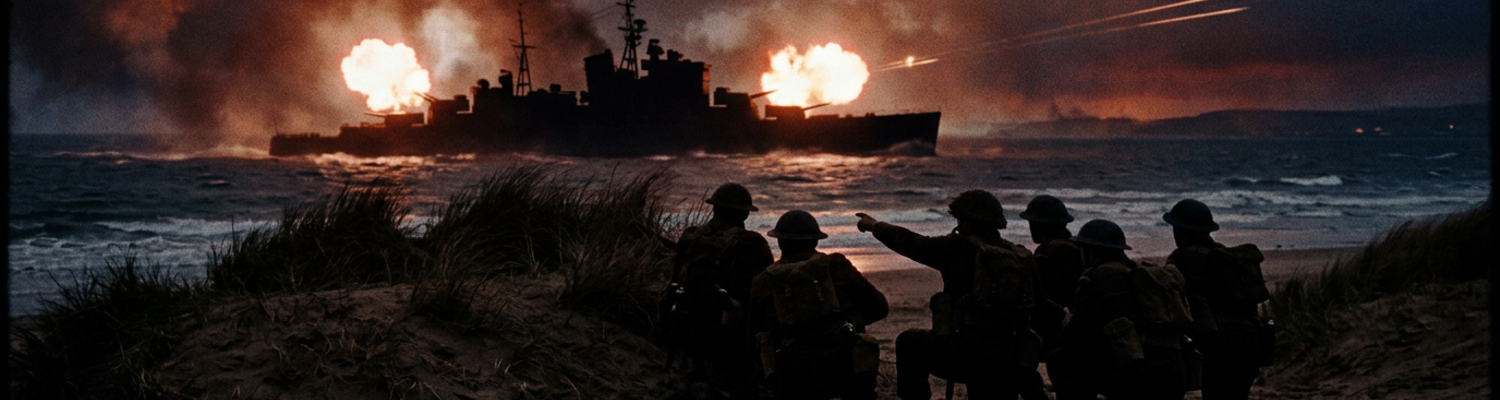
U-boats of the German navy contested the western Mediterranean sea lanes along the rocky North African coastline in late December 1942 and January 1943. Convoy KMF-5 steamed directly through these dangerous approaches toward Algeria, carrying thousands of British and American personnel alongside an advance cadre of five Women's Army Auxiliary Corps officers. Torpedoes fired by German submarine U-562 struck the ocean liner and transport Strathallan before dawn, breaching the engine compartments and forcing thousands of passengers into lifeboats in heavy swells. Flooding quickly overcame damage control efforts, and the sinking Strathallan destroyed the advance WAAC officers' personal stores, winter clothing, and equipment prior to debarkation. Crates of heavy coats, warm undergarments, office typewriters, and field desks sank into the sea, leaving the surviving personnel with only the soaked garments on their backs.
Destroyers of the Royal Navy pulled the survivors from the water, landed them temporarily at coastal bases, and placed them on crowded troop trains running eastward. Personnel landed at the port of Algiers in January 1943 facing total Quartermaster supply deficits across the entire theater. Army warehouses had directed all arriving supplies toward combat units fighting in Tunisia, leaving the base depots empty of women's shoes, cold-weather uniforms, and blankets. Supply sergeants tried to meet the emergency by distributing oversized men's field jackets, stiff denim work pants, and loose combat boots that caused painful blisters on muddy roads. Members of the company arrived at their duty stations wearing these mismatched garments over damp undergarments, carrying no replacement clothes or mess gear.
Officers at Allied Force Headquarters ordered the ill-equipped detachment to assume operational duties immediately, allowing zero days for rest or re-equipment. Personnel reported directly to cold, drafty offices in the Saint George Hotel and damp underground signal bunkers to run the theater's central communications network. Clerks and switchboard operators typed operational plans, sorted casualty logs, and decoded high-level radio traffic during continuous twelve-hour shifts in unheated stone rooms. Drafts numbed the women's fingers, causing typewriter keys to stick and slowing down urgent administrative work as temperatures plunged near freezing each night. Sustained clerical shifts under these conditions forced women to type with stiff hands, rubbing their knuckles together to restore circulation between incoming priority cables.
Luftwaffe bombers struck the port of Algiers repeatedly during night hours, interrupting these exhausting shifts and driving the workers into unheated stone basements. Exploding bombs shook the walls of the headquarters and severed communications lines, creating urgent message backlogs that typists had to clear the moment the sirens ceased. Sustained sleep deprivation and relentless work pressure pushed personnel toward severe physical and nervous exhaustion, resulting in muscle tremors, chronic respiratory infections, and sudden weeping at desks. Field doctors administered basic throat lozenges and aspirin, but they could not provide hospital beds or dry woolens. Unit supervisors stabilized the emergency by organizing twenty-four-hour hot soup lines in the hallways and rotating the most exhausted operators between day and night shifts to keep headquarters communications open.
Signal Operations at the Hotel Saint-Georges
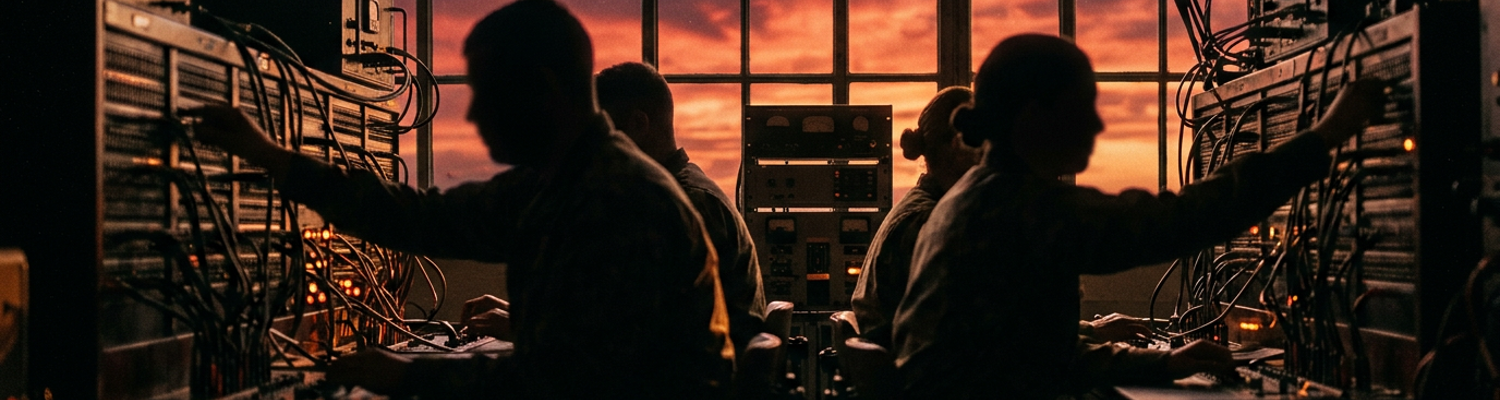
Brass patch plugs clicked rhythmically into switchboard jacks as the rotated crews took over the banks of equipment inside the Hotel Saint-Georges. Allied Force Headquarters established its central Mediterranean theater command post in this hillside resort complex under General Dwight D. Eisenhower, filling its ornate tiled salons, bedrooms, and ballrooms with military staff sections. Members of the 149th WAAC detachment took charge of the headquarters signal center, managing round-the-clock manual switchboard, teletype, and cryptographic operations across three overlapping work shifts. Wire crews ran hundreds of telephone circuits through open French windows and along marble corridors, connecting Eisenhower and his planning staff directly to frontline units pushing through Tunisian mud. Operators sat shoulder to shoulder on hard wooden stools before the tall wooden switchboard cabinets, thrusting heavy cords into glowing jacks while balancing metal headsets over ears rubbed raw by constant pressure. Blinking signal lamps lit up the dimly illuminated switchboard rooms without pause, demanding split-second hand movements from women who had swallowed bowls of broth only minutes before returning to the board.
Teletype machines clattered against the stone walls as these incoming calls fed urgent dispatches into the adjacent message center. Operators managed strategic message routing between Mediterranean theater commands, the War Department in Washington, and British signal networks across North Africa and the United Kingdom. Women working the cryptographic converters fed scrambled paper tape through cipher wheels, translating tactical reports, troop movements, and high-level strategy into clean text for delivery to Eisenhower's inner circle. Cipher keys changed on strict schedules, and any slip of a tired finger on the keyboard meant invalidating an entire encrypted transmission and restarting the encoding process by hand. Punched paper tapes spilled off the metal reels onto the floor in long coils, tangling around the operators' combat boots as bells announced fresh flash-priority cables. Static hissed over the long-distance radio circuits whenever winter storms battered the Mediterranean coast, garbling teletype characters and forcing the operators to tap out repeated verification requests across thousands of miles of wire and sea cable.
Sweat soaked through the stiff denim work jackets as the women pushed through hours of nonstop cable traffic without stepping away from their keyboards. Mental fatigue dulled reaction speeds after eight or nine hours of deciphering scrambled casualty figures and air raid warnings, causing eyes to burn and fingers to cramp around typewriter keys. Operators began confusing numbers on incoming signal slips, triggering bursts of panic whenever an urgent field order stalled between the decoding desk and the courier pouch. Supervisors watched women drop their heads directly onto their switchboard shelves between incoming rings, fast asleep for five seconds until a buzzing drop indicator snapped them back to attention. Tears broke out openly along the teletype benches when jammed paper feed rollers tore critical message strips, forcing exhausted clerks to re-type shredded communiques under the watchful eyes of impatient staff officers. Medical officers documented rising numbers of women suffering from severe tension headaches and chronic stomach pain, handing out aspirin tablets while the operators kept their hands moving over the clattering keys.
Sergeants rotated the most trembling operators off the cryptographic machines and placed them on slower administrative desks to prevent total operational failure. Detachment noncommissioned officers enforced mandatory five-minute pacing breaks on the hotel terrace, pushing workers into the cold sea air to clear their minds before returning to the clattering switchboards. Relief crews stepped into the teletype room to clear the backlog of Pentagon cables, double-checking every encrypted routing code against master code books by flashlight whenever power surges knocked out the ceiling bulbs. Mess clerks carried thermoses of black coffee and trays of dry bread directly to the operating stations so women could eat without untying their headsets. Staff officers received their morning battle summaries on time because the company sustained this rigid rotation throughout the winter nights, keeping every wire alive into General Eisenhower's planning room.
Quartermaster Supply Deficits and Improvised Field Gear
Couriers carried those completed battle summaries into the heated command suites while the 149th WAAC switchboard operators shivered through their dawn shifts in frayed, damp uniforms. Early War Department supply circulars and Quartermaster procurement schedules failed to provide female-sized field clothing and equipment for North African service. Army planners in Washington had treated the women's auxiliary as a home-front administrative trial, organizing distribution tables solely around warm-weather garrison uniforms rather than combat theater winter conditions. Mediterranean supply depots held no stocks of small shoe sizes, narrow work gloves, or fitted wool undergarments, routing all arriving cold-weather apparel straight to combat infantry fighting on the Tunisian front lines. Base supply sergeants in Algiers could only shrug at the unit requisition forms, pointing the shivering typists and switchboard operators toward wooden crates packed with bulk men's clothing designed for tall recruits.
Razor blades and borrowed pocketknives became emergency tailoring tools as detachment members tackled these stiff garments inside their freezing off-duty quarters. Women sheared inches of coarse fabric off long trouser legs, gathered wide waistbands with scrap telephone wire, and stitched heavy seams by candlelight using sewing needles from personal pocket kits. Heavy flannel shirts hung loosely over narrow shoulders, forcing clerks to roll sleeves past their elbows so excess cuffs would not drag across sticky typewriter ribbons. Footwear presented an even worse operational hazard, as loose size-nine men's combat boots slipped against bare heels, driving operators to wrap layers of torn wool and scrap cardboard around their toes to keep from stumbling down the hotel's marble staircases.
Cardboard shims and rag padding failed to prevent severe blisters, compounding the unit's physical strain as off-duty hours brought no relief from manual labor. Personnel adapted improvised field rations and makeshift billeting accommodations while handling standard military signal workloads without auxiliary support personnel. Signal operators finished grueling twelve-hour cryptographic shifts only to haul cold water buckets up four flights of villa stairs, light temperamental gasoline burners, and scrub greasy wool garments in shared metal basins. Meals consisted of cold canned meat, hard crackers, and instant broth stirred over open flames, as company members traded canned goods with local dockworkers to supplement meager Army rations. Cots squeezed into unheated classrooms and drafty monastery cells offered little rest, leaving the operators to sleep fully dressed in damp overcoats before reporting back to the switchboards.
Switchboard cables and cryptographic teletypes demanded constant attention from these half-frozen crews, who fought off deep exhaustion through the coldest pre-dawn hours. Numb fingers struggled to grip slick brass plugs, and loose boot heels clattered loudly across stone floors as couriers rushed decoded orders between hotel suites. Sickness spread rapidly through the ranks as chronic dampness, poor food, and unbroken operational stress lowered bodily resistance to respiratory illness. Company first sergeants set up kerosene lanterns beside the operating consoles so supervisors could monitor pale, shivering clerks for sudden fainting spells. Officers distributed extra wool blankets and hot canteen cups of strong black tea directly at the desks, forcing exhausted women to stay upright until the morning relief shift arrived at the hotel doors.
Freedom Exchange Operations During Kasserine Pass
Relief crews stepping past those hotel doors took over switchboard positions just as signal volume through the Allied headquarters exchange, codenamed Freedom, increased exponentially during the February 1943 Axis offensive at Kasserine Pass. German panzers overran forward American airfields and pushed through the mountain gap in western Tunisia, sending panicked commanders searching for open telephone and teletype circuits back to Algiers. Incoming flash calls jammed every copper trunk line leading into the hotel, lighting up entire rows of red and white switchboard indicators simultaneously. Staff officers crowded behind the operating benches to shout conflicting routing instructions, while the women jammed brass plugs into glowing sockets without taking time to set down their notebooks or wipe the sweat from their faces. Desperate field reports of retreating infantry, lost artillery batteries, and burning tank parks poured directly into the headsets, forcing the young operators to absorb the blunt shock of catastrophic frontline losses while maintaining their professional speaking voices. Company supervisors ordered every woman to remain locked in her chair, forcing the operators to keep pushing brass plugs into the glowing sockets to prevent the command network from collapsing.
WAAC telephone operators and cryptographic clerks worked sustained emergency shifts to decode, authenticate, and route critical combat dispatches without communication blackouts as the retreat worsened. Shifts stretched past sixteen and twenty continuous hours, keeping the same clerks pinned to their typing stands while fresh batches of encrypted cables piled up beside the cipher machines. Cryptographic clerks checked each five-letter code group against daily authenticator charts, their bloodshot eyes straining under low-wattage desk lamps to spot transposition errors before passing troop movement orders to General Eisenhower. The psychological weight of knowing that a single misread letter could send an armored column down the wrong mountain road produced severe nausea, dizziness, and uncontrollable muscle spasms in the operators' hands. Women chewed their lips raw and dug their fingernails into their palms to fight off sudden sleep blackouts while processing priority messages about ammunition shortages and emergency troop deployments. Medical attendants carried smelling salts along the teletype lines, reviving clerks who collapsed across their keyboards so they could finish typing the urgent dispatches before being helped away.
Clerks dragged themselves back to their consoles only to face equipment breakdowns, as overloaded electrical switchboards suffered severe mechanical wear, causing continuous switchboard jack failures and burnt terminal connections under peak operating loads. Heat radiating from transformer coils filled the poorly ventilated rooms with the acrid stench of scorched insulation, stinging the eyes of women who were already fighting exhaustion. Worn bronze springs inside the jack sleeves snapped after thousands of rapid insertions, deadening vital lines in the middle of urgent voice transmissions between field generals. Sparking wires behind the wooden faceplates triggered small electrical fires that Signal Corps repairmen smothered with canvas rags while operators continued plugging cords into adjacent working circuits. Women watched sparks pop inches from their fingers, yet they refused to drop their patch cords because breaking a connection meant cutting off an American battalion fighting for its life in the Tunisian mud. Technicians crawled beneath the switchboard benches on their stomachs, soldering replacement jumper cables around the operators' combat boots while cold solder flux dripped onto the stone floor.
Cables spliced by the technicians held the circuits open long enough for General Eisenhower and his staff to coordinate the arrival of British armor and American artillery reserves at the western exit of the pass. Dispatches routed through the repaired switchboards directed artillery batteries into blocking positions, halting Rommel's advance before German tanks could break out toward the Allied supply depots at Tebessa. Operators slumped over their boards as the frantic ringing finally slowed, their hands trembling so violently that supervisors had to pry the heavy brass plugs from their cramped fingers. Company medics evacuated several delirious clerks to the base dispensary with acute nervous collapse, treating their dehydration and severe tremors while fresh relief operators took over the damaged consoles. First sergeants inspected the scorched switchboard banks, logged the message totals in the company duty journal, and tagged the broken jack strips for depot replacement.
Luftwaffe Night Bombardment and Cumulative Sleep Deprivation
Mechanics from the base signal depot unloaded wooden crates of replacement jack strips into the hotel corridor just as air raid sirens sounded across the bay. German Luftwaffe bomber formations conducted recurring nighttime air attacks against the port and command facilities of Algiers throughout early 1943. Twin-engine Junkers and Heinkel bombers crossed the Mediterranean coastline under the cover of darkness, dropping high-explosive ordnance and incendiary canisters onto the crowded waterfront and the surrounding military headquarters complexes. Heavy anti-aircraft batteries along the harbor fired thousands of shells into the sky, filling the night air with shrapnel and blast flashes. Shockwaves from the exploding bombs traveled through the hillside bedrock, violently jarring the hotel foundation and shattering exterior glass across the upper balconies. Soot and cordite smoke drifted down the hallway shafts, setting off perimeter warning bells and throwing the maintenance crews flat against the tiled floor.
Plaster dust showered the signal room floor as WAAC operators remained at their switchboards and cryptographic machines during air raids to prevent disruptions in urgent frontline command traffic. Operators pulled heavy steel helmets down over their audio headsets and leaned forward against their wooden operating benches. Priority circuits carried continuous troop transport coordinates, naval convoy routing directions, and combat ammunition tallies between Allied Force Headquarters and forward airbases in western Tunisia. Dropping a patch cord or abandoning a teletype keyboard meant cutting off active division commanders during critical battlefield movements. Shrapnel hazards multiplied as jagged iron bomb fragments punched through upper shutters and ricocheted across open terraces, forcing messengers to crawl along baseboards to deliver incoming decoded slips. Women steadied vibrating switchboard plugs with both hands, ignoring the heavy blasts outside as detonations rocked their stools and sent clouds of choking white plaster dust billowing out of the ventilation grates.
Iron bomb fragments and continuous blast concussions tore through the surrounding streets throughout the night, driving off-duty personnel out of their cots and into cold basement shelters. Continuous blast concussions, shrapnel hazards, and split-shift emergency schedules caused widespread acute sleep deprivation across the company. Company commanders broke normal eight-hour rotations into fragmented four-hour shifts so personnel could reinforce switchboards during peak alert periods and bomb damage repairs. Off-duty operators lay down fully dressed in damp wool coats on hard cots, only to be awakened twenty minutes later by air raid sirens, anti-aircraft barrages, or emergency courier calls. Fragmented rest ruined normal sleep cycles, producing constant headaches, dull ringing in the ears, and severe physical exhaustion that resting on a concrete floor could not relieve. Exhausted women slumped against damp cellar walls with coats pulled over their ears while anti-aircraft batteries continued firing into the harbor mist.
Sergeants pulled shivering clerks to their feet in the cold cellars to replace fainting operators at the cipher desks. Sleep-deprived operators suffered from blurred vision and severe hand tremors, making it difficult to read five-letter encryption tables or seat telephone plugs into vibrating sockets. Several women experienced auditory hallucinations, mistaking the continuous hum of electrical coils for incoming bomb whistles, while others wept silently without stopping their work at the teletype keys. Officers distributed caffeine tablets and warm cups of salty bouillon to keep clerks conscious as morning daylight filtered through shattered window frames. Relief drivers loaded the most severely incapacitated operators into field ambulances for temporary observation at the base hospital, while the remaining detachment members wiped grease and plaster dust from their switchboard panels to prepare for the day's traffic.
Combat Attrition and High-Tempo Operational Strain
Canvas rags swept across the brass faceplates as the remaining 149th WAAC operators plugged in fresh patch cords to meet the morning surge of theater communications. Sustained twelve-to-sixteen-hour cryptographic and telecommunications shifts under air attack produced severe physical and nervous exhaustion. Operators sat locked in their chairs while German bombs detonated across the docks below, their muscles stiffening and their pulses racing as shockwaves rattled the heavy cipher machines on their desks. Prolonged strain drained the women of stamina, causing chronic stomach cramps, painful eye spasms, and involuntary hand tremors that made it difficult to slip narrow brass plugs into vibrating jack sockets. Tired clerks frequently missed dinner rations and skipped rest periods because incoming combat cables backed up the moment an operator stepped away from her console. Supervisors watched women sway on their wooden stools from extreme dizziness, yet the clerks refused to leave their stations, keeping their hands firmly clamped over their headsets to hear incoming field commands.
Paper rolls fed endless strings of urgent frontline combat dispatches into the clattering teletype receivers beside the switchboard banks. Processing constant casualty lists, emergency ammunition requests, and urgent troop repositioning orders generated profound vicarious trauma among operators. Clerks typed out verified names of dead, wounded, and missing soldiers for hours at a time, recognizing hometown acquaintances and brothers of fellow detachment members on the damp carbon sheets. Incoming flash messages brought frantic appeals from field captains whose battalions were running out of rifle cartridges and mortar rounds, forcing the women to witness the destruction of combat units in real time through brief teleprinter lines. Teletype operators decoded sudden repositioning orders for shattered infantry companies retreating across central Tunisia, absorbing the mounting fear and chaos of the battlefront while remaining trapped at their desks. Emotional numbness settled over the signal room as clerks wiped tears onto their wool sleeves and kept their fingers moving across the keyboards to keep commanders informed.
Clerks leaned toward neighboring desks to check on trembling coworkers during brief pauses in incoming message traffic. Unit personnel developed tight peer-monitoring routines and dark humor as informal coping mechanisms to prevent operational breakdowns on the line. Senior operators watched their bench partners closely for sudden warning signs of collapse, such as blank stares, frozen hands, or erratic breathing over the switchboard mouthpieces. Women exchanged quick elbow nudges, passed small tins of mints, or quietly switched seats with an overwhelmed neighbor to give her several minutes to steady her hands on an easier administrative circuit. Sarcastic jokes about torpedoes, bomb craters, and cold field rations circulated along the rows of desks between incoming cable runs, cutting through the heavy tension and drawing brief smiles from clerks on the verge of tears. Company sergeants noted the improved stability at the consoles, recorded the completed message batches in the daily operations log, and assigned fresh relief squads to take over the clattering teletypes.
Sergeants marched into the crowded signal room to unfasten heavy headsets from the ears of operators who had completed sixteen straight hours on duty. First sergeants escorted trembling clerks into quiet back corridors, handing out canteen cups of hot broth and checking each woman for fever before sending her to a basement cot. Medical corpsmen checked pulse rates and bandaged blistered fingers, but they returned every operator to duty status after four hours of rest because Allied Force Headquarters could not spare a single trained signal specialist. Exhausted women slept in their boots on damp wool blankets, rising without complaint when buglers sounded the shift change or when fresh bomb blasts shook the stone foundations of the hotel. Technicians adjusted the teletype ribbons and cleared paper jams along the operating line as the rested clerks filed back onto their wooden benches to maintain Eisenhower's communications network.
Switchboard Validation and the Transition to Military Status
Switchboards absorbed the surge of fresh signal traffic as the operators cleared backlogged queues and routed tactical directives across the Mediterranean command network. The continuous performance of the 149th WAAC Company under combat conditions proved female personnel could maintain critical theater communications without operational failure. Operating teams maintained uninterrupted circuits through heavy spring offensives, processing cryptographic ciphers, emergency ammunition requisitions, and frontline casualty reports without dropping priority connections. Wire technicians repaired burned terminal blocks and frayed cords on the fly while operators kept their hands moving across the glowing jack strips. Allied field officers confirmed that message routing speeds remained steady despite damaged equipment, and Signal Corps inspectors documented zero communication blackouts and zero compromised cipher transmissions across five months of intense Mediterranean operations. Staff officers gathered these daily transmission logs and duty rosters at Allied Force Headquarters to document the real operational reliability of the company under enemy fire.
Dwight D. Eisenhower reviewed these operational logs in Algiers and forwarded urgent cables to Washington requesting thousands of additional female soldiers for combat theater duty. Theater commanders, including General Eisenhower, cited the unit's North African operational record to overcome congressional and War Department resistance. Conservative politicians and traditionalist planners in the War Department had previously argued that women lacked the physical stamina and nervous control required to function in an active war zone. Eisenhower refuted these objections directly by presenting hard statistical proof that WAAC personnel had endured a troopship torpedoing, recurring night bombardments, and winter supply deficits without abandoning their posts. Allied staff officers attached detailed casualty, message-volume, and equipment maintenance reports to Eisenhower's personal endorsements. Allied staff couriers delivered copies of these performance evaluations to the War Department and legislative committee rooms on Capitol Hill, dropping the heavy stacks of transmission logs onto the desks of skeptical lawmakers.
Edith Nourse Rogers cited these North African signal records before congressional committees while drafting new legislation to eliminate the auxiliary status entirely. The proven necessity of the detachment directly informed the July 1943 legislative transition of the auxiliary into the full military-status Women's Army Corps. Federal lawmakers recognized that auxiliary members had faced battlefield hazards, air attacks, and disease without receiving standard military rank, equitable overseas pay, veteran disability benefits, or legal protections under the Geneva Convention if captured. Congressional opposition collapsed as committee members studied the documented message volumes and efficiency ratings established by the women in Algiers. President Franklin D. Roosevelt signed the bill into law on July 1, 1943, officially establishing the Women's Army Corps as an integral component of the Army of the United States. War Department clerks immediately printed new enlistment contracts and distributed company re-enrollment packets across the Mediterranean theater.
Sergeants carried the fresh re-enrollment packets into the signal rooms of the Hotel Saint-Georges and distributed enlistment contracts along the switchboard benches. Members of the 149th stepped forward between active shifts to sign the paperwork and take the standard soldier oath of allegiance. Signal officers administered the oath to dozens of switchboard operators and teletype clerks who traded their auxiliary titles for formal military ranks from private to captain. Women who had worked through winter cold and German air raids gained equal military standing, wartime insurance, and official recognition as soldiers of the line. Supply sergeants issued newly cast brass collar insignia depicting the helmeted head of Pallas Athena to replace the auxiliary walking-eagle pins. Personnel pinned the golden Athena insignias onto the collars of their cut-down wool uniforms and sat back down at the switchboards to manage operational traffic for the invasion of Sicily.