
Sixth Army Operational Directives for Leyte
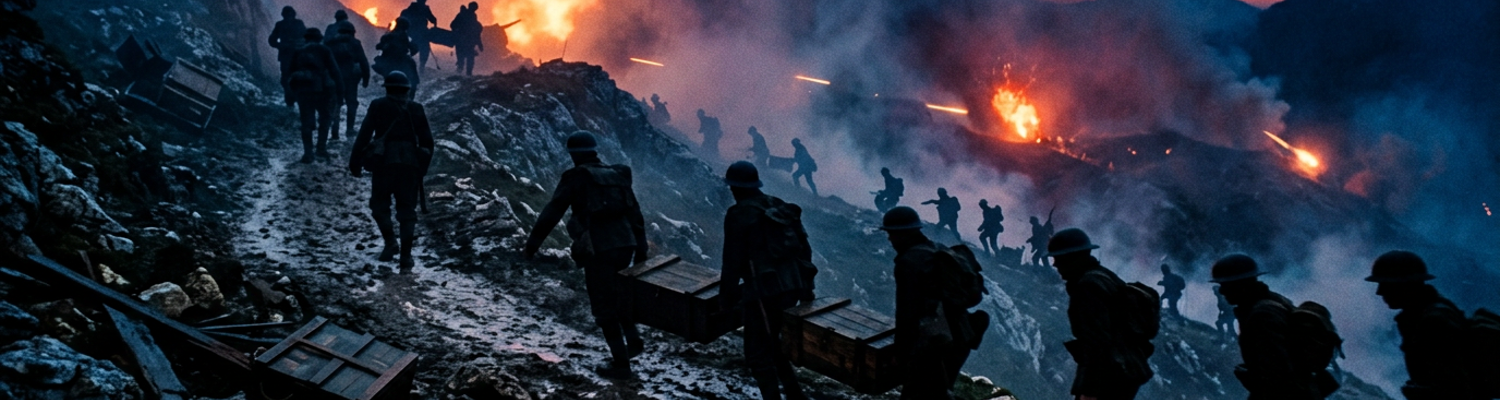
Troopers clawed through knee deep mud as torrential cloudbursts washed out the foothill trails within hours of the division jumping off into the wilderness. Commanders under General Walter Krueger committed Major General Joseph M. Swing and his 11th Airborne Division as conventional light infantry to sever Japanese transit corridors between Burauen and Ormoc. Strategists envisioned a rapid overland march across the island spine, yet the 511th Parachute Infantry Regiment and 187th Glider Infantry Regiment were thrust into the Central Cordillera without organic vehicular transport or mountain pack equipment. Soldiers slung their rifles, hoisted heavy machine guns onto their shoulders, and hauled ammunition crates by hand through churning brown sludge. Rain filled their boots and soaked their field jackets, adding physical weight to every step as the forward columns began ascending the first rocky slopes.
Slopes depicted on Sixth Army contour maps severely underestimated the vertical razorback ridges and impenetrable jungle canopy of the Mahonag Anas pass, leaving the climbing infantry unprepared for the real terrain ahead. Paper sheets failed to register how the narrow ridges dropped away into sheer stone cliffs hidden under thick vines and massive mahogany trees. Soldiers hauled themselves upward by grabbing exposed tree roots and wet bamboo stalks on slippery inclines angled at more than sixty degrees. Heavy equipment slipped from greasy hands and tumbled hundreds of feet down into tangled ravines, destroying valuable radios and field phones. Exhausted men dropped to their knees in the mud, staring up at the next vertical rock face that blocked their path toward the high pass.
Pass approaches and grueling climbs burned through the soldiers limited five day combat loads as ration crates and canvas cartridge pouches emptied rapidly. Porters recruited from lowland villages struggled behind the combat teams, but steep mountain ravines and deep mud pits forced most pack carriers to abandon their wooden supply boxes along the trail. Jeeps and light trucks sat useless miles behind the lines on flooded coastal tracks, unable to cross the swollen mountain torrents that had washed away every wooden bridge. Signal corpsmen discovered that damp jungle air corroded internal wiring, while dense layers of interlocking tree branches blocked airborne radio signals back to corps headquarters. Paratroopers and glidermen pressed deeper into the dark mountain corridors completely cut off from vehicle based resupply, carrying only what remained in their pockets and rucksacks.
Rucksacks snagged on thorn bushes as Japanese machine gunners opened fire from hidden log bunkers buried into the ridgeline spurs above the narrow trail. Snipers tied into ironwood treetops picked off squad leaders, while well placed mortar rounds slammed into the forward files pinned down in the mud. Officers under Major General Swing ordered forward units to dig in and establish a perimeter along the crest, but trenching tools barely scratched the tangle of dense roots and slick shale. Forward observers could not call in artillery barrages because the surrounding mountain walls blocked field gun trajectory and forward shells exploded harmlessly high in the tree crowns. Platoon sergeants ordered their men to fix bayonets and pile up wet logs to form a hasty defensive line before darkness covered the gorge.
Logistics Collapse Along Central Cordillera Trails
Gorge logs and wet mud provided the only cover for the shivering paratroopers, but their defensive perimeter lacked the ammunition crates and dry bandoliers needed to hold off another coordinated assault. Fresh rifle magazines and mortar rounds never reached the ridgeline because torrential monsoon downpours turned mountain footpaths into deep mud channels, immobilizing quartermaster trucks and jeep trailers within miles of the Burauen assembly areas. Drivers gunned their engines in vain as dual axle tires spun down to their differentials in thick volcanic clay along the lower tracks. Quartermaster mechanics stripped down winches and snapped steel tow cables trying to yank heavy trailers out of the wallowing bogs, but the expanding quagmire swallowed every vehicle attempting to push past the coastal staging grounds. Maintenance crews abandoned hundreds of tons of crated ammunition, replacement dry clothing, and artillery shells on the roadsides, leaving the forward rifle companies to fight with whatever cartridges remained in their web gear.
Web gear and haversacks held almost no food, forcing the men to ration waterlogged crackers and cold canned meats as hunger settled over the high perimeter. Field kitchens belonging to the 11th Airborne Division were abandoned near the coast, cutting off hot rations and dry provisions for forward combat echelons. Mess sergeants left their heavy cast iron stoves and boiling cauldrons stranded in the coastal mud, while company cooks grabbed carbines and stood guard over flooded rear area supply dumps instead of preparing warm meals. Forward riflemen along the mountain spurs subsisted on crushed combat ration biscuits that dissolved into moldy paste inside their damp pockets. Paratroopers scraped stagnant rainwater from broad jungle leaves into aluminum canteens and chewed on bitter wild plants to stave off crippling stomach cramps.
Cramps and severe weakness struck dozens of men as quartermasters attempted to bypass the drowned roadways by organizing overland pack trains. Reliance on native Filipino carrying parties broke down as vertical ascents and sheer mud slick ravines made continuous overland hand carriage unsustainable. Barefoot local carriers shouldered fifty pound wooden crates up near vertical cliffs until the relentless rain washed entire sections of the mountain path into roaring rocky gorges below. Civilian porters dropped their heavy wooden pack boards after watching fellow carriers lose their footing on grease slick shale ledges and tumble hundreds of feet down to the jungle floor. Panic over enemy ambushes and the absolute impossibility of navigating crumbly knife edge drop offs in the pitch blackness convinced the remaining carriers to scatter back into the lowlands.
Lowlands absorbed the retreating carriers, leaving abandoned wooden boxes containing vital blood plasma, rifle clips, and dry socks broken open across the steep, rain lashed ravines. Paratroopers scrambled down the slick rock faces in desperate recovery parties to salvage whatever scattered tins and loose cartridges they could pull from the mud. Exhausted troopers hauled only a fraction of those dropped supplies back to the ridge, expending more physical energy during the climb than the salvaged calories could replace. Signal specialists spliced together wet telephone wire and scavenged dead dry cell batteries from broken radios, failing to establish stable contact with rear depots or support airfields. Platoon leaders consolidated remaining rifle ammunition by stripping clips from wounded men and distributing three rounds per rifleman across the forward foxholes.
Aircraft Resupply Failures and Frontline Starvation
Foxholes filled with freezing mist as riflemen held their bayonets ready through the night, waiting for morning air drops to replenish the depleted cartridge belts across the defensive line. Low cloud banks parted briefly after daybreak, allowing twin engine cargo planes and tiny spotter aircraft to navigate the jagged peaks of the Central Cordillera and calculate release points over the ridge. Skytrain transports and Grasshopper liaison aircraft routinely dropped cargo bundles that drifted into cloud choked ravines, yielding catastrophic loss rates. Violent mountain updrafts caught the descending parachutes and swept them hundreds of yards away from the orange marker panels, leaving valuable cargo dangling out of reach in eighty foot ironwood crowns. Recovery details scrambled down slick rock walls with telephone wire and ropes to retrieve the smashed bundles, finding shattered ammunition boxes, cracked plasma vials, and ruined dry goods wedged between deep boulders.
Boulders and thick brush concealed Japanese patrols who contested the few containers that landed near the lower creek bed, machine gunning any paratroopers who ventured down from the crest to salvage food or bullets. Paratroopers pulled back into their muddy foxholes empty handed as company commanders slashed daily rations to stretch what little food remained inside the isolated perimeter. Frontline troopers were reduced to quarter rations of waterlogged hardtack and forced to forage for wild heart of palm across the ridgelines. Men chipped the gray, mold covered biscuits into small crumbs with trench knives, chewing each dry bite for several minutes to suppress gnawing hunger pains during their twelve hour watches. Squad leaders sent armed foraging parties along the forward reverse slopes under intermittent sniper fire to hack into wild palm trees with machetes and heavy bayonets.
Bayonets and machetes stripped away the tough, spiny outer bark to pry out the pale inner pith, allowing troopers to cram raw chunks of bitter fiber into their mouths simply to fill their hollow stomachs. Cooks boiled the bitter palm hearts in steel helmets over smokeless heat tablets, producing a watery, fibrous stew that provided almost no nutritional value for soldiers burning thousands of calories in the continuous rain. Rainwater accumulated in bomb craters and muddy drainage ruts along the ridge, offering the only liquid available to replace bodily fluids lost to heavy sweat and exhausting physical labor. Troopers drank untreated jungle seepage, triggering widespread bacillary dysentery, skin ulcerations, and severe physical exhaustion throughout the 511th Parachute Infantry Regiment. Bacterial infections struck riflemen without warning, producing violent stomach cramps, uncontrollable vomiting, and bloody diarrhea that forced men to relieve themselves where they lay under hostile mortar fire.
Fire and mud compounded the misery as open tropical ulcers formed on water softened ankles and shins, eating away dead skin and flesh down to the bone where muddy canvas leggings ground against raw tissue. Sick paratroopers trembled with high fevers in their shallow fighting holes, resting their chins on their rifle stocks because they lacked the arm strength to hold their weapons upright. Platoon sergeants inspected the perimeter and reassigned the sickest riflemen to static observation posts, positioning every functional rifle toward the dark tree line where enemy movement rustled in the bamboo.
Japanese Ridge Infiltration and Perimeter Isolation
Bamboo shoots snapped as Japanese soldiers from the 16th and 26th Divisions crawled through the sodden undergrowth, timing their movements to match the continuous roar of overhead rain. Imperial Japanese Army elements utilized dense rain squalls and ridge ravines to infiltrate isolated paratrooper strongpoints across the crest. Deep erosion gullies and boulder choked water channels provided natural covered routes where American heavy weapons could not depress their barrels low enough to sweep the approaches. Infiltration squads hauled rifles, satchel charges, and magnetic mines through the sludge, exploiting wide gaps between disconnected paratrooper foxholes. Japanese teams cut through thick tangles of creepers to reach the rear of forward listening posts, severing field telephone cables with hand axes and leaving frontline squads cut off from their company headquarters.
Headquarters lost contact as telephone wires lay dead in the mud, forcing platoon leaders and forward observers to step into the open to direct defensive fire with hand signals. Snipers tied into trees targeted platoon leaders, forward observers, and litter teams to disrupt tactical command networks across the slope. Marksmen lashed their legs and chests to the trunks of tall ironwood and banyan trees with heavy hemp rope, wrapping palm fronds around their helmets and shoulders to blend into the wet foliage eighty feet above the forest floor. Smokeless propellant concealed their elevated positions as high velocity rifle rounds cracked through the canopy without revealing a trace of smoke. Squad leaders who rose to rally their riflemen or identify enemy positions collapsed back into the muck with fatal head wounds.
Wounds bled freely as stretcher bearers attempting to carry injured men toward battalion collection points took bullets through their shoulders and knees, forcing combat medics to abandon the open trail and drag casualties through the brush on wet ponchos. Ponchos soaked through with blood and muddy water accumulated near the battalion aid station as night settled over the mountain. Night infiltration parties repeatedly harassed airborne outposts to pinpoint defensive machine gun positions and battalion command posts. Small Japanese raiding squads lobbed hand grenades against perimeter log barricades and fired brief, erratic bursts from automatic weapons to provoke return fire from the foxholes. Paratroopers who lost their composure and squeezed their triggers in the pitch blackness betrayed their exact firing arcs to enemy spotters concealed in the undergrowth.
Undergrowth concealed Japanese scouts who noted every muzzle flash against the dark hillside, calculating precise firing stakes for knee mortar crews waiting down in the rocky creek beds. Mortar shells began slamming into American perimeter strongpoints within minutes, blowing apart log revetments, killing key weapons crews, and scattering hot shrapnel through the mud. Mortar fragments tore through canvas command shelters and severed the remaining dry cell radio cables, leaving company commanders completely isolated in their fighting holes. Paratroopers crouched shoulder to shoulder in the watery clay, clutching their bayoneted rifles as unseen enemy teams crawled along the perimeter wire. Japanese riflemen tossed smoke pots and small explosive charges directly into American weapon pits, blinding the defenders and forcing them to fight hand to hand in the dark.
Bayonet Counterthrust at Mahonag Drop Zone
Darkness broke as rifle bolts slammed forward through the driving rain when Japanese assault forces attacked the airborne perimeter around the stump studded Mahonag clearing in early December 1944. Japanese infantrymen burst through the shattered bamboo screen in shouting assault waves, hurling fragmentation grenades into forward fighting holes and endangering the battalion casualty collection point located just behind the frontline foxholes. Dozens of severely wounded paratroopers lay immobilized on muddy litters under waterlogged canvas tarps as enemy rifle fire shredded the shelter ropes and smashed open wooden plasma crates. Combat medics drew their issue pistols and fired into the darkness to shield their patients while the defensive line gave way under concentrated Japanese small arms fire and knee mortar barrages. Frontline riflemen along the western rim of the clearing expended their remaining small arms rounds at point blank range, firing their final thirty caliber clips and carbine magazines into the charging attackers until their firing pins struck empty chambers.
Chambers clicked empty as brass casings and ejected clips vanished beneath the churning brown mud, allowing infiltrating Japanese soldiers to surge within twenty feet of the battalion aid tents. Steel bayonets flashed in the dark rain as frontline paratroopers executed an immediate, violent five minute close quarters countercharge with bayonets and trench knives. Airborne riflemen plunged directly into the oncoming Japanese files, driving ten inch blades into enemy soldiers before the infiltrators could level their long rifles. Men grappled chest to chest in the slick clay between charred ironwood stumps, using brass knuckled trench knives and sharpened entrenching tools to strike down Japanese assault troops who fought to clear a path toward the wounded. Squad leaders and walking wounded threw themselves into the melee, swinging heavy walnut rifle butts and steel helmets against opposing soldiers to halt the forward momentum of the Japanese charge.
Charge momentum broke as soldiers of the Imperial Japanese Army shattered under the violent shock of the bayonet thrust, fleeing in disarray as the rapid counterattack routed the infiltrating force back toward the gorge. Surviving Japanese infantrymen threw down their weapons and scrambled down the slick rock walls of the ravine, leaving dozens of casualties sprawled across the stump studded drop zone. Counterattacks pushed the enemy completely out of the inner perimeter, preventing the overrun of the regimental aid station and sparing the defenseless casualties who filled the battalion casualty collection point. Exhausted paratroopers collapsed against wet logs to catch their breath while combat medics rushed forward to pull wounded riflemen out of the puddles and drag them under surviving shelter tarps. Torn canvas and bloodied bandages littered the trampled mud where the Japanese spearhead had come within yards of wiping out the division medical personnel.
Personnel and mortar crews stood guard over the central supply pits only yards away from the aid station, successfully safeguarding remaining mortar ammunition from destruction or capture by enemy demolition teams. Weapons squads quickly hauled the waterproof green ammunition crates out of the rising rainwater, wiping mud off the cylindrical fiber containers and stacking the high explosive rounds beside their tubes. Gunners shoved their heavy steel baseplates deep into the soggy clay, using hand levels and sight brackets to register defensive firing stakes on the ravine paths where the Japanese remnants were regrouping. Assistant gunners uncapped finned mortar shells and adjusted propellant increments, preparing final protective fire patterns to hammer the jungle approaches at the first sound of renewed enemy movement. Riflemen slid back into their drenched foxholes along the edge of the clearing, wiping blood and grit from their bayonet blades before locking their empty rifle bolts forward to face the dark trees.
Casualty Evacuation Breakdown and Strategic Aftermath
Trees dripped cold water as medics struggled to patch shattered bones and torn flesh inside the aid tents, listening to groans from the wounded mix with the sound of falling rain. Litter evacuation across the mud bound Cordillera required up to forty infantrymen per wounded soldier, as teams of six men at a time could only haul a stretcher a few yards up slick vertical mud banks before slipping backward into ravines. Company commanders simply did not possess that kind of spare manpower while fighting off continuous Japanese counterattacks. Medics handed pistols and loaded carbines to bandaged paratroopers who could still see and pull a trigger, leaving casualties to assist in their own perimeter defense from their litters. Shrapnel torn soldiers propped their rifle barrels on dirt revetments and watched their assigned sectors of the brush, conserving their few remaining cartridges to defend against further enemy rushes into the aid station.
Station perimeters held firm as paratroopers kept their weapons aimed down the razorback approaches, watching daylight reveal scores of dead attackers scattered across the muddy slopes. Paratroopers of the 511th Infantry Regiment clung to the high ground west of Mahonag through freezing nights and relentless mortar fire, refusing to surrender the ridge that blocked the mountain corridors. Squads rotated through observation posts, chewing on bark and boiled roots while cleaning mud out of their weapon actions with frayed shoelaces and dry bamboo splinters. Patrols pushed short probes down the western spurs, knocking out enemy snipers and keeping Japanese staging units from massing for another assault against the battered crest. Company runners scrambled between the foxholes with handwritten orders from Major General Swing, instructing every platoon to conserve their ammunition and hold the line.
Line defenders scanning the western valleys picked up the dull thud of heavy American artillery echoing from the coastal plains around Ormoc. Airborne forces held the high ground west of Mahonag until linking with 7th Division forces pushing east from Ormoc Bay. Lead patrols from the 7th Infantry Division slashed their way through the bamboo breaks and made physical contact with forward airborne outposts on the reverse slope of the ridge. Soldiers in clean uniforms and dry boots hauled packboards loaded with combat rations, blood plasma, and crates of thirty caliber ammunition up to the starved paratroopers who had held the crest for weeks. Stretcher teams from the relieving infantry regiments immediately began moving the critical casualties down cleared trails toward coastal field hospitals, finally lifting the siege of the Mahonag perimeter.
Perimeter logs and medical evacuation records from the Cordillera campaign gave War Department planners raw data to determine how light airborne units had nearly disintegrated on the peaks. Supply breakdowns at Mahonag forced military leaders to revise airborne doctrine regarding unsupported sustained ground combat in vertical tropical environments. Tactical manuals had assumed that paratroopers could operate indefinitely as standard foot soldiers without organic transport or heavy pack trains, but the mud and jungle had proven that airborne units would starve and run out of ammunition within days if cut off from mechanical supply lines. Planners rewrote logistics protocols to mandate dedicated mountain pack units, specialized airdrop recovery teams, and rapid link up schedules for future airborne deployments in the Pacific. Army engineers began designing lightweight aerial delivery containers and rugged tactical vehicles capable of crossing deep jungle mud before airborne divisions received combat assignments on Luzon.