
Grounding on Bligh Reef and Initial Crisis
Glaciers and sheer granite cliffs wall off Prince William Sound from the Alaskan mainland, creating an isolated subarctic labyrinth where sub-zero winds and floating icebergs constantly threaten maritime navigation. Narrow shipping corridors force deep-draft tankers through tight waterways flanked by submerged reefs and powerful tidal surges that can push a heavily laden vessel off course within minutes. Sub-freezing winter gales routinely blast the sound with freezing sea spray that glazes metal deck machinery in thick ice, while sudden fog banks roll off coastal peaks to erase visual landmarks. Navigators depend heavily on coastal radar beacons and channel buoys to guide vessels through the Valdez Narrows out toward open gulf waters. Supertanker Exxon Valdez entered this hazardous waterway loaded with fifty-three million gallons of crude oil, veering east of normal traffic lanes to avoid chunks of floating glacial ice.
Rudder indicator gauges showed the massive ship turning too slowly to avoid the underwater shelf during a critical five-minute window between 12:04 AM and 12:09 AM on March 24, 1989. Third Mate Gregory Cousins ordered a hard right rudder command to swing the bow clear of the shallows. Forward momentum of fifty-three million gallons of cargo counteracted the steering assembly and kept the hull sliding relentlessly toward the hazard. Helmsman Robert Kagan watched the compass heading creep by single degrees while the vessel closed the distance to the submerged rocks. Bligh Reef tore through the single steel hull at 12:09 AM, lifting the vessel six feet above the seabed and pinning the keel directly on the stone pinnacle. Crude oil erupted through the torn plating under heavy hydrostatic pressure, drowning the surface in a thick layer of toxic sludge that began drifting across open channels.
Booms deployed by commercial contractors failed immediately to contain the heavy black emulsion pooling around the stricken tanker. Alyeska Pipeline Service Company crews lacked sufficient skimmers, barge capacity, and anchored barrier curtains to encircle the massive discharge during the initial window of calm seas. Gale-force storm winds hit Prince William Sound three days after the collision, driving forty-foot swells that snapped towlines, tore rubber boom segments apart, and tossed private recovery craft back to sheltered harbors. Rapid spread of crude oil across sensitive fisheries contaminated millions of salmon eggs, damaged vital herring nurseries, and choked hundreds of miles of remote shoreline. Local fishermen launched small wood and fiberglass boats to defend salmon hatcheries in Sawmill Bay and Knight Island Passage, but the advancing oil overwhelmed their improvised lines of absorbent pads.
Directorate of Military Support planners in the Pentagon activated an emergency operations cell when the total collapse of commercial response assets left local defenders entirely helpless. Civilian contractors and state authorities had completely run out of transport vessels, reliable field radios, and heavy equipment capable of surviving the brutal weather in Prince William Sound. Coast Guard commanders requested Department of Defense intervention to salvage the cleanup, prompting the Secretary of the Army to deploy military logistics assets under DOMS oversight. Air Force C-5 and C-141 transport planes immediately began staging specialized Navy open-ocean skimming systems and tactical communications shelters for rapid airlift to Elmendorf Air Force Base in Anchorage. Army logisticians took charge of arranging heavy sealift craft, military berthing barges, and fuel supply networks to sustain thousands of civilian and military workers operating along the isolated coastline.
DOD Executive Agent Designation and Presidential Directives
Barges and fuel supply craft staged across Prince William Sound remained paralyzed by peacetime federal statutes that prevented military commanders from committing active-duty logistical assets without top-level civilian authorization. Commercial contractors and regional Coast Guard officers were rapidly exhausting their containment equipment, yet inter-service rivalry, funding restrictions, and bureaucratic delays stalled heavy defense resources in hangars and naval bases across the nation. Existing disaster protocols under the National Contingency Plan lacked clear legal mechanisms for coordinating multi-service armed forces during an industrial oil spill of this magnitude. President George H.W. Bush resolved this operational paralysis on April 7 by issuing a domestic assistance directive that designated the Secretary of the Army as the Department of Defense Executive Agent for the entire cleanup operation. This executive order legally empowered the Secretary of the Army to direct all military branches, obligate defense funding, and deploy specialized logistical assets in direct support of the Federal On-Scene Coordinator in Alaska. Teleprinters pulsed the presidential mandate through dedicated encryption cables directly into the Pentagon basement, where the Army staff maintained its crisis monitoring stations.
Major General J.D. Smith pulled the decoded presidential message from the teleprinter terminal inside the subterranean Army Operations Center at 1:15 PM on April 7, 1989, initiating a critical five-minute window that pivoted the entire military intervention. Smith marched onto the main watch floor at 1:16 PM, silencing fragmented inter-agency phone calls and verbally activating the Director of Military Support Joint Task Force. Action officers representing the Army, Navy, Air Force, Marine Corps, and Coast Guard reported to the central command table at 1:17 PM, establishing an integrated tasking cell with direct communications to the command post in Valdez. Smith initialed the operational activation ledger at 1:18 PM, formally assuming authority as the action agent responsible for coordinating, prioritizing, and assigning every Department of Defense asset dispatched to Alaska. Watch officers broadcast high-priority execution orders across secure military channels at 1:19 PM, clearing bureaucratic roadblocks and transforming scattered service support into a synchronized joint logistics campaign before the operations clock turned to 1:20 PM.
Depots throughout the country responded immediately to the broadcast tasking orders by staging heavy equipment that private contractors had failed to supply. Major General Smith ordered the Army Corps of Engineers to prepare the hopper dredges Yaquina and Essayons for ocean duty, converting their high-volume suction pumps to ingest emulsified crude from passages choked with oil. Navy salvage detachments loaded open-sea skimmers and heavy mooring winches onto Air Force C-5 and C-141 transport planes under the new DOMS flight priorities, funneling tons of specialized gear straight into Elmendorf Air Force Base. Army logistics coordinators leased commercial berthing craft and dispatched self-contained floating quarters to Prince William Sound, solving the acute housing shortage for hundreds of civilian cleanup laborers and military technicians. Communications specialists installed deployable satellite and high-frequency radio terminals along the Valdez shoreline, feeding real-time equipment status reports directly back to the Pentagon watch floor. Smith validated the comprehensive logistics distribution plan at the end of the shift, ensuring that fuel, food, and protective suits flowed continuously to isolated shoreline staging sites throughout the contaminated sound.
Establishment of Alaska Oil Spill Joint Task Force
Pallets of rubberized protective suits, emergency food rations, and modular fuel bladders landed on the frozen concrete at Elmendorf Air Force Base near Anchorage as Department of Defense directives shifted logistics execution directly to regional commanders. Lieutenant General Thomas G. McInerney, commander of Alaskan Command, assumed authority as the Defense Senior Representative to direct all military resources supporting the Federal On-Scene Coordinator. McInerney confronted a fractured operational landscape where incoming transport aircraft clogged the Anchorage flight line while civilian cleanup crews three hundred miles away in Prince William Sound lacked basic staging gear. Commercial transport firms could not handle the sudden influx of outsized military hardware arriving from continental bases, and regional Coast Guard stations lacked the high-frequency radio equipment needed to track military flights. McInerney moved his joint staff into the Alaskan Command operations center, establishing the Alaska Oil Spill Joint Task Force to fuse Army, Navy, Air Force, and Marine Corps assets into a unified operational command.
McInerney unrolled a regional topographic chart across the center briefing table at 8:00 AM on April 10, 1989, initiating a critical five-minute window that synchronized military command, control, and staging infrastructure across south-central Alaska. McInerney pointed directly to the bottleneck at the Anchorage airfield at 8:01 AM, cutting off an inter-service debate over transport jurisdictions and ordering Air Force cargo handlers to clear arriving aircraft immediately without waiting for commercial bills of lading. Navy liaison officers spliced dedicated tactical communication lines into the joint command switchboard at 8:02 AM, establishing instantaneous voice and data contact between Elmendorf, the Coast Guard headquarters in Valdez, and salvage vessels operating off Bligh Reef. Army logistics officers grabbed the operations desk telephones at 8:03 AM to commandeer military flatbed trucks from Fort Richardson, establishing an around-the-clock overland supply corridor along the Glenn and Richardson highways to bypass ice-blocked coastal waters. Air Force loadmasters initialed an emergency cargo transfer order at 8:04 AM, redirecting heavy forklifts to pull ocean-skimming booms straight from aircraft cargo bays onto the idling Army trucks. McInerney signed the operational tasking directive at 8:05 AM, locking the inter-service staging infrastructure into place and transforming Elmendorf into the primary logistics springboard for the entire theater.
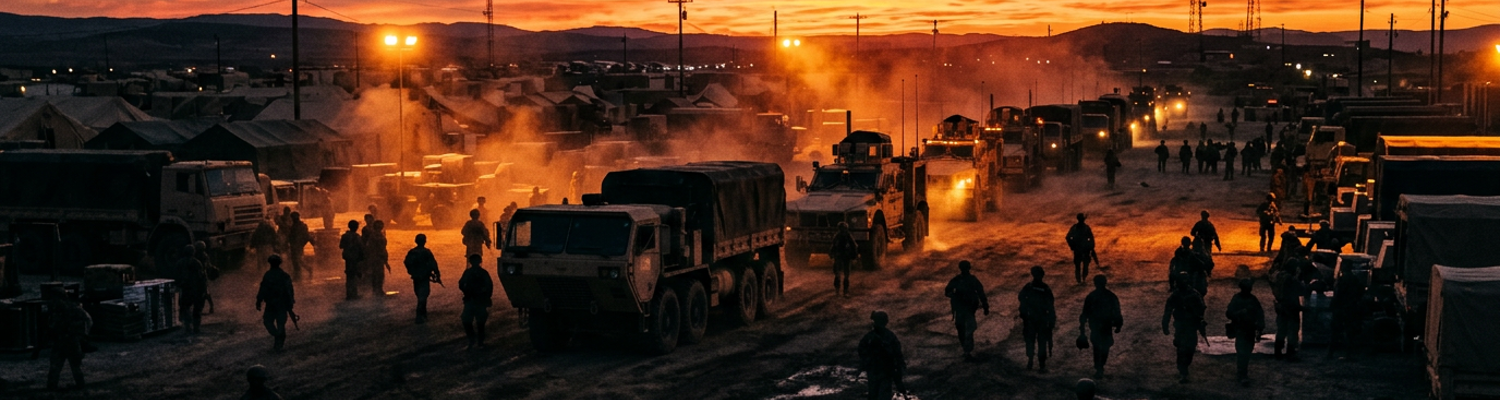
Forklift operators from the 616th Aerial Port Squadron swarmed the Elmendorf flight line immediately after the directive took effect, stripping cargo pallets from arriving Air Force C-5 Galaxy and C-141 Starlifter transport planes. Ground crews transferred heavy Navy Marco Class V oil skimmers, sixteen-foot mooring buoys, and miles of containment barrier directly onto military flatbed trailers bound for the tanker terminal at Valdez. Soldiers from the 6th Infantry Division at Fort Richardson secured the heavy machinery with steel chains and drove convoys through blizzard conditions over Thompson Pass, delivering the first wave of containment hardware to the coast within twelve hours. Joint Task Force engineers erected intermediate maintenance shelters and diesel fuel bladders along the highway route to keep transport trucks operating continuously without straining civilian gasoline stations. Supply specialists established forward logistics depots at Seward, Homer, and Kenai, positioning reserve barrier reels and decontamination tents along the western approaches to intercept floating crude before swells pushed slicks into Cook Inlet. Signal teams from the Army and Marine Corps climbed coastal promontories to install tactical microwave repeaters and satellite antennas, establishing a reliable command-and-control net that reached across hundreds of miles of mountainous shoreline.
Sailors aboard the amphibious transport dock USS Juneau anchored off Valdez to operate the forward floating command post, linking shipboard radar suites directly into the Elmendorf communication grid. Dock landing ship USS Fort McHenry arrived alongside the Juneau several days later, ballasting down its stern gate so landing craft could deploy skimming gear and ferry cleanup crews directly onto fouled beaches. Shipboard berthing compartments housed hundreds of civilian workers and military technicians who had previously slept on overcrowded pier sheds or open workboats in freezing subarctic drizzle. Mechanics in the shipboard well decks serviced fouled outboard engines, while medical personnel established decontamination stations to scrub toxic oil residue from protective suits and rubber rafts. Lieutenant General McInerney monitored the offshore flotilla on the Elmendorf status board, directing replenishment flights and supply barges to keep the joint fleet operational across the expanding spill zone.
Airlift Operations for Navy Salvage Systems
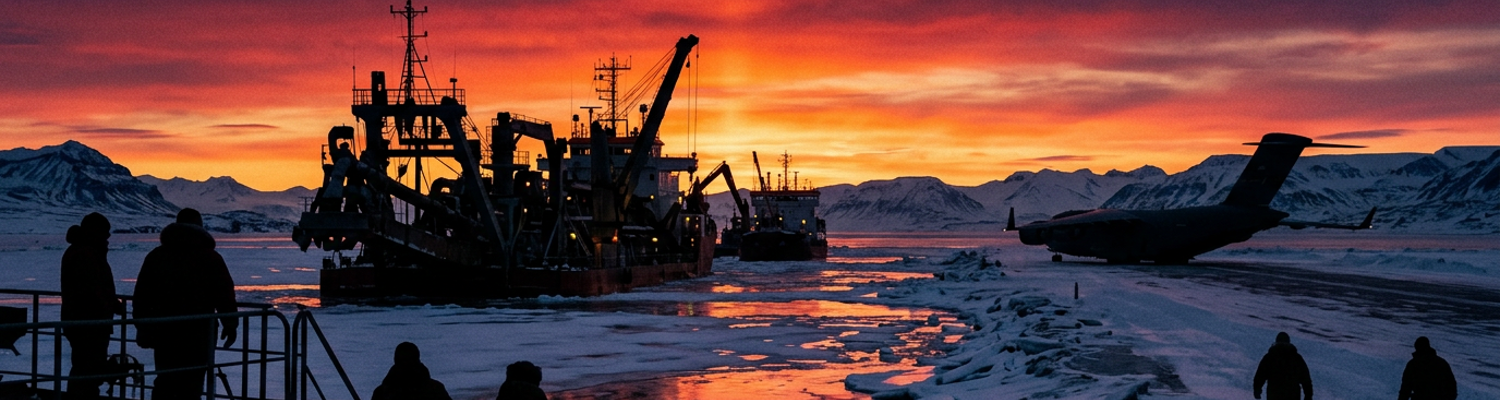
Transport aircraft from Military Airlift Command answered McInerney's logistics directives by mounting emergency C-5 Galaxy and C-141 Starlifter cargo sorties into Elmendorf Air Force Base and regional airfields. These heavy airlifters established a rapid continental pipeline from naval supply depots in Virginia and California, hauling mission-critical assets that civilian contractors could not provide. The strategic airlift of U.S. Navy Supervisor of Salvage skimming systems, heavy mooring equipment, tactical communications vans, and berthing vessels to support Prince William Sound operations moved forward with maximum urgency. Riggers tensioned heavy steel chains and cargo straps across equipment skids to keep multi-ton skimmers, communications shelters, and berthing modules stable through severe subarctic turbulence. Pilots wrestled the laden transports through freezing cloud layers and gusting winds over the Chugach Mountains, touching down on the icy Anchorage runways before sub-zero crosswinds could glaze cargo ramps in ice.
Ice froze the rear cargo door actuators on an incoming C-5 Galaxy at 2:10 PM on April 12, 1989, initiating a critical five-minute window that threatened to paralyze the entire logistics pipeline. Technicians sprinted to the stalled aircraft at 2:11 PM with thermal blowers and bronze mallets to free the jammed door mechanisms, while two fuel-starved C-141 Starlifters circled over Cook Inlet awaiting clearance. Mechanics bypassed the frozen hydraulic valves at 2:12 PM, releasing the manual pressure locks and dropping the heavy cargo ramp directly onto the concrete apron. Aerial port handlers drove tow tractors up the ramp at 2:13 PM, chaining the heavy Navy skimming frames to tow vehicles and dragging them out of the cargo hold. Flight line specialists winched tactical communications vans and mooring winches onto awaiting transport trailers at 2:14 PM, pulling the bulky loads entirely clear of the active taxiway. Ramp marshals guided the cleared Galaxy into an auxiliary parking slot at 2:15 PM, reopening the tarmac and allowing the low-fuel Starlifters to land immediately on the active runway.
Starlifter transports touched down minutes later, taxiing to the cargo apron to begin the rapid offload of secondary salvage gear and support personnel. Logistics officers dispersed the arriving hardware between Elmendorf and forward staging airfields at Kenai and Valdez to avoid bottlenecking a single runway. Ground crews winched additional Supervisor of Salvage skimming systems and diesel hydraulic power packs onto military flatbed trucks for rapid transit over mountain passes toward Prince William Sound. Technicians unloaded ruggedized tactical communications vans and immediately tied their high-frequency radio systems into the Alaskan Command satellite relay net. Port handlers transferred specialized mooring equipment and anchor gear directly into cargo holds of regional shuttle aircraft bound for coastal distribution nodes. Mechanics working under portable floodlights serviced every recovered skimmer and pumping unit on the apron to ensure the gear arrived at the oil slicks ready for immediate deployment.
Convoys laden with the inspected salvage machinery rolled out of the base gates toward the marine terminals at Whittier, Seward, and Valdez. Crane crews at the docks transferred heavy mooring anchors and containment booms into workboats while outfitting chartered berthing vessels with airlifted power generators, fresh water bladders, and supplies to house hundreds of shoreline cleanup workers. Navy salvage masters placed the delivered skimming systems into containment zones surrounded by heavy boom, linking hydraulic lines to onboard recovery tanks. Communications vans positioned along rocky headlands began relaying real-time oil coordinates from coastal patrol craft directly to skimmer operators maneuvering in the oil slicks. Workboats dropped the heavy mooring equipment into position around threatened coves and fish hatcheries, anchoring deflection barriers against powerful tidal currents before the next tide cycle pushed the slick ashore.
Mobilization of Army Corps Hopper Dredges
Petroleum mousse rolled directly over the skirts of the newly anchored barriers, overwhelming standard civilian boom and skimming hardware with thick, emulsified sludge that lightweight vacuum pumps could not draw. Commercial skimmers choked on the dense mixture of sea water and crude oil, forcing emergency response commanders to seek industrial dredge equipment capable of swallowing massive volumes of heavy debris. Joint Task Force leaders coordinated with civilian authorities to execute the emergency deployment of Portland District hopper dredges Yaquina and Essayons to Prince William Sound and Shelikof Strait. Essayons prepared heavy ocean equipment in Oregon before getting underway, while the shallower draft Yaquina completed its voyage first, steaming directly into the thickest fields of crude oil near Knight Island.
Yaquina lowered its twin dragarms into the floating oil field at 10:00 AM on April 21, 1989, initiating a critical five-minute window that transformed an untested dredging experiment into a functional recovery system. Dredge operators throttled up the suction pumps at 10:01 AM, but the downward-facing dragheads drew clean seawater from beneath the slick and failed to capture the floating crude. Deck engineers signaled the bridge at 10:02 AM, shutting down the pump turbines and ordering the crane crew to winch the thirty-five-foot steel arms above the waterline. Riggers attacked the mounting brackets with pneumatic wrenches at 10:03 AM, unbolting the heavy intake heads and rotating them one hundred and eighty degrees so the suction mouths faced upward toward the surface. Crane operators lowered the inverted dragheads back into the oily water at 10:04 AM, resting the intake lips directly against the surface mousse. Chief engineers re-engaged the diesel pumps at 10:05 AM, establishing immediate suction that drove sixty-three thousand gallons of emulsified sludge into the internal hopper bins during the first operational test.
Radio transmitters aboard Yaquina beamed the draghead modification blueprints directly to Essayons as the larger ship arrived in Prince William Sound. Technicians aboard Essayons immediately inverted their own dragheads, utilizing the ship's powerful one-thousand-six-hundred-fifty horsepower pumps to vacuum dense slicks off Gore Rock and Resurrection Bay. Civilian fishing boats worked alongside the dredges to herd drifting oil into circular boom pockets, allowing the dredge crews to position their suction heads directly inside the concentrated pools. Essayons then sailed southwest into Shelikof Strait, where gale winds had pushed broken oil patches more than three hundred miles from the original grounding site on Bligh Reef. Heavy ocean swells battered the hull in the open strait, but the large dredge kept operating around Sutwik Island, vacuuming floating mousse and collecting bags of oily beach debris loaded from small skiffs.
Hoppers aboard both vessels accumulated nearly three hundred eighty thousand gallons of oil and one hundred eighty cubic yards of solid waste during the offshore campaign. Transfer pumps reversed their flow cycles to discharge the dense mousse into commercial tank barges moored alongside the dredges in protected bays. Dredge mechanics scraped thick asphalt crust off the intake grates and flushed the pump impellers with solvent between skimming runs to prevent the emulsified crude from solidifying in the machinery. Joint task force logisticians maintained a continuous pipeline of fuel, food, and replacement parts to both ships, ensuring uninterrupted skimming across the outer passages. Winch operators secured the dragarms against the hull cradles at Seward, connecting high-pressure steam lines to melt the remaining oil crust from the dredge pipes and hoppers.
Drag Head Inversion Decision
Steam clouds billowed across the deck plating as scalding condensate flushed oily sludge out of the intake grates and into drainage troughs along the pier. Dredge mechanics and Army Corps of Engineers specialists gathered around the exposed pipe joints to inspect the structural wear caused by pumping heavy petroleum through machinery designed for coastal sand. Standard riverbed drag heads were engineered to plane across underwater silt beds, driving their heavy intake nozzles downward into mud under dozens of tons of ballast weight. That downward orientation proved disastrous in open water because the suction orifices sat beneath the slick, drawing millions of gallons of clean seawater from below while leaving buoyant petroleum mousse floating untouched on the surface. Operating the pumps at full throttle without capturing crude oil wasted precious generator fuel, filled the shipboard collection hoppers with useless water, and threatened to end the Army dredging mission before it produced results.
Corps civilian engineers and shipboard officers huddled beside the portside drag arm at 8:15 AM to resolve the intake failure during a high-stakes, five-minute field engineering conference. Project leaders laid mechanical blueprints over an equipment crate at 8:16 AM, demonstrating that raising the trailing suction arms with normal cable winches simply tilted the intake mouths further away from the surface film. Dredge specialists proposed a radical structural inversion at 8:17 AM, arguing that unbolting the multi-ton drag heads, rotating them one hundred eighty degrees, and re-bolting them upside down would turn the downward nozzles into upward-facing scoops. Skeptical deck officers warned at 8:18 AM that an upward-facing intake would suck in atmospheric air and cavitate the high-volume diesel pumps, destroying the impeller housings within seconds if wave swells broke the liquid seal. The chief engineer resolved the debate at 8:19 AM by deciding to invert the drag heads immediately, gambling that precise hoist control could keep the flipped intake lips skimming just below the oil layer without breaking suction.
Riggers uncoupled the heavy hinge pins with pneumatic mallets to rotate the massive steel intake castings, setting up the delicate mechanical tuning required to operate the inverted drag heads. Technicians on the Yaquina then began the granular mechanical adjustment of the trailing suction arm hoists to align suction openings directly with floating mousse. Shipboard operators replaced the coarse cable brakes with sensitive friction calipers on the forward and aft hoist drums, giving the winch drivers millimeter-level control over the sixty-foot trailing arms. Mechanics adjusted the counterweight limit switches and hydraulic tensioning valves on each hoist line so the suspended steel arms would not sink under their own deadweight into clean water. Winch crews made micro-adjustments to the secondary davit falls, leveling the inverted intake lip exactly three inches beneath the surface plane of the water to form an artificial skimming weir.
Tension gauges on the winch control console stabilized at ninety-eight percent of the arm weight, confirming that the adjusted hoists were carrying the full mass of the inverted drag heads instead of letting them plunge into the seabed. Yaquina cast off from the Seward pier and lowered the reconfigured arms into the thickest mousse fields drifting outside Resurrection Bay. Suction pumps engaged at low idle, pulling a continuous sheet of dark brown emulsified crude over the upward-facing lips and directly into the internal hopper bins with almost no seawater contamination. Winch operators monitored ultrasonic depth sensors on the bridge, trimming the hoist cables inch by inch as ocean swells lifted and dropped the hull against the oil slick. Dense crude poured into the cargo holds at twelve hundred gallons per minute, proving that the inverted drag heads and recalibrated hoists could harvest industrial quantities of floating waste from the subarctic sea.
Recovery Operations for Viscous Crude Mousse
Hopper compartments deep within the hull collected the surging influx of brown mousse as Yaquina maintained steady forward momentum along the edge of the slick. Dredge operators throttled the diesel engines down to two knots, allowing the inverted suction lips to skim the surface without throwing bow waves that would scatter the concentrated oil. Essayons joined the operation shortly afterward, deploying its own modified trailing suction arms to scour the open waters where wind and tide concentrated heavy mats of mousse. Continuous operation of the inverted drag heads in Prince William Sound and Shelikof Strait to draw viscous oil directly into onboard hopper compartments kept both ships running through day and night recovery cycles. Winch crews stood watch in freezing rain to adjust hoist tensions against five-foot ocean swells, preventing the flipped intakes from dipping too low into clean water or lifting into open air.
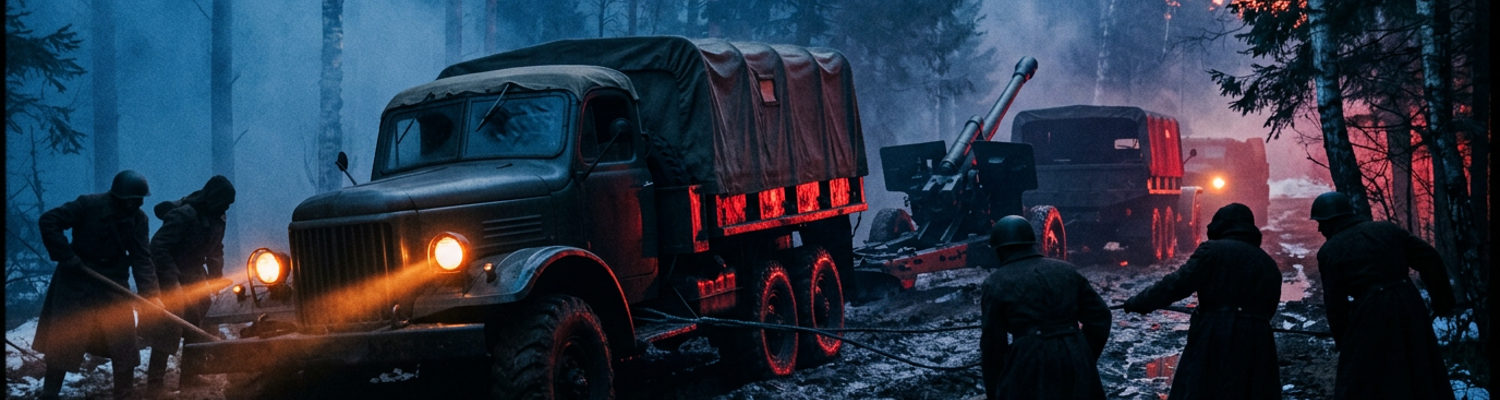
Steel hoist cables absorbed the violent pitching of the hull, flexing across secondary sheaves to keep each inverted drag head riding flush against the oily swell. Heavy swells in Shelikof Strait pushed a dense barrier of floating debris directly toward the starboard drag head of Essayons at 1:10 PM, threatening to choke the suction intake with waterlogged drift timber. Dredge mechanics detected a sudden surge in pump vacuum at 1:11 PM and immediately alerted the bridge to cut main propulsion. Riggers dashed onto the catwalk at 1:12 PM, using long handling poles and high-pressure water lances to push floating logs away from the upward-facing scoop before the wood could lodge in the intake grate. Deck officers throttled the water cannon at 1:13 PM, blasting a clear channel through the debris field while the dredge glided forward under residual momentum. Operators restored full suction power at 1:14 PM, and the intake mouth resumed drawing thick petroleum into the ship at 1:15 PM without suffering damage to the high-speed pump impellers.
Intake impellers drove the viscous emulsion through internal piping at thousands of gallons per hour, dumping dark brown foam into the cavernous holds. Engineers tracked hopper fluid levels with manual sounding rods, monitoring the rate of natural separation as heavier seawater settled beneath the buoyant petroleum layer. Deck crews opened lower hopper release valves to drain accumulated bottom water back into the sound, maximizing the storage volume available for concentrated oil. Commercial tugboats nudged heavy tank barges alongside the dredges in sheltered coves every evening to relieve the hoppers before the ships reached maximum draft. Reversible discharge pumps transferred the captured crude into the waiting barges through flexible rubber hoses, allowing the dredges to clear their holds and return to offshore recovery tracks before morning light.
Recovery of roughly 380,000 gallons of crude oil mousse by the Yaquina and Essayons removed immense volumes of toxic petroleum from subarctic waters, establishing a unique benchmark for improvised maritime engineering. Joint task force planners at Elmendorf Air Force Base used the success of the dredges to revise emergency cleanup doctrine, demonstrating that deep-draft navigational vessels could outperform specialized civilian skimming skiffs in open seas. Dredge crews continually scraped hardened petroleum from drag arm joints and steam-cleaned the internal pump housings between operational runs to keep the mechanical tolerances intact. Repair teams at the Seward marine terminal replaced worn impeller seals and hydraulic hoses as soon as the ships tied up to the docks, preparing the vessels for subsequent tasking along the outer Kenai Peninsula. Technicians secured the massive trailing arms in their deck cradles and shut down the suction generators as the offshore recovery phase concluded.
Defense Support Operations and Institutional Lessons
Army Corps engineers examined the silent suction pumps and scarred pipe flanges along the Seward docks to record how their coastal navigation machinery had performed in the thickest crude. Drafting technicians sketched detailed schematics of the flipped intake nozzles, cable brake modifications, and counterweight alignments that had allowed the Yaquina and Essayons to harvest oily mousse from open subarctic swells. Civilian marine architects in the Portland District converted these field sketches into permanent engineering technical bulletins for trailing suction dredge conversions. Federal maritime authorities incorporated these dual-use engineering adaptations for U.S. Army Corps of Engineers specialized marine vessels directly into shipyard maintenance standards, guaranteeing that commercial navigation dredges could deploy as industrial skimming platforms during national disasters. Depot crews stored pre-drilled intake adapter plates and high-pressure steam fittings at coastal river terminals, readying regional dredging crews to invert their heavy drag heads within hours of an industrial blowout.
Machinists at continental Army Corps yards organized these conversion kits alongside standard dredging spares to preserve the mechanical lessons learned in Prince William Sound. Senior officers inside the Pentagon recognized that mechanical ingenuity alone could not compensate for the initial command delays that had kept military assets waiting on the tarmac for presidential authorization. Joint staff planners compiled operational logs from the Alaska Oil Spill Joint Task Force to identify every administrative obstacle that had stalled the mobilization of Navy skimmers, strategic cargo planes, and floating command ships. Military logisticians translated those after-action reviews into the formalization of Army DOMS response protocols for large-scale domestic environmental catastrophes under defense support to civil authorities frameworks. Commanders eliminated ambiguity over operational funding and resource chains by drafting standardized interagency service agreements between the Department of Defense, the Department of Transportation, and civilian disaster response agencies.
Staff officers at the Directorate of Military Support used these interagency agreements to build permanent operational playbooks inside the Pentagon Army Operations Center. Watchstanders replaced improvised crisis rosters with standing deployment rosters that assigned specific Air Force cargo squadrons, Navy salvage detachments, and Army logistics battalions to domestic crisis duty. Telecommunications teams pre-configured deployable satellite vans and encrypted radios with civilian Coast Guard and regional maritime frequencies, eliminating the signal blackouts that had separated offshore recovery flotillas from continental headquarters. Logistics officers logged pre-authorized airlift priority codes into Military Airlift Command dispatch computers, ensuring that emergency containment hardware would bypass routine military air cargo queues during future domestic spills.
Dispatchers at regional military terminals practiced these rapid loading sequences in nationwide readiness exercises, testing how quickly transport wings could move heavy booms and berthing barges to threatened coastlines. Army logisticians distributed the updated defense support frameworks across continental joint force headquarters, establishing direct liaison channels between regional military commanders and civilian on-scene coordinators. Exercise directors routed test deployment orders through the DOMS operations cell to verify that heavy industrial gear and Corps vessels could mobilize without special executive declarations. Commanders archived the verified operational matrices, equipment modification blueprints, and multi-service supply rosters into the central defense support system, closing the active Prince William Sound logbooks as military units returned to their home stations.