
Operation Sagebrush and Tactical Nuclear Doctrine
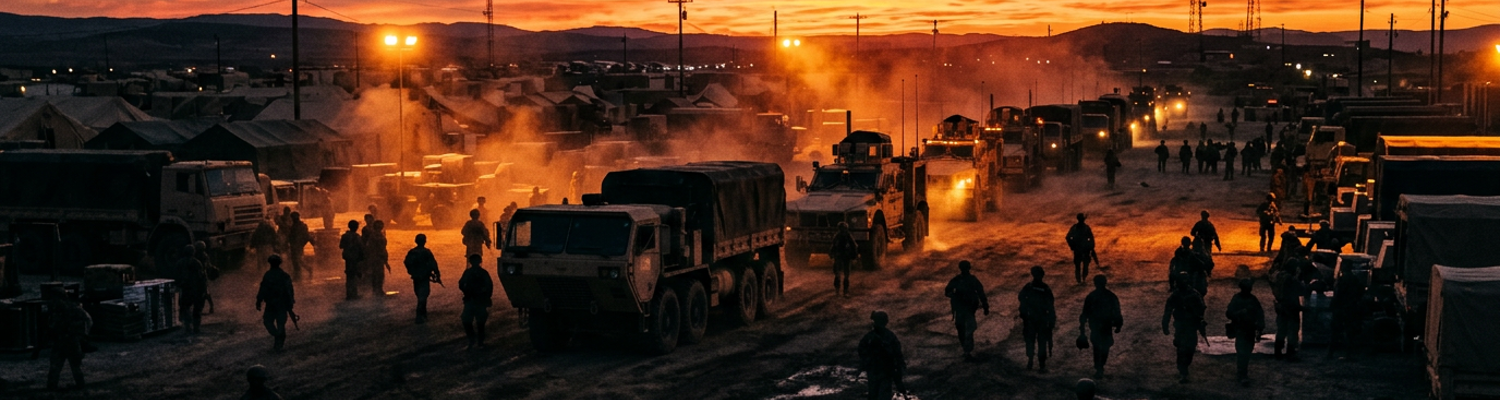
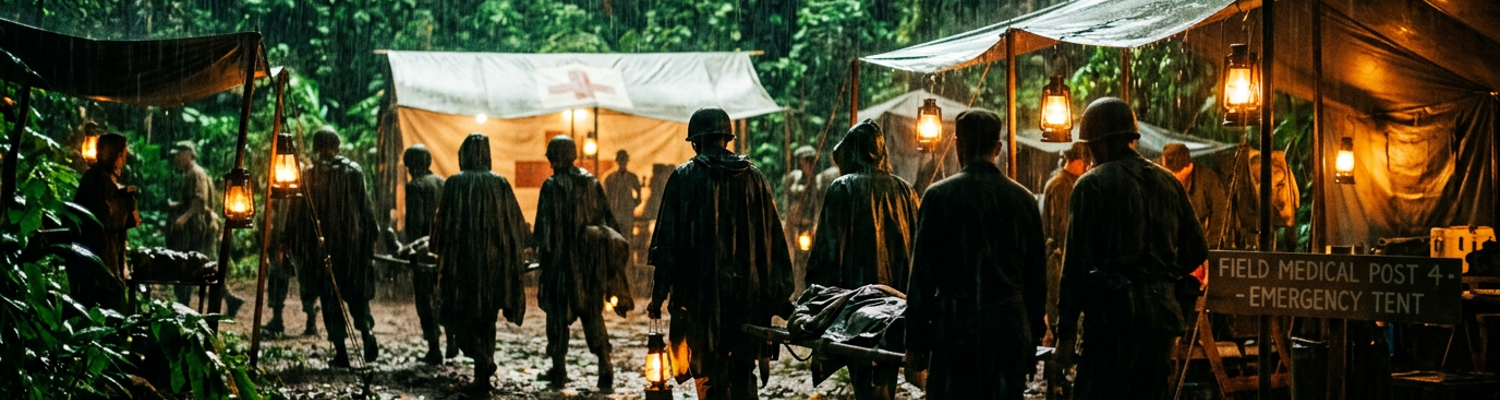
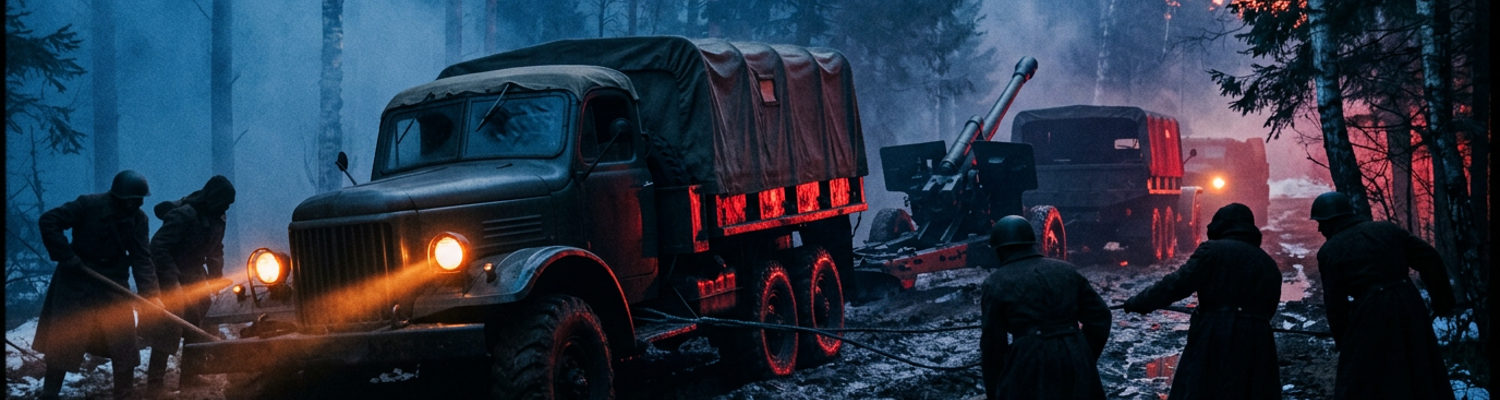
Riflemen discovered that their standard training manuals had promised orderly company dispersions across open terrain, but the physical reality on the ground was a difficult barrier of thick pine scrub, deep mud, and trapped convoys. Simulated tactical nuclear and chemical strikes absorbed by 85,000 troops across Louisiana maneuver zones in December 1955 exposed these vulnerabilities almost immediately during the joint field exercise known as Operation Sagebrush. Exercise umpires detonated ground flash charges and dropped simulated contaminant powders along unpaved supply roads to represent atomic rockets hitting packed regiments. Truck drivers abandoned stalled cargo transports along narrow dirt trails while radio teams failed to send critical coordinates through the dense forest canopy. Combat engineers struggled to clear bypass lanes through flooded drainage ditches, but theoretical casualty counts mounted faster than field hospital units could clear mock triage tags.
Paper triage tags piled up by the thousands inside division command posts, forcing staff officers to confront an organizational system that could not operate under simulated atomic conditions. Field assessment reports detailing command paralysis within standard triangular infantry division frameworks reached exercise headquarters within days of the first mock strikes. Division commanders remained trapped behind three distinct administrative layers of regiments and battalions, meaning that urgent tactical orders required hours to travel from general staff down to company officers. Signal corps teams could not lay telephone wire fast enough to reconnect severed regiments, and high-frequency radios failed completely under regional atmospheric interference. Staff officers eventually stopped drawing unit boundaries on their plastic map boards because the rigid triangular division created massive troop concentrations that tactical nuclear weapons could eliminate in a single detonation.
Couriers carried these catastrophic damage assessments straight to the Pentagon, where civilian defense planners used the exercise failures to challenge the basic size of ground combat units. Eisenhower administration austerity reviews prompting active Army personnel reassessments under New Look doctrine gained immediate leverage from the Louisiana data. President Dwight D. Eisenhower and his financial advisers believed that maintaining large conventional forces wasted valuable federal tax dollars during an era of atomic weapons. Bureaucrats inside the Bureau of the Budget cited the Sagebrush maneuver reports to argue that traditional infantry regiments offered little defensive value on modern nuclear battlefields. Defense officials subsequently informed senior military leaders that the active Army would face deep personnel cuts unless it redesigned its combat formations to function with fewer men and smaller divisional budgets.
General Maxwell Taylor answered these civilian budget ultimatums by ordering his general staff to dismantle the triangular division entirely. Planners inside the Pentagon discarded the historic three-regiment structure and began drafting blueprints for five smaller, self-contained battle groups designed to operate while widely separated across hundreds of miles. Adjutant General personnel specialists began rewriting administrative staffing tables and recalculating duty positions to strip thousands of administrative billets out of headquarters companies. Staff officers packed these reorganization charts into leather courier pouches and delivered them across the river to the Joint Chiefs of Staff, seeking to preserve active soldier numbers by presenting a modern atomic organization.
General Order 70 and Administrative Reorganization
Civilian defense secretaries opened these leather pouches inside conference rooms and demanded immediate structural reductions rather than paper theories. Secretary of the Army Wilber M. Brucker responded to these financial demands by signing Department of the Army General Order 70 during the final days of December 1955. General Order 70 formally abolished the legacy Assistant Chief of Staff G-1 Personnel division that had governed soldier allocations since the First World War. Bureaucratic resistance crumbled across Pentagon corridors as the directive stripped line commanders of independent administrative authorities and consolidated military manpower authority under a centralized executive structure. Army leaders executed this sweeping decree to dismantle top-heavy headquarters elements and satisfy the Eisenhower administration mandate for smaller, cheaper standing forces under the New Look defense program. Civilian comptrollers subsequently gained direct oversight of military payrolls, transferring high-level administrative functions away from traditional staff officers to enforce strict fiscal controls across all combat arms.
Comptrollers utilized these strict fiscal controls to establish the office of the Deputy Chief of Staff for Personnel, supervising every facet of soldier management under rigid federal spending caps. Lieutenant General Walter L. Weible assumed this newly created post and immediately stationed financial analysts beside military planners to review division strength returns. Deputy staff officers audited unit rosters line by line, calculating the exact dollar cost of each rifleman, radio operator, and vehicle mechanic authorized in operational field manuals. Planners eliminated nonessential administrative billets to guarantee that combat formations did not exceed the strict troop ceilings set by the White House. General officers who attempted to shield legacy administrative slots from elimination faced swift budget cuts, which forced theater commanders to reduce rear-echelon headquarters complements across continental bases. Financial managers forwarded these trimmed staffing quotas down to operating branches, instructing administrative bureaus to support widely separated combat units without inflating payroll costs.
Specialists within the Office of the Adjutant General overhauled their administrative workflows to handle these trimmed staffing quotas across projected atomic battlefields. Major General John A. Klein directed his personnel managers to dismantle the mass replacement depots that had handled troop movements during previous wars. Clerks recognized that traditional centralized staging yards presented catastrophic targets because a single atomic rocket could vaporize thousands of soldiers concentrated in rear staging areas. Planners dispersed administrative detachments into smaller field units, stationing record specialists in armored tracks and camouflaged tents to process casualties closer to frontline maneuver elements. Technicians replaced slow carbon-paper casualty registries with decentralized reporting rosters that linked isolated battle groups directly to theater personnel banks. Field clerks maintained these streamlined rosters through daily radio updates, tracking missing riflemen and wounded specialists across barren dispersal zones via daily radio transmissions.
Operators transmitted these daily radio updates directly to mobile replacement detachments that delivered individual soldiers across contaminated terrain. Administrative sergeants assigned to these forward detachments bypassed destroyed road hubs by routing small groups of infantry replacements aboard armored personnel carriers and utility helicopters. Supply clerks packed individual gear allotments inside forward staging shelters, ensuring that incoming soldiers moved into defensive perimeters within hours of arriving at theater terminals. Punch-card machines inside sandbagged headquarters shelters processed soldier identification tags day and night to keep battle group rosters updated despite constant tactical shifts. Regimental record books disappeared completely as company clerks carried portable filing boxes into foxholes, verifying personnel losses under canvas lean-tos. Replacement convoys navigated dirt bypass trails to drop riflemen directly at dispersed company perimeters before tactical nuclear fire could target their approach routes.
Pentomic Battle Groups and the 101st Airborne
Riflemen tumbling out of cargo beds into these dispersed company perimeters found no regimental headquarters or battalion command posts waiting behind them. General Maxwell Taylor had ordered the dissolution of traditional three-regiment structures in favor of five self-contained atomic battle groups, dismantling the organizational framework that had governed American ground warfare since World War II. Each new battle group incorporated five rifle companies, a combat support company, and an organic mortar battery, placing nearly fifteen hundred soldiers under the direct authority of an individual colonel. Company captains operated across wide stretches of open ground without intermediate battalion commanders to coordinate their flanks, relying on long-range radios and utility helicopters to survive simulated nuclear strikes. This drastic tactical fragmentation created immediate political controversy inside the Pentagon, where civilian budget directors seized on the lighter units to justify slashing overall military manpower authorizations. President Dwight D. Eisenhower cited these dispersed formations during National Security Council debates to demonstrate that ground armies could adapt directly to the nuclear era without draining the federal treasury.
Diplomats representing NATO member states watched these White House debates with rising alarm, warning that shrinking American divisions would leave Western Europe defenseless against massed Soviet armored divisions. General Taylor answered this international outcry by selecting the 101st Airborne Division as the primary testbed for Pentomic structural doctrine in 1956. Major General Thomas L. Sherburne Jr. took command of the reactivated division at Fort Campbell, Kentucky, stripping away medium tanks and heavy corps artillery to construct a rapid-deployment force of under twelve thousand paratroopers. Screaming Eagle soldiers tested the radical concept by loading light jeeps, mechanical mules, and Honest John nuclear-capable rocket launchers into cargo aircraft for high-speed dispersion drills. Exercise evaluators logged severe radio blackouts and serious ammunition shortages across the Kentucky drop zones, yet senior administration officials highlighted the maneuvers to convince foreign leaders that airborne atomic battle groups could counter Soviet attacks along the European border. Defense secretaries presented the division airborne test records to congressional committees to defeat legislative opposition against deep personnel reductions.
Clerks inside the Pentagon translated these legislative victories into binding administrative orders to enforce the atomic reorganization across the active Army. Major General John A. Klein supervised the publication and distribution of revised Tables of Organization and Equipment by the Adjutant General Office, delivering thousands of new administrative manuals to military installations across the globe. Staff personnel packaged these revised documents into official mail pouches, formally abolishing the traditional regimental lineages that infantry soldiers had carried since the Revolutionary War. Base commanders opened these newly arrived binders to discover strict personnel allowances that eliminated hundreds of traditional support billets, vehicle mechanics, and administrative clerks from division payrolls. Civilian comptrollers cross-referenced the newly distributed staffing tables against daily strength reports, refusing to authorize pay vouchers for any unit that retained unauthorized conventional billets.
Inspectors dispatched by the Department of Defense traveled to overseas garrisons to ensure that theater commanders complied with these financial restrictions. Theater generals across West Germany and South Korea complied by disbanding historic infantry regiments under the direct supervision of these civilian budget monitors. Allied military attaches watched these rapid organizational reductions in disbelief, realizing that the United States Army was reducing its ability to fight protracted conventional ground wars. Foreign ambassadors filed urgent protests with the State Department, warning that relying on small atomic battle groups left front lines vulnerable to rapid enemy ground offensives. Maxwell Taylor dismissed these diplomatic objections during White House strategy sessions, insisting that Pentomic organization kept the active Army relevant in a nuclear age dominated by the Air Force. Garrison troops throughout the North Atlantic alliance packed away their historic regimental standards and mounted tactical nuclear rockets onto light mobile launchers along the West German border.
Operation Whitecoat and Fort Detrick Rosters
Rocket crews servicing these mobile nuclear launchers trained under constant biological warfare alert drills because Pentagon strategists feared that Soviet forces would retaliate against dispersed battle groups with aerosolized pathogens. Intelligence warnings regarding foreign bacterial stockpiles forced the Department of the Army to search for human test subjects to evaluate vaccines and medical defenses before deploying troops into contaminated zones. Selective Service officials provided a practical solution by identifying thousands of young men who refused regular combat duty on religious grounds. Adjutant General personnel specialists processed Seventh-day Adventist conscripts holding Selective Service noncombatant classifications at the Medical Field Service School at Fort Sam Houston in Texas. Church elders met with military authorities to establish a formal volunteer agreement, assuring inductees that serving as clinical research subjects fulfilled their religious commitments to preserve human life without handling weapons. Army recruiters interviewed these Adventist medics in base classrooms, offering them transfers into a biological research program known as Operation Whitecoat rather than assignment to standard division medical companies.
Adventist volunteers accepted these research assignments and boarded transport trains bound for Fort Detrick in Maryland under specialized personnel allocations managed by the Office of the Adjutant General. Staff officers in Washington coordinated this troop movement through special transfer rosters that exempted the Adventist recruits from overseas deployments and basic marksmanship training. Personnel managers placed these volunteer cohorts into the United States Army Medical Unit at the Maryland facility, assigning them directly to biological defense prophylaxis trials. Scientists at the laboratory placed the volunteers inside sealed testing chambers, including a massive hollow steel sphere known as the Eight-Ball, where technicians released controlled doses of aerosolized bacteria. Technicians measured airflow through rubber masks and fabric filters, checking whether experimental vaccines, breathing equipment, and protective clothing could protect troops from lethal biological clouds. Laboratory staff housed the volunteers in strict medical barracks between tests, monitoring physical symptoms, body temperatures, and blood samples around the clock.
Hospital isolation wards filled quickly as researchers administered experimental countermeasures against Q fever and tularemia to evaluate vaccine potency and antibiotic timing. Medical officers closely observed the men as infectious pathogens took hold, administering tetracycline therapies the moment sharp fever spikes and muscle chills signaled active infection. Administrative clerks created comprehensive tracking ledgers to document every soldier clinical symptoms, medication schedules, and antibody levels throughout the testing cycle. Record specialists in the Adjutant General Office archived these medical subject rosters alongside permanent service files, establishing long-term health tracking records for every participant in the prophylaxis trials. Planners used these administrative health records to confirm that treated soldiers could survive biological attacks, proving that Pentomic units could operate in areas exposed to airborne disease. Logistical officers forwarded the finalized medical defense guidelines to overseas commands, stocking field supply depots across West Germany with the newly validated vaccines, diagnostic testing kits, and protective antibiotics.
Operation Musketeer and Mediterranean Alliance Friction
Pallets of those antibiotics and medical kits sat untouched in West German warehouses when combat across the Suez Canal diverted military attention toward the Mediterranean. British and French bombers initiated Operation Musketeer by striking airfields and communication centers across Egypt, with Anglo-French air operations against Egyptian targets commencing October 31, 1956. Royal Air Force Canberras and French Corsairs cratered runways at Cairo West and Almaza, destroying Egyptian aircraft on the ground beneath heavy clouds of smoke. President Dwight D. Eisenhower expressed severe anger upon learning that London and Paris had coordinated with Israel while deliberately hiding their military plans from the United States. Telephone operators in Washington connected emergency calls as American diplomats condemned the attack at the United Nations, refusing to support European military ambitions. Soviet Premier Nikolai Bulganin seized upon this split to threaten London and Paris with rocket attacks, raising the danger that fighting in Egypt might trigger a wider European war.
Couriers hurried across Pentagon corridors carrying classified intelligence binders as diplomatic fractures among Western allies precipitating critical emergency reviews in the Pentagon forced senior leaders to reassess American global troop posture. Joint Chiefs Chairman Admiral Arthur Radford summoned service chiefs to determine if American soldiers could enter the Mediterranean basin without provoking direct military confrontation with the Soviet Union. General Maxwell Taylor faced direct questioning from civilian defense officials over whether his newly reorganized Pentomic units could fight a conventional ground war without firing tactical nuclear rockets. Army field assessments revealed that battle groups stripped of heavy tanks and organic field artillery could not hold beachheads against armored counterattacks. Staff officers examined operational maps across Pentagon conference rooms, concluding that active divisions stationed in West Germany could not be diverted to Middle Eastern landing zones. Military planners turned their attention back to the continental United States to locate secondary forces capable of overseas deployment.
Major General John A. Klein directed this search by supervising an evaluation by the Adjutant General of reserve readiness for potential Mediterranean deployments. Personnel clerks in Washington analyzed punch cards and mobilization folders for Army Reserve and National Guard divisions, checking physical fitness exams, military specialty classifications, and junior officer rosters. Administrative reviews produced discouraging findings, showing that recent budget reductions under the New Look defense policy had left reserve units severely short of personnel and modern equipment. Many reserve formations lacked transport trucks, radios, and current weapons, meaning any call-up would require months of depot refitting and combat training before soldiers could board transport ships. Klein delivered these findings directly to the Chief of Staff, warning that activating reserve divisions for expeditionary service in Egypt would create intense public opposition while producing units unready for combat.
President Dwight D. Eisenhower used these alarming administrative evaluations to shut down any prospect of American military intervention alongside Anglo-French forces. Financial pressure replaced military deployment as Eisenhower instructed the Treasury to oppose International Monetary Fund emergency loans for Great Britain until invasion forces left Egyptian territory. British Prime Minister Anthony Eden yielded to this currency crisis within days, ordering allied task forces along the canal to halt their advance and accept an immediate ceasefire. United Nations peacekeepers soon arrived at Port Said aboard transport ships to replace French and British battalions along the canal corridor. Maxwell Taylor carried the emergency staff evaluations back to his office, ordering planning teams to adjust mobilization timetables so that future Pentomic battle groups could deploy rapidly.
Soviet Armor in Budapest and Dual Mobilization Testing
Couriers rushed these revised mobilization timetables into the office of General Taylor just as intelligence teletypes tapped out urgent reports of a second major crisis across Central Europe. Soviet mechanized divisions advancing into Budapest to suppress Hungarian forces on November 4, 1956, smashed through civilian barricades and seized critical bridgeheads across the Danube River. Heavy Soviet tanks fired high-explosive shells directly into apartment blocks and university buildings, defeating armed street resistance and restoring hardline communist control through overwhelming armored firepower. American theater commanders in West Germany immediately elevated defense readiness levels, ordering forward infantry units and armored cavalry patrols into defensive screen positions along the Fulda Gap. Strategic operational stress on unfinalized personnel reconstitution tables during dual cold war flare-ups pushed Pentagon administrative offices into widespread confusion as staff officers tried to manage simultaneous alert states in both the Mediterranean and Central Europe.
Tabulators inside the Adjutant General casualty branch jammed as clerks fed thousands of conflicting replacement rosters into sorting machines to meet the needs of these simultaneous global crises. Personnel clerks sorted through stacks of incomplete file cards, discovering that overseas garrisons still lacked clear administrative procedures for replacing individual riflemen within the experimental five-company battle groups. Supply depots in France and West Germany held traditional infantry and artillery replacements who did not match the specialized technical positions required by the unfinalized Pentomic organizational tables. Administrative officers attempted to draft emergency conversion schedules by hand, trying to turn heavy mortar crews and radar technicians into front-line riflemen before border clashes erupted. Couriers sprinted across the Pentagon rings carrying contradictory orders between the Deputy Chief of Staff for Personnel and the Joint Chiefs of Staff, demonstrating bureaucratic failure across the entire military establishment. Field commanders in Germany dispatched urgent priority cables to Washington demanding immediate clarification on whether incoming soldiers would arrive as organized combat companies or individual replacements.
Eisenhower examined these urgent cables during emergency White House strategy conferences as fighting continued across both Egypt and Eastern Europe. National Security Council assessments regarding readiness gaps during incomplete Pentomic structural transitions warned the president that American ground forces could not mount a sustained conventional response without risking immediate battlefield collapse. Analysts reported that divisions caught midway between traditional triangular frameworks and experimental atomic battle groups lacked both the heavy conventional artillery needed to stop Soviet armor and the mature logistical channels required to sustain dispersed atomic warfare. Defense officials emphasized that while the 101st Airborne had tested the Pentomic concept in domestic training exercises, frontline divisions in Europe still lacked essential cross-country transport vehicles, atomic-capable rockets, and reliable tactical radios. Strategic planners warned that committing unprepared units to Eastern Europe would force an immediate choice between rapid retreat and the use of tactical nuclear weapons. Eisenhower reviewed these grim assessments alongside Secretary of State John Foster Dulles, recognizing that American conventional weakness left the administration with no viable military option to intervene in Hungary without risking all-out nuclear war.
General Taylor received direct orders from Defense Secretary Charles Wilson to freeze further divisional reorganizations until the Army could resolve these severe supply and personnel shortages. Staff officers locked the classified readiness evaluations inside vault cabinets and sent updated instructions to theater headquarters across Europe, directing Seventh Army commanders to hold their existing triangular defensive sectors. Adjutant General personnel teams halted the immediate conversion of conventional field artillery battalions into unproven rocket batteries, redirecting shipments of conventional ammunition and tank spare parts back toward West German depots. Supply sergeants unpacked crates of traditional weapons and reissued heavy recoilless rifles to frontline units along the border to ensure they could engage Soviet armored columns. Mechanics across Bavaria tightened steel tracks on M48 Patton tanks and loaded armor-piercing shells into ready racks, establishing conventional roadblock positions along the Czechoslovakian border.