
First Army Headquarters Isolation and Fuel Reserves
Lead-sheathed telephone cables snapped along the frozen roadbeds southeast of Spa under the concussions of heavy German artillery barrages and deliberate cutting by infiltration teams wearing American uniforms. Signal technicians in the frigid basement of the Hotel Britannique immediately leaped over crates of spare wire and seized their portable testing meters to locate the broken trunk circuits. The technicians yanked burnt fuses from the central switchboard frames and plugged patch cords into alternate relays, but the dead lines produced only hollow buzzing and flat static. First Army headquarters at Spa operated in a complete information blackout on December 16 and 17, 1944, relying entirely on fragmented telephone reports as communication lines failed across the Ardennes sector. Staff officers stared at silent telephone banks and plotted out-of-date troop locations across acetate map overlays, unable to verify which frontline outposts still held their ground against the German assault.
Dispatch runners arriving at headquarters on spluttering motorcycles delivered contradictory accounts of enemy tanks overrunning forward observation posts, but communication lags obscured the collapse of Allied defenses along the Losheim Gap. Operations officers in the war room routinely discarded the most alarming reports as frontline panic, continuing to mark the Schnee Eifel sector as firmly defended with blue grease pencils. Senior commanders believed the armored thrusts were minor local counterattacks, so they issued no immediate retreat orders to service troops managing the supply installations just miles behind the lines. Staff clerks kept filing regular administrative requisitions while German spearheads pushed directly into the undefended valleys leading toward the logistical nerve centers of the army.
Colonel Andrew T. McNamara, the First Army Quartermaster, held responsibility for Depots 2 and 3 near Francorchamps and Spa, which contained over three million gallons of combat motor fuel. McNamara examined the incomplete situation maps in his basement supply office and recognized the terrible vulnerability of these vast reserves of eighty-octane and eighty-seven-octane gasoline. Red jerrycans and five-gallon drums sat in dense stacks along miles of forest lanes north of Malmedy, protected only by scattered administrative personnel and armed truck drivers. McNamara knew that German armored formations suffered from chronic gasoline shortages and would make every effort to capture these fuel dumps to sustain their drive toward the Meuse River crossings.
Depot personnel at Francorchamps received direct orders from McNamara to prepare the fuel stocks for rapid evacuation by truck or total destruction on the ground before enemy spearheads could seize them. Mechanics scrambled to start every available two-and-a-half-ton cargo truck in the sub-freezing morning air, checking carburetors and battery connections to haul loads away from the southern approaches. Quartermaster soldiers gathered hand tools, axes, and cans of aviation fuel to lay demolition lines along the outer fuel stacks, ready to ignite thousands of gallons of gasoline across the roadway the moment German armor appeared around the northern bends.
Kampfgruppe Peiper and the Francorchamps Threat
Colonel Andrew T. McNamara inspected these crude demolition lines while confirming intelligence reports on December 17, 1944, that Kampfgruppe Peiper had breached the Losheim Gap and was driving northwest toward Stavelot, Spa, and Francorchamps. Motorcycle dispatch riders arriving at the First Army supply office reported that German panzers had crushed forward defensive outposts and were advancing along narrow river valleys directly toward the rear supply bases. Operations officers plotted the reported enemy positions on acetate map overlays, calculating that the armored column was rolling rapidly along the Ambleve River corridor barely fifteen miles away. McNamara recognized that the millions of gallons of fuel stored in open forest dumps at Francorchamps lay directly in the path of this German spearhead. Evacuation details worked frantically along the icy access trails to load supply trucks, but the sudden collapse of the forward lines left depot personnel with only hours to prepare their defenses.
Panzers from the German 1st SS Panzer Regiment operated with critically depleted fuel supplies and required captured Allied petroleum reserves to sustain their advance to the Meuse River. Massive Mark V Panther and King Tiger tanks consumed up to five gallons of fuel for every single mile traveled through the snow and mud of the Ardennes, rapidly emptying their internal fuel tanks. German motorized supply columns lagged miles behind the assault forces on clogged, shell-cratered mountain roads, unable to deliver fresh petroleum to the front. Kampfgruppe Peiper depended entirely on seizing intact American fuel dumps to prevent their heavy armored vehicles from stalling completely in the Belgian forests. Forward scouts in Peiper reconnaissance detachments carried specific maps marking the locations of the giant American petroleum reserves, pushing their half-tracks forward with orders to capture the fuel before guards could burn it.
Staff officers and headquarters commanders in Spa faced contradictory tactical reports and had virtually no frontline combat infantry or anti-tank units available to defend the depots. Broken telephone circuits and panicky radio messages alternately placed the German spearhead miles to the east or already entering the streets of nearby Stavelot. Operations planners frantically searched their sector maps for combat reserves, but every rifle company and tank destroyer crew had already been committed to forward defense lines. First Army headquarters held only administrative personnel, military police detachments, and supply clerks who lacked heavy weapons to fight armored vehicles. Senior commanders recognized that the entire logistical core of the army rested behind an open, undefended corridor.
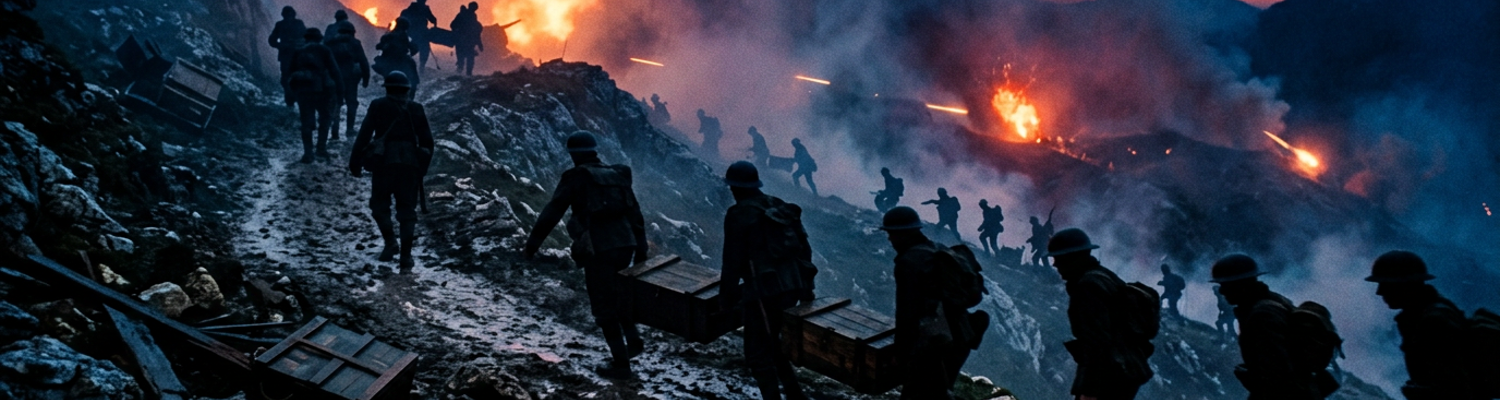
Truck drivers and depot mechanics seized rifles, carbines, and bazookas from supply crates to organize makeshift roadblocks across the key intersections south of Francorchamps. Service troops dragged two-and-a-half-ton cargo trucks across the icy roads and stacked felled pine trees into crude barriers to slow down any approaching panzer column. Machine-gun crews set up firing positions in the drainage ditches along the northern highway, covering the approaches with crossfire. Soldiers assigned to demolition details stood beside the gasoline stacks with torches, flare pistols, and fuel cans, ready to ignite the petroleum lines across the roadway. Spotters in nearby pine trees kept their field glasses trained down the winding road from Stavelot, listening for the rumble of enemy tank tracks through the cold mountain fog.
Major Paul Solis and the Stavelot Fuel Barrier
Panzers from the advancing German spearhead rolled through the thick mountain mist along the valley road on December 18, 1944, leaving Major Paul Solis and troops of the 526th Armored Infantry Battalion cut off near Stavelot without anti-tank artillery. Supply clerks, mechanics, and truck drivers manned shallow foxholes along the wooded ridge with only standard M1 carbines, service rifles, and a few light machine guns to oppose heavy armored vehicles. Major Solis tracked the enemy column through his field glasses as German half-tracks and tanks crossed the Ambleve River, confirming that forward combat units had been overrun or pushed back. Communications back to First Army headquarters in Spa remained dead due to severed telephone wires and enemy infiltration, leaving staff officers in their distant war room unaware that German armor stood at the gateway to the fuel depots. Solis recognized that no armored reinforcements, anti-tank guns, or air support could arrive in time to defend his isolated perimeter. Rifle ammunition could not penetrate the thick steel armor of the approaching tanks, forcing Solis to find an immediate physical barrier to stop the German spearhead from climbing the ridge.
Major Solis ordered his men to dump 124,000 gallons of fuel from five-gallon jerrycans into a steep sunken road cut leading from Stavelot up toward Francorchamps. Quartermaster soldiers hurried into the fuel storage stacks with axes, crowbars, and wrenches, prying open rows of metal containers stored along the roadside under pine branches. The soldiers carried the heavy five-gallon cans to the high clay banks of the sunken road, twisted open the cam-locking caps, and spilled continuous streams of combat gasoline down the steep slopes. Empty red cans clattered against the frozen ground and accumulated in piles along the ditches as the men worked down the line in the freezing cold. Raw gasoline flowed down the center of the sunken roadbed, filling the wheel ruts and creating a continuous liquid fuel trap hundreds of yards long. Vapors from the evaporating fuel burned the throats and eyes of the quartermasters as they completed the liquid barrier directly across the route the German tanks were taking.
Quartermasters ignited the fuel stream, generating a massive wall of fire that blocked the armored column and forced German spearheads to redirect away from Depot 2. Soldiers threw incendiary grenades and dropped lit torches into the fuel bed, triggering an immediate explosion of orange flames and dense black smoke that rose high into the treetops. Intense heat radiated across the sunken road cut, blistering the metal hulls of the lead German combat vehicles and scorching the pine trees along both sides of the roadway. German tank crews slammed their vision hatches shut and stopped their advance, unwilling to drive through the burning gasoline where flames would get drawn into engine air intakes and detonate internal fuel supplies. German infantrymen riding on the tanks scrambled down to seek cover from the heat and smoke, unable to move forward on foot through the burning gorge. Tank commanders in the lead panzers shifted into reverse and backed their machines down the hill, turning their column west toward the Ambleve River valley to bypass the flaming roadblock.
Logistics Evacuation Under Blizzard Conditions
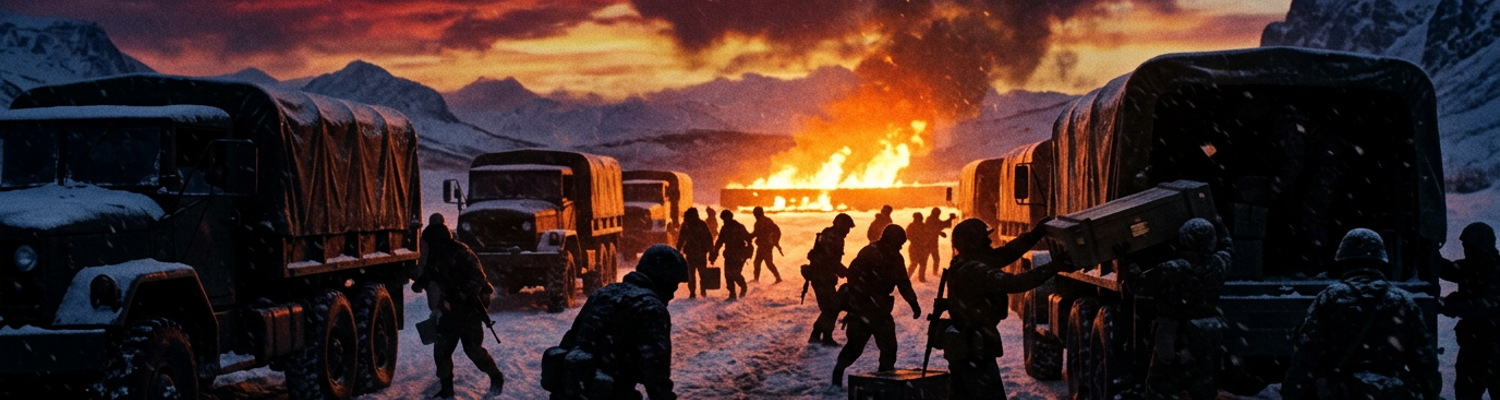
Quartermaster soldiers watching the German retreat immediately turned back toward the fuel stacks at Francorchamps to begin stripping the dumps before another enemy detachment could strike. First Army quartermasters mobilized hundreds of cargo trucks and available railcars through severe winter blizzard conditions to evacuate fuel stocks before German forces could overrun the depots. Drivers shoveled thick snowdrifts away from frozen tires, chipped sheets of glaze ice off windshields, and applied blowtorches directly to frozen engine oil pans to get crankcases turning. Depot crews wrestled five-gallon jerrycans and heavy fifty-five-gallon steel drums onto the flat wooden beds of every operational GMC six-by-six truck that rolled through the loading bays. Civilian rail workers and American soldiers shoved freight cars by hand along snow-choked sidings, packing every boxcar to capacity with crated motor fuel. Swirling winds dropped air temperatures well below freezing and coated the pine forests in deep snow, making every step on the packed ice hazardous for the exhausted loading parties.
Depot crews maintained around-the-clock convoys over icy mountain roads, working through severed communications and the constant threat of infiltration. Convoy commanders drove with slit blackout marker lights or total darkness because standard headlamps would draw sniper fire and ambushes from German infiltrators hiding in the timber along the roads. Steel tire chains snapped under the weight of the overloaded cargo beds, sending six-ton transport trucks sliding sideways across the steep Belgian ridges into drainage ditches and snowbanks. Soldiers used tow cables and front-mounted winches to drag stalled vehicles back onto the slippery road surface, refusing to abandon a single gallon of gasoline along the route. Dispatchers received zero operational guidance from the cut-off command staff in Spa, forcing young officers and sergeants to choose alternate routes through the forested hills on their own initiative. Mechanics rode on the running boards of the cargo trucks with rifles slung across their chests, ready to leap onto the frozen ground to clear roadblocks or repair broken tie rods on the shoulder.
Logistics personnel pushed these continuous supply lines toward the safety of the northern distribution centers, guiding their overloaded vehicles across dozens of miles of contested mountain territory. Working without clear coordination from isolated higher headquarters, logistics personnel successfully hauled 2.2 million gallons of petroleum out of the Ardennes toward Liege. Engineers coupled steam locomotives to long strings of hastily loaded tank cars and flatbeds at nearby railheads, shoving the heavy trains through blizzard whiteouts just hours ahead of advancing German armored patrols. Depot teams at the receiving yards outside Liege guided the trucks into dispersed forest dispersal sites, stacking millions of gallons of fuel under camouflage netting to keep the reserves safe from enemy aerial reconnaissance. Weary drivers climbed down from their cabs only long enough to gulp hot coffee and inspect their wheel lugs before turning their empty trucks back toward the front lines. Supply sergeants logged each arriving cargo manifest on oilcloth clipboards and immediately dispatched the empty transports south along the frozen highway to pull out the remaining fuel stocks.
Strategic Impact on the German Ardennes Offensive
Panzer crews in Kampfgruppe Peiper ground to a complete halt along the narrow Ambleve River roads near La Gleize as those returning American supply trucks carried the remaining gasoline out of reach. Deprived of the First Army fuel stores at Francorchamps and Spa, Kampfgruppe Peiper ran completely dry near La Gleize and was compelled to abandon its armored vehicles. Drivers of seventy-ton Tiger II tanks watched their fuel gauges drop to zero on steep forest inclines, leaving high-compression Maybach engines to sputter, backfire, and stall when carburetors sucked in air instead of petrol. German mechanics siphoned the final gallons of fuel out of overturned half-tracks and scout cars into a handful of lead tanks, but the meager fuel burned away within minutes of hard mountain climbing. SS Lieutenant Colonel Joachim Peiper gathered his officers in the cellars of La Gleize and ordered them to smash internal radio consoles, wedge demolition charges into tank gun barrels, and abandon every combat machine on the frozen hillsides. German soldiers left over one hundred heavy tanks, armored personnel carriers, and artillery pieces behind in the snow, fleeing east on foot across freezing streams under heavy American artillery fire.
Sixth Panzer Army suffered an immediate and fatal collapse of operational momentum across the northern Ardennes once Peiper lost that forward spearhead of armor in the valley. The denial of over three million gallons of fuel prevented the Sixth Panzer Army from maintaining the operational tempo required to secure crossings over the Meuse River. German battle plans had depended entirely on capturing intact American petroleum stocks along the Spa-Francorchamps axis to fuel the massive drive through Huy and Liege toward Antwerp. Rail networks and supply lines running back across the Rhine River could not deliver synthetic fuel through the deep snowdrifts and heavy Allied aerial attacks to keep up with the armored columns. Stalled German armor blocked the narrow mountain passes, leaving combat divisions unable to maneuver around Allied roadblocks or deploy into open terrain before American reinforcements reinforced the Meuse bridges. Tank commanders climbed out of immobile panzers to search farmsteads and abandoned sheds for heating oil, but found only empty barns as American combat units sealed off the escape corridors.
Colonel Andrew T. McNamara and Major Paul Solis engineered this operational paralysis miles to the rear by taking independent tactical control while headquarters staff remained cut off without telephone communications. The improvised defensive actions of Colonel McNamara and Major Solis demonstrated how combat officers and rear-echelon personnel working in isolation altered the operational outcome of the Battle of the Bulge. Headquarters commanders in Spa sat behind silent telephone switchboards and outdated situation maps, leaving field quartermasters to decide whether to burn or evacuate millions of gallons of combat fuel without senior command approval. Service troops, warehouse clerks, and truck drivers who had never trained for frontline infantry combat transformed liquid petroleum from a logistical vulnerability into a decisive physical barrier. Truck convoys rolling through blizzards safely delivered 2.2 million gallons of fuel to northern depots outside Liege, preserving the reserves needed to fuel the Allied counterstrike. Allied armored units drew from those evacuated gasoline stores outside Liege to fill the fuel tanks of their Sherman tanks, driving south to sever the German salient and push enemy forces back across the Our River.