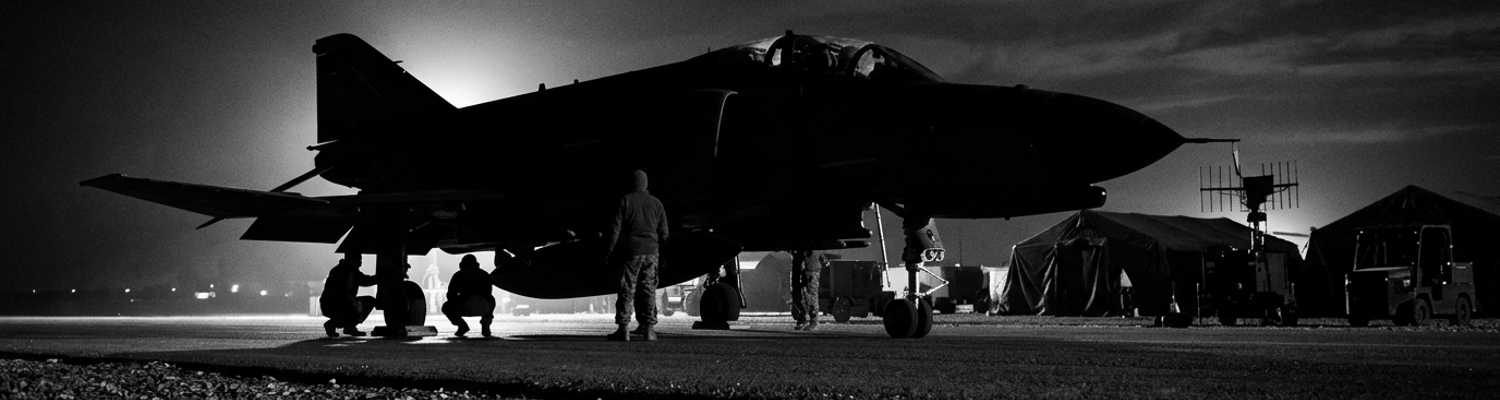

Austere Dispersal Operations at Shaikh Isa Air Base
At 0200 hours on January 16. The primary landlines linking Shaikh Isa Air Base to the Tactical Air Control Center in Riyadh went dead. Radio silence had already clamped down across the Persian Gulf. This severed wire represented a total physical collapse of the wing communications link to theater command. Combat staff in Bahrain stared at inert switchboards. Secure teletype machines halted mid-line. Tactical controllers could no longer receive frag orders. They lacked updated electronic orders of battle. They had no revised threat corridors. Fifty-eight combat aircraft and hundreds of support personnel were marooned in the dark. Hours remained before the opening strikes of Operation Desert Storm.
The frontline unit stood completely isolated.
Archival evidence shows that the 35th Tactical Fighter Wing Provisional operated from an unfinished construction site. Deployed out of George Air Force Base in California. The unit had been assigned to an unshielded expanse of salt flats and gravel in southern Bahrain. Paved surfaces ended abruptly. Run-up pads were composed of compacted crushed rock. This aggregate pitted and chipped titanium compressor blades during engine starts. Hardened aircraft shelters did not exist. Flight crews and maintenance specialists lived in fabric general-purpose tents pitched directly into the sand. They were exposed to jet exhaust and raw JP-4 fuel fumes. Operational logs record that the complete lack of physical bunkers forced ground personnel to sustain high-tempo turnaround schedules on the flight line during continuous SCUD alerts without overhead protection.
Exhaustion settled directly into the marrow of the maintenance line.
A close review of maintenance reports indicates that the mechanical failure rate was driven by the sensitivity of aging Phantom avionics to the Persian Gulf climate. The F-4G relied on the AN/APR-38 and upgraded AN/APR-47 Radar Attack and Warning Systems. These were dense complexes of receivers and fin-cap antenna arrays. Early-generation signal processors had been retrofitted into airframes built in the late 1960s. Fine silica dust bypassed external intake seals. The sand packed tightly into internal circuit bays. It choked the forced-air cooling ducts. Ambient ground temperatures routinely climbed past one hundred degrees Fahrenheit. This degraded hydraulic seals. The fragile traveling wave tubes inside the radar threat receivers burned out during taxi runs. Maintenance teams worked eighteen-hour shifts on open ramps. They handled scorching tools to trace electrical shorts through brittle wiring harnesses. These harnesses fractured whenever panels were pulled.
Every pre-flight inspection turned into a triage drill.
The physical isolation from Riyadh was compounded by a breakdown in the theater supply chain. Strategic airlift priority was directed toward main hubs in Saudi Arabia. Bahrain was stranded at the absolute end of the supply route. The Air Force had already slated the F-4G for retirement. Supply depots maintained almost zero redundant inventory. Key replacement parts sat half a world away at Hill Air Force Base in Utah (NARA Record Group 338). Base supply officers at Shaikh Isa could not requisition line-replaceable units through normal inventory pipelines. Maintenance personnel turned to aggressive cannibalization. Mechanics pulled navigational computers and radar altimeters from parked airframes. Missile-firing interface components were removed to push a single division of jets onto the daily flying schedule. Maintenance logs show that by the evening of January 16, tail number 69-7263 had been stripped of thirty-eight individual avionics components. Sister aircraft required these parts to remain flight-worthy.
Air Tasking Order Disconnects and Degraded Datalinks
Declassified communications logs show that the Computer Aided Force Management System repeatedly collapsed. The sheer volume of data transmitted from the Tactical Air Control Center in Riyadh overwhelmed the network. Generating a theater-wide Air Tasking Order produced an eight-hundred-page daily document. This file detailed thousands of individual sorties and tanker rendezvous brackets. Dispersed Gulf airfields lacked reliable high-speed data terminals. They could not ingest the massive file size over unstable military phone lines. Base communications sections watched their 2400-baud modems drop connection mid-packet. This corrupted entire target appendices. Theater commanders resorted to physical couriers. Twice daily, twin-engine C-21 Learjets and C-130 transports ferried printed reams of paper across Saudi Arabia and the Gulf emirates. They delivered the fragmented flight schedules. Aircrews sat in windowless pre-mission rooms. Time limits were severe. Grease pencils and plastic map overlays served as primary planning tools. Crews manually transcribed radio frequencies and IFF squawks before running toward their aircraft.
Paper couriers determined who flew and who stayed on the ground.
After-action reports confirm that the electronic link between forward Wild Weasels and E-3 Sentry Airborne Warning and Control System aircraft fractured immediately upon crossing the northern border. AWACS controllers with the 552nd Airborne Warning and Control Wing orbited on assigned stations two hundred miles south in Saudi airspace. They attempted to manage up to three hundred coalition aircraft simultaneously on single UHF frequencies. Transmitters saturated instantly. Have Quick II frequency-hopping radios repeatedly lost time-synchronization data. Atmospheric disturbances and heavy signal jamming broke communications into static-filled syllables. Aircrews in the F-4G cockpits encountered dead silence on designated command nets right when entering high-threat airspace. Descending below ten thousand feet to evade long-range tracking radars broke the physical line-of-sight propagation necessary for tactical relays. Weapons directors inside the E-3 could neither track low-altitude Phantoms nor broadcast timely warnings regarding Iraqi MiG-29 interceptor launches. Electronic warfare officers had to scan raw scope strobes without external tactical guidance.
The radar screens in Riyadh were blind to low-altitude strike packages.
A close review of operational logs indicates that the breakdown in data dissemination forced the 35th Tactical Fighter Wing to execute uncoordinated suppression missions across southern Iraq. Wing mission planners received frag orders stripped of sister service routing. F-4G crews launched without precise knowledge of Navy A-6E attack profiles or Air Force F-16 ingress corridors. Flight leaders directed four-ship formations straight into the Basra and Tallil air defense sectors. The Iraqi KARI integrated command network retained intact communications in these zones. Threat zones spanning from the Kuwaiti border toward Nasiriyah lacked designated geographic separation lines. They had no synchronized suppression windows. Rear-seat electronic warfare officers manually monitored the AN/APR-47 display. They spotted active Spoon Rest early warning emitters and tracking radars without confirmation of whether adjacent strike packages had already passed or aborted. Pilots altered flight paths independently to avoid overlapping friendly Tomahawk cruise missile flight tracks. They banked heavily across unmapped antiaircraft artillery belts at five hundred feet to avoid surface-to-air missile engagements.
Front-seaters tracked visual threats through the canopy. Rear-seaters worked switches on the missile control panels. Both operated at the threshold of physical disorientation. Cockpit temperatures spiked as environmental control units struggled against engine heat and dense electrical loads. On the night of January 18, tail number 69-7251 crossed the border into Iraq without an updated electronic order of battle. The crew relied on hand-written frequencies taped to the pilot left thigh board.
APR-47 Audio Saturation and Electronic Warfare Strain
Flight surgeon records document that inside the cockpits of the 561st Tactical Fighter Squadron, the primary source of physiological strain was the AN/APR-47 radar attack and warning system. Retrofitted into the F-4G nose radome and vertical stabilizer fairing. This electronic suite converted detected microwave radiation directly into synthetic acoustic tones. These tones were delivered through the crew flight helmet headsets. Over central Iraq, the density of the Iraqi air defense network saturated these processors beyond their design parameters. Whenever the aircraft climbed above five hundred feet, up to forty separate radar sites painted the Phantom simultaneously. This triggered continuous threat-warning audio. The system broadcast a cacophony of warbling tones and intermittent buzzes. High-frequency chirps corresponded to search, acquisition, and track pulses. EWOs could adjust individual audio volume. Turning down the master alarm risked muting the distinct high-pitched continuous audio warning that signaled an active surface-to-air missile guidance uplink. Crews spent hours listening to piercing tonal variations. Their flight helmets vibrated against the cockpit canopies.
The sound never stopped.
A close review of combat tapes indicates that the rear-seat electronic warfare officer had to manually categorize overlapping radar strobes under severe time constraints. On the five-inch Planned Position Indicator scope, azimuth vectors overlapped in dense clusters around high-value targets near Tallil Air Base and Salman Pak. EWOs scanned past the broad, low-frequency sweeps of Soviet-supplied Spoon Rest early warning radars operating in the A-band. These flooded the display with wide positional lines. Mixed directly into this baseline clutter were the sharper emissions of Fan Song fire-control radars associated with SA-2 batteries. Agile H and I-band tracking signals of Straight Flush systems guiding SA-6 missiles appeared alongside them. The officer pressed buttons on the missile control indicator panel to cycle system modes. They worked to isolate the precise radio-frequency fingerprint of terminal tracking locks. They had to discriminate against adjacent decoys. A delayed identification or a misread threat symbol on the scope left the aircraft vulnerable. Radar-directed antiaircraft artillery or sudden command-detonated missile launches could destroy the aircraft.
One wrong button push scrubbed the shot.
When tracking radars locked on and missile launches registered on the scope. Pilots initiated high-speed split-S maneuvers to break line-of-sight tracking. They attempted to outrun the missile kinematic intercept zone. Rolling the aircraft inverted at five hundred knots and pulling straight through toward the terrain generated vertical acceleration loads exceeding six Gs. Under these rapid gravitational shifts, blood drained from the pilot brain. Peripheral vision grayed out despite the violent inflation of the lower-body anti-G suit. Night operations over unlit desert sand dunes stripped away visual references. This produced immediate vestibular disorientation. The pilot inner ear generated false sensations of climbing or level flight. The radar altimeter unwound at several thousand feet per minute. Rear-seat officers were pinned against their headrests with chins down to read the illuminated green CRT screens. They suffered from severe spatial confusion. Negative and positive G-forces tossed flight bags and checklists across the cockpit.
The horizon vanished into pitch-black sand.
Archival evidence of missions flown on the night of January 19 reveals that tail number 69-7561 executed three successive diving escapes within a seven-minute window over the al-Taqaddum radar sector. Centrifugal force tore the cockpit kneeboard from the pilot thigh. It wedged beneath the rudder pedals while the jet pulled out of a dive at just eight hundred feet above ground level. Ground radar sweeps from an adjacent SA-3 Low Blow radar battery immediately illuminated the tail section as the engines reached full afterburner.
Unrelenting Sortie Tempos and Crew Exhaustio
Operational schedules from Shaikh Isa Air Base show that the sortie tempo stripped aircrews of basic physiological recovery time. The 35th Tactical Fighter Wing Provisional operated on a twenty-four-hour continuous generation cycle. Fifty-eight F-4G airframes were expected to cover suppression requirements for the entire theater. This demand forced flight crews into a relentless rotation of briefing, flying, debriefing, and immediate turnaround. Airmen routinely logged up to three combat sorties within a single twenty-four-hour block. Each mission required four hours of pre-flight planning and three hours of actual flight time. Post-mission intelligence debriefings consumed another two hours. The arithmetic of the daily schedule left no room for sleep.
The human element began to fracture under the math.
A close review of medical logs indicates that flight surgeons with the 35th Tactical Hospital intervened chemically to keep the wing operational. The Air Force authorized the use of dextroamphetamine. These were known colloquially as go pills. Pilots and electronic warfare officers consumed these stimulants prior to engine start to force their central nervous systems past the threshold of physical collapse. The amphetamines suppressed appetite and masked severe fatigue. They allowed crews to process the dense sensory input of the AN/APR-47 displays during high-threat engagements. Upon returning to the dispersal field, the chemical stimulation prevented natural sleep. Aircrews lay awake in canvas cots while the desert sun heated the GP-medium tents past ninety degrees.
Chemical intervention became a mandatory flight requirement.
To force the crews into restorative sleep cycles, medical officers prescribed temazepam. These sedatives were issued during post-flight debriefings. The pharmacological whiplash between heavy stimulants and chemical depressants degraded the baseline cognitive function of the aircrews over a period of two weeks. Flight logs from late January 1991 document a sharp increase in minor taxiing errors and missed radio calls. Pilots reported involuntary hand tremors while attempting to sign maintenance release forms. Electronic warfare officers experienced micro-sleeps during the long transit flights back across the Saudi border. They would wake suddenly to the sound of radar warning receivers blaring in their headsets.
Base defensive records show that the physical environment of the dispersal field compounded the exhaustion. Iraqi Scud missile launches triggered theater-wide alerts multiple times each night. Base sirens forced aircrews out of their cots. They had to don heavy, charcoal-lined chemical protective overgarments and M17 gas masks. Crews sat in shallow sand trenches for hours. Patriot missile batteries engaged incoming warheads overhead. These interruptions shattered any chemically induced sleep cycles. By the third week of Operation Desert Storm, the average F-4G crew member had lost ten pounds of body weight. Dark circles bruised the skin under their eyes. Flight surgeons grounded airmen only when they physically collapsed on the flight line. The requirement for Wild Weasel coverage over Baghdad superseded standard peacetime crew rest regulations.
The wing operated on borrowed physiological time.
Radar-Directed Artillery Impacts and Cockpit Compromise
Combat damage assessments from January 21 detail low-level suppression runs north of Jalibah Airfield. Flight leaders from the 561st Tactical Fighter Squadron descended below eight hundred feet to force Iraqi radar operators to illuminate. Iraqi defensive doctrine anticipated these dive profiles. Ground commanders had integrated truck-mounted ZSU-23-4 Shilka quad-barrel autocannons directly with heavy 57mm S-60 antiaircraft batteries. These were positioned along canal berms and dry riverbeds. Iraqi crews slaved their RPK-2 Gun Dish radar systems to passive optical spotters. Gunners waited for incoming F-4Gs to cross fixed firing sectors before initiating high-rate barrage fire. Four water-cooled 23mm barrels fired simultaneously at cyclic rates reaching four thousand rounds per minute. This saturated the flight path with high-explosive incendiary rounds. Adjacent 57mm batteries detonated proximity-fused shells directly in the forward quadrant of incoming Phantoms. Egress routes quickly became pre-calculated kill zones. Radar warning receivers offered zero advance notice against optically guided salvos.
Low-altitude airspace beneath two thousand feet contained pre-sighted antiaircraft artillery kill boxes.
When examining the physical wreckage of these engagements. Proximity bursts from 57mm flak tore directly through airframes rather than deflecting off armor plate. High-velocity fragments struck the front canopy frame of tail number 69-7271 at speeds exceeding three thousand feet per second. This shattered the three-quarter-inch acrylic transparencies into thousands of razor-sharp shards. Shrapnel drove inward across the cockpit dash panel. It stripped away engine instruments and cut flight control cables routed through the left sill. The structural destruction of the canopy triggered immediate explosive decompression at four hundred knots. The five-pounds-per-square-inch cockpit pressure vented into ambient air within milliseconds. Shock waves stripped the oxygen masks from crew helmets. This broke physical seals and snapped chin straps. Ambient external temperatures rushed into the open cockpit. Loose checklists and unanchored electronic warfare reference cards tore out of the tub into the slipstream. Wind forces pinned the crew heads against the Martin-Baker ejection seat headrests.
Cockpit pressure equalized to exterior air levels in less than six milliseconds.
A close review of post-flight engineering reports indicates that the physical threat escalated when high-explosive shrapnel penetrated the forward avionics bay directly behind the radome. This punctured the dual three-thousand-pound-per-square-inch hydraulic lines. Pressurized MIL-H-5606 petroleum-base hydraulic fluid instantly atomized into a fine aerosol spray. It blew directly through severed environmental control ducting and filled both crew stations. Operating temperatures within the primary hydraulic pumps kept this fluid above one hundred and eighty degrees Fahrenheit. The boiling chemical vapor coated flight suit fabric. It penetrated flight gloves and bare skin across the neck and jaw. This inflicted severe second-degree thermal and chemical burns. Breathing the vaporized petroleum compound scorched the mucosal lining of the pilot respiratory tract. This triggered involuntary coughing fits and immediate ocular burning. External visual flight became impossible. The primary and utility hydraulic reservoirs bled out through ruptured lines in less than ninety seconds. Flight control surfaces froze in place. The pilot was unable to move the stabilator or lower the nose toward the southern border.
Tail number 69-7271 struck the open terrain south of Jalibah at four hundred and fifty knots. Zero control response remained in the flight controls.
Emergency Flightline Triage and Austere Surgical Interventions
Archival evidence shows that when flak-damaged Phantoms taxied onto the dispersed parking revetments at Shaikh Isa. Forward extraction teams faced immediate physical hazards before they could reach wounded aircrews. Aircraft rescue firefighters and flight surgeons approached fuselages drenched in atomized JP-4 jet fuel and burning hydraulic fluid. Pratt and Whitney J79 engines slowly spooled down. Canopy jettison mechanisms repeatedly failed due to severed pneumatic actuators and twisted sill rails. Ground crews dragged aluminum maintenance stands across crushed aggregate. They scaled the eleven-foot climb to the cockpit rim. Before reaching into the tub, technicians had to insert safety pins into the Martin-Baker Mk-H7 ejection seat drogue guns and face curtain handles. Any accidental tug on a snagged survival lanyard by an unconscious pilot risked firing a rocket catapult into the ramp personnel. Flight surgeons cut through shredded nylon harness straps and g-suit bladders with hook-bladed trauma shears. Rescuers hoisted limp airmen over sharp, jagged canopy frames. They lowered them down exterior ladders. Blood made the painted aluminum skins impossible to grip.
F-4G tail number 69-7298 settled on flat landing gear. Ground handlers pulled the unconscious electronic warfare officer across the cockpit sill at 0340 hours.
Medical logs confirm that emergency surgical stabilization took place inside uninsulated GP-medium canvas tents. These were pitched two hundred yards off the active taxiway. Fine Arabian dust sifted constantly through stitched fabric seams and open tent flaps. It settled over stainless steel instrument trays and exposed trauma tables. Medical teams with the 35th Tactical Hospital operated without mechanical air filtration or running water. Bottled saline was poured by hand to clean deep wounds. Fragments from 23mm and 57mm high-explosive antiaircraft shells had shredded flight suits. The metal drove Nomex fabric deep into aircrew thighs, torsos, and shoulders. Flight surgeons used blunt-tipped dissecting scissors and tissue forceps to excise necrotic muscle. Serrated steel shrapnel was pulled out alongside slivers of pulverized cockpit aluminum. Irrigation bags were squeezed manually over open muscle beds. This washed away hydraulic oil residue and sand before anaerobic bacteria could seed systemic infection. Deep bleeders were clamped with hemostats and tied off with silk sutures without electrocautery units. Combat corpsmen pushed whole blood from plastic cold-storage coolers into veins collapsed by hemorrhagic shock.
Wound tract infections surged as blowing sand penetrated sterile gauze packs within minutes of application.
A close review of hospital records indicates that the clinical crisis expanded under strict combat blackout protocols. These were triggered by theater-wide Scud missile alerts. Base defensive posture prohibited all white light on the ramp and inside fabric tents. Ophthalmology specialists and flight surgeons had to assess acute ocular trauma under the dull illumination of filtered red-lens anglehead flashlights. They held chem lights inches from wounded faces. Shattered forward canopies had blasted micro-fragments of optical-grade acrylic across crew stations. This peppered the corneas and scleras of pilots who were forced to raise scratched helmet visors to track night reference points. Intense thermal flash from exploding proximity flak and missile warheads compounded the trauma with severe photochemical corneal burns. Surgeons instilled topical tetracaine drops to numb the spasming ocular muscles. They pried swollen eyelids open with wire speculums. Working with jeweler forceps and hand-held battery lamps. Doctors extracted razor-sharp plastic shards embedded in the clear corneal stroma. Both eyes were coated with erythromycin ointment and taped shut beneath thick pressure dressings. Airmen were left entirely blind in unairconditioned cots.
Flight surgeon logs recorded seven emergency eye debridements completed under blackout filters before dawn on January 23.