
Operation Toan Thang 43 Airspace Coordination
Helicopter crews of the 1st Cavalry Division collapsed against grease stained maintenance trailers at Quan Loi, drained by round the clock preparations under blistering tropical heat. Red laterite dust coated every exposed machine part, clogging engine turbine intake screens and forcing mechanics to strip carburetors with makeshift tools while spare replacement parts dwindled. Fresh food and clean water ran dangerously low as supply trucks bogged down on rutted dirt roads, leaving soldiers and aviators to survive on canned rations and chemical treated water from rubber bladders. Flight crews suffered from painful heat rashes, dehydration, and severe exhaustion after flying non stop staging missions along the border. Staff officers inside sweltering tactical operations bunkers worked through the night on operational maps, but their plans faced immediate resistance from Seventh Air Force representatives who demanded complete authority over all aircraft operating near the Cambodian frontier.
Aircraft operating over the Fish Hook airspace became the center of a bitter bureaucratic battleground prior to the May 1970 border crossing. Seventh Air Force planners insisted that every sector of sky belong strictly to their Tactical Air Control Center. Air Force officers wanted to assign rigid flight corridors, strict altitude blocks, and predetermined entry timetables for every formation heading into Cambodia. First Cavalry Division staff officers objected to these fixed corridors, arguing that predictable flight paths would funnel hundreds of fragile troop transport helicopters directly into enemy anti aircraft ambushes. Army aviation commanders explained that their airmobile tactics depended on rapid, flexible maneuvers, where helicopter pilots changed their flight paths instantly based on enemy fire rather than waiting for radio permission from air bases in South Vietnam. Bureaucratic disputes deadlocked joint planning meetings at Tan Son Nhut Air Base, with Army generals refusing to restrict their assault helicopters while Air Force commanders threatened to withhold essential jet fighter support.
Fighter support relied entirely on Air Force forward air controllers flying slow O-1 Bird Dog and OV-10 Bronco observation planes. Seventh Air Force rules dictated that only these Air Force pilots could mark ground targets with smoke rockets and give permission for fighter bombers to release ordnance. First Cavalry Division leaders relied instead on their own organic air cavalry reconnaissance teams, pairing low flying OH-6 Cayuse scout helicopters with heavily armed AH-1 Cobra gunships. Army scout crews flew directly above the tree branches at high speeds to draw enemy fire deliberately, allowing accompanying Cobras to destroy concealed anti aircraft nests within seconds of contact. Waiting half an hour for an Air Force forward air controller to fly in, locate the smoke, and approve a bomb drop disrupted this rapid rhythm and left exposed Army helicopter crews vulnerable to heavy machine gun fire.
Machine gun fire from enemy positions remained a critical threat, prompting Major General Elvy B Roberts to confront Seventh Air Force commanders directly during emergency conferences. Division staff and air commanders eventually agreed to split the operating area into distinct vertical layers, giving the 1st Cavalry Division sole control over all aircraft flying from the jungle floor up to one thousand feet. Seventh Air Force controllers retained control of the sky above one thousand feet, managing high altitude jet strikes, aerial tankers, and reconnaissance jets without dictating low level helicopter movements. Division signal officers assigned Air Force tactical air control parties directly to forward command posts at Quan Loi and Tay Ninh to coordinate artillery corridors and jet strikes through shared radio networks. Ground crews wheeled loaded troop helicopters onto their revetments before sunrise on May 1, completing final maintenance checks as flight leaders received their revised corridor maps for the border crossing.
Tactical Air Prep Delays in Landing Zones
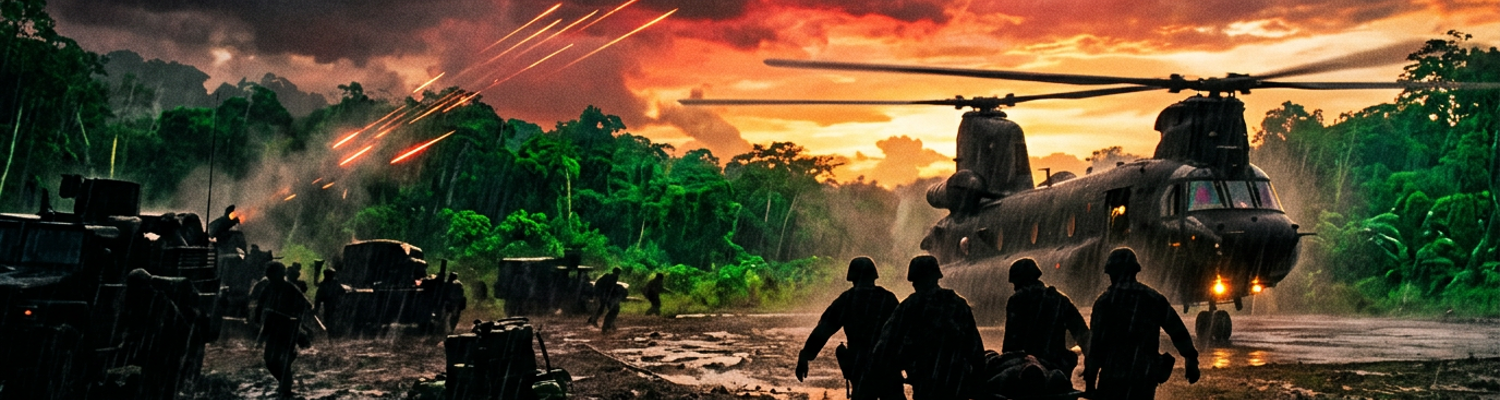
Corridor maps guided pilots as they lifted their loaded UH-1 Huey transport helicopters off the steel revetments and banked northwest toward the dense tree lines of the Fish Hook. Flight leaders monitored their instrument panels while following escorting AH-1 Cobra gunships, expecting Seventh Air Force tactical strike bombardments to flatten the designated landing zones before the air assault arrived. The promised airstrikes failed to appear on schedule because dispatchers at the Tactical Air Control Center in Saigon struggled with morning target clearances and delayed fighter scrambles. Seventh Air Force strike planners had pushed back the bombardment timetables without notifying the division flight leads already in the air, creating a dangerous gap between high altitude planning and low altitude reality. Helicopter formations approached the border at ninety knots with no bomb craters or burning brush in sight, forcing pilots to circle over the dense jungle while burning critical fuel reserves. Rotor noise echoed across the canopy for miles, alerting North Vietnamese Army gunners hidden around the uncleared landing sites to the exact flight paths of the incoming troop carriers.
Troop carriers drifted within effective range of the tree lines as gunners opened fire with heavy 12.7 millimeter antiaircraft machine guns. Green tracer fire ripped upward through the morning humidity, punching holes through aluminum tail booms, shattering cockpit windscreens, and severing hydraulic lines. Cobra pilots pushed their nose controls down and fired 2.75 inch rockets and 20 millimeter chin turret cannons into the brush, but these light munitions could not penetrate the thick log roofs shielding the enemy weapon pits. Troop laden Hueys shuddered under constant automatic weapons fire, forcing pilots to break formation and pull hard on their collective sticks to escape the killing zones. Aviators reported direct hits on engine compartments and passenger cabins over the radio net as black smoke billowed from damaged airframes attempting emergency climbing maneuvers. Flight commanders quickly radioed American artillery bases positioned along the border, demanding immediate high explosive barrages to suppress the antiaircraft nests before more transports were shot out of the sky.
Transports continued taking fire while battery commanders at border fire bases locked their 105 millimeter and 155 millimeter howitzers in place. Rigid rules of engagement blocked these artillerymen from delivering immediate suppression fire across the frontier. Rules established by higher military and political authorities strictly restricted cross border artillery missions to prevent accidental shelling of unmapped civilian settlements or friendly reconnaissance teams. Artillery officers required explicit geographic verification and formal approval signatures from field force headquarters before any cannon crew could load a shell and pull a firing lanyard. Battery radiomen listened to frantic distress calls from the circling helicopter pilots while waiting on deadlocked telephone lines for clearance officers to review target coordinates. Gun crews stood motionless beside their ammunition stacks under the morning sun as spotter planes continued to report heavy antiaircraft fire tracking the American helicopters just over the tree line. Division staff officers argued over field radios with corps coordinators to bypass the administrative checkpoints, but the restrictive regulations remained in effect during the entire opening wave of the insertion.
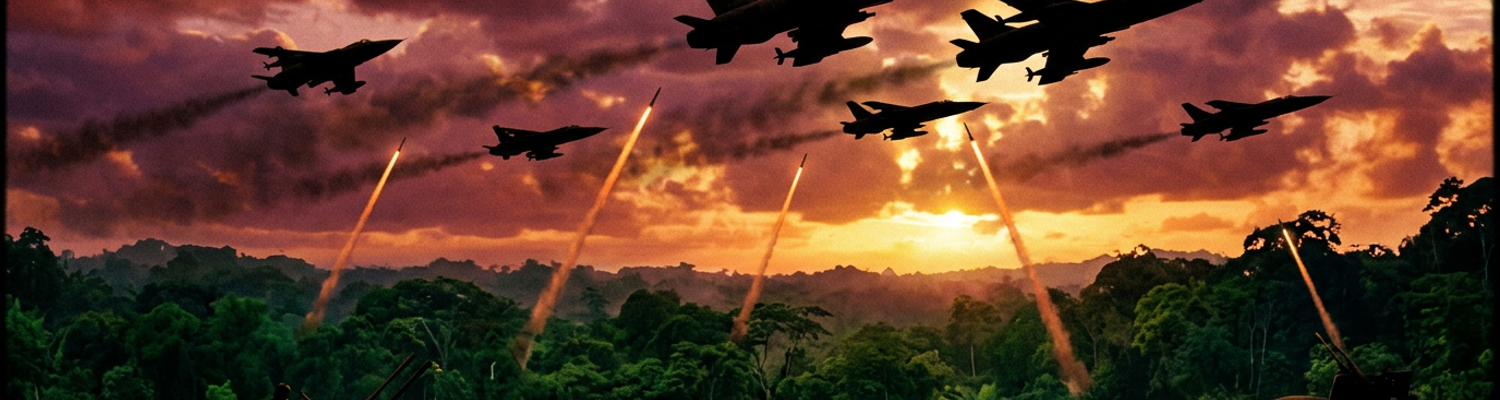
Insertion waves finally received support when fighter bombers from Seventh Air Force squadrons streaked across the Cambodian border nearly forty minutes late. Jets dived through the smoke to release heavy iron bombs and napalm onto the enemy gun nests. Concussion waves from the seven hundred and fifty pound bombs flattened the thick brush and collapsed the main North Vietnamese bunker positions, silencing several of the heavy machine guns that had dominated the landing zone. The delayed strike brought relief to the survivors, but the assault plan had suffered severe disruption during the long wait above the trees. Damaged Hueys limped back across the frontier toward emergency landing strips at Quan Loi with wounded infantrymen, leaking fuel bladders, and punctured rotor blades. Ground commanders quickly reorganized their remaining flyable helicopters over tactical frequencies, directing the second flight wave to descend through the settling dust and place boots on Cambodian soil.
Subterranean Breaching at The City Redoubt
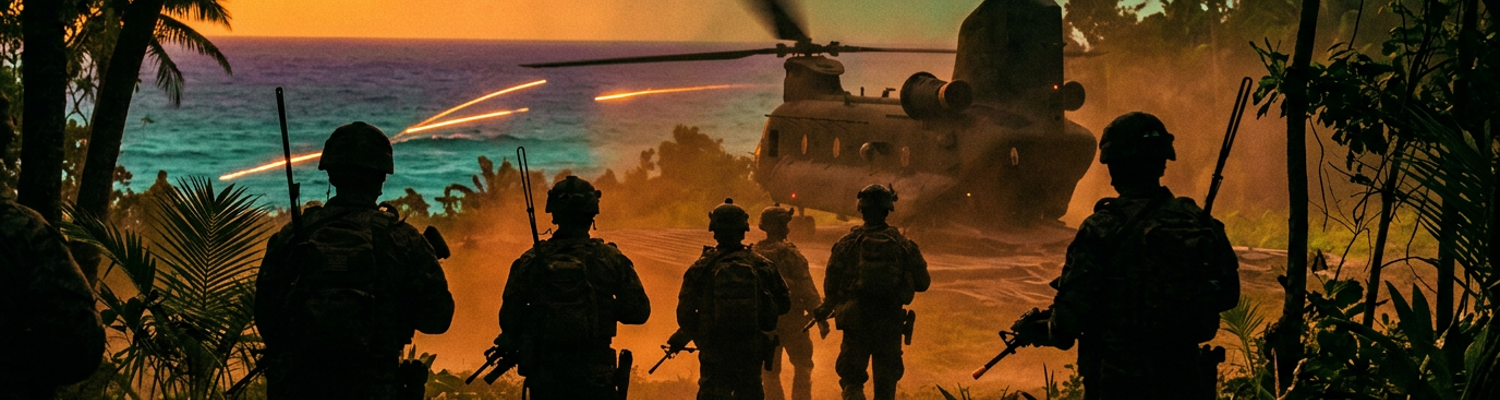
Boots of infantrymen hit Cambodian soil as soldiers leaped from hovering helicopter skids into waist high elephant grass. Soldiers fanned out into security perimeters while low flying scout teams from the 1st Squadron, 9th Cavalry tracked fresh truck ruts through the dense bamboo. Aerial scouts spotted reinforced log roofs, bamboo matted footpaths, and hidden radio antennas that led 1st Cavalry Division elements to uncover a massive North Vietnamese supply redoubt code named The City. The complex spanned nearly two square miles southwest of Snoul, concealing hospital wards, mess halls, and vehicle maintenance bays beneath a triple canopy jungle that completely masked the base from high altitude observation planes. Seventh Air Force strike liaisons at once demanded that division commanders pull their troops back so B-52 bombers and tactical fighter bombers could obliterate the grid coordinates to generate high tonnage bomb damage scores. Major General Elvy B Roberts rejected the Air Force targeting request, refusing to surrender an intact logistical center of immense intelligence value to competitive inter service bomb tallies. Division leaders ordered their airmobile rifle companies and accompanying combat engineers to secure the surface perimeter and prepare for immediate underground breaches.
Engineers initiated underground breaches as specialists from the 8th Engineer Battalion joined airmobile infantry squads at concealed trapdoors. Specialists utilized pry bars, entrenching tools, and wire cutters to force their way into the earth. Airmobile infantry and combat engineers penetrated multistory underground bunker networks and fortified tunnel complexes built into hard packed laterite clay. Troopers descended wooden ladders and notched tree trunks into subterranean tiers eight to twelve feet below the surface, discovering living quarters, ammunition lockers, and medical clinics connected by narrow crawlways. Hand hewn mahogany timbers and heavy earthen revetments reinforced the ceiling bulkheads, protecting the underground rooms against direct artillery hits and five hundred pound aerial bombs. Tunnel teams moved forward on hands and knees with flashlights taped to M16 rifles, probing the dark corridors with bayonets to disarm booby traps rigged with tripwires and Chinese stick grenades. Deep inside the lowest level of the complex, search teams uncovered central command rooms packed with cryptographic signal books, operational map overlays, and stacked wooden crates of new automatic weapons.
Weapons and intelligence materials drew immediate attention from Military Assistance Command, Vietnam officers who flew into forward landing clearings by helicopter. These headquarters specialists insisted that combat engineers halt their underground clearances until technical exploitation teams could catalog and fingerprint every document in place according to rigid protocol manuals. Cavalry commanders refused to pause their underground advance, arguing that tropical monsoon downpours and enemy counterattacks would flood the tunnel shafts or collapse the timbers before Saigon desk personnel completed their paperwork. Combat engineers ignored the administrative stop orders, using ropes and aluminum grapnels to pull booby trapped filing cabinets from lower galleries while armed infantrymen stood guard at connecting tunnel intersections. Working parties formed human bucket brigades along the wooden entry ladders, passing thousands of rifle magazines, mortar rounds, and anti aircraft shells upward into the sunlight.
Sunlight illuminated the massive haul as CH-47 Chinook helicopters hovered over the cleared canopy gaps. Flight crews lowered cargo nets and heavy steel cables to hoist the stacked munitions away from the base area. Transportation coordinators at division logistics bases struggled to keep pace with the massive haul, as higher level headquarters staff diverted heavy lift airframes to shuttle VIP delegations and political observers into the border area for promotional briefings. Ground officers watched empty supply pallets accumulate on the forest floor while hundreds of tons of North Vietnamese weapons, medical crates, and rice bags remained piled around the bunker entrances without adequate evacuation transport. Division leaders resolved the logistical deadlock by ordering their engineers to destroy whatever equipment could not be flown across the border before enemy units reorganized for a counterassault. Combat engineers stacked thousands of mortar shells and anti personnel mines inside the lower bunker chambers, wiring C-4 plastic explosive blocks and detonation cord through every subterranean junction. Engineers spooled firing wire out across the jungle floor and depressed their hand held blasting machines, collapsing the multi level tunnel network into a series of smoking subterranean craters.
Tunnel Clearance and MACV Intelligence Oversight
Craters billowed laterite dust and black cordite smoke as combat engineers from the 8th Engineer Battalion advanced toward uncollapsed tunnel shafts. Specialists strapped on canvas gas masks and crawled down narrow vertical entryways, using bayonets and pocket knives to probe the packed clay floor for hidden hazards. Tunnel teams encountered improvised toe popper booby traps made from hollowed bamboo tubes and rifle cartridges, designed to shatter a soldier's foot under minimal stepping weight. Chinese antipersonnel mines and salvaged American artillery fuses hung from mahogany ceiling beams by thread thin copper tripwires, threatening to bring down entire galleries if disturbed. Contaminated underground corridors filled with lingering tear gas residue, rotting medical waste, and stagnant water stung the eyes of the engineers and choked their breath as they edged deeper into the darkness. Teams worked in suffocating ninety degree subterranean heat for hours, cutting electrical detonating cords and disarming pressure plates before hauling armloads of waterlogged codebooks, payroll ledgers, and weapons crates into the open air.
Codebooks and wet paper files accumulated in sprawling heaps across the open landing zones. Intelligence officers from Military Assistance Command, Vietnam stepped off their transport helicopters and immediately tried to freeze the flow of materials. Headquarters evaluators insisted that frontline cavalry troopers stop stacking documents until specialists could number, catalog, and translate each notebook on site. Cavalry squad leaders pushed back violently against the administrative delay, knowing that monsoonal cloudbursts would dissolve the ink on the documents within hours if they remained exposed on the dirt. The intelligence personnel set up folding field desks beside the tree line and began logging individual items by hand into standard report registers, ignoring the tactical vulnerability of the perimeter. Troopers who had just spent days fighting through dense jungle bitterly resented the desk bound investigators who treated an active enemy base area like an office in Saigon. Frantic radio traffic crackled between forward cavalry commanders and corps headquarters as tactical leaders warned that enemy reconnaissance units were already probing the thinning American security lines.
Security lines took incoming fire when mortar rounds dropped into the tree line three hundred yards out. Intelligence teams refused to accelerate their processing speeds for captured weapons despite the incoming explosives. Technical inspectors insisted on examining every recovered SKS carbine, AK-47 assault rifle, and rocket propelled grenade launcher to record factory serial numbers and country of origin armory markings before release. Cavalry working parties watched cargo helicopters circle overhead, burning fuel and drawing sniper fire while intelligence clerks argued over minor paperwork discrepancies. Frustrated troopers bypassed the inspection tables entirely, dragging heavy crates of machine guns and mortar tubes straight to the helicopter pads to load them into waiting nylon cargo nets. Heated shouting matches erupted across the flight line as intelligence lieutenants threatened to file formal insubordination charges against cavalry sergeants who refused to pause their loading details. Airmobile commanders stepped in between the disputing factions, blunt in their assessment that preserving the lives of their men and the physical haul outweighed any bureaucratic inventory protocol.
Inventory protocols collapsed completely when helicopter crews from the 229th Assault Helicopter Battalion set their turbine throttles and lifted the disputed cargo nets off the ground. Rotor wash from the departing UH-1 Huey and CH-47 Chinook transports blasted laterite grit across the intelligence officers and blew scattered cataloging forms into the surrounding brush. Ground crews shoved the remaining intelligence personnel and their portable lockboxes onto outgoing troop helicopters, cutting short the field document examination before the enemy counterattack fully materialized. Cavalry rearguards detonated thermite grenades inside the empty bunker portals and collapsed the last entry shafts with demolition blocks as the final helicopters cleared the canopy. Division supply officers redirected the entire stockpile directly to secure rear staging depots at Quan Loi and Tay Ninh, leaving MACV intelligence analysts to sort through the captured equipment far behind the border.
Ordnance Extraction at Rock Island East
Equipment flooded the rear staging depots as cavalry reconnaissance teams pushed forward to sweep the dense tree lines northeast of The City. Troopers trailed fresh truck tire tracks directly into a vast North Vietnamese supply depot code named Rock Island East. Soldiers from the 2nd Battalion, 7th Cavalry fanned out through bamboo groves to secure hundreds of camouflaged bunkers, sheds, and open trenches packed with millions of ammunition rounds and heavy antiaircraft weaponry. Search parties cataloged over six million rounds of small arms, mortar, and machine gun ammunition, along with dozens of 12.7 millimeter antiaircraft guns, rocket launchers, and heavy artillery shells hidden beneath palm fronds and canvas tarpaulins. American commanders named the site after the vast military arsenal in Illinois because the sheer tonnage of North Vietnamese war materiel dwarfed every previous arms discovery of the war. Ground officers quickly realized that moving hundreds of tons of munitions back across the South Vietnamese frontier before tropical storms broke would demand every transport helicopter available in the theater.
Helicopters responded to the urgent extraction call, bringing fleets of CH-47 Chinook and CH-54 Tarhe cargo aircraft into the combat zone. Severe payload extraction limits imposed by restrictive flight envelopes and sweltering midday heat immediately hampered operations. Humid ninety five degree air thinned the atmosphere over the Cambodian jungle, reducing engine turbine output and forcing flight crews to slash sling load weights well below factory design maximums to stay airborne. Restrictive flight envelopes established by inter service transit coordination compounded the mechanical struggle, as Seventh Air Force air traffic regulators refused to grant the Army helicopters broad navigational leeway across the international border. Air Force planners in Saigon mandated narrow aerial corridors and locked helicopter formations beneath a strict one thousand foot ceiling to prevent interference with high altitude jet bombardments and aerial tanker orbits. North Vietnamese gunners quickly identified these rigid transit routes, positioning automatic weapons and rocket batteries along the designated boundary corridors to fire upward into the slow, heavily loaded helicopters.
Pilots of the heavily loaded helicopters absorbed continuous ground fire along the assigned border routes. Seventh Air Force transit controllers repeatedly refused division requests to widen the flight envelopes or allow evasive flight paths. Air Force staff officers insisted that opening secondary corridors would endanger high flying jet strikes, forcing helicopter pilots to make agonizing trade offs between aircraft survival and cargo weight. Crew chiefs aboard the twin engine CH-47 Chinooks stripped out auxiliary fuel tanks, troop seats, and cabin armor to reduce empty aircraft weight, allowing the helicopters to lift heavy antiaircraft cannons out of the clearings. Pilots operating the massive CH-54 Tarhe Skycranes struggled with aerodynamic sway as dense crosswinds buffeted the open framework airframes, threatening to snap external hoist cables when hauling five ton sling loads of boxed artillery shells. Ground handlers used portable scales and crude balancing charts to weigh every crate of captured ammunition, hastily cutting loose entire pallets of small arms cartridges whenever an overloaded helicopter hovered sluggishly over the jungle canopy.
Canopy clearings filled with discarded ammunition crates as engineers from the 8th Engineer Battalion stacked the excess into enormous demolition pyramids along the perimeter of the depot. Demolition specialists packed blocks of C-4 explosive and lengths of detonating cord into the stacks of millions of rifle rounds and antiaircraft shells that could not be lifted out under the rigid flight quotas before the withdrawal deadline. Cavalry platoons maintained defensive security against probing enemy infantry squads while the final flyable Chinooks and Tarhes lifted the prize heavy weapons and fire control optics into the low altitude corridor toward Tay Ninh. Demolition teams unspooled electric firing wire across the red laterite soil to distant foxholes, checking their circuit testers as the last loaded helicopter cleared the surrounding treetops. Platoon sergeants depressed the hand held detonators, igniting thunderous chain reaction blasts that pulverized the remaining ammunition caches and collapsed the North Vietnamese supply depot into scorched, smoking earth.
In Situ Demolitions and Cache Destruction
Smoke from the pulverized depot drifted across the surrounding bamboo as scouts uncovered adjacent satellite storage pits. These new pits contained hundreds of tons of unstable ordnance that no helicopter fleet could ever evacuate. Sweating infantrymen pulled perimeter guard while combat engineers from the 8th Engineer Battalion hauled heavy forty pound ammonium nitrate cratering charges into the deep trench lines to shatter the massive unrecoverable munitions dumps in place. Demolition specialists placed specialized M14 thermite incendiary devices directly on top of stacked wooden crates containing heavy machine guns, fused mortar rounds, and recoilless rifle shells. Intense chemical heat from the burning thermite reached over four thousand degrees, melting steel gun receivers into misshapen slag and burning through thick weapon casings so the equipment could never be salvaged. Squad leaders inspected every bunker chamber to ensure explosive cables reached the deepest corners of the storage network. Engineers tamped thick layers of wet clay and heavy sandbags over the cratering charges to direct the main explosive force downward into the buried bunker foundations.
Bunker foundations remained rigged for destruction when MACV evaluators stepped out of light observation helicopters into the muddy clearing. Saigon intelligence officers waved clipboards and ordered the engineers to halt the demolitions before they could ignite the primed charges. These evaluators insisted that frontline cavalry units stop laying explosives until evaluation teams could compile comprehensive serial inventories of every captured carbine, antiaircraft barrel, and ammunition lot. Disagreements escalated into shouting matches beside the open trenches as staff evaluators threatened administrative reprimands against any engineer who destroyed unlogged war materiel. Tactical combat commanders rejected the administrative demands on the spot, pointing out that North Vietnamese reconnaissance patrols were rapidly converging on the isolated clearings while American security cordons were thinning out. Intelligence evaluators argued that higher headquarters required complete serial number ledgers to verify enemy supply lines and maintain proper theater accounting records for Washington briefings. Cavalry commanders countered that their immediate tactical priority was the rapid demolition of the stockpiles to keep lethal munitions out of enemy hands rather than stalling combat operations to catalog equipment under hostile fire.
Fire from advancing North Vietnamese squads interrupted the argument as mortar shells slammed into the outer perimeter. Explosions threw wet red dirt across the dispute and scattered the uncompleted inventory forms into the brush. Cavalry officers used the sudden bombardment to end the bureaucratic stalemate, shoving the protesting MACV evaluators aboard an outbound transport helicopter to clear the landing zone for immediate demolition. Combat engineers rushed through the trenches under incoming small arms fire, stringing high velocity detonating cord between the cratering charges and pyramids of unevacuated 122 millimeter rockets. Specialists unspooled heavy electric firing wire across the churned laterite toward protected defensive trenches along the tree line, verifying each circuit connection with handheld test meters. Platoon sergeants gripped their dual action blasting machines and twisted the firing handles, triggering a synchronized blast that threw thousands of tons of earth and ruptured metal into the sky. Shockwaves from the detonating cratering charges pulverized the subterranean bunkers and shattered the remaining weapons caches into smoking, unrecoverable fragments.
Antiaircraft Ambushes on Retrograde Aircrews
Fragments of unrecoverable weapons rained down as helicopter pilots climbed away from the smoking blast craters. Flight leaders funneled their aircraft into narrow air corridors that Seventh Air Force controllers insisted on keeping restricted below one thousand feet. North Vietnamese regiments took immediate advantage of these rigid flight lanes, mounting escalating 12.7 millimeter and 37 millimeter antiaircraft ambushes against retrograde aviation corridors throughout late 1970. Enemy gun crews concealed heavy Soviet built 12.7 millimeter machine guns and radar assisted 37 millimeter rapid fire cannons along ridgelines, jungle clearings, and river junctions directly underneath the mandatory flight paths. Weapon crews camouflaged their dug in gun pits with freshly cut bamboo branches and broad palm fronds, waiting until troop laden Hueys and lumbering Chinooks entered interlocking kill zones before opening fire. Concentrated volleys of heavy explosive shells ripped through the low skies, chewing into aluminum airframes and puncturing pressurized hydraulic lines as entire helicopter formations struggled to clear the border. Heavy antiaircraft fire battered the extraction waves daily, filling the narrow air channels with black bursts of flak and tracing lines of armor piercing bullets.
Bullets and shrapnel from exploding antiaircraft shells shattered Plexiglas windshields and tore through cargo decks. Wounded pilots fought their vibrating flight controls while warning lights flashed across instrument panels. Division aviation commanders appealed to Seventh Air Force headquarters in Saigon to immediately suspend the one thousand foot ceiling or authorize alternative flight routes through uncontested airspace. Air Force operations officers rejected these emergency tactical requests, arguing that permitting Army aircraft to climb above the ceiling would endanger high altitude jet strikes and disrupt regional airspace management. Bureaucratic friction between ground aviation commanders and Saigon air planners left the low flying helicopters pinned between the lethal ground fire and the dense monsoon clouds building up above the tree canopy. Tropical monsoon storms brought heavy downpours, severe turbulence, and dense ground fog that forced helicopter formations to descend even closer to the camouflaged enemy weapons pits.
Weapons pits faced immediate retaliation when aero weapons teams and 9th Cavalry gunships answered the distress calls. Pilots of the 1st Squadron, 9th Cavalry pushed their AH-1 Cobra gunships and armed OH-6A Cayuse light observation helicopters right down through torrential rain showers and blinding cloud banks to locate the concealed enemy positions. Flight crews skimmed just above the wet tree crowns at over one hundred knots, drawing heavy ground fire deliberately so escorting Cobras could spot the muzzle flashes hidden under the dense canopy. Gunship aviators fired salvos of 2.75 inch folding fin aerial rockets, twenty millimeter automatic cannon fire, and high explosive grenades directly into fortified 37 millimeter revetments and 12.7 millimeter machine gun pits. Rocket blasts and cannon fire pulverized the camouflaged gun emplacements, buying crucial minutes for crippled transport helicopters to limp across the border toward emergency staging strips at Tay Ninh and Quan Loi.
Mechanics at emergency staging strips in Tay Ninh and Quan Loi swarmed over the returning helicopters. Ground crews patched jagged shrapnel holes with sheet metal and replaced shredded rotor blades while engines remained hot. Division flight operations officers reorganized surviving aircraft into tighter, mutually supporting formations to bypass the most heavily defended enemy flak corridors along the Cambodian border. Cavalry commanders directed organic artillery batteries and division gunships to lay continuous suppression bombardments along known ambush corridors without waiting for delayed Air Force target clearance. North Vietnamese gunners gradually lost their ability to sustain synchronized heavy fire as relentless low level rocket strikes dismantled their concealed weapon positions across the border zone. Troop carriers and heavy cargo helicopters delivered their final loads of personnel and captured equipment into South Vietnamese revetments, securing the completed extraction before North Vietnamese infantry could overrun the abandoned border clearings.
Territorial Handovers and Fort Hood Redeployment
Clearings along the border fell behind as ground crews guided the returning aircraft into crowded revetments at Phuoc Vinh and Tay Ninh. Maintenance teams immediately unloaded tons of salvaged munitions and prepared remote installations for rapid turnover. Cavalry commanders faced escalating pressure from Military Assistance Command, Vietnam headquarters to execute rapid logistical and firebase transfers to South Vietnamese territorial forces and ARVN units. Staff officers in Saigon demanded strict property accounting and fast transfer schedules, but frontline troops struggled to hand over isolated combat bases amid heightened enemy harassment from North Vietnamese rocket and mortar squads. Engineers and cavalry platoons worked beside South Vietnamese soldiers under intense midday heat to reinforce defensive bunkers, inventory 105 millimeter howitzers, and string thousands of yards of fresh concertina wire around the perimeter. Hostile artillery shells repeatedly slammed into ammunition supply points and splintered freshly installed revetment timbers, forcing American gunners and South Vietnamese crews to scramble into shared foxholes to direct suppressive counterbattery fire into the surrounding treelines.
Treelines absorbed salvos of high explosive shells as artillery batteries from the division unleashed fire against the hidden mortar positions. This counterbattery fire bought precious hours for the joint base defense. Bureaucratic friction complicated these transfers because theater logistics officers refused to release critical spare parts, radar equipment, and backup generators to local South Vietnamese garrisons. American division officers argued that territorial militia units could not withstand enemy probes without operational communication gear and heavy weapons, but military advisory planners strictly followed theater property regulations that barred unauthorized equipment abandonment. Cavalry officers on the ground resolved the impasse by intentionally writing off vehicle components, medical kits, and crates of small arms ammunition as combat losses, leaving the valuable supplies behind in ARVN hands. North Vietnamese infantry launched sudden roadside ambushes against the subsequent withdrawal columns along Highway 13, detonating command controlled mines and firing rocket propelled grenades at supply trucks. Division convoy guards returned heavy automatic weapons fire and called in armed helicopter gunships, driving the enemy back into the dense jungle to keep the retreat routes open.
Retreat routes remained secure as cavalry regiments and aviation battalions assembled at Phuoc Vinh and Bien Hoa. Division units received citations for the Valorous Unit Award for their extraordinary heroism during the border clearance operations. Soldiers earned these high combat citations after weeks of subterranean breaching, hazardous cache demolitions, and intense aerial extractions under relentless enemy antiaircraft fire. Saigon administrative staff attempted to trim back unit decoration requests, claiming that operational tallies should follow standard bureaucratic formulas rather than frontline commanders assessments. Senior cavalry officers forcefully defended the award recommendations during command conferences, ensuring that division flags and battalion guidons formally received their campaign streamers prior to final withdrawal. Riggers secured helicopter main rotor blades inside wooden shipping crates and strapped heavy maintenance equipment onto flatbed pallets at the Bien Hoa flight line, preparing entire battalions for overseas movement.
Movement overseas began when troopers boarded long range jet transports at Bien Hoa airfield in April 1971. Commanders cased the division colors as the bulk of the command executed its redeployment to Fort Hood, Texas. Headquarters personnel left the separate 3rd Brigade behind in South Vietnam to maintain airmobile operations around Saigon, while thousands of returning soldiers traveled to Texas to rebuild the division. Pentagon planners ordered the 1st Cavalry Division to transform upon arrival into an experimental triple capability formation, integrating heavy tanks, mechanized infantry, and air cavalry into a combined arms structure. Inter agency logistics deadlocks slowed the transition because depot managers failed to deliver designated M60 tanks and armored personnel carriers on time, leaving motor pools half empty. Mechanics and vehicle drivers spent long weeks refurbishing worn training machinery and reassembling returning UH-1 Huey helicopters under the hot Texas sun. Cavalry crews loaded live ammunition aboard their tanks and helicopters, conducting large scale combined arms maneuver drills across the open firing ranges of Fort Hood to re establish combat readiness.