
Television Broadcasts and Diplomatic Fallout
LVTP-5 amphibious tractors churned through thick mud south of Da Nang as Marine infantry moved toward the fortified tree lines of Cam Ne. These thirty-ton armored tracked vehicles carried rifle squads through flooded rice paddies, but three of the tractors quickly sank to their hulls in the soft earth, forcing the troops to dismount into waist-deep water under sniper fire. Squads deployed three-point-five-inch rocket launchers and backpack flamethrowers against fortified bunkers, yet the fighting rapidly spilled into the civilian settlement. Morley Safer of CBS News walked behind the lead platoons with a sound technician and a Vietnamese cameraman, filming Marines using standard Zippo lighters to ignite the dry thatch on peasant huts while families fled into underground trenches. Safer shipped the raw film canisters by courier aircraft from Da Nang to New York, where network editors prepared the visual record of burning homes for nationwide transmission.
Network television sets across the United States broadcast this footage on the evening news, showing millions of viewers the sight of American Marines setting fire to village huts. Viewers immediately sent thousands of angry letters and phone calls to the White House and Congress, while diplomats and newspapers across Europe and Asia condemned the destruction of peasant property. President Lyndon B. Johnson reacted with fury to the international and domestic public outcry, telephoning CBS News executives early the following morning to criticize the network and demand the reporter be removed. Johnson then directed his anger at the military high command, applying direct political pressure to Secretary of Defense Robert McNamara and the Joint Chiefs of Staff to stop troops from producing public relations disasters. Marine Corps Commandant General Wallace M. Greene Jr. and senior officers in Saigon received direct orders from the White House to explain why frontline forces had destroyed civilian homes without clear military necessity.
General Lewis W. Walt, commanding general of III Marine Amphibious Force in Da Nang, responded to this White House pressure by ordering an immediate review of operational practices across all Marine tactical zones. Walt recognized that destroying civilian property alienated local villagers and damaged diplomatic standing abroad, complicating the mission to secure the countryside. Marine staff officers worked alongside military assistance advisers to draft restrictive rules of engagement designed to minimize non-combatant casualties and property damage during search operations. These new rules prohibited troops from burning huts unless enemy personnel used those specific buildings as active firing positions, and they removed the authority of junior officers to order village destruction. Field commanders received strict instructions to use rifle fire and tear gas instead of heavy ordnance, artillery strikes, or flamethrowers when clearing suspected enemy bunkers in populated areas.
Infantrymen operating south of Da Nang felt the immediate impact of these new tactical boundaries during subsequent cordon operations around the Cam Ne village complex. Battalion commanders placed loudspeaker teams at the front of advancing units to broadcast warnings and allow women, children, and elderly residents to leave the area before troops entered the hamlets. Support units brought truckloads of lumber, corrugated metal sheets, and food supplies into the battered hamlets, putting combat engineers to work rebuilding destroyed houses while naval corpsmen treated injured villagers. Patrol leaders submitted written damage reports to their regimental headquarters and arranged cash payments to families whose property suffered combat damage. Sentries established fixed checkpoints along the waterways and footpaths, searching civilian carts by hand for hidden weapons rather than employing heavy firepower against nearby tree lines.
Operation Teton and the Transition to Madison
Riflemen of the 3rd Battalion, 1st Marines maintained these slow hand searches while shifting from the static security lines of Operation Teton into the wider search zones of Operation Madison between October 11 and October 23, 1966. Battalion commanders transferred three rifle companies out of fixed village perimeters to sweep larger rural districts for hidden insurgent supply bases. Heavy motor transport assets carried ammunition crates, eighty-one-millimeter mortar baseplates, and field radios from coastal rear depots to forward staging areas. Officers spent hours studying aerial reconnaissance photographs to identify suspected assembly areas and supply caches spread across rural hamlets. Infantrymen packed their canvas rucksacks with rations, spare socks, and extra bandoliers of rifle ammunition for two weeks of continuous movement. Company commanders organized their platoons into long marching columns, trading dry road networks for marshy approach routes that tested vehicle transmissions and physical endurance.
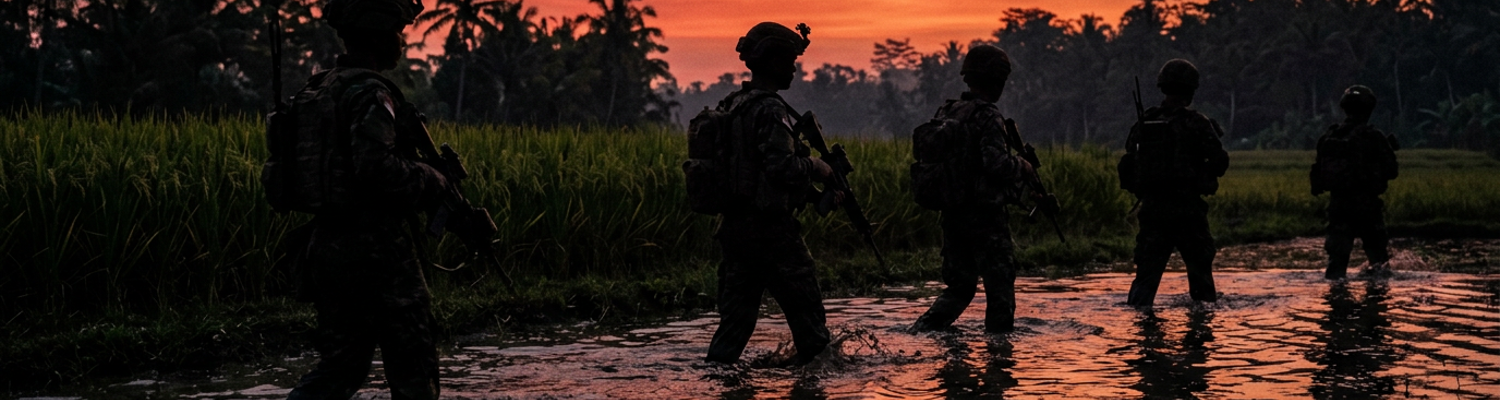
Monsoon rains from the northeast inundated the lowlands southwest of Da Nang Airfield, turning those marshy routes into waist-deep water barriers and grounding wheeled transport. Torrential downpours filled irrigation ditches until rice paddies merged into continuous stretches of muddy water. Saturated topsoil trapped the tracks of armored personnel carriers, forcing vehicle crews to hook up heavy steel tow cables and abandon mechanical transport in favor of foot patrols. Marine infantrymen wrapped their radio transceivers in heavy plastic bags, stripped their rifles daily to clean out wet grit, and carried extra ammunition cans high on their chests. Patrol leaders used wooden poles to probe flooded paddies ahead of their point men to detect sunken pitfalls and concealed tripwires. Riflemen slung their packs higher on their shoulders and waded through the flooded paddies, searching for solid ground to establish a coordinated cordon.
South Vietnamese Popular Forces platoons joined the Marine companies to guide them across submerged dikes toward the Yen River. Marine leaders integrated these regional militiamen into their operational plans because the local fighters understood the seasonal water depths and the location of safe footpaths through flooded farmland. Joint patrols paired American rifle squads with Vietnamese scouts, allowing the units to spot hidden punji-stick traps and underwater ditches that lay beneath the brown floodwaters. Local fighters pointed out the family layouts of surrounding farm hamlets, helping American officers distinguish between normal civilian traffic and suspicious movements by insurgent couriers. Popular Force scouts also spoke the regional dialect, enabling immediate verbal exchanges with local farmers encountered along the path. These scouts led the combined columns directly through the thick riverside vegetation, bypassing deep sinkholes to reach key crossing points on the riverbanks.
Sandbags and timber reinforced the new outer blocking positions as troops dug machine-gun pits directly into the wet clay along the Yen River. Popular Force fighters and Marine riflemen established interlocking fields of fire across the water, covering major bends and sampan ferry routes where small boats could attempt nighttime crossings. Field telephone wires linked each fortified bunker to adjacent squad positions and back to company command posts, ensuring dependable communications when torrential rain drowned out radio transmissions. Sentries maintained constant surveillance over the river, tracking drifting debris and checking civilian sampans for hidden weapons or illicit medical supplies. Marine machine gunners mounted tripod-supported machine guns behind earthen berms to cover every blind spot along the water. Mortar crews drove aiming stakes into the mud and zeroed their tubes on the opposite bank to block any night retreat across the river.
Infantry Cordons at the Cam Ne Hamlet Complex
Riflemen stepped out from the riverbank mortar lines at first light, pushing through dense bamboo thickets to close the southern cordon around the thatched dwellings of Cam Ne. Strict battalion orders forbade forward observers from calling in artillery fire or launching high-explosive mortar rounds into the populated village perimeter, denying the infantry their usual heavy fire support to prevent civilian casualties and property destruction. Marine officers kept their pack howitzers silent at the rear firebases, instructing squad leaders that any hostile fire from inside the hamlet had to be answered exclusively with rifles, pistols, and tear gas. Platoons moved through the narrow footpaths with twelve-gauge shotguns and M14 rifles ready, advancing yard by yard without the preliminary explosive barrages that had leveled settlements in earlier operations. Squad leaders checked their compass bearings and maintained visual contact with adjacent fire teams, sealing off irrigation canals and footpaths to prevent insurgent messengers from escaping into the surrounding brush. This tight encirclement forced hidden defenders to remain trapped inside their concealed fighting positions rather than scattering into the open countryside.
Steel probes pierced the damp earth beneath pigpens and sleeping mats, systematically uncovering spider holes, subterranean tunnels, and fortified log bunkers built into the foundations of Cam Ne. Marines knelt in muddy courtyards to scrape away layers of dried palm thatch, exposing narrow wooden trapdoors that opened into interconnected underground trench networks. Point men dropped into the dark, cramped crawlways with hand-held flashlights and forty-five-caliber pistols, checking dirt-walled chambers for booby traps, hidden weapon caches, and concealed snipers. Search teams tossed non-lethal CS tear gas grenades into deep shafts instead of satchel charges, flushing barricaded fighters out into the open while protecting the structural framing of surrounding peasant huts. Combat engineers used pickaxes, shovels, and tow cables to collapse empty firing bunkers along the hedgerows without damaging adjacent civilian family dwellings. Each cleared bunker and tunnel branch yielded hidden bags of salt, regional communication logs, and small arms, which Marine riflemen cataloged and hauled into open daylight alongside detained suspects.
Navy corpsmen met these escorted families and detainees at the edge of the hamlet, directing hundreds of local inhabitants into a coordinated processing perimeter equipped with battalion interrogation tents and a field medical station. South Vietnamese military interrogators and Marine intelligence specialists sat at folding wooden tables, checking laminated identification cards and comparing family names against administrative blacklists of local guerrilla cadres. Intelligence personnel conducted quiet interviews with village elders, asking specific questions to distinguish permanent residents from insurgent fighters who had forced the community to construct underground fortifications. Doctors and corpsmen worked alongside the screening lines, treating skin infections, washing eye irritations caused by lingering dust, and applying clean gauze to untreated shrapnel lacerations. Support platoons distributed clean drinking water and canned rations to waiting mothers and children, maintaining order while the background evaluations proceeded without physical abuse or panic. Administrative clerks stamped identification papers and medical personnel verified physical conditions, handing cleared residents written travel passes that allowed them to walk back to their inspected homes.
Command Chronologies and Phantom Battalions
Riflemen watched those inspected families settle back into their courtyards, finding none of the pitched combat that higher headquarters had warned them to expect. Prior to the sweep, III Marine Amphibious Force intelligence estimates had warned commanders to anticipate contact with an entrenched four-hundred-man Viet Cong battalion dug into the hedgerows of Cam Ne. Intelligence officers in Da Nang believed that this reinforced insurgent unit planned to defend its fortified base area with heavy machine guns, coordinated mortar positions, and deep earthen pillboxes. Company commanders had briefed their squad leaders to prepare for brutal close-quarters assaults against fortified tree lines and determined defensive stands. Assault platoons swept through open hamlets that contained only silent underground shelters and civilian farming families instead of meeting concentrated counterattacks.
Battalion clerks recorded these silent settlements in the official Third Battalion, 1st Marines command chronology documentation, logging daily entries that revealed an absence of organized enemy forces. Staff officers documented deserted fortifications, concealed punji pits filled with sharpened bamboo stakes, and occasional sniper fire rather than the massed resistance predicted by regional planners. Hidden riflemen took solitary shots from distant tree lines before vanishing into submerged drainage canals, while booby-trapped footpaths caused far more platoon injuries than enemy counterattacks. Search teams mapped miles of cleared earthworks, dry underground bunkers, and abandoned spider holes, confirming that insurgent cadres had evacuated their fighters across the river before the cordon snapped shut. Patrol leaders submitted their final company logs showing negligible enemy casualties, creating an official paper trail of an expensive operation that had captured empty real estate instead of breaking a combat battalion.
Military Assistance Command, Vietnam headquarters measured tactical success through large enemy body counts, creating immediate friction with the modest tallies reported from Cam Ne. Commanders in Saigon evaluated field operations using statistical metrics that required dead enemy soldiers to justify the commitment of battalions, heavy transport, and aerial logistics. This operational doctrine placed high value on aggressive search-and-destroy sweeps that generated large piles of captured equipment and heavy enemy fatalities in remote jungles. Pacification cordons deliberately restrained heavy firepower to safeguard rural settlements, producing tedious low-yield searches that yielded tiny casualty counts and few captured weapons. Staff officers at MACV viewed such low numbers as evidence of failed aggression or flawed execution, refusing to believe that hundreds of insurgent fighters could simply evaporate from a sealed village without leaving a trail of bodies.
Marine commanders defended their sparse casualty logs by insisting that cordon methods preserved civilian communities and isolated insurgent political cadres without triggering domestic media outrage. General Lewis Walt and his III Marine Amphibious Force staff resisted demands from Saigon for aggressive search-and-destroy sweeps, ordering Third Battalion to maintain its combined patrols alongside South Vietnamese Popular Forces. Platoon commanders collected their spent brass, loaded their field packs onto waiting trucks, and repositioned their rifle companies along the outer perimeter of the Yen River. Combat engineers began filling the abandoned fighting holes with earthmovers, securing the perimeter to prevent the absent Viet Cong battalion from reoccupying the evacuated trenches.
Pacification Realities and Post-Madison Operations
Earthmovers leveled the dirt ramparts around Cam Ne as Marine planners converted the cleared ground into permanent security outposts rather than abandoning the hamlets to enemy control. Lieutenant General Lewis Walt and Lieutenant General Victor Krulak mounted a firm strategic defense of this enclave pacification approach, arguing that safeguarding the civilian population mattered far more than pursuing guerrilla units into empty mountain ranges. General William Westmoreland and senior commanders at Military Assistance Command, Vietnam favored conventional search-and-destroy missions to produce high enemy casualty counts, but Krulak and Walt warned that massive firepower alienated the very citizens the government needed to win over. Marine staff officers presented detailed field studies showing that destructive sweeps generated thousands of homeless refugees, ruined agricultural fields, and left the underground insurgent political network completely intact once American forces withdrew. Walt directed his combat engineers, naval corpsmen, and rifle squads to remain in the hamlets alongside local authorities, establishing fortified outposts to protect peasant farming communities from insurgent extortion and midnight executions.
Washington officials and Pentagon analysts scrutinized tactical operations across these populated I Corps areas with unprecedented intensity to prevent political embarrassment. President Lyndon B. Johnson and his civilian advisers monitored morning intelligence cables from Da Nang with deep concern, fearing that another broadcast of burning thatch huts would trigger wider protests and collapse domestic support for the war. Higher headquarters in Saigon placed strict reporting demands on regimental officers, requiring battalion commanders to clear target coordinates through regional political leaders before artillery batteries could fire a single shell near populated zones. Radio operators at field command posts regularly received sharp inquiries from higher headquarters whenever spotter planes noticed rising smoke, damaged brick walls, or unexploded ordnance close to family dwellings. Frontline commanders responded by enforcing tight rules of engagement, shelving heavy aerial strikes in favor of infantry cordons, and relying on close-range rifle fire, non-lethal tear gas, and door-to-door hand searches. Field officers recognized that a single stray round could trigger international press backlash, forcing companies to advance through suspected enemy positions without preliminary artillery preparation.
Riflemen assigned to expanding Combined Action Platoons stepped directly into these rural communities as the Marines main counterpoint to conventional search-and-destroy attrition doctrine. Marine commanders paired a fourteen-man American rifle squad and a Navy corpsman with a local South Vietnamese Popular Force platoon, stationing the integrated unit inside the village perimeter on a permanent, round-the-clock basis. Squad leaders lived in thatched huts alongside Vietnamese militiamen, teaching them how to maintain automatic weapons, adjust mortar fire, call in emergency medical evacuations, and defend local administrative offices. These mixed units gained the trust of local families by sharing combat rations, helping farmers repair irrigation canals, and providing continuous medical care at community aid stations. Sentry squads guarded water wells and village gates during the day, preventing insurgent tax collectors from confiscating the rice harvest, while night patrol teams laid silent ambushes across irrigation dikes to catch infiltrating guerrillas. Popular Force fighters and Marines secured the hamlet boundaries without dropping heavy bombs or displacing families, holding the ground line by line as infantry squads established permanent security perimeters across the Yen River lowlands.