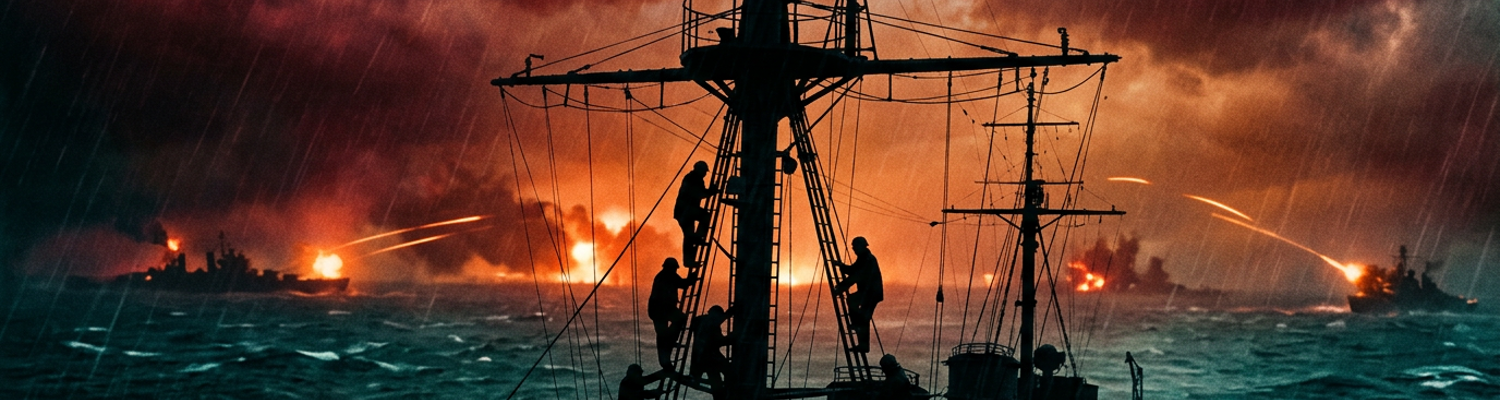
Banner for XIV Corps and the Pasig River Assault of 1945

XIV Corps and the Pasig River Assault of 1945

USMilitaryArchive
USMilitaryArchive

Published on

69 Views
0 Likes
Text Size

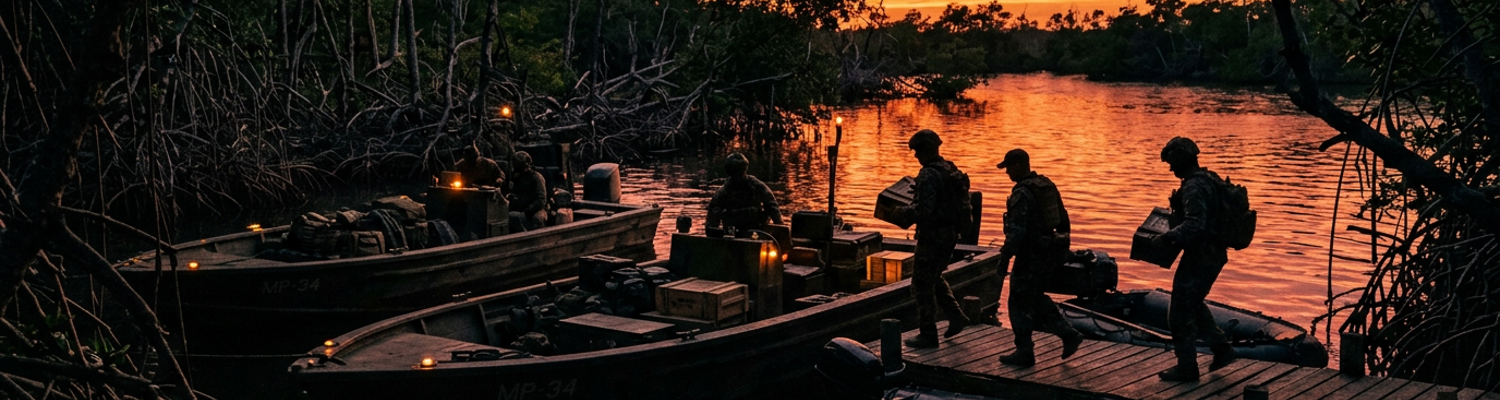
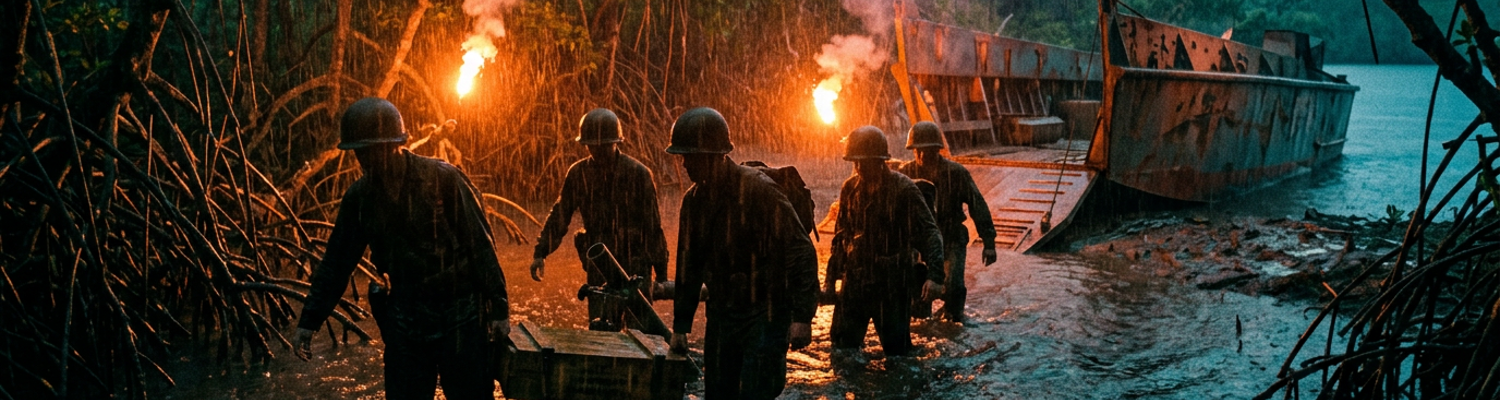
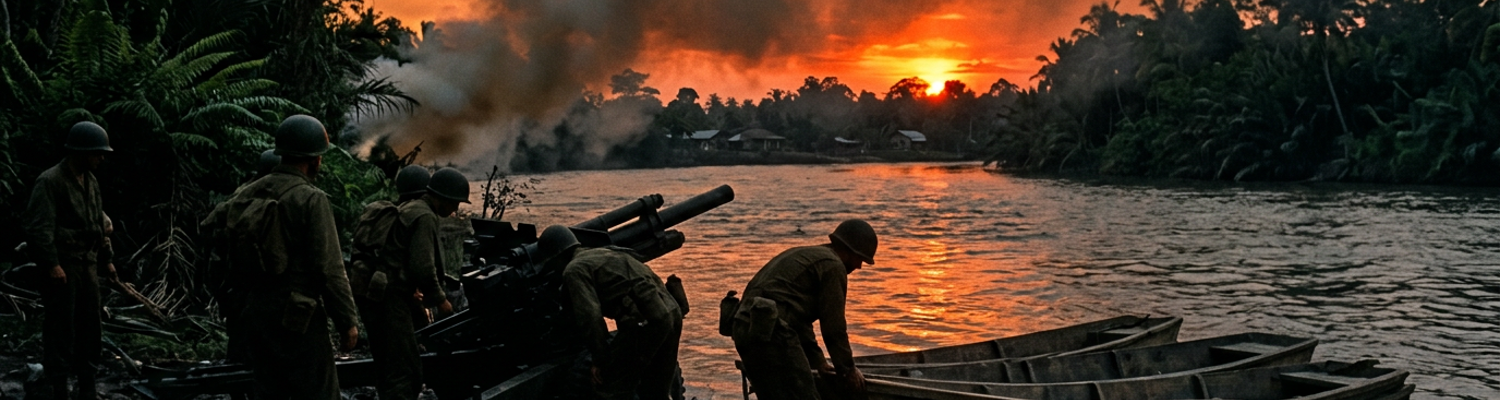
Plywood Assault Boats and Outboard Motor Preparation\n\nEngineers from the 117th Combat Engineer Battalion dragged ten man M2 assault boats through the thick mud along the north bank of the Pasig River. Work parties inspected the plywood hulls for splinter damage and sealed the rubberized joints of the accompanying canvas pontons to ensure watertight integrity. Mechanics pulled the spark plugs from the twenty two horsepower outboard motors to dry the ignition chambers, wrapping the electrical coils with friction tape and heavy grease to repel the humid tropical moisture. Fuel lines required clearing using hand pumps to remove sediment before soldiers checked the drive shafts and wired spare brass shear pins directly to the motor tillers. Engine crews finished testing the pull cords in muffled pits dug into the riverbank dirt, signaling the forward rifle companies to move into the embarkation trenches.\n\nRiflemen and machine gunners from the 148th Infantry Regiment stepped into these muddy trenches carrying weapons heavily contaminated by days of house to house fighting across northern Manila. Concrete dust, brick grit, diesel soot, and oily river sludge had seeped into the operating rods of M1 Garand rifles and the internal linkages of Browning Automatic Rifles. Soldiers used small solvent cans, toothbrushes, and dry cotton rags to strip down their bolt assemblies, scrubbing away the gummy paste formed by city debris mixing with light weapons oil. Machine gun crews pulled the top covers off their air cooled thirty caliber machine guns, wiping the receiver wells completely dry of excess lubricant so that floating dust from incoming mortar bursts would not bind the recoiling parts. Gunners inserted the cleaned bolt mechanisms back into the steel receivers and repeatedly worked the cocking handles by hand to guarantee that the firing pins dropped smoothly.\n\nCloth ammunition belts loaded with thirty caliber cartridges passed through clean wiping cloths to remove grit before loaders laid them into green steel ammunition cans. Gun crews stacked these sealed cans beside the riverbank retaining wall, where diesel exhaust from idling transport trucks hung thick against the warm air and blended with the sulfurous stink of burning city districts to the north. Stagnant river water pushed clumps of tropical weeds and floating charred wood against the muddy north shore, creating a thick barrier that threatened to tangle boat propellers as soon as the craft shoved off into the current. Squad leaders used wooden poles to shove this debris away from the launch lanes, peering south through the smoky haze toward the concrete factories and warehouses held by Japanese naval troops on the opposite bank. Boat commanders matched their assigned soldiers into strict ten man assault teams, assigning two riflemen in each boat to hold wooden paddles in case an engine suffered a mechanical failure midstream.\n\nBoat crews lifted the three hundred pound M2 craft by their side carrying handles and eased them down the slick mud slope into the brown river water. Engineers steadied each bobbing boat against the bank while the mechanics bolted the twenty two horsepower outboards onto the reinforced wooden transoms and tied the canvas ponton sections alongside to provide extra buoyancy in the choppy current. Soldiers stepped carefully over the gunwales to keep their freshly cleaned weapons out of the bilge water pooling at the bottom of the hulls, resting their rifle barrels across their knees and bracing their boots against the floor ribs. Coxswains gripped the steering handles and clamped their thumbs over the throttle levers, waiting for the whistle blast that would send the first wave of boats out into the open river.\n\n## LVT Tractors and Riverine Crossing Operations\n\nWhistle blasts from Major General Oscar Griswold echoed along the north bank, launching the 37th Infantry Division assault across the four hundred foot wide Pasig River near Malacanan Palace at 1515 on February 7, 1945. Outboard motors cranked into gear as the plywood M2 boats shoved out past the mud flats alongside the steel treads of LVT 4 amphibious tractors, churning river water into wide wakes. Riflemen crouched low beneath the gunwales, holding their M1 rifles and automatic weapons above the brown river spray while coxswains braced their bodies against the tillers to fight the central current. The first assault wave crossed the open river without drawing defensive fire, grounding its flat bottom hulls onto the southern mud shelves beneath the palace stone walls within three minutes. Soldiers climbed over the bow gunwales, scrambled up the slick masonry, and rapidly established an initial perimeter along the edge of the palace river path.\n\nJapanese naval troops concealed inside reinforced concrete bunkers along the Malacanan Gardens perimeter held their fire until the follow on assault waves reached midstream. Concealed Type 96 twenty five millimeter twin mount guns and twenty millimeter naval cannons then opened fire alongside dug in machine gun nests, targeting the crowded crossing lanes with intersecting cones of fire. Explosive twenty five millimeter shells struck the thin wooden hulls of the M2 assault craft, tearing through canvas pontons and riddling troop compartments with jagged metal splinters. Small arms rounds pierced outboard motor blocks and severed pressurized fuel lines, setting gasoline fires on the surface of the river. Soldiers rolled over the sides into the brown water to escape the burning hulls, unbuckling heavy ammunition belts and packs so the swift current would not drag them to the bottom.\n\nCoxswains in the surviving wooden boats attempted evasive turns, but continuous twenty millimeter fire drilled holes through the plywood hulls along the waterlines. LVT 4 tracked amphibians drove forward to shield the compromised wooden craft, positioning their steel armor plates between the Japanese guns and the swimming riflemen. Heavy machine gunners on the tractors fired their fifty caliber weapons directly at the concrete gun ports in the garden walls, knocking off chunks of masonry and suppressing the Japanese gunners. Tractor crews reached over the high steel sides to drag waterlogged soldiers out of the river, pulling men onto the cargo decks while twenty millimeter rounds flattened against the armor. Disabled assault boats drifted downstream toward broken bridge timbers, taking on river water through multiple shell holes and burning from punctured fuel tanks.\n\nTractor pilots steered through the smoke to unload the rest of the assault companies onto the south bank mud shelves. Riflemen from the 148th Infantry Regiment already ashore pushed directly into the Malacanan Gardens to destroy the Japanese weapons firing on the river. Infantry squads advanced through the garden hedges with flamethrowers and white phosphorus grenades, attacking the rear entryways of the pillboxes. Combat engineers detonated satchel charges against the reinforced concrete bunkers, destroying the Type 96 twenty five millimeter positions and killing the enemy gun crews inside. Radio operators set up battalion message posts against the palace walls, running telephone wire down to the landing zones to coordinate incoming ammunition barges and medical teams.\n\n## Air Support Prohibitions and Direct Fire Artillery\n\nShovels struck buried trolley tracks and crushed masonry as the infantry attempted to deepen their fighting positions under heavy fire from reinforced Japanese strongpoints to the south. Forward observers with the 148th Infantry Regiment radioed headquarters to request air strikes against the multistory concrete administrative centers that blocked every southward avenue of advance. General Douglas MacArthur issued strict inter service directives prohibiting Fifth Air Force close air bombardment to preserve civilian infrastructure and historical architecture across the densely populated capital. Major General Oscar Griswold and his XIV Corps staff protested the prohibition as Japanese naval troops converted government offices, colleges, and municipal halls into fortified redoubts packed with automatic weapons and naval cannons. Fifth Air Force pilots remained grounded at landing strips outside the city while American infantrymen took heavy casualties from machine guns firing out of upper story windows that aircraft were barred from bombing.\n\nRadio operators listened to frustrated fighter bomber pilots circling on standby over Manila Bay while rifle companies remained pinned down in the rubble. Artillerymen devised a direct fire alternative by rolling their field pieces into the street fighting to blast the fortified buildings apart at ground level. XIV Corps field artillery batteries moved their guns across the river on heavy pontons and positioned M2A1 105mm and M1 155mm howitzers in open streets for point blank demolition of reinforced concrete government buildings. Heavy tractors towed the artillery down rubble strewn avenues under the cover of thick smoke screens, unlimbering the weapons directly in wide intersections. Gun crews dropped the heavy steel spades of the carriages onto the cracked asphalt and stacked sandbags behind the rubber tires to absorb the violent recoil of horizontal shooting.\n\nOfficers checked their firing angles between ruined telephone poles, knowing that standard high angle lobbing could not crack the thick concrete facades or reach the deeply dug basements. Gunners opened the breech blocks and sighted their targets by looking straight down the open barrels at structural pillars, barred windows, and sandbagged doorways just three hundred yards away. Loaders shoved concrete piercing shells and delay fuzed high explosive rounds into the chambers, slamming the steel sliding blocks shut before pulling the firing lanyards. Muzzle blasts shattered every remaining pane of glass in the surrounding neighborhood, creating violent shock waves that tore down telephone wires and knocked infantrymen to their knees. High explosive shells punched clean holes through three foot thick reinforced walls before detonating inside the rooms, blowing out window frames, heavy masonry, and enemy gun emplacements in geysers of pulverized gray dust.\n\nCrews swabbed the hot powder residue from the rifled tubes with wet bore sponges and loaded fresh rounds within seconds to keep the Japanese defenders from recovering their weapons. Riflemen bounded forward through the settling dust immediately after each artillery volley, hurling white phosphorus grenades through the freshly blown breaches. Assault teams cleared the ground floors room by room with submachine guns and bayonets while the howitzer crews outside elevated their barrels to batter the upper floors and corner towers. Japanese defenders rushed down damaged interior stairwells to contest the hallways, but repeated direct fire concussions collapsed interior load bearing walls and buried enemy squads under tons of fallen rubble. Combat engineers rushed up behind the infantry with satchel charges to blast through interior partitions, creating covered passageways from one captured office to the next.\n\n## Boundary Conflicts and Signal Coordination Failures\n\nArtillery observers signaled the howitzer crews to cease fire only when American rifle companies climbed onto the rooftop parapets and secured the smoking ruins. Riflemen looking out from the captured rooftops spotted reconnaissance troops from the 1st Cavalry Division pushing westward into the very city blocks targeted by XIV Corps artillery. Major General Robert Beightler had expanded the 37th Infantry Division bridgehead south of the Pasig River toward the Paco district, but the boundary line dividing his men from the flanking cavalrymen remained vague on grease penciled command maps. Both divisions converged rapidly upon the same grid coordinates, crowding into narrow avenues blocked by downed trolley wires and burned automobiles. Forward artillery observers attached to the infantry called down high explosive barrages on concrete warehouse compounds, unaware that cavalry troops had already entered the far side of those buildings.\n\nArtillery shells from 105mm howitzers burst across mutual boundary lines, throwing jagged metal fragments into friendly positions and forcing American squads from both units to scramble into the same basements for cover. Wiremen inside regimental command posts cranked their EE 8 field phones to halt the cross boundary bombardment, only to find copper lines severed by falling masonry and passing tank treads. Mismatched signal operation instructions prevented the two converging divisions from sharing common radio frequencies, leaving company commanders unable to call neighboring units directly across the street. Signal corps regulations required frontline radio teams to route urgent warning traffic through XIV Corps headquarters miles away, adding severe delays to emergency ceasefire requests. Radiomen tuning their SCR 300 backpack sets encountered heavy static as thick concrete structures and pulverized stone dust absorbed high frequency signals.\n\nRadio transmissions from dozens of infantry battalions crowded the limited radio channels, filling the airwaves with garbled traffic and urgent shouts from operators attempting to cancel incoming fire missions. Spotters from the 1st Cavalry Division mistakenly identified muzzle flashes from 37th Division tank destroyers as Japanese naval guns, ordering counter battery artillery strikes into the Paco rail yards. High velocity artillery shells landed directly among infantrymen as they cleared barricades along the drainage canals. Officers on both sides of the contested boundary sent frantic messages over battalion nets, but conflicting code sheets and outdated call signs delayed the recognition of friendly positions as units converged on the dense urban sectors. Japanese defenders trapped between the two American forces used the chaotic crossfire to shift automatic weapons into dead spaces along the division boundaries, striking both American divisions with flanking fire.\n\nMachine gunners from the 148th Infantry Regiment held their fire in frustration, unable to determine whether helmet silhouettes moving through the smoke two blocks ahead were cavalry troopers or Japanese naval troops. Officers grabbed fluorescent orange identification panels and climbed onto exposed second story balconies, spreading the canvas sheets over iron railings to warn approaching cavalry tanks. Combat engineers backed armored half tracks into rubble strewn intersections to string fresh telephone wire across the division boundary, physically connecting the two separate headquarters switchboards under continuous enemy mortar fire. Staff officers from the 37th Infantry Division and the 1st Cavalry Division met inside a damaged bank building to redraw boundary lines along distinct railroad embankments and broad boulevards rather than arbitrary street coordinates. Battery commanders finally received corrected target grids over the newly spliced field wire, lifting their howitzer barrels and shifting fire zones deeper into the industrial perimeter.\n\n## Demolitions and Reduction of Naval Strongpoints\n\nArtillery observers directed those newly adjusted fire zones against isolated industrial sectors because Rear Admiral Sanji Iwabuchi and his 17,000 man Manila Naval Defense Force had detonated the Pasig River vehicular and pedestrian bridges. Japanese demolition teams lashed Type 95 and Type 2 depth charges to the central steel piers and concrete abutments of the Jones, Santa Cruz, Quezon, and Ayala bridges. Electric blasting caps detonated hundreds of pounds of military explosives, dropping the heavy roadbeds and pedestrian walkways into the brown water in tangled heaps of fractured rebar and sheared steel girders. These riverbed demolitions prevented American Sherman tanks, tank destroyers, and ammunition trucks from driving south across the river, forcing infantry companies to advance on foot through narrow alleys and mud choked drainage esteros. Iwabuchi ordered his naval troops to defend the south bank to the death, converting municipal schools, electrical substations, and stone churches into mutually supporting strongpoints to inflict heavy casualties on the oncoming assault forces block by block.\n\nEngineers and riflemen pushing south from the river had to systematically crack each fortified structure without armored vehicle support from the northern bank. Infantrymen from the 148th Infantry Regiment encountered the first of these reinforced bastions in the Paco district, where Japanese sailors had converted the historic Paco church and surrounding school compounds into an interlocking fortress. Japanese naval troops barricaded the church doors with sandbags and concrete rubble, cutting firing slits through three foot thick stone walls and mounting automatic cannons behind religious statues in the belfry. American crews hauled M3A1 37mm anti tank guns and 57mm pieces through backyard gardens by hand, manhandling the rubber tires into street intersections to pound the church windows with direct anti tank fire. Armor piercing shells cracked the exterior masonry at fifty yards, creating narrow openings for assault teams carrying M2 2 portable flame throwers.\n\nEngineers rushed past the scorched window frames under protective rifle fire, hurling fifty pound satchel charges packed with high explosives through the blown walls to shatter internal barricades and collapse the mezzanine. Violent internal blasts collapsed the burning roof timbers onto the enemy gun crews below, clearing the nave and allowing American rifle squads to secure the perimeter. Rifle squads consolidating their positions around the smoking church immediately drew heavy machine gun and cannon fire from Provisor Island, a three acre industrial landmass in the Pasig River that housed the main Manila Electric Company power plant. Japanese naval defenders had transformed the massive brick boiler rooms, coal conveyor towers, and reinforced turbine halls into a dense network of machine gun bunkers and sniper positions. Soldiers from the 129th Infantry Regiment attempted to cross the narrow Estero de Provisor in plywood assault craft, but concentrated defensive fire shredded the boat hulls and forced the survivors to drag their wounded back into the mud.\n\nBattalion commanders countered by rolling 57mm anti tank guns and 105mm howitzers directly onto the northern water edge, directing horizontal armor piercing salvos through the generator room walls to smash the enemy gun positions. Assault teams crossed the murky channel under this covering bombardment, wading through oily sludge with flame throwers and concentrated satchel charges. Engineers blasted through reinforced iron doors with explosive packs and directed streams of blazing liquid fuel into fuel storage basements, triggering secondary explosions that burned out the remaining naval gunners and secured the power station after two days of bitter fighting. Smoke rising from the gutted power station drifted southeast over the Paco railroad station, where another garrison of naval troops fought desperately from reinforced concrete platforms and bullet riddled rail cars. American infantry battalions converged on the brick terminal building from two directions, bringing forward towed anti tank guns to blast through fortified ticket booths and freight bays at point blank range.\n\nFlamethrower operators worked in pairs alongside riflemen, spraying continuous jets of fire into subterranean baggage cellars while machine gunners swept the train tracks. Combat engineers pressed forward behind the flame bursts, shoving twenty pound satchel charges into freight car doors and detonating them with short friction fuzes to pulverize hidden enemy nests. Surviving Japanese naval troops launched isolated counterattacks with bayonets and handheld naval artillery shells, but concentrated small arms fire and point blank anti tank rounds cut them down across the gravel rail beds. American assault companies established defensive lines along the captured rail embankment, unrolling field telephone wire and digging machine gun pits to anchor the southern perimeter.

Preserve the Legacy of Service

History isn't just written in textbooks—it is preserved by family members, researchers, and veterans who ensure the details are never lost. Join our community to bookmark records, build custom reading collections, and share stories.

CONTINUE EXPLORING
More from Interwar and World War II Era

Community Discussion

Login to Comment