
Shinyo Maru Interdiction and Intelligence Failures
Iron bulkheads radiating intense equatorial heat trapped seven hundred and fifty Allied prisoners of war inside the suffocating lower holds of Japanese transport ships along the Mindanao coastline. Monsoon swells whipped across the Sulu Sea, throwing churning surf against the rusted hull of the tramp freighter Shinyo Maru while blinding tropical squalls battered the unventilated decks above. Captives jammed shoulder to shoulder into the dark, airless cargo spaces endured temperatures exceeding one hundred and ten degrees Fahrenheit without water, food, or sanitation. Heavy humidity turned the bilge floor into a swamp of salt water and human waste, leaving the weakened men battling dysentery and severe dehydration as the convoy crawled toward Manila. Fleet Radio Unit Pacific signals intelligence misidentified the Japanese hellship Shinyo Maru as a combat troop carrier rather than an Allied prisoner of war vessel. Decoders forwarded the intercepted convoy coordinates to Allied submarine commands across the theater, marking the transport group as an urgent operational target for interdiction.
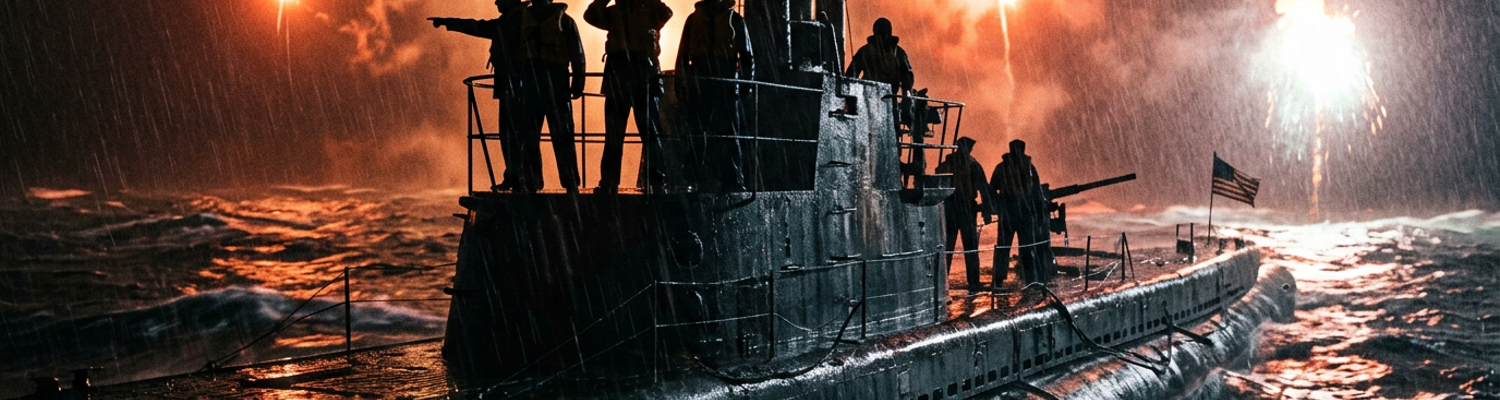
USS Paddle intercepted the convoy off Sindangan Point on September 7, 1944, and fired torpedoes that detonated the holds without knowing Allied prisoners were aboard. Lookout watches aboard the American submarine sighted the two merchant freighters and their escort vessels hugging the shoreline through heavy afternoon sea spray. Submarine commander Byron Nowell maneuvered his boat into firing position at periscope depth, tracking the lumbering lead freighter across calm coastal shallows. Torpedo crews loaded four Mark 23 steam torpedoes into the forward tubes and unleashed them in a tight spread toward the target. Blast shockwaves tore through the hull as two torpedoes detonated directly against the forward cargo sections of Shinyo Maru, blowing out the interior hatch ladders and collapsing heavy timber decking onto the men below. Seawater rushed through the gaping hull breaches, filling the lower decks within seconds and drowning scores of men in the rising bilge.
Japanese guards machine gunned prisoners and threw grenades into the flooded holds, killing over six hundred and sixty men before eighty three wounded survivors reached the Mindanao shore. Gunners on the surrounding escort vessels opened fire with light artillery and rifles, systematically shooting men who breached the surface of the boiling sea. Wounded soldiers swam through thick black fuel oil that choked their lungs and burned their eyes, dodging constant strafing runs from enemy motor launches. Exhausted men pushed floating debris for hours across two miles of rough coastal waters until the strong surf dumped them onto the sharp rocks of the bay. Filipino fishermen and local villagers ran out into the waist deep water to drag the naked, bleeding survivors away from the exposed shoreline before Japanese patrols arrived.
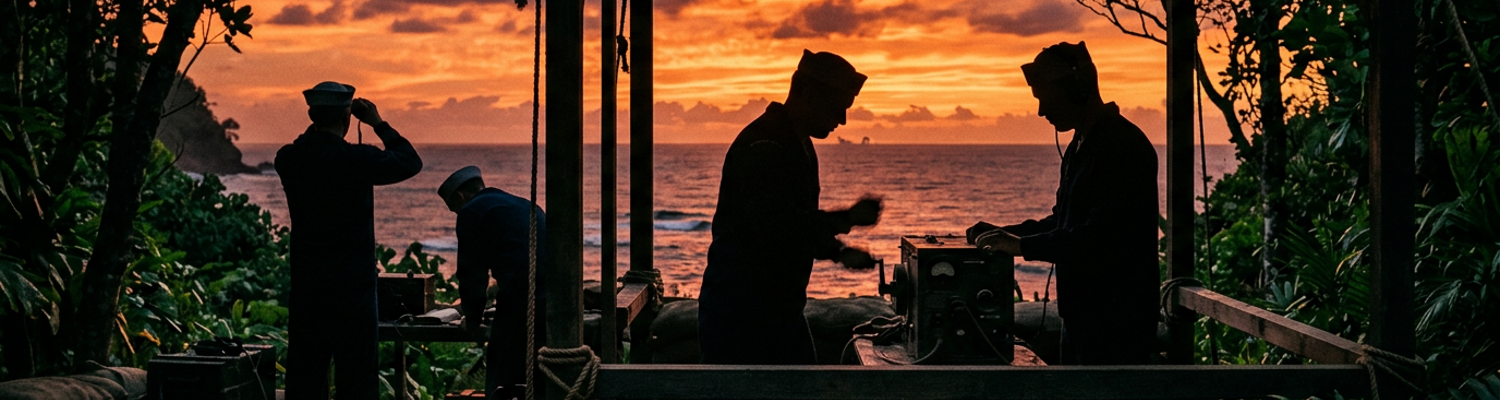
Guerrilla fighters attached to the Tenth Military District sheltered the eighty three survivors in concealed mountain hideouts along the jungle ridges above Sindangan Bay. Medical volunteers treated severe shrapnel lacerations, shattered bones, and saltwater burns using scavenged coconut oil and rudimentary jungle remedies. Colonel Wendell Fertig organized a defensive perimeter of armed irregulars to block Japanese infantry columns advancing from coastal garrisons to execute the remaining Americans. Signal corps operators set up a portable radio transmitter in the rainforest and broadcasted an urgent encrypted dispatch directly to General Douglas MacArthur and his headquarters in Australia. Allied commanders in Brisbane received the coordinates of the survivors and immediately drew up emergency maritime extraction orders to send a rescue submarine into enemy waters.
Tenth Military District Guerrilla Operations and Survivor Triage
Submarine transit routes from northern Australia to the Zamboanga Peninsula spanned well over a thousand nautical miles, which forced Mindanao guerrillas under Colonel Wendell Fertig to secure the beachhead and gather the surviving emaciated prisoners under their own protection. Scouts moved systematically along the sands of Sindangan Bay to pull eighty two living Americans and one Filipino soldier from the surf and coastal rocks. Guerrilla soldiers hoisted men who weighed under ninety pounds onto stretchers constructed from split bamboo and jungle vines. Armed screening units set up defensive roadblocks across the narrow coastal trails to block Japanese motorized patrols advancing out of the garrison at Liloy. Lookouts positioned atop coastal palm trees scanned the horizon for Japanese patrol craft attempting to shell the beach or land search parties.
Japanese search parties pressed inward from coastal outposts to hunt down escapees, forcing Filipino civilians and guerrilla forces to hide the survivors in dispersed jungle bivouacs around Sindangan Bay. Villagers guided the stretcher teams across swollen streams and steep ravines into dense canopy cover that concealed movement from low flying enemy reconnaissance planes. Civilian families shared their meager stores of sweet potatoes, rice, and dried fish with the starving men while establishing an early warning network of runners along the paths. Guerrilla squads divided the eighty three survivors into small groups housed in separate bamboo shelters so that an enemy discovery at one location would not compromise the entire company. Local volunteers stood continuous watch at trail junctions to intercept suspicious travelers and brush away the tracks leading into the jungle camps.
Guerrilla medics operating inside these hidden camps established field treatment stations using boiled coconut water, salvaged local bandages, and rudimentary medicines to stabilize critical blast victims. Blast shockwaves and steel fragments had torn deep lacerations into the survivors, while long weeks of starvation left them vulnerable to severe infection. Medical personnel washed open wounds with sterile salt water and administered boiled coconut water as an improvised intravenous fluid directly into veins to counter severe dehydration. Caretakers cut clean abaca cloth and cotton flour sacks into salvaged local bandages to dress burns and compound fractures. Pharmacists rationed small stockpiles of quinine, aspirin, and sulfanilamide powders to reduce high fevers and prevent the spread of lethal gangrene.
Patients treated in the forest stations regained enough stamina over the following ten days to survive an overland march back to the water. Colonel Wendell Fertig sent runners to coordinate with local barrio leaders, assembling litters, draft animals, and armed guerrilla escorts to transport the wounded. Radio operators maintained brief encrypted transmissions with Allied naval command in Australia, sending updated coastal coordinates and reports on Japanese patrol boat movements. Guerrilla riflemen deployed across the sandspits and coconut groves at Sindangan Bay to build a secure defensive perimeter for the incoming rescue submarine. Lookouts watched the open sea from concealed positions in the brush, waiting for the extraction submarine to surface after nightfall.
Unmapped Shallows and Submarine Navigation Hazards
Commander Jack Titus steered USS Narwhal toward the northern coast of Zamboanga after receiving urgent orders diverting the vessel from clandestine cargo delivery missions to execute an emergency beach extraction at Sindangan Bay. Narwhal had originally departed its staging base in Darwin loaded with firearms, mortar shells, and radio equipment intended to reinforce guerrilla divisions across Cebu and Negros. Theater commanders in Australia abruptly canceled those drops when encrypted dispatches confirmed that dozens of torpedoed American prisoners had washed ashore alive on the Mindanao coast. Torpedo crews and deck hands worked through the tropical heat of the lower compartments to restack crated carbines, food stores, and heavy ammunition boxes against the pressure hull. Titus pushed the submarine north across the Sulu Sea at top speed, keeping lookouts alert on the bridge shears for Imperial Japanese Navy patrol craft and maritime reconnaissance bombers known to sweep the passage.
Radiomen inside the submarine communications space kept their radio transmitters completely shut down under strict operational radio silence to avoid alerting Japanese shore based direction finding stations on Mindanao. Disrupted naval communications networks and chaotic atmospheric static across the southwest Pacific prevented Narwhal from confirming survivor headcounts or coordinating shore party recognition signals prior to landfall. Titus possessed no confirmation regarding the exact situation on the ground, having received no transmission updates on whether forty or four hundred survivors waited along the sand. Communication breakdowns also meant that guerrilla commanders under Colonel Fertig could not send confirmation flags, prearranged light flash codes, or radio challenges to guide the vessel in. Lookout watches had to scan the dark shoreline through optical periscopes and night binoculars, hoping to identify friendly bonfires while bracing for a potential trap set by Japanese motorized infantry patrols.
Navigators guided the large submarine into uncharted shallows relying on outdated prewar bathymetric charts and periscope soundings to avoid grounding. Narwhal ranked among the largest underwater combat vessels in the United States Navy, displacing nearly four thousand tons submerged and requiring deep water to clear its massive twin propellers and ballast keels. Decades old Spanish surveys and inaccurate commercial maritime maps in the chart room offered no reliable data on shifting sandbars, coral heads, and river silt washed into Sindangan Bay by seasonal monsoon storms. Quartermasters maintained constant watch at the periscope, taking periscope soundings and cross checking visual mountain bearings against lead line drops to protect the hull from sudden underwater obstructions. Titus kept the crew closed up at silent running stations as the depth beneath the keel dropped steadily from fifty feet down to thirty feet, turning any navigational error into a grounding risk under enemy guns.
Quartermasters called out depth soundings in quiet voices as the steel keel crept over the shallow mud banks toward the designated extraction point. Submarine ballast crews pumped seawater between trim tanks to maintain precise boat balance while the vessel eased through the coastal surf zone barely a mile from the beach. Engine room mechanics shut down three of the main diesels to muffle engine exhaust noise, running on a single engine to minimize surface wake under the night sky. Deck sailors stood ready in the dark near the deck hatches with mooring lines, rubber rafts, and carbines, waiting for the command to open the outer hatches. Titus held the submarine on a steady compass heading toward the brushwood fires along the palm lined shore, aligning the bow for an immediate emergency turn if enemy artillery opened fire from the coastal ridges.
Indigenous Bancas and the Sindangan Bay Extraction
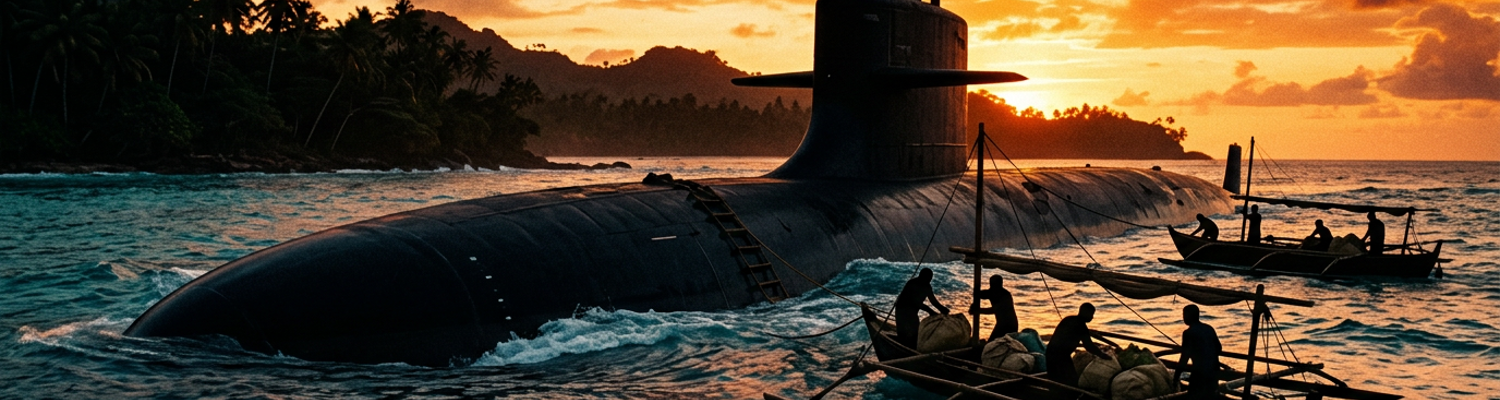
USS Narwhal surfaced within two miles of the Sindangan Bay shoreline under darkness on September 29, 1944, to conduct the clandestine rendezvous. Compressed air blasted into the main ballast tanks, lifting the massive hull out of the water until the wet teak decking drained cascades of seawater through the deck scuppers. Commander Titus and his watch officers climbed into the bridge shears with binoculars, peering through the humid ocean haze toward the flicker of guerrilla bonfires along the palm line. Tactical reality contradicted any popular depiction of a leisurely rescue, because the submarine sat exposed in uncharted shallows where Japanese coastal artillery or patrol craft could spot its silhouetted deck at any moment. Deck lookouts manned the deck guns with loaded ammunition boxes while signalmen used red filtered battle lanterns to flash prearranged recognition blinks toward the sandspit. Guerrilla lookouts hidden among the shore palms responded with matching torch flashes, confirming that Colonel Fertig held the beachhead and that the transfer boats were preparing to launch.
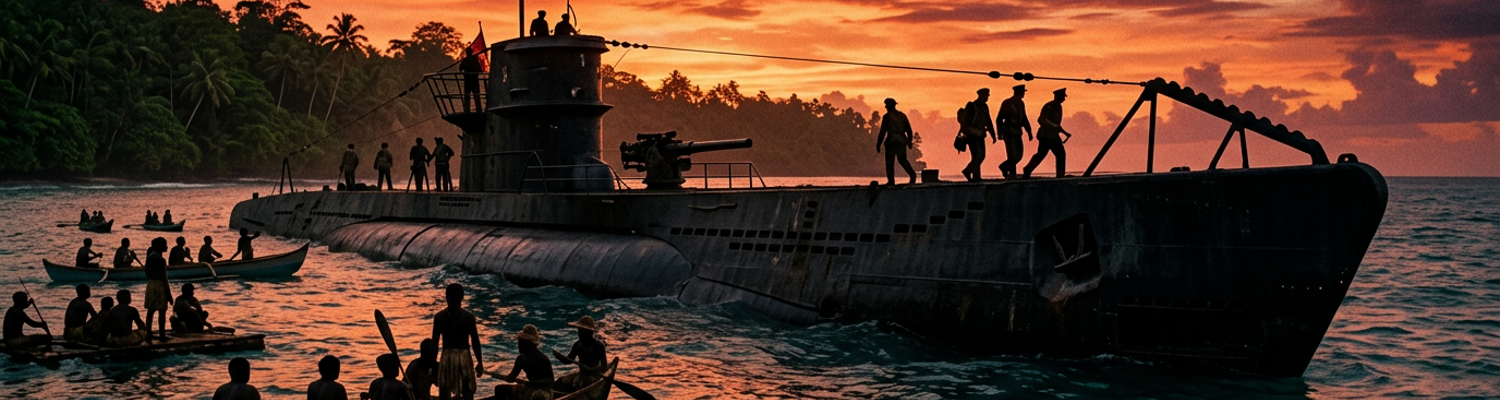
Guerrilla fighters utilized indigenous bancas and rubber landing craft to ferry eighty one surviving prisoners across treacherous shoals to the submarine casing. Filipino oarsmen maneuvered the wooden outrigger craft through breaking surf and hidden coral heads, balancing the unstable boats against crosscurrents that threatened to overturn them in the dark. Saltwater spray and crashing rollers repeatedly washed over the gunwales, soaking the eighty one emaciated men who lay helpless in the bilges. Physical exhaustion and weeks of untreated blast trauma had left these survivors weighing as little as sixty to eighty pounds, with many suffering from shattered limbs, perforated eardrums, and gangrenous shrapnel wounds. Armed irregulars paddled alongside the rubber boats to steady the frail passengers, shielding the open burns and tropical ulcers on their skin from the abrasive wooden frames and salt crust. Boat handlers guided the dispersed flotilla past the outer sandbar and drew up alongside the black hull plates of the submarine, where waiting sailors reached down to secure the mooring painters.
Submarine deck crews loaded the incapacitated survivors through the conning tower hatches within thirty minutes before clearing the bay to avoid Japanese air patrols. Deck sailors dropped down to the casing, braced their boots against the slippery steel deck, and carefully lifted each broken body directly from the pitching canoes. Deck parties formed lines across the casing, passing the emaciated survivors over the bulwarks and lowering them through the narrow circular hatch openings into the pressure hull. Sailors inside the dark interior caught the limp men by the shoulders and ankles, carrying them down the steep iron ladder rungs so their wounded limbs would not strike the steel hatch rings. Torpedo men and engine mechanics cleared every available flat surface below, laying the critical casualties onto bunk cushions, mess tables, and canvas covered torpedo skids. Corpsmen immediately began swabbing infected lacerations, administering sterile dressings, and spooning warm broth into men who had spent weeks on starvation rations in Japanese ship holds.
Commander Titus ordered the bridge cleared and the outer hatch dogs slammed shut the instant the final casualty dropped through the conning tower collar. Deck crews cast off the empty bancas and rubber craft, allowing the guerrilla boatmen to pull away into the darkness toward the safety of the mangrove coastline. Engine room mechanics engaged the main diesel throttles, turning the twin brass screws to back the submarine away from the shoals and swing the bow toward the open Sulu Sea. Navigators checked their fathometer soundings every few seconds as the steel keel cleared the shallow bar and entered deep water where the vessel could submerge safely. Titus pushed the diesels to full flank speed across the surface, racing to open the distance from the Mindanao shoreline before daylight brought Japanese bombers over the bay.
Depleted Plasma Stores and Subsurface Medical Triage
Narwhal dived deep under the morning surface when Japanese reconnaissance planes appeared on the radar horizon, locking eighty one critically injured survivors inside an airtight steel hull. Torpedo crews secured the armed Mark 14 torpedoes in their storage racks and cleared deck space to manage the human catastrophe. Narwhal converted forward and aft torpedo rooms into emergency surgical wards where ambient temperatures regularly exceeded one hundred degrees Fahrenheit during submerged runs. Heat from the electric drive motors and auxiliary machinery accumulated inside the unventilated compartments because the submarine could not run diesel exhaust blowers while submerged on battery power. Heavy condensation formed across the cold steel frames overhead, dripping greasy water onto casualties who lay crowded shoulder to shoulder on canvas litters and bare metal skids. Medical assistants wiped sweat from their eyes with rags while maneuvering between high pressure air manifolds to reach the most critical blast victims.
Pharmacist mates treated blast induced ruptured eardrums, gangrenous shrapnel wounds, and acute amoebic dysentery with critically depleted blood plasma supplies. Metal shrapnel from the torpedo detonations inside the Shinyo Maru had torn through muscle and bone weeks earlier, leaving necrotic tissue that corpsmen had to cut away using scalpels and limited antiseptic washes. Cotton bandages ran out within hours of the dive, forcing medical personnel to wrap open fractures and tropical ulcers with torn mattress covers and utility towels. Severe amoebic dysentery caused uncontrollable bowel hemorrhaging among dozens of men whose body weights had dropped below eighty pounds during three years of captivity. Corpsmen rationed the remaining vials of blood plasma and morphine, administering fluids only to those men whose pulses had faded to near imperceptible levels.
Narwhal crewmen surrendered their bunks to the wounded and slept on deck plates amidst severe humidity and pervasive bacterial infections. Submariners carried incapacitated soldiers into the narrow three tiered bunk frames of the forward and aft living compartments, giving up every mattress and wool blanket on the ship. Off duty sailors curled their bodies around valves, ammunition lockers, and battery hatch covers on the wet lower decks to catch brief intervals of sleep between watch rotations. Tropical heat and stagnant air circulated virulent intestinal bacteria and staph infections between the wounded passengers and the submarine crew. Staph sores and fungal rot broke out across the skin of sailors who walked barefoot across the fouled steel plating to deliver drinking water to the casualties. Engine mechanics and cooks volunteered on relief shifts to bathe feverish patients with damp cloths and empty waste buckets into the submarine sanitary tanks.
Sanitary pumps struggled to discharge human waste overboard because Titus held the submarine at a cruising depth of one hundred and fifty feet to avoid acoustic detection by Japanese antisubmarine craft. Air revitalization systems released canisters of chemical oxygen and spread calcium hydroxide powder across flat canvas sheets to absorb the heavy accumulation of carbon dioxide. Titus kept Narwhal pointed southward toward the Allied naval base at Port Darwin, balancing the speed of the electric motors against the drainage of the main storage batteries. Chief torpedomen rigged auxiliary electrical cables to supply power to small desk fans aimed directly at the surgical tables in the torpedo flats. Quartermasters logged the vital signs of the eighty one evacuated passengers every hour while the submarine navigated through the deep channels of the Celebes Sea toward safety.
Acoustic Discipline and the Submerged Evasion to Darwin
USS Narwhal executed a five day submerged evasion run through Japanese patrolled waters toward Australia under strict acoustic discipline. Commander Titus kept the boat locked beneath forty fathoms during daylight because Imperial Japanese Navy patrol craft and maritime reconnaissance aircraft swept every strait connecting the Celebes Sea to the southern oceans. Sailors padded through the passageways in heavy wool socks, spoke only in low whispers, and taped down loose wrenches and tin mess kits to eliminate metallic sounds that enemy hydrophones could detect. Chief torpedomen shut down auxiliary pumps and ventilation blowers, holding the electric drive motors to minimum revolutions to suppress propeller cavitation. Punishing heat built up rapidly across the lower decks as seawater temperatures warmed the pressure hull, driving compartment readings past one hundred and five degrees while carbon dioxide fouled the stagnant air.
Corpsmen labored through this suffocating, toxic atmosphere in the crowded torpedo flats to keep the blast victims alive. Shipboard medical staff carefully rationed emergency fluids and bland canned provisions to prevent fatal refeeding syndrome among severely starved survivors. Pharmacist mates spooned out measured mouthfuls of warm canned fruit syrup, heavily diluted milk, and thin broth at four hour intervals, strictly refusing the frantic pleas of delirious soldiers who begged for solid food. Medical assistants tracked every cubic centimeter of fluid intake with grease pencils across the painted steel bulkheads, adjusting saline drips through rubber intravenous needles to stabilize collapsing blood pressure without triggering pulmonary edema. Submariners crawled between high pressure air manifolds to sponge feverish patients with salt water and empty waste buckets into the bilges, guarding each fragile pulse as the vessel crept south past Timor.
Commander Titus surfaced the submarine only after midnight in open waters south of Timor to clear the poisonous air and run the main diesels. Cool ocean breezes swept down through the open conning tower hatch, lowering interior temperatures and reviving scores of unconscious survivors who had suffered severe heat exhaustion during the long submerged daylight run. Deck gunners manned the four inch deck guns and machine guns in total darkness during these brief surface dashes, watching the horizon for enemy torpedo boats or patrol craft. Electricians monitored the giant storage batteries constantly for hazardous hydrogen gas leaks, checking meters by red flashlight beams to ensure the air remained safe before the next dive. Navigators confirmed their dead reckoning positions as the submarine crossed the shallow continental shelf of the Timor Sea and entered Allied controlled waters.
Navigators guided the submarine past coastal minefields under armed escort as the Australian mainland rose above the horizon. The submarine docked at Port Darwin on October 4, 1944, disembarking all eighty one rescued personnel into Allied custody without a single transit fatality. Royal Australian Navy personnel and United States Army medical officers waited on the concrete pier with stretchers, blankets, and ambulances as mooring lines lashed the hull against the wooden camels. Submariners carried the emaciated survivors up the narrow ladder rungs and passed them through the conning tower hatch directly into the hands of waiting litter bearers. Ambulance drivers sped the critical casualties to Australian military field hospitals for intensive nutrition therapy, ending the evacuation without losing a single survivor from the Sindangan Bay extraction.