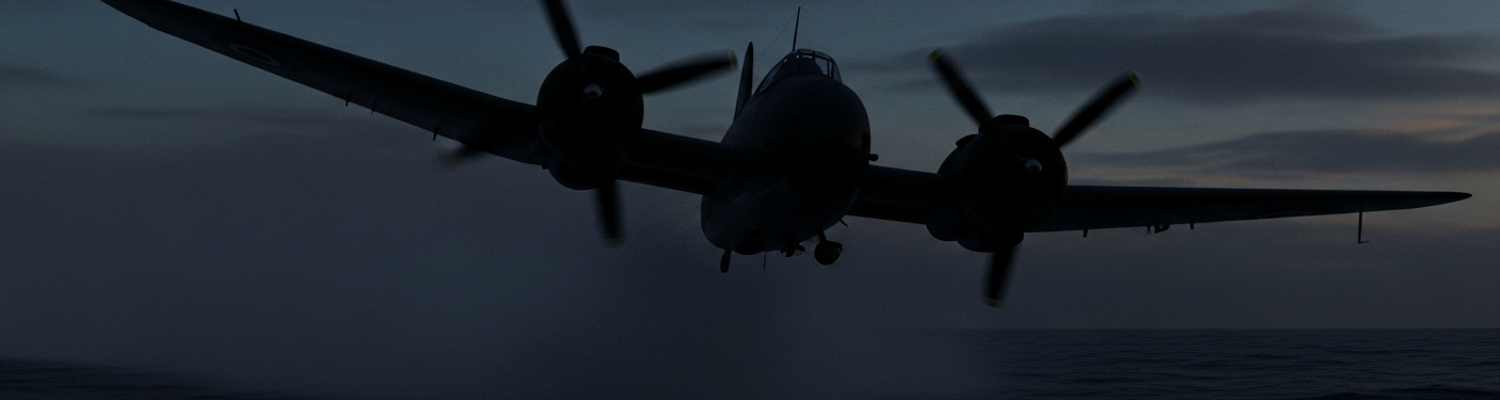

Interwar Doctrine and Flawed Assumptions
Planners at the Naval War College envisioned a different war. A review of the historical record indicates a service building its philosophy within the sterile environment of chart-based exercises. The dominant assumption, refined through years of Fleet Problems, was that the next conflict would be decided by a single, colossal clash of battleship lines in the open ocean. Doctrine was engineered to serve this one climactic event. Fleet Tactical Publications codified a vision of massed, coordinated attacks. Destroyers would execute daring torpedo runs against the enemy battle line while cruisers provided support. The entire structure rested on centralized command and the perfect execution of complex maneuvers, drilled repeatedly in peacetime exercises that assumed clear weather and a predictable foe.
This framework was underpinned by a profound faith in a new generation of torpedoes. The Mark 14 for submarines and the Mark 15 for surface ships were considered revolutionary. Their key feature was the secret Mark 6 magnetic influence exploder, designed to detonate the warhead not on impact, but by sensing the magnetic field of a steel hull to trigger an explosion directly beneath the keel. The resulting upward blast was expected to break a vessel’s back.
It was a technological marvel developed with almost no realistic testing.
A single successful test against a decommissioned submarine in 1926 was deemed sufficient proof of concept. The Bureau of Ordnance, citing the high cost of a single torpedo (around $10,000 in 1930s dollars), was unwilling to conduct live-fire tests that would expend such expensive hardware. The weapons were manufactured in large numbers and locked away. Their multiple, severe flaws remained unknown. These included a tendency to run about 10 feet deeper than set, a contact detonator so fragile it often broke on impact without firing, and a magnetic exploder calibrated for the Earth’s magnetic field in Newport, Rhode Island. This calibration meant it would trigger prematurely or not at all in the waters of the Pacific.
Strategic planning for naval air operations was similarly optimistic. The Douglas TBD Devastator torpedo bomber, introduced in 1937, was the Navy’s first all-metal monoplane. Doctrine for its use revolved around coordinated strikes. The TBDs would make a slow, steady, low-altitude run-in to drop their Mark 13 aerial torpedoes. Planners assumed friendly fighter escorts would sweep the skies clear and that anti-aircraft fire would be largely ineffective. The attack profile was dictated by the torpedo's limitations. It could not be dropped at speeds above 115 miles per hour or from high altitudes without damaging its delicate internal mechanisms. These tactical constraints, which made the Devastator highly vulnerable, were accepted. Peacetime fleet exercises never truly simulated the chaos of a determined enemy fighter screen and concentrated anti-aircraft fire.
The Failures of the Mark 13 Torpedo
Operational logs from 1942 into 1943 paint a grim picture of the Mark 13 aerial torpedo’s performance. The weapon was fundamentally unreliable. A mid-1943 analysis of 105 torpedo drops conducted under combat conditions revealed the scope of the failure. Only 31 percent of the torpedoes launched gave a satisfactory run. The remainder suffered from a cascading series of malfunctions.
Archival evidence shows that 36 percent failed to run at all. Crews had a term for it: running cold. Another 20 percent simply sank upon hitting the water. An additional 20 percent exhibited poor deflection, veering wildly off course. The sum of these failures exceeded 100 percent, demonstrating that many individual torpedoes suffered from multiple, overlapping defects. This was not a weapon with a single flaw. It was a system plagued by deep design problems stemming from a lack of live-fire testing.
The weapon's fragility dictated a suicidal attack profile.
To prevent the delicate internal mechanisms from being destroyed upon water entry, doctrine required pilots to fly perilously slow and low. The Douglas TBD Devastator, the Navy’s primary torpedo bomber in the early war, had to throttle back to a speed of just 115 miles per hour and descend to an altitude of around 50 feet. This created a long, straight, and predictable attack run. It made the aircraft an easy target for enemy fighters and anti-aircraft gunners. At the Battle of Midway, this combination of a vulnerable aircraft and a dysfunctional weapon led to the near-annihilation of the torpedo squadrons. Of the 41 Devastators launched from the carriers Hornet, Enterprise, and Yorktown, only a handful returned. They failed to score a single torpedo hit.
Beyond frequent failures upon water entry, the Mark 13 was crippled by an inability to maintain its set depth. Like its submarine and surface-launched counterparts, the Mark 13 often ran significantly deeper than intended. The issue stemmed from miscalibrated hydrostatic mechanisms. A torpedo set to run at 15 feet might instead plunge to 25 or 30 feet. This meant that even in the rare instances when a torpedo ran hot, straight, and normal, it would often pass harmlessly beneath the keel of its target. For the aircrews who had braved enemy fire, the sight of their weapon vanishing without a trace was a source of intense frustration. Reports from the Battle of the Coral Sea in May 1942 are filled with pilot claims of hits that resulted in no detonation, many of which were likely depth-keeping failures.
The Bureau of Ordnance remained resistant to feedback from the fleet, often blaming poor results on pilot error rather than acknowledging the weapon’s deep-seated flaws.
The Tactical Death Trap of Drop Constraints
Bureau of Ordnance specifications from the pre-war era show the Mark 13 was never designed to withstand a high-energy impact with water. Its internal mechanisms were delicate. Doctrine mandated a drop altitude of no more than 50 feet. This was a physical requirement. Dropping from a greater height risked the torpedo breaking apart, running on the surface, or sinking. For pilots, this meant an approach that felt like skimming the wavetops, a flight regime that left no margin for error and placed them directly in the optimal kill zone of a warship’s light anti-aircraft batteries.
This was a death sentence.
The altitude constraint was matched by an equally unforgiving speed limit. To ensure the torpedo entered the water at a viable angle, pilots were forced to throttle back to a speed of just 110 knots, roughly 126 miles per hour. For the TBD Devastator, this was perilously close to its stall speed, leaving the aircraft sluggish and unresponsive. Flying a long, straight run at this velocity turned the torpedo bomber into a slow-moving target. Archival evidence from the Battle of Midway on June 4, 1942, provides the most brutal illustration. The TBDs from Torpedo Squadrons 3, 6, and 8, separated from their fighter escorts, were forced to execute these textbook approaches against the Japanese carrier fleet. They were systematically annihilated by defending A6M Zero fighters and anti-aircraft fire.
The attack profile gave enemy defenses minutes, not seconds, to acquire, track, and destroy the incoming aircraft. A torpedo bomber crew first had to contend with the Combat Air Patrol, whose fighters could make multiple firing passes on the slow-moving TBDs and TBF Avengers. If they survived the CAP, they then flew into the concentric rings of the fleet’s anti-aircraft fire. This began with large-caliber guns at longer ranges and culminated in a storm of 25mm cannon and 7.7mm machine gun fire at point-blank range. The unarmored Devastator was acutely vulnerable to this punishment.
It was not until 1944 that a solution emerged. Following extensive research by the California Institute of Technology, two key modifications were developed. The first was a plywood drag ring, nicknamed the pickle barrel, that was fitted over the torpedo’s nose. This ring slowed the weapon’s fall and acted as a shock absorber. The second was a box-shaped wooden tail shroud that stabilized the torpedo during its drop. These simple additions, which broke away on impact, transformed the Mark 13’s employment envelope. Drop speeds were authorized up to 300 knots, and altitudes increased to 800 feet. By the end of the war, test drops were successful from as high as 2,400 feet at speeds over 410 knots.
The Strategic Chokepoint of Blackett Strait
A topographical analysis of the Solomon Islands chain shows Blackett Strait as a narrow, reef-fringed passage separating the large island of Kolombangara from Arundel Island. This waterway forms a critical link, connecting the Vella Gulf to the Kula Gulf. For naval forces in the Central Solomons in 1943, the strait was a dangerous but necessary corridor. Its confined nature made navigation treacherous at night but also offered the shortest path between the main north-south channel of The Slot and Japanese garrisons on New Georgia and Kolombangara. The Japanese had established airbases at Munda on New Georgia and Vila on Kolombangara’s southern coast, turning the region into a fortified hub. For warships, entering the strait meant accepting the risk of ambush from coastlines that provided excellent radar clutter.
This waterway was a lifeline for the Japanese.
Nightly supply missions, known to Allied forces as the Tokyo Express, were the logistical foundation of the Japanese war effort in the Solomons. A review of Imperial Japanese Navy operational patterns shows that fast destroyers, such as those of Destroyer Squadron 4, were routinely tasked with these high-speed runs. Departing from bases like Rabaul, these ships would steam down The Slot under cover of darkness to evade Allied aircraft from Henderson Field. They would then navigate channels like Blackett Strait to reach destinations like Vila, where they would offload troops and cargo. The supplies were often rudimentary. Accounts describe food and ammunition packed into drums, which were then pushed overboard to be collected by barges. On the night of March 5, 1943, the destroyers Murasame and Minegumo conducted just such a mission before attempting to exit through the Kula Gulf.
Allied forces had one objective: sever this supply line. Every successful Japanese supply run extended the campaign on the ground. The task fell to U.S. Navy surface action groups, typically comprising new light cruisers and destroyers. Task Force 68, under Rear Admiral Aaron S. Merrill, was one such unit, built around the Cleveland-class light cruisers Montpelier, Cleveland, and Denver. Their mission was to interdict Japanese naval forces and conduct shore bombardments of the airfields at Munda and Vila. Success depended on intelligence from coastwatchers and reconnaissance aircraft, followed by a high-speed nighttime transit into confined waters. This developing doctrine leaned heavily on the new SG microwave surface-search radar, a technology that allowed American ships to detect Japanese vessels through darkness and land clutter.
Improvisation and Desperation in the Solomons
Operational logs from the Cactus Air Force on Guadalcanal reveal the desperate nature of early attempts to interdict Japanese resupply convoys. The American response was fragmented and reactive. A coastwatcher would spot an incoming force, and a frantic scramble would ensue to launch whatever aircraft were available. Grumman TBF Avengers, Douglas SBD Dauntlesses, and even Army P-400 Airacobras were thrown into the fight. Pilots often had little training in coordinated night attacks against surface ships. These initial efforts were piecemeal, with small groups attacking without the mass required to overwhelm a warship’s defenses.
The attacks were almost always uncoordinated.
Technological and doctrinal limitations of 1942 and early 1943 made a synchronized strike a near impossibility. After-action reports from this period show a consistent pattern of failure in timing and communication. The various aircraft types had different cruising speeds, meaning a flight of faster SBD dive bombers would often arrive over the target well before the slower TBF torpedo planes. Lacking reliable radio communication and operating in darkness over a featureless sea, strike packages frequently failed to find each other. A typical report would describe dive bombers executing their attacks and departing minutes before the torpedo bombers even arrived. This left the torpedo planes to face the full, undivided attention of the Japanese anti-aircraft gunners, who were by then fully alert.
This tactical failure, combined with the unreliability of the Mark 13, forced aircrews to innovate. A new, desperate tactic began to emerge: the push-over attack. It was a dangerous improvisation, born from a rejection of the standard low-and-slow torpedo run. Instead of approaching at 50 feet and 110 knots, pilots would approach at several thousand feet and then enter a shallow dive. Coming out of the dive, with speed boosted well beyond doctrinal limits, the pilot would push over the nose and release the torpedo, flinging it toward the target. This profile reduced the crew’s exposure time to anti-aircraft fire, but it subjected the fragile Mark 13 to forces it was never designed to withstand. The chance of the weapon failing increased substantially. Yet, for crews who had seen squadrons annihilated at Midway while following doctrine, it was a gamble they were willing to take.
The Ordeal of VT-11 and VT-21
A close examination of unit logs for Torpedo Squadron 11 (VT-11) during the New Georgia campaign reveals a demanding operational tempo. Arriving at Guadalcanal in April 1943, the squadron was almost immediately thrown into the fight, flying their TBF Avengers from the crude runways of Henderson Field. Their missions involved a mix of daylight strikes, night mining, and patrol flights, often targeting Japanese shipping around the contested Munda airfield. The squadron’s actions in June 1943 included some of the first daylight raids on Bougainville, a long flight over open water. These missions were a direct confrontation with the doctrinal disconnect. TBF Avenger crews were forced to employ weapons designed for open-ocean fleet actions within the narrow confines of the Solomon Islands. Instead of striking large carriers, they were hunting fast destroyers at night or attacking fortified shore positions.
The experience was one of grinding attrition.
For Torpedo Squadron 21 (VT-21), operating from Henderson Field during the same period, the story was much the same. A review of their combat crew rosters paints a picture of constant, high-risk operations. One incident from July 7, 1943, encapsulates the squadron’s challenges. A TBF Avenger (Bureau Number 06063) was returning from a night attack on a Japanese destroyer near Bougainville when it was ambushed by a night fighter. The turret gunner was killed. The pilot, though wounded and flying a badly damaged aircraft, managed to fly 300 miles back to Guadalcanal, where he attempted a water landing off Lunga Point. The aircraft crashed and sank, taking the pilot with it. Only the radioman survived. This single event highlights the multiple layers of risk: long over-water flights in darkness, the threat of enemy fighters, and the unforgiving final moments of combat.
Confidence in the weapon system evaporated. Aircrews in squadrons like VT-11 and VT-21 were acutely aware they were being sent on missions with a high probability of failure. The Mark 13 torpedo’s performance was an open secret. A mid-1943 analysis confirmed what the pilots knew from experience: a satisfactory run was the exception. This knowledge created a crisis of confidence. Pilots were ordered to execute low, slow, predictable attack runs that they knew were suicidal, all to accommodate a weapon that would likely fail. This led to a breakdown in tactical discipline, born from a desperate desire to survive. Crews improvised push-over glide attacks, exceeding the torpedo’s drop parameters in the hope that a faster, less predictable approach might get them through the anti-aircraft fire. The seven Navy Crosses awarded to VT-11 crews were a testament to individual heroism in the face of systemic failure.
The Wall of Japanese Anti-Aircraft Fire
After-action reports from U.S. Navy aircrews over the Solomon Islands in 1943 reveal a consistent obstacle: the sheer volume of Japanese anti-aircraft fire. In constricted waterways like Blackett Strait, this defensive fire became a concentrated, three-dimensional barrier. The primary weapon responsible was the Type 96 25mm automatic cannon. A locally produced variant of a French Hotchkiss design, these guns were typically deployed in triple-barreled mounts on destroyers and in purpose-built revetments ashore. While suffering from excessive vibration and a slow manual traverse speed, the weapon was devastating against slow-moving torpedo bombers. The guns fired 15-round box magazines, and their tracer ammunition created dense, incandescent streams of fire. The Japanese military estimated it took an average of 1,500 rounds to down an aircraft at 1,000 meters, a number that dropped dramatically as ranges closed. For a TBF Avenger crew committed to a low-altitude drop, they were flying directly into the weapon’s most effective engagement envelope.
This was not a theoretical danger.
The defensive network was composed of interlocking naval and shore-based batteries. The destroyers of the Tokyo Express bristled with these 25mm mounts. An Etorofu-class escort ship, for example, could carry up to fifteen 25mm guns by August 1943. These ships formed a mobile screen of fire. Supporting them were extensive shore-based installations on islands like Kolombangara and New Georgia. Analysis of aerial photography shows Japanese engineers were adept at building camouflaged gun positions in sandbagged revetments. Major bases like the airfields at Munda and Vila were protected by dozens of these guns, often arranged to create overlapping fields of fire. These batteries frequently included heavier 75mm anti-aircraft guns and 13.2mm heavy machine guns.
The islands themselves became weapon platforms.
The rigid attack profile required by the faulty Mark 13 made the TBF Avenger a predictable target. Crews were forced to fly for minutes at a time directly into this layered defense with little ability to maneuver. The 25mm shells were more than capable of shredding control surfaces, puncturing fuel tanks, and killing or wounding crew members. A hit did not need to cause an immediate explosion to be fatal; damage to an engine or oil line could lead to the aircraft being lost over open water hours later. The operational logs of squadrons flying from Henderson Field are filled with accounts of aircraft returning with heavy damage or failing to return at all from strikes into these chokepoints.
A Forced Reassessment
By mid-1943, the performance of the Mark 13 torpedo was no longer a squadron rumor. It was a statistically proven disaster. The relentless attrition in campaigns like the one over Blackett Strait forced a confrontation with the facts. Fleet commanders, most notably Admiral Chester Nimitz, had been receiving a steady stream of complaints since the start of the war. The Bureau of Ordnance, the entity responsible for the weapons, had consistently deflected blame, attributing failures to poor pilot technique or improper maintenance. This institutional denial began to crumble under the weight of combat evidence. The disconnect between the Bureau’s assurances and the fleet’s experience created a crisis of command.
The pressure became undeniable.
Faced with mounting losses, Nimitz and other senior leaders forced the issue. A formal investigation began, sidestepping the resistant Bureau of Ordnance and turning to outside scientific expertise. The National Defense Research Committee contracted the California Institute of Technology (Caltech) to conduct an independent analysis of the Mark 13. Scientists at Caltech approached the weapon as a physics problem. Using high-speed cameras and conducting tests at Morris Reservoir, they quickly identified the core issue: hydrodynamic and aerodynamic instability. The torpedo was tumbling on its journey from the aircraft to the water. The Caltech team’s findings were a complete vindication of the aircrews who had insisted the weapon was flawed.
Their solution was a set of simple aerodynamic stabilizers. The first was a plywood ring fitted over the torpedo’s nose, the device known as the pickle barrel. It acted as a drag ring, slowing the weapon’s aerial descent and ensuring it maintained a stable, nose-forward attitude. The second modification was a box-shaped wooden shroud fitted around the tail fins. This assembly, known as a box tail, prevented the torpedo from yawing or tumbling and guaranteed a clean entry into the water. Both additions were designed to shear off upon water impact, leaving the torpedo to begin its underwater run unimpeded.
These low-cost additions, readied for fleet use by early 1944, transformed aerial torpedo warfare. A review of the new operational parameters shows a dramatic expansion of the launch envelope. The mandatory drop speed leaped from 110 knots to over 410 knots. The required altitude climbed from 50 feet to 2,400 feet. For pilots of the new Grumman TBF Avenger, this meant the end of the long, slow run. They could now execute a high-speed dive, release their torpedo, and use their speed to escape. The first major combat use of the modified Mark 13 came during Operation Hailstone in February 1944, the massive carrier raid on the Japanese naval base at Truk, where the newly reliable weapons performed with lethal success.