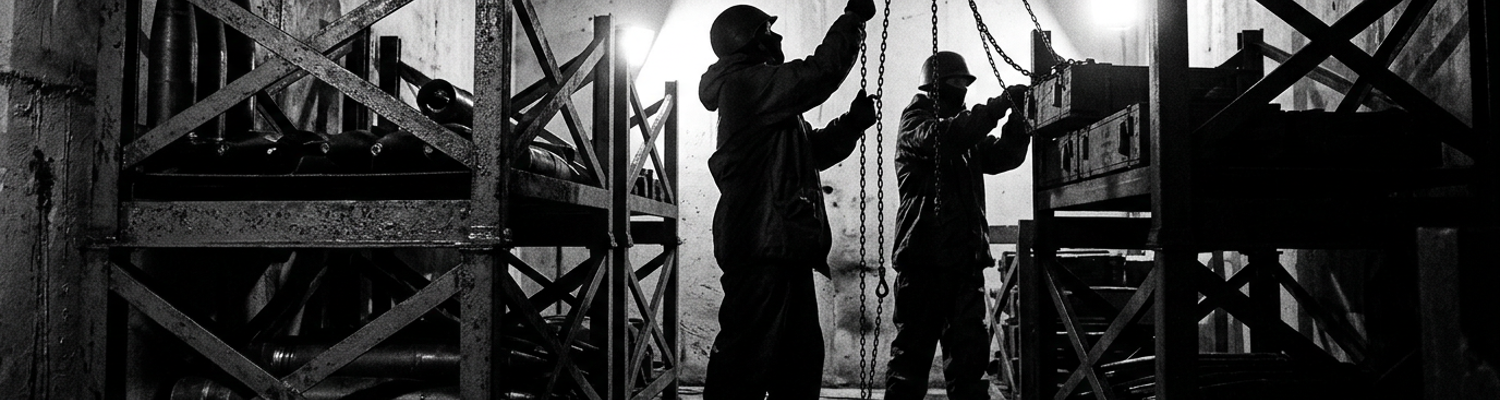

Subterranean Chemical Stockpiles at Chibana Depot
Department of the Army technical field manuals promised sealed steel ordnance would isolate chemical agents indefinitely. They guaranteed zero atmospheric contamination during sustained depot storage. Soldiers arriving at the Chibana Ammunition Depot in central Okinawa found a different environment. They were stationed above hundreds of tons of decaying nerve agent containers. Toxic fluid wept from these casings into unventilated subterranean cells. Archival evidence shows this clandestine arsenal began accumulating in the autumn of 1962 under Project Red Star. This classified operation transferred thousands of metric tons of chemical munitions to the island. Field responsibility fell directly to the 267th Chemical Company.
This specialized unit received and secured lethal stockpiles adjacent to Kadena Air Base.
Local civilian populations and the government in Tokyo knew nothing about the facility. The unit took custody of Mark 94 aerial bombs (FSN 1325-00-143-8219) filled with Sarin. They handled 155-millimeter artillery shells charged with mustard agent. Thousands of M55 rockets holding concentrated VX payloads sat in the dark. Okinawa has a subtropical maritime environment. This climate systematically ruined the infrastructure designed to contain these weapons. Chibana featured subterranean earth-covered bunkers. Engineers built them from poured concrete and packed coral limestone revetments. These structures trapped relentless island moisture. Relative humidity levels regularly exceeded eighty-five percent inside the unconditioned igloos. Airborne salt particles carried inland by typhoons continuously infiltrated the perimeter air intakes.
Condensation dripped from concrete ceiling vaults onto steel munitions racks.
Standing water pooled across the sloped magazine floors. Galvanic corrosion accelerated along the thin-gauge metal skins of clustered M55 rocket casings. Gaskets dried out. Seam welds oxidized into brittle crusts of iron oxide. The paint layers applied during manufacture flaked away. Raw pitted carbon steel sat exposed to direct atmospheric moisture.
Corrosion worked faster than depot technicians could scrape it away.
A close review of operational logs indicates the unit implemented emergency maintenance schedules. They fought the rapid thinning of bomb casings under absolute operational secrecy. Technicians entered the dark subterranean vaults wrapped in impermeable butyl rubber suits. They wore M9A1 protective masks. Internal temperatures routinely pushed beyond one hundred degrees Fahrenheit. The psychological erosion was immediate. Men performed delicate manual repairs on leaking pressurized ordnance. Chemical alarms were primed to scream at the first airborne trace of acetylcholinesterase inhibitors. Soldiers used handheld ultrasonic thickness gauges. They applied chemical agent detector paper to identify compromised metal shells before structural failure occurred.
They scraped blistering rust off live casings by hand.
Crews swabbed localized leakage with caustic calcium hypochlorite slurry. They repainted affected surfaces to conceal visible degradation from visiting inspection teams. Every sweep across an active munition igloo carried the immediate threat of nervous system collapse. Working twelve-hour shifts in full protective ensembles created chronic heat exhaustion. Acute disorientation spread among the small maintenance cadre. Men lost ten pounds of water weight per shift inside the unbreathable rubber garments. This caused muscle spasms and persistent tremors. Chronic sleep deprivation plagued the company barracks. Command directives ordered the hazardous monitoring cycles to continue around the clock throughout the spring of 1969.
Mark 94 Bomb Maintenance and Thermal Stress
The Mark 94 aerial bomb required constant physical intervention.
These munitions contained high-purity isopropyl methylphosphonofluoridate. The military designated this compound as GB or sarin. Each bomb held hundreds of pounds of the volatile liquid. The steel casings were never designed for long-term storage in tropical environments. Archival evidence shows the 267th Chemical Company dedicated most of their daily shifts to inspecting these specific weapons. The bombs rested on heavy wooden cradles inside the concrete igloos. Moisture wicked up from the floor and saturated the wood. This constant dampness accelerated rust formation along the contact points.
Technicians had to physically lift and rotate the bombs to inspect the undersides.
They used manual chain hoists suspended from the ceiling. The process was slow and physically draining. Men in butyl rubber suits struggled to grip the heavy metal chains. Sweat pooled inside their boots. Their M9A1 masks fogged over from heavy respiration. The thermal stress inside the unventilated bunkers pushed human endurance to its absolute limit. Ambient temperatures inside the suits often exceeded one hundred twenty degrees Fahrenheit.
Heat casualties became a daily occurrence.
A close review of operational logs indicates medics stationed outside the igloos treated multiple cases of heatstroke every week. Soldiers collapsed mid-shift. Other team members had to drag their unconscious bodies out of the toxic environment. They could not remove the protective masks until the casualty cleared the decontamination line. This delay in cooling the body core temperature caused severe physiological strain. The psychological toll compounded the physical exhaustion. Every technician knew a single mistake with the hoist could drop a bomb. A ruptured casing would fill the bunker with lethal vapor in seconds.
The constant fear eroded unit morale.
Men developed nervous tics. They experienced severe anxiety before starting their shifts. The command structure offered no relief. The maintenance schedule had to be maintained to prevent a catastrophic leak. The depot commander issued orders to increase the inspection frequency in early July 1969. Rust was spreading faster than anticipated. The unit lacked the proper chemical solvents to clean the casings safely. They resorted to using improvised solvent baths.
This decision increased the risk of accidental detonation or chemical release.
The solvent fumes mixed with the stagnant air inside the bunkers. The rubber suits provided no protection against the psychological pressure. The men were trapped in a dark hot toxic box. They worked with tools that were too clumsy for the delicate tasks required. The Teflon seals on the bomb fill-plugs were degrading. The unit did not have enough replacement parts. They had to reuse compromised seals. This practice violated every safety protocol in the manual.
Necessity dictated the workflow.
Containment Rupture Inside Hardened Igloo 1339
Routine depot operations collapsed on a Friday morning in mid-July.
Archival evidence shows an ordnance maintenance detail from the 267th Chemical Company entered Igloo 1339 on July 18, 1969. They were assigned to scrape surface rust and re-stencil corroded munitions casings. Inside the unventilated earth-covered concrete storage chamber technicians prepared an active Mark 94 aerial bomb. The weapon was filled with liquid sarin. They planned cosmetic sandblasting. An operator exerted excessive torque against a severely oxidized fill-plug valve during the rigging process. The heavy steel casing shifted against the mechanical hoisting tackle. The degraded Teflon seal failed immediately.
Days of tropical heat buildup inside the unconditioned magazine compounded the high internal vapor pressure.
The volatile organophosphate forced its way through the breached valve threading. An aerosol cloud sprayed directly into the breathing zone of the work crew. Exhaustion and oppressive humidity led the team to compromise basic protective protocol. Men slung their M9A1 protective masks over their shoulders. They did not wear them in an airtight configuration. Droplets coated the damp concrete floor beneath the munition cradles. The hiss of escaping vapor echoed against the blast walls.
Sarin requires only seconds to overwhelm human biology.
A close review of operational logs indicates the physical destruction of the team began within ninety seconds of the seal failure. Technicians attempted to clear the workspace. They inhaled trace amounts of the vapor. Their trembling hands failed to position and seal their rubber mask hoods in time. Synaptic junctions across their peripheral nervous systems flooded with acetylcholine. The organophosphate permanently bound to their acetylcholinesterase enzymes. Extreme miosis struck first. Their pupils rapidly contracted into microscopic pinpoints. This stripped away their depth perception in the dim magazine lighting.
Workers stumbled against steel racks.
They dropped their decontamination wrenches. Involuntary muscle twitching spread from their fingers into their forearms and calves. Uncontrolled neural discharges caused localized fasciculations. Their limbs jerked violently. Motor control collapsed completely. Smooth muscle around their bronchial tubes constricted. Runaway fluid secretions filled their lungs. Acute respiratory distress reduced their breathing to ragged audible gasps on the concrete floor.
The breach exposed the total vulnerability of the depot physical barriers.
Secondary containment had entirely failed. This realization triggered immediate psychological panic among the surviving personnel. Igloo 1339 featured reinforced concrete revetments and heavy earth coverage engineered to withstand external explosive blasts. The subterranean facility lacked an internal negative-pressure filtration system to trap escaping chemical vapor. The open exterior blast doors formed the only barrier between the lethal aerosol plume and the open atmosphere of central Okinawa. Civilian residential zones and Kadena Air Base flight lines sat less than a mile away.
Maintenance personnel recognized the physical boundary breach.
They abandoned their assigned duties and fled blindly toward the daylight. Men kicked over calcium hypochlorite wash buckets. They threw aside detection kits in an unregulated scramble to clear the portal. Shaking hands fumbled with Mark I automatic atropine injectors. They stabbed needles repeatedly through sweat-soaked fatigue trousers into thigh muscles. They needed to stop the spreading paralysis. Emergency sirens sounded across the Chibana compound. Twenty-three soldiers and one civilian contractor collapsed onto the tarmac. Medical teams evacuated them under armed guard to the United States Army Hospital at Camp Kue.
Communications Breakdown and Delayed Medical Countermeasures
Isolation crippled the Chibana complex during the opening minutes of the containment failure.
Archival evidence shows physical wire communications between the subterranean magazine complex and Kadena Air Base failed before technicians could report the leak. Heavy trenching equipment operated along the eastern perimeter revetment. The machinery severed the primary WD-1/TT twin-lead field telephone lines. These wires connected the 267th Chemical Company dispatch office to the central Fort Buckner communications routing center. The hardwired TA-312 switchboards were completely dead. Depot personnel attempted emergency broadcasts using tactical AN/PRC-25 radio transceivers. These tactical ground radios operated across very high frequency bands (30.00 to 75.95 MHz).
These frequencies were technically incompatible with the ultra-high frequency gear used by the 18th Tactical Fighter Wing.
The crash-fire networks at Kadena Air Base could not hear the transmissions. Air Force dispatchers maintained watches on separate military aviation frequencies between two hundred twenty-five and four hundred megahertz. Depot staff lacked the cross-band patch equipment needed to relay alarms directly across the two service branches. This prevented immediate alerts to the adjacent flight line. The invisible plume began drifting southward across open drainage culverts toward civilian farmland.
Kadena flight control tower received no direct electronic warning.
A close review of operational logs indicates life-saving pharmaceutical countermeasures were marooned behind depot administrative protocols. They sat hundreds of meters away from the subterranean hot zone. Regulations governing Class VIII medical materials strictly prohibited keeping loose stocks of pralidoxime chloride and atropine autoinjectors inside explosive munition igloos. Oxime compounds have high chemical sensitivity in tropical heat. Medical supplies sat locked inside reinforced steel lockboxes within the air-conditioned 267th dispensary building. This structure was located nearly a kilometer north of Igloo 1339.
The duty non-commissioned officer on site lacked the physical keys to the pharmacy vault.
Messengers had to sprint across sunbaked asphalt to locate the depot chemical officer. Couriers finally loaded crates of Mark I autoinjector kits into the rear bed of an M151 utility truck. Transit across the unpaved coral roads took ten critical minutes. Needles finally reached the concrete blast ramp. Technicians lying inside the hot zone had spent nearly twenty minutes absorbing neurotoxins. They had not received a single milligram of pralidoxime chloride to reverse the biochemical binding at their neural receptors.
Storage regulations preserved the shelf life of the medicine while leaving poisoned soldiers without treatment.
Unequipped support personnel approaching the mouth of Igloo 1339 triggered immediate chaos. Depot inventory clerks and drivers assigned to general transport details ran toward the bunker portal. They lacked gas masks. They wore no charcoal-lined protective coats or gloves. These unshielded soldiers encountered maintenance technicians crawling across the concrete threshold. The victims were in violent full-body seizures. They vomited copiously and expelled thick secretions from their airways.
Rescue personnel ignored secondary transfer risks.
They grabbed the chemical-soaked clothing of fallen comrades with bare hands. They immediately absorbed liquid sarin through their palms. Other rescuers inhaled off-gassing vapor rising directly from wet fabric in the midday sun. The support troops suffered rapid pupillary constriction within minutes. Severe dizziness and sudden respiratory spasms followed. Screaming men fumbled with field dressings. They attempted to pry open the clenched teeth of suffocating casualties using bayonets and wooden tongue depressors. Water from an exterior washdown hose sprayed indiscriminately over the victims. This spread the oily organophosphate film across the concrete pad. The toxic runoff soaked through the boots of uninjured onlookers.
Eight support soldiers collapsed alongside the initial maintenance crew.
The first decontamination team from the Camp Kue medical compound had not yet arrived.
Security Detachment Panic and Combat Fatigue
Panic swept the perimeter within minutes of the alarm.
Archival evidence shows casualty counts mounted rapidly as contaminated men arrived at the triage station outside the main gate. Twenty-three American military personnel and one Department of the Army civilian technician suffered acute physiological poisoning. The organophosphate plume escaping Igloo 1339 incapacitated them. Medics loaded the victims onto canvas stretchers and the open beds of three-quarter-ton M37 trucks. They raced down Route 24 toward the United States Army Hospital at Camp Kue. Doctors inside the triage bay confronted patients displaying full-spectrum anticholinesterase toxicity.
Victims exhibited severe pin-point pupil contraction.
This blinded them in normal room light. Localized skeletal muscle tremors accompanied the blindness. The men produced copious frothing at the mouth and suffered violent thoracic spasms. Hospital staff stripped sweat-soaked chemical-drenched poplin fatigues from the convulsing men. They cut away fabric with surgical shears. Contaminated cloth was dropped into galvanized garbage cans sealed with wet bedsheets. Attending physicians repeatedly emptied five-milligram ampoules of atropine into the thighs of the civilian specialist and the most severely poisoned ordnance handlers.
Six of the victims stopped breathing on the examination tables.
Medical teams had to manually clear airway secretions using rubber aspirators. They inserted endotracheal tubes without muscle relaxants. The depot guards broke down in the dark. A close review of operational logs indicates the security detachment assigned to Chibana had already reached extreme physical exhaustion before the leak occurred. Guard details from the 53rd Military Police Company endured continuous seventy-two-hour alert cycles. They walked perimeter fence lines along the coral ridges under ninety-degree heat and ninety-percent relative humidity.
Chronic sleep deprivation scrambled their situational awareness.
Men slept in forty-minute intervals inside stifling corrugated metal guard huts. False perimeter alarms triggered by stray dogs and typhoon gusts awakened them repeatedly. Word of the chemical breach reached the guard towers. This physical exhaustion collapsed into pervasive invisible-threat paranoia. Guards interpreted standard heat rash as chemical blistering. They mistook the burning eye sting of salty sweat for the onset of nerve agent miosis. Every subtle shift in wind direction across the eucalyptus groves generated frantic radio reports. Sentries claimed phantom vapor clouds were moving toward the barracks.
Armed sentries refused to take off their stifling M17 protective masks to drink water or eat canned rations.
This triggered widespread dehydration. Fainting spells and hallucinatory episodes occurred along the exterior concertina wire. The psychological breaking point arrived when command dispatched military police details to seal depot perimeter gates. They secured secondary access junctions along the boundary with Koza City. Officers instructed these squads to hold containment cordons along the southern drainage culverts. The units lacked functional chemical detection apparatus. The field supply room possessed only depleted stocks of M18A2 chemical agent detector kits. The internal glass reagent ampoules had degraded and dried out in the tropical dampness months earlier.
Squad leaders discovered packets of M8 chemical detection paper had absorbed ambient moisture through torn foil packaging.
This rendered the test strips chemically inert. They were incapable of changing color in the presence of organophosphates. Enlisted police officers stood at roadblock barriers on asphalt access roads completely blind. They did not know whether the air they breathed carried lethal concentrations of odorless sarin. Discipline fractured along the southern checkpoint lines facing this absence of functional detection gear. Several military policemen threw down their M14 rifles. They tore off useless detection pouches and fled northward on foot toward the 267th headquarters compound. Other sentries locked themselves inside steel dispatch kiosks. They cocked their service pistols and refused direct radio orders from the provost marshal to step back out into the open roadway.
Operation Red Hat and Strategic Chemical Evacuation
The political fallout breached Washington within seventy-two hours of the hospital admissions.
Archival evidence shows international press reports published in late July 1969 exposed the clandestine chemical arsenal at Chibana. This detonated immediate protests across the Japanese archipelago. Japanese Prime Minister Eisaku Sato faced furious cross-examination in the National Diet. Opposition lawmakers demanded the total abrogation of bilateral security agreements. Mass demonstrations erupted across Okinawa Prefecture. Thirty thousand base workers affiliated with the Zengunro trade union threatened general strikes. These walkouts would paralyze military airfield operations.
Local civilian assemblies in Koza City and Gushikawa passed emergency resolutions.
They condemned the presence of lethal nerve agent stores situated less than two miles from residential schools. Washington was actively negotiating the formal reversion of Okinawa to Japanese sovereignty. The public disclosure of thirteen thousand short tons of toxic warheads threatened to derail the entire diplomatic timetable. The United States Department of Defense agreed to strip the island of all chemical munitions before finalizing the administrative handover. Tokyo applied relentless political pressure to force this decision.
The military called the withdrawal Operation Red Hat.
A close review of operational logs indicates the packaging and evacuation campaign required sixteen months of round-the-clock labor. Crews prepared the Chibana stockpile for oceanic transit. Technicians placed leaky M55 rockets and Mark 94 bombs into airtight steel secondary containment vessels known as overpack containers. They secured mustard-filled 155-millimeter artillery shells using the same method. Specialized cranes lifted these sealed drums into steel MILVAN cargo vaults. These containers featured internal air-sampling lines and automated chemical agent monitoring detectors. Military convoys executed forty-one separate nighttime movements between January and September of 1971.
They hauled chemical payloads down civilian roadways from Chibana Depot along Route 13.
The trucks drove to the military docks at Tengan Pier (Facility 312) in Uruma. United States Army chemical specialists secured the cargo aboard the transport ships USNS Lt James E Robinson and USNS Hollis. The vessels set sail across two thousand nautical miles of open Pacific waters toward Johnston Atoll. The isolated coral reef had been designated as the permanent Pacific chemical disposal site. Depot crews were left behind to scrub empty concrete igloos with boiling calcium hypochlorite slurry.
Physical evacuation did not resolve the neurological trauma sustained by the ordnance handlers.
Veterans of the 267th Chemical Company exhibited severe persistent psychiatric disorders. These conditions tied directly to organophosphate neurotoxicity and sustained operational dread. Toxicological data revealed repeated sub-lethal inhalation of sarin vapor induced chronic sleep fragmentation. Men suffered permanent short-term memory loss and persistent body tremors. Sudden episodes of unprovoked panic became common. Military medical evaluation boards systematically classified these physical and neurological symptoms under standard combat exhaustion or preexisting personality disorders. Army psychiatrists attributed the tremors and depressive episodes to generalized military service stress.
They refused to document chemical agent toxic encephalopathy on service records.
Men who experienced acute poisoning during the July 1969 leak were assigned non-combat disability ratings. This left them without long-term veterans compensation for delayed central nervous system degeneration. Several affected ordnance specialists spent decades battling severe depressive neuroses and agoraphobia. They were repeatedly hospitalized in Veterans Administration psychiatric wards without formal acknowledgment of nerve agent exposure. Medical discharge logs from 1972 list the primary cause of disability for the Igloo 1339 repair crew as psychoneurosis of undetermined origin.