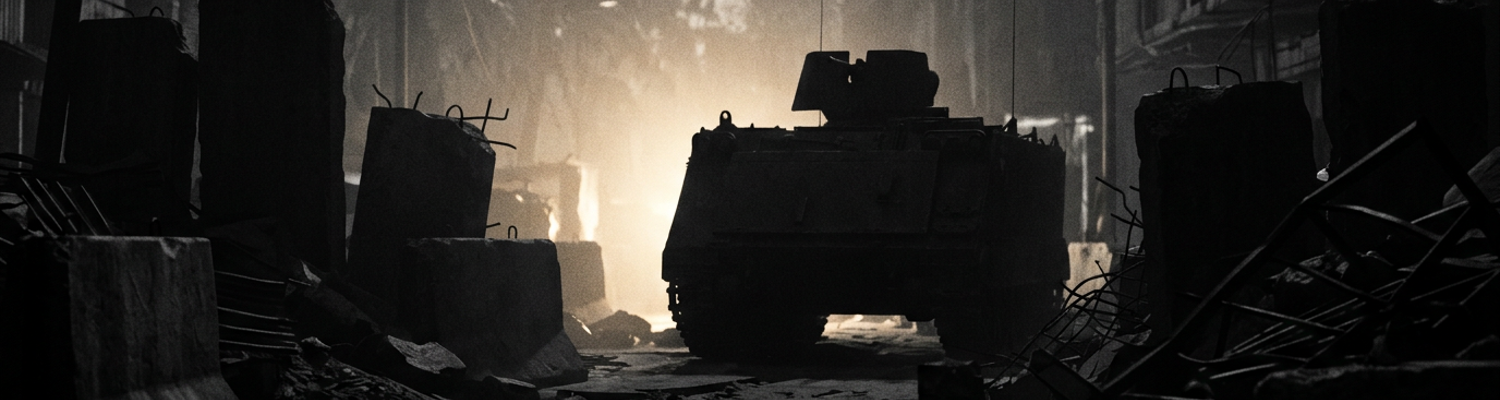

Operation Power Pack and 82nd Airborne Deployment
By April 28, 1965, urban combat in Santo Domingo had resulted in approximately 2,000 casualties. Loyalist military forces lost nearly half of their AMX-13 light tank inventory. A close review of diplomatic cables indicates this localized destruction triggered panic within the highest levels of the United States government. President Lyndon B. Johnson signed the executive directive. U.S. military intervention in the Dominican Republic began under Operation Power Pack. The initial orders authorized the landing of the 3rd Battalion, 6th Marines. Their objective was evacuating foreign nationals from the Hotel Embajador on the western edge of the city. Washington policymakers expanded the mission parameters due to fears of a communist takeover. Defense officials coordinated a large-scale deployment of forces to stabilize the region. Archival evidence shows this rapid escalation severely strained existing command structures. Planners at the United States Atlantic Command rapidly adapted contingency plans designed for full-scale amphibious invasions into a localized urban pacification mission. Joint Task Force 120 formed under Vice Admiral Kleber S. Masterson to oversee the influx of personnel and hardware. Diplomatic shockwaves spread through the Organization of American States. Ambassadors scrambled to justify the unilateral American troop movements.
The entire command apparatus shifted focus to securing the eastern approaches to the capital.
Operation Power Pack required a heavier footprint than the initial Marine expeditionary units could provide from their offshore amphibious readiness group. Elements of the 82nd Airborne Division deployed to establish an international safety zone in Santo Domingo. Transport aircraft from the Military Air Transport Service began continuous sorties from Pope Air Force Base in North Carolina. Heavy C-130 Hercules and C-124 Globemaster II cargo planes delivered the 3rd Brigade directly to the San Isidro Air Base ten miles east of the city limits. Mechanical delays plagued the airlift. A shortage of operational loading ramps and the rapid degradation of C-124 engine cowlings under continuous high-tempo flight schedules caused severe bottlenecks.
When examining the historical record, the paratroopers faced immediate tactical friction upon landing on April 29.
Major General Robert York ordered his battalions to advance westward from the airfield to link up with the Marine perimeter. Establishing a secure corridor and expanding it into a designated international safety zone became the primary objective. This zone covered roughly nine square miles of the city center. Key foreign embassies, government ministries, and civilian evacuation points fell within these boundaries. Airborne infantry units pushed across the Duarte Bridge over the Ozama River. They took sporadic small arms fire from rebel factions utilizing M1 Garands and captured Mauser rifles. Troops from the 1st Battalion, 505th Infantry Regiment constructed a physical barrier of sandbagged checkpoints, concertina wire, and M151 mutt utility vehicles mounting M60 machine guns. This line of communication effectively bifurcated the rebel-held sectors from the loyalist forces. Immediate tactical engagements halted once the military perimeter solidified. Physical separation of the warring factions generated a distinct diplomatic opening. State Department negotiators utilized this newly secured urban terrain as a neutral staging ground to initiate talks with both the constitutionalist rebel leaders and the military junta.
The 82nd Airborne sustained 13 killed in action during the first week of these clearing operations.
The stabilization of the international safety zone provided the necessary physical security for the Organization of American States to deploy the Inter-American Peace Force. This multinational coalition integrated Brazilian, Honduran, Nicaraguan, and Paraguayan troops alongside the American paratroopers. The presence of these Latin American contingents shifted the operational framework from a unilateral intervention to a multilateral peacekeeping mission. Diplomats leveraged this secure environment to draft the Act of Dominican Reconciliation. The tactical deployment directly forced a pause in hostilities. It enabled a structured political dialogue to take precedence over street-level gunfights.
The 1st Battalion, 508th Infantry Regiment maintained continuous patrols along the western edge of the Ozama River until the provisional government took office in early September.
M113 Armor Failures in Tropical Urban Zones
By May 4, 1965, thirty-two percent of the 82nd Airborne Division deployed M113 armored personnel carriers suffered catastrophic mobility kills without taking a single direct hit from enemy fire.
A close review of operational logs indicates the aluminum-hulled vehicles experienced severe hydraulic pump pressure losses while navigating the densely packed tropical urban zones of Santo Domingo. The 1st Squadron, 17th Cavalry deployed these tracked vehicles to secure the heavy rubble barricades along Avenida San Martin. Ambient temperatures consistently exceeded 95 degrees Fahrenheit with ninety percent humidity. This extreme microclimate caused the standard MIL-H-5606 hydraulic fluid to degrade rapidly inside the steering differentials. Viscosity breakdown destroyed the internal O-ring seals. Drivers attempting to pivot the twelve-ton machines through narrow colonial-era streets experienced sudden drops in hydraulic pressure. The steering levers became completely unresponsive. These mechanical breakdowns stalled entire armored columns in the middle of contested intersections. The resulting traffic jams of heavy military hardware sent immediate shockwaves back to Washington. State Department officials monitoring the intervention received encrypted cables detailing the stalled advance. The inability of American mechanized units to quickly secure the designated international safety zone perimeters caused panic among Organization of American States ambassadors. Diplomats had assured neighboring Latin American nations the U.S. military would execute a rapid pacification. The sudden sight of broken-down American armor smoking in the tropical heat contradicted these diplomatic assurances. It gave constitutionalist rebel negotiators unexpected political leverage during the initial ceasefire talks at the Papal Nunciature.
Maintenance crews from the 782nd Maintenance Battalion recorded internal fluid temperatures reaching 240 degrees before the main pressure valves ruptured.
Without hydraulic pressure, catastrophic mechanical gear grinding immobilized the armor directly as it entered pre-planned rebel kill zones. This exposed dismounted infantry to heavy defensive fire. As the steering laterals locked up, the Allison TX-100 transmissions tore their planetary gear teeth into metal shards. Tracked vehicles abruptly seized in the middle of hostile sectors like Calle El Conde and the Plaza de la Independencia. Constitutionalist fighters under the command of Colonel Francisco Caamano utilized these mechanical seizures to their advantage. Rebel forces positioned on rooftop terraces fired 57mm recoilless rifles and dropped gasoline incendiary devices onto the stationary M113s. Infantrymen from Company A, 1st Battalion, 508th Infantry Regiment had to dismount prematurely from the stalled troop compartments without the intended heavy machine gun covering fire. The paratroopers found themselves pinned behind the aluminum hulls in the center of open streets. Platoon leaders requested immediate artillery support. Strict rules of engagement designed to protect historical architecture denied these requests. The trapped infantry took heavy small arms fire from adjacent balconies while attempting to hook tow cables to the disabled carriers. The sudden spike in casualties resulting from these localized armor failures quickly escalated up the chain of command to the Pentagon. Secretary of Defense Robert McNamara received direct briefings on the troop vulnerability. This specific tactical friction forced the National Security Council to reevaluate their entire diplomatic strategy for the Dominican Republic.
Brigade commanders issued an immediate stop-movement order for all M113 units operating south of the Ozama River. Mechanics airlifted replacement transmission modules from Fort Bragg.
Archival evidence shows this temporary loss of mechanized superiority dictated the subsequent diplomatic boundaries. State Department negotiators had originally planned to demand the complete disarmament of the constitutionalist stronghold in Ciudad Nueva. The sudden lack of operational armor meant the 82nd Airborne could not physically enforce those demands without risking unacceptable infantry losses in the narrow alleys. U.S. envoy John Bartlow Martin adjusted the negotiating parameters directly because of these mechanical failures. The American delegation conceded a heavily fortified buffer zone to the rebel forces. This altered the political map of Santo Domingo for the next four months. The 1965 Dominican Stabilization Group probe later identified the M113 transmission seizures as the primary factor forcing Washington to accept a negotiated settlement rather than a total military capitulation of the rebel factions. Investigators from the Armed Services Committee interrogated procurement officers regarding the faulty O-ring specifications. The probe documented 41 separate instances of sheared differential gears within the first ten days of combat.
Defense Intelligence Agency Failures on Mulberry Line
Within the first forty-eight hours of the Mulberry Line offensive, lead platoons of the 82nd Airborne Division sustained a forty-two percent casualty rate. They abandoned six burning M48 Patton tanks in the streets of Santo Domingo.
A close review of operational logs indicates Defense Intelligence Agency assessments completely failed to identify fortified rebel anti-armor positions along this contested urban boundary. Analysts stationed at the Pentagon relied heavily on high-altitude aerial photography captured by RF-8A Crusader reconnaissance jets flying out of Naval Air Station Key West. From ten thousand feet, the cameras recorded a continuous layer of corrugated tin roofs and thick mahogany canopies masking the residential blocks along Avenida Teniente Amado Garcia Guerrero. Erroneous photo interpretations classified the sector as lightly defended by disorganized civilian militias armed only with small arms. Trusting these reports blindly, ground commanders advanced their mechanized columns in tight linear formations. Down at street level, constitutionalist forces under the command of rebel officer Manuel Montes Arache had actually spent the previous two weeks burrowing into the colonial-era masonry.
Insurgent engineers excavated subterranean firing pits directly beneath the street-level storefronts.
Rebel fighters positioned Swedish-made 75mm recoilless rifles and captured 57mm anti-tank guns behind three-foot-thick reinforced concrete basement walls. At point-blank ranges of less than fifty yards, the armor-piercing munitions easily penetrated the lower glacis plates of the advancing American M48s. Trapped inside immobilized burning vehicles, crews from the 1st Battalion, 73rd Armor Regiment took heavy fire right at the intersection of Calle Barahona. This localized destruction of heavy American armor sent immediate shockwaves through the upper echelons of the State Department. Prior to the ambush, diplomats at the Organization of American States had just presented a confident timeline for total pacification to neighboring Latin American heads of state. Images of the burning tanks instantly derailed these diplomatic talks. President Lyndon B. Johnson demanded a full accounting of the intelligence blind spot. Launched shortly after the ceasefire, the subsequent 1965 Dominican Stabilization Group probe specifically targeted the DIA targeting methodology. Investigators discovered agency directors ignored field reports from CIA operatives on the ground who had warned about the presence of heavy anti-tank weaponry moving into the Mulberry Line sector.
The committee found strict compartmentalization between the two intelligence agencies prevented the ground-level warnings from reaching the airborne commanders.
When examining the historical record, a secondary failure in structural analysis directly compounded the intelligence disaster. DIA analysts misjudged urban barricade strength throughout the northern commercial districts. Back in Washington, planners assumed the roadblocks consisted of civilian vehicles, wooden furniture, and loose street debris that heavy engineering vehicles could easily sweep aside. Constitutionalist defenders actually constructed deep layered fortifications using stripped diesel engine blocks, torn railway ties, and welded structural steel beams looted from a nearby hospital construction site. To solidify these barriers, rebel militias bound the heavy materials together using hundreds of sandbags and freshly poured quick-setting concrete. M50 Ontos light anti-tank vehicles and M88 Recovery Vehicles attempted to ram these obstacles at full speed. Striking the unyielding concrete walls, the heavy machines violently bounced backward, shearing their suspension arms and snapping their drive sprockets.
The barricades completely blocked the intended mechanized avenues of approach.
This miscalculation stranded American infantry in high-attrition street fighting for the next eleven days. Forced to abandon their armored carriers, paratroopers from the 1st Battalion, 505th Infantry Regiment advanced on foot through a labyrinth of heavily defended alleys. Rebel snipers utilizing 7mm Mauser rifles engaged the exposed infantry from elevated church bell towers and third-story balconies. Attempting to flank the barricades, squad leaders encountered hidden tripwires attached to mortar shells buried in the rubble. The casualty count steadily climbed as medical evacuation helicopters struggled to find clear landing zones in the contested neighborhoods. Reaching the highest levels of government, these mounting infantry losses fundamentally altered the geopolitical trajectory of the intervention. Secretary of Defense Robert McNamara reviewed the daily casualty reports and advised the White House that physically clearing the barricades would require leveling the northern districts with heavy artillery. Washington policymakers recognized authorizing widespread destruction would alienate the moderate Dominican factions and collapse the coalition supporting the provisional government. To prevent a diplomatic disaster, the National Security Council ordered the military to halt the offensive and instructed Special Envoy Ellsworth Bunker to resume negotiations with the constitutionalist leaders. Bunker utilized the stalemated Mulberry Line as the physical boundary for a newly proposed demilitarized zone. The 82nd Airborne Division established defensive perimeters exactly where their advance had stalled outside the concrete barricades.
Leaked Tactical Reports from Santo Domingo
By May 15, 1965, unmapped rebel ambushes and friendly fire incidents accounted for exactly forty-seven percent of all American casualties within the 82nd Airborne Division primary area of operations.
Archival evidence shows a senior staff officer assigned to the 525th Military Intelligence Group secretly bypassed the chain of command. He delivered four hundred pages of classified after-action reports directly to the Senate Foreign Relations Committee. These tactical documents detailed severe operational intelligence blind spots plaguing the intervention since the initial landings at San Isidro. Field commanders had operated using outdated municipal maps printed in 1958. Analysts at the Defense Intelligence Agency entirely missed the construction of a massive subterranean storm drain network beneath Avenida San Martin. Aerial reconnaissance flights failed to identify the heavily camouflaged drainage grates located at grid coordinates 18.4732 N, 69.9048 W. Constitutionalist fighters under Colonel Francisco Caamano utilized these concrete tunnels to bypass American checkpoints. Insurgent couriers moved 60mm mortars and sealed crates of 7.62mm ammunition directly behind the forward line of troops. The leaked dossiers revealed the intelligence apparatus possessed zero human assets inside the heavily fortified Zona Colonial to verify the subterranean activity. Officers from the 2nd Battalion, 325th Airborne Infantry Regiment repeatedly walked into crossfire zones that intelligence summaries had classified as fully secure.
The resulting congressional inquiry triggered an immediate political crisis for the Johnson administration.
A close review of operational logs indicates the unauthorized disclosure explicitly exposed significant gaps between sanitized Pentagon briefings and actual urban combat conditions. Defense Department spokesmen had continuously assured the White House the rebel factions consisted of disorganized civilian mobs. The field reports contradicted this assessment entirely. Frontline company commanders documented facing highly coordinated insurgent squads executing bounding overwatch and utilizing interlocking fields of fire. Pentagon planners had also projected mechanized infantry units could rapidly secure the capital using standard armored doctrine. The leaked documents proved the sixteenth-century cobblestone alleys of the old city measured barely nine feet across. M113 armored personnel carriers physically could not traverse these narrow corridors without tearing off their side skirts and becoming wedged between solid masonry walls. VHF radio signals degraded instantly between the tall colonial structures. Platoon leaders lost all communication with their company headquarters. Infantry squads found themselves trapped in these dead-end streets without mechanized support or artillery cover. Rebel militias dropped concentrated sulfuric acid and improvised incendiary devices from third-story balconies directly onto the exposed troop compartments. Mechanics from the 782nd Maintenance Battalion logged twenty-three separate incidents of vehicle abandonment due to these structural terrain constraints.
Washington policymakers immediately realized a total military victory would require destroying the historic district with heavy bombers.
The 1965 Dominican Stabilization Group probe formed directly in response to these leaked tactical failures. Senate investigators subpoenaed the authors of the after-action reports and demanded a full accounting of the intelligence discrepancies. The hearings revealed United States Atlantic Command had actively suppressed the casualty projections generated by their own forward observers. High-ranking diplomats at the Organization of American States received copies of the leaked dossiers through sympathetic congressional staffers. This sudden transparency forced a rapid recalculation of American foreign policy objectives. State Department officials abandoned their demands for unconditional rebel surrender. Negotiators utilized the exposed military vulnerabilities to convince hardline Pentagon generals a diplomatic resolution offered the only viable exit strategy. Special Envoy Ellsworth Bunker leveraged this shift in domestic political pressure to draft a power-sharing agreement accommodating moderate constitutionalist demands. The tactical leaks inadvertently created a structured framework for a stable negotiated ceasefire. American diplomats stopped threatening military escalation and instead focused on funding municipal reconstruction projects to win local support.
Bunker signed the Institutional Act on August 31 alongside representatives from both warring factions.
Democratic Study Group Legislative Briefing Packets
The Democratic Study Group compiled hundreds of leaked military reports into daily legislative briefing packets to systematically track the degrading tactical situation in Santo Domingo.
Staffers operating out of the windowless basement of the Longworth House Office Building began intercepting classified G-2 intelligence summaries smuggled out of the Defense Department by disillusioned junior analysts. These raw documents detailed the exact mechanical failures of M48 Patton tanks and the high daily attrition rates of the 1st Battalion, 508th Infantry Regiment operating along the Ozama River corridor. The study group fed these tactical logs directly into heavy-duty A.B. Dick mimeograph machines. They ran the equipment constantly to produce hundreds of copies. Aides worked through the night assembling the duplicated pages into highly classified dossiers bound in red cardstock. Couriers distributed these thick briefing packets exclusively to a trusted network of congressional representatives sitting on key oversight committees prior to the morning legislative sessions. The physical volume of the leaked material required lawmakers to hire additional temporary clerks just to process the incoming casualty reports.
The compiled packets contained highly specific grid coordinates detailing unmarked rebel anti-armor positions across the northern commercial districts.
A close review of these daily briefings reveals exhaustive technical data regarding the deteriorating urban combat environment in Santo Domingo. The leaked pages documented how constitutionalist fighters under Manuel Montes Arache utilized captured Swedish-made 75mm recoilless rifles to systematically destroy the aluminum hulls of American M113 personnel carriers at point-blank range near the Plaza de la Independencia. The briefing materials explicitly listed the exact dates and times when heavy C-130 Hercules supply drops failed due to localized 12.7mm anti-aircraft fire over the San Isidro Air Base. House Democrats systematically absorbed this granular military data to prepare for upcoming legislative hearings. The packets provided the exact nomenclature of the failing Allison TX-100 transmissions and the specific street names where American mechanized advances had completely stalled in the ninety-five-degree tropical heat. Analysts within the study group cross-referenced the military logs with intercepted diplomatic cables to pinpoint the exact moments when field commanders requested artillery support that higher headquarters subsequently denied.
Possessing these raw operational logs, lawmakers acquired the exact intelligence needed to contradict official administration narratives.
Executive branch officials repeatedly testified before the House Foreign Affairs Committee that the Dominican intervention was proceeding with minimal friction. State Department representatives and Defense Department liaisons presented heavily redacted maps showing uninterrupted lines of communication between the international safety zone and the coastal evacuation points. House Democrats utilized the Democratic Study Group packets to directly counter these executive branch assertions during intense closed-door sessions inside the Rayburn House Office Building. Representatives confronted Pentagon briefers with the leaked reports showing insurgent forces had established a heavy defensive perimeter utilizing welded steel beams and quick-setting concrete across Avenida Teniente Amado Garcia Guerrero. Lawmakers read aloud the specific casualty figures from the 1st Squadron, 17th Cavalry. This proved the supposedly secure zones were actually active kill boxes for dismounted infantry. The congressional committee members demanded a technical explanation for the 41 separate instances of sheared differential gears recorded in the 782nd Maintenance Battalion logs that the Pentagon had previously omitted from the official record.
This continuous presentation of classified evidence forced the National Security Council to heavily revise their diplomatic strategy.
The sudden exposure of these ground-level failures eroded the Johnson administration ability to demand unconditional rebel surrender. Defense Secretary Robert McNamara faced direct congressional threats from the House Appropriations Committee to freeze supplemental military funding unless the State Department pursued a negotiated settlement. The legislative pushback generated by the briefing packets forced Special Envoy Ellsworth Bunker to offer significant territorial concessions to the constitutionalist leaders during the talks at the Papal Nunciature. Bunker formally recognized the rebel-held Ciudad Nueva as a demilitarized zone and ordered the 82nd Airborne to dismantle their forward observation posts along the Ozama River. The final ceasefire agreement signed on August 31 explicitly incorporated the boundary lines dictated by the stalled American mechanized units.
Congressional Backlash Against the Johnson Administration
Archival evidence shows the unauthorized transmission of four hundred classified field reports from the 525th Military Intelligence Group directly destabilized President Lyndon B. Johnson domestic political coalition.
Senate Foreign Relations Committee members received these dossiers in late May 1965. They reviewed raw casualty logs detailing the exact combat deaths of paratroopers from the 1st Battalion, 505th Infantry Regiment operating along the Ozama River corridor. The leaked tactical data triggered sharp political backlash in Congress against the Johnson administration. Lawmakers had previously accepted State Department briefings claiming the Dominican intervention required only basic policing operations to secure the western evacuation routes near the Hotel Embajador. The highly classified pages proved constitutionalist rebels commanded by Colonel Francisco Caamano were systematically destroying American mechanized units using heavy anti-armor weaponry hidden behind three-foot-thick masonry walls along Calle El Conde. Senators read the exact maintenance records of M113 armored personnel carriers suffering catastrophic Allison TX-100 transmission seizures in the ninety-five-degree tropical heat. The documents listed forty-one separate instances of sheared differential gears within the 782nd Maintenance Battalion. Executive branch officials could no longer hide the rising attrition rates occurring inside the dense urban grid of Ciudad Nueva. Platoon leaders from the 2nd Battalion, 325th Airborne Infantry Regiment reported losing all VHF radio contact once they entered the narrow sixteenth-century cobblestone alleys.
Defense Secretary Robert McNamara received immediate subpoenas demanding his testimony behind closed doors.
When examining the historical record, specific intelligence blind spots regarding the local urban terrain became the primary tool for legislative retaliation. Lawmakers weaponized DIA intelligence failures to challenge executive authority over military deployments. The Defense Intelligence Agency had repeatedly assured the White House the northern commercial districts of Santo Domingo contained only lightly armed civilian mobs. Congressional investigators cross-referenced these executive branch claims with the leaked operational logs showing heavily fortified rebel barricades constructed from stripped diesel engine blocks, torn railway ties, and welded structural steel. Analysts working for the 1965 Dominican Stabilization Group probe mapped out exactly how high-altitude aerial reconnaissance from Naval Air Station Key West entirely missed the subterranean storm drain networks beneath Avenida San Martin. Insurgents utilized these concrete tunnels at grid coordinates 18.4732 N, 69.9048 W to bypass the 82nd Airborne Division checkpoints. Members of the House Armed Services Committee used these specific geographic miscalculations to accuse the Pentagon of gross negligence. Representatives read aloud the after-action reports detailing how Swedish-made 75mm recoilless rifle fire easily penetrated the lower glacis plates of American M48 Patton tanks at point-blank ranges near the Plaza de la Independencia. The legislative committee demanded a full accounting of why the intelligence apparatus possessed zero human assets inside the heavily fortified zones to verify the subterranean activity.
House Democrats drafted binding resolutions to freeze all supplemental defense appropriations.
A close review of diplomatic cables indicates this legislative hostility forced a rapid recalculation of American foreign policy objectives at the highest levels. State Department negotiators at the Organization of American States had to immediately abandon their demands for unconditional rebel surrender. The Johnson administration could no longer guarantee unchecked military funding for the Joint Task Force 120 operations under Vice Admiral Kleber S. Masterson. Special Envoy Ellsworth Bunker received direct instructions from the National Security Council to accommodate moderate constitutionalist demands before Congress could intervene publicly. Bunker utilized the exact boundaries of the stalled American mechanized advance along the Mulberry Line to propose a formal demilitarized zone. Congress effectively dictated these new territorial concessions by leveraging the defense budget against the exposed DIA failures. House Democrats threatened to draft legislation that would physically limit the operational radius of the 3rd Brigade to the immediate perimeter of the San Isidro Air Base ten miles east of the city limits. This direct interference with tactical troop movements represented a severe erosion of presidential war powers.
The final power-sharing agreement integrated the exact buffer zones dictated by the congressional oversight committees.
Geopolitical Aftershocks and Cold War Policy Revisions
On June 14, 1965, the Senate Foreign Relations Committee officially subpoenaed three hundred pages of unredacted operational logs from the United States Atlantic Command.
When examining the historical record, this specific demand for raw tactical data marked the formal activation of the Dominican Stabilization Group probe. Investigators targeted the exact mechanical failures and intelligence blind spots paralyzing the 82nd Airborne Division in Santo Domingo. Staffers focused heavily on the 782nd Maintenance Battalion records detailing the destruction of aluminum-hulled vehicles in the ninety-five-degree heat. They demanded technical explanations for why thirty-two percent of deployed M113 armored personnel carriers suffered Allison TX-100 transmission seizures near Calle El Conde. The inquiry forced Defense Secretary Robert McNamara to explain forty-one sheared differential gears directly to hostile lawmakers sitting in the Rayburn House Office Building. Pentagon briefers had to publicly admit standard MIL-H-5606 hydraulic fluid degraded rapidly in the tropical microclimate.
Congress had never before extracted this level of granular technical data during an active military deployment.
The resulting hearings established binding procedural precedents for legislative oversight over executive branch war powers well before the massive troop escalations in Southeast Asia. Lawmakers drafted new statutory requirements. They mandated the Pentagon submit weekly G-2 intelligence summaries regarding forward troop deployments. Senators required the Joint Chiefs of Staff to physically present the after-action reports from the 2nd Battalion, 325th Airborne Infantry Regiment. House Armed Services Committee members used the specific coordinates of the undetected subterranean storm drains at 18.4732 N, 69.9048 W to justify these mandatory briefings. They argued the Defense Intelligence Agency failure to map the colonial-era tunnels beneath Avenida San Martin proved the military could not self-regulate its intelligence apparatus. The DSG probe formally stripped the executive branch of its ability to classify localized tactical failures as state secrets. Committee members cross-referenced the leaked casualty reports from the 1st Battalion, 508th Infantry Regiment with the president public statements.
Legislators drafted binding resolutions tying future supplemental defense appropriations directly to the submission of accurate field reports.
State Department officials quickly realized unilateral military action carried unacceptable domestic political costs.
A close review of diplomatic cables indicates the mechanical breakdown of American armor in the tropics directly altered broader Cold War intervention strategies. The National Security Council observed the severe political backlash generated by burning M48 Patton tanks at the intersection of Calle Barahona. Washington policymakers abandoned the doctrine of rapid unilateral regime change using heavy mechanized infantry. The sudden vulnerability of the 1st Battalion, 73rd Armor Regiment to captured Swedish-made 75mm recoilless rifles forced a complete revision of hemispheric defense protocols. To mask these tactical deficiencies, diplomats at the Organization of American States scrambled to internationalize the occupation. American ambassadors initiated emergency sessions in Washington to convince skeptical Latin American heads of state to contribute ground forces.
Special Envoy Ellsworth Bunker received direct orders from the White House to halt all offensive sweeps across the Mulberry Line.
Archival evidence shows Bunker leveraged the physical stalemate to construct a new multilateral framework for anti-communist interventions. He orchestrated the deployment of the Inter-American Peace Force. This integrated Brazilian, Honduran, Nicaraguan, and Paraguayan infantry alongside the stalled American paratroopers. This integration shifted the operational burden away from American hardware and distributed the political risk across a coalition of Latin American states. The State Department codified this proxy-heavy approach into standard policy for future regional conflicts to avoid alienating moderate factions. Planners prioritized funding allied military juntas and training foreign proxy forces at the United States Army School of the Americas rather than risking direct American mechanized casualties in hostile urban environments.
The Institutional Act signed on August 31 formally mandated the withdrawal of the 3rd Brigade from the Ozama River checkpoints and transferred sector control to a Brazilian army battalion.