
Air Corps Tactical School Precision Doctrine
Bombardiers of the 73rd Bombardment Wing peered through their optical drift sights over Tokyo, watching crosshairs jump uncontrollably as 150-knot winds battered their formations. Flying at thirty thousand feet above central Honshu in late November 1944, the crews of the newly deployed Boeing B-29 Superfortresses discovered that the upper atmosphere behaved in ways their training manuals had never predicted. Severe jet stream currents pushed the heavy four-engine bombers across the sky at ground speeds exceeding four hundred miles per hour on downwind runs, while headwind approaches slowed their forward progress to a crawl. Violent high-altitude turbulence shook the delicate internal gyroscopes of their automated flight equipment, while thick layers of cloud cover obscured the Nakajima aircraft engine plant below. Flight crews released their high-explosive ordnance through brief openings in the overcast, only to watch the bomb strings drift miles off course. These jarring mission failures exposed an immediate operational crisis, revealing an irreconcilable gap between frontline Pacific flight conditions and the core strategic theory that had guided American air planners for over a decade, leaving the targeted aircraft engine plants completely untouched.
Planners at the Air Corps Tactical School at Maxwell Field in Alabama had spent the previous decade building a theoretical framework that promised total destruction of such industrial targets. Prewar doctrine developed at Maxwell Field maintained that daylight high-altitude precision bombardment against critical industrial bottlenecks would collapse an enemy nation's capacity to wage war. Tactical theorists argued that modern industrial states were interconnected physical networks that depended entirely on a few indispensable manufacturing components. Analysts compiled target folders focusing on specialized choke points such as ball-bearing manufacturing plants, petroleum refineries, and electrical power grids. Knocking out these key nodes would immediately paralyze frontline military forces and halt the flow of weapons to the battlefield. American air leaders embraced this doctrine with complete confidence, assuring political leaders that massive fleets of heavy bombers could win major conflicts by striking directly at enemy production facilities using specialized targeting hardware.
Engineers provided this specialized targeting hardware by developing the gyroscopically stabilized Norden bombsight. The doctrine assumed clear visual conditions and relied on this mechanical computer to place high-explosive ordnance onto discrete industrial facilities. Technicians linked the device directly into the autopilot controls of the aircraft, allowing the bombardier to steer the plane during the final approach while the sight calculated altitude, ground speed, and wind drift. Flight exercises conducted in the cloudless desert air of the American Southwest routinely produced tight bomb groupings, convincing staff officers that aircrews could hit compact target buildings from twenty thousand feet. Military officials guarded the classified device with extreme security, locking it in guarded vaults between flights and ordering crews to destroy it with incendiary charges if an aircraft crashed. This deep reliance on mechanical precision led planners to assume that small numbers of high-explosive bombs dropped from high altitude could dismantle war production without damaging surrounding urban neighborhoods, provided the target areas remained visible from high altitude.
Photographs taken by reconnaissance aircraft over the Japanese home islands completely shattered that assumption of clear visibility. Cloud formations covered mainland Japan nearly eighty percent of the time during the winter months, blinding bombardiers and preventing optical instruments from locking onto individual factory roofs. Radar operators attempted blind drops through the solid overcast, but their radar screens displayed indistinct, washed-out images that scattered impacts across miles of open terrain. Strike assessment analysts examining post-raid imagery found that less than ten percent of dropped bombs landed within one thousand feet of designated industrial targets. Brigadier General Haywood Hansell, commanding the XXI Bomber Command from Saipan, insisted on continuing daylight high-altitude precision attacks despite the mounting losses and negligible factory damage. Army Air Forces commanding general Henry Arnold lost patience with the lack of results and ordered Major General Curtis LeMay to relieve Hansell on Guam, setting the stage for a complete overhaul of bombardment tactics across the Pacific theater.
High-Altitude Precision Failures Over Japan
Major General Curtis LeMay took command of XXI Bomber Command headquarters on Guam and immediately confronted the operational disaster recorded in the flight logs. Marianas-based B-29 Superfortresses encountered unexpected 150-knot jet stream winds at thirty thousand feet that disrupted drift meters and bomb runs on almost every mission over the main Japanese islands. These powerful upper-air currents pushed the four-engine bombers across the sky at ground speeds exceeding four hundred miles per hour on downwind runs, while headwind approaches slowed the aircraft to a near standstill. Mechanical drift meters inside the bomber cockpits could not calculate such extreme sideways drift, forcing bombardiers to make rapid manual corrections as crosshairs jumped across their viewing lenses. Severe turbulence in the jet stream toppled the delicate gyroscopes inside the Norden bombsights, throwing automated flight-control linkages out of alignment during the crucial thirty-second bomb run. Bombs released under these turbulent atmospheric conditions drifted miles away from their industrial coordinates, scattering explosive payloads into Tokyo Bay, rural hillsides, and open farmland, far from the intended factory complexes.
Factory buildings at the Nakajima Musashino aircraft engine plant on the western edge of Tokyo escaped destruction raid after raid because of these wild delivery errors. Dense decks of winter overcast blanketed the Tokyo plain on nearly eight out of every ten days, hiding the vast engine workshops beneath unbroken cloud cover. Extreme sub-zero temperatures at thirty thousand feet congealed the lubricants inside aerial reconnaissance cameras, freezing the mechanical shutters and producing blank or severely blurred film rolls over the target areas. Photographic interpreters back on Saipan and Guam searched through these ruined exposures without finding any proof of concentrated damage to the Musashino machine shops or testing blocks. Japanese factory records revealed that Musashino workers repaired minor fragmentation damage within days, maintaining full assembly line production of military aircraft engines while American ordnance detonated uselessly in surrounding fields, wasting the massive mechanical effort required to reach the home islands.
Wright R-3350 Duplex-Cyclone engines broke down under heavy mechanical strain to deliver these futile strikes against Japanese war plants. Pilots pushed their heavily loaded Superfortresses to full throttle to reach thirty thousand feet, causing engine cylinder heads to overheat and crack under the prolonged climb through thin sub-polar air. Oil fires, runaway propellers, and exhaust valve failures plagued the bomber groups, forcing dozens of planes to abort their missions or ditch in the open ocean during the three-thousand-mile round trip from the Marianas. Aviation fuel reserves on Saipan and Tinian drained rapidly as each B-29 burned thousands of gallons of high-octane gasoline fighting the brutal headwinds over Honshu. Maintenance depots struggled to replace burned-out engines and damaged superchargers as fast as the high-altitude runs destroyed them. Ground personnel watched battered planes return to Marianas airfields with dry fuel tanks, scorched cowlings, and empty bomb bays that had accomplished nothing against Japanese aircraft production, prompting a radical shift in operational thinking.
Staff planners calculated that dropping flight altitudes to between five thousand and eight thousand feet would bypass the jet stream winds entirely and slip bomber formations beneath the persistent winter cloud decks. Lower altitudes reduced engine strain, eliminated the need for heavy high-altitude superchargers, and allowed each B-29 to double its bomb load by saving tons of aviation fuel. Weapons officers began replacing five-hundred-pound general-purpose demolition bombs in the island supply dumps with pallets of M69 incendiary cluster units. Armament crews unbolted heavy defensive machine guns and ammunition tracks from the bombers to strip out unnecessary weight for low-altitude night runs. Technicians adjusted bomb bay shackles to drop dense sticks of firebombs directly into the crowded wooden residential quarters that housed dispersed manufacturing centers.
Dispersed Cottage Industry Manufacturing Networks
Target folders covering these wooden quarters confirmed that Japanese wartime aircraft and ordnance manufacturing relied on distributed subcontracting networks and domestic feeder workshops rather than single-site consolidated factories. Small family-run machine shops, back-alley garages, and corner workshops operated high-precision drill presses, turret lathes, and stamping dies directly beneath residential living quarters. Workers in these crowded domestic spaces manufactured carburetors, ignition coils, control cables, and hydraulic valves before shipping them by handcart and bicycle to central assembly depots. Neighborhood associations coordinated work shifts among residents, turning entire residential wards into sprawling, decentralized production plants. Major zaibatsu corporations like Mitsubishi, Nakajima, and Kawasaki depended on thousands of these small home suppliers to maintain aircraft delivery quotas throughout the war, rendering traditional precision targeting ineffective.
Bombs dropped on primary assembly plants left this vast network of domestic suppliers completely untouched. Precision high-explosive targeting packages failed to halt industrial output because critical component production was geographically dispersed across high-density residential zones. Reconnaissance photographs taken after daylight raids showed that five-hundred-pound demolition bombs blew massive craters in open factory yards without interrupting the steady delivery of finished components. Subcontractors working blocks away from bomb craters simply swept shattered glass from their workbenches and continued machining aircraft parts on schedule. Assembly lines inside main factories quickly resumed production after minor repairs because delivery carts continuously brought in fresh parts from neighboring city blocks, sustaining the flow of military hardware.
Lathes and drill presses operated inside fragile wooden houses packed tightly along narrow alleys across eastern Tokyo to maintain this flow of hardware. Japanese municipal authorities had deliberately accelerated this dispersal policy after early American air incursions, distributing machine tools to civilian households and small workshops. Families slept in upper rooms directly above operational metal presses, running small-scale production lines late into the night. Wood framing, sliding paper screens, and straw tatami mats surrounded these hot machine tools, creating intense concentrations of combustible material around every workshop. Military logistics officers collected the finished nuts, bolts, and aluminum brackets daily, routing them through narrow residential street grids that heavy high-explosive bombs could never effectively target without causing widespread collateral damage.
Intelligence assessments of these street grids convinced Curtis LeMay that only mass fire could eradicate the cottage manufacturing network. Staff planners in the Marianas calculated that burning entire residential sectors would simultaneously destroy the domestic workshops, ruin their delicate machinery, and displace the skilled workforce. Ordnance crews on Guam and Tinian began loading B-29 bomb bays with hundreds of thousands of M69 incendiary bomblets packed into quick-opening clusters. Operations officers drew new target grids over the dense, wood-built wards of Tokyo, Nagoya, and Osaka, replacing specific factory buildings with massive square-mile aiming zones. Bomber commanders scheduled low-altitude night missions to saturate these residential manufacturing sectors with gasoline gel and white phosphorus, preparing to incinerate the subcontractor base that kept Japanese war factories alive, a strategy that required highly specific urban data.
Establishment of the Joint Target Group
Officers planning these low-altitude fire raids required unified industrial data to pinpoint where critical feeder workshops were clustered among combustible civilian dwellings. Joint Chiefs of Staff leaders formed the Joint Target Group in late 1944 to synthesize multi-service intelligence on Japanese economic and industrial infrastructure vulnerabilities. Army Air Forces officers, Navy analysts, and civilian economic specialists joined the new organization to break down rivalries between separate military intelligence branches that had previously guarded their own files. Analysts gathered inside the Pentagon to evaluate industrial bottlenecks, factory floor plans, and municipal layouts across the Japanese home islands. Researchers examined seized Japanese shipping manifests, prewar commercial directories, interrogation reports from captured merchant seamen, and thousands of aerial reconnaissance film rolls. Economists correlated this flood of information inside Washington offices to calculate how much war production would collapse if specific components, raw materials, or domestic worker communities were systematically destroyed, translating economic theory into actionable targeting coordinates.
Cartographers and intelligence specialists translated these economic calculations into the eleven-volume study Air Target Intelligence and Analysis by Areas, Japanese War. Volume pages broke down metropolitan districts into numbered grid sectors, cataloging the physical characteristics of Japanese neighborhoods alongside their primary manufacturing output. Specialists measured the spacing between wood-and-paper houses, counted nearby municipal water hydrants, and recorded average street widths to determine whether blazes could leap across avenues. Building inspectors and fire engineers contributed detailed assessments of local building materials, noting that sliding paper screens and straw tatami mats would accelerate combustion. Weather tables in each volume documented seasonal wind directions and humidity levels, predicting how rapidly surface firestorms would spread through tight rows of wooden dwellings. Drafting teams marked these high-density sectors on detailed target mosaics, identifying forty-six separate industrial zones across major cities where cottage machine shops operated in direct support of the main war plants, providing a comprehensive blueprint for destruction.
Couriers delivered these finished target portfolios across the Pacific to XXI Bomber Command headquarters on Guam. Operations planners on Guam took the data from each Urban Industrial Concentration and drew massive rectangular aiming areas across entire residential wards. Staff officers calculated the exact tonnages of M69 incendiary clusters needed to ignite contiguous fire zones across each designated sector, matching bomb densities to the flammability ratings established by Washington. Technicians drafted flight profiles that allowed bombers to fly beneath winter cloud decks, relying on radar operators to identify urban coastlines and river bends. Intelligence personnel discarded older briefing packets that featured individual factory buildings, replacing them with radar approach charts centered on densely packed worker neighborhoods. Bombardiers memorized these new charts in Marianas briefing huts, tracing coastal radar landmarks and timing points to guide low-altitude nighttime bomb runs over the wooden districts, fundamentally altering the physical preparation of the bomber fleet.
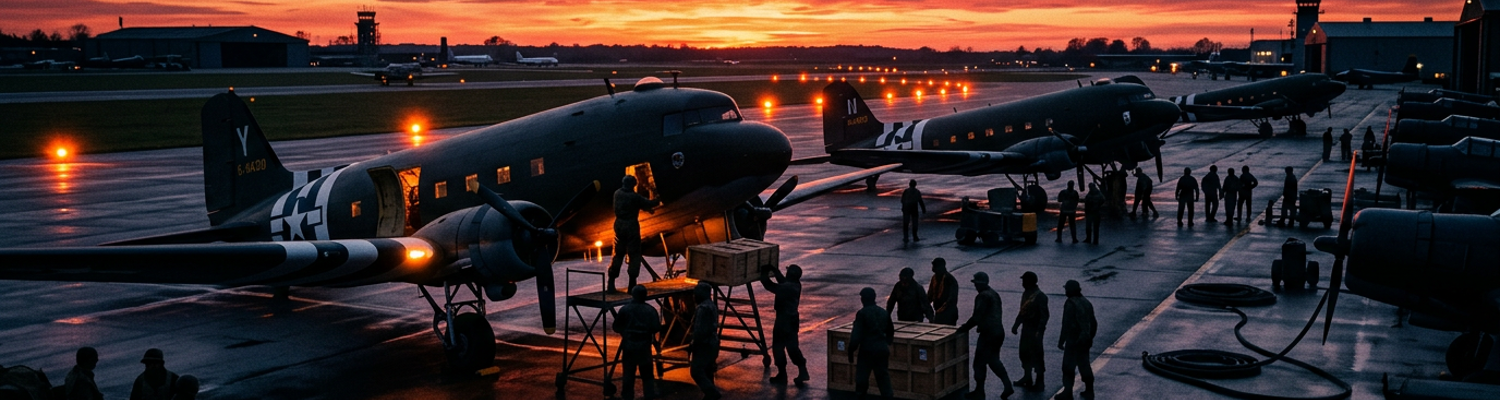
Mechanics and ordnance crews on Saipan and Tinian supported these new flight plans by loading bomber bays with thousands of incendiary bomblets instead of high-explosive ordnance. Weapons handlers stacked quick-opening cluster units packed with gasoline-gel bomblets on airfield aprons, setting barometric fuzes to burst open two thousand feet above Japanese rooftops. Ground personnel checked the release shackles of every B-29, making sure the heavy clusters would drop in rapid succession to create continuous carpets of flame. Staff navigators plotted flight routes that crossed perpendicular to prevailing winds, ensuring that dropped firebombs would ignite wide fire lines that swept across neighboring machine shops. Major General Curtis LeMay signed the combat field orders that committed hundreds of Superfortresses to night incendiary attacks against Tokyo. Pilots started their engines and taxied heavily loaded bombers toward the runway thresholds, carrying the Joint Target Group fire plans into combat above the Japanese mainland, relying on precise mathematical models of urban destruction.
Urban Structural Flammability and Weaponry Analysis
Target folders stacked inside the bomber navigation bays contained detailed mathematical evaluations that turned Japanese municipal construction into fuel calculations. Joint Target Group analysts calculated the combustibility of Japanese wood-and-plaster urban architecture, low water pressure infrastructure, and narrow firebreak systems to measure how quickly entire districts would burn. Analysts examined residential framing techniques that used light cedar posts, sliding paper partitions, and thick straw tatami mats, noting that these dry materials would feed intense flames within minutes of ignition. Building surveys revealed that municipal water mains throughout cities like Tokyo and Nagoya operated with weak, low water pressure infrastructure that could never pump enough water to combat multiple simultaneous blazes. Japanese civil defense workers had cut cleared firebreak paths between residential blocks, but Joint Target Group researchers discovered these gaps were far too narrow to stop heat from leaping into neighboring rows of homes. Planners concluded that spreading thousands of small fires across these crowded blocks would overwhelm local fire crews and burn out the small manufacturing shops hidden inside the wooden houses, a theory that required physical validation.
Engineers in the Utah desert built entire simulated city blocks to test how those fragile domestic structures would burn under modern air bombardment. Weapons trials conducted on simulated Japanese structures at the Dugway Proving Ground confirmed the optimal dispersal patterns for M69 incendiary cluster bomblets. Construction crews at the test range assembled full-scale replicas of common Tokyo dwellings using authentic materials, including light cedar frames, bamboo supports, straw tatami floor mats, and clay roof tiles. Armament teams released clusters of six-pound M69 bomblets from high towers and bomber bomb bays, tracking the way the falling weapons struck sloped roofs. Trailing cloth ribbons stabilized each plunging bomblet so its nose fuze struck flat against the roof, allowing the steel cylinder to punch through shingles into the living quarters below. Internal delay charges then sprayed burning gasoline gel across paper screens and wooden floorboards, producing fast-moving fires that simulated Japanese civil defense teams could not extinguish with standard hand pumps, proving the lethal efficiency of the incendiary payload.
Hand pumps and small bucket lines failed during the Utah tests because the burning gasoline gel clung to vertical surfaces and generated choking smoke that drove firefighters away from the buildings. Weapons officers compiled the test results into precise loading tables that dictated how many incendiary clusters each B-29 should carry over Honshu. Armament crews packed thirty-eight of the six-pound M69 cylinders into each five-hundred-pound cluster casing, fitting every unit with a mechanical airburst fuze. Ordnance specialists set these fuzes to crack the outer casings open two thousand feet above Japanese rooftops, releasing the finless bomblets to fan out across broad target footprints. Analytical charts showed that this specific opening altitude prevented the bomblets from clustering too tightly in one spot or drifting too far apart to sustain interlocking fires. Planners transferred these release calculations directly into combat flight manuals, giving bomber crews an exact formula to ignite large areas with minimal bomb expenditure, readying the fleet for a massive operational shift.
Operations planners on Guam matched these weapon dispersal formulas against the Joint Target Group flammability maps of Tokyo, Nagoya, and Osaka. Navigators plotted bomber approaches across the wind so the prevailing Pacific air currents would push the expanding fires across narrow streetbreaks and into adjacent industrial sectors. Intelligence officers noted that the lack of functional municipal water pressure meant that once three or four houses in a block caught fire, the entire ward was doomed to burn. Armament personnel loaded hundreds of modified B-29s with full bays of the newly tuned incendiary clusters, readying the force for low-altitude night runs beneath the winter clouds. Major General Curtis LeMay reviewed the final weapon dispersal graphs and signed the launch directives that sent the firebombers toward the crowded wooden districts of central Tokyo, initiating a brutal new phase of the air war.
Tactical Transition and Operation Meetinghouse
Ground mechanics across the Marianas airfields immediately set to work modifying hundreds of bombers to carry out the radical low-level operational concept. Major General Curtis LeMay ordered B-29s to strip defensive guns and ammunition to maximize M69 incendiary payloads for low-altitude night attacks between five thousand and nine thousand feet. Armament personnel unbolted remote-controlled turrets, removed electronic fire-direction computers, and emptied thousands of rounds of heavy caliber ammunition from storage bins inside the fuselages, retaining only the twin tail guns for rear defense. Removing this defensive weaponry shed over three thousand pounds of dead weight from each airframe, allowing fuel managers to cut reserve gasoline loads and pack bomb bays with up to seven tons of cluster munitions. Flight engineers welcomed the revised operational profile because cruising beneath the jet stream spared the Wright R-3350 engines from the punishing strain of high-altitude supercharging and severe headwind turbulence, ensuring a higher mechanical survival rate for the massive bomber stream.
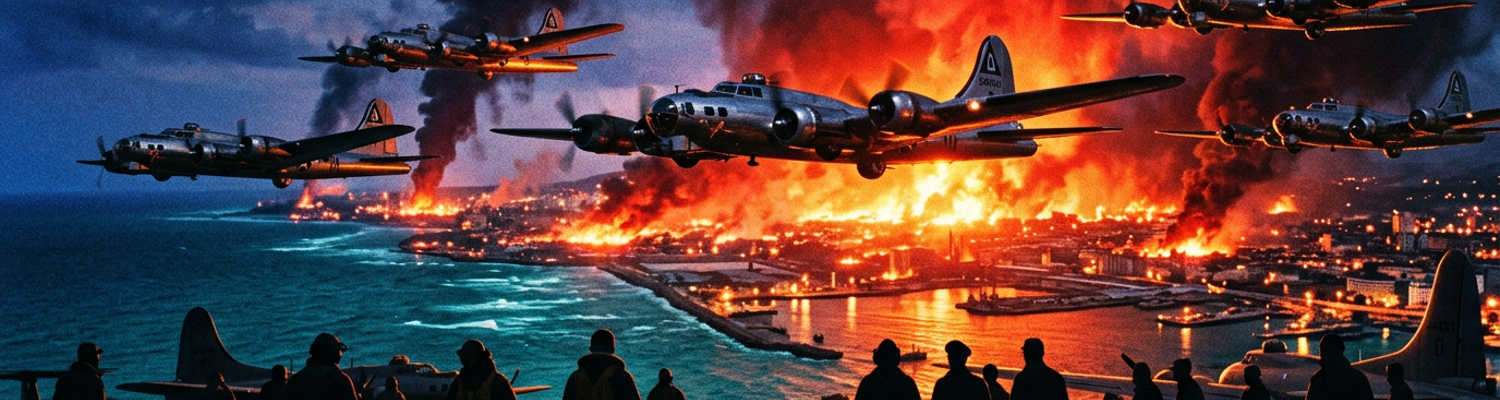
Superfortress pilots pushed their throttles forward along the crushed-coral runways of Guam, Saipan, and Tinian, launching a staggered stream of heavily laden bombers into the Pacific darkness. Navigators guided their individual aircraft across fifteen hundred miles of open ocean without flying in formation, saving additional fuel by avoiding the difficult assembly maneuvers required for daylight strikes. Pathfinder bombers of the 314th Bombardment Wing reached the coast of Honshu first, using their search radars to track the dark waters of Tokyo Bay and the winding bends of the Sumida River through scattered clouds. Lead bombardiers toggled their incendiary loads directly across the designated aiming points, setting two enormous intersecting fire lines across the dense eastern wards of the capital. Following waves of bombers used this blazing ground marker as a visual guide, dropping down to their assigned release altitudes to release their weapons in a steady five-hour procession, saturating the urban landscape with thousands of incendiary cylinders.
Operation Meetinghouse struck Tokyo on the night of March 9 to 10, 1945, incinerating sixteen square miles of urban area based on Joint Target Group zone overlays. Barometric fuzes cracked open thousands of cluster casings at two thousand feet, releasing hundreds of thousands of six-pound M69 incendiary cylinders to plunge into the crowded Shitamachi district. Cloth streamers pulled the falling cylinders vertical so their nose fuzes drove steel bodies deep through clay shingles, wooden roofs, and ceiling boards into family living spaces and backyard workshops. Internal powder charges ignited upon impact, spraying sticky gasoline gel across light cedar framing, paper sliding screens, and dry straw tatami floor mats. Gale-force surface winds of nearly thirty miles per hour caught the thousands of isolated ignitions and merged them into a unified firefront that swept over canals and cleared streets, defeating local civil defense crews armed only with hand pumps and water buckets, creating an uncontrollable inferno that consumed the manufacturing district.
Flight crews flying in the final attack waves felt extreme thermal updrafts seize their seventy-ton aircraft, throwing bombers upward by thousands of feet and flipping flight instruments off their gyroscopic axes. Thick columns of black smoke filled cockpits with the odor of burning wood and scorched cloth, forcing pilots to fight their control yokes as turbulence hurled aircraft through the night sky. Tail gunners reported seeing the deep orange glow of the burning capital reflect across the Pacific horizon for more than one hundred and fifty miles after turning south toward the Marianas. Reconnaissance aircraft swept over the smoking city the following afternoon to photograph the charred ruins, documenting that the fire had flattened the targeted zone overlays and obliterated hundreds of feeder workshops that supplied frontline aircraft factories, validating the brutal effectiveness of the new targeting doctrine.
Secondary Regional City Firebombing Operations
Film negatives developed from those damage assessment flights confirmed that fire had gutted primary cottage production sectors, leaving the major metropolitan areas largely reduced to ash by late spring. Target planners reviewing the intelligence reports recognized that remaining war manufacturing had dispersed into smaller provincial cities that supplied parts to surviving factories or housed key transportation hubs. Between May and August 1945, XXI Bomber Command applied Joint Target Group area portfolios against more than sixty secondary and tertiary Japanese industrial cities. Operational orders directed B-29 wings against mid-sized urban centers such as Toyama, Hamamatsu, Fukui, and Shizuoka, where regional railway yards, textile mills converted to munitions work, and small machine tool foundries operated amid dense residential blocks. Armament crews across Saipan, Tinian, and Guam loaded thousands of tons of M47 and M69 incendiary clusters onto assembly racks, preparing hundreds of bombers for a continuous rotation of nighttime area strikes against these regional targets, expanding the campaign of destruction across the entire Japanese archipelago.
Bomber formations flying into these regional airspaces encountered dense cloud decks, low marine fog, and lingering soot plumes that completely blocked optical sights of coastal inlets and urban landmarks. Radar operators seated in cramped compartments behind the cockpit tuned the cathode-ray screens of their radar sets to identify shorelines, river bends, and railway embankments through the overcast. Pathfinder bombardiers synchronized their mechanical release controls to those glowing radar blips, dropping clusters of magnesium and phosphorus flares that punched through cloud layers to ignite initial ground fires across the aiming zones. Trailing waves of Superfortresses tracked those blazing pilot fires or took radar coordinates from the lead ships, dumping full bays of gasoline-gel bomblets into the heart of each municipality despite zero visual visibility, ensuring that bad weather could no longer protect Japanese industrial centers.
Firebombs plunging into these smaller regional centers overwhelmed local emergency services that possessed only rudimentary firefighting equipment. Municipal water mains in secondary cities lost pressure almost immediately as thousands of fires broke out across packed wooden neighborhoods, drying up the shallow hydrants used by volunteer fire squads. Civilian defense teams equipped with hand-cranked pumps and water buckets retreated from streets choked with thick heat and blowing sparks, unable to stop flames from leaping across narrow alleys into family workshops and small foundries. Conflagrations swept through communities such as Toyama, where intense blazes destroyed over ninety-nine percent of the built-up city area in a single night, while raids on towns such as Fukui and Kofu wiped out more than half of all municipal structures. Fleeing residents and dispersed factory workers abandoned burning districts for surrounding canals and agricultural fields, halting local subassembly work and stranding regional supply shipments, effectively paralyzing the provincial wartime economy.
Photographs rushed from Mariana darkrooms documented these smoldering ruins, giving intelligence analysts concrete evidence that secondary city manufacturing had collapsed. Target analysts on Guam measured the blackened footprints on composite maps, checking off secondary manufacturing centers as their workshops, warehouses, and transit lines ceased operations. Major General Curtis LeMay reviewed these damage calculations and expanded the flight manifests, ordering additional bombardment wings to strike the next tier of provincial cities still listed in the target portfolios. Supply officers on Tinian and Saipan marshaled fresh shipments of cluster bombs from incoming cargo ships to the flight lines, keeping bomber bays loaded for the next scheduled nighttime incendiary run. Flight leaders issued new approach coordinates to their crews and directed maintenance chiefs to service every available airframe for another multi-wing strike across Honshu and Kyushu, while a separate, highly classified targeting effort unfolded in Washington.
Manhattan Project Target Selection and Survey Baseline
Teletype machines at Marianas airfields printed urgent priority orders from Washington that abruptly withdrew several major metropolitan targets from the daily XXI Bomber Command strike rosters. The Manhattan Project Target Committee utilized Joint Target Group dossiers and flammability metrics to identify pristine urban-industrial targets including Hiroshima, Kokura, and Niigata. Major General Leslie Groves and scientific advisers insisted on selecting untouched municipal centers where conventional incendiary raids had not yet scarred the landscape, ensuring that strike observers could clearly measure the blast, thermal, and radiological effects of the new atomic weapons. Target planners cross-referenced Joint Target Group structural surveys with municipal building records, calculating how tightly packed wooden housing and low water pressure systems would respond to sudden, massive thermal radiation. Hiroshima met every analytical criterion because its flat delta contained dense residential workshops packed around the Second General Army headquarters and regional supply depots, while Kokura housed vast munitions plants and Niigata operated major steel mills and oil refineries along the coast. Secretary of War Henry Stimson endorsed these selections and placed the nominated cities under strict operational immunity, barring conventional B-29 wings from dropping a single incendiary cluster into their boundaries, preserving these urban centers for a devastating new weapon.
Pilots of the 509th Composite Group took custody of those preserved targets on Tinian, conducting high-altitude navigation rehearsals while the rest of the Twentieth Air Force continued firebombing regional cities across the mainland. Bombardiers studied aerial photographs and target folders prepared from the Joint Target Group dossiers, selecting distinct landmarks such as the T-shaped Aioi Bridge in Hiroshima to guide their visual release runs. Colonel Paul Tibbets flew the B-29 Enola Gay over Hiroshima on the morning of August 6, 1945, releasing a single uranium-fueled weapon that detonated nineteen hundred feet above the municipal center. Intense thermal radiation vaporized roof tiles and ignited light cedar framing across thousands of homes within split seconds, creating thousands of simultaneous ignitions that rapidly merged into a violent firestorm across the delta. Major Charles Sweeney flew the plutonium-fueled weapon toward Kokura three days later, but heavy clouds and drifting factory soot forced the Superfortress to divert to its secondary target of Nagasaki, where the blast funneled along the Urakami Valley to crush the Mitsubishi ordnance plants. Japanese military communications collapsed across both target zones, leaving imperial authorities in Tokyo with reports of total municipal devastation that prompted the unconditional surrender of the empire on August 15, ending the combat phase of the strategic bombing campaign.
Military transports ferried teams of American civilian economists, structural engineers, and ordnance officers into Japanese airfields before the smoke cleared from ruined cities. The United States Strategic Bombing Survey adopted the Joint Target Group pre-strike target analyses as the foundational baseline for evaluating wartime structural destruction and industrial disruption. Field analysts carried the eleven-volume Air Target Intelligence and Analysis by Areas dossiers directly into the field, using pre-strike blueprints, street maps, and economic estimates to assess the actual damage across sixty-six bombed cities. Survey teams examined the charred remains of Hiroshima and Nagasaki alongside provincial centers like Toyama and Hamamatsu, measuring ground-zero blast radii, structural wall displacement, and firebreak failures against the original intelligence predictions. Engineers discovered that modern reinforced concrete buildings had resisted extreme blast overpressures and heat far better than predicted, while the surrounding timber neighborhoods and small machine shops had burned completely away. Factory inspectors walked through gutted industrial districts with plant managers, checking surviving machine tools against pre-strike inventories to determine whether bombing or raw material shortages had halted assembly lines, gathering massive amounts of physical data.
Survey analysts assembled these on-site damage reports and seized corporate account books into exhaustive statistical tables at general headquarters in Tokyo. Cross-checks between pre-strike intelligence and postwar factory ledgers revealed that cottage industry subassembly production had collapsed primarily because fire raids displaced workers and destroyed domestic living quarters rather than crushing heavy industrial machinery. Economists calculated that maritime blockades and mining campaigns had already starved Japanese war plants of steel and oil before the low-altitude incendiary and atomic campaigns flattened municipal centers. Technical divisions drafted hundreds of forensic diagrams illustrating structural deformation, weapon dispersion patterns, and urban burn zones across every targeted Japanese city. Survey directors bound the resulting charts, tables, and physical assessments into comprehensive multi-volume publications, delivering the completed documentation to the War Department, where military leadership archived the massive physical record of the strategic air campaign.