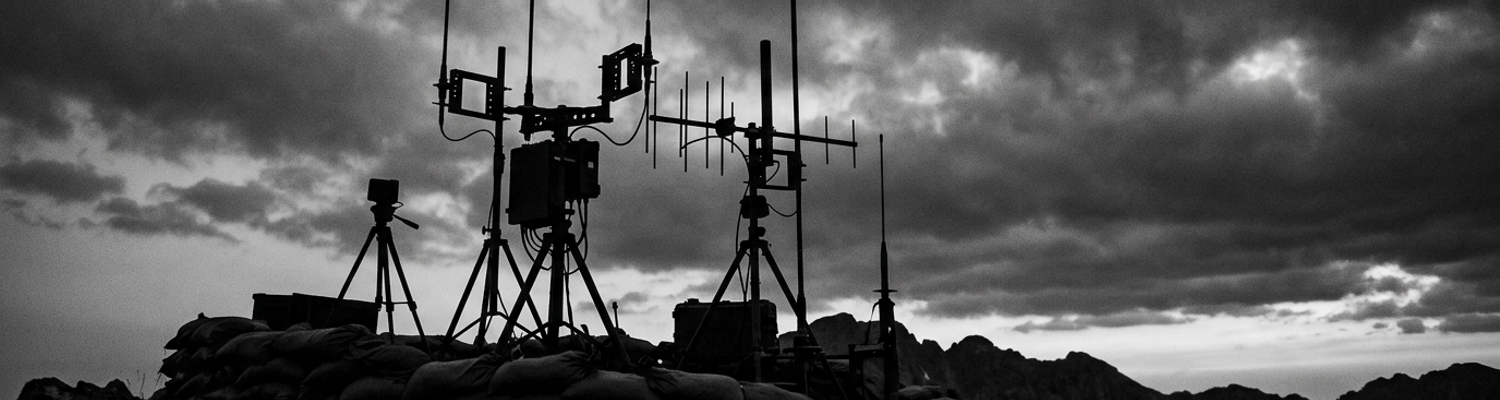

Hill 327 Bunker Complex and Command Structure
The operational directive issued to the 1st Marine Division command staff dictated a complete realignment of electronic warfare assets across the Que Son mountains. Planners faced a strict seventy-two hour countdown before the February offensive commenced. Staff officers had to re-route cryptographic frequencies. They synchronized ground-based sensor relays and established new airborne reconnaissance vectors before the first infantry patrols crossed the line of departure. Failing to meet this deadline meant sending infantry battalions into the A Shau Valley completely blind.
The clock ran continuously.
A close review of operational logs indicates that in February 1970, Headquarters Battalion, 1st Marine Division operated from the bunker complex atop Hill 327 overlooking Da Nang. This installation sat exactly 327 meters above sea level on a ridgeline dominating the coastal plain. Marine engineers constructed the primary command center using deeply buried CONEX boxes. They covered these steel shipping containers with layers of pierced steel planking and thousands of sandbags. Inside these subterranean rooms, the temperature regularly exceeded ninety degrees Fahrenheit. Diesel exhaust from the external MEP-115A generators constantly leaked through the ventilation shafts. General officers worked in a state of profound physical isolation from the combat zones they managed. They stared at acetate-covered topographical maps illuminated by flickering fluorescent bulbs. The actual fighting occurred miles away in the triple-canopy jungle.
The commanders made their strategic decisions entirely dependent on electrical wires and radio waves.
Hill 327 served as the central hub for directing tactical communications and photographic intelligence across Northern I Corps. The technical infrastructure required to maintain this network involved extensive arrays of AN/TRC-97 tropospheric scatter radio sets positioned along the ridge. These parabolic antennas blasted microwave signals northward toward Phu Bai and southward to Chu Lai. Inside the comms bunkers, operators managed banks of KY-8 secure voice encryption devices. Technicians found that the electronic components of these encryption units failed constantly. High humidity levels trapped inside the concrete bunkers caused the internal circuitry to short out. Radiomen cannibalized parts from broken machines just to keep the primary channels open to the regiments. Every time a KY-8 unit failed, an entire infantry battalion lost secure contact with the division headquarters.
Intelligence officers processed the war through chemical baths and wet film.
Photographic intelligence gathered across the entire Northern I Corps sector flowed directly into the Hill 327 darkrooms. Reconnaissance pilots flying RF-4B Phantom aircraft assigned to VMCJ-1 captured high-altitude aerial imagery of enemy troop movements along the Ho Chi Minh Trail. Ground crews retrieved the exposed film canisters from the aircraft at Da Nang Air Base. They drove the film up the winding dirt access road to the bunker complex. Photo interpreters stood over large light tables examining the wet negatives through magnifying loupes. They searched for slight variations in the jungle canopy that indicated hidden anti-aircraft emplacements or freshly dug mortar pits.
The time delay between a pilot snapping a photograph and an infantry squad receiving the target coordinates often exceeded forty-eight hours.
Commanders pacing the floor of the Hill 327 bunker issued orders based on outdated visual data. An interpreter would identify a suspected North Vietnamese Army bivouac near Antenna Valley on Tuesday morning based on film exposed on Sunday afternoon. Division staff would draft an artillery fire mission or coordinate an electronic jamming sweep for that specific grid coordinate. When the high-explosive shells finally impacted the target zone, the enemy personnel had already relocated kilometers away. Staff officers on the ridgeline updated their situation boards using grease pencils to reflect a successful strike. Distance between the air-conditioned planning rooms and the mud of the valley floor created a blind spot in the command structure. Cables connecting the AN/PRC-77 radio relays to the main antenna masts frequently snapped under the weight of monsoon winds.
Combat Camera Equipment and Chemical Shortages
Archival evidence shows that division combat photographers faced severe shortages of photographic developing chemicals throughout the first quarter of 1970. Supply requisitions submitted by the 1st Marine Division photographic section went entirely unfulfilled for weeks at a time. The high-volume processing required for intelligence gathering quickly depleted the existing stocks of Kodak D-76 developer and glacial acetic acid stop bath. Supply chains collapsed entirely. Cases of sodium thiosulfate powder sat on shipping pallets at the Da Nang port facilities. These chemicals baked in the tropical heat until the active compounds degraded into useless chalk. Photographers assigned to the Hill 327 bunker complex reused exhausted developer solutions far beyond their recommended capacity. This chemical exhaustion caused the silver halide crystals on the Kodak Tri-X negative film to process unevenly. The resulting negatives emerged extremely thin. They lacked the contrast necessary to distinguish a camouflaged mortar pit from a cluster of banana leaves.
Intelligence officers staring through magnifying loupes at the contact sheets could not identify the coordinates of North Vietnamese Army radio transmitters.
Supply officers at Force Logistics Command diverted incoming chemical shipments to the larger air wings. Ground combat camera units scavenged for basic processing materials. Field photographic units lacked functional darkroom equipment. They attempted to document electronic intercept teams operating deep in the Que Son mountains. Combat camera personnel attached to the 1st Radio Battalion deployed into the field to photograph the exact placement and calibration of AN/PRD-1 portable direction-finding sets. Headquarters staff required these visual records to verify the triangulation geometry of intercepted enemy signals. The field photographers carried their exposed rolls of 35mm film back to forward operating bases that possessed no standard processing infrastructure. Requisition forms for portable water-chilling units and voltage regulators for Simmon Omega enlargers sat unfulfilled at the Da Nang supply depot.
The lack of temperature-controlled water jackets proved disastrous for film processing.
Water drawn from local streams or lister bags routinely exceeded eighty-five degrees Fahrenheit. Standard processing protocols required chemical baths maintained at exactly sixty-eight degrees. Technicians tried to cool the water by burying canteens in the mud beneath their bunkers. The ambient soil temperature offered little relief. Without functional contact printers, the field units could not produce the positive prints required for the daily intelligence briefings. At that temperature, the gelatin emulsion physically melted off the acetate film base. Photographers built makeshift darkrooms inside standard issue general-purpose medium tents to save the imagery. They stacked sandbags around the canvas walls to block the midday sun. They constructed crude processing tanks out of discarded ammunition cans. Dust particles blown in by the CH-46 Sea Knight helicopters landing nearby settled directly onto the wet film strips hanging from parachute cord.
A close review of operational logs indicates that the field units lacked functional safelights.
Technicians spooled film onto metal developing reels in complete darkness while wearing thick rubber gloves. The mechanical timers used to measure the precise immersion intervals in the chemical baths rusted completely shut due to the constant humidity. Photographers counted seconds in their heads while agitating the film tanks. Without proper fixing agents, the negatives that survived the heat and dust immediately began to turn purple. They faded the moment they were exposed to daylight. Field commanders received blurry prints showing the intercept teams standing next to unidentifiable radio arrays. The unreadable images were stuffed into manila envelopes and sent via courier back to the analysts on Hill 327.
Electronic Intercept Operations in I Corps
Archival evidence shows that throughout March 1970, commanders on Hill 327 ordered detachments from the 1st Radio Battalion into the Que Son mountains. These units monitored North Vietnamese Army communications networks. Field commanders assigned these electronic warfare teams to Firebase Ross. This base sat at grid coordinates 15 35 N 108 01 E. It directly overlooked the primary infiltration routes of the NVA 2nd Division. The specialized units hauled AN/PRD-1 portable direction-finding sets through thick jungle vegetation. Each equipment load weighed over eighty pounds. Operators manually assembled the heavy Adcock antenna arrays in dense brush. They intercepted low-power VHF radio transmissions. NVA signal operators frequently utilized frequency-hopping techniques and burst transmissions using Soviet-supplied R-105M manpack radios.
Marine intercept operators sat for fourteen-hour shifts in muddy listening posts wearing heavy Bakelite headphones.
They transcribed intercepted Morse code traffic onto waterproof field pads using grease pencils. The physical environment degraded the intercept capability immediately. Heavy monsoon rains saturated the canvas carrying cases of the RS-6 receivers. Moisture seeped into the primary oscillator circuits. This caused the tuning dials to slip off their calibrated frequencies. A close review of operational logs indicates that the intercept data gathered in the Que Son mountains faced severe transmission bottlenecks before reaching the decision-makers. Field operators encoded the transcribed NVA coordinates using one-time pads. Radiomen keyed the ciphered text over standard AN/PRC-77 radios back to the Hill 327 bunker complex. Atmospheric interference bouncing off the mountain ridges routinely corrupted the transmission streams.
Division staff officers sitting inside the air-conditioned subterranean command center received fragmented transcripts missing specific alphanumeric coordinates.
Analysts attempted to reconstruct the enemy troop movements by plotting the incomplete direction-finding lines of bearing on their acetate maps. Generals authorized immediate artillery strikes based on these fractured geometric intersections. By the time the 155mm howitzer batteries at Firebase Ross received the fire mission from Hill 327, the targeted NVA radio operators had collapsed their antennas. They marched several kilometers down the valley. The artillery shells detonated against empty hillsides. Photographic reconnaissance teams accompanied specialized electronic warfare units into field operations. They documented the exact geometry of enemy transmission sites. Command staff on Hill 327 required physical visual evidence to confirm the specific types of Soviet antennas the NVA employed across Sector Alpha.
Two-man combat camera detachments attached directly to the 1st Radio Battalion patrols carried heavy Leica M3 rangefinder cameras and 50mm Summicron lenses into the dense brush.
When an infantry sweep overran a North Vietnamese forward observation post, the photographic teams immediately documented the site. They photographed captured Signal Operating Instructions and handwritten codebooks. They recorded the exact directional orientation of the enemy dipole antennas strung between mahogany trees. Field intelligence officers used these photographs to determine if the NVA aimed their directional signals specifically toward the Laotian border. The photographers operated under intense time constraints. Infantry commanders refused to keep their units static in known enemy territory while a photographer bracketed exposure settings. Camera operators shot rolls of Kodak Tri-X film at high shutter speeds to avoid motion blur while taking incoming small arms fire from nearby ridgelines. Sweat dripping from their foreheads frequently fogged the camera viewfinders.
The exposed 35mm film canisters traveled back to the Hill 327 bunker via CH-46 helicopters on scheduled supply runs.
Flight manifests show that transit times from the Que Son mountains to the Da Nang airbase added another twenty-four hours to the intelligence cycle. Division commanders issued tactical directives based on printed photographs showing NVA antenna placements that no longer existed. Analysts inside the command bunker examined the glossy prints under fluorescent lights to determine the transmission range of the captured equipment. They measured the length of the enemy antenna wires in the photographs using plastic drafting calipers. This allowed them to calculate the specific frequency bands the NVA utilized. Darkroom technicians down in the Hill 327 bunker printed these specific intelligence images on exhausted photographic paper.
NVA Radio Jamming along the Cu De River
Archival evidence shows that by mid-April 1970, North Vietnamese Army signal units had established specialized electronic warfare camps directly overlooking the Cu De River. These positions sat at exact grid coordinates 16 08 N 108 06 E. They were heavily concealed beneath the triple-canopy jungle of the Hai Van mountain pass. The steep granite walls of the river valley created a natural corridor. This restricted Marine communication signals to a narrow horizontal plane. NVA technicians exploited this geographic bottleneck. They deployed Soviet-supplied R-330P broadband noise generators powered by heavy diesel alternators. They targeted the AN/GRC-106 high-frequency radio networks utilized by the 1st Marine Regiment. These specific Marine radio sets operated within the 2 to 29.999 megahertz range. They required clear atmospheric bounce to connect the valley patrols with the Hill 327 bunker complex.
Enemy signalmen activated their spark-gap transmitters the moment Marine infantry columns crossed the river.
The resulting electromagnetic interference severed the high-frequency relays instantly. Radiomen carrying the eighty-pound transmitter loads across their backs twisted their tuning dials through all available channels. They heard nothing but a continuous oscillating squeal. A close review of operational logs indicates that this directional signal interference created total communication blackouts between forward elements and headquarters. NVA electronic warfare teams mounted large Yagi-Uda directional antennas on felled mahogany trees. They aimed the arrays directly down the river corridor. By focusing a 500-watt jamming signal along a precise azimuth, the enemy operators saturated the specific frequencies assigned to Marine forward observers. The intense white noise overloaded the squelch circuits on the standard AN/PRC-77 manpack radios. Cryptographic synchronization failed completely.
When the KY-38 NESTOR secure voice devices lost their timing signals, the internal relays physically clicked open and dropped the encrypted connection.
Infantry squads operating three miles up the valley could not transmit contact reports. They could not request medical evacuations or call for artillery support. Platoon leaders shouted into their handsets while taking small arms fire from the surrounding ridgelines. Commanders inside the Hill 327 bunker stared at silent radio banks. Officers attempting to manage the battlefield from their air-conditioned subterranean rooms issued blind strategic decisions. General staff ordered the deployment of O-1 Bird Dog aircraft from Da Nang Air Base. These planes orbited the Cu De River valley at five thousand feet. These light observation planes carried specialized retransmission modules designed to bounce the VHF signals over the jamming cone. NVA operators on the ground tracked the radial engine noise of the low-flying aircraft. They manually tilted their directional antennas upward.
The concentrated interference tracked the planes through the sky and severed the airborne relay link within minutes.
Down in the valley, forward observers attached to Echo Company, 2nd Battalion, 7th Marines attempted to bypass the dead secure networks. They transmitted their coordinates in the clear. Enemy intercept operators recorded the unprotected grid locations on reel-to-reel tape decks. Marine artillery batteries at Firebase Ross received their fire missions through landline cables connected directly to Hill 327. When examining the historical record, the physical isolation of the headquarters staff dictated the deployment of high-explosive ordnance without active target verification. Division planners looked at their acetate map boards. They calculated the estimated marching speed of the blacked-out infantry units. Staff officers drafted fire support coordinates based on where they assumed Echo Company would be after four hours of radio silence. The 155mm howitzers fired hundreds of shells into the jungle canopy based entirely on these mathematical projections. Forward infantry elements trapped in the jamming zone watched the friendly artillery rounds detonate against the granite cliffs two kilometers behind their actual position.
A radioman crouched behind a boulder near the riverbank disconnected his KY-38 encryption unit and threw the dead fifty-pound battery casing into the mud.
Isolation of Forward Reconnaissance Detachments
Archival evidence shows that by late May 1970, North Vietnamese Army signal intelligence companies actively hunted the forward visual reconnaissance units of the 1st Marine Division. Enemy technicians deployed Soviet-manufactured R-318 VHF jamming arrays on the steep ridgelines overlooking the Song Thu Bon river basin. These arrays sat at exact grid coordinates 15 48 N 108 05 E. They powered these systems with portable diesel generators dragged up the mountain paths by hand. These specialized jammers specifically targeted the 30 to 75 megahertz frequency bands utilized by Force Reconnaissance patrols operating deep behind enemy lines. The moment a Marine forward observer keyed the handset of their AN/PRC-77 radio to transmit enemy troop coordinates back to headquarters, NVA operators activated their broadband noise generators. Electromagnetic interference instantly flooded the channel.
Targeted jamming completely isolated forward visual reconnaissance units from 1st Marine Division commanders sitting in the Hill 327 bunker.
Radio operators in the field frantically swapped out the BA-4386/U magnesium batteries. They thought their power supplies had failed in the intense humidity. They twisted the frequency selector knobs through all 920 available channels and found only static. When examining the historical record, this deliberate electronic severance created a total intelligence vacuum inside the subterranean command center. Generals pacing the concrete floors of Hill 327 stared at silent KY-38 encryption devices bolted to the plywood walls. Without active voice uplinks, the division staff could not issue extraction coordinates or coordinate artillery support for the exposed reconnaissance detachments. The commanders made blind strategic decisions based on patrol routes drawn on acetate maps forty-eight hours earlier.
Staff officers dispatched CH-46 Sea Knight helicopters to predetermined extraction zones that the reconnaissance teams had already abandoned due to heavy enemy contact.
Communications blackouts forced the isolated field units to rely entirely on visual documentation. They needed to prove the existence of NVA anti-aircraft emplacements to the skeptical staff officers back at headquarters. That documentation required a constant supply of fresh photographic materials. Physical transport of unexposed film was delayed by contested ground routes and severed communications across Sector Alpha. The 1st Reconnaissance Battalion required hundreds of rolls of unexposed Kodak Tri-X 35mm film to document the camouflaged enemy supply caches hidden beneath the jungle canopy. Logistics clerks at the Da Nang supply depots packed the fresh film canisters into metal ammunition crates. They loaded them onto M151 utility trucks for ground transport. NVA sapper units routinely ambushed these slow-moving supply convoys along Route 4. This narrow dirt artery was flanked by dense elephant grass.
The enemy buried pressure-detonated 122mm artillery shells in the dirt roadbeds and set up interlocking fields of fire using RPD machine guns.
Without active radio relays to call in close air support, Marine convoy commanders halted their vehicles. They engaged in prolonged firefights that lasted for days. The unexposed film sat baking inside the stalled transport trucks under the midday sun. Heat radiating through the metal crates degraded the unexposed silver halide crystals before the film ever reached a camera. Forward reconnaissance detachments waiting at Firebase Ross completely exhausted their supply of unexposed negatives by the second week of June. Platoon leaders drafted urgent requisition forms for fresh film on waterproof paper. They handed them to returning casualty evacuation pilots. Severed communications networks meant logistics officers at Hill 327 had no idea which forward operating bases desperately needed resupply. Division planners dispatched supply trucks down the wrong mountain passes based on outdated logistical tables.
When a convoy finally broke through the contested ground routes and reached the forward reconnaissance units, the delivered film stocks were often completely ruined by the extreme temperatures sustained during the delayed transit.
A combat photographer opened a sealed olive-drab supply crate to find eighty rolls of unexposed film melted into a single solid block of acetate.
The Headquarters Command Bubble at Da Nang
First Marine Division planners received exactly forty-eight hours to map all North Vietnamese Army anti-aircraft emplacements before infantry battalions crossed the line of departure into the Que Son mountains. The operations order mandated a complete electronic synchronization of artillery batteries and forward observer frequencies prior to the assault. Officers stared at the ticking mechanical clocks bolted to the concrete walls. Failing to establish this communications network meant sending three thousand Marines into a heavily fortified valley without fire support. Archival evidence shows that division commanders at Hill 327 experienced profound strategic isolation due to severe communication delays throughout this brief preparation window. The primary command center sat inside deeply buried CONEX boxes overlooking the Da Nang airfield. General officers operated in an artificially cooled environment separated entirely from the triple-canopy jungle where the actual fighting occurred.
They relied on electrical cables and radio waves to understand the battlefield.
Those electronic tethers snapped under the atmospheric pressure of the coastal monsoon. A close review of operational logs indicates that the physical distance between the ridgeline bunker and the Que Son valley caused heavy degradation in the AN/TRC-97 tropospheric scatter radio networks. Technicians aimed the parabolic microwave antennas south toward Firebase Ross. They attempted to punch signals through dense thermal inversions. The high humidity levels trapped in the valley floor scattered the microwave bursts before they reached the receiving arrays. Encrypted voice traffic passing through the KY-8 secure encryption devices lost synchronization constantly. When a forward infantry company took small arms fire and attempted to call for immediate extraction, the transmission delay often exceeded four hours.
Radiomen inside the Hill 327 complex twisted their calibration dials and heard only static.
The generals pacing the plywood floors could not speak directly to the battalion commanders engaged in combat. The physical environment of the bunker exacerbated this disconnect. Heavy steel blast doors sealed the general staff away from the sounds of the incoming rocket attacks that routinely hit the lower elevations of the base. They watched lights flicker on their switchboards while waiting for couriers to hand-deliver decoded teletype messages from the valley. A staff sergeant recorded the fragmented contact reports on waterproof paper using a grease pencil. Senior staff were forced to make tactical decisions miles away from the front without real-time reconnaissance data. Planners sitting in the subterranean bunker drafted artillery fire missions based entirely on outdated visual intelligence gathered by RF-4B Phantom aircraft.
The intelligence cycle required ground crews to physically drive exposed film canisters from the airfield up the winding dirt access road to the bunker complex.
Darkroom technicians processed the negatives in chemical baths and printed contact sheets for the analysts. By the time an intelligence officer identified an NVA mortar pit at grid coordinates 15 35 N 108 01 E, thirty-six hours had elapsed since the pilot snapped the photograph. Division commanders looked at these delayed images and authorized 155mm howitzer strikes from the 11th Marine Regiment. They issued these execution orders without any ground-level confirmation that the enemy targets still occupied the zone. The artillery shells detonated against abandoned positions. Officers attempting to manage the battlefield from the isolated command center issued blind directives to forward elements. When examining the historical record, the spatial disconnect between the Hill 327 bunker and the muddy valley floor created a dangerous lag in operational awareness.
Planners calculated estimated marching speeds for the 7th Marine Regiment and updated their acetate map boards accordingly.
They ordered infantry platoons to advance toward specific ridgelines assuming the earlier artillery bombardments had neutralized the enemy threat. The NVA 2nd Division had already relocated their heavy machine gun teams into flanking positions along those exact routes. Division staff transmitted the final assault coordinates over fading high-frequency radio channels using one-time cryptographic pads. They assumed the infantry companies possessed clear avenues of approach based on aerial photographs taken two days prior. Down in the Que Son valley, a forward observer keyed his handset to warn headquarters about the newly constructed enemy bunkers blocking the path.
An incoming mortar round severed his main antenna cable.
Technological Vulnerabilities in Tactical Communications
Archival evidence shows that Marine high-frequency relay networks operating across Northern I Corps possessed severe technical flaws that North Vietnamese Army signal intelligence units systematically exploited. Forward infantry elements of the 5th Marine Regiment deployed into the Que Son mountains carrying AN/GRC-106 radio sets. These specific transceivers operated in the 2 to 29.999 megahertz spectrum. Ground commanders relied entirely on these high-frequency bands to push atmospheric bounce signals over the granite peaks back to the Hill 327 bunker complex. NVA electronic countermeasure teams neutralized this hardware by deploying Soviet-built R-330P broadband spark-gap transmitters on elevated ridgelines. Enemy operators did not blanket the entire electromagnetic spectrum. They monitored the specific cryptographic synchronization tones emitted by the Marine KY-8 secure voice units.
Once the NVA technicians identified the exact frequency hop, they fired concentrated bursts of localized white noise directly at the targeted channel.
This directional jamming overloaded the squelch circuits inside the Marine transceivers instantly. Radiomen carrying the eighty-pound equipment loads twisted their selector knobs through the available channels trying to find an open frequency while taking incoming mortar fire. The encrypted network collapsed into a continuous oscillating squeal. A close review of operational logs indicates that this localized interference forced forward observers to abandon their encrypted networks entirely. Platoon commanders operating near Antenna Valley ordered their radiomen to disconnect the heavy NESTOR encryption devices. They transmitted fire mission coordinates in the clear out of immediate tactical desperation. NVA intercept operators recorded these unprotected grid locations using portable reel-to-reel tape decks hidden in cave complexes.
Enemy commanders immediately relayed the exposed Marine positions to heavy artillery batteries positioned on the Laotian border.
Division officers inside the subterranean Hill 327 bunker stared at silent receiving banks. General staff remained completely unaware that their forward elements were transmitting on open channels. The physical cables connecting the transceivers to the antenna masts frequently burned out from the electrical overload generated by the jamming signals. Electronic isolation compounded a total failure in visual intelligence gathering. The lack of secure real-time image transmission created a complete dependency on physical film delivery across the entire combat theater. Defense Communications Agency engineers had not yet developed facsimile systems capable of pushing high-resolution imagery through the narrow bandwidth of tactical field radios. Marine intelligence analysts sitting in Da Nang required visual confirmation of NVA anti-aircraft emplacements before authorizing airstrikes.
Forward reconnaissance units and RF-4B Phantom aircrews shot rolls of Kodak Tri-X negative film to document these camouflaged positions.
Every exposed frame had to travel physically from the combat zone back to the darkrooms at Hill 327. Ground crews stuffed the 35mm film canisters into canvas bags. They handed the exposed negatives to CH-46 Sea Knight helicopter pilots conducting medical evacuation flights out of Firebase Ross. Low cloud ceilings during the coastal monsoon season frequently grounded these supply flights for consecutive days. When examining the historical record, this reliance on mechanical transport completely severed the operational chain of command. Weather patterns forced the helicopters to remain on the Da Nang tarmac. Logistics clerks loaded the exposed film crates onto M151 utility trucks. Convoys drove south along Route 1. This contested asphalt highway ran directly adjacent to flooded rice paddies and dense tree lines.
NVA sapper units buried command-detonated 122mm artillery shells in the roadbed specifically to halt these logistics columns.
During these ambushes, the transport trucks sat idling in ambient temperatures exceeding one hundred degrees Fahrenheit. The intense heat radiating through the metal truck beds degraded the silver halide crystals on the acetate film base. Chemical degradation ruined the visual data before the convoys ever reached the perimeter wire of the command base. A photo interpreter opening the canvas bags received blank negatives smelling of melted gelatin emulsion.
Tactical Aftermath and Intelligence Logistics Legacy
Archival evidence shows that the total communication blackout along the Cu De River exposed critical flaws in the combined signal and visual intelligence doctrine utilized by the 1st Marine Division. Planners inside the subterranean Hill 327 command center originally designed a synchronized system where electronic intercepts would immediately cue aerial photographic sweeps. Fleet Marine Force operational manuals dictated that forward elements of the 1st Marine Regiment should transmit the precise grid coordinates of North Vietnamese Army radio transmitters over secure KY-8 encrypted voice channels. Division staff would then dispatch RF-4B Phantom aircraft from VMCJ-1 to photograph those exact locations. Enemy technicians operating Soviet-supplied R-330P broadband noise generators completely severed this operational loop.
When the high-frequency AN/GRC-106 relays collapsed into continuous static, ground patrols lost all ability to guide the reconnaissance aircraft.
The aircrews flew blind over the triple-canopy jungle. A close review of operational logs indicates that this specific geographic bottleneck destroyed the fundamental premise of cross-referencing tactical data. Intelligence officers sitting in the air-conditioned Da Nang bunkers required simultaneous inputs to verify enemy positions. They needed real-time radio confirmation from the valley floor to validate the outdated aerial imagery drying in their darkrooms. The Cu De River jamming operations created an absolute vacuum that lasted for seventy-two hours. Staff officers stared at wet contact sheets showing suspected NVA mortar pits at grid coordinates 16 08 N 108 06 E. They could not raise the infantry platoons assigned to investigate those clearings.
Radiomen operating in the valley twisted their frequency selector knobs through thousands of channels trying to report that the enemy had already moved the mortars into reinforced cave systems.
The division commanders authorized heavy artillery strikes based entirely on the silent unverified photographs. Marine Corps logisticians subsequently re-evaluated supply chains for forward photographic processing units after reviewing these intelligence failures. Supply officers at Force Logistics Command realized that the total reliance on rear-echelon darkrooms contributed directly to the command isolation at Hill 327. They drafted new operational tables designed to push film processing capabilities directly to the forward operating bases. This shift required a complete overhaul of how volatile chemicals reached the combat zones. Previously, cases of sodium thiosulfate powder and Kodak D-76 developer sat on wooden shipping pallets at the Da Nang port facilities. The tropical sun baked these bulk shipments until the active compounds degraded into useless chalk.
Logisticians abandoned the standard M151 utility truck convoys that repeatedly fell victim to NVA sapper ambushes along Route 1.
Planners began packing the temperature-sensitive darkroom chemicals inside insulated medical blood-transport coolers. Quartermasters at Da Nang Air Base loaded these modified containers directly onto CH-46 Sea Knight helicopters assigned to daily medical evacuation routes. This direct airlift bypassed the contested dirt roads entirely and reduced transit times from weeks to hours. Field photographers attached to the 1st Radio Battalion at Firebase Ross finally received functional batches of glacial acetic acid stop bath that had not boiled inside a metal truck bed. The logisticians also issued new priority requisition codes for portable water-chilling units and voltage regulators meant for Simmon Omega enlargers.
Technicians working inside sandbagged general-purpose medium tents wired these heavy regulators to portable MEP-115A diesel generators.
The modified equipment allowed the combat camera personnel to maintain their chemical baths at exactly sixty-eight degrees Fahrenheit despite the ninety-degree ambient jungle heat. A field technician successfully processed a roll of Kodak Tri-X negative film showing captured Soviet directional antennas and immediately handed the wet prints to the local battalion commander. The time delay between capturing an image and issuing a tactical directive shrank from forty-eight hours to less than three. By processing high-resolution visual evidence directly at the forward operating bases, infantry officers no longer had to wait for couriers from Hill 327. Field analysts could match the fresh photographs of newly dug NVA trench lines with the sporadic radio intercepts gathered by the portable AN/PRD-1 direction-finding sets. If the local broadband jammers severed the primary tropospheric scatter relays, the battalion commander at Firebase Ross still retained physical proof of the enemy buildup. Officers coordinated their own localized 155mm howitzer fire missions without routing the requests through the blind subterranean command center in Da Nang. A logistics clerk stapled the new supply routing protocols to the plywood wall of the supply depot.