
The 1978 NATO Warning Assessment Intelligence Gap
Archival evidence shows the Group of Soviet Forces in Germany held a distinct numerical advantage along the Inner German Border in early April 1978. Nineteen Soviet motor rifle and tank divisions sat fully mechanized within striking distance of the Fulda Gap. Four thousand two hundred main battle tanks idled in forward deployment areas. These were primarily T-64s equipped with 125mm smoothbore guns. Two thousand self-propelled artillery pieces pre-registered target coordinates across West German staging grounds. Third Shock Army elements occupied garrison towns from Magdeburg down through the dense Thuringian forests. Western analysts calculated that Soviet forces outnumbered NATO defenders by a ratio of three to one in heavy armored assets. The sheer volume of mechanized chassis created an immediate physical threat of overrun.
This density of hostile armor required uninterrupted visual surveillance.
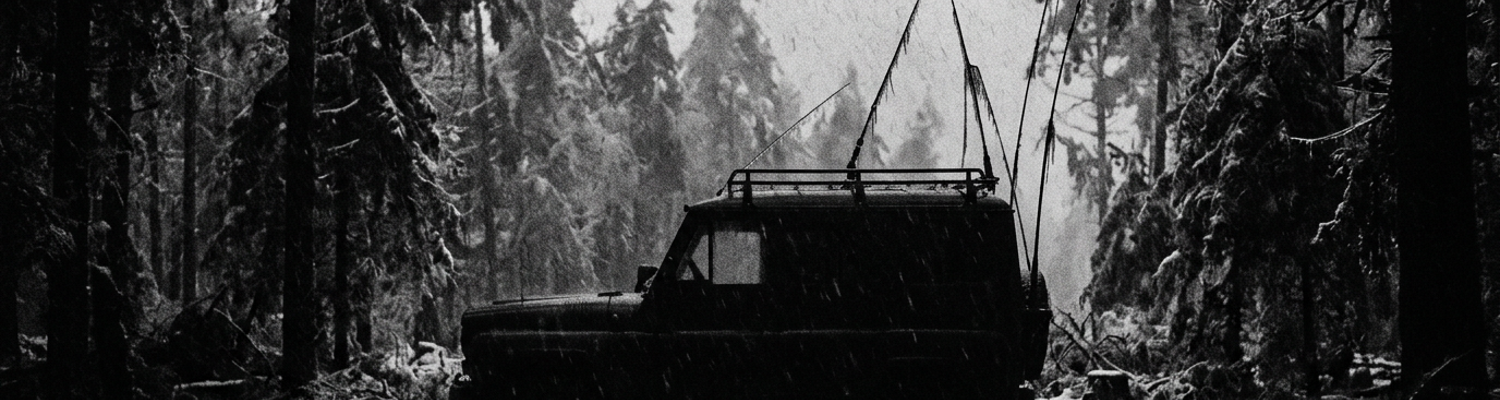
A close review of operational logs indicates a complete failure in this surveillance network occurred between April 12 and April 14. A forty-eight-hour intelligence gap crippled NATO warning assessments. This happened during a period of unannounced Soviet winter-spring transition exercises. United States Military Liaison Mission crews operating in the southern sector near Erfurt encountered severe freezing sleet. Ice accumulation snapped the AS-1729 fiberglass whip antennas on their modified Ford Custom 500 patrol vehicles (serial numbers 78-A-449 through 78-A-462). Atmospheric degradation completely blocked high-frequency radio transmissions back to the Allied control centers.
NATO Supreme Headquarters Allied Powers Europe relied entirely on these reports.
Analysts needed to verify if Soviet rail movements constituted routine training or a hostile buildup. The loss of real-time telemetry from the Thuringian corridor meant analysts at Mons had no data on the combat readiness status of the 8th Guards Army. The indicator matrix for the southern sector registered zero incoming data points. Commanders in Frankfurt operated entirely blind. The Berlin Support Detachment failed to receive timely intelligence reports from forward observers tracking these armored columns. Forward teams sat parked in concealed observation posts along Route 7. They physically recorded the serial numbers of T-64 tanks loading onto flatbed railcars at the Weimar freight yards.
Operatives transcribed the data onto standardized one-time cipher pads under the dashboard lights.
The field personnel attempted to broadcast these encrypted coordinates using AN/VRC-46 tactical vehicular radios. Heavy-duty alternators powered these specific units. The frequency modulation signals could not penetrate the heavy sleet or the geographical depression of the Thuringian basin. Technicians inside the Berlin Support Detachment communications vault on Clayallee waited for the scheduled burst transmissions. Their KW-7 cryptographic teletype machines printed nothing but static-induced garble for two consecutive days. No backup transmission protocols existed for this specific weather event.
Structural flaws in their routing network become apparent upon examining the detachment standard operating procedures.
The primary relay station positioned on the Teufelsberg listening post required clear line-of-sight VHF propagation from the roaming patrol cars. Ice buildup on the Teufelsberg radomes compounded the signal attenuation caused by the weather front. Field teams eventually had to abandon their stationary observation posts. They drove back toward the Potsdam checkpoint to physically hand over their exposed 35mm film and handwritten logs. This physical transit over icy East German farm roads added an extra fourteen hours to the delay. The Berlin Support Detachment eventually processed the film and identified the movement of the 39th Guards Motor Rifle Division. The Soviet formations had already reached their simulated attack positions by that time. The motorized rifle regiments broke radio silence at their designated staging coordinates just three kilometers from the Hessian border.
USMLM Reconnaissance Operations in the Thuringian Zone
Declassified debriefings from April 1978 reveal the exact mechanics of how US Military Liaison Mission teams conducted covert mobile surveillance along the Thuringian border. The crews drove heavily modified Ford Custom 500 sedans. These vehicles featured reinforced skid plates and heavy-duty suspension coils. Mechanical upgrades allowed the two-ton vehicles to navigate the deeply rutted logging roads of the Thuringian Forest without tearing open their oil pans. Drivers navigated Route 85 south of Weimar entirely without headlights. They relied on early-generation AN/PVS-5 night vision goggles to spot the darkened silhouettes of Soviet troop transports.
The primary objective involved intercepting the deployment routes of the 39th Guards Motor Rifle Division.
Sleet aggressively degraded the physical driving conditions across the region. The 4,200 Soviet main battle tanks stationed across the inner border required constant visual identification. Operating the surveillance equipment under these atmospheric conditions proved physically punishing. Observers photographed the rail yards at Saalfeld using Nikon F2 cameras. These cameras were fitted with fixed 1000mm Nikkor reflex lenses. Window brackets stabilized the heavy optics against the idling engine vibrations. The freezing rain coated the exposed glass elements in solid ice within seconds of rolling down the armored windows.
Officers manually scraped the lenses with brass defroster tools to maintain focus on the loading ramps.
They visually recorded the tactical bumper numbers of T-64 tanks rolling off the flatbed railcars. Every transcribed digit went onto a waterlogged acetate clipboard illuminated by a red-filtered penlight. Archival evidence shows that forward HUMINT observers operated deep within Soviet-controlled sectors under severe security constraints. These teams frequently penetrated Permanently Restricted Areas deep inside the East German interior. Yellow and black signs marked these specific geographic zones as strictly off-limits to Western liaison personnel under the terms of the Huebner-Malinin Agreement. Drivers pushed their vehicles off paved highways and into the dense pine forests near Ohrdruf to bypass heavily guarded Soviet checkpoints.
Navigators plotted coordinates purely by dead reckoning and military grid reference system maps under the dense canopy.
Soviet counter-intelligence units actively hunted these specific patrols. Spetsnaz detachments driving Ural-375D six-by-six trucks routinely attempted to ram the American sedans off the road and into drainage ditches. Capture inside a restricted zone meant immediate detainment and aggressive interrogation at KGB headquarters in Karlshorst. Security protocols dictated extreme operational discipline to avoid detection. The HUMINT observers could not run their vehicle heaters to thaw their frozen radio equipment or warm their extremities. Thermal signatures from the exhaust pipes would immediately alert East German border troops patrolling the ridge lines with infrared scanning devices.
The men sat in sub-zero cabins wearing layered M-65 field jackets.
They consumed cold field rations. They maintained absolute silence while Soviet mechanized infantry columns passed within fifty meters of their concealed positions. A single dropped wrench would trigger a search by the accompanying infantry dogs. The operational logs note a specific confrontation on April 13 at grid coordinate 50.82 N, 10.95 E. A USMLM crew tracking a short-range ballistic missile battalion found themselves boxed in by three Soviet BTR-60 armored personnel carriers on a single-lane logging track. The driver engaged the customized locking rear differential. He reversed the Ford through a dense thicket of spruce saplings. They abandoned the observation post and retreated blindly toward the designated safe zone near Erfurt. The rear steel bumper tore completely off the chassis on a buried granite boulder.
Soviet Eighth Guards Army Border Armor Staging
The sheer volume of Soviet mechanized power massing in the southern sector presented an inescapable threat of immediate overrun. The Soviet 8th Guards Army order of battle in early April 1978 comprised over 2,500 tracked vehicles. It included 800 artillery systems and 60,000 combat-ready personnel arrayed against a thinly defended western perimeter. This force density meant that for every NATO anti-tank guided missile launcher stationed in the Hessian corridor, the Warsaw Pact fielded roughly seven main battle tanks. General officers at the Nohra headquarters complex initiated the mobilization sequence on April 5. They ordered the 79th Guards Tank Division out of its Jena garrison.
Columns of T-64A tanks equipped with 125mm 2A46 smoothbore guns began a synchronized push westward.
Three distinct armored spearheads converged simultaneously on the staging grounds near Meiningen. Operational logs indicate this was a full-scale forward deployment rather than a localized readiness drill. Flatbed heavy equipment transporters hauled the slower 2S1 Gvozdika self-propelled howitzers along the Route 84 corridor. This conserved track life and diesel fuel. Mechanics attached to the 39th Guards Motor Rifle Division worked through the night. They replaced worn torsion bars and tensioned the tracks on BMP-1 infantry fighting vehicles before they rolled into the assembly areas. Lead reconnaissance battalions reached their designated tactical coordinates just four kilometers from the border fence by April 8.
Hundreds of V-46-6 supercharged diesel engines idled continuously.
The tank crews needed to prevent the fuel lines from gelling in the sub-zero temperatures. Unburned hydrocarbons settled over the Thuringian valleys in a thick toxic fog. This masked the thermal signatures of the staging regiments from airborne infrared scanners. The 8th Guards Army had positioned a lethal strike force directly opposite the Fulda Gap. United States Military Liaison Mission field teams intercepted these formations by pushing their patrol vehicles into the center of the severe weather front. Freezing rain and sleet began falling across the Suhl district on April 9. Ice accumulated rapidly on the secondary road networks.
American crews drove modified sedans fitted with aggressively treaded snow tires.
Reinforced suspensions supported the extra weight of specialized surveillance gear. Sleet coated the windshields faster than the heavy-duty wiper motors could clear the glass. Electric motors eventually overheated and short-circuited under the mechanical strain of pushing solid ice across the panes. Drivers resorted to rolling down the armored side windows. They steered through the treacherous mountain passes by leaning their heads out into the freezing precipitation. Hypothermia became an immediate operational hazard for the exposed crews.
The technical lengths required to verify the Soviet buildup become clear when examining the historical record of the April 11 patrols.
A two-man USMLM team established a concealed observation post near a railway junction at grid coordinate 50.58 N, 10.49 E. Observers set up their spotting scopes under a canvas tarp suspended between pine branches. This protected the optics from the driving sleet. They visually confirmed the offloading of T-62 tanks belonging to the 120th Guards Motor Rifle Regiment despite visibility dropping below two hundred meters. Navigators cataloged the three-digit tactical numbers painted on the turret sides. They noted the installation of KMT-6 mine plows on the lead vehicles. The team physically wrote this data onto waterproof field pads using grease pencils. The ink in their standard issue ballpoint pens had frozen solid in the ambient air. They transmitted nothing back to Frankfurt.
Spring Freeze Conditions Across the Thuringian Border
Archival evidence shows over three thousand Soviet mechanized chassis idled along the eastern ridgelines of the Thuringian basin in the second week of April 1978. Four fully mobilized motor rifle divisions belonging to the 8th Guards Army saturated the staging zones near Suhl and Meiningen. They deployed T-64 main battle tanks and 2S1 self-propelled howitzers. Western intelligence estimates placed the local force ratio at roughly nine Warsaw Pact armored vehicles for every single NATO anti-tank emplacement positioned across the Hessian corridor. The sheer density of 125mm smoothbore gun tubes pointed directly at the Fulda Gap guaranteed a localized breakthrough within hours of an attack order.
A severe weather front then entirely blinded the western surveillance grid.
A massive low-pressure system stalled directly over the Thuringian Forest on April 12. Unseasonable freezing sleet began falling continuously across the southern sector. Ambient air temperatures plummeted to minus eighteen degrees Celsius within a six-hour window. This precipitation coated the primary deployment routes along Highway 84 in three inches of solid black ice. United States Military Liaison Mission patrols attempting to track the 39th Guards Motor Rifle Division found themselves trapped in a severe sub-zero freeze zone. This zone spanned from Erfurt down to the Bavarian border. Field agents driving their heavily modified Ford Custom 500 sedans through the dense pine forests near grid coordinate 50.62 N, 10.68 E lost all traction on the logging roads.
Thick mud packed solid inside the heavy-duty suspension coils.
Patrol commanders ordered their vehicles off the main transit arteries to avoid physical collisions with Ural-375D supply trucks sliding out of control on the steep mountain grades. Continuous sleet storms buried their designated observation posts under heavy layers of rime ice. Windshield wiper motors on the American sedans overheated and short-circuited while attempting to push the heavy accumulation off the glass. Operators had to roll down the armored side windows and physically scrape the windshields with brass tools while driving blind through the mountain passes. The physical environment immediately began dismantling the American intelligence apparatus.
The sub-zero weather conditions caused systemic failures across all onboard surveillance and transmission hardware.
Extreme cold drained the secondary lead-acid batteries installed in the trunks of the patrol vehicles in under three hours. Technicians had wired these specific power cells to run the AN/VRC-46 vehicular radios independently of the engine alternators. Power output dropped below the required 24 volts needed to push frequency modulation signals through the dense moisture-heavy atmosphere. Ice accumulation measuring two inches thick snapped the AS-1729 fiberglass whip antennas directly off their roof mounts. Observers attempting to photograph the Soviet staging areas outside Meiningen discovered the mechanical shutters on their Nikon F2 cameras had frozen entirely in the open position. Lubricant grease inside the 1000mm Nikkor reflex lenses hardened into a solid paste. Field teams could not manually adjust the focal rings to capture the tactical bumper numbers on the passing T-64 tanks.
Copper wiring connecting the cryptographic teletype machines became brittle and fractured under the floor mats.
Without functional telemetry gear, the forward observers possessed no method of warning Frankfurt about the massing armor. Human physical endurance collapsed alongside the electronics. Standard operating procedures required the USMLM teams to maintain absolute thermal discipline while operating near Permanently Restricted Areas. Crews parked in concealed ravines along Route 85 could not activate their vehicle heaters. Any thermal exhaust signature would instantly alert East German border troops scanning the tree lines with early-generation infrared detectors. Forward observers sat stationary in the freezing cabins for fourteen consecutive hours. Sleet penetrated the door seals and froze directly onto the interior vinyl panels.
Navigators lost fine motor control in their hands.
They dropped their grease pencils onto the floorboards and could no longer operate the dials on their cryptographic cipher pads. Personnel wore standard issue M-65 field jackets that provided insufficient insulation against the minus eighteen degree ambient air. Cold field rations froze solid in their aluminum tins. Consuming frozen water from their canteens accelerated their core temperature drops. Ice fused the driver boots to the steel brake pedal. An operational commander in the southern sector officially aborted the reconnaissance mission at 0400 hours on April 14 due to advanced stages of hypothermia affecting his driver. These agents abandoned their primary surveillance vector and initiated an emergency withdrawal back toward the Potsdam checkpoint. They left their disabled radio equipment bolted to the dashboard.
Thermal Discharge of Nickel Cadmium Field Batteries
Engineering logs from the April 1978 deployment indicate a specific chemical vulnerability within the American portable communications gear. United States Military Liaison Mission forward observers operating outside their vehicles relied on AN/PRC-77 tactical manpack radios for localized reporting. These transceivers drew power from early-generation BB-590/U nickel-cadmium rechargeable batteries. Observers positioned near the Ilmenau rail yards at grid coordinate 50.68 N, 10.92 E dismounted from their Ford Custom 500 sedans to establish concealed listening posts in a dense spruce tree line. Unseasonable freezing sleet saturated the Thuringian basin. Ambient air temperatures dropped to minus sixteen degrees Celsius during the night of April 12.
This sudden freeze induced rapid thermal discharge across the exposed power cells.
The potassium hydroxide electrolyte solution inside the nickel-cadmium casings thickened into a highly viscous gel under the extreme cold. Internal electrical resistance spiked across the battery terminals. The voltage output plummeted from a required twelve volts down to less than four within twenty minutes of exposure to the sleet. The chemical reaction necessary to maintain a continuous electrical charge completely halted. Field technicians had initially attempted to route these transmissions through KY-38 secure voice encryption modules. The cryptographic hardware demanded a stable 24-volt power draw to synchronize cipher sequences with the allied relay stations. The dying NiCad cells could not sustain this heavy electrical load.
Operators physically disconnected the encryption modules.
They attempted to broadcast raw unencrypted frequency modulation signals directly from the AN/PRC-77 chassis. They dialed into the secondary emergency frequencies using frozen fingers. Ice water from the driving sleet seeped through the degrading rubberized gaskets on the battery compartments. Short circuits arced across the copper connection pins. The unencrypted bursts failed to penetrate the dense atmospheric moisture and the steep granite walls of the surrounding valleys. Operators watched the green power indicator lights flicker and die at 0215 hours. Archival evidence shows this specific hardware failure completely isolated the forward HUMINT observers from the allied command structure.
Technicians inside the Berlin Support Detachment communications vault on Clayallee monitored the designated emergency frequencies for forty-eight hours.
They received not a single telemetry ping. Listening post personnel in Berlin heard only atmospheric static on their receivers. Forward teams trapped along Route 4 lacked the power to transmit the tactical bumper numbers of the passing 79th Guards Tank Division. The HUMINT personnel sat in the freezing mud without any method of receiving extraction coordinates or abort codes from their commanding officers. Physical isolation forced the field operatives to make undocumented tactical decisions regarding their proximity to Soviet mechanized infantry patrols. They observed Spetsnaz counter-intelligence units sweeping the adjacent ridge lines with directional radio finding equipment. Soviet troops were actively hunting for the exact high-frequency emissions that the American batteries could no longer produce.
No redundant power systems existed in the standard issue field kits.
Standard operating procedures required the observers to initiate a manual exfiltration protocol without functional field radios. The team leader at the Ilmenau observation post recorded the final T-64 tank serial number on his acetate clipboard at 0340 hours on April 13. He secured the unencrypted AN/PRC-77 radio chassis into a waterproof canvas transport bag to prevent further water ingress. The men crawled three hundred meters back through the ice-covered brush to their concealed patrol vehicle. They physically unclasped the dead BB-590/U batteries from the radio base plates with numb hands. The operatives packed the chemically inert nickel-cadmium blocks into a steel lockbox bolted behind the rear passenger seat. The driver engaged the manual transmission and steered the Ford Custom 500 toward the secondary logging roads.
Improvised Vehicle Alternator Systems and Mechanical Failure
Motor pool technicians at the Berlin Support Detachment compound anticipated severe electrical deficits in their Ford Custom 500 sedans prior to the April 1978 deployment. The onboard AN/VRC-46 vehicular radios and KY-38 secure voice encryption modules required a continuous 24-volt direct current to push frequency modulation signals across the Inner German Border. Standard civilian Ford alternators produced only 12 volts at roughly 40 amps. This mathematical deficit forced field mechanics into unauthorized hardware improvisations inside the Clayallee garages. Maintenance personnel stripped 100-amp Leece-Neville heavy-duty alternators from M35 cargo trucks. Operators fabricated custom steel mounting brackets using acetylene torches to force the military-grade generators into the commercial engine bays.
Technicians bolted these oversized forty-pound components directly onto the cast-iron V8 engine blocks.
The routing of this auxiliary power required extensive copper wiring modifications. Mechanics completely bypassed the factory voltage regulators to prevent current throttling. Four-gauge shielded cables ran directly through newly drilled holes in the steel firewall. This routed raw direct current under the floor mats into the trunk-mounted communications suites. The mechanical setup utilized twin rubber drive belts running off the main crankshaft pulley to spin the heavier alternator rotors. Added weight on the front axle required installing stiffer coil springs to maintain the vehicle ride height. United States Military Liaison Mission patrols departed the Potsdam checkpoint on April 11 relying entirely on this jury-rigged electrical architecture to power their telemetry gear.
Forward teams pushed south along Route 85 toward the Suhl district to intercept the 79th Guards Tank Division deployment.
Ambient air temperatures dropped to minus eighteen degrees Celsius over the Thuringian basin. The improvised electrical systems failed rapidly under the compounding strain of extreme electrical loads and severe cold weather. Observers tracking Soviet T-64 columns near grid coordinate 50.75 N, 10.82 E attempted to broadcast encrypted coordinates back to the Frankfurt command center using burst transmissions. Engaging the push-to-talk switch on the AN/VRC-46 handset spiked the electrical draw to maximum capacity. The Leece-Neville alternators engaged under full magnetic load to meet the demand. Thick sleet had coated the open engine bays during the overnight surveillance operation. Freezing moisture caused the twin rubber drive belts to harden and lose their physical elasticity.
The sudden mechanical resistance from the heavily loaded alternators caused the brittle belts to slip against the steel crankshaft pulleys.
Friction burned completely through the reinforced rubber within four minutes of continuous radio operation. Acrid black smoke poured through the dashboard air vents. The exact sequence of mechanical degradation becomes fully apparent when examining the historical record of the April 13 patrols. Field agents parked in concealed defilades off Highway 84 kept their engines idling at 2500 RPM to maintain continuous amperage for their cryptographic teletype machines. Sub-zero temperatures thickened the synthetic lubricating grease packed inside the alternator bearings. Internal steel rotors ground aggressively against their cast-aluminum housings. High-amperage current generated massive internal heat within the copper stators while the exterior metal casings remained frozen by the driving sleet.
This extreme temperature differential cracked the ceramic insulators holding the electrical windings.
Bare copper wires contacted the grounded metal chassis. Short circuits arced violently across the engine bays. The primary wiring harnesses melted. Voltage output instantly dropped to zero. Without active auxiliary power generation, the heavy radio equipment immediately began draining the primary lead-acid vehicle batteries. Crews watched their dashboard voltage meters plummet from 24 volts down to 9 volts as the encryption modules shut down mid-transmission. A patrol commander operating near Meiningen attempted to manually swap a melted external voltage regulator using frozen brass wrenches. His numb hands slipped against the ice-coated fender. He dropped the replacement part into the deep mud below the oil pan. Field operatives abandoned the repair attempt. The Ford Custom 500 sat immobilized in a frozen rut three kilometers from a Soviet motorized rifle checkpoint.
Courier Runner Collapse and Hypothermic Attrition
The final phase of the intelligence blackout began when field teams abandoned their immobilized vehicles to initiate manual exfiltration protocols. American personnel trapped near grid coordinate 50.61 N, 10.70 E recognized their AN/VRC-46 vehicular radios and AN/PRC-77 manpacks were completely dead. Improvised Leece-Neville alternators had melted the primary wiring harnesses inside their Ford Custom 500 sedans. Officers ordered the immediate extraction of exposed 35mm film canisters containing visual proof of Soviet T-64A tanks staging with KMT-6 mine plows. Navigators packed these materials alongside their handwritten acetate cipher pads into olive-drab rubberized map cases.
Standard operating procedures dictated that in the event of total electronic failure, USMLM teams must transition to physical courier runners to transport intelligence across the Inner German Border.
The men left their heavily modified sedans hidden in dense spruce thickets off Route 84. They permanently disabled the engine blocks by pouring soil directly into the oil fill tubes to prevent Soviet exploitation of the upgraded hardware. Forced marches through the Thuringian Forest toward a designated emergency rally point sixteen kilometers north near Erfurt became their only option. Soviet Spetsnaz counter-intelligence patrols actively monitored the primary paved road networks with directional searchlights. American runners hiked entirely through off-road logging trails and scaled sixty-degree granite inclines in pitch darkness using military grid reference system maps. The freezing sleet coated their cotton fatigue trousers in solid sheets of ice within the first hour of the march.
The physical destruction of these courier teams occurred through rapid thermal drain rather than enemy contact.
Ambient air temperatures hovered at minus eighteen degrees Celsius across the Suhl district. This unseasonable low-pressure system dumped continuous freezing precipitation directly through the dense pine canopy. Field operatives wore standard issue M-65 field jackets layered over heavy wool sweaters. Such clothing combinations lacked a waterproof outer shell capable of repelling heavy liquid sleet during high-exertion evasion maneuvers. Moisture penetrated the outer nylon fabric and completely saturated the underlying wool fibers. Absorbed water added roughly fifteen pounds of dead weight to their frames. Liquid conducts heat away from the human body twenty-five times faster than dry air. Couriers experienced aggressive drops in their core body temperatures as they waded through knee-deep snowdrifts and crossed slick mud-filled ravines.
Their internal thermal regulation systems completely collapsed.
Medical debriefings note that the runners lost fine motor control in their extremities after three hours of continuous exposure to the storm front. Blood flow constricted severely as their bodies attempted to keep central organs functioning through rapid peripheral vasoconstriction. Navigators could no longer grip their lensatic compasses, manipulate the switches on their red-filtered flashlights, or unfold their topographical maps. The men stumbled off their designated extraction azimuths. They wandered blindly into the dense restricted pine stands near the Ohrdruf training area. Shivering mechanisms ceased functioning entirely as muscle glycogen stores depleted. This marked the biological transition from mild to severe hypothermia.
A localized search team later found the team leader from the Route 84 patrol unresponsive at the base of a granite outcropping.
He had physically dropped the rubberized map case containing the recorded tactical bumper numbers two kilometers back along the trail. His hands had grown too numb to secure the canvas carrying strap. The patrol driver lay unconscious in a frozen drainage ditch fifty meters away. Severe frostbite blackened his exposed face and hands. The physical loss of the film canisters sealed the forty-eight-hour intelligence gap. Technicians inside the Berlin Support Detachment communications vault kept the KW-7 cryptographic teletype machines active for an additional twenty-four hours. The designated emergency rally points near Erfurt stayed entirely empty. Forward observation posts along Route 7 sat abandoned while the 39th Guards Motor Rifle Division advanced to their attack coordinates. Two thousand Soviet mechanized chassis idled in the staging grounds directly opposite the Fulda Gap.