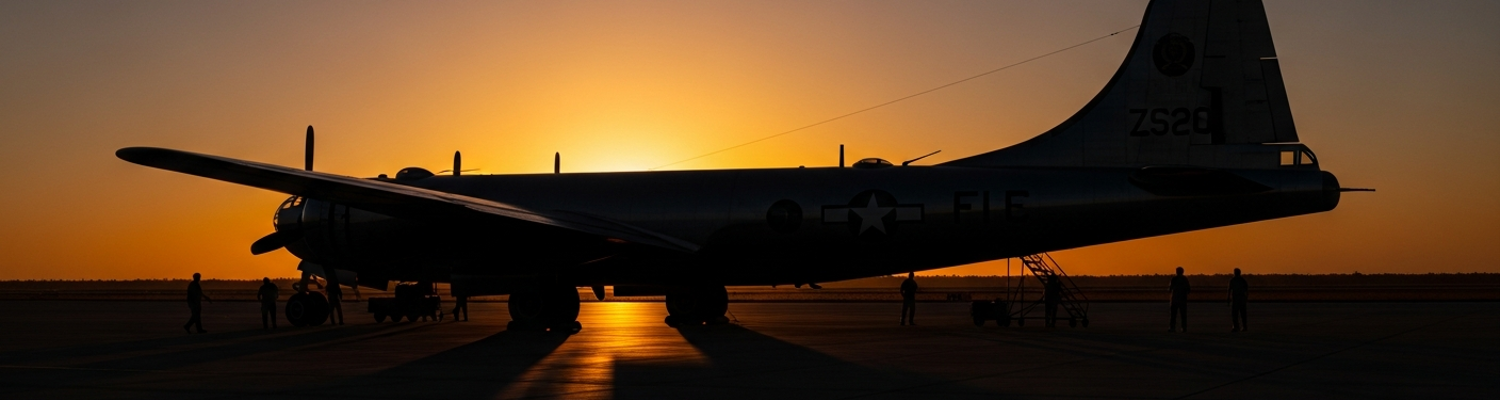

A B-29 strategic bombing mission against the Japanese home islands was a monumental undertaking. From bases in the Marianas, a round trip to Tokyo was a grueling 15-hour, 3,000-mile flight over the Pacific Ocean. Planners in the Twentieth Air Force required exceptionally precise intelligence to justify such perilous missions. They needed detailed layouts of industrial facilities, like the Nakajima Aircraft Company or the Yawata steel works, identifying the most vulnerable nodes within each complex. Mission packages for the XXI Bomber Command also required data on anti-aircraft artillery concentrations, the patrol patterns of Japanese interceptor fighters, and reliable weather forecasting. Early reconnaissance flights by F-13s, the photographic variant of the B-29, provided thousands of images but faced their own set of challenges, including extreme high-altitude operation and mechanical failures. The inability to acquire and correctly analyze this information did not just risk a single aircraft; it jeopardized the entire strategic effort to cripple Japan’s industrial capacity from the air.
Penetrating Japanese society with traditional human intelligence assets was a near-fruitless endeavor. Unlike in occupied Europe, there was no widespread local resistance movement to feed information to Allied handlers. The linguistic and cultural chasms made the insertion of Western agents an almost guaranteed failure. This operational difficulty was magnified by an internal security apparatus of exceptional efficiency. The Kempeitai, the army’s military police, operated with near-total autonomy, responsible for counter-espionage and crushing any hint of dissent. Working in tandem with the civilian Special Higher Police, or Tokkō, they cultivated a pervasive atmosphere where neighbors informed on neighbors. These organizations actively hunted for spies and suppressed any thoughts concerning the war effort. By 1936, the Tokkō alone had arrested over 59,000 people. This created an environment of intense paranoia and control, effectively sealing the home islands off from conventional espionage and leaving Allied intelligence agencies blind.
Information had to leak out, not be pulled out.
The few cracks in Japan’s closed society appeared in the neutral diplomatic and commercial channels that remained open during the conflict. Nations like Switzerland, Sweden, and Portugal became unintentional conduits for intelligence. Diplomats and attachés stationed in Tokyo could observe and report on conditions, from factory activity and bomb damage to public morale and food availability. Their observations, sent home through protected diplomatic pouches, provided some of the only firsthand accounts from within the empire. A more structured source came from the formal exchange of interned civilians and diplomats, facilitated by neutral-flagged ships like the Swedish liner MS Gripsholm. Chartered by the U.S. State Department, the Gripsholm made several voyages to neutral ports like Portuguese-controlled Mormugao in India, where it exchanged Allied civilians for Japanese nationals. Upon their return, these repatriates, businessmen, journalists, missionaries, and diplomats who had been caught in Japan or Japanese-occupied territory, underwent exhaustive debriefings by Allied intelligence officers. They brought with them ground-level details on factory locations, infrastructure, and the psychological state of the Japanese people, providing fragmented but irreplaceable pieces of the puzzle.
A close review of operational logs reveals the intricate diplomatic machinery required to orchestrate a mass exchange. The entire process hinged on the precise coordination of neutral powers. Switzerland, serving as the protecting power for United States interests in Japan, handled the initial, delicate negotiations. Swiss diplomats in Tokyo and Washington relayed lists of proposed individuals for exchange, a painstaking process of offers and counteroffers between the U.S. State Department and the Japanese Foreign Ministry. Once an agreement on personnel was reached, Sweden provided the physical means of transport. The Swedish American Line’s cruise ship, the MS Gripsholm, was chartered by the U.S. government. Operating under the authority of the International Red Cross, the vessel was granted safe conduct by all belligerents. Its neutrality was its armor. The ship was painted white with large blue and yellow stripes of the Swedish flag, the word DIPLOMAT emblazoned on its sides in massive letters, and fully illuminated at night to prevent accidental attack.
Two major exchanges defined the Gripsholm’s Pacific theater operations. The first occurred in mid-1942. The MS Gripsholm departed New York on June 18, 1942, carrying over 1,000 Japanese nationals, including Ambassador Kichisaburo Nomura. It steamed south, picking up more Japanese diplomats in Rio de Janeiro, before rounding the Cape of Good Hope. The designated exchange point was the port of Lourenço Marques in neutral Portuguese East Africa, modern-day Mozambique. Simultaneously, Americans and other Allied nationals, including U.S. Ambassador to Japan Joseph Grew, were transported from Japan aboard the Japanese liner Asama Maru and the Italian vessel Conte Verde. The ships met in July 1942, and the transfer of personnel was executed with speed. A second, similar exchange took place in the autumn of 1943. This time the rendezvous point was Mormugao in Portuguese India. The Gripsholm again sailed from New York with Japanese nationals, while the Japanese ship Teia Maru brought over 1,500 Americans and other Allied civilians, many of whom had been held in internment camps.
Upon arrival in New York, the repatriates were not merely released. They were met by intelligence officers from the Army’s G-2, the Office of Naval Intelligence (ONI), and the Office of Strategic Services (OSS). These debriefings were systematic. Ambassador Grew, for instance, provided top-level analysis of the Japanese government’s mindset and war-making potential to the State Department. Businessmen, engineers, and missionaries who had lived and worked across Japan for years provided a different form of intelligence. They could identify specific factory buildings, describe infrastructure vulnerabilities, and report on the effectiveness of Japanese civil defense. They brought firsthand knowledge of food rationing, raw material shortages, and public morale that was impossible to obtain through signals intelligence or aerial photography. These ground-level details were meticulously cataloged and cross-referenced, feeding directly into the target folders being compiled for the B-29s of the XXI Bomber Command. An observation from a repatriated oil executive about a specific refinery’s layout could directly influence the selection of aiming points for the next mission to the home islands.
The debriefing process for repatriates was a multi-agency operation designed to extract every particle of actionable intelligence. As the MS Gripsholm docked, it was met by a cordon of intelligence officers. Passengers were escorted to designated processing centers where initial screening began. Archival records (NARA Record Group 226) indicate a triage system was in effect. All repatriates filled out preliminary questionnaires, but the primary effort focused on identifying high-value targets for in-depth interviews. An engineer who had worked at a steel plant in Yawata or a diplomat like Ambassador Joseph Grew were segregated for more intense debriefings. Some of these interviews took place at clandestine facilities, such as the Army’s secret interrogation center at Fort Hunt, Virginia, known only by its codename P.O. Box 1142. This facility, staffed by the Military Intelligence Service, was designed for long-form strategic interrogation.
The ‘Gripsholm Questionnaires’ were the central nervous system of this data collection effort. These were not simple customs forms but detailed, multi-page documents designed by intelligence analysts to fill specific gaps in their understanding of the Japanese home islands. The questionnaires were often customized based on the known background of the repatriate. A missionary from rural Shikoku would receive questions about local food rationing and civil defense drills. An oil executive would be asked to draw from memory the layout of a specific refinery, marking the locations of cracking units and storage tanks. These documents asked for ground-truth details that aerial reconnaissance could not provide: the thickness of concrete on a factory roof, the location of transportation chokepoints, and assessments of industrial production based on visible output. The forms acted as a systematic filter, allowing intelligence officers to rapidly process hundreds of individuals.
This raw data fed directly into the targeting folders for the Twentieth Air Force. Three intelligence categories were of paramount importance. The first was industrial capacity. A repatriated engineer’s hand-drawn sketch of the Nakajima aircraft engine plant provided aiming points with a new level of fidelity. This information allowed planners to shift from area bombing to precision attacks on vulnerable nodes of Japanese industry. The second target was Japanese morale. Repatriates provided firsthand accounts of public sentiment, describing the effectiveness of government propaganda and the psychological impact of the Doolittle Raid. Ambassador Grew's assessments of the Japanese leadership’s resolve were particularly influential. Finally, the debriefings offered a window into the effectiveness of Japanese domestic propaganda and civil defense. Reports on the population’s belief in victory and the state of their air-raid shelters gave Allied psychological warfare units the material needed to craft more effective propaganda.
The Boeing B-29 Superfortress was a declaration of technological ambition. Its design was a radical departure, a machine purpose-built to fulfill a very specific strategic vision. The airframe was dominated by four massive Wright R-3350 Duplex-Cyclone radial engines, each equipped with two General Electric turbosuperchargers essential for maintaining power in the thin air above 30,000 feet. These engines were powerful but notoriously temperamental, prone to overheating during the long climbs to altitude. Crew survivability at these heights demanded a fully pressurized fuselage, a complex system that allowed the ten-man crew to operate for hours without oxygen masks. The defensive armament was equally advanced, consisting of a General Electric remote-control fire system where gunners used computerized sights to aim multiple turrets. Every component was engineered to fly higher and farther than any bomber before.
The strategic thinking behind the B-29 was the culmination of theories developed at the US Army Air Corps Tactical School, a philosophy championed by men like Brigadier General Haywood S. Hansell, the first commander of the XXI Bomber Command. Hansell was a fervent believer in high-altitude, daylight precision bombing. The core idea was that modern industrial economies were intricate webs that could be paralyzed by severing a few nodes. The plan was not to burn cities but to surgically destroy specific, high-value targets, such as the Nakajima aircraft engine factory in Musashino. Flying in large formations in broad daylight, it was believed the B-29s could use their superior altitude and the accuracy of the Norden bombsight to place bombs on individual factory buildings, collapsing Japan’s ability to wage war.
This doctrine was about to collide with an atmospheric phenomenon planners did not fully understand. The first mass B-29 raid against Tokyo from the Marianas on November 24, 1944, provided the initial, shocking intelligence. As the formations approached their bombing altitude of 30,000 feet, pilots found their aircraft suddenly accelerating to ground speeds approaching 450 miles per hour. They had flown into a river of air, a current later identified as the jet stream. Mission reports from this period show that crews consistently encountered these winds, which could reach speeds of over 200 miles per hour. The effect on precision bombing was ruinous. Attempting to fly against the wind made the bombers near-stationary targets for Japanese anti-aircraft fire. Flying with the wind gave bombardiers mere seconds over the target, rendering the Norden bombsight useless. Bombs were scattered across miles of Japanese countryside. The initial raids were a dismal failure.
Archival evidence (RG 338) shows that intelligence gathered from the MS Gripsholm repatriates directly validated the core assumptions underpinning the B-29 campaign. The debriefings of diplomats and engineers in 1942 and 1943 painted a picture of a war economy with identifiable vulnerabilities. This was the exact type of intelligence that advocates of high-altitude precision bombing needed. Their doctrine rested on the theory that an industrial state could be paralyzed by destroying key nodes. The repatriates provided the ground-truth that transformed this theory into an operational plan. Their reports confirmed that Japanese industry was highly centralized in specific urban districts, making it an ideal target set for a long-range bomber. This stream of human intelligence was a key factor in the decision to deploy the expensive and mechanically fraught B-29s.
The intelligence was intensely granular. Operational planning documents reveal that targeting folders for the Twentieth Air Force were filled with details that could only have come from firsthand observation. An engineer who had worked near Kawasaki could sketch the placement of anti-aircraft artillery batteries. A manager from an oil company could identify the most critical cracking units within a refinery complex near Yokohama. This information allowed target planners to move beyond simply hitting a large factory complex and begin to aim for specific, vital components within it, like the Nakajima aircraft engine plant at Musashino. This ground-level data on vulnerabilities was the foundation of the precision bombing strategy.
The challenge of reconciling the repatriates' ground-level intelligence with the operational conditions of high-altitude bombing proved almost insurmountable. The core problem was the jet stream. On the first major B-29 raid from the Marianas against Tokyo on November 24, 1944, crews encountered winds exceeding 200 miles per hour. These powerful air currents rendered the ground-based intelligence functionally useless. A bombardier with a detailed map of the Nakajima engine plant, provided by intelligence officers who had debriefed a returned engineer, was helpless when his aircraft was swept over the target at a ground speed of over 440 miles per hour. The Norden bombsight, a mechanical computer designed for much lower wind speeds, could not compensate. Consequently, bombs from these initial high-altitude raids were scattered for miles, with miss distances of several thousand feet being common. The specific, actionable intelligence so painstakingly gathered was being fed into a delivery system whose accuracy was being defeated by the wind.
The intelligence pipeline fed by the Gripsholm repatriates was choked by its own success. The volume of raw information gathered from questionnaires and debriefings threatened to overwhelm the agencies designed to process it. Army G-2, the Office of Naval Intelligence, and the Office of Strategic Services all descended upon the returning passengers, each with its own priorities. This created immediate bureaucratic friction. ONI analysts, focused on identifying Japanese naval construction, often classified and siloed reports that contained secondary details on army ordnance factories, delaying their transfer to Army G-2. Conversely, Army intelligence officers prioritized data for the Twentieth Air Force’s target folders, sometimes neglecting to cross-reference information on port activity valuable to the Navy. The processing center at Fort Hunt, P.O. Box 1142, became the nexus of this effort, but its capacity was finite. Translating, transcribing, and verifying thousands of pages of testimony was a colossal undertaking performed with card catalogs and teletype machines.
Data was a mosaic of fragments. An analyst in Virginia might hold a hand-drawn map of a factory from a repatriated businessman, while another possessed a missionary’s account of rail traffic near that same factory. The two pieces of information, separated by departmental walls, might never be connected. The information was also highly perishable. A report from the 1943 exchange detailing the layout of the Nakajima aircraft engine plant was invaluable, but by the time B-29s were in position to strike in late 1944, the Japanese had almost certainly dispersed some production. Turning subjective human memory into the cold, hard coordinates required by a Norden bombsight was the core challenge. A repatriate’s description of a factory as being a few miles south of a river bend was not an actionable aiming point. Analysts had to painstakingly correlate these qualitative descriptions with F-13 reconnaissance photos, a difficult task when landmarks were obscured by weather or industrial haze.
Operational logs indicate a fundamental disconnect between the intelligence being gathered and the strategic commanders who were meant to use it. The detailed reports compiled at Fort Hunt were perfect for the high-altitude precision bombing doctrine championed by XXI Bomber Command’s leader, Brigadier General Haywood S. Hansell. His strategy depended on knowing the exact location of the most important building in an industrial complex. The Gripsholm data provided exactly that. Yet, the dissemination of this information to the forward bases in the Marianas was slow. A thick report on Japanese industrial morale was of little use to a flight crew preparing for a 15-hour mission; they needed targeting photos with clear aiming points and up-to-date flak analysis. The intelligence that did arrive was often too dense or too late. This created a situation where the strategic directive was to conduct surgical strikes, but the units on the flight line were not consistently receiving the specific, timely intelligence needed to execute that directive.
The complete abandonment of the high-altitude precision bombing doctrine represented a tectonic shift in American military strategy. A close review of operational logs from late 1944 shows the consistent failure of the initial B-29 raids. In January 1945, this failure resulted in Hansell’s abrupt removal from command of the XXI Bomber Command. His replacement, Major General Curtis LeMay, was a pragmatist, not a theorist. LeMay’s adjustment was to invert the established doctrine entirely. He ordered his B-29s to attack at night, at low altitudes between 5,000 and 8,000 feet, and stripped them of most defensive armament to accommodate a heavier payload of the newly developed M-69 napalm incendiary clusters. This was a direct admission that the foundational strategy of the B-29 campaign had failed.
This tactical pivot created immediate and severe political friction. A study of the command structure shows that organizations like the OSS and Army G-2 were geared towards providing the highly specific, granular intelligence that Hansell’s precision doctrine required. Analysts at facilities like Fort Hunt were cross-referencing repatriate debriefings with reconnaissance photos to pinpoint individual factory buildings. LeMay’s shift to low-altitude area bombing rendered much of this work moot. His command no longer required the blueprint of a specific engine plant; it needed broad intelligence on urban residential density, construction materials, and weather patterns that favored the creation of firestorms. This created a schism where the vast intelligence apparatus was providing answers to questions the warfighters were no longer asking. Archival evidence reveals a palpable frustration in the field, where LeMay and his planners saw the intelligence from Washington as slow and disconnected from their new, brutal operational tempo.
The operational shift culminated in the mission of March 9-10, 1945, when 279 B-29s dropped 1,665 tons of incendiaries on Tokyo. The resulting firestorm was the single most destructive air raid in human history, killing an estimated 100,000 people and incinerating over 16 square miles of the city. This was not a precision attack; it was the deliberate targeting of a civilian population center to destroy both cottage war industries and national morale. For Allied leadership, this presented a new political reality. The carefully crafted public narrative of a clean and surgical air war against Japan was shattered. The firebombing of Tokyo, and the dozens of similar raids that followed against other Japanese cities, represented a new phase of the war. This strategic adjustment, forced by the initial intelligence failure to account for the jet stream, had led the United States down a path of escalating destruction that made the eventual use of the atomic bomb seem not like a radical departure, but a more efficient continuation of LeMay’s established campaign.