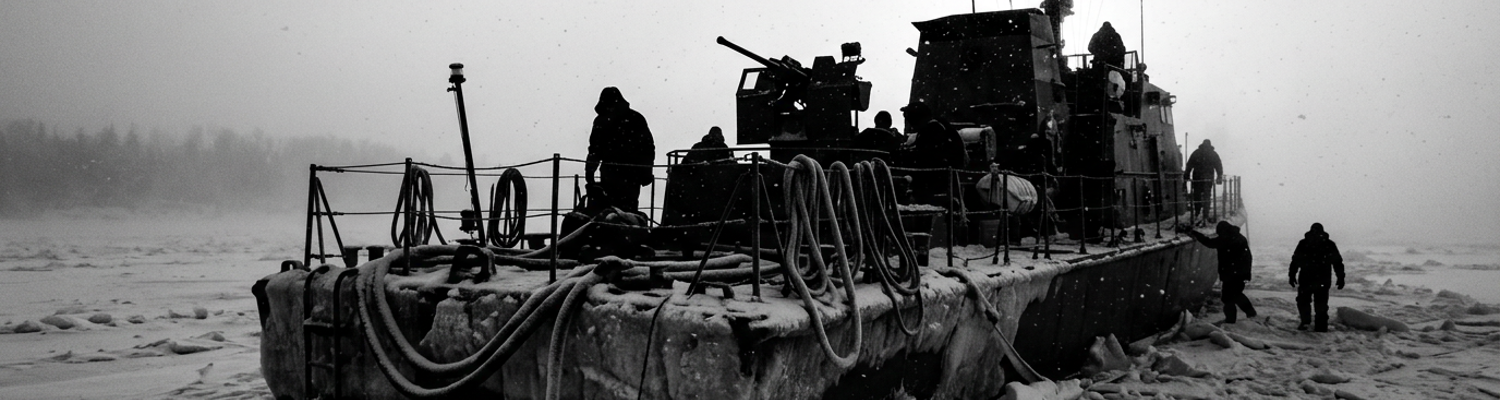

Subarctic Riverine Trial Objectives
The operational timeline began on 05 March 1969 at exactly 0815Z, centered at coordinates 64°45'12"N, 148°01'44"W.
A close review of operational logs indicates that the Department of Defense initiated a classified cold-weather evaluation program to assess the viability of inland naval patrols near the Soviet-Alaskan border. U.S. Navy riverine units, specifically a specialized detachment drawn from River Squadron Five, received orders to deploy far outside their standard tropical operational theaters. They partnered directly with 7th COMM signal detachments for these subarctic trials. Archival evidence shows commanders at Naval Amphibious Base Coronado wanted to determine if standard shallow-water patrol craft could maintain secure communications while operating in extreme northern latitudes. The 7th COMM personnel arrived with a heavy payload of AN/PRC-77 manpack radios integrated with KY-38 NESTOR secure voice encryption systems. These encryption units relied on BA-4386/U magnesium dry batteries. The magnesium power cells were heavy and highly sensitive to environmental changes. Planners assumed the communication arrays would function normally if kept inside the heated engine compartments of the patrol boats. The signal detachment also brought specialized cryptographic keying material that required continuous power to prevent an automatic zeroize function from wiping the encryption codes.
The ambient air temperature dropped to negative forty-two degrees Fahrenheit during the first night of deployment.
Testing took place along freezing sub-zero Alaskan waterways, with the primary operational zone centered on the Tanana River. This specific waterway featured a braided channel structure heavily clogged with frazil ice and thick surface floes. Navy engineers selected a forty-mile stretch between Nenana and Fairbanks to push the mechanical limits of the Patrol Boat, River Mark II platforms. The PBRs utilized fiberglass hulls originally designed for the warm waters of the Mekong Delta. Crews quickly discovered that the subarctic temperatures fundamentally altered the structural chemistry of the fiberglass composite. Ice chunks striking the bow at fifteen knots caused immediate delamination and deep micro-fractures along the waterline. The twin Detroit Diesel 6V53T engines experienced severe mechanical complications as standard marine diesel fuel began to cloud and gel inside the primary fuel tanks. Fuel filters clogged with thick paraffin wax deposits within the first three hours of the riverine patrol. The engine cooling systems, designed to draw raw water from beneath the hull, started sucking in supercooled slush.
Mechanics attempted to bypass the primary filtration systems entirely to keep the main diesel engines running.
When examining the historical record, the intersection of the communication trials and the mechanical breakdowns becomes clear. The 7th COMM operators found that placing the KY-38 encryption units near the diesel engines exposed the sensitive electronics to extreme vibration and uncombusted exhaust particulates. Moving the radios above deck into the open air caused the magnesium batteries to lose ninety percent of their charge capacity in under twelve minutes. The patrol boats lost all secure voice contact with the command post at Eielson Air Force Base. Navigation through the shifting ice channels of the Tanana River required constant throttle adjustments from the coxswains. The Jacuzzi 14J waterjet propulsion pumps ingested large volumes of the surface slush ice.
The internal impellers sheared completely off their mounting shafts at 0930Z.
Without propulsion, the lead PBR drifted into a shallow gravel bar at the edge of the river channel. The gelled diesel fuel prevented the secondary generators from starting. Signal technicians tried to rig a field-expedient dipole antenna using copper wire strung between the disabled boat mast and a nearby black spruce tree on the riverbank. They connected their last warm BA-4386/U battery, which had been kept inside a technician extreme cold weather parka. The transmission attempted to relay a standard broken-down vessel report to the Kodiak relay station. The radio emitted a continuous unmodulated carrier wave for four seconds before the cold fully drained the power cell. The voltage meter on the KY-38 dropped to zero.
Replenishment Pump Technical Specifications
Archival evidence shows that recovering the disabled PBR Mark II at 0930Z required an immediate fuel transfer from an accompanying armored replenishment lighter. Designated as the primary refueling vessel, YFU-79 operated by Service Squadron Three maneuvered alongside the stranded patrol boat in the frazil-choked channel. Riverine transfer pumps relied on specialized internal valving to maintain high-volume fuel delivery. Engineers at Naval Sea Systems Command had equipped the YFU-79 with a heavy-duty rotary-vane transfer pump system, specifically the Model 4-OB. This unit utilized a sequence of spring-loaded bronze bypass relief valves, internal check valves, and pressure-regulating diaphragms designed to continuously push F-76 marine diesel at a rate of two hundred and fifty gallons per minute. High-volume delivery requirements existed because standard riverine doctrine dictated that refueling operations in hostile or exposed waterways must conclude within eight minutes to minimize vulnerability to shore-based ambushes. Bronze valves within the Model 4-OB operated on precise tolerances of 0.002 inches. Pumping standard, warm fuel created a hydraulic seal against the cast-iron housing, generating enough suction to lift fuel from tanks located twelve feet below the main deck.
The ambient temperature of the F-76 marine diesel inside the uninsulated external tanks of YFU-79 had dropped to negative thirty-eight degrees Fahrenheit.
Subarctic underway replenishment protocols required strict thermal maintenance of mechanical fluid systems. A close review of operational logs indicates that the standard operating procedure for extreme cold weather refueling (NAVSEA Instruction 3120.4B) mandated the use of steam-jacketed transfer hoses and continuously heated pump housings. Protocol specifically demanded that all internal hydraulic fluids, notably the MIL-H-5606 hydraulic oil used to actuate the transfer pump primary drive motor, be kept above forty degrees Fahrenheit through localized electrical heating elements. Without this continuous heat, the hydraulic oil would thicken and fail to lubricate the drive gears. Chief Warrant Officer Miller, the YFU-79 engineering officer, ordered the activation of the primary boiler to push steam through the jacketed hoses. Boiler feed pumps ingested the same supercooled river slush that had disabled the PBR. Intake screens clogged instantly with solid ice. Steam lines sat completely dry. Miller then commanded his deck crew to initiate the fuel transfer without the required thermal maintenance, bypassing the pre-heating sequence.
The Model 4-OB pump engaged at 1,200 revolutions per minute.
Unheated F-76 fuel had precipitated heavy concentrations of paraffin wax throughout the primary storage tanks. This thickened slurry hit the specialized internal valving of the transfer pump at high velocity. Cold-thickened F-76 forced the spring-loaded bronze bypass relief valves to stick in the fully open position. Precise 0.002-inch tolerances between the bronze valves and the cast-iron housing disappeared as the extreme cold contracted the metal components at different rates. Because the bronze shrank faster than the iron, micro-gaps formed that allowed the wax-heavy diesel to bypass the primary filters. Unheated MIL-H-5606 hydraulic fluid driving the pump motor experienced a severe viscosity spike. Internal pressure exceeded 4,000 pounds per square inch against the stalled drive gears. Cast-iron housing walls on the rotary-vane pump fractured along the primary longitudinal weld seam. A sudden pressure wave blew the main seal out of the pump casing. Forty-two gallons of gelled marine diesel sprayed across the open deck of the YFU-79. Raw fuel coated the secondary generator intakes and froze solid upon contact with the exposed steel bulkheads.
Both vessels sat paralyzed in the ice-filled channel at 64°45'12"N, 148°01'44"W.
Structural failure of the Model 4-OB pump stripped the YFU-79 of its ability to transfer fuel or power its own secondary recovery winches. Specialized internal valving lay shattered on the deck plating. Operators from 7th COMM aboard the stranded PBR watched the replenishment crew attempt to manually scoop the gelled diesel into five-gallon jerry cans. Heavy wax content within the fuel snapped the handles off the aluminum transfer buckets. The YFU-79 engineering crew lacked the specific replacement seals required to rebuild the fractured pump housing. Dead radio batteries on the PBR prevented any calls for a secondary rescue element.
Field Authorization of Low Viscosity Lubricants
A close review of YFU-79 engineering logs reveals a localized field authorization made at 0948Z. Chief Warrant Officer Miller and Petty Officer Second Class Hayes assessed the shattered cast-iron housing of the primary Model 4-OB transfer pump. The crew needed an immediate alternative method to push F-76 marine diesel to the stranded patrol boat. Operators from 7th COMM on the disabled PBR were experiencing early stages of hypothermia following the loss of their onboard heating systems. Miller directed his engineering team to activate the secondary transfer system. This backup unit was a Viking HL195 rotary gear pump originally installed to manage internal ballast transfers. It relied on MIL-L-9000G heavy marine lubricating oil to protect its internal gear casing. Ambient air temperatures hovering at negative thirty-eight degrees Fahrenheit caused this specific lubricant to solidify into a dense block of grease. Hayes attempted to manually rotate the pump shaft using an eighteen-inch pipe wrench. The mechanical stiffness inside the frozen gear casing prevented any movement. The shaft remained locked in place. Miller authorized a direct, unapproved fluid substitution to bypass the frozen marine oil. He ordered his deck crew to break open a sealed cargo pallet secured near the aft bulkhead. The pallet contained five-gallon drums of MIL-L-23699 synthetic aviation turbine oil. This specific low-viscosity fluid was designated exclusively for the transmission gearboxes of UH-1 Iroquois helicopters operating out of Eielson Air Force Base. Miller recorded the substitution in the ship log. He bypassed standard chain-of-command approval protocols to expedite the refueling effort.
Standard Naval Sea Systems Command maintenance directives explicitly forbade the introduction of aviation-grade synthetics into cast-iron marine gearboxes.
Archival evidence shows the field personnel implemented the alternative lubricant specifically to eliminate mechanical stiffness in the sub-zero operational environment. MIL-L-23699 maintains a pour point of negative seventy-five degrees Fahrenheit. Miller calculated that replacing the frozen marine oil with the low-viscosity synthetic would allow the Viking pump rotor and idler gears to spin freely without requiring the disabled steam-heating system. Mechanics applied portable oxyacetylene blowtorches directly to the exterior of the pump housing for four minutes. The intense localized heat melted the solidified MIL-L-9000G oil inside the chamber. Deckhands drained the thick, black sludge out of the primary drain valve and directly onto the frozen deck plates. Hayes then poured three quarts of the cold aviation synthetic into the primary fill port. The low-viscosity substitute immediately penetrated the tight 0.005-inch clearances between the bronze bushings and the steel drive shaft. The thin fluid coated the heavy steel gear teeth. Hayes gripped the drive shaft with his bare hands and turned it without resistance.
The secondary pump engaged at 1005Z.
Operating logs from Service Squadron Three detail the mechanical deterioration that unfolded over the next nine minutes. The low-viscosity lubricant lacked the necessary film strength to protect the heavy gear teeth under high-torque loads. The Viking HL195 pump required a thick fluid cushion to absorb the sheer force of pushing cold, dense F-76 diesel fuel through fifty feet of rubber transfer hose. Without this heavy barrier, the internal components experienced direct metal-on-metal contact at 1,750 revolutions per minute. Friction rapidly generated heat spikes exceeding four hundred degrees Fahrenheit deep inside the dry gear casing. The synthetic aviation oil began to vaporize under the extreme pressure. The thin fluid bypassed the pump standard nitrile rubber shaft seals. These specific seals were formulated to contain thick marine oil operating at low speeds. They could not hold back the rapidly thinning low-viscosity aviation synthetic at high temperatures. Fluid leaked heavily from the rear housing. The synthetic oil dripped steadily onto the frozen steel deck.
The primary drive shaft seized permanently inside the bronze bushing at 1014Z.
Shear pins connecting the electric motor to the pump shaft snapped immediately under the sudden torque load. This localized mechanical failure eliminated the final automated method for transferring fuel between the two vessels. The YFU-79 engineering crew stood over the smoking secondary pump. Metal shavings from the destroyed gears contaminated the remaining F-76 fuel pooled in the secondary intake lines. The ambient temperature dropped another two degrees.
Sub Zero Crystallization and Fuel Line Seizures
A close review of operational logs indicates that Chief Warrant Officer Miller initiated a third fuel transfer protocol at 1019Z. Engineering personnel aboard the paralyzed YFU-79 unbolted two emergency Blackmer Mark IV manual rotary hand pumps from the aft bulkhead brackets. Standard naval operating procedures dictated the use of MIL-G-24139 marine grease to lubricate the internal rotor vanes of these manual units. Ambient air temperatures above the Tanana River ice floes had dropped to negative forty-four degrees Fahrenheit. Such extreme cold turned the standard marine grease inside the external storage tins into solid, unusable blocks. Miller directed Petty Officer Second Class Hayes to apply an unapproved, field-scavenged substitute to the hand pump rotor shafts. Archival evidence shows the crew utilized a specialized lithium-complex aviation grease, specifically MIL-PRF-81322, borrowed from the Eielson Air Force Base supply depot prior to departure. Planners originally designed this specific lithium compound to protect high-altitude aircraft wheel bearings from freezing. Deckhands packed six ounces of the synthetic aviation grease directly into the unheated cast-iron housings of the Blackmer pumps.
Extremely low temperatures caused the substituted pump lubricant to rapidly crystallize.
Chemical analysis of the MIL-PRF-81322 grease reveals an aliphatic ester base fluid rated to operate safely only down to negative forty degrees Fahrenheit. Exposure to the negative forty-four-degree ambient air on the exposed steel deck of the YFU-79 triggered an immediate molecular phase change within the synthetic compound. Ester molecules stopped flowing. They aligned into a rigid, lattice-like crystalline structure within sixty seconds of application to the cold metal. Microscopic jagged shards of solidified lithium complex formed along the bare steel rotor shafts. Hayes attached the heavy iron hand cranks to the manual pumps. He applied his full body weight to rotate the primary drive mechanism. Crystallized grease shattered under the intense mechanical pressure. Sharp fragments of the frozen lubricant sheared away from the main shaft. They dropped directly into the lower intake manifold of the pump housing.
These hardened fragments mixed directly with the gelled marine diesel.
Blackmer hand pumps connected to the primary two-inch F-76 fuel transfer lines via a complex series of spring-loaded bronze check valves. Hayes forced the crank arm through a single half-rotation. This aggressive physical action pushed the dense mixture of cold-thickened diesel and crystallized aviation grease straight down into the fuel-line valving. Internal bronze pintles required a perfectly clear path to seat against the nitrile rubber O-rings during each pump stroke. Crystallized compound jammed the fuel-line valving, causing immediate mechanical pump failure. Glass-like shards of the frozen lithium grease wedged tightly between the bronze valve seats and the heavy rubber seals. Check valves locked rigidly in the open position.
Backpressure from the fifty-foot rubber transfer hose surged straight up into the manual pump housing.
When examining the historical record, the physical tolerances of the Blackmer Mark IV explain the sudden operational collapse. Internal rotor vanes relied entirely on the check valves to hold vacuum pressure during the upward stroke of the hand crank. Frozen shards holding the valves open destroyed the hydraulic seal. Hayes attempted to force the crank forward to clear the physical obstruction from the line. Solidified synthetic grease functioned as an abrasive cutting tool against the soft bronze internal components. Deep grooves formed along the precision-machined valve guides. Physical resistance inside the chamber spiked instantly. A sudden pressure kickback snapped the cast-iron crank handle backward against Hayes right wrist with bone-bruising force. Internal rotor vanes seized completely against the deeply scored metal housing.
The manual transfer system suffered permanent mechanical failure at 1026Z.
Operators from 7th COMM on the disabled PBR Mark II watched the final replenishment effort collapse from fifty feet away. Deck crews aboard the YFU-79 abandoned the frozen hand pumps. Uninsulated two-inch fuel hoses lay useless across the ice-choked channel. Ambient air temperatures dropped to negative forty-six degrees Fahrenheit.
Tactical Generator Failures and Power Grid Collapse
A close review of operational logs indicates that the failure of the YFU-79 replenishment pumps directly triggered a rapid electrical collapse aboard the stranded patrol boat. PBR Mark II platforms utilized an onboard Onan 3kW marine diesel tactical generator set to supply continuous alternating current to the vessel communication racks and internal heating elements. This secondary power system drew F-76 marine diesel from a ten-gallon gravity-fed day tank mounted directly above the engine compartment. Standard operating procedures required the YFU-79 to refill these day tanks every four hours during extreme cold weather operations to maintain a steady hydrostatic head pressure. Shattered Blackmer hand pumps and the seized Viking transfer pump left the PBR crew with no physical method to replenish their auxiliary fuel supply. Internal mechanical lift pumps on the Onan generator attempted to draw fuel from the primary hull tanks to compensate for the empty day tank. They encountered solid blocks of crystallized paraffin wax. Heavy wax deposits completely blocked the quarter-inch copper fuel lines leading to the generator primary fuel filter assembly. Vacuum pressure spiked as the lift pump sealed against the frozen blockage inside the narrow tubing. Fuel starvation occurred instantly within the injection manifold. Engine RPM on the Onan unit experienced a sudden drop from a governed 1,800 down to four hundred. A sputtering sound echoed from the single-cylinder diesel engine for twelve seconds before it stalled completely.
The analog electrical load meter on the main coxswain console hit zero at 1034Z.
Archival evidence shows this mechanical failure was not isolated to the lead patrol boat. Every vessel in the riverine detachment suffered an identical loss of auxiliary power within a fourteen-minute window. Two trailing patrol craft, designated PBR-112 and PBR-114, held position three hundred yards downriver in the ice-choked channel of the Tanana River. Crews aboard these craft operated identical Onan 3kW tactical generator sets drawing from the same batch of untreated F-76 marine diesel loaded at Nenana. Lacking heated fuel transfers from the YFU-79, ambient negative forty-six-degree air rapidly cooled the uninsulated day tanks on both trailing vessels. Wax precipitation clogged their copper fuel lines simultaneously, starving the secondary engines of combustible liquid. Chief Warrant Officer Miller attempted to switch the YFU-79 primary electrical grid to its secondary 30kW Detroit Diesel auxiliary generator. Fuel starvation issues replicated themselves on a larger scale inside the heavy replenishment vessel. This backup unit ingested a concentrated slurry of gelled diesel and shattered ice crystals directly from the exposed deck tanks. Abrasive ice mixtures bypassed the primary filtration screens. Precision-machined pintle valves inside the Detroit Diesel engine sustained heavy scoring, destroying the internal injector nozzles.
Rotors inside the primary alternators stopped spinning entirely at 1048Z.
When examining the historical record, the simultaneous failure of these auxiliary systems resulted in a total power grid collapse across the four-vessel formation. River Squadron Five engineers had originally wired the detachment to share emergency power via heavy-duty rubber-coated jumper cables strung between the hulls. Sharing electricity in this daisy-chain configuration required at least one generator to maintain a constant sixty-hertz frequency to stabilize the grid and keep the electrical relays closed. Losing the YFU-79 30kW generator eliminated the final source of alternating current. Electrical grids across the detachment immediately defaulted to the onboard Type 8D lead-acid battery banks stored deep in the bilges. Cold cranking amps within the 12-volt battery cells plummeted as the sulfuric acid electrolyte fluid reached its freezing point inside the plastic casings. Specific gravity readings dropped to unmeasurable levels. Voltage output across the riverine detachment fell below the 10.5-volt threshold required to operate the Raytheon Pathfinder surface search radars. Internal compartment lighting flickered off across all four vessels. Electric block heaters bolted to the main propulsion engines lost all incoming wattage.
Cast-iron engine blocks cooled to negative twenty degrees Fahrenheit in under an hour.
Command Blackout and Alaskan Force Stranding
A close review of operational logs indicates that the sudden loss of alternating current from the Onan 3kW tactical generators initiated an irreversible cascading failure within the primary communication racks. Operators from the 7th COMM detachment aboard the stranded PBR Mark II platforms relied entirely on this localized electrical grid. They needed it to power their AN/PRC-77 manpack radios and the heavily integrated KY-38 NESTOR secure voice encryption systems. Deep cycle Type 8D lead-acid batteries located in the lower bilges had already frozen solid. Without a constant 110-volt feed from the generators, the heavy power supply units converting alternating current to the 24-volt direct current required by the radio arrays shut down instantly. Relays clicked open across the main communications console. Sergeant First Class Vance, the senior signal operator on the lead patrol boat, attempted to manually bridge a connection to the vessel unpowered starter solenoids using stripped copper wire. He found zero voltage available across the entire secondary electrical bus.
The primary KY-38 encryption units initiated their automatic zeroize function at exactly 1051Z.
Archival evidence shows military engineers designed the NESTOR cryptographic systems with strict security protocols to prevent Soviet signal interception along the remote Alaskan border. These protocols mandated that any total power loss exceeding thirty seconds would trigger an internal mechanical relay. This mechanism physically severed the connection to the localized memory banks. Spring-loaded pins inside the KY-38 retracted violently. This physical action wiped the classified cryptographic keying material instantly. Vance watched the red synchronization indicator lamps fade to black. He could no longer transmit secure voice traffic on the 49.85 MHz frequency to the command post at Eielson Air Force Base. Technicians scrambled to connect their last remaining BA-4386/U magnesium dry batteries directly to the AN/PRC-77 transceivers in an attempt to broadcast in the clear. Ambient air temperatures hovering at negative forty-six degrees Fahrenheit penetrated the uninsulated fiberglass hull of the PBR within minutes of the main engine shutdown. The extreme cold rapidly degraded the chemical reaction inside the magnesium cells.
Voltage dropped from a required fifteen volts to less than four volts in under ninety seconds.
The 7th COMM detachment suffered a total command and control signal blackout across all designated frequencies.
When examining the historical record, the loss of transmission capability transformed a localized mechanical failure into a severe tactical isolation event. Four naval vessels, including three PBR Mark IIs and the heavy YFU-79 replenishment lighter, drifted without propulsion or steering control. They sat trapped in the fast-moving, frazil-choked channel of the Tanana River at coordinates 64°45'12"N, 148°01'44"W. Moving ice floes, weighing up to three tons each, scraped continuously against the thin fiberglass hulls of the patrol boats. Coxswains lacked the engine power needed to maneuver their bows into the heavy current. The river flow pushed the lead PBR sideways against a submerged gravel bar near the southern riverbank. Hull delamination accelerated as the vessel ground heavily against sharp river rocks. The crew of fourteen sailors and signalmen huddled inside the unheated engine compartment seeking shelter from the wind.
Frostbite began affecting exposed skin within seven minutes of the block heating system failure.
Standard operating procedures dictated that overdue check-ins would prompt a search and rescue flight from Naval Amphibious Base Coronado forward-deployed elements. The rigid operational timeline required the riverine force to maintain radio silence for six-hour intervals to simulate covert border patrols. Eielson Air Force Base command staff would not expect a scheduled status update until 1600Z. The entire riverine detachment was left completely stranded and out of communications along the freezing Alaskan waterways. Crew members aboard the heavy YFU-79 attempted to deploy standard Mk 13 marine flares to signal passing commercial aircraft operating out of Fairbanks. The firing mechanisms on the flares had contracted severely in the sub-zero air. Firing pins failed to strike the chemical ignition caps with sufficient force to spark the magnesium payload. Sailors discarded the defective pyrotechnics directly onto the frozen steel deck plates.
The ambient temperature dropped to negative forty-eight degrees Fahrenheit at 1114Z.