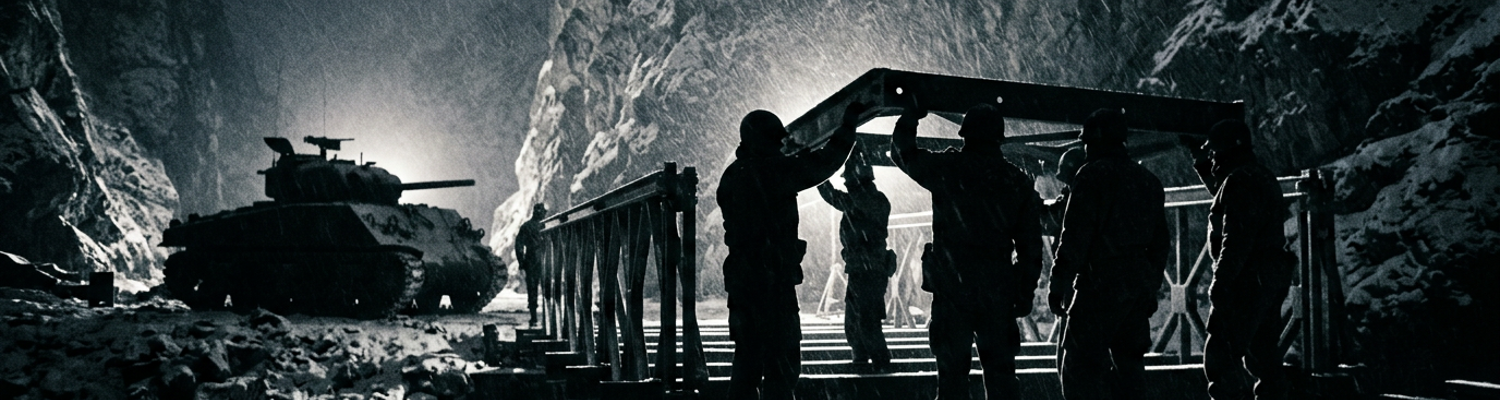

Mount Belvedere Offensive Strategy
18 February 1945. Coordinates 44.195 N, 10.902 E. Elements of the United States 10th Mountain Division initiated a coordinated nighttime assault against entrenched German positions near Mount Belvedere in the Northern Apennines. Archival evidence shows the Wehrmacht 232nd Infantry Division controlled the high ground along the Gothic Line. Securing the summit required American forces to ascend a 3,700-foot peak covered in solid ice and snow.
The psychological erosion of the frontline troops began during the silent five-mile approach march.
Infantrymen of the 85th and 87th Mountain Infantry Regiments advanced up gradients exceeding forty-five degrees without covering artillery fire. Command chose silence to maintain the element of surprise. Radio transmissions were strictly forbidden. This isolation amplified the psychological burden on the individual rifleman. Soldiers carried ninety-pound packs containing specialized climbing gear, extra ammunition, and cold-weather rations. Scaling the Belvedere-Torraccia massif in sub-zero temperatures rapidly depleted their caloric reserves. Men experienced severe combat fatigue before engaging the enemy.
Anticipating sudden detection by German sentries armed with MG42 machine guns created a sustained state of hyper-arousal.
Adrenal glands depleted rapidly. Prolonged neurological stress caused auditory hallucinations, hyperventilation, and severe tremors among the lead climbing elements. Once the firefight commenced at the summit, the lack of immediate supply lines forced the infantry into a defensive posture. Troops had to hold the captured ground with depleting ammunition stores against coordinated German counterattacks from the 1044th Grenadier Regiment. Casualties mounted from shrapnel and severe cold exposure.
Command directives dictated that armored support had to reach the summit within twenty-four hours.
The 126th Mountain Engineer Battalion received orders to build Bailey bridges and M2 treadway spans across deep mountain ravines. This infrastructure would enable the passage of M4 Sherman tanks and M3 half-tracks. A close review of operational logs indicates the engineers faced highly restrictive geographic obstacles. Geographic surveys of the sector detailed sheer rock walls dropping hundreds of feet into freezing rivers. Construction crews manually transported prefabricated steel Bailey panels over narrow unlit mountain trails.
Each ten-foot section of steel weighed over six hundred pounds.
Six-man teams carried these components through heavy snowdrifts while receiving sporadic mortar fire from adjacent German batteries. Mental degradation compounded with every hour of continuous labor. They operated heavy machinery and assembled load-bearing structures in complete darkness to avoid drawing direct artillery fire. The tactical plan required the engineers to span a sixty-foot gap over the Dardagna River gorge using only hand tools and block-and-tackle systems. The M2 treadway bridges utilized pneumatic pontoons in standard deployments. The sharp rocks and steep drops of the Apennines made these components useless. Engineers relied entirely on rigid steel construction.
Sleep deprivation systematically destroyed their fine motor skills.
Assembling heavy bridge components in this environment caused severe structural and human failures. Hydraulic jacks on the M2 treadway trucks froze solid in the negative temperatures. Engineers had to manually align the heavy steel stringers and plywood decking using crowbars and pure physical force. Ice buildup frequently jammed the transom clamps designed to hold the Bailey panels together. Men struck the frozen steel pins with heavy sledgehammers. Acoustic signatures from the metal impacts echoed through the ravines and provided targets for German forward observers.
Incoming 81mm mortar rounds sent jagged rock splinters through the work zones.
Unit rosters show the men worked in continuous forty-eight-hour shifts under this bombardment. Exhaustion caused engineers to drop heavy steel components. This resulted in crushed limbs. Knowing a single misaligned sway brace would cause a thirty-ton Sherman tank to plummet into the gorge weighed heavily on the isolated unit. The stress of precision engineering under fire induced severe gastrointestinal distress and panic attacks among the veteran engineers. Frostbite destroyed the tissue in the fingers of men who removed their gloves to thread the securing bolts.
Medical officers recorded forty-two severe cold-weather injuries by the second morning of construction.
The primary bridging crane winch mechanism failed completely.
Hazardous Terrain and Supply Chain Failures
A close review of operational logs indicates the 126th Mountain Engineer Battalion encountered severe geological resistance at the Dardagna River gorge.
Temperatures dropped to minus ten degrees Fahrenheit by 0200 hours. The cliff face consisted of layered sedimentary shale. Water seepage between the rock strata had frozen solid during the rapid ambient temperature drop. This created a reinforced ice-stone matrix along the designated bridge alignment. Engineers attempted to anchor structural footings for the heavy steel abutments directly into this bank.
Standard entrenching tools shattered against the hardened surface.
Combat engineers switched to heavy pickaxes. The kinetic shock of striking the frozen ground traveled up the wooden handles. Blunt force fractured the metacarpal bones in the hands of several front-line workers. Pneumatic air compressors designed for rock drilling seized up completely. Condensation inside the rubber air hoses turned to ice and blocked the pressure valves. This rendered the mechanized equipment useless. Work details rotated every fifteen minutes to prevent severe hypothermia.
Psychological erosion accelerated as entire twelve-man squads spent six hours chiseling less than four inches into the rock face.
Command required a depth of thirty-six inches to secure the steel base plates safely. The constant repetitive impact against an unyielding surface induced acute despair among the forward elements. Medical corpsmen observed men weeping uncontrollably while swinging sledgehammers into the frozen earth.
The structural integrity of the entire offensive depended entirely on these shallow jagged holes.
Archival evidence shows a massive breakdown in the rear echelon supply chain compounded this localized crisis. Route 64 operated as the primary artery for the Fifth Army quartermasters. A heavy snowstorm obscured the road markers near the destroyed village of Vidiciatico. The lead drivers of a ten-truck convoy carrying the primary Bailey bridge base plates, heavy winch assemblies, and reinforced steel transoms took a wrong fork.
This misrouted supply column drove five miles down a dead-end valley before becoming stuck in deep snowdrifts.
Forward units of the 126th Engineers received a radio transmission at 0415 hours detailing the navigational error. The heavy equipment would not arrive for at least eighteen hours. Armored units of the 1st Armored Division were already advancing up the mountain trails behind them. The engineers had to improvise structural supports under extreme time constraints. Company commanders ordered the felling of local chestnut trees using hand saws. They stripped the wet bark and lashed the timber together using climbing ropes and scavenged field telephone wire. Battalion officers screamed coordinates into dead radios. They demanded immediate heavy drop resupply that never materialized.
Freezing temperatures caused the wet timber to contract and split violently along the grain.
When examining the historical record, the mental degradation during this improvised construction phase reached a high-risk threshold. Engineers wedged the cracked chestnut logs into the shallow ice-filled shale footings. They stacked sandbags filled with frozen gravel around the timber bases to provide lateral stability. A thirty-ton M4 Sherman tank exerts massive downward and shearing forces on a bridge abutment. Knowing their makeshift wooden supports had to bear this load caused severe anxiety among the construction crews.
The stress of calculating load-bearing physics with compromised materials broke the mental endurance of the veteran engineers.
Several men experienced dissociative episodes. Medical logs report three soldiers wandering away from the work site into the blizzard without their helmets or rifles. The remaining personnel cannibalized steel plating from a destroyed German Panzer IV located two miles down the gorge. They manually dragged these three-hundred-pound steel sheets up the icy gradient using block and tackle systems anchored to tree stumps. The men jammed the scavenged armor plates between the wooden beams and the frozen shale to distribute the mechanical load.
Frostbitten hands slipped on the frozen metal during the final positioning phase.
A dropped plate crushed the foot of a corporal. The impact severed two of his toes.
Mortar Barrages and Minefield Clearance
A close review of operational logs indicates the Wehrmacht 232nd Artillery Regiment pre-registered their fire missions on the exact geographic choke points required for the American advance.
German forward observers positioned on the high ridges of Monte della Torraccia directed continuous fire into the narrow approach trails leading toward the Dardagna River spanning site. Gun crews utilized 81mm Granatwerfer 34 mortars alongside heavier 10.5cm leFH 18 howitzers to saturate the eighty-foot-wide canyon floor. The physical topography of the gorge amplified the lethality of these barrages. Incoming high-explosive rounds struck the upper granite walls. This triggered secondary rockfalls that rained limestone and shale onto the 126th Mountain Engineer Battalion.
Acoustic shockwaves from the explosions bounced off the steep cliff faces.
This caused severe barotrauma and ruptured eardrums among the exposed construction crews. Sustained exposure to this concussive environment rapidly degraded the mental processing speeds of the frontline troops. Battalion commanders ordered the engineers to continue assembling the steel treadway components during the bombardment. They refused to halt the timeline for the armored advance. Men lost their spatial awareness under the barrage and frequently dropped heavy construction materials. This resulted in severe crushing injuries to their lower extremities.
The narrow canyon walls offered zero lateral cover for the exposed work details.
Archival evidence shows the German defensive strategy relied heavily on area denial tactics immediately preceding the bridge abutments. Elements of the 1044th Grenadier Regiment had seeded the primary bridge approaches with dense overlapping anti-tank and anti-personnel minefields. Forward sappers of the 126th encountered these defensive belts three hundred yards from the intended crossing point. Freezing temperatures severely complicated standard clearance protocols. Standard SCR-625 mine detectors failed to locate the wooden-bodied Schu-mine 42 devices buried in the frozen mud.
Battery packs for these early electronic detectors drained rapidly in the sub-zero environment.
This rendered the equipment useless after forty-five minutes of operation. Combat engineers had to abandon their mechanized sweeps and transition to manual probing methods. They crawled forward on their stomachs across the ice. The physical and psychological strain of manual mine clearance at night broke the mental endurance of multiple squads. Sappers used standard M1 bayonets to puncture the frozen topsoil at a thirty-degree angle. They checked for buried Tellermine 43 anti-tank explosives.
Sub-zero temperatures fused the topsoil into a solid block of ice and shale.
This required the men to exert extreme physical force just to penetrate the surface. Striking a buried mine with too much kinetic energy risked triggering the pressure plate. The expectation of instantaneous dismemberment caused severe hyperventilation and uncontrollable hand tremors among the lead probing elements. Detonations occurred frequently when exhausted men misjudged the depth of the ice cover. Blast waves in the confined approach zones severed limbs and drove frozen soil into the resulting wounds.
Compounding casualties depleted the specialized sapper units at an unsustainable rate.
Evacuation of the wounded required four healthy engineers to carry a single litter back down the steep unlit mountain trails while still under active mortar bombardment. Platoon leaders recorded a fifty percent casualty rate among the forward clearance teams by 0400 hours. When examining the historical record, the specific mechanical failures of the German ordnance added another layer of psychological torture. The extreme cold frequently caused the internal springs of the Schu-mine igniters to malfunction or delay.
Engineers would uncover a device and attempt to neutralize the Z.Z. 42 fuze.
The device would trigger a delayed detonation seconds later. Medical logs from the battalion aid station recorded twenty-seven traumatic amputations directly attributed to these delayed secondary explosions. Blood plasma froze solid inside the glass administration bottles before corpsmen could initiate transfusions. The engineers left the dead where they fell. They marked the cleared safe lanes with white engineer tape soaked in the blood of the clearance teams.
The primary approach corridor contained seventy-four neutralized anti-tank mines.
These explosives were stacked directly next to the frozen bodies of the sappers who disarmed them.
Radio Network Degradation and Isolation
Archival evidence shows the complete degradation of the 10th Mountain Division signal network began at 0315 hours within the Dardagna River gorge.
Forward elements of the 126th Mountain Engineer Battalion relied on SCR-300 backpack transceivers to maintain contact with regimental command. The physical topography of the immediate sector aggressively blocked frequency modulation signals. Sheer limestone walls rising four hundred feet on either side of the construction site created a dead zone for line-of-sight VHF transmissions. Signalmen repeatedly climbed exposed shale outcroppings attempting to establish a connection with the command post located three miles rearward.
Severe weather compounded this topographical shielding.
Freezing rain coated the flexible steel antennas in thick rime ice. The added weight snapped the metal rods near the base mounts during high wind gusts. Operators attempted to splice standard field telephone wire to the broken antenna stubs using bare hands. Temperatures dropping to minus twelve degrees Fahrenheit systematically destroyed the internal power supplies of the communication gear. The SCR-300 utilized BA-70 dry cell batteries to power its eighteen vacuum tubes.
Chemical reactions inside these zinc-carbon power cells ceased entirely in the sub-zero environment.
Voltage dropped below the required threshold to emit a carrier wave. Signal corps personnel placed the heavy batteries inside their field jackets to transfer body heat into the frozen cells. This localized cooling accelerated the onset of hypothermia among the radio operators without generating enough thermal energy to revive the equipment. Artillery strikes from the German 232nd Infantry Division permanently eliminated the remaining hardware.
A close review of operational logs indicates the Wehrmacht utilized heavy 10.5cm leFH 18 howitzers to target the specific grid squares surrounding the gorge.
High-explosive shells detonated directly against the upper granite walls. Concussive shockwaves from these localized airbursts traveled straight down into the canyon floor. The intense pressure changes shattered the fragile glass vacuum tubes housed inside the stamped steel radio chassis. Technicians attempted to replace the broken frequency oscillators in complete darkness to avoid drawing sniper fire.
Exhausted men dropped microscopic copper coils and replacement tubes into the deep snowdrifts.
By 0400 hours, the battalion had lost all contact with higher headquarters. A deep operational silence isolated the forward engineering companies. Forward engineering elements were forced to operate without tactical updates, reinforcement scheduling, or direct fire support coordination. Company B of the 126th had to assemble rigid steel bridging components while taking direct mortar fire from adjacent ridges.
Platoon commanders lacked the ability to relay targeting coordinates to the 604th Field Artillery Battalion for counter-battery suppression.
German mortar crews operated with complete impunity. The lack of incoming intelligence created severe psychological friction among the bridge builders. Officers had no confirmation if the 1st Armored Division tanks scheduled to cross the gorge were actively en route. Engineers expected German infantry from the 1044th Grenadier Regiment to overrun their exposed positions at any moment. Fear of an unannounced enemy assault generated a sustained state of hyper-arousal.
Combat engineers abandoned their heavy construction equipment to establish defensive perimeters.
Squad leaders deployed M1 Garand rifles and Browning Automatic Rifles along the icy approach trails. This pulled men away from the bridging timeline. Without a reinforcement schedule, the specialized construction crews assumed they would receive no relief from the rear echelon. Men worked continuous twenty-two-hour shifts lifting six-hundred-pound steel panels into place. Mental processing speeds deteriorated rapidly in this information vacuum.
The psychological safety net of command oversight vanished entirely.
A lieutenant ordered his men to cannibalize their remaining spool of W-110-B communication wire to lash heavy transoms together. This field modification permanently severed any chance of re-establishing a landline to the rear echelon. Medical officers noted a sharp increase in acute combat fatigue as the isolation compounded the physical exhaustion. Soldiers stared blankly at the frozen river. They were unresponsive to verbal commands from their non-commissioned officers.
The stress of precision engineering under continuous unanswered enemy bombardment broke the mental endurance of the veteran troops.
Forward observers recorded three engineers physically attacking a frozen SCR-536 hand-held radio with heavy entrenching tools. The device had failed to transmit a casualty report.
Extreme Combat Fatigue and Psychiatric Casualties
A close review of operational logs indicates that by 0430 hours on 19 February, the men of Company B had been operating heavy machinery and assembling steel structures for sixty-eight consecutive hours without sleep.
Topographical confinement inside the Dardagna River gorge subjected the engineering details to a relentless barrage of sensory overload. Continuous 81mm high-explosive detonations from the German 232nd Artillery Regiment echoed off the sheer limestone walls. These blasts created overlapping concussive waves that physically rattled the internal organs of the exposed troops. A deafening roar of incoming artillery mixed with the high-pitched screech of frozen steel Bailey bridge panels scraping against rock outcroppings.
Men operating block-and-tackle systems to hoist six-hundred-pound stringers into position absorbed the full friction of thick manila ropes tearing through their frostbitten hands.
Human nervous systems cannot process this volume of extreme auditory and tactile input indefinitely. Swinging ten-pound sledgehammers to drive steel retaining pins into the frozen ground rapidly depleted the glycogen stores in their muscles. Combat exhaustion manifested as severe involuntary muscle tremors. This made fine motor tasks physically impossible. Medical corpsmen recorded resting heart rates exceeding one hundred and forty beats per minute among engineers sitting completely motionless in the snow.
Archival evidence shows the complete loss of radio contact with regimental headquarters pushed the isolated construction crews past standard psychological breaking points.
The men knew their makeshift chestnut log abutments and scavenged Panzer IV armor plates had to support thirty-ton M4 Sherman tanks. They lacked any engineering officers to verify the load-bearing calculations. This specific mechanical uncertainty generated acute anxiety that degraded mental function across the platoon level. Veterans of the Italian campaign began experiencing vivid auditory hallucinations. Several non-commissioned officers reported hearing non-existent cease-fire orders.
They physically restrained their subordinates from assembling the next section of the M2 treadway.
Other engineers slipped into catatonic states. They dropped their heavy crowbars and stared blankly at the freezing water of the river below while mortar shrapnel shredded the chestnut trees around them. The isolation compounded the trauma of the mounting casualty rate. Construction crews had to manually drag the frozen bodies of twenty-seven sappers killed by delayed Schu-mine detonations out of the primary alignment path just to position the final steel base plates. They stacked the dead along the southern rock wall to function as a windbreak.
When examining the historical record, the completion of the sixty-foot span under these conditions required a complete override of human self-preservation instincts.
Surviving personnel of Company B resorted to brute force mechanics to finalize the structural connections before the armored advance arrived. Ice buildup inside the female transom clamps prevented the heavy steel sway braces from seating properly. Exhausted men abandoned their jammed pneumatic tools. They used their own body weight to force the steel components together. They jumped repeatedly on the frozen metal locking pins.
A squad leader ordered his remaining six men to stand directly underneath the unsecured bridge deck.
They manually held the heavy plywood treadways in place while he hammered the final bolts through the top. This positioning exposed the squad to immediate crushing hazards if the primary Bailey panels shifted on the icy shale footings. The engineers accepted this high-risk physical exposure because the operational timeline dictated the armored column would cross the gorge exactly at 0545 hours. Track links from heavy Chrysler engines echoed down the approach trail at 0540 hours.
Elements of the 1st Armored Division advanced their M4 Shermans in column formation directly toward the completed span.
The engineers did not retreat to safe defensive positions. The exhausted men lay in the frozen mud alongside the bridge abutments. They physically watched the scavenged armor plates bend under the massive downward pressure of the lead tank. Chestnut timber supports groaned loudly but held their structural integrity as the thirty-ton machine rolled across the plywood decking. Surviving construction crews remained entirely silent during the crossing. Platoon rosters indicate that forty-one engineers required immediate psychiatric evacuation to rear-echelon medical facilities once the tanks cleared the gorge.
The bridging crane winch mechanism lay shattered in the snowdrift next to the primary support cables.