
Major General Montgomery and the Armor Request
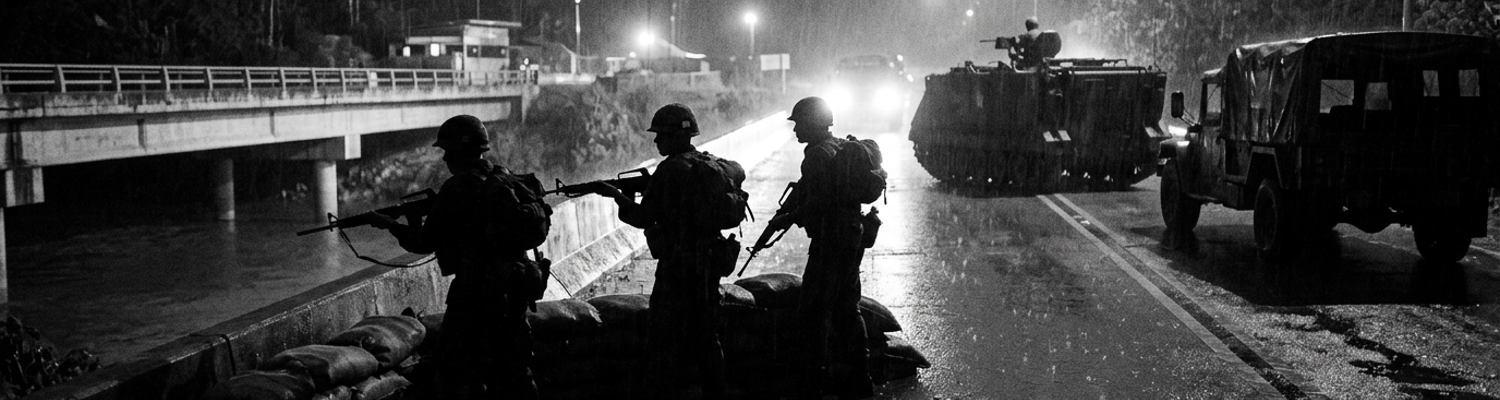
M998 High-Mobility Multipurpose Wheeled Vehicles and five-ton cargo trucks served as the primary transports for American patrols navigating the ruined streets of Mogadishu in late 1993. Drivers steered these wheeled transports over broken asphalt, concrete rubble, and burning tire barricades while snipers fired from rooftops. Factory fiberglass doors, open beds, and fabric tops offered no resistance against heavy rifle rounds, forcing soldiers to line the vehicle floorboards with sandbags and hang spare Kevlar vests over the passenger doors. Somali militia gunners targeted the unprotected radiators, tires, and crew cabs with Soviet-made Kalashnikov rifles and rocket-propelled grenades when convoys halted at crowded intersections. These sudden strikes routinely disabled steering linkages, punctured fuel cells, and pinned down lightly armed infantrymen in open avenues where maneuver was impossible. Militia fighters concentrated their fire on the unpaved primary supply routes, knowing that the thin-skinned utility trucks could not push through fortified roadblocks or survive concentrated point-blank crossfires.
Major General Thomas Montgomery examined the battle-damaged trucks returning from these crossfires and recognized that his soldiers could not survive without heavy tracked protection. He knew that light wheels could not break through reinforced ambushes, prompting him to turn to the American inventory for tracked armor that could withstand direct rocket impacts. Montgomery requested four M1A1 Abrams tanks and fourteen M2 Bradley fighting vehicles via US Central Command in September 1993. The armored assets were intended to shield Quick Reaction Force convoys from persistent militia ambushes along primary supply routes. Steel-plated Bradleys carried twenty-five-millimeter chain guns capable of suppressing sniper nests in stone buildings, while seventy-ton Abrams tanks possessed the mass and engine power to crush roadblocks and survive rocket-propelled grenade strikes that routinely destroyed light utility trucks. Montgomery packaged this tactical requirement into an urgent formal message and sent it upward to United States Central Command headquarters.
General Joseph Hoar reviewed Montgomery's message at Central Command headquarters in Florida and endorsed the armored package before forwarding it to the Pentagon. Political leaders and senior defense officials inside the national command structure in Washington evaluated the armor request based on domestic politics rather than tactical conditions in the city. The military headquarters in Mogadishu operated under severe communication delays, sending classified requests through secure teletypes and waiting days for policy committees thousands of miles away to deliberate. Civilian policymakers, including Secretary of Defense Les Aspin, worried that introducing heavy tanks and mechanized fighting vehicles would alter the public image of a humanitarian mission and signal an escalation of combat operations. Officials held meetings in the Pentagon without conferring directly with the tactical commanders who encountered rifle fire daily on the streets of Mogadishu. Defense Secretary Les Aspin ultimately rejected the request for the Abrams tanks and Bradley vehicles, deciding that the political risks of deploying heavy armor outweighed the operational needs described by the commander on the ground.
Major General Montgomery received the official rejection at his embassy compound headquarters and realized that his isolated command would receive no mechanical reinforcement from Washington. He had to prepare his soldiers for widening urban clashes while relying entirely on thin-skinned Humvees and unarmored five-ton supply trucks. The Quick Reaction Force, drawn primarily from the 10th Mountain Division, remained stripped of the heavy firepower needed to break through organized militia ambushes on the capital's supply lines. Task Force Ranger arrived to hunt militia leaders across the city, operating under a separate command structure that also lacked organic tracked armor. Montgomery adjusted his operational plans to keep supply convoys running under constant danger, positioning riflemen along the truck beds with handheld weapons to provide whatever defense they could. Montgomery ordered the 10th Mountain Division to continue escorting convoys with soft-skinned utility vehicles, forcing mechanics to weld scrap steel onto Humvee floorboards before the next patrol rolled beyond the compound gates.
Pentagon Deliberations and the Aspin Denial
Mechanics cut and shaped those metal sheets in Somalia while paperwork detailing Montgomery's urgent request for tracked armor moved through civilian offices inside the Pentagon. Defense Secretary Les Aspin evaluated the armored vehicle package against severe political pressures building across Washington, where legislators openly questioned the purpose of the deployment. Lawmakers on Capitol Hill were already demanding a firm withdrawal timetable, warning that the original famine relief effort was sliding into an open-ended military confrontation with Somali warlords. Aspin feared that sending heavily armored tracked combat vehicles to Mogadishu would provoke fierce public debate and invite scrutiny from congressional committees eager to shut down the overseas operation. Secretary of Defense Les Aspin formally rejected the armor package to avoid the political perception of mission creep in Washington. Aspin signed the official denial paperwork and kept the deployment request off the desk of President Bill Clinton, ensuring the decision remained contained within the Pentagon bureaucracy.
Pentagon policymakers supported Aspin's unilateral denial because they believed that the strategic goals of the administration required a strictly limited military profile. Civilian analysts insisted that seventy-ton M1A1 Abrams tanks and M2 Bradley fighting vehicles would transform the United Nations coalition into an occupying army rather than an impartial relief partner. Under Secretary of Defense Frank Wisner and senior policy advisors concluded that American forces had to project restraint to encourage Somali clan leaders to negotiate peacefully. Policy staff drafted formal guidance instructing theater commanders to manage urban friction through diplomacy and light infantry patrols rather than overwhelming mechanized firepower. Defense officials filed these policy memos in Washington while leaving tactical commanders on the ground with no heavy tools to suppress coordinated militia ambushes.
Infantrymen of the 10th Mountain Division absorbed the direct impact of those coordinated militia ambushes as gunners attacked their unarmored patrols along the harbor road with automatic weapons and rocket-propelled grenades. Communications between the embassy compound in Somalia and national decision-makers in Washington took days to travel through secure teletype networks and layered military headquarters, creating an acute operational delay. General Joseph Hoar at Central Command in Florida attempted to bridge this gap by endorsing the armor request a second time, but his urgent endorsement stalled inside the Office of the Secretary of Defense. Civilian officials in Washington reviewed casualty figures and ambush reports inside quiet conference rooms, isolated from the dust, heat, and sniper fire that defined daily operations in the city. Bureaucrats treated the mounting combat losses as temporary local disruptions rather than proof of an organized urban guerrilla war designed to drive American forces out of the country.
Aspin maintained his firm refusal throughout late September despite urgent warnings from intelligence officers tracking the buildup of militia weapons designed to drive American forces out of the country. Major General Montgomery received the final rejection cable at his command post, locked the classified memo into his safe, and assembled his staff to revise convoy security protocols using only light wheeled transports. Officers with Task Force Ranger continued planning helicopter assault raids against militia leadership networks, knowing their assault teams possessed no tracked vehicles to extract them if an aircraft crashed in hostile neighborhoods. Soldiers across the Mogadishu task force mounted machine guns onto open-topped utility trucks, stacked extra ammunition crates into the passenger footwells, and prepared to enter the city streets alone.
Unarmored Humvees in the Bakaara Market
Task Force Ranger entered those city streets alone on October 3, conducting an assault using soft-skinned M998 Humvees and unarmored M939 five-ton trucks to extract assault teams and captive clan leaders from the city center. Lieutenant Colonel Danny McKnight led this ground convoy of twelve wheeled vehicles away from the coastal airfield and directly into the crowded maze of the Bakaara Market. Heavy five-ton M939 cargo trucks bounced over concrete rubble and broken curbs, their canvas canopies and plywood bench seats leaving dozens of soldiers completely exposed to rooftop snipers. Drivers kept their foot throttles pressed down while navigating through narrow alleyways, scanning second-story windows for weapon barrels as dust churned around the soft aluminum truck bodies. McKnight halted the column near the target building beside the Olympic Hotel, ordering his gunners to establish an outward-facing security perimeter while Delta Force operators cleared the interior rooms.
Somali National Alliance gunners exploited the halted vehicles by firing massed RPG-7 salvos into exposed passenger cabins and wheel wells from surrounding alleyways and rooftops. High-explosive warheads detonated against unarmored door panels, tearing through sheet metal and sending jagged fragments across the crowded passenger compartments. Rocket blasts shredded the unshielded rubber tires and sheared through steering rods on the lead Humvees, instantly immobilizing several transports in the middle of the dust-choked street. Soldiers dropped to the hot pavement behind flat tires to return rifle fire, but concrete curbs and thin sheet metal provided no real cover against incoming machine gun rounds. Wounded infantrymen dragged their comrades beneath the chassis of disabled M939 trucks, trying to shelter casualties from plunging fire while combat medics ran low on pressure dressings.
Major General William Garrison monitored the developing ambush and the rising need for pressure dressings through overhead surveillance cameras inside the joint operations center at the coastal airfield. Video feeds from an orbiting Navy P-3 Orion aircraft showed dark smoke rising from burning tires and multiple disabled vehicles, but the grainy screens could not reveal individual street signs or exact casualty numbers. Garrison and his staff officers stared at tactical maps three miles away, issuing course corrections over crackling radios that reached McKnight only after several minutes of deadly delay. Radio operators inside the headquarters struggled to track which Humvees could still steer, while convoy commanders shouted over engine noise and continuous gunfire to report blocked intersections. Garrison ordered the ground convoy to load the prisoners and wounded men into the operational trucks, expecting the unarmored column to fight its way out along hostile avenues without heavy mechanized escort.
Rangers shoved captured militia suspects into the back beds of the remaining M939 trucks and hauled bleeding crew members onto bullet-riddled Humvee hoods to escape without heavy mechanized escort. McKnight signaled the battered vehicles forward into a gauntlet of continuous rifle fire, attempting to retrace their route toward friendly lines. Militia fighters dropped concrete blocks, telephone poles, and flaming tires across every egress route, funneling the slow-moving wheeled transports into pre-sighted kill zones. Armor-piercing bullets pierced engine blocks and cracked radiator housings, boiling coolant onto the windshields and forcing drivers to steer blind through thick smoke. McKnight turned his lead Humvee north toward the crash site of Super 61, directing the surviving vehicles into narrower corridors where militia rockets waited at point-blank range.
Pakistani M48s and Malaysian Condor APCs
Rocket warheads fired at point-blank range shattered McKnight's surviving trucks and halted the evacuation, leaving both crash sites completely surrounded and forcing American headquarters to confront the catastrophic reality on the ground. Major General Thomas Montgomery understood from his embassy operations center that the trapped Rangers and 10th Mountain Division riflemen would be overrun unless heavy armor broke through the militia barricades. American commanders had no heavy fighting vehicles of their own in the theater, leaving them entirely dependent on United Nations coalition partners stationed across the city. The 10th Mountain Division relief column relied on Pakistani M48 Patton tanks and Malaysian Condor armored personnel carriers to reach pinned soldiers. Montgomery and his staff spent critical hours negotiating with Pakistani and Malaysian officers over command authority, route planning, and vehicle limits while gunfire echoed through the night. Pakistani tank leaders refused to advance without clear daylight or infantry escorts, while Malaysian commanders hesitated to commit their wheeled transports into an unmapped urban maze without dedicated air support.
Staff officers inside the joint operations center bridged the tactical impasse over dedicated air support through hasty radio relays and face-to-face arguments, finally assembling the multinational convoy at the coastal airfield near midnight. Pakistani M48 Patton tanks rolled to the front of the line, their ninety-millimeter main guns and heavy cast-steel hulls providing the raw mass needed to smash through stone roadblocks and car barricades. Malaysian Condor armored personnel carriers lined up behind the heavy tanks, their four-wheeled chassis offering mobile shelter for over two hundred American infantrymen from the 10th Mountain Division. American soldiers climbed into the cramped passenger bays of the Condors, sitting knee-to-knee with Malaysian drivers and machine gunners with whom they shared no common tactical language. Radio frequencies did not match between the American, Pakistani, and Malaysian vehicle networks, forcing isolated headquarters commanders to direct the movement through layered command posts miles to the rear. Lieutenant Colonel Bill David signaled the lead tank engines to accelerate, sending the noisy mechanized column clattering out of the port gates into the dark, hostile avenues.
Militia fighters positioned along National Street opened fire as soon as the mechanized column entered those hostile avenues, targeting the wheeled transports with automatic weapons and rocket salvos. Pakistani tank crews pushed their M48s through smoldering obstacles, but the Pakistani tank drivers could not see through the dark urban dust without thermal sights, forcing the column to slow to a crawl. Somali gunners exploited the delay by firing rocket-propelled grenades from second-story windows into the thinner roofs and side hulls of the four-wheeled vehicles below. Malaysian Condors sustained severe armor penetration and spalling under intense rocket fire, resulting in the death of one Malaysian crewman. High-explosive warheads burned through the light steel plating of the lead Condors, filling the passenger compartments with blinding smoke and flaking off razor-sharp metal shards that shredded the flesh of the men inside. Driver Mat Aznan Awang died instantly behind his steering wheel when a shaped-charge rocket pierced his forward armor plate, causing his vehicle to swerve off the roadway and crash into a concrete building wall.
American infantrymen kicked open the rear doors of the disabled Condor resting against the concrete building wall, pulling their bleeding comrades into the street while returning rifle fire into nearby windows and alleyways. Staff officers inside the distant tactical operations center listened to frantic, broken radio reports of penetrated armor and dead drivers, unable to see the street-level carnage or provide direct suppressive fire through the smoke. Malaysian gunners stood exposed in open top turrets, firing twelve-point-seven millimeter heavy machine guns to suppress militia rooftop positions while American medics bandaged shrapnel wounds on the hot pavement. Pakistani tank gunners fired machine guns and high-explosive shells into fortified militia buildings, clearing the immediate intersection so the remaining Condors could push forward into the market district. Lieutenant Colonel David reorganized his shattered column under continuous incoming fire, ordering the surviving armored carriers to bypass the wreckage and advance toward the trapped force at the first crash site.
Congressional Inquiries and Task Force 1-64
Malaysian Condors and Pakistani tanks reached the first crash site at daybreak, allowing infantrymen to pull trapped Rangers and dead pilots out of the wreckage under heavy suppressing fire. Combat medics crowded the wounded into damaged vehicle bays while riflemen walked alongside the rolling tires to protect the retreating column on its return to the coastal airfield. American commanders in Mogadishu counted eighteen dead soldiers and more than seventy wounded men by the time the battered transports shut down their engines inside the base perimeter. Television broadcasts of dead American soldiers dragged through dirt streets provoked instant outrage across the United States, exposing the vulnerability of troops operating without heavy mechanized support. Pentagon officials scrambled to reverse their previous policies, realizing that the isolated headquarters in Somalia could not survive another battle without tracked fighting vehicles.
Abrams tanks and Bradley fighting vehicles rolled off cargo ramps at the Mogadishu seaport as mechanized crews arrived to reinforce the shaken coastal airfield. The Department of Defense deployed Task Force 1-64 Armor from the 24th Infantry Division with Abrams tanks, leading to Les Aspin's resignation in December 1993. Sixty-ton combat vehicles immediately took up defensive positions at critical road junctions, giving American forces the impenetrable steel hulls and heavy cannons that Major General Montgomery had requested weeks earlier. Somali militia gunners avoided attacking the armored checkpoints, proving that heavy armor effectively suppressed urban ambushes along the supply lines. Soldiers in Mogadishu recognized that this massive mechanized force had arrived too late for the men lost in the Bakaara Market, fueling deep bitterness among the surviving units. Capitol Hill lawmakers demanded immediate access to internal Pentagon records to determine why senior officials had withheld those very fighting vehicles from the battlefield until after American soldiers were killed.
Senators on the Armed Services Committee opened public hearings to examine the civilian decision-making process that had doomed the ground convoy where American soldiers were killed. Congressional hearings in November 1993 revealed the documented paper trail of the rejected armor request and triggered severe backlash. Witnesses produced the original cables from Major General Montgomery and Central Command, proving that frontline commanders had warned of escalating rocket ambushes throughout September. Declassified memorandums showed that civilian defense officials had killed the armored vehicle request to preserve the appearance of an unthreatening humanitarian mission. Committee members confronted senior officials with this bureaucratic paper trail, condemning the headquarters bubble that had ignored clear tactical warnings from the field.
Les Aspin shouldered full responsibility for ignoring those warnings from the field during hours of hostile questioning, acknowledging to the committee that his political calculations had proved catastrophically wrong. Hostile questioning from both parties destroyed the defense secretary's standing, leaving him without political allies in Congress or the White House. President Clinton accepted Aspin's formal resignation on December 15, ending the secretary's tenure after eleven months of mounting defense controversies. White House officials ordered all American troops to prepare for a total withdrawal from Somalia by March 1994, abandoning further offensive operations against clan militias. Tank crews from Task Force 1-64 maintained their armored guard around the Mogadishu harbor, keeping their cannons trained on the coastal avenues while logistics teams loaded the final evacuation vessels.