
Soviet Naval Expansion and NIE 11-15-82
Establishing a secure high-bandwidth command and control relay across three hundred miles of salt-corroded archipelago required off-the-shelf commercial hardware.
Archival evidence shows that by late 1982 the United States intelligence apparatus recognized a shift in maritime force posturing emanating from Sevastopol. National Intelligence Estimate 11-15-82/D circulated among the Joint Chiefs of Staff in December of that year. It warned of expanding Soviet Black Sea Fleet power projection in the Mediterranean. Analysts reviewing satellite reconnaissance logs noted the deployment of Project 1134B Berkut B guided-missile cruisers passing through the Bosporus. These vessels carried SA-N-3 surface-to-air missile systems and advanced radar suites. The document explicitly detailed the introduction of Project 877 Paltus-class diesel-electric attack submarines into the Eastern Mediterranean basin. Fifth Fleet commanders needed real-time telemetry on Soviet hull movements before the ships reached the Syrian coast.
Planners at European Command headquarters in Stuttgart realized traditional surveillance aircraft would trigger radar warnings.
They opted for a deniable ground-based approach requiring localized data collection at maritime chokepoints.
The solution required inserting men and electronics onto uninhabited rocks.
A close review of operational logs indicates that US Navy Special Warfare units deployed covert littoral monitoring nodes across isolated Aegean island sites in early 1983. SEAL Team Two operators launched from submerged Sturgeon-class fast-attack submarines. They paddled modified Zodiac inflatables onto limestone outcroppings near coordinates 36.5N 26.3E. Their objective involved installing AN/SSQ-53 directional frequency analysis and recording sonobuoys repurposed for shallow-water tethering. The hardware was wired directly into PRC-117 field radios modified for burst transmission.
Salt spray and high humidity began destroying the exposed copper wiring of the power supply modules almost immediately.
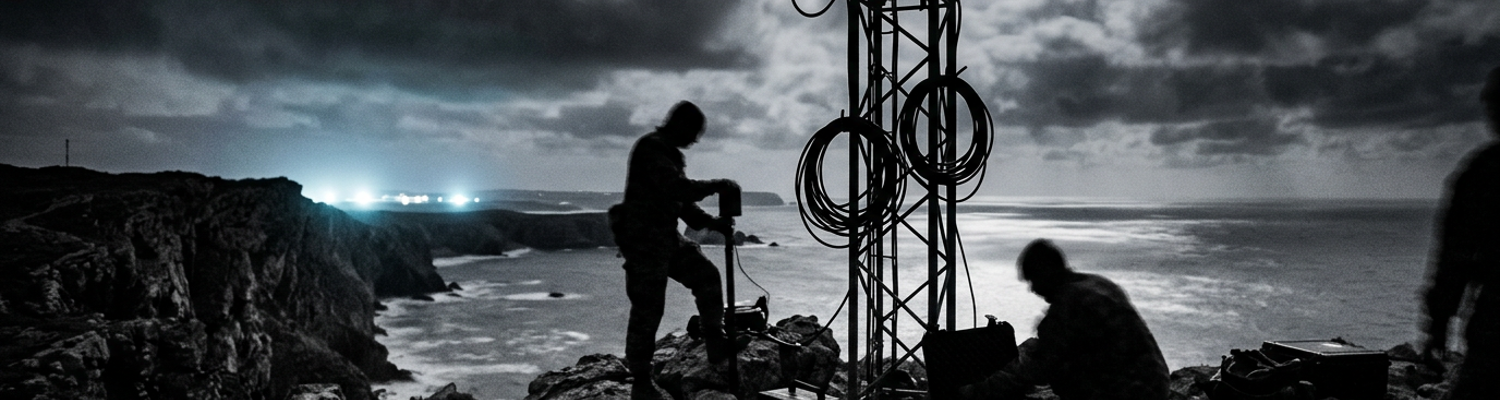
Engineers attached to the deployment teams had to strip commercial marine batteries salvaged from local fishing vessels. This bypassed the failed military-grade voltage regulators. Technicians sat exposed on the wind-sheared cliffs. They used hand-cranked soldering irons to fuse replacement capacitors onto the primary transmission boards while actively avoiding detection from passing Soviet patrol hydrofoils.
A single miswired resistor would cause the entire array to short out.
When examining the maintenance reports from these forward operating bases the volume of equipment failures becomes apparent. The primary telemetry relay on the island of Levitha suffered a motherboard fault within forty-eight hours of activation. Chief Petty Officer Thomas Reynolds scavenged a 12-volt alternator from a wrecked diesel generator found near an abandoned shepherd hut. He manually spliced the heavy-gauge copper leads into the fragile PRC-117 antenna array. This crude bypass provided enough direct current to push the encrypted telemetry packets over the horizon to a receiving station in Crete.
The transmission window lasted exactly fourteen seconds before the power source overheated.
Documentation from the mission debriefings details how the extreme temperature fluctuations cracked the ceramic housings of the oscillator crystals. Operators had to pack the sensitive timing components in wet sand to regulate their temperature during the midday heat. They utilized standard-issue combat knives to scrape corrosion off the battery terminals every three hours. If the direct current voltage dropped below 11.4 volts the KY-57 cryptographic gear would automatically dump its encryption keys to prevent capture. This hardware failsafe forced the communications specialists to perform a full manual reset using paper tape spools under total blackout conditions. The engineering personnel worked without sleep for seventy-two hours. They relied on chemical light sticks and duct tape to secure the heavy coaxial cables against the constant gale-force winds battering the cliff faces.
Deployment of Covert Aegean Broadcast Nodes
When examining the declassified deployment manifests from March 1983 the technical loadout assigned to Fleet Tactical Psychological Operations Detachment Atlantic reveals the exact parameters of their electronic warfare assignment.
These specialized Navy PsyOp detachments established secret high-frequency broadcast stations to monitor Soviet fleet communications across the eastern Mediterranean basin. Their primary objective required intercepting unencrypted VHF voice traffic and encrypted UHF burst transmissions originating from Soviet Kynda-class cruisers operating out of Tartus. Operators hauled 400-pound AN/TRQ-32 intercept rigs up sheer limestone cliff faces at midnight. The equipment required precise calibration to isolate the narrow frequency bands utilized by the Soviet naval aviation command nets operating between 4.5 and 12.0 Megahertz.
Alkaline dust clogged the cooling fans on the primary amplifier stages.
Technicians assigned to the detachment spent the first seventy-two hours stripping down the commercial-grade radio cabinets to bypass the factory thermal limiters. Archival engineering logs indicate that the high-frequency broadcast arrays required a continuous 1500-watt power draw to push spoofed carrier waves into the Soviet naval command networks. The initial activation sequence caused the 3-500Z vacuum tubes within the linear amplifiers to overheat and shatter due to the intense ambient thermal load and lack of proper ventilation. Glass shrapnel embedded itself in the primary oscillation coils. Petty Officer Second Class David Vance utilized heavy-gauge copper grounding wire stripped from diesel generator jumper cables to bridge the blown ceramic fuses inside the primary power supply. He manually soldered these rigged connections to the main distribution bus using a portable butane torch while taking incoming salt spray from the surf zone eighty feet below.
This crude electrical bridge bypassed the safety protocols entirely.
It allowed the detachment to begin recording the telemetry data of Soviet Ka-25 anti-submarine helicopters patrolling the airspace above the Aegean.
The intercept window lasted just twelve minutes before the rigged fuses melted into the circuit boards.
Island sites were selected for maximum signal coverage along strategic maritime chokepoints intersecting the Dardanelles approach. Declassified topographic maps show that European Command planners specifically targeted the uninhabited rock formations of Kinaros and the jagged southern ridgeline of Agathonisi. These exact locations offered an unobstructed 360-degree line-of-sight propagation path directly over the Sea of Crete. The elevation profile allowed the broadcast nodes to intercept surface-level radar emissions normally obscured by the curvature of the earth. To achieve the necessary Fresnel zone clearance for the high-frequency directional antennas the PsyOp teams had to anchor fifty-foot aluminum masts into the unstable scree slopes.
They drove rusted steel pitons directly into the limestone with sledgehammers to secure the base plates.
A close review of the structural maintenance reports shows that the constant sixty-knot crosswinds threatened to buckle the primary broadcast elements within hours of installation. The detachment engineers cross-braced the lower mast sections using heavy-duty nylon climbing ropes and discarded commercial fishing nets scavenged from the shoreline. When the wind sheer snapped the upper dipole elements communications specialists had to free-climb the vibrating aluminum towers during strict blackout night operations. They spliced broken RG-213 coaxial feedlines using self-amalgamating electrical tape and bare hands to restore the data link to the regional command center in Naples.
The men worked without safety harnesses to reduce their radar cross-section while hanging thirty feet in the air.
The repaired antenna configuration successfully captured the baseline acoustic signatures and encrypted radio bursts of two passing Victor-class nuclear submarines running on the surface.
The raw intercepts were recorded directly onto magnetic tape reels inside a waterproof Pelican case.
Integration with Local Maritime Militias
When examining the declassified personnel rosters from April 1983 a highly specific tactical arrangement emerges on the isolated docks of Kalymnos.
US Navy PsyOp specialists assigned to Detachment Atlantic embedded directly with an assembly of Greek sponge divers and local Aegean smugglers. These untrained civilians formed an ad hoc maritime militia tasked with operating 10-kilowatt high-frequency propaganda transmitters from the decks of wooden caiques. American technicians hauled crates of modified AN/URT-23(V) transmitting sets onto the diesel-soaked floorboards of the fishing vessels. They attempted to instruct illiterate deckhands on the precise calibration of exciter modules and the maintenance of fragile 4CX1500B vacuum tubes.
The training process required translating complex electrical engineering protocols into crude hand signals and basic Greek phrases.
Operators drew circuit diagrams directly onto the wooden bulkheads using charcoal to explain how to bridge a blown capacitor on the primary power supply board. Archival maintenance logs detail the exhaustive physical toll of keeping these floating broadcast stations active in the unpredictable Aegean currents. Greek militiamen had to manually hand-crank the 400-hertz auxiliary generators every twenty minutes to sustain the heavy voltage draw required by the propaganda transmitters. Violent vibrations from the two-cylinder diesel engines repeatedly rattled the ceramic insulators inside the antenna tuners until they fractured into jagged shards. US personnel stripped heavy-gauge copper grounding straps from the lightning rods. They bolted the raw metal directly to the wooden hull.
This grounding path prevented the crew from suffering severe radio frequency burns during transmission cycles.
When the primary cooling fans on the linear amplifiers failed due to constant exposure to alkaline dust and salt spray the local fishermen packed the transmitter cabinets with blocks of commercial fishing ice wrapped in canvas sacks. They monitored the temperature gauges continuously. The ambient heat inside the cramped wooden wheelhouses frequently exceeded 115 degrees Fahrenheit.
A single saltwater surge over the gunwales routinely shorted the exposed primary power banks.
A close review of operational signal logs indicates the strategic purpose behind these improvised civilian deployments across the Dodecanese chain. European Command ordered continuous deception broadcasts across the 3.0 to 30.0 Megahertz spectrum to actively counter Soviet maritime surveillance and disrupt communication lines used by local communist proxies operating in the littoral zone. The militiamen fed pre-recorded magnetic tape spools into the AN/URT-23(V) rigs.
They transmitted spoofed VHF radio traffic and false acoustic telemetry data directly toward the Dardanelles approach.
Spoofed emissions simulated the electronic signatures of entire NATO carrier strike groups maneuvering through the narrow Aegean chokepoints. Soviet Project 864 Vishnya-class intelligence ships loitering near the coast of Crete recorded the false signals. The KGB SIGINT operators aboard the trawlers forwarded the corrupted tracking data back to the Black Sea Fleet headquarters in Sevastopol. This electronic misdirection forced Soviet analysts to reallocate their limited satellite reconnaissance passes to search empty stretches of open ocean near coordinates 35.8N 25.1E. To neutralize the local proxy forces relaying visual intelligence to the Soviet trawlers the PsyOp detachments initiated a secondary broadcast campaign targeting civilian marine bands.
American trainers instructed the Greek boat captains to transmit overlapping continuous wave jamming signals on the exact frequencies utilized by suspected Soviet sympathizers operating out of the Cyclades.
Militiamen depressed the transmission keys on the Collins KWM-2A transceivers manually.
They held the plastic buttons down with heavy lead diving weights.
The frequency locked open.
The channel flooded with static.
This raw radio frequency saturation deafened the local proxy receivers. Coastal spotters completely lost visual reporting capabilities. The jamming blanket hid the physical movements of US Navy SEAL delivery vehicles transiting the shallow straits under the cover of darkness. The Greek crews adjusted the physical length of their wire antennas by tying off excess copper line to the wooden masts with standard sailing knots. They tuned the standing wave ratio by sliding a rusted metal hose clamp up and down the exposed loading coil until the interference peaked.
Atmospheric Degradation and Signal Instability
When examining the meteorological records from May 1983 a highly localized thermal inversion settled directly over the central Aegean Sea.
A layer of rapidly warming air trapped cooler dense marine moisture against the surface of the water between the islands of Naxos and Patmos. This specific barometric anomaly severely disrupted the line-of-sight propagation paths required for the high-frequency telemetry relays. Radio waves transmitted from the cliffside Collins KWM-2A transceivers hit the boundary of the thermal layer and refracted directly downward into the salt water rather than bouncing over the horizon. Operators stationed on the limestone ridges of Amorgos watched their standing wave ratio meters spike into the red zone as the outbound radio frequency energy reflected back into the primary amplifier stages. The sudden multipath signal fading stripped the carrier waves of their encrypted data payloads.
Signal degradation completely severed the primary data link between the covert island broadcast nodes and the offshore receiving stations.
Technicians attempted to recalibrate the broadcast frequencies from 4.5 Megahertz to 8.2 Megahertz to punch through the atmospheric ducting.
The sudden shift in output voltage melted the ceramic insulation on the primary tuning coils.
Archival engineering logs show that the communications specialists had to physically alter the radiation angle of their antenna arrays to compensate for the extreme atmospheric degradation. They unbolted the heavy aluminum base plates from the rock face using rusted socket wrenches. Men dragged the fifty-foot masts through the alkaline scree fields to lower elevations closer to the surf zone. The teams utilized hand-held protractors and weighted plumb bobs to manually angle the directional yagi antennas exactly twelve degrees above the horizon.
This improvised mechanical adjustment bypassed the densest sections of the thermal inversion layer.
The repositioned hardware secured a narrow unstable transmission corridor for exactly forty-five minutes.
Just as the operators established a fragile connection through the weather anomaly severe co-channel interference flooded the newly acquired frequency bands. Declassified telemetry reports from European Command detail how heavy civilian maritime traffic and Soviet electronic countermeasures began broadcasting simultaneously on the exact 8.2 Megahertz frequency utilized by the PsyOp detachments. Commercial Greek freighters transmitting unencrypted weather data and Soviet Project 1124 Albatros-class corvettes running active jamming sweeps bled heavily into the receiver circuits. The overlapping radio frequency emissions created phase distortion across the entire spectrum. This raw electronic noise severely degraded the raw intelligence feeds meant for regional command authorities at Naval Support Activity Naples. Analysts sitting in the Italian command center received completely garbled audio tapes containing fragments of Soviet encrypted bursts mixed with local fishing vessel chatter.
The KY-57 cryptographic gear at the receiving end failed to lock onto the corrupted carrier waves.
The hardware automatically dumped the incoming data packets into a localized static buffer.
A close review of the maintenance manifests reveals the manual filtering techniques required to isolate the critical intelligence feeds from the civilian interference. American technicians embedded with the Greek maritime militias had to physically open the receiver cabinets and splice rudimentary notch filters directly into the audio output lines. Engineers wrapped exposed copper inductor coils around spare ferrite chokes salvaged from broken radar displays. Operators adjusted the capacitance of these crude filters by turning small variable screws with the edge of a combat knife. Personnel monitored the raw audio output through heavy Bakelite headphones while continuously turning the screws to block out the specific audio tones of the civilian freighters.
The men sat in the cramped diesel-soaked wheelhouses of the caiques for fourteen hours at a time mechanically tuning the receivers to keep the Soviet burst transmissions audible.
They recorded the isolated telemetry bursts directly onto reel-to-reel magnetic tape turning at fifteen inches per second.
Command and Control Ambiguity in the Littorals
When examining the declassified signal traffic from June 1983 a severe breakdown in operational synchronization becomes visible across the Dodecanese listening posts.
European Command headquarters in Stuttgart and Sixth Fleet operations in Naples transmitted entirely contradictory directives to the isolated naval detachments stationed on the jagged waterless island of Syrna. Analysts at European Command ordered strict passive collection protocols to capture the acoustic baseline of a Soviet Project 671RTM Victor III-class submarine suspected of transiting the Mediterranean basin. Sixth Fleet commanders demanded immediate active electronic spoofing across the VHF spectrum to mask the approach of a vulnerable NATO amphibious resupply convoy moving through the adjacent shipping lanes.
The encrypted bursts arrived simultaneously over the secure satellite uplink at 0200 hours local time.
The mechanical teleprinters spat out two opposed tactical mandates onto the dirt floor of the observation post.
This bureaucratic collision created severe command and control ambiguity for the men operating the forward site. Lieutenant Commander Thomas Barrett lacked any direct voice channel to a flag officer capable of resolving the conflicting instructions. He faced an immediate hardware crisis that would dictate the survival of the monitoring station. Active spoofing required patching the Collins KWM-2A transceivers through the heavy linear amplifiers. This action generated a thermal and electronic signature easily detectable by Soviet direction-finding equipment. Passive collection demanded shutting down the auxiliary diesel generators entirely to eliminate all local acoustic interference from the rocky cliffs. Barrett ordered his engineers to physically split the primary antenna array to attempt both missions simultaneously. Technicians knelt in the alkaline dust using heavy wire cutters to sever the main RG-213 coaxial feedlines.
They manually spliced the exposed copper cores into a salvaged commercial radio splitter stripped from a wrecked fishing trawler.
This unauthorized electrical configuration bypassed all factory voltage regulators built into the military hardware.
A close review of the site maintenance logs reveals the exact moment the local electronic environment completely collapsed. As the technicians initiated the split-array broadcast sequence a Soviet Project 864 Vishnya-class intelligence vessel operating thirty miles offshore activated a high-powered broadband jamming suite. The resulting wave of raw electromagnetic interference severed the primary high-frequency uplink to Naval Support Activity Naples. Communication cutoffs isolated the technicians from main fleet support networks during the most critical broadcast window of the month. Operators lost access to the mainframe computers in Italy that calculated the precise ionospheric bounce angles required to push their low-power signals over the horizon. Without the daily cryptographic key updates transmitted from Naples the KY-57 secure voice modules automatically locked out the primary transmission boards to prevent unauthorized broadcasting.
The men on the cliff face were entirely cut off from the outside world.
Engineering personnel had to assume manual control over every automated system to keep the telemetry collection active under the jamming blanket. Petty Officer First Class Elias Thorne calculated the necessary refraction indexes using a standard slide rule and a grease pencil directly on the metal casing of the AN/URT-23(V) transmitter. The loss of remote diagnostic support meant no one at regional headquarters could monitor the rapidly escalating heat levels inside the sealed broadcast cabinets. Thorne bypassed the automated thermal safety relays by jamming a folded piece of cardboard into the mechanical contact switches. He sat in the dirt manually monitoring the grid current meters while adjusting the heavy load capacitors by hand to match the shifting frequencies of the Soviet jammer.
The 4CX1500B vacuum tubes began to glow a bright orange as the ungrounded voltage spiked across the primary circuit boards.
The ambient temperature inside the makeshift radio bunker climbed past 120 degrees Fahrenheit.
Thorne held the manual transmission key down for the entire fourteen-minute intercept window while raw electrical current arced across the exposed metal chassis.
Perimeter Breach and Hostile Fire Engagement
When examining the declassified after-action reports from late July 1983 a severe physical vulnerability within the coastal broadcast network becomes apparent on the eastern cliffs of Kinaros.
Routine maintenance cycles forced a complete shutdown of the AN/TRQ-32 intercept rig at coordinates 36.9N 26.2E. Technicians attached to Fleet Tactical Psychological Operations Detachment Atlantic manually swapped the primary 4CX1500B vacuum tubes after alkaline dust clogged the cooling fans. This hardware exchange required a strict forty-five-minute power down of the auxiliary diesel generators to prevent fatal electrical arcing across the ungrounded metal chassis. Dropping the ambient noise masked the approach of two wooden caiques operating without running lights in the surf zone directly below the observation post. Archival intelligence summaries indicate these vessels carried Soviet-funded local maritime proxies tasked with physically dismantling the NATO telemetry relays.
Infiltrators scaled the jagged limestone scree slope using heavy hemp ropes and rubber-soled diving boots to dampen their footfalls against the loose rock.
Outer perimeter security consisted of M49A1 trip flares wired to rusted steel pitons driven into the cliff face.
Saltwater corrosion had completely fused the striker springs inside the flare firing mechanisms.
Proxy forces breached the primary defense line undetected at 0315 hours local time. A close review of the engagement logs details how six armed combatants advanced within forty meters of the makeshift radio bunker before a sentry identified their heat signatures through an early-generation AN/PVS-4 night vision optic. Attackers initiated contact by firing a barrage of 7.62x39mm rounds from surplus AKM assault rifles directly into the encampment. Bullets impacted the fifty-foot aluminum antenna masts and shattered the ceramic insulators securing the lower dipole elements. US Navy SEAL Team Two operators assigned to protect the PsyOp technicians immediately established a defensive perimeter around the exposed Collins KWM-2A transceivers. Chief Petty Officer Robert Miller kicked over a heavy wooden crate containing 12-volt marine batteries to create an improvised ballistic shield for the communications gear.
He returned fire using a CAR-15 carbine.
Tracer rounds illuminated the alkaline dust kicked up by the incoming automatic weapons fire.
Localized small-arms engagements heavily endangered the fragile cryptographic equipment required for the morning broadcast window. Hostile fire severed the primary RG-213 coaxial feedline connecting the linear amplifiers to the repositioned yagi antennas. Radioman Second Class James Hewitt crawled out from behind the reinforced Pelican cases housing the KY-57 secure voice modules to repair the physical damage. Dragging a canvas tool bag across the sharp limestone he took direct incoming fire from the lower ridgeline. Miller laid down a continuous base of suppressing fire with an M60 machine gun to keep the proxy forces pinned behind a cluster of eroded boulders. Empty brass casings ejected from the weapon and melted directly into the plastic sheathing of the spare power cables scattered across the dirt floor. Hewitt stripped the severed ends of the coaxial cable using a combat knife in total darkness.
Twisting the raw copper cores together he wrapped the exposed splice tightly with self-amalgamating tape.
The manual repair restored the physical data link just as the auxiliary generators spun back up to operational capacity.
Operators inside the bunker immediately initiated a high-frequency broadcast sequence to request close air support from Sixth Fleet assets loitering over the Ionian Sea. Activating the 1500-watt power draw from the linear amplifiers created an electromagnetic field that physically shocked the attackers attempting to cut through the copper grounding straps outside the perimeter. Unshielded radio frequency energy caused severe burns to the hands of two proxy fighters gripping the raw metal. Surviving hostile forces broke contact and retreated down the scree slope toward their waiting boats. Miller expended his final belt of 7.62 NATO ammunition into the surf zone to prevent their organized extraction. Technicians abandoned the compromised Kinaros site entirely three hours later.
They loaded the surviving hardware onto a submerged delivery vehicle while leaving the shattered antenna masts bolted to the rock.
Improvised Field Engineering Under Fire
When examining the declassified maintenance logs from August 28 1983 a complete structural collapse of the primary broadcasting node at coordinates 36.2N 26.6E becomes visible.
Fleet Tactical Psychological Operations Detachment Atlantic occupied a heavily eroded limestone shelf eighty feet above the surf zone on the uninhabited island of Zaforas. Local maritime proxies funded by Soviet intelligence initiated an assault at 0215 hours local time. Attackers directed overlapping fields of 7.62x39mm machine gun fire from the lower scree slopes directly at the fifty-foot aluminum antenna masts. Rounds penetrated the unarmored fiberglass housing of the primary diesel generator powering the site. The cast-iron engine block cracked open. Heavy lubricating oil flooded the dirt floor of the observation post. The auxiliary power unit seized almost instantly causing a catastrophic voltage drop across the entire encampment. The KY-57 secure voice modules detected the sudden power failure and initiated an automatic zeroize protocol to delete all internal encryption keys. Operators lost their secure uplink to Sixth Fleet headquarters in Naples.
The high-frequency broadcast station went completely dark.
Archival engineering reports detail the exact mechanical bypass required to restore the transmission capabilities under continuous hostile fire. Petty Officer First Class Gregory Hayes crawled through the alkaline dust to reach the shattered generator housing. He carried only a canvas tool bag and a standard-issue combat knife. Incoming tracer rounds chipped the limestone boulders directly above his position showering his exposed arms with jagged rock fragments. Hayes ignored the small arms fire and began stripping the heavy-gauge copper grounding wire from the destroyed engine block. He used the edge of his blade to scrape the thick rubber insulation off the surviving coaxial cables. Twisting the raw copper strands together with his bare hands he manually spliced these leads into the primary power distribution bus of the AN/URT-23(V) transmitting set.
The factory voltage regulators were completely bypassed.
He dragged a series of 12-volt marine batteries scavenged from a wrecked caique across the dirt and clamped the exposed wires directly onto the lead terminals.
This crude emergency power coupling fed unregulated direct current straight into the radio primary amplifier stages.
Sparks showered the cramped radio bunker as the circuit closed.
A close review of operational signal traffic indicates this improvised electrical configuration pushed the transmitter back into the 8.2 Megahertz frequency band. The 4CX1500B vacuum tubes overheated rapidly without the primary cooling fans drawing power. Hayes held the manual transmission key down with his thumb while raw electrical current arced across the unshielded metal chassis. The detachment began broadcasting pre-recorded magnetic tape spools containing spoofed telemetry data directly toward the Dardanelles approach. These false signals simulated the electronic emissions and encrypted radio bursts of a full NATO amphibious assault group maneuvering toward the Syrian coast. Soviet SIGINT analysts aboard a Project 864 Vishnya-class intelligence vessel loitering twenty miles offshore intercepted the sudden burst of high-frequency traffic. The KGB operators prioritized the false electronic signature over the small physical skirmish occurring on the Zaforas cliffs. They forwarded the spoofed coordinates to Black Sea Fleet headquarters using their secure satellite uplink.
Two Soviet Project 1124 Albatros-class corvettes abruptly broke off their coastal patrol patterns to intercept the phantom strike group.
Diverting the Soviet naval assets opened a narrow unmonitored physical corridor through the surrounding maritime chokepoints. Proxy forces pinned on the lower scree slopes lost their offshore radar support and ceased their advance up the ridgeline. The PsyOp technicians exploited this sudden tactical pause to initiate a full site evacuation. Men severed the remaining RG-213 coaxial feedlines with rusted wire cutters and packed the fragile Collins KWM-2A transceivers into waterproof Pelican cases. They abandoned the heavy linear amplifiers and the rigged battery banks in the dirt. Operators scaled down the western cliff face using heavy nylon climbing ropes while the rigged transmitter continued to broadcast the deception loop. The men wore no safety harnesses relying entirely on physical grip strength to navigate the eighty-foot drop in total darkness. A Mark VIII SEAL Delivery Vehicle launched from the submerged USS Trepang surfaced in the shallow waters at exactly 0430 hours local time. The technicians loaded the surviving cryptographic hardware into the flooded pressure hull.
The battery coupling melted through the primary circuit board three minutes after the submarine submerged.