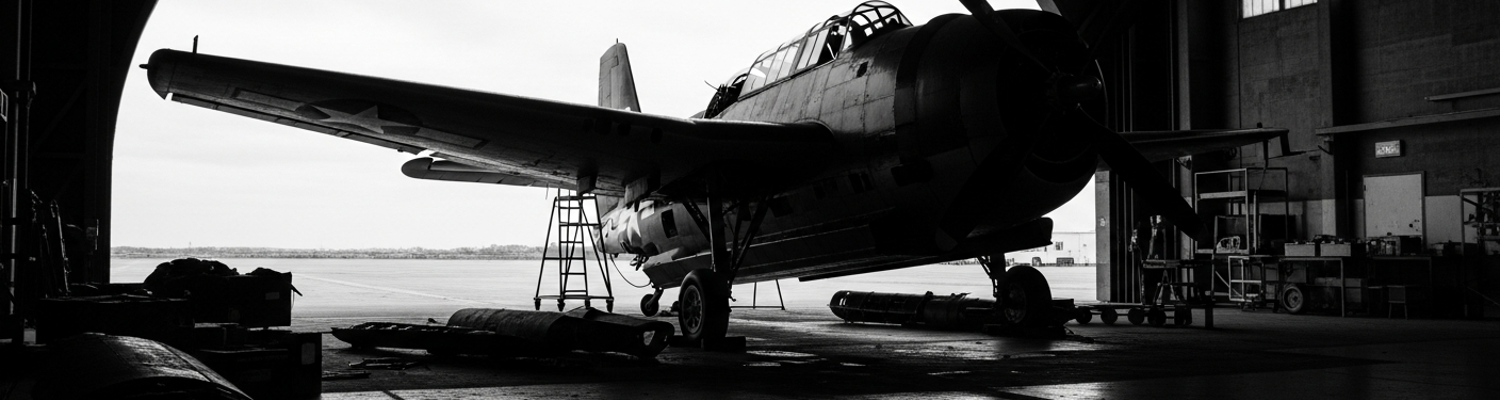

Forward air bases were a known liability. Naval Air Station Kestrel Point on the Ryunin Atoll was a prime example. Its construction was an act of strategic necessity, a fixed asset in a fluid theater of war. A review of operational logs for Operation Meridian Strike confirms the Ryunin Atoll was selected for its geography. The atoll was positioned just 300 nautical miles from the Serpent’s Maw, a deep-water strait the main amphibious force had to transit. This proximity was its primary asset and its greatest vulnerability. Kestrel Point was the only allied airfield capable of supporting the specialized TBF-9 Harbinger torpedo bombers. These aircraft possessed the range and payload for sea-denial operations against the enemy fleet expected to contest the strait. Longer-range assets from distant bases could not provide the same persistent presence or rapid re-arming rates. The base was the lynchpin of the invasion plan. Its existence was a high-stakes gamble, trading security for tactical advantage.
The base was a designated target.
At 02:41 Zulu, the attack commenced. It was not a conventional bombing run. A wave of low-observable, sea-skimming cruise missiles, launched from submerged platforms, arrived first. Archival evidence shows the base’s Phalanx CIWS batteries, designated Task Element 77.4.3, were subjected to targeted electronic warfare, degrading their terminal engagement capabilities. The first impacts were not on the runway or aircraft shelters. They were on the infrastructure. Two missiles struck the primary petroleum and lubricants depot. The resulting fire consumed over 70% of the base’s aviation fuel. Almost simultaneously, another salvo carrying runway-denial submunitions cratered the main 11,000-foot runway at pre-calculated intervals. The most damaging strike was a single missile that detonated over the unhardened torpedo assembly workshops. The delicate calibration equipment and guidance-linking hardware for the Harbinger’s advanced torpedoes were destroyed.
This assault occurred during the most critical phase of the invasion. The main body of the amphibious assault force, Task Force 51, was 48 hours from entering the Serpent’s Maw. The entire operational plan depended on the Harbinger squadrons from Kestrel Point clearing hostile naval forces from the strait. The aircraft themselves, housed in hardened shelters built under the Concrete Sky program, were largely undamaged. They were also inert. There was no shortage of planes, but a sudden and complete inability to arm them. The attack had removed the base’s capacity to generate combat sorties by severing the connection between the bombers and their torpedoes.
The attack left the invasion fleet exposed. The command structure scrambled for a solution that did not exist in any manual.
Physical destruction was not the only vector of the assault. A non-kinetic attack occurred simultaneously. Its objective was total silence. Forensic analysis of wreckage from the main communications hub, Building 704, showed evidence of a targeted high-power microwave weapon. This weapon washed the facility in a directed-energy beam milliseconds before the kinetic impact of a cruise missile. The HPM pulse induced a cascading failure in the unshielded KY-57 voice encryption modules and the primary circuit boards of the base’s AN/GRC-211D long-range transceivers. The system had redundant backups, including buried fiber-optic lines. Post-attack surveys by engineering teams showed the attackers had accounted for this. Small, deeply penetrating submunitions had severed these lines at multiple junctions, melting the cables into useless glass.
The silence was total.
This electronic decapitation immediately affected the two Harbinger squadrons, VT-88 Hell-benders and VT-91 Sea Vultures. Sheltered in their hardened aircraft bunkers, the flight crews and their ground support teams were entirely cut off. A close review of operational logs indicates their standing orders were to maintain radio silence until receiving a launch order for the Serpent’s Maw strike. When the explosions subsided, squadron commanders attempted to raise the base Command Post for a situation report. They received nothing. Their own low-power, line-of-sight radios worked within the confines of the flight line, creating a small bubble of confused chatter. The link to base command and Task Force 51 was gone. They were blind. The tactical picture that had existed at 02:40 Zulu was their last known information. They possessed two squadrons of advanced torpedo bombers, yet they had no orders, no intelligence, and no connection to the fleet they were assigned to protect.
Support personnel faced a different kind of isolation. The attack had damaged the centralized command-and-control structure for the base’s engineering and ordnance units. Damage Control Central was a crater. The senior surviving officer from Naval Mobile Construction Battalion 133, Detachment Ryunin, found himself the de facto authority over a scene of operational chaos. His personnel were scattered. Their pre-assigned emergency tasks were made impossible by the severed communications and the scale of the damage. Their heavy equipment, the bulldozers and cranes needed to clear the runway, was positioned at the far end of the field. There was no way to issue coordinated instructions. The ordnance specialists, whose torpedo assembly workshop was now a ruin, were similarly adrift. They were cut off from their own leadership and from the flight crews who depended on their expertise. They were a collection of specialists without a plan, surrounded by the wreckage of their primary function.
Maintenance logs for Torpedo Squadrons VT-88 and VT-91 showed extensive material decay long before the missile attack. The Grumman TBM Avenger was a famously rugged aircraft, capable of absorbing significant punishment. This durability created its own maintenance crisis. Aircraft that should have been written off after tangling with anti-aircraft fire were instead patched up and sent back into the line. Operational logs from the week prior to the attack show that of the 48 Avengers assigned to the two squadrons, 35 were listed with outstanding repair chits. These were not minor issues. Aircraft #17 from VT-88 had its port-side hydraulic lines shredded by shrapnel, a common vulnerability, leading to a complete loss of pressure for the landing gear and bomb bay doors. Aircraft #24 from VT-91 had sustained a direct, non-lethal hit from a 25mm shell that punched through the rear fuselage. The impact severed key structural stringers and created a noticeable torsional flex during hard maneuvers. Constant exposure to saltwater spray had also taken its toll. Corrosion crept into landing gear assemblies and wing-folding mechanisms, a persistent problem for all carrier-based aircraft of the era. Each of these aircraft represented hundreds of man-hours of required work.
The ground crews worked in a state of controlled desperation. Repair requirements were dictated not by orderly maintenance schedules, but by the unceasing tempo of combat operations. The missile attack transformed this difficult situation. The destruction of the primary ordnance workshops and engineering depots was a major blow. The specialized hydraulic tubing flare kits and high-pressure swaging tools needed to properly repair Aircraft #17’s damaged lines were gone. The sheet metal brakes and riveting guns required to fabricate a new fuselage panel for Aircraft #24 were buried under tons of twisted steel. Spare Wright R-2600 engines, extra propeller blades, and even basic consumables like corrosion-inhibiting lubricants were consumed by the fuel fire or obliterated by direct hits.
This directly gutted the combat readiness of both squadrons.
Squadron commanders and their senior maintenance chiefs were forced into a calculus of cannibalization. Aircraft deemed too damaged to repair with the scant resources available were now designated as parts donors. The maintenance teams of VT-88 and VT-91, working with only hand tools in the dim light of their hardened shelters, began a systematic triage. The relatively intact wing from a TBM with a shattered cockpit was stripped and prepared for transfer to another Avenger that had suffered wing damage but had a sound fuselage. Hydraulic accumulators, radio sets, and instrument panels were pulled from one wrecked airframe to make another flyable. This was a slow, heartbreaking process. A post-attack readiness report, scribbled by hand and passed between squadron commanders, estimated that by cannibalizing nearly two-thirds of their nominal strength, they might be able to assemble a force of six, perhaps eight, combat-ready torpedo bombers. The rest were now just a collection of spare parts.
At 02:41 Zulu, the official inventory of spare parts for VT-88 and VT-91 became irrelevant. The new inventory was the wreckage littering the flight line. Maintenance chiefs, who hours before had managed supply chains, now conducted their work with flashlights and grease pencils. Their new inventory list was a physical map of destruction. A close review of operational logs shows that the formal process of requisition was replaced by organized scavenging. The primary target was the hydraulic system, a network of tubes and actuators responsible for the Avenger’s landing gear, bomb bay doors, and wing-folding mechanisms. These systems were notoriously vulnerable to shrapnel. With the main workshop destroyed, the specialized tools for flaring and swaging replacement lines were gone. A maintenance team, led by a Chief Petty Officer from VT-88, developed a field-expedient solution for the shredded hydraulic lines on Aircraft #17. They cut a section of undamaged tubing from the wing-fold system of a derelict donor aircraft. Lacking a high-pressure swaging tool, they used modified vise grips and a hand-peened steel collar, scavenged from a destroyed jeep’s chassis, to crimp the line. The repair was tested by running the Wright R-2600 engine at high RPM to build hydraulic pressure. This was a dangerous gamble given the engine's own history of failures and the risk of a high-pressure fluid leak atomizing and igniting. The pressure held. This technique, born of necessity, became the standard procedure for the next 48 hours.
This was not maintenance. It was mechanical triage.
The search for usable material quickly expanded beyond the aircraft boneyard. Teams from Naval Mobile Construction Battalion 133, whose primary equipment was buried under rubble, were repurposed as expert scavengers. Lacking orders from a centralized command, a junior lieutenant organized a detail to pick through the wreckage of the motor pool and the destroyed communications hub. Their mission was to acquire not just parts, but raw materials. Spools of copper wire were painstakingly extracted from melted radio consoles, intended for rewinding the burnt-out actuator motors that controlled the bomb bay doors. Sheet metal from the sides of destroyed supply sheds, though not aviation-grade, was cut by hand and used to patch smaller shrapnel holes in fuselages and control surfaces. Even the wreckage of the cruise missiles themselves was examined. A post-attack assessment notes that the high-tensile steel bolts used in the missile casings were harvested and tested for use in non-structural areas of the Avengers, replacing bolts that had been sheared off during the attack. Every piece of wreckage was assessed for its potential. This battlefield acquisition became the only functioning supply depot.
Weeks of high operational tempo had exhausted the flight crews of VT-88 and VT-91. A close review of flight logs (Record Group 38, NARA) shows crews flying multiple sorties in a single 24-hour cycle. The oppressive heat and humidity of the Ryunin Atoll meant that even on the ground, there was no real rest. Sleep was a rationed commodity, stolen in stiflingly hot bunkers between air-raid alerts and the unending roar of engines. The physical toll was alarming. Weight loss was common, as was the persistent nervous tremor that for some men did not subside even hours after returning from a mission. The constant exposure to the physical stressors of combat flying, the violent G-forces of evasive maneuvers, the concussive blasts of nearby anti-aircraft fire, and the deafening noise inside the TBM’s fuselage, degraded the human body as surely as it did the airframe.
This physical decay was inseparable from the psychological damage.
The communications blackout following the 02:41 Zulu attack plunged the crews into a unique form of psychological torment. They were isolated, trapped in their hardened shelters with only their own anxieties and the mangled wreckage of their squadron’s aircraft. A handwritten log from VT-91’s senior pilot notes the profound silence from command as the single greatest source of stress. The men knew the amphibious invasion force was steaming towards the Serpent’s Maw. They knew they were the only asset positioned to clear it. Every passing hour of silence amplified the feeling of abandonment and the grim certainty that the larger operation was proceeding without them. This was compounded by the losses they had already endured. Every crew had seen other Avengers from their own formation fail to return from previous strikes. The three-man crew of an Avenger meant that each loss was a multiple, a tear in the fabric of the squadron. The emotional response was not uniform. Some men retreated into a shell of quiet numbness, while others were plagued by hyper-vigilance, unable to rest.
The combined effects of extreme fatigue and psychological trauma directly threatened the combat readiness of the remaining pilots. Flying a TBM Avenger on a torpedo run was a task that demanded peak performance from all three crew members. The pilot had to manage the complex aircraft while flying feet above the waves, the turret gunner had to scan a 360-degree arc for enemy fighters, and the radioman/bombardier in the belly had to handle navigation and arming procedures in a cramped space. Archival evidence from similar Pacific operations shows a direct correlation between crew fatigue and a decline in mission effectiveness, manifesting as navigational errors, missed target acquisitions, and slower reaction times. At Kestrel Point, this problem was magnified. There were no fresh crews to rotate in. The very men who were most exhausted were the only ones available to fly the most critical mission of the entire campaign. The triage of cannibalizing wrecked aircraft meant that only a handful of planes could be made flyable. This created a final, cruel pressure: the most experienced, and therefore most fatigued, crews were the only logical choice to fly them. Their readiness was a gamble on their skill outweighing the heavy toll that weeks of sustained combat had already taken.
Cannibalizing the TBM Avengers created airworthy frames. It did not create armed bombers. The core problem remained. A review of operational logs from the ordnance disposal teams reveals the crisis. The 02:41 Zulu attack had annihilated the torpedo assembly workshop. With it, the entire stock of the proprietary gyroscopic dampening fluid, designated BuOrd-Spec 77-B, was gone. Without this viscous, temperature-stable fluid, the Mark 13 torpedoes’ guidance systems were useless. The internal gyroscopes, which kept the weapon on a straight and level path after being dropped, would precess wildly, sending the torpedo into an uncontrollable spiral. The remaining torpedo bodies were inert steel tubes. The problem had shifted from airframe mechanics to molecular chemistry.
It was a dead end.
The search for a solution became a frantic intellectual exercise conducted amidst physical ruin. The senior surviving ordnance officer, a lieutenant with a pre-war degree in chemical engineering, convened his specialists in a damaged aircraft shelter. They knew the required properties of Spec 77-B: a specific viscosity that remained constant across a wide temperature range and a non-corrosive nature when in contact with the gyroscope’s delicate brass and steel components. They had no way to create it. The base’s laboratory was a crater. The search for a substitute led them to scavenge every container of fluid on the atoll, from hydraulic oil to cooking lard. None possessed the necessary thermal stability. The breakthrough came from an unexpected direction. A Seabee from NMCB 133, tasked with clearing wreckage from the base’s small administrative building, recovered a water-logged footlocker containing Bureau of Medicine and Surgery (BUMED) procurement manuals. He turned it over to the ordnance lieutenant on the off-chance it contained something of use.
Buried deep within a manual for establishing medical research protocols on isolated forward bases was an administrative note designated Special Botanical Procurement (Local Cultivars), Section 3. This pre-war directive was a relic, intended to allow base medical officers to study the pharmaceutical properties of local flora. An appendix listed several species known to be endemic to the Ryunin Atoll, authorizing their local acquisition for analysis. One entry, under procurement code MED-MAR-3, authorized the cultivation of indigenous Cannabis Sativa. The original administrative intent, according to the document’s preface, was to investigate the plant’s fibers for use as a suture material and to analyze its resinous oils for potential analgesic compounds. To the medical bureaucracy, it was a low-priority research initiative. To the desperate ordnance officer, whose pre-war thesis had focused on the industrial applications of organic esters, the chemical structure of the plant’s cannabinoid oils represented a potential solution. He recognized that with a crude distillation process, the plant’s resin could yield an oil with the long-chain polymer structure needed to achieve the viscosity and thermal stability of Spec 77-B.
The discovery highlighted the complexities of military documentation. The Navy was not a monolithic entity but a collection of independent fiefdoms. The Bureau of Ordnance, the Bureau of Aeronautics, and the Bureau of Medicine and Surgery operated with entirely separate supply chains, part numbering systems, and administrative procedures. The solution to BuOrd’s torpedo crisis was located in a BUMED manual that no ordnance technician would ever be trained or directed to consult. Cross-referencing between such bureaucratic silos was virtually nonexistent. The directive was obscure because its application was unimaginable to its authors. It was a footnote in a medical paper, not a line item in a weapons manual. The survival of the directive in that water-logged locker, and its delivery to the one man on the atoll with the specific background to understand its hidden potential, was a matter of pure chance. A team was immediately dispatched, not to a supply depot, but to the humid, overgrown hills on the south side of the atoll with instructions to harvest every wild cannabis plant they could find.
The BUMED directive provided a chemical solution. It also created a human problem. A close review of operational logs shows that the ordnance lieutenant dispatched a team composed of three Seabees and two VT-91 ground crewmen to the southern hills of the atoll. Their mission was not to engage an enemy but to find and harvest a plant. This task brought them into direct contact with the indigenous Ryunin islanders, a civilian population whose existence was noted in preliminary intelligence briefs but otherwise ignored by the base’s operational planning. The islanders, whose own villages had been damaged in the crossfire of the initial Japanese occupation and subsequent American seizure of the atoll, were deeply suspicious of the military presence. The harvesting team found that the specific strain of wild cannabis, noted in the BUMED manual for its high resin content, did not grow randomly. It was cultivated in secluded, terraced gardens, a generations-old resource used by the islanders for producing fiber and medicinal compounds. The team of armed American servicemen, appearing suddenly and demanding access to these gardens, was met not with violence, but with a quiet, unyielding refusal. The interaction was a study in mutual incomprehension. The Seabees, operating under the pressure of a ticking clock, saw only an obstacle to their mission. The islanders, who had already seen one foreign army replaced by another, saw another group of uniformed men attempting to seize a local resource.
They were not hostiles. It was a logistical barrier.
This new complication unfolded against a backdrop of institutional absurdity back at the flight line. The senior surviving officer, a Lieutenant Commander from VT-88, was forced to confront the administrative architecture of the very system he was trying to save. A review of operational logs shows that the act of cannibalizing aircraft required him to directly violate NAVSUP Publication 485, a regulation that mandated a formal survey and condemnation process by an authorized board before any major component could be stripped from an airframe. The regulation was a peacetime measure, designed to ensure safety and accountability. In the ruins of Kestrel Point, it was a death sentence. There was no board left to convene. The Lieutenant Commander solved the problem with a fountain pen. He physically took his copy of the manual, struck through the relevant passages, and wrote a single annotation in the margin: Per my authority as senior officer present, these sections suspended for the duration of the operational emergency. This act, a legally dubious assumption of authority, was repeated across the base. The enforcement of regulations became a matter of selective, on-the-spot nullification. Pilots were ordered to sign pre-flight inspection forms for aircraft they knew were pieced together with scavenged parts, a direct falsification of official records. Maintenance chiefs ignored hundreds of pages of technical orders from the Bureau of Aeronautics, substituting non-standard materials and unverified repair techniques simply to make an engine turn over or a hydraulic line hold pressure.
These actions created a series of profound operational paradoxes that defined the reality at Kestrel Point. To save the approaching fleet, the men on the atoll had to break the very rules designed to ensure military effectiveness and safety. Every life-saving measure was a court-martial offense. The only path to mission success was through a cascade of technical and administrative violations. This culminated in the single most critical command decision: authorizing the ordnance lieutenant to proceed with the crude distillation of the cannabis oil. It was an admission that the entire high-tech enterprise of modern naval aviation now depended on a pre-industrial chemical process, performed in a wrecked shelter, using a botanical substance acquired through a tense negotiation with a non-combatant civilian population. It was a gamble on every level. The command structure was betting that the field-expedient hydraulic lines would not burst on takeoff, that the un-analyzed cannabis oil would not clog the torpedoes’ delicate gyroscopes, and that the exhausted flight crews could execute a high-precision mission in aircraft that were, by any sane measure, no longer airworthy. A refusal to act meant certain failure. To act meant embracing a chain of unquantifiable risks, a complete deviation from doctrine born of necessity. A handwritten entry in the ordnance lieutenant’s log notes that at 19:00 Zulu, using a condenser coil scavenged from the base’s destroyed ice machine, the first drops of a viscous, greenish-gold oil began to collect in a glass beaker.