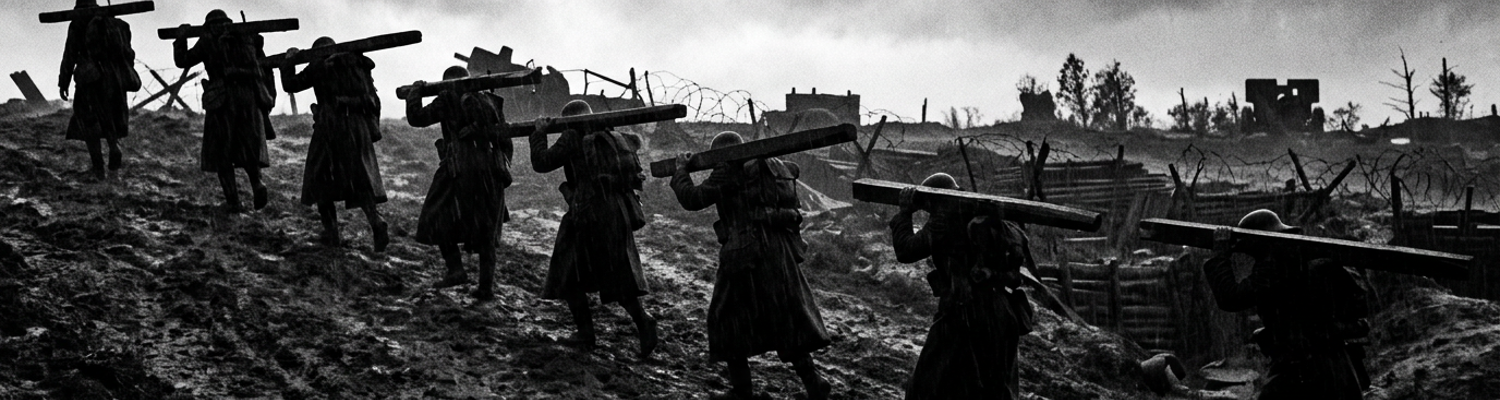

Post-Armistice Border Conditions
Sustaining a fully manned defensive line across the mountainous center of the Korean peninsula with depleted post-war supply chains presented a severe operational challenge. Archival evidence shows the 24th Infantry Division assumed defense responsibilities along key sectors of the Korean armistice line in January 1957. Command logs detail the movement of these battalions into the central sector. They focused specifically on the rugged elevations surrounding the Chorwon Valley and the approaches south of Pyonggang. Elements of the 19th and 21st Infantry Regiments marched into the jagged hills under strict radio silence.
Soldiers carried M1 Garand rifles that frequently jammed.
The viscosity of standard-issue lubricants failed completely in the extreme cold. The division relieved outgoing units during nighttime hours to avoid North Korean observation posts situated just across the border zone. Troops hauled seventy-pound canvas rucksacks up steep, unpaved ridgelines. They wore M1951 field jackets that failed to trap body heat in the high-altitude winds. A close review of operational logs indicates that platoons arrived at their designated outposts already suffering from early-stage frostbite in their extremities. Supply trucks could not navigate the steep, iced-over mountain passes. This forced the enlisted men to physically carry thousands of rounds of .30 caliber ammunition up to the forward observation bunkers by hand. They also hauled heavy crates of C-rations and five-gallon water cans. The sweat generated by this physical exertion immediately froze against their skin the moment they stopped moving.
The 19th Infantry Regiment recorded dozens of cold-weather casualties before they even fired a single shot.
Commanders ordered immediate fortification upgrades upon arrival. The men found themselves assigned to trench networks originally carved out during the final months of the 1953 stalemate. These positions consisted of winding communication trenches, sandbagged firing steps, and timber-reinforced sleeping bunkers dug deeply into the reverse slopes of high-ground outposts. Sub-zero winter temperatures froze ground fortifications. This created deceptive structural stability across forward positions. The mercury frequently plummeted past negative twenty degrees Fahrenheit during the long night watches. This extreme cold caused the moisture inside the clay and dirt walls of the trench systems to freeze completely solid into a dense permafrost layer extending three feet deep. Enlisted personnel patrolling these sectors believed the hardened walls offered superior protection against potential enemy artillery fire. Exposed dirt possessed the exact density of poured concrete.
Sandbags stacked along the parapets transformed into rigid blocks of ice and soil.
When soldiers attempted to deepen the communication trenches or repair collapsed bunker roofs, their standard-issue M1943 entrenching tools deflected off the permafrost. Steel shovel blades cracked and snapped away from their wooden handles under the repeated impacts. The men could not dig hasty fighting positions during dismounted patrols in the no-man's-land between the barbed wire fences. They remained entirely trapped above ground if a firefight broke out. Any incoming mortar rounds striking the frozen terrain blasted jagged shards of ice and hardened rock directly into the exposed faces of the defending troops. The structural integrity of the main bunkers relied entirely on this temporary deep freeze. Timber supports installed three years prior suffered from extensive, unseen dry rot caused by previous monsoon seasons. Solidified mud tightly held the decaying wooden beams in place. This masked the critical weight-bearing failures of the overhead cover from the platoon leaders.
Soldiers slept on canvas cots suspended just inches above the ice-slicked bunker floors.
Timber and Earth Revetment Failures
When examining the historical record of the 21st Infantry Regiment in late March 1957, the transition from winter to spring introduced a highly destructive environmental shift across the Chorwon Valley. Daytime temperatures climbed steadily above thirty-two degrees Fahrenheit. The three-foot permafrost layer that previously bound the outpost hillsides together began to melt from the top down. Timber-and-earth revetments along the post-armistice border suffered severe structural degradation under these thaw conditions. Subterranean ice veins trapped behind the primary retaining walls liquefied into trapped pools of water. This created massive hydrostatic pressure against the aging eight-by-eight inch Douglas fir support beams originally installed by combat engineers in 1953. Water seeped deeply into the untreated wood grain of the bunker supports. The dry rot documented in winter maintenance logs rapidly accelerated into total mechanical failure as the wood fibers softened and separated.
Mortise and tenon joints holding the ceiling joists slipped out of alignment.
The frozen dirt that previously possessed the exact density of poured concrete turned into a heavy, viscous clay slurry. Sandbags stacked along the parapets absorbed the meltwater until the burlap fabric ruptured. This spilled thousands of pounds of wet soil directly into the walking paths. Entire sections of the primary defensive line simply liquefied and slid down the reverse slopes of the outposts. Forward infantry squads were forced into continuous manual labor to clear soil cave-ins and shore up collapsing trench lines. Command directives from the 24th Infantry Division canceled all non-essential combat patrols to address the failing infrastructure. Enlisted personnel transitioned from riflemen to full-time construction crews operating in highly dangerous conditions. Soldiers stood knee-deep in near-freezing mud for twelve to fourteen hours at a time. They used standard M1943 folding entrenching tools and battered steel M1 helmets to scoop liquid clay out of the communication trenches.
The semi-liquid mud frequently flowed right back into the excavated areas.
Squad leaders organized exhausting rotating work shifts just to keep the primary firing steps elevated above the water line. Men dragged 150-pound replacement pine timbers up the muddy, unpaved trails of Hill 400 under the cover of darkness. They executed this resupply strictly at night to avoid the optical sights of North Korean sniper teams stationed on the adjacent ridgelines. The sheer physical exertion caused widespread muscle tearing and severe joint inflammation across the frontline battalions. A close review of medical logs from April 1957 shows a massive spike in immersion foot and exhaustion cases among the enlisted ranks. Soldiers wore standard leather combat boots that offered zero waterproofing against the constant exposure to the wet earth. Their olive-drab M1951 uniform trousers became permanently caked in heavy clay. This added ten to fifteen pounds of dead weight to their lower bodies with every step they took through the flooded trench network.
Infantrymen operated on less than two hours of rest per forty-eight-hour cycle.
When a thirty-foot section of the northern parapet caved in at Outpost Ouellette, tons of wet soil completely buried the heavy weapons emplacements. Gun crews frantically dug through the heavy mud with their bare hands to recover their M1919A4 Browning machine guns before the internal mechanisms rusted shut. The extracted weapons required complete disassembly and boiling in steel fifty-gallon drums to remove the abrasive grit from the receiver groups. Engineers attempted to reinforce the worst cave-ins using corrugated steel sheets scavenged from abandoned rear-area supply dumps. Transporting these sharp, awkward metal panels up the slick hillsides resulted in deep lacerations to the hands and arms of the carrying parties. The mud severely compromised the basic sanitation of the forward positions. Latrine sumps overflowed into the main communication trenches. This mixed raw human waste with the liquefied clay.
Medical officers recorded high rates of dysentery spreading through the exhausted squads.
Night-Probe Fire and Trench Reconstruction
A close review of operational logs from the 24th Infantry Division in late April 1957 reveals the immediate consequences of shifting fortification repairs to the nighttime hours. Battalion commanders ordered all trench reconstruction to occur strictly under the cover of darkness to avoid the optical sights of daytime snipers. This directive created a highly dangerous acoustic environment across the Chorwon Valley. Enlisted men striking buried granite outcroppings with their steel M1943 entrenching tools generated loud metallic impacts that echoed for miles. Hostile night-probe teams routinely targeted these vulnerable American working parties engaged in open trench maintenance. Korean People's Army reconnaissance units exploited the noise of the digging to mask their own movements through the brush. These infiltrators wore soft-soled canvas sneakers and carried compact PPSh-41 submachine guns.
They slipped past the forward listening posts along the Pyonggang approaches.
The continuous scraping of shovels against the rocky soil completely concealed the sound of the approaching enemy squads. American engineers and infantrymen stood fully exposed on top of the ruined parapets while wrestling with 150-pound replacement pine timbers. They possessed no overhead cover and could not utilize the collapsed communication trenches for defilade. KPA probe teams initiated contact by silently maneuvering within forty yards of the active excavation sites. Attackers threw trip-flares into the work zones or fired directly at the silhouettes of the men hauling wet sandbags up the reverse slopes. Gunfire erupted from multiple vectors simultaneously. The enlisted personnel dropped their heavy loads and scrambled for cover that no longer existed. F-1 fragmentation grenades rolled down the slick mud of the collapsed hillsides directly into the trapped working parties. Dismounted squads suffered heavy casualties while attempting to clear debris under this active small-arms and mortar harassment.
Archival medical records from the 21st Infantry Regiment indicate a high volume of lower-extremity shrapnel wounds during these specific night engagements.
Accompanying KPA 82mm mortar crews positioned on the northern ridgelines dropped high-explosive rounds onto the pre-registered coordinates of the collapsed American bunkers the moment the small-arms fire began. Infantrymen abandoned their digging tools and attempted to un-sling their M1 Garand rifles to return fire. Heavy clay coated the exposed receiver groups of their weapons. Operating rods seized instantly upon firing the first round due to the abrasive grit jamming the internal tracks. Soldiers dove into shallow, water-filled depressions where the primary firing steps used to be. This exposed their backs to the incoming mortar barrages. Platoon leaders reported losing three men for every ten yards of trench line repaired under these exact conditions. Evacuating the wounded transformed into a grueling physical ordeal that further disrupted the fortification efforts.
Stretcher-bearers sank to their thighs in the liquefied earth.
Medics dragged casualties through knee-deep slurry because the primary communication trenches remained entirely blocked by the previous cave-ins. Command directives insisted the fortification upgrades continue despite the nightly attrition. Squads established localized security perimeters using M1918A2 Browning Automatic Rifles. The gunners lacked stable bipod placement in the shifting clay. KPA probe units fired short, concentrated bursts before retreating back into the dense underbrush of the no-man's-land. American return fire largely struck empty terrain as the infiltrators vanished into the darkness. The working parties received orders to resume digging alongside the fresh blood pooling in the muddy excavation sites. Men scooped the semi-liquid mud out of the pathways using their battered steel M1 helmets. They stacked wet sandbags in complete darkness. They feared that any use of flashlights would draw another mortar barrage.
Shrapnel from the recent explosions embedded deep into the newly placed Douglas fir support beams.
Frostbite and Environmental Exposure Hazards
Archival evidence shows that nighttime temperatures across the Chorwon Valley plummeted back below ten degrees Fahrenheit during the second week of April 1957. This rapid temperature drop trapped liquid clay and meltwater inside the newly excavated communication trenches of Outpost Ouellette. Command logs detail strict orders from the 24th Infantry Division requiring enlisted men to manually bucket out this standing water before it hardened into solid ice blocks over the primary firing steps. Infantrymen from the 21st Infantry Regiment stood directly in sub-zero mud for six to eight hours at a time during these nighttime clearing operations. The freezing slurry breached the eyelets of their standard-issue leather combat boots within minutes of entering the trench network. Once saturated, the men could not leave the defensive line to dry their footwear or change their socks.
North Korean sniper teams maintained active crosshairs on the rear access trails.
The trapped water inside the uninsulated leather boots froze completely solid against the skin of the dismounted infantrymen. Medical officers recorded seventy-three severe frostbite cases during a single forty-eight-hour rotation on Hill 400. The affected flesh turned a pale white and hardened into ice. This destroyed the underlying capillaries and caused immediate cellular death. Men attempting to walk back to the battalion aid stations felt their frozen toes cracking inside their stiffened boots with every step. Surgeons amputated gangrenous digits using unsterilized bone saws. A close review of quartermaster reports indicates a total breakdown of the wet-cold extreme weather supply chain across the central sector. The division issued M-1944 rubber shoepacs to the forward squads. These specialized boots required daily rotations of dry felt liners to function safely.
Forward supply depots possessed zero replacement liners in their inventories.
Enlisted personnel wore the exact same damp wool socks for up to fourteen consecutive days while standing in flooded defensive positions. The thick rubber outer shell of the shoepacs trapped natural foot sweat inside the waterproof boot casing. During twelve-hour static guard shifts along the Pyonggang approaches, this trapped moisture rapidly cooled in the night air without actually freezing solid. Prolonged exposure to these damp, near-freezing conditions caused widespread non-freezing cold injuries across the rifle platoons. The skin on the soldiers' feet swelled massively and turned a mottled purple color as their peripheral blood vessels constricted to preserve core body temperature. Command directives strictly forbade soldiers from removing their boots inside the forward bunkers due to the constant threat of KPA night-probe attacks.
When medics finally cut the rigid leather and rubber casings off the injured men at the rear aid stations, the swollen, necrotic flesh frequently peeled away with the wool socks.
Nerve damage left the infantrymen permanently unable to walk. The standard M-1951 field jackets provided to the dismounted patrols absorbed massive quantities of the freezing trench water. Cotton poplin outer shells offered zero waterproofing against the liquid mud splashing up from the flooded trench floors during the nightly reconstruction shifts. This heavy water weight dragged the uniforms tightly against the men's skin. It sapped their core body heat through rapid thermal conduction. Platoon leaders requisitioned specialized insulated rubber boots from the Eighth Army supply command in Seoul to combat the rising attrition rates. Transport trucks carrying this cold-weather gear bogged down in the axle-deep clay of the main supply routes miles behind the front lines. The front-line troops relied entirely on heavy wool trench coats that stiffened into rigid, immovable boards once the absorbed water froze in the night air.
The firing pins rusted shut against the frozen receiver groups.
Blast Trauma in Forward Trench Sectors
Archival evidence shows that by the first week of May 1957, the 1st Battalion, 19th Infantry Regiment engaged in continuous, exposed trench excavation along the southern slopes of Hill 400. Rapid spring thaws completely dissolved the structural integrity of the communication trenches connecting the forward listening posts to the main defensive line. Digging parties operated in narrow, unreinforced clay channels measuring less than thirty inches across. Mud coated everything. Korean People's Army probe teams exploited these open excavations by lobbing F-1 fragmentation grenades directly into the cramped pathways. Close-proximity grenade bursts and mortar impacts caused severe blast trauma inside unreinforced trench sections. Dense, saturated clay walls refused to absorb any of the explosive energy. The resulting overpressure wave possessed no vertical or lateral escape routes.
It traveled linearly down the trench floor at supersonic speeds.
Enlisted personnel caught within fifteen feet of a detonation experienced immediate barotrauma. Sudden atmospheric compression ruptured their tympanic membranes and caused severe hemorrhaging within their pulmonary alveoli. Soldiers dropped their M1943 entrenching tools and collapsed to their knees as blood poured from their ears. Shockwaves ripped standard steel M1 helmets clean off the heads of the infantrymen. The physical blast force lifted men off their feet and slammed violently against the wet earthen walls. The confined geometry of the ruined trench network amplified the lethal radius of standard infantry munitions by a factor of three. A close review of medical logs from the 24th Infantry Division details the exact physiological toll of these close-quarters detonations. Company commanders ordered their squads to maintain their digging positions during the mortar barrages to prevent total defensive collapse.
This directive forced enlisted men to absorb multiple consecutive blast waves over a single four-hour nighttime rotation.
Repeated concussive impacts caused severe neurological damage among the forward trench maintenance squads. Infantrymen lost basic motor function. Extreme vertigo rendered them completely unable to stand upright in the knee-deep mud. Shrapnel from the F-1 grenades ricocheted off the buried granite outcroppings. This created secondary fragmentation hazards that tore through the unarmored lower legs of the working parties. Arteries severed. Blood filled their leather boots. Concussed men could not hear the incoming whistle of subsequent mortar rounds. They crawled aimlessly through the liquefied clay while KPA infiltrators fired short bursts from PPSh-41 submachine guns into the open pits. Platoon leaders frantically attempted to reorganize their scattered squads using hand signals. Deafened soldiers stared blankly at their officers while the artillery bombardment continued to systematically dismantle the defensive perimeter. Medics documented fifty-two cases of permanent hearing loss within a single rifle company over a three-day period.
When examining the historical record of Sector 4 during the early morning hours of May 12, the intersection of blast trauma and structural failure produced devastating casualty rates.
Incoming fire bursts struck the weakened earth directly above the primary sleeping bunkers of the 21st Infantry Regiment. Collapsing timber supports frequently trapped injured personnel during incoming fire bursts. Aging eight-by-eight inch Douglas fir beams holding up the bunker ceilings already suffered from advanced dry rot and water saturation. Sudden explosive compression from an 82mm mortar impact instantly snapped the mortise and tenon joints holding the primary load-bearing joists in place. Entire sections of the subterranean roof caved in without warning. Tons of wet soil, jagged rocks, and splintered pine crashed down onto the canvas cots below. Men screamed. Infantrymen recovering from fresh shrapnel wounds found themselves pinned beneath heavy structural debris. Sweeping machine-gun fire completely suppressed the secondary rescue teams. Uninjured men outside the collapsed bunkers dove into water-filled depressions to avoid the hostile crossfire.
Trapped personnel slowly asphyxiated as heavy, viscous clay compressed their chest cavities.
Forward Outpost Reconnaissance Isolation
Archival evidence shows that by late May 1957, Eighth Army headquarters issued explicit directives requiring the 24th Infantry Division to maintain unbroken physical occupation of all forward listening posts. Battalion commanders relayed these orders down to the rifle companies of the 19th Infantry Regiment stationed along the Pyonggang approaches. Enlisted personnel received strict instructions to hold their positions inside subterranean bunkers that were actively collapsing around them. The extreme spring thaw completely compromised the structural integrity of the primary defensive line. Eight-by-eight inch Douglas fir support beams buckled under the hydrostatic pressure of the liquefied earth pressing against the exterior retaining walls. Platoon leaders submitted daily engineering reports detailing the failure of mortise and tenon joints holding the ceiling joists in place.
These documents recorded an average ceiling sag of four to six inches per week inside the main sleeping quarters.
Division command refused all requests to temporarily withdraw the forward squads to the more stable secondary trench lines on the reverse slopes. Officers feared that any abandonment of the forward observation posts would immediately allow Korean People's Army infiltration units to cross the border undetected. Infantrymen sat in complete darkness listening to the untreated pine supports splinter under the weight of the saturated clay. A close review of operational logs from the 2nd Battalion indicates that this environmental degradation rapidly isolated the smallest reconnaissance elements from the main force. Massive soil cave-ins obliterated the narrow access trails connecting the forward listening posts to the primary trench network. Thousands of pounds of wet soil and ruptured burlap sandbags slid down the steep inclines of Hill 400 during the heavy rainstorms of the third week of May.
This viscous slurry completely buried the primary supply routes under five feet of liquid mud.
Quartermaster units could no longer push physical supplies up to the five-man reconnaissance teams stationed in the isolated forward positions. Supply trucks bogged down miles behind the main line of resistance. This forced men to attempt manual resupply runs that failed the moment they reached the collapsed reverse slopes. The men trapped in these advanced outposts exhausted their standard combat loads of .30-06 Springfield ammunition within forty-eight hours. They possessed no fresh water. They relied entirely on a dwindling stockpile of canned C-rations that they ate cold to avoid lighting their small kerosene heaters. The shifting earth severed the physical supply lines and the electronic communication networks simultaneously. Engineering reports detail the systemic failure of the WD-1/TT field wire that linked the forward EE-8 field telephones to the battalion switchboards.
Signal corps personnel originally laid these communication lines in shallow trenches running parallel to the main access trails.
The massive thaw-induced mudslides exerted hundreds of pounds of shear force directly onto the unarmored copper and steel strands. The wire snapped abruptly under the tension. Forward reconnaissance teams lost all voice contact with their platoon leaders. They could no longer call in defensive artillery fire or request emergency medical evacuations for men suffering from severe dysentery. Signal repair squads attempted to run fresh spools of WD-1/TT wire across the surface of the collapsed hillsides under the cover of darkness. Korean People's Army mortar crews targeted these exposed repair teams using pre-registered coordinates. High-explosive 82mm rounds detonated against the wet clay. This shredded the replacement communication lines with jagged steel shrapnel before the technicians could even connect them to the forward terminals. The isolated listening posts remained entirely cut off from the main line of resistance for up to six consecutive days.
The wet soil continued to pour through the firing slits faster than the exhausted squads could scoop it out.
Emergency Medical Triage in Waterlogged Earthworks
Archival evidence shows that by late April 1957, medical personnel attached to the 1st Battalion, 21st Infantry Regiment operated in an environment completely hostile to standard trauma doctrine. The rapid spring thaw across the Pyonggang approaches transformed the defensive outposts into flooded, unstable trench networks. Field medics performed frontline trauma procedures directly in these waterlogged earthworks under heavy darkness. Command directives strictly forbade the use of artificial illumination during night-probe attacks. Enlisted medical technicians treated severe lower-extremity shrapnel wounds while standing knee-deep in near-freezing liquid clay. They navigated the ruined anatomy of their casualties entirely by touch. Standard-issue Carlisle bandages absorbed the dirty water the second they were removed from their brass waterproof tins.
The sterile cotton pads became instantly contaminated with the viscous mud that coated everything inside the collapsed firing steps.
A single flashlight beam guaranteed immediate 82mm mortar fire from the northern ridgelines. A close review of medical logs from Sector 4 details the systemic failure of issued medical equipment in these conditions. Combat medics attempted to administer pain relief using standard morphine syrettes. The extreme cold jammed the small gauge needles with frozen mud the moment they touched the trench floor. Medics used their unwashed, freezing fingers to clamp severed femoral arteries. The structural integrity of the trench dissolved around them. Aging Douglas fir retaining walls buckled under the hydrostatic pressure of the liquefied earth. The clay walls frequently sloughed off in massive chunks directly onto the exposed chest cavities of the wounded. Evacuation delays occurred constantly due to collapsed communication trenches blocking standard litter-bearer routes.
During the first week of May, massive soil cave-ins obliterated the narrow access trails connecting the forward listening posts on Hill 400 to the primary aid stations.
Thousands of pounds of wet soil and ruptured burlap sandbags filled the defilade pathways. Stretcher teams could no longer utilize the secondary trench lines on the reverse slopes to safely transport casualties. They found their designated routes blocked by splintered eight-by-eight inch pine beams and chest-high pools of trapped meltwater. Stretcher teams could not bypass the debris fields. This environmental degradation forced infantrymen to haul wounded soldiers over the exposed parapets under active small-arms harassment. Four-man teams utilized standard M1942 canvas litters to move bleeding personnel down the unpaved, slick hillsides. A wounded infantryman wearing a waterlogged M-1951 field jacket and heavy clay-caked combat boots easily weighed over two hundred and fifty pounds. The men carrying the litter sank to their thighs in the heavy slurry with every step.
Men died in transit.
Medics documented dozens of cases where stabilized patients succumbed to secondary hypothermia and hemorrhagic shock before reaching the battalion surgeons. Blood loss accelerated as the near-freezing temperatures restricted core vascular function. Operational reports from the 24th Infantry Division record specific instances of evacuation collapse during the heavy rainstorms of May 14. Litter bearers attempting to traverse the ruined communication trenches of Outpost Ouellette repeatedly lost their footing on the submerged granite outcroppings. Physical exhaustion caused their grip on the wooden litter handles to fail. Stretchers tipped over. This spilled severely wounded men directly into the freezing, unsanitary water pooling in the cratered pathways. Medical personnel possessed no dry blankets to replace the soaked canvas wrapping the casualties. They manually dragged the injured men through the final fifty yards of liquid mud by their web belts.
The abrasive grit from the clay seeped directly into open surgical wounds.
Tactical Aftermath of Fortification Failures
Archival evidence shows that by June 1957, engineering officers within the 24th Infantry Division began systematically cataloging the mechanical thresholds of the ruined border outposts. Combat engineers attached to the 3rd Engineer Battalion spent weeks measuring the exact decay rates of the untreated timber supports across Sector 4. They recorded the physical deformation of the eight-by-eight inch Douglas fir beams holding up the primary sleeping bunkers along the Pyonggang approaches. Technicians utilized mechanical calipers to document how the wood grain separated under the continuous moisture exposure. Hydrostatic pressure from the liquefied clay snapped the mortise and tenon joints at a mathematically predictable rate of failure. Division commanders compiled these specific stress-failure logs to petition Eighth Army headquarters in Seoul for a complete overhaul of frontline architecture.
The documentation proved that standard earth-and-timber revetments could no longer support the heavy soil weight during the Korean spring thaw.
Officers advocated for an immediate transition to reinforced concrete bunker designs capable of withstanding both the environmental degradation and direct 82mm mortar impacts from Korean People's Army probe teams. Newly drafted engineering specifications demanded high-density Portland cement poured over interlocking grids of three-quarter-inch steel rebar. Construction crews required specialized gasoline-powered heaters just to cure the wet cement in the freezing nighttime temperatures. When examining the historical record of the 19th Infantry Regiment, the logistics of this proposed concrete transition demanded entirely new supply chain mechanics. Trucks could not haul liquid cement up the steep, unpaved ridgelines of Hill 400. Enlisted personnel physically carried eighty-pound canvas sacks of dry cement powder and bundled steel rebar up the muddy access trails under the cover of darkness.
They mixed the heavy concrete by hand in scavenged fifty-gallon steel drums using water drawn directly from the flooded communication trenches.
A close review of post-action field reports submitted by the 21st Infantry Regiment detailed the exact physiological toll of the earlier fortification efforts. Platoon leaders recorded the high volume of immersion foot and blast trauma cases generated by forcing enlisted personnel to excavate liquid clay in complete darkness. This raw data flowed directly back to the Department of the Army. The Pentagon subsequently issued revised cold-weather trench maintenance doctrine to all forward-deployed units across the Korean armistice line. New operational mandates strictly capped static manual labor shifts in waterlogged earthworks at forty-five minutes to prevent peripheral nerve damage. Quartermasters received strict orders to distribute mechanized water pumps to the forward squads to replace the manual bailing of the defensive lines. Revised doctrine completely banned the use of standard M1943 folding entrenching tools for primary trench excavation.
Supply depots issued heavy-duty steel pickaxes and long-handled spades designed to penetrate the dense permafrost without transferring the kinetic shock back into the hands of the enlisted men.
Platoon leaders enforced mandatory dry-sock rotations every four hours. These documents recorded the total collapse of standard rear-echelon medical evacuation routes during the heavy spring mudslides. Stretcher-bearers could not transport bleeding infantrymen down the ruined access trails before the patients succumbed to hemorrhagic shock. This failure drove a permanent revision regarding forward medic staging across the entire theater of operations. Battalion surgeons abandoned the traditional practice of holding primary aid stations on the reverse slopes miles behind the main line of resistance. They pushed their trained medical technicians directly into the advanced listening posts alongside the frontline infantry squads. Forward bunkers received dedicated stockpiles of dry wool blankets and chemical heating pads designed specifically to keep morphine syrettes from freezing solid. Medical personnel embedded in these advanced positions no longer relied on Carlisle bandages stored in unsealed brass tins. Supply chains pushed waterproof, rubberized medical kits directly to the newly poured concrete observation posts. Enlisted medics treated lower-extremity shrapnel wounds on elevated steel tables bolted directly into the hardened floors. Glass plasma bottles hung from the exposed rebar ceilings. They administered whole blood transfusions mere yards from the primary firing steps.