
Command Transition and Da Nang Artillery Organization
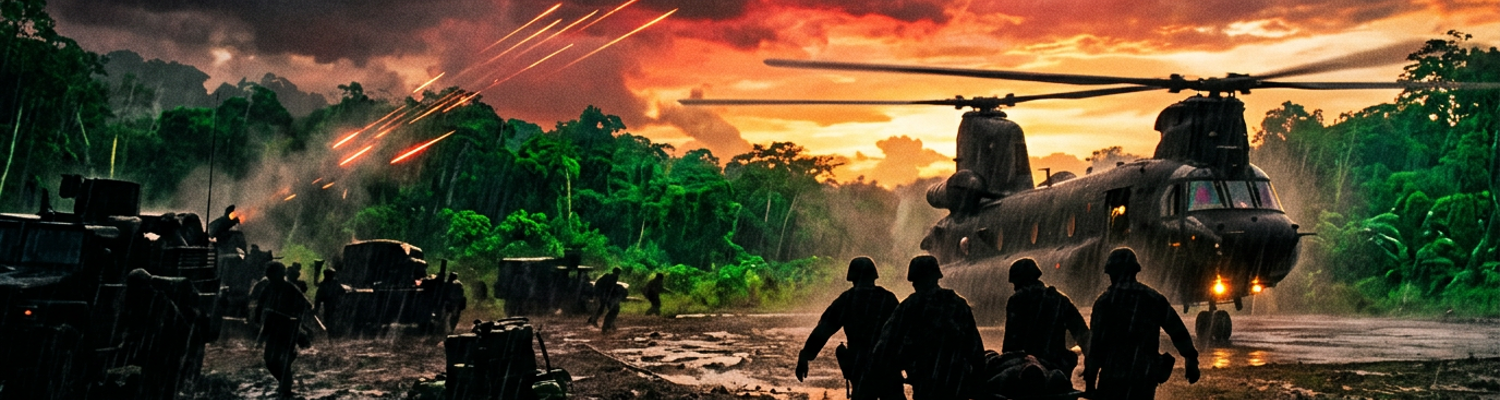
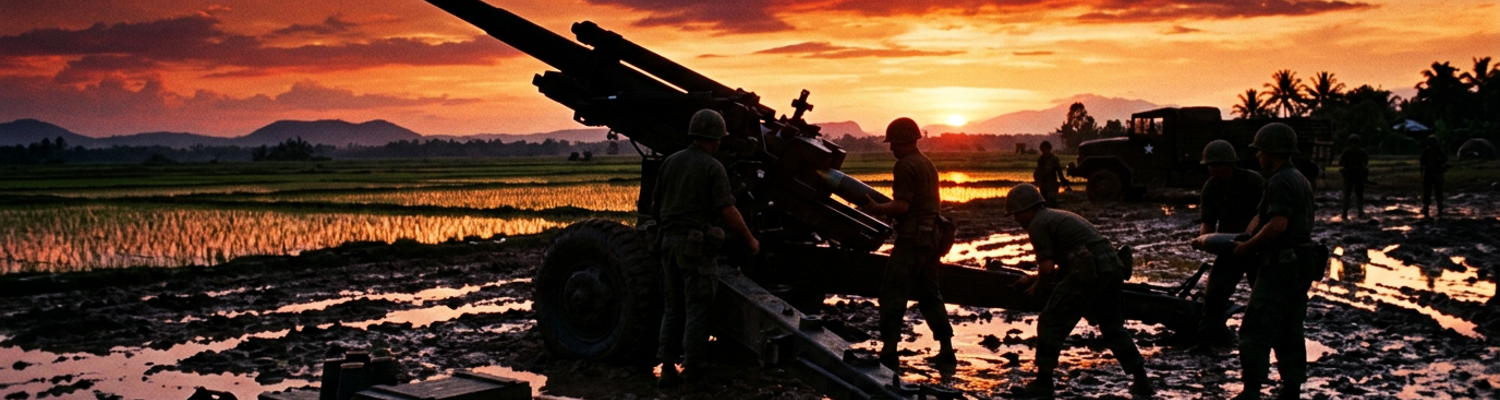
M114 towed 155mm howitzers sank past their wheel hubs into gray alluvial mud as five-ton trucks dragged the organic field pieces into battery revetments outside Da Nang. Gun crews labored to lever heavy spade trails into saturated clay, fighting the slick ground with wooden timbers while river sand abraded wheel bearings and exposed traverse gears. Attached heavy armor reinforced the battalion perimeter, bringing the tracked chassis of the 3d 8-Inch Howitzer Battery into firing pits alongside the long-barrel vehicles of the 3d 155mm Gun Battery. Steel tracks churned deep ruts through the staging areas, throwing up spray of pulverized red soil that jammed breech rings and clogged prime mover air filters. Sweating cannoneers manhandled two-hundred-pound eight-inch projectiles onto mechanical loading trays, watching hydraulic fluid leak past worn wiper seals every time the massive recoil cylinders absorbed a maximum-charge firing shock. Supply sergeants logged each blown seal and stripped traverse gear in dog-eared maintenance binders, calculating the exact deficit of replacement parts required to keep the guns firing in the abrasive delta sludge.
Binders of maintenance reports landed on the command post desk as Lieutenant Colonel Joseph M. Laney Jr. assumed command of the 4th Battalion, 11th Marines within the 1st Marine Division on February 2, 1967. Laney took charge of an artillery battalion tasked with directing general artillery support across the wide Da Nang tactical area of operations. Battery positions stretched across fragmented terrain, requiring his organic towed 155mm M114 howitzers to cover extensive protective sectors while the attached self-propelled eight-inch and 155mm guns reached out toward distant river junctions. Dispatch orders arrived continuously over field telephone lines, directing fire missions against suspected enemy staging zones and interdicting foot paths used by local insurgent units. Laney reviewed gun crew readiness reports that listed critical shortages of clean replacement gaskets, spare firing mechanisms, and fresh hydro-pneumatic oil. Artillery officers immediately reorganized battery distribution points to ensure heavy ammunition pallets reached the revetments before torrential rains made local cart tracks impassable.
Ammunition pallets sagged under rain-soaked canvas covers as utility trucks hauled hundreds of steel projectile casings across the Da Nang causeways. Cannoneers worked through the night under blackout conditions, sorting variable-time fuses and matching bagged powder charges to specific gun tubes based on documented chamber wear. Sustained firing missions wore down the rifling grooves inside the M114 howitzer barrels, altering initial muzzle velocities and demanding constant mathematical corrections from fire direction plotters. Battery gunners swabbed out fouled chambers with solvent-soaked burlap rags, clearing away sticky carbon residue that threatened to cause breech misfires during rapid-fire calls. Motor transport mechanics worked alongside the artillerymen, welding cracked trail arms on the towed howitzers and patching severed hydraulic lines on the self-propelled carriages. Forward liaison teams pushed communication wire out to local infantry command posts, confirming target coordinates across the lowlands before battery commanders locked down their final registration data.
Steel registration shells struck distant sandbars and swamp tree lines, confirming the firing calculations that forward liaison teams had plotted across the lowlands. Gun chiefs adjusted their panoramic sights and tightened locking collars against the jarring recoil of high-charge missions that rattled through every sandbag revetment. Laney verified that each medium battery held sufficient high-explosive, white phosphorus, and illuminating ammunition on hand to sustain several continuous days of combat support. Cannoneers covered open powder canisters with rubberized sheets to shield sensitive flash bags from tropical humidity that altered propellant burn rates. Bulldozers scraped wide earthen parapets around the gun pits to protect the weapons from incoming mortar fragments while signal operators tested switchboard patch cords for line continuity. Battery sentries took up perimeter watch posts behind interlocking fields of machine-gun fire, waiting for the first infantry units to move into position south of the river.
Operation Stone Encirclement Strategy and Fire Support
Infantry companies of the 1st Marines pushed south across the swollen waterways on February 12, 1967, initiating Operation Stone to trap and neutralize insurgent forces holding fortified villages in Quang Nam Province. Foot patrols moved through knee-deep mud to seal off escape corridors while rifle squads established blocking positions around the fortified hamlets. The tactical encirclement required 4th Battalion, 11th Marines to establish continuous artillery cords and interlocking interdiction boundaries that sealed every escape route out of the contested zone. Battery commanders translated these boundaries into fixed defensive sectors, assigning specific gun tubes to cover open sandbars, irrigation dikes, and flooded paddies. Liaison officers inside the infantry command bunkers verified safety zones on acetate-covered operational maps, plotting the exact boundary limits where heavy artillery rounds could strike without endangering friendly rifle companies closing the net. Field telephone wires buzzed with fire mission orders as forward observers pushed toward the riverbanks and began calling in registration data to lock down the perimeter.
Artillery fire-direction centers coordinated concentrated registration barrages to deny escape routes across riverine terrain, aiming battery salvos directly at choke points along the Song Yen and its connecting tributaries. Plotters worked with mechanical range deflection fans and firing tables, entering data for air temperature, wind velocity, and barrel wear to ensure the first rounds landed precisely across crossing points. High-explosive shells exploded in timed patterns across sandbars and mangrove shallows, raising muddy plumes that sheared through wooden sampans and collapsed earthen trench works. Forward observers stationed in reinforced observation towers adjusted each battery strike by radio, walking the shell bursts across muddy trails to prevent guerrilla units from scattering into surrounding swamps. Cannoneers kept their weapons loaded and laid on designated registration coordinates, prepared to fire immediate variable-time and high-explosive missions the moment night observation patrols detected enemy movement toward the water.
Gun crews slammed fifty-pound powder charges into open chambers as the encirclement tightened, maintaining high rates of fire that rocked the sandbagged gun pits. Hydro-pneumatic recoil cylinders on the towed 155mm howitzers heated up under the rapid firing schedule, leaking thin streams of hydraulic fluid past grit-damaged wiper rings. Cannoneers wiped hot cylinder shafts with oily rags and pumped fresh fluid into replenishment fittings between salvos to prevent the heavy tubes from slamming metal to metal against their cradles. Attached eight-inch self-propelled howitzers fired deep interdiction missions into tree lines beyond the infantry cordon, their massive two-hundred-pound projectiles shattering fortified bunkers and tearing up buried tunnel networks. Supply sergeants recorded the rising ammunition expenditures in battalion logbooks, calculating powder lot numbers and fuze tallies as trucks rolled through the battery gates with fresh crates of high explosives.
Ammunition working parties stacked wooden crates on soggy dunnage inside the revetments, breaking open steel bands to prepare illumination canisters for nighttime perimeter defense. Parachute flares drifted over the river loops after sundown, exposing enemy squads trying to wade through the low-tide shallows and directing instant high-explosive counterfire from the waiting batteries. Interlocking artillery fires trapped the retreating units against the advancing infantry lines, cutting off every attempted breakout across the riverine lowlands. Laney maintained continuous radio contact with the 1st Marines command post, shifting battery fire concentrations meter by meter to match the infantry advance. Sweating gunners swabbed out rifled bores with bore brushes and checked panoramic sight levels, holding their weapons on target as forward outposts reported the enemy pocket collapsing inward.
Barrier Fires Against the Viet Cong R-20 Battalion
Artillery plotters aligned brass deflection fans across the firing boards as the pocket compressed, laying continuous blocking fires directly against the Viet Cong R-20 Doc Lap Battalion between February 12 and 22, 1967. Fourth Battalion, Eleventh Marines delivered non-stop barrier salvos into designated grid coordinates, closing every known escape route that led south toward the river channels. Sweating cannoneers hoisted ninety-five-pound high-explosive projectiles onto mechanical loading trays as urgent mission calls arrived continuously over field telephone lines. Gun chiefs adjusted quadrant elevations and vernier scales to drop high-angle shell patterns across flooded rice dikes and tree lines, trapping enemy platoons against the advancing cordon. Battery gunners swabbed scorching powder residue out of the chambers between rounds while fire direction officers calculated fresh propellant charges to compensate for heat-induced bore expansion. Supply clerks tallied every fired salvo in ledger books, noting that non-stop firing shocks cracked the mounting brackets on panoramic sights and sheared off grease fittings along the carriage trails.
Mechanics hammered replacement pins into the fractured carriage assemblies while gunners dragged fresh ammunition pallets across the mud for the next fire mission. Prolonged interdiction missions pinned guerrilla units inside cordoned sweep sectors, enabling infantry maneuvering by the 1st Marines. Marine rifle companies pushed through waist-deep paddy water and thorn hedgerows without facing coordinated resistance because heavy artillery salvos broke up enemy counterattacks before they could organize. Forward observers embedded with the infantry radioed rapid corrections over field radios, holding shell impacts fifty meters in front of the advancing Marine skirmish line. Battery officers monitored chamber temperatures with contact gauges, watching worn hydro-pneumatic seals bleed fluid across the spade trails every time a battery salvo rattled the gun pits. Gun chiefs wiped the hot recoil cylinder packings with kerosene-soaked rags, bracing their crews as new target coordinates arrived to suppress fortified bunkers near the riverbanks.
Ammunition working parties expended high-explosive and white phosphorus rounds day and night to suppress fortified tunnel complexes and river crossings. White phosphorus bursts drove thick chemical smoke into underground air shafts, forcing hidden combatants to the surface where delay-fuzed explosive projectiles caved in subterranean living quarters and fighting holes. Towed M114 howitzers hammered riverbanks along the Song Yen, shattering camouflaged wooden sampans and collapsing submerged bamboo footbridges before guerrilla squads could slip across the waterways. Lieutenant Colonel Laney coordinated these saturation missions with attached eight-inch and 155mm self-propelled guns, shifting battery fires across multiple choke points to deny the insurgents any chance to regroup. Exhausted loaders handled hundreds of heavy steel projectiles under driving rain, sliding each copper rotating band into the breech until wet canvas gloves wore through to bare skin. Supply logbooks registered massive ammunition expenditures, recording how the rapid consumption of powder bags and fuzes stripped battery storage areas down to their emergency reserves.
Truck drivers wrestled heavy six-by-six cargo haulers through knee-deep mud ruts, delivering replacement projectile pallets directly to the revetment gates before the gun crews ran out of ammunition. Cannoneers stripped the damp packing crates under blackout tarpaulins, preparing fresh shells alongside field pieces that had fired day and night for ten consecutive days. Continuous barrier fire broke the organized resistance of the enemy force, fragmenting the insurgent formation into isolated remnants that could not pierce the surrounding ring of Marine positions. Infantry units of the 1st Marines swept through the pulverized village ruins, capturing dozens of insurgent fighters and seizing hidden weapon stores buried inside caved-in trench lines. Battery mechanics tightened loose carriage bolts, replaced scorched wiper rings on the recoil cylinders, and replenished hydraulic reservoirs to keep the howitzers combat ready for subsequent operations across the sector.
Recoil Mechanism Wear and Ordnance Maintenance
Hydraulic oil seeped past the newly installed wiper rings as soon as howitzer crews resumed heavy fire missions with maximum propellant charges. Sustained maximum-charge firing rapidly blew hydro-pneumatic recoil packings and degraded recoil cylinder seals on M114 howitzers. Hot gas pressure from the green-bag propellant burned out the internal synthetic rubber packings within dozens of rounds, forcing red fluid across the cradles and down into the spade trenches. Recoil mechanisms that had operated smoothly in training depots quickly lost their hydraulic damping, causing the heavy weapon tubes to slam violently into their rear stops. Supply ledgers showed a constant deficit of replacement gaskets and packing kits as division logistics trucks struggled to push spare parts through the soaked supply routes from Da Nang. Cannoneers monitored the fluid sight glasses after every fire mission, watching the red levels drop toward empty as the metal barrels absorbed punishing thermal shock.
Steel howitzer tubes expanded under this intense thermal shock, accelerating bore degradation across the entire battalion. Continuous high-cadence firing eroded tube rifling and created severe carbon fouling within interrupted-screw breechblock assemblies. The abrasive friction of ninety-five-pound projectiles traveling down the rifling stripped away the sharp lands and grooves, reducing the spin and flight stability of outgoing high-explosive rounds. Thick soot and unburned propellant residue baked into the stepped threads of the breech mechanisms, causing the heavy steel blocks to stick and jam during reloading cycles. Gun chiefs used bronze wire brushes and solvent rags to scrape the fouled screw threads between salvos, hammering on operating handles with wooden mallets when the blocks locked in place. Ordnance sergeants recorded each bore measurement in their maintenance logs, noting that powder fouling and barrel wear threatened to take multiple pieces out of action.
Field artillery crews conducted emergency teardowns and seal replacements in abrasive mud to prevent weapon downtime. Cannoneers unbolted the heavy recoil cylinders directly inside waterlogged gun pits, working without overhead shelter while rain washed red clay into open maintenance pans. Mechanics used bronze pry bars to ease the scored pistons out of their sleeves, fighting against fine river sand that blew into the delicate internal valves. Every exposed component required immediate washing with diesel fuel or kerosene to strip away the grit before fresh rubber packing rings could be pressed into place. Gun chiefs improvised clean assembly areas by laying empty wooden powder boxes across the muck, keeping their tools and replacement seals off the saturated ground. Sweating cannoneers supported the heavy piston rods on wooden ammo boxes to keep the bare steel out of the gritty soup beneath their feet.
Mechanics wiped the exposed piston shafts with clean kerosene rags before sliding fresh bronze rings and rubber seals into the cylinder heads. Hand pumps charged the rebuilt recoil systems with nitrogen gas and hydraulic fluid, bringing the operating reservoirs back up to required field pressures. Gun crews reattached the heavy cylinder rods to the barrel lugs, torqued the retaining nuts with long breaker bars, and smeared heavy grease over the exposed threads to block the wet sand. Loaders ran oiled swabs through the chambers to clear the remaining carbon scale from the breech threads before testing the counter-recoil action with manual release levers. Battery officers verified the nitrogen bottle pressures on their gauges, ordered the breechblocks slammed shut on fresh powder casings, and signaled the battery to resume firing into the river crossings.
Terrain Hazards and Heavy Ammunition Resupply
Steel spade anchorages drove backward into the saturated soil as battery fire missions slammed round after round toward the river crossings. Monsoon rains saturated low-lying delta soil, causing artillery spade anchorages to sink deep into the mud during battery fire missions. Huge recoil forces pushed the wide spade blades straight down into the soft earth, throwing the howitzers off target and threatening to flip the carriage trails over backward. Gun crews paused between fire missions to lever the buried spades back to the surface with heavy timber balks, re-leveling the sight bubbles before resuming fire. Battery mechanics logged dozens of sheared spade pins and cracked trail welds as the metal frames twisted under uneven ground pressure. Cannoneers shoveled gravel and stacked sandbags behind the sinking spade blades, trying to build solid backstops against the backward shock of the weapons.
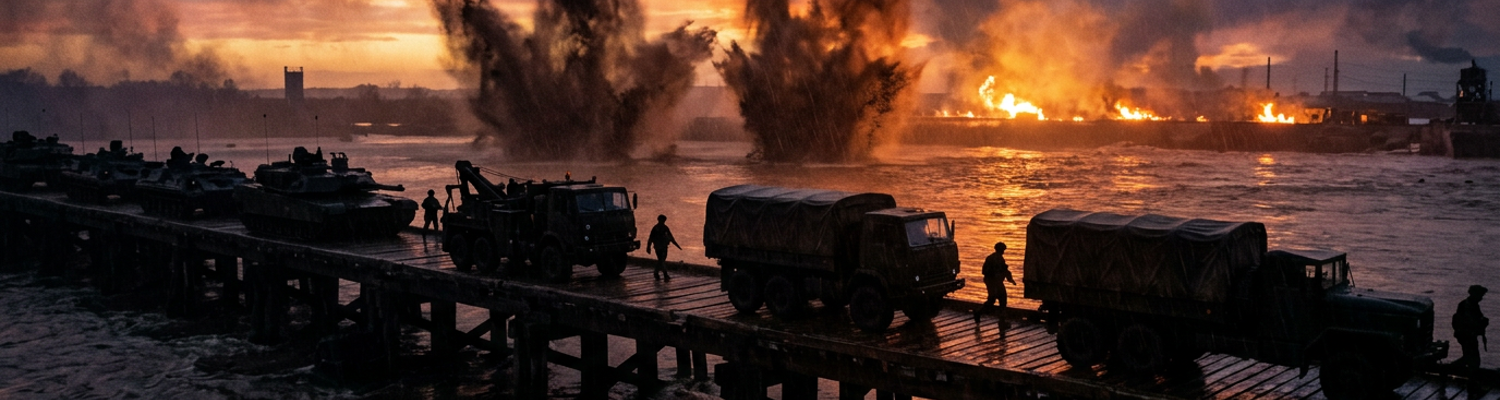
Gravel and heavy sandbags quickly ran out because flooded roads and washed-out causeways severely impeded transport trucks hauling fresh supplies from Da Nang. Five-ton cargo trucks loaded with ammunition bogged down to their axles along Route 4, unable to cross collapsed culverts and washed-out sections of road. Heavy floodwaters poured across low-lying causeways, turning packed dirt roads into impassable mud channels that trapped military transport convoys. Convoys carrying thousands of ninety-five-pound 155mm projectiles and bagged powder charges ground to a complete standstill miles behind the firing lines. Truck drivers used hand winches and cut bamboo poles to free their stuck vehicles, but the rising water swallowed tires and engine compartments faster than the men could dig. Ordnance sergeants watched the downpour soak through canvas truck covers, worried that moisture would ruin the sealed powder canisters before the shells ever reached the guns.
Tractors and tracked vehicles took over cargo transfers when wheeled trucks could push no farther along the submerged delta routes. Forward ammunition handling parties relied on tracked vehicles and manual labor to haul Class V ordnance across impassable delta routes. Tracked cargo carriers and amphibious tractors crawled through flooded rice fields and muddy creeks, carrying heavy wooden shell pallets past stranded trucks. Narrow canal paths and deep water channels eventually blocked the tracked vehicles as well, stopping them short of the battery positions. Ammunition handling parties had to climb into the vehicle beds and unload the ninety-five-pound projectiles by hand. Exhausted cannoneers lifted the heavy high-explosive shells and powder canisters onto their shoulders, carrying them across slippery paddy dikes through waist-deep water.
Mud coated the uniforms and hands of the working parties as they carried the heavy ordnance into the battery revetments. Loaders used kerosene rags to wipe silt and river sand off the metal shell casings before stacking them on wooden dunnage inside the gun pits. Supply sergeants logged each delivered projectile and powder charge in waterlogged ledgers, counting remaining supplies against the heavy ammunition expenditure rates of the ongoing operation. Gun chiefs loaded the clean ninety-five-pound shells into the open howitzer breeches, added dry powder bags from rubberized storage bags, and cranked the elevation wheels back to their registered firing angles. Battery officers checked the sight alignment levels, confirmed target grid coordinates with forward observers across the river, and ordered the gunners to resume firing into the fortified tree lines.
Command Chronology Findings and Material Exhaustion
Cannoneers fired continuous barrages into those fortified tree lines for several more days, cratering hidden machine-gun bunkers and shattering insurgent river redoubts across the delta. High-explosive shells and white phosphorus rounds pulverized fortified village complexes, burying underground tunnel exits under tons of displaced swamp soil. Operation Stone concluded in late February 1967, following the destruction of enemy redoubts and heavy insurgent casualties across the cordoned river loops. Marine infantry sweeps through the smoking ruins confirmed nearly three hundred enemy dead, uncovering caved-in fighting holes and shattered supply caches that the artillery cordon had pinned in place. Gun crews dropped their elevation wheels and locked their howitzers in traveling position when the final cease-fire order reached the revetments on February 28. Supply sergeants sat on empty ammunition boxes in the sudden quiet, opening rain-warped ledger books to balance official field manual supply quotas against the reality of broken iron and empty dunnage.
Officers compiling the battalion command chronology recorded acute material exhaustion and component breakdowns across all firing batteries by late February 1967. Cannoneers had fired thousands of rounds at maximum propellant charges through driving rain and river grit, stripping the internal synthetic packings out of every M114 recoil cylinder. Hydraulic fluid dripped from cracked counter-recoil housings into the mud, leaving weapon cradles without the cushioning pressure needed to stop heavy steel barrels from slamming hard against their rear stops. Severe carbon fouling and heat expansion warped interrupted-screw breechblocks, forcing loaders to pound operating handles with wooden mallets to extract stuck casing bases between salvos. Gun chiefs measured bore rifling with vernier calipers and discovered that steel lands near the muzzles were worn flat, stripping outgoing high-explosive shells of their flight stability and throwing impact points wildly off register. Ordnance sergeants red-lined battery after battery in their maintenance binders, noting that the battalion had exhausted its organic repair kits and could no longer keep the weapons firing safely without major rear-echelon intervention.
Motor transport sections suffered matching structural failures across every battery support area as heavy vehicles gave out under the strain of moving ordnance across drowned roads. Five-ton cargo trucks and tracked prime movers sat mired along Route 4 with flooded crankcases, cracked spring shackles, and burned-out clutches after hauling heavy pallets through waist-deep water. Saturated delta soil had twisted carriage trails and sheared heavy spade pins during high-angle missions, leaving multiple howitzer mountings cracked along their welded seams. Battery mechanics worked by flashlight under rain-slicked canvas tarpaulins, stripping usable parts from immobilized prime movers to keep a handful of ammunition haulers rolling toward the forward gun pits. Drivers hauled the last empty wooden pallets back to collection points while signal operators reeled in miles of water-soaked telephone wire that had rotted and grounded out during the two-week bombardment.
Wreckers hauled the battered howitzers and five-ton trucks back to Da Nang because extensive post-operation depot overhauls were required to restore damaged recoil mechanisms and replenish depleted regimental ammunition reserves. Machinists stripped down the scored hydro-pneumatic cylinders in clean maintenance shops, replacing scorched seals and re-honing cylinder walls that field crews could only patch with diesel fuel and emergency wiper rings. Ordnance teams inspected the eroded rifling inside the howitzer barrels, marking worn tubes for complete factory condemnation while salvage crews cut away twisted metal to salvage usable carriage frames. Ammunition handling details rebuilt the flattened Class V stockpiles at the division supply point, unloading thousands of fresh 155mm high-explosive projectiles, brass fuses, and bagged propellant charges from deep-draft cargo ships anchored in Da Nang harbor. Supply sergeants signed the final transfer receipts on the Da Nang docks, loaded replacement seal kits onto the first repaired cargo trucks, and dispatched the restocked convoys back toward the battery staging areas.