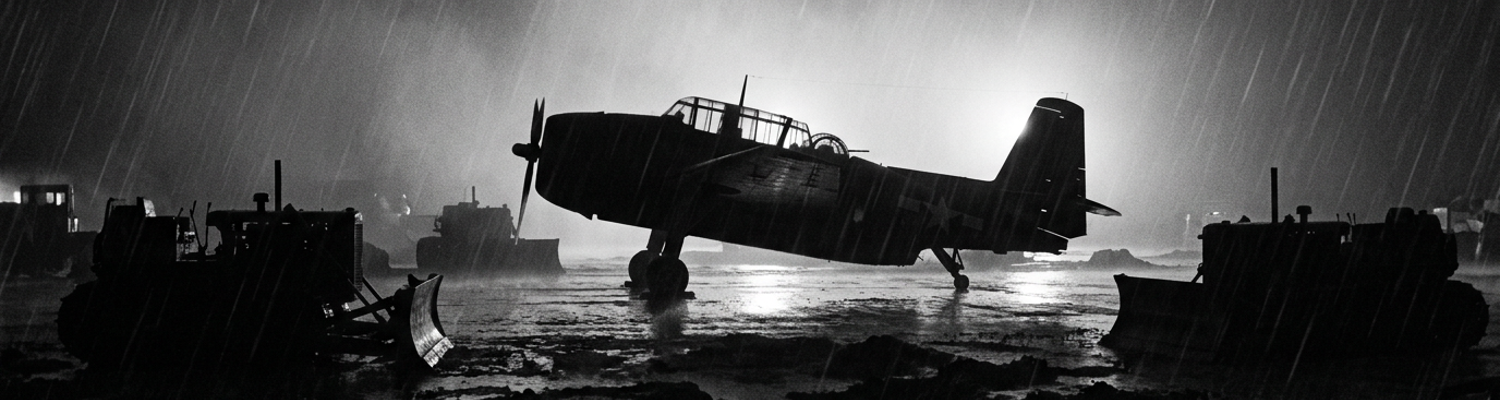

Funafuti Airfield Construction and Strategic Context
When examining the historical record of late 1942, the Imperial Japanese Navy possessed a contiguous defensive perimeter across the Central Pacific. Tens of thousands of combat troops manned heavily fortified coral bastions in the Gilbert and Marshall Islands. Hundreds of land-based Mitsubishi G4M bombers and A6M Zero fighters sat on alert across island airfields like Tarawa, Makin, and Kwajalein. The Japanese Fourth Fleet operated a network of mutually supporting air bases spanning from the Carolines directly down to the Marshalls. Over eighty thousand Imperial troops garrisoned these outposts behind thick concrete pillboxes and submerged coastal defense guns.
The United States Pacific Fleet faced an adversary holding absolute numerical superiority.
Planners required a staging point to penetrate this heavily armed front. The 5th Naval Construction Battalion landed at Funafuti Atoll in the Ellice Islands on October 2, 1942. They initiated Operation Rose under total radio silence. Engineers faced a narrow strip of land covered in dense coconut palms. They brought Caterpillar D8 bulldozers and diesel-powered graders ashore through the surf. Saltwater corrosion immediately began eating through exposed hydraulic lines.
Mechanics stripped metal from wrecked landing craft.
They fashioned replacement brackets for bulldozer blades snapping against deep palm roots. The humid, saline environment caused engine blocks to overheat daily. Dredging operations required engineers to wade chest-deep into the lagoon to position heavy suction hoses. The abrasive coral slurry quickly wore down the steel impellers inside the dredge pumps. Technicians cannibalized parts from sunken barges to rebuild the pump housings every three days. Men worked twelve-hour shifts in ninety-degree heat to pull the crushed coral from the lagoon floor. They packed this wet coral into a 5,000-foot runway base.
Heavy rollers compacted the material.
The tropical sun baked it into a hard surface capable of supporting heavy bomber traffic. A primary rock crusher shattered its main drive shaft in late December 1942. Seabee welders spent forty-eight straight hours fusing scrap steel together to jury-rig a replacement mechanism. This improvised repair allowed the grading of the main flight line to finish by early 1943. Funafuti immediately operated as a forward base for monitoring Japanese naval and air movements across the Gilbert and Marshall Islands. Consolidated B-24 Liberators from the VII Bomber Command and PBY Catalina flying boats required constant maintenance on the newly baked coral strip. Ground crews replaced sand-scoured engine cylinders using hand tools under canvas tarps.
A close review of operational logs indicates these reconnaissance flights gathered exact coordinates of Japanese troop buildups on Betio Island and Jaluit Atoll.
The aircraft carried SCR-270 radar components and heavy aerial cameras. Technicians constantly fought against condensation forming inside the glass lenses of the K-17 reconnaissance cameras. The vibration from grueling fourteen-hour flights routinely sheared the mounting bolts on the camera brackets. Machinists on Funafuti milled new high-tensile steel bolts on a single portable lathe powered by a salvaged Jeep engine. The intelligence gathered revealed the exact placement of Type 89 127mm dual-purpose guns on Tarawa. Engineers rewired failing radio transmitters using salvaged copper wire pulled from the abandoned telegraph station. Mechanics fabricated custom dust filters for the B-24 superchargers out of canvas scraps to prevent the abrasive coral dust from destroying the Pratt and Whitney engines.
Japanese reconnaissance aircraft located the hidden airfield on March 27, 1943.
Enemy bombers launched retaliatory strikes from Tarawa shortly after the discovery. Air raid sirens wired to portable generators provided only minutes of warning before the first high-explosive payloads struck the runway. Ground crews sheltered in shallow slit trenches dug directly into the coral table. The high water table on Funafuti meant the slit trenches flooded with seawater at high tide. Engineers continually pumped the trenches dry using hand-cranked bilge pumps. During the April 22 bombing raid, two G4M bombers dropped anti-personnel fragmentation bombs across the revetments. Mechanics patched 142 separate shrapnel holes on a single B-24 using aluminum cut from ration tins and applied with a hand-riveter. Maintenance units emerged before the smoke cleared to shovel raw coral back into the craters. They packed the loose material down with hand tampers to get the runway operational for returning patrols.
Coral Revetment Excavation by Naval Engineers
Archival evidence shows Landing Ship Tanks of the 2nd Naval Construction Battalion dropped their bow ramps directly onto the submerged outer reef shelf of Funafuti at low tide on May 15, 1943. Operators drove thirty-ton Caterpillar D8 bulldozers and Bucyrus-Erie 15-B power shovels through four feet of turbulent saltwater to reach the beachhead. Saltwater intrusion contaminated the diesel fuel lines of the offloaded machinery. Repair crews worked entirely in the open under constant threat of aerial observation. These men tore down the fuel injection pumps on the D8 tractors using standard-issue wrench sets and canvas buckets filled with aviation gasoline for parts cleaning. Abrasive coral sand coated every exposed gear before the engine casings could be reassembled.
The steel degraded instantly.
Field reports indicated that track idler bearings on the heavy bulldozers seized completely after just forty-eight hours of continuous beach operations. Machinists cannibalized brass fittings from wrecked Higgins boats to cast replacement bearing sleeves in a makeshift foundry powered by an oil-fired forge. Clearing operations proceeded continuously despite the mechanical attrition. Drivers ran the Bucyrus-Erie shovels in twelve-hour shifts to clear the shattered palm stumps left by previous bombings. Drive chains on the power shovels snapped repeatedly under the strain of pulling deeply rooted ironwood and coconut trunks from the dense atoll crust. Welders fused broken chain links back together using oxy-acetylene torches powered by gas cylinders strapped to the back of a modified Willys Jeep.
The 2nd Naval Construction Battalion lost three bulldozers to severe engine lock before the first week ended.
A close review of operational logs indicates the primary objective for the newly arrived engineers involved excavating deep defensive revetments out of the porous atoll soil. Ground crews needed massive U-shaped blast pens to shield the four-engine Consolidated B-24 Liberators from horizontal shrapnel during regular Japanese air raids. Heavy tractor drivers utilized towed rooter plows to break the initial layer of baked coral crust. This underlying geological structure proved unstable. As the Bucyrus-Erie shovels dug past the three-foot mark, the porous nature of the dead coral reef caused the vertical walls to crumble inward under the weight of the heavy machinery operating on the rim. Engineers resorted to drilling blast holes using pneumatic jackhammers powered by towed LeRoi air compressors. Demolition specialists packed half-pound charges of TNT into the boreholes to fracture the deeper coral table.
The rock shattered.
Manual clearing teams followed the blasting units into the resulting craters. Over two hundred men used standard entrenching tools and steel pickaxes to manually clear the broken debris from the fifty-foot-wide revetment floors. The high water table presented an immediate physical barrier to the excavation depth. At a depth of four feet, seawater continuously seeped upward through the porous ground. These newly excavated blast pens rapidly filled with tidal seepage.
Aircraft mechanics waded through knee-deep sludge to change heavy bomber tires.
Trench maintenance became a continuous twenty-four-hour physical requirement to prevent the bombers from sinking into the mud. Commanding officers directed the excavation of an extensive network of airfield drainage trenches running alongside the main flight line. Measurements for these secondary trenches reached six feet deep and three feet wide. Gravity-fed channels were designed to pull the rising tidal groundwater away from the bomber revetments and route it directly back into the ocean. The atoll structure crumbled. Unstable trench walls required constant reinforcement to prevent total collapse. Work details cut thousands of sandbags from discarded canvas tents and packed them with wet coral slurry to build retaining walls along the trench perimeters. Saline water rapidly corroded the metal impellers of the gasoline-powered centrifugal pumps assigned to drain the system. Maintenance personnel stationed along the drainage network manually disassembled the pump housings every six hours to scrape away the hardened calcium deposits. When the primary intake valves failed completely, work details organized bucket lines to physically throw the water over the revetment walls.
A sudden tropical squall on June 8 dumped four inches of rain over the airfield in under an hour.
This sudden deluge collapsed the northern drainage trench entirely. Thick mud and shattered coral rock washed directly into the primary B-24 maintenance bays. Recovery teams chained two Caterpillar D8s together to drag a submerged Adams motor grader out of the resulting sinkhole. Engine specialists replaced the flooded carburetor of the grader in total darkness using a single shielded flashlight.
Mark 13 Torpedo Storage and Saltwater Mitigation
A close review of operational logs from late June 1943 indicates that ordnance technicians on Funafuti struggled to maintain an active stockpile of Mark 13 aerial torpedoes. These 2,216-pound weapons contained sensitive internal mechanics designed strictly for dry storage. High water tables across the atoll pushed brackish saltwater directly up through the porous coral floors of the newly excavated ammunition magazines. This tidal seepage severely compromised the torpedoes. Saltwater pooled around the lower racks. Corrosive moisture rapidly oxidized delicate brass gyroscopes and fouled hydrostatic valves located inside the Mk 4 tail assemblies. Technicians reported that just three days of exposure to the humid environment inside the flooded revetments caused the twin-blade propellers to seize entirely. Steel casings protecting the 600-pound Torpex warheads developed deep rust pitting.
Armament crews discarded twelve complete torpedo units during the first week of July due to severe internal corrosion.
Brackish tidal water also threatened primary reserves of 100-octane aviation gasoline. Supply ships had offloaded thousands of gallons of fuel into flexible rubberized canvas bladders placed within deep earthen berms along the eastern edge of the airstrip. Daily intrusions of lagoon water submerged the lower halves of these 3,000-gallon bladders. Archival evidence shows constant soaking in warm saltwater caused the canvas outer layers to rot. Synthetic rubber seams delaminated. Microscopic cracks formed along the base of the bladders. Corrosive saline water seeped into the fuel supply. Mechanics servicing the patrol squadrons discovered heavy water contamination in the fuel lines of their aircraft. Engine cylinders misfired during pre-flight checks. Ground crews manually drained and filtered hundreds of gallons of gasoline through chamois cloths to separate the intruding water before loading it into the wing tanks.
Commanding officers ordered an immediate halt to all subsurface ordnance storage on July 12.
Engineers from the 2nd Naval Construction Battalion initiated an emergency project to elevate the torpedo racks and fuel bladders above the high-tide line. Work details dragged hundreds of empty 55-gallon steel oil drums from the beachhead dump. Welders fused these drums together in grids of twenty to form rigid buoyant foundations inside the flooded storage pens. Heavy equipment operators drove Bucyrus-Erie power shovels to the edge of the revetments to dump dry crushed coral directly over the steel drum grids. This created an elevated platform sitting exactly three feet above the highest recorded spring tide mark. To prevent upward moisture seepage through the new coral base, Seabees melted down blocks of solid asphalt in open iron kettles over wood fires. Men carrying galvanized buckets poured boiling liquid asphalt over the crushed coral. They spread the thick tar using wooden rakes to form a waterproof seal across the floor of the magazine.
The hardened asphalt layer measured two inches thick.
Protecting the elevated revetments from horizontal flooding required sealing the perimeter walls against daily tidal surges. Construction crews cut discarded steel Marsden Matting into ten-foot sections. They drove them vertically into the soft coral sand around the storage platforms. Work details packed the space between the steel plating and the earthen walls with a mixture of wet sand and powdered Portland cement. This created a dense semi-permeable barrier. To manage water that still breached the perimeter, engineers installed a series of heavy-duty Gorman-Rupp centrifugal pumps at the lowest point of each revetment. Mechanics connected these pumps to salvaged Ford V8 engines. Intake hoses featured custom-built wire mesh filters designed to block abrasive coral fragments from destroying the pump impellers. Technicians ran the V8 engines at half-throttle for twenty minutes every four hours to clear the accumulated seepage. A failure of the primary drive belt on Pump Station Four on August 3 resulted in two feet of water entering the U-shaped blast pen before a replacement belt could be fitted.
TBF One Avenger Patrols Across Central Pacific Sea Lanes
When examining the historical record of the Central Pacific theater in mid-1943, the Imperial Japanese Navy maintained a numerical superiority that dominated the operational calculus. Vice Admiral Masami Kobayashi controlled the Fourth Fleet from Truk Lagoon. He directed over sixty armed destroyers, dozens of fleet submarines, and hundreds of motorized supply barges across the Gilbert and Marshall Islands. United States naval planners looking at the nautical charts saw a defensive grid spanning a million square miles of ocean. Japanese forces could deploy three hundred operational Mitsubishi A6M Zero fighters within a two-hour flight radius of any contested atoll.
Every allied flight into this sector faced immediate radar detection and interception.
Commanding officers initiated the deployment of Navy TBF-1 Avenger bombers for extended maritime interdiction patrols to disrupt this defended logistics network. Torpedo Squadron 11 arrived at Funafuti on August 4, 1943. They brought eighteen modified Grumman aircraft. These single-engine bombers carried a crew of three and a 2,000-pound payload capacity intended for low-level strikes against Japanese shipping barges. The aggressive operational tempo immediately degraded the Wright R-2600-8 Twin Cyclone radial engines. Flight crews pushed the aircraft on nine-hour interdiction routes flying just fifty feet above the ocean surface to evade Japanese Type 88 early warning radar. Continuous exposure to low-altitude salt spray caused severe galvanic corrosion inside the engine cowlings. Archival evidence shows that saltwater violently reacted with the magnesium components of the Bendix-Scintilla magnetos. Ignition harnesses short-circuited mid-flight. Pilots experienced sudden engine misfires while operating hundreds of miles from the Funafuti airstrip. Ground crews working on the crushed-coral flight line stripped the magnetos daily. Mechanics soaked the fouled ignition components in buckets of aviation gasoline before baking them dry in makeshift ovens constructed from discarded ammunition crates.
The heat warped the brass distributor housings.
Maintenance reports from mid-August detail failures within the hydraulic systems controlling the Avenger internal bomb bay doors. The abrasive coral dust of the Funafuti runway mixed with high-humidity atmospheric condensation to form a thick compound. This grit coated the exposed hydraulic actuator rams. Retracting the bomb bay doors dragged this material directly through the rubber O-ring seals. The synthetic rings tore apart. High-pressure hydraulic fluid bled out into the aircraft belly. Aviators attempting to deploy Mark 13 torpedoes during interdiction runs found the bay doors jammed shut. Machinists bypassed the ruined rubber seals by fabricating crude gaskets out of melted shoe rubber and canvas webbing.
A close review of operational logs indicates these modified Avengers also executed long-range reconnaissance missions targeted at Japanese shipping routes between Tarawa and Kwajalein. Intelligence officers needed exact coordinates for the enemy cargo vessels resupplying the fortified garrisons along the navigational corridor. Navigators flying in the cramped belly compartments of the TBF-1s relied on the ASB surface-search radar to detect enemy convoys through thick tropical squalls. The ASB radar units utilized primitive vacuum tubes that proved susceptible to the relentless vibration of the R-2600 engines. Yagi antennas mounted under the wings snapped off during heavy turbulence. Radar operators reported that the cathode-ray tubes frequently overheated and shattered inside the fuselage.
Glass shards fell directly onto the navigation tables.
Radio technicians cannibalized parts from wrecked SBD Dauntless dive bombers to keep the Avenger radar sets functioning. They spliced broken coaxial cables using copper wire salvaged from the Funafuti telegraph station and insulated the repairs with medical tape. On August 22, an Avenger piloted by Lieutenant Commander Robert Isely launched on a fourteen-hour reconnaissance sweep toward Kwajalein. At 1400 hours, the improvised radar system detected a blip sixty miles south of the Jaluit Atoll. The crew visually identified a Japanese Katori-class light cruiser escorting three Maru cargo ships. The Avenger radio operator immediately transmitted the convoy heading back to Funafuti using a repaired AN/ARC-5 transmitter. Japanese anti-aircraft fire from the cruiser severed the port aileron control cable of the retreating bomber.
Isely flew the aircraft back to base using only rudder inputs and engine torque.
Japanese Night Bombing Raids on Ellice Islands
When examining the historical record of mid-1943, the Imperial Japanese Navy maintained an offensive strike capability across the Central Pacific. Vice Admiral Kakuji Kakuta directed the 22nd Air Flotilla from fortified staging grounds on Nauru, Tarawa, and Mille Atoll. Defenders on Funafuti faced an adversary capable of launching over two hundred twin-engine Mitsubishi G4M bombers against a single exposed coral runway. United States radar operators stared at primitive SCR-270 oscilloscope screens in total darkness. They operated under the knowledge that an enemy formation could approach from any compass heading across a million square miles of open ocean. The Japanese military possessed tactical control of the night sky.
Mitsubishi G4M bomber crews initiated their ingress protocols at 2300 hours.
A close review of operational logs indicates these night raids required exact mechanical synchronization to traverse the seven hundred miles of black ocean separating Tarawa from the Ellice Islands. Japanese mechanics fitted the twin Mitsubishi Kasei 14-cylinder radial engines with custom exhaust dampeners. This physical modification concealed the blue combustion flames from Allied night fighters. Ground crews on Tarawa hand-pumped exactly 1,300 gallons of aviation fuel into the unprotected wing tanks of each bomber to ensure maximum range. Pilots pushed the heavy aircraft to an altitude of 15,000 feet to maximize fuel efficiency and evade low-level tropical storm cells. Navigators sat in the unpressurized glass noses of the aircraft using octants to take celestial fixes on the Southern Cross. Cabin temperatures at this altitude dropped below freezing. Flight crews relied entirely on dead reckoning, airspeed indicators, and stopwatch timing to maintain their attack vectors. The G4M bombers carried no internal heating systems. Frost formed directly on the internal aluminum bulkheads as the formations flew in tight V-shapes without radio communication.
The first warning on Funafuti came when the SCR-270 radar detected incoming blips sixty miles north of the atoll.
Archival evidence shows the bombardiers relied on the natural moonlight reflecting off the Funafuti lagoon to align their Type 99 bombsights. The lead aircraft released strings of Type 98 250-kilogram high-explosive bombs set with instantaneous point-detonating fuzes. Gravity accelerated the cylindrical steel casings to terminal velocity before they struck the crushed-coral flight line. The resulting detonations instantly vaporized the porous surface material. Blast waves displaced hundreds of tons of compacted coral rock into the air. These explosions created craters measuring twenty feet wide and eight feet deep directly across the primary runway. Shrapnel from the disintegrating bomb casings tore horizontally across the airfield at supersonic speeds. Jagged steel fragments shredded the sandbag retaining walls of the newly excavated bomber revetments. The horizontal blast pressure collapsed the unstable coral trenches inward. Tons of wet sludge buried the heavy drainage pumps. Mechanics sheltering in the adjacent slit trenches suffered concussive injuries as the shockwaves reverberated through the shallow water table.
Fragmentation patterns completely bypassed the earthen berms.
High-explosive ordnance directly impacted the logistics infrastructure sustaining the 5th Naval Construction Battalion. A 60-kilogram general-purpose bomb struck the primary water distillation plant located fifty yards east of the flight line. The blast shattered the cast-iron boiling chambers and severed the heavy rubber intake hoses pumping saltwater from the lagoon. Fresh water production ceased immediately. Shrapnel sliced through the elevated 55-gallon steel oil drums supporting the emergency aviation fuel reserves. Hundreds of gallons of 100-octane gasoline poured into the flooded drainage trenches. Sparks from the secondary explosions ignited the pooling fuel. Maintenance personnel abandoned their slit trenches to suppress the resulting fires using hand-cranked foam extinguishers. The chemical foam proved entirely ineffective against the high-octane aviation fuel burning on top of the tidal water. Heavy equipment operators drove Caterpillar D8 bulldozers directly toward the flames to push raw coral sand over the burning fuel bladders.
The heat warped the steel track links on the bulldozers.
Ground crews worked through the night to locate unexploded ordnance buried in the runway surface. Ordnance disposal teams dug through the soft coral mud using wooden shovels to prevent accidental static discharge. They manually unscrewed the brass nose fuzes from three dud bombs by flashlight. The firing pins had jammed against the striker plates upon impact with the soft mud. Engineers hauled the disarmed steel casings away using a salvaged Jeep.
Blackout Ordnance Repairs Using Salvaged Landing Mats
A close review of operational logs from September 1943 indicates that Aviation Ordnancemen assigned to Torpedo Squadron 11 executed all mechanical repairs in complete darkness. The threat of secondary Japanese airstrikes dictated absolute blackout conditions across the Funafuti flight line. Enemy G4M bombers frequently loitered at 10,000 feet after their initial bombing runs. They waited to drop fragmentation ordnance on any ground illumination. Base commanders authorized military police patrols to shoot out any visible light source. Mechanics servicing damaged TBF-1 Avengers and B-24 Liberators dragged heavy canvas tarpaulins over the aircraft wings to form makeshift light-discipline tents. Ground crews relied entirely on tactile memory to reassemble the complex Mk 4 tail assemblies of Mark 13 torpedoes. Technicians replaced shattered hydrostatic valves and bent brass gyroscopes using only their bare hands to thread the fine-pitch retaining screws. Aviation machinist mates patched severed hydraulic lines inside the cramped Avenger bomb bays while holding standard-issue wrenches. They coated the replacement aluminum tubing with heavy aviation grease to prevent accidental sparks if a tool slipped against the airframe. Supervisors permitted the use of a single flashlight fitted with a dark red cellophane lens for exactly ten seconds to verify torque settings on the propeller locknuts. The blackout protocols extended to the refueling operations. Fuel handlers manually connected the heavy rubber hoses to the wing tanks by running their fingers along the aluminum seams.
Sweat from the mechanics dripped directly onto the exposed torpedo warheads.
Archival evidence shows the concussive force of the nighttime bombing raids liquefied the porous coral structure surrounding the primary aircraft revetments. High-explosive payloads caused the local water table to surge upward through the shattered atoll crust. Drainage trenches excavated by the 2nd Naval Construction Battalion dissolved into deep channels of saline mud. This slurry rapidly flowed back toward the flight line. It threatened to engulf the newly repaired ordnance staging areas. Heavy bomber tires began sinking past their axles into the compromised ground, trapping the aircraft in place. Ground crews needed an immediate physical barrier to hold back the collapsing trench walls before the returning patrol squadrons attempted to park their planes. Standard canvas sandbags tore open under the heavy hydrostatic pressure of the shifting coral debris. The 5th Naval Construction Battalion lacked the imported concrete required to cast permanent retaining walls.
The mud swallowed standard entrenching tools.
Engineers initiated a stabilization effort utilizing indigenous timber and destroyed runway materials. Work details hauled two-man crosscut saws to the eastern edge of the atoll to harvest mature coconut palms. Tractor drivers chained the heavy trunks to Caterpillar D8 bulldozers and dragged them back to the flooded maintenance bays. Carpenters cut the fibrous palm wood into ten-foot sections to construct heavy timber cribbing. They stacked these logs horizontally along the collapsing trench walls, using heavy iron spikes to bind the corners together. To prevent the semi-liquid coral mud from pushing through the gaps in the logs, Seabees salvaged hundreds of pieces of ruined Marsden Matting from the bomb craters on the primary runway. High-explosive blasts had bent and warped these pierced-steel planks beyond aviation use. Work gangs dragged the heavy steel sheets to the revetments. Two-man teams lifted twelve-pound sledgehammers to drive the steel matting vertically down into the trench floors directly behind the coconut-log cribbing. The interlocking hooks of the Marsden Matting formed a rigid steel spine that distributed the weight of the collapsing earth against the heavy timber frames. Mechanics packed raw coral sand into the voids between the steel plates and the logs to create a solid, water-resistant barrier.
The completed retaining walls extended four feet below the surface water line.
Emergency Drainage Trench Maintenance Under Fire
A close review of operational logs indicates the 2nd Naval Construction Battalion faced complete collapse of the Funafuti airfield drainage network during the second week of October 1943. A low-pressure system stalled over the Ellice Islands. It dropped six inches of rain in forty-eight hours. This sustained tropical downpour occurred simultaneously with a series of coordinated strikes by Mitsubishi G4M bombers flying out of Tarawa. High-explosive 250-kilogram payloads detonated along the eastern perimeter of the crushed-coral runway. The blast waves instantly liquefied the saturated atoll surface. Shockwaves traveling through the high water table shattered the heavy timber cribbing holding back the primary drainage trenches. Hundreds of tons of wet coral slurry and shattered palm wood collapsed directly into the six-foot-deep gravity channels. The sudden blockage caused brackish rainwater to back up rapidly into the B-24 Liberator revetments. Aviation mechanics dropped their wrenches and grabbed standard entrenching tools to fight the rising water. Men stood waist-deep in the saline mud as shrapnel from secondary explosions tore through the palm canopy above them. They shoveled the heavy sludge over the damaged retaining walls by hand.
The dense coral paste snapped the wooden handles of their shovels.
Archival evidence shows the survival of the strike aircraft patrols depended entirely on field-expedient mechanical interventions to keep the flight line from sinking. When the primary Gorman-Rupp centrifugal pumps choked on the abrasive coral slurry, Navy engineers initiated immediate teardowns right on the flooded runway edge. Mechanics discovered the thick mud had completely stripped the brass impellers inside the pump housings. Without replacement parts, technicians dragged a portable oxy-acetylene welding cart through the flooded trenches. Heavy equipment operators cut steel plates from wrecked Japanese supply barges that had washed onto the reef. Machinists used hand files to grind these scrap metal pieces into crude, heavy-duty impeller blades. Welders fused the new blades directly onto the pump drive shafts using a portable generator powered by a salvaged Willys Jeep engine. To prevent larger chunks of shattered coral from entering the newly modified intake valves, work details cut up heavy wire mesh screens originally intended for radar enclosures. Seabees wrapped this mesh around the intake hoses and bound it tightly with copper wire stripped from abandoned telegraph lines.
The modified pumps processed two hundred gallons of slurry per minute.
Keeping the TBF-1 Avengers flying required continuous maintenance of this improvised drainage network throughout the active bombardments. The 2nd Naval Construction Battalion deployed dedicated troubleshooting teams to patrol the trench lines during every air raid siren. These squads drove Caterpillar D8 bulldozers directly into the impact zones before the smoke cleared. Operators lowered their heavy steel blades to push raw, dry coral sand into the breached sections of the trench walls. When shrapnel severed the rubber discharge hoses of the drainage pumps, engineers did not wait for the bombing run to end. Two-man repair teams sprinted across the exposed flight line carrying rolls of canvas and buckets of heated asphalt. They wrapped the punctured rubber hoses in canvas strips and sealed the patches by pouring boiling tar over the fabric. This allowed the pumps to maintain vacuum pressure while high-explosive ordnance continued to detonate fifty yards away. The rapid extraction of the floodwater prevented the heavy bombers from sinking past their axles into the softened runway base.
Ground crews loaded Mark 13 torpedoes into the dry bomb bays.
When examining the historical record of the October 14 sortie generation, ordnance personnel faced severe timeline constraints caused by the flooded taxiways. The VII Bomber Command required fourteen B-24 Liberators airborne by 0430 hours to intercept a Japanese shipping convoy near Kwajalein. Tractor drivers chained two D8 bulldozers to a heavily loaded fuel truck that had bogged down in the mud near Trench Four. The operators apply maximum throttle to drag the ten-ton vehicle through the sludge to reach the stranded bombers. Mechanics standing in knee-deep water manually pumped 100-octane aviation gasoline into the wing tanks using hand-cranked rotary pumps. They bypassed the submerged electrical fuel transfer stations entirely. Maintenance officers directed squads of Seabees to lay down overlapping sheets of warped Marsden Matting over the deepest mud pockets directly in front of the aircraft landing gear. The heavy bombers rolled over these improvised steel bridges to reach the solid crushed-coral runway surface.
Engineers pulled the steel planks away as the aircraft accelerated.
Maritime Interdiction Along Tarawa and Kwajalein Lines
A close review of operational logs from late October 1943 indicates that United States Army Air Forces and Navy bomber squadrons based on Funafuti executed a systematic blockade of Japanese shipping channels. Intelligence officers mapped a high-traffic maritime corridor connecting the Fourth Fleet logistics hub at Kwajalein Atoll directly to the defensive garrison on Tarawa. Japanese cargo manifests detailed daily movements of 3,000-ton Maru transport ships and shallow-draft Daihatsu landing barges carrying steel-reinforced concrete, Type 89 artillery shells, and aviation fuel. Seventh Air Force Consolidated B-24 Liberators and Navy TBF-1 Avengers launched continuous interdiction patrols to sever this specific supply line ahead of the planned Marine Corps amphibious landings. Navigators charted 700-mile attack vectors through heavy equatorial storm fronts using primitive dead reckoning and ASB surface-search radar. The constant low-level flying required to evade Japanese early warning systems subjected the aircraft to extreme atmospheric pressure changes and heavy salt spray. Mechanics on the Funafuti flight line discovered that the corrosive sea air violently degraded the electrical solenoids inside the B-24 bomb release mechanisms.
Technicians bypassed the ruined electrical switches by running braided steel control cables directly from the cockpit to the bomb bay racks.
Archival evidence shows these improvised mechanical repairs directly enabled the destruction of enemy logistics convoys transiting the Marshall Islands. On November 4, a flight of six B-24s intercepted a Japanese resupply flotilla twenty miles north of the Betio Island reef. The manual cable releases functioned perfectly, dropping strings of 500-pound general-purpose bombs fitted with delayed-action fuzes across the decks of two transport vessels. Detonations tore through the unarmored hulls, instantly igniting thousands of gallons of drummed aviation fuel intended for the Tarawa fighter strip. Subsequent strikes by Funafuti-based Avengers utilizing Mark 13 aerial torpedoes shattered a fleet of motorized Daihatsu barges carrying armed Imperial Japanese Naval Landing Forces. The disruption of these specific shipments created severe material shortages for the Japanese engineers attempting to finish the coastal pillbox network on Betio.
Enemy concrete bunkers sat exposed due to a lack of imported Portland cement.
When examining the historical record, the sustained sortie generation required to isolate Tarawa and Kwajalein depended entirely on the improvised geological stabilization of the Funafuti airfield. The extreme atoll environment presented a continuous threat of runway liquefaction that would have grounded the entire bomber fleet. Heavy precipitation and daily tidal surges constantly undermined the crushed-coral flight line. The long-term tactical value of the 2nd Naval Construction Battalion emerged from their relentless manual maintenance of the airfield drainage network. Seabees prevented the thirty-ton B-24 Liberators from sinking into the porous ground by continuously reinforcing the perimeter trenches with salvaged Marsden Matting and coconut-log cribbing. This physical barrier system held back the semi-liquid coral mud during the torrential November monsoons.
Tractor operators drove Caterpillar D8 bulldozers through three feet of standing water to drag heavy aircraft out of the flooded maintenance revetments.
Maintaining an operational flight deck allowed ordnance crews to load over four hundred tons of high explosives into the bomber fleet during the two weeks preceding the Tarawa invasion. The continuous operation of the modified Gorman-Rupp centrifugal pumps kept the primary taxiways just dry enough for the heavily laden aircraft to achieve takeoff velocity. Engineers manually cleared shattered coral fragments from the intake valves every twenty minutes to prevent the pump impellers from seizing. This uninterrupted drainage capability directly translated into uninterrupted maritime strikes against the Japanese resupply lines. On the morning of November 18, pump failures on the eastern flight line threatened to ground a scheduled bombing mission targeting the Kwajalein submarine pens. Machinists instantly fabricated replacement drive belts out of layered canvas and rubber cement.
Mechanics bolted the improvised belts onto the salvaged Ford V8 pump engines using standard brass pipe fittings.