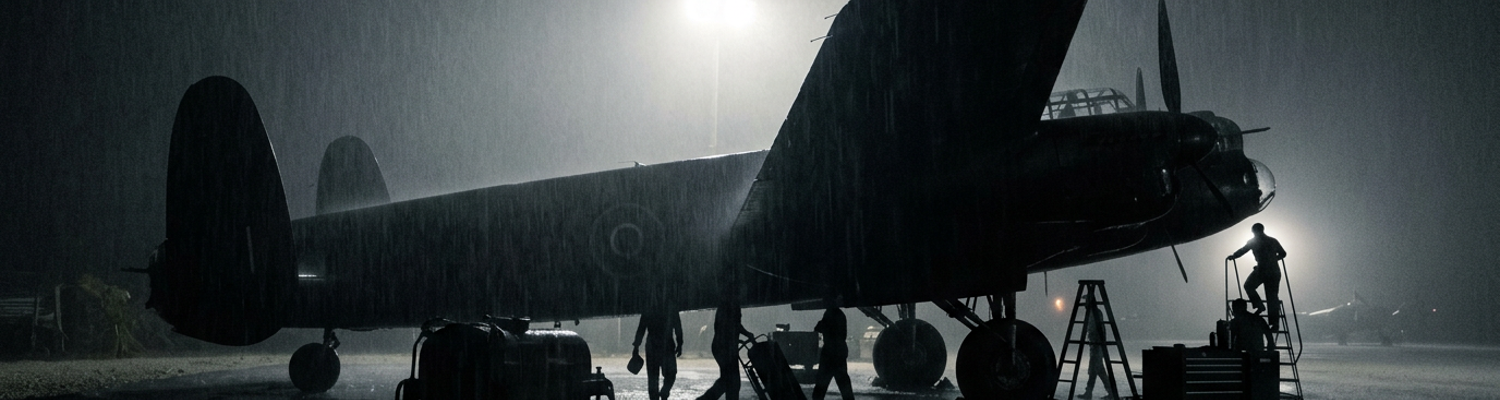

Deployment of Marine Bombing Squadron Four Thirteen
The humid air over the Solomon Sea held a profound silence just moments before the first engine ignitions shattered the pre-dawn stillness. Men sat tightly strapped into unarmored aluminum seats. They felt the heavy vibration of a kinetic engagement that would soon follow their departure from the crushed coral airstrip. When examining the historical record, it becomes clear that this specific staging ground was barely suitable for heavy aircraft operations. In early January 1944, Marine Bombing Squadron 413 established its primary operational base on Stirling Island. This small landmass sat in the Treasury Islands archipelago at coordinates 7°21′S 155°34′E. Naval construction battalions had recently carved a single runway out of the dense jungle vegetation. The flight manuals printed at Marine Corps Base Quantico assumed clean tarmac and predictable crosswinds for takeoff procedures. Operations on Stirling Island required pilots to force their heavily loaded aircraft down a blinding white strip of uneven coral while fighting sudden tropical squalls.
The manuals offered no guidance for coral dust stripping the protective paint from propeller blades.
Archival evidence shows that the deployment of Marine Bombing Squadron 413 was a calculated command decision intended to choke off Japanese supply lines running toward Bougainville and Rabaul. Lieutenant Colonel Paul J. Fontana commanded the unit. The 8th Naval Construction Battalion completed the primary runway in late December 1943. This allowed VMB-413 flight echelons to arrive by January and February 1944. Ground crews immediately found themselves fighting the local climate. Standard operating procedures dictated regular intervals for engine overhauls and airframe inspections based on stateside flight hours. The abrasive coral dust and relentless humidity of the Treasury Islands accelerated wear on every moving part. Mechanics were forced to cannibalize grounded aircraft just to keep a fraction of the squadron flight-worthy.
The parts supply chain stretching from California to the South Pacific was chronically delayed.
To execute their assigned maritime patrol missions, the unit operated twin-engine North American Aviation PBJ-1D Mitchell bombers. This aircraft was the Marine Corps variant of the Army Air Forces B-25. It was heavily modified for over-water night operations. Each PBJ-1D was powered by two Wright R-2600-13 Twin Cyclone fourteen-cylinder radial engines. These powerplants were capable of producing 1,700 horsepower apiece. A close review of operational logs indicates that the most highly significant modification was the installation of the AN/APS-3 surface search radar. Technicians mounted this radar system in a retractable radome located in the ventral turret position. This physical modification replaced the lower defensive guns entirely. Doctrine taught that radar operators would identify targets from medium altitudes before initiating a coordinated bombing run. The crews of VMB-413 quickly discovered that Japanese barge traffic hugged the coastlines. The enemy vessels hid among the radar returns of the islands themselves.
Finding these targets required dropping to altitudes of three hundred feet in complete darkness.
Flying maritime patrol missions at this altitude pushed the PBJ-1D airframes past their engineered stress limits. Pilots navigated by instruments and the faint green glow of the radar scope. They hunted for motorized Daihatsu-class landing craft heavily laden with troops and supplies. The Wright engines consumed large amounts of 100-octane aviation fuel during these low-level runs over the Solomon Sea. Mechanics documented frequent failures in the ignition harnesses. The dense salt spray and tropical moisture shorted out the unsealed magnetos. Engine cowling flaps would often jam open due to a buildup of pulverized coral in the hydraulic actuators. Ground crews spent their days replacing the rubber seals on the main landing gear oleo struts. These components deteriorated rapidly under the weight of aircraft carrying maximum fuel loads and full bomb bays onto the unyielding Stirling Island runway.
Armament configurations required constant field modifications.
The PBJ-1D arrived with a standard loadout of .50 caliber Browning M2 machine guns. This included a fixed nose package designed for forward strafing. Training regimens at Marine Corps Air Station Cherry Point instructed pilots to engage at a specific dive angle to maximize armor penetration. The low-level night patrols out of Stirling Island rendered this geometry useless. Pilots had to approach targets completely flat. They fired blindly into the dark based on verbal corrections from the radar operator seated behind them. The concussive force of firing multiple heavy machine guns simultaneously rattled the airframe. This vibration frequently knocked the sensitive vacuum tubes of the AN/APS-3 radar out of alignment. Technicians recorded dozens of instances where the radar screens went completely blank at the exact moment of trigger pull.
Integration of AN APS Three Airborne Radars
A close review of operational logs indicates that the Marine Corps mandated a highly specific equipment modification for the PBJ-1D airframes to execute low-visibility maritime interdiction. Technicians fitted the bombers with radome-enclosed AN/APS-3 search radar sets. These units were specifically engineered for nocturnal sweeps across vast stretches of open ocean. This X-band system operated on a three-centimeter wavelength. It utilized a cavity magnetron to generate high-frequency radio pulses capable of detecting surface vessels at a theoretical range of forty miles. Stateside training manuals issued at Cherry Point instructed radar operators to conduct these sweeps from an altitude of five thousand feet. The crews were supposed to maintain a steady cruising speed of one hundred and sixty knots. The physical installation of the radar hardware required ground crews to remove the standard ventral ball turret. Mechanics then riveted a fiberglass radome directly onto the lower fuselage framing. They routed thick coaxial cables through the bomb bay. These cables connected the belly scanner to the primary A-scope display mounted in the navigator compartment just behind the cockpit.
The fragile magnetron tubes frequently shattered during violent runway touchdowns.
Archival evidence shows that the theoretical capabilities of the AN/APS-3 degraded severely upon exposure to the South Pacific climate. The radome enclosure lacked adequate weather sealing. Saltwater spray and condensation pooled inside the fiberglass housing during the heavy tropical squalls common over the Solomon Sea. This moisture frequently short-circuited the rotary joint that allowed the radar antenna to scan a full three hundred and sixty degrees. Radar operators sitting in the pitch-black fuselage struggled to interpret the cathode-ray tube displays. The heavy sea state generated massive amounts of background clutter. To distinguish a solid target from the crest of a large wave, pilots had to push the control yoke forward. They dropped the heavy bomber down to an altitude of three hundred feet.
The altimeter dials offered no margin for error.
When examining the historical record, the primary objective of these nocturnal sweeps becomes highly apparent. Crews targeted Japanese submarine traffic and armed supply barges operating throughout the Solomon Sea. Imperial Japanese Navy commanders had largely abandoned the use of heavy destroyers for resupply missions following severe losses in late 1943. They shifted to a decentralized logistical network reliant on shallow-draft vessels. Nightly barge traffic moved along the coastlines of Bougainville, Choiseul, and New Britain. The enemy attempted to reinforce isolated garrisons before sunrise. The radar returns from these wooden and steel Daihatsu-class landing craft blended seamlessly into the radar echoes generated by the dense jungle canopies of the adjacent shorelines. Radar operators had to manually adjust the receiver gain on the AN/APS-3 every few seconds. They strained to separate the faint blip of a forty-foot barge from the solid green mass of a coral reef.
Pilots flew completely blind beyond the plexiglass windscreen.
The doctrine disconnect became highly pronounced when engaging Japanese submarines. Ro-class coastal submarines frequently surfaced in the middle of the New Georgia Sound under the cover of darkness. They did this to recharge their electric batteries and ventilate their hulls. Training syllabi dictated that PBJ-1D crews should initiate a coordinated bombing run from medium altitude upon detecting a surfaced submarine on the radar scope. The localized weather patterns and low cloud ceilings forced pilots to initiate their attack runs at sea level. They employed skip-bombing techniques to bounce standard general-purpose munitions directly into the hulls of enemy vessels. Armed supply barges presented an entirely different kinetic threat. Japanese infantry mounted dual-purpose Type 98 twenty-millimeter anti-aircraft cannons to the decks of their Daihatsu barges. PBJ-1D pilots executing low-level strafing runs flew directly into concentrated tracer fire. This return fire easily penetrated the unarmored nose compartment of the bomber. Armorers at Stirling Island responded by setting the delay fuses on their AN-M64 five-hundred-pound bombs to four or five seconds.
Breakdown of Standard High Altitude Calibration Protocols
Archival evidence shows that Naval Air Training Manuals issued by the radar school at Marine Corps Air Station Cherry Point mandated strict high-altitude radar calibration sequences prior to engagement. Before a PBJ-1D crew could authorize weapons release, the radar operator was required to ascend to an altitude of eight thousand feet to initialize the AN/APS-3 system. The documentation specified a twenty-minute straight-and-level flight path in clear air. This procedure established a baseline return on the A-scope display. Technicians had to manually tune the localizer oscillator. They matched the frequency of the returning three-centimeter radio waves against a known geographical reference point. Instructors taught operators to use the distinct volcanic cone of Kolombangara, located at coordinates 7°58′S 157°04′E, as the primary calibration target. The operator would adjust the receiver gain knob until the landmass appeared as a crisp, defined spike on the cathode-ray tube. This confirmed the cavity magnetron was functioning within acceptable parameters. This protocol assumed the bomber would remain above the weather layer. It assumed the aircraft would be free from the heavy turbulence that could knock the fragile vacuum tubes out of alignment.
The actual flight paths out of Stirling Island offered no clear air.
A close review of operational logs indicates that Commander Aircraft, Solomons issued direct orders requiring VMB-413 to conduct nocturnal sweeps at an altitude of three hundred feet. This was the only way to intercept shallow-draft barge traffic. Dropping the heavy bombers down to this deck level introduced severe environmental interference that the Cherry Point manuals had never accounted for. At three hundred feet, the AN/APS-3 radar antenna scanned directly into the surface of the Solomon Sea. It pointed right at the turbulent waters of the New Georgia Sound. The high-frequency radio pulses bounced off the crests of rolling ocean swells. This generated massive amounts of background noise known as sea return. This constant interference saturated the primary A-scope display with a solid block of bright green light. It masked any actual targets completely. The mandated low-altitude night search profiles completely invalidated prescribed high-altitude manual doctrine. The twenty-minute calibration sequence became physically impossible to execute. If an operator attempted to tune the localizer oscillator while flying just above the wave tops in pitch blackness, the receiver gain would lock onto the nearest water displacement instead of a solid landmass. Operators twisting the calibration dials found that the manual mathematical formulas for target discrimination failed instantly upon contact with the heavy South Pacific sea state.
The cathode-ray tubes would instantly overload and blow their internal glass fuses.
When examining the historical record, it is clear that Lieutenant Colonel Paul J. Fontana made a specific command decision to abandon the mandated training protocols entirely. Fontana instructed his radar operators to power on the AN/APS-3 units while still parked on the crushed coral taxiways of Stirling Island. They calibrated the systems against the corrugated metal hangars of the 8th Naval Construction Battalion before takeoff. This field modification bypassed the Cherry Point doctrine. It also introduced entirely new mechanical failures. The cavity magnetron required constant airflow to cool its internal copper anode block. Running the system on the humid, ninety-degree tarmac caused the components to overheat rapidly. Once airborne, the pilots pushed the PBJ-1D throttles forward for low-level patrols along the heavily defended Bougainville coast. They navigated the treacherous passage between Shortland Island and the mainland. The heavy vibration from the twin Wright R-2600-13 engines running at high manifold pressure transferred directly through the airframe into the ventral radome. Without the smooth, high-altitude flight path dictated by the manual, the intense shaking sheared the aluminum mounting brackets holding the radar rotary joint in place. Mechanics at Stirling Island logged eighty-four separate instances in February 1944 where the low-altitude turbulence physically ripped the thick coaxial cables out of the transmitter receiver unit.
Crews were forced to fly the remainder of their six-hour patrols with completely dead screens.
Environmental Degradation of Avionics in Tropical Climates
Archival evidence shows that the primary failure point for Marine Bombing Squadron 413 aircraft operating out of Stirling Island was the rapid destruction of complex electronics by the local atmosphere. The AN/APS-3 surface search radar relied heavily on an array of unsealed glass vacuum tubes. This included the highly sensitive 2J22 cavity magnetron and the 723A/B reflex klystron oscillator. These components required dry, temperature-controlled environments to maintain their precise internal vacuums and electrical resistance. The Treasury Islands archipelago maintained an average relative humidity of ninety-two percent throughout the early months of 1944. Marine technicians documented that airborne moisture bypassed the rubber gaskets of the ventral radome within minutes of engine startup. Persistent salt spray whipped up from the Solomon Sea during low-level patrols. This spray coated the bare copper wiring and high-voltage terminal blocks of the transmitter-receiver unit.
This highly corrosive brine layer initiated immediate galvanic corrosion across the silver-plated tuning cavities.
When examining the historical record, the specific mechanics of these electrical failures become highly apparent. The X-band radar system required a massive electrical surge to generate its three-centimeter radio pulses. Pilots dropped their PBJ-1D bombers to three hundred feet to avoid Japanese anti-aircraft fire along the Bougainville coast. The heavy sea state forced saltwater directly into the cooling louvers of the radar housing. The extreme tropical humidity combined with this salt ingress to create a highly conductive film over the glass envelopes of the vacuum-tube radar circuits. When the radar operator engaged the main power switch, thousands of volts arced violently across the damp exterior of the tubes. The current bypassed the internal tungsten filaments entirely. This uncontrolled electrical arcing shattered the glass casings of the thyratron modulator tubes. It instantly melted the primary wiring harnesses. Radar screens in the navigator compartment went black as the internal fuses blew out violently.
Aircrews frequently returned from six-hour patrols with completely useless target acquisition systems.
A close review of operational logs indicates that repairing these compromised systems presented an entirely separate set of severe physical challenges for ground echelons. Field technicians lacked sheltered facilities for aircraft maintenance on Stirling Island. The 8th Naval Construction Battalion had prioritized the rapid completion of the seven-thousand-foot primary runway at coordinates 7°21′S 155°34′E. They left no heavy equipment available to construct enclosed hangars or weather-sealed maintenance bays. Mechanics parked the massive twin-engine bombers on open-air hardstands. These parking areas were constructed from crushed coral and pierced steel planking. When a radar unit failed during a nocturnal sweep, technicians had to execute complex field repair of delicate radar components completely exposed to the elements.
Sudden tropical downpours frequently flooded the open bomb bays where mechanics stood to access the ventral radome.
Command decisions mandated that Marine Bombing Squadron 413 maintain a continuous tempo of night operations to interdict Japanese barge traffic in the New Georgia Sound. This scheduling forced ground crews to replace shattered vacuum tubes and shorted magnetrons in total darkness. Imperial Japanese Navy floatplanes conducted frequent nuisance raids over the Treasury Islands. Base commanders enforced strict blackout conditions across the entire airstrip. Technicians balancing on oil-soaked aluminum ladders were restricted to using red-lens flashlights. They used these dim lights to illuminate the dense clusters of wiring inside the radar housing. The red light washed out the color-coded markings on the replacement electrical cables. This led to frequent miswiring of the power supply units. Mechanics attempting to extract a damaged thirty-pound transmitter-receiver unit from the lower fuselage framing often dropped the microscopic brass mounting screws directly into the porous crushed coral below.
Finding a two-millimeter screw in the dark while under threat of aerial bombardment proved physically impossible.
Ground Crew Defensive Conditions and Revetment Maintenance
Archival evidence shows that base defense protocols at Stirling Island required heavy fortification of the immediate flightline. This was necessary to protect the unarmored PBJ-1D airframes from Imperial Japanese Navy floatplane raids. The 8th Naval Construction Battalion utilized heavy tractors to push up large berms of crushed coral and volcanic soil. These berms ran along the edges of the seven-thousand-foot runway at coordinates 7°21′S 155°34′E. Ground crews from Marine Bombing Squadron 413 worked alongside anti-aircraft gunners from the 9th Marine Defense Battalion. They reinforced these structures with thousands of burlap sandbags and freshly cut coconut logs. These perimeter revetments physically absorbed the blast fragmentation of fifty-kilogram bombs dropped by night-flying Aichi E13A reconnaissance aircraft.
The daily tropical squalls quickly transformed the defensive perimeter into a continuous trench of thick white sludge.
When examining the historical record, the physical labor required to maintain these defensive earthworks completely exhausted the available ground echelons. Base commanders ordered airfield sentries and aviation mechanics to manually clear the mud-choked perimeter revetments. They used standard entrenching tools and steel buckets. Rainwater mixed with the pulverized coral dust to form a highly abrasive, concrete-like slurry. This mixture pooled directly on the pierced steel planking of the aircraft hardstands. The caustic liquid rapidly dissolved the synthetic rubber tires of the heavily loaded Mitchell bombers. Personnel spent hours digging drainage ditches through the coral berms to channel the runoff into the adjacent Solomon Sea. The physical digging never stopped. The trench networks connecting the anti-aircraft batteries to the primary squadron encampment flooded completely during the heavy storms of February 1944.
Sentries stood their assigned night watches in chest-deep water clutching heavily oiled M1 Garand rifles.
A close review of operational logs indicates that personnel worked continuously amid severe chemical hazards directly inside the revetment areas. Lieutenant Colonel Paul J. Fontana issued strict orders mandating rapid turnaround times for the nocturnal maritime patrols. This forced maintenance crews to execute engine overhauls and armament reloading operations in ninety-five-degree tropical heat. The unsealed fuel pumps of the Wright R-2600-13 engines frequently leaked 100-octane aviation gas directly onto the hardstands. Mechanics also operated heavy diesel generators to power the arc welders and localized runway lighting systems. Heavy pools of spilled diesel fuel collected in the low-lying coral depressions. Armorers stripping and cleaning the fixed .50 caliber Browning M2 machine guns after low-level strafing runs routinely brushed heavy accumulations of unburned cordite powder out of the receiver groups. The thick air trapped these toxic fumes at ground level inside the U-shaped blast walls.
Oxygen displacement from the pooling fuel vapors caused widespread respiratory distress among the maintenance crews.
The initial airfield construction process had compounded these hazardous environmental conditions. Seabee tractor operators had violently uprooted acres of primary rainforest canopy. They pushed the shattered banyan tree trunks, broadleaf vines, and dense fern undergrowth into large spoil heaps directly behind the defensive trenches. Extreme humidity rapidly accelerated the breakdown of this decaying jungle foliage. This generated highly concentrated pockets of methane gas. It also attracted dense swarms of malarial mosquitoes to the flightline. Aviation machinist mates attempting to safety-wire the exposed cylinder heads of the radial engines breathed in a constant mixture of rotting vegetation and vaporized petroleum. Prolonged exposure to this toxic slurry dissolved the leather soles of standard-issue field boots within three weeks of arrival. Base medical officers recorded severe fungal infections and chemical burns on the hands of armorers who handled the wet cordite residue without protective gloves. Mechanics frequently dropped heavy steel wrenches into the submerged coral pits. Their bare hands were completely coated in a thick layer of spilled diesel and sweat.
Tactical Adaptation During Solomon Sea Night Sweeps
A close review of operational logs indicates that the aircrews of Marine Bombing Squadron 413 systematically abandoned their authorized flight profiles. They conducted low-altitude surface searches under zero-visibility conditions. Pre-deployment training at Marine Corps Air Station Cherry Point instructed PBJ-1D pilots to cruise at five thousand feet. The radar operator was supposed to scan the open ocean for targets from this safe altitude. The heavy cloud cover and localized squalls of the Solomon Sea completely invalidated this approach. To detect Japanese barge traffic moving rapidly along the coastlines of Choiseul and Bougainville, pilots pushed their control yokes forward. They descended into the pitch-black void. Flight crews leveled off their heavily loaded twin-engine bombers at altitudes between one hundred and three hundred feet. They flew directly above the turbulent waters of the New Georgia Sound. At this specific deck level, the plexiglass windscreens instantly coated with thick layers of salt spray and condensation. Navigators lost all visual reference points outside the cockpit. The pilots flew entirely by referencing the glowing analog dials on their instrument panels. They held the Wright R-2600-13 radial engines at high manifold pressure to maintain a speed of two hundred knots.
A barometric altimeter lagging by just three seconds at this speed guaranteed a catastrophic collision with the ocean surface.
Archival evidence shows that VMB-413 established improvised nocturnal search tactics to overcome the limits of rigid pre-war military doctrine. The printed manuals issued by the War Department dictated that bomber crews should identify a surface target on radar, ascend to a safe drop altitude, and execute a level bombing run utilizing a Norden bombsight. Squadron commander Lieutenant Colonel Paul J. Fontana recognized that this theoretical geometry failed completely against shallow-draft wooden Daihatsu barges. These small vessels hid against the radar clutter of the shoreline. He authorized a highly aggressive, flat-approach tactic. This bypassed the bombardier entirely. The radar operator sitting in the unlit navigator compartment became the primary fire control officer for the aircraft. This enlisted Marine stared into the glowing A-scope of the AN/APS-3 radar. He called out precise degree headings over the internal intercom system. Pilots manipulated the rudder pedals to swing the heavy aircraft left or right based purely on these verbal vectors.
They closed the distance to the target at two hundred miles per hour in absolute darkness.
When examining the historical record, the kinetic execution of these low-level sweeps placed extreme physical stress on both the airframes and the flight crews. Standard operating procedures required visual confirmation before weapons release to prevent friendly fire incidents. The modified tactics forced VMB-413 pilots to initiate their attack sequences completely blind. They flew against unseen vessels off the coast of Kolombangara near coordinates 7°58′S 157°04′E. Upon reaching a radar range of one thousand yards, the operator commanded the pilot to squeeze the trigger for the fixed .50 caliber Browning M2 machine guns mounted in the nose package. The concussive recoil of firing these heavy weapons directly above the wave tops violently shook the aluminum fuselage. Pilots watched the glowing green tracers bounce off the surface of the water. They used the visible ricochets to manually adjust their pitch. If the heavy armor-piercing rounds struck a solid object in the darkness, the pilot immediately depressed the bomb release button on the control yoke. Armament officers loaded standard AN-M64 five-hundred-pound general-purpose bombs fitted with four-second delay fuses for these specific runs. The aircraft then pulled up into a steep, high-G climbing turn. This maneuver was required to avoid the blast radius and the unseen mast of the targeted vessel.
Flight mechanics found deep gouges along the lower fuselage framing caused by the fragmentation of their own munitions.