
War Department Postmortem and Confederate Rail Restoration
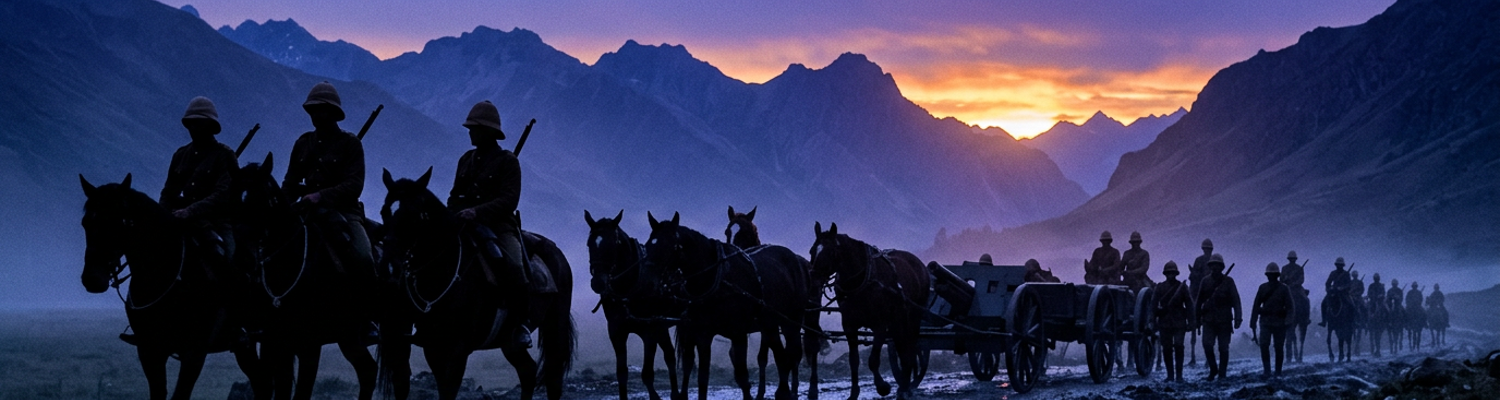
Clerks in the sweltering offices of the War Department examined telegraph logs and field reports that measured the massive logistical challenge of moving eight hundred cavalrymen, pack animals, and mountain howitzers over two hundred miles of coastal plain. Major General John G Foster and Brigadier General Edward E Potter had confronted a formidable task when organizing the strike from New Bern, outfitting the Third New York Cavalry and supporting detachments with thousands of iron horseshoes, grain sacks, and carbine rounds. Every trooper carried more than two hundred pounds of gear, weapons, and provisions on mounts that had to navigate deep sand, swamp water, and sweltering summer heat over hundreds of miles. The column stretched for miles down rural roads, grinding down men and livestock through sleepless marches just to reach Rocky Mount and tear into the Confederate supply corridor. War Department telegraph logs and field reports confirmed that Wilmington and Weldon Railroad freight operations resumed carrying vital supplies to General Robert E Lee and his Army of Northern Virginia within days of the raid.
Locomotives loaded with salt pork, North Carolina corn, and overseas blockade cargo steamed north toward Richmond over iron that Union raiders claimed to have ruined. Major Ferris Jacobs Jr and six companies of the Third New York Cavalry had set fire to the Rocky Mount depot, destroyed government warehouses, and burned the long wooden bridge over the Tar River on July 20, 1863. The blaze had consumed train cars and bridge timbers, but it left the stone masonry piers and the roadbed largely undamaged. Confederate engineering crews mobilized immediate reconstruction efforts, replacing damaged tracks and restoring regular service across the corridor within ten days. Work gangs and local laborers hauled fresh pine stringers out of nearby forests, levered scorched iron off charred roadbeds, and spiked replacement rails into place before the ash piles in town had cooled. Southern track bosses rerouted priority wagon trains around the temporary gap at the Tar River, ferrying military freight across shallow fords until the rebuilt trestle took the weight of rolling stock again.
Timber trestles and wooden crossties burned easily, but the underlying iron rails resisted the hasty demolition methods available to horse soldiers on the move. Troopers from the Third New York carried carbines and sabers rather than heavy sledgehammers, crowbars, or specialized rail twisting wrenches. Cavalrymen tried piling fence rails over sections of track and setting them ablaze, but the small fires lacked the sustained heat required to warp rails into useless shapes. The heat merely charred the wooden ties and caused minor bends in the iron before the raiding party had to mount up and gallop eastward to escape Confederate pursuit. Confederate track crews salvaged those slightly bent rails, reheated the metal over open forge fires, and spiked them back onto fresh pine ties.
Sledgehammers driving iron spikes into fresh wood along the Tar River sealed the failure of an expedition that had cost Major General Foster dozens of irreplaceable cavalry horses and left hundreds of troopers physically incapacitated. Riders returning to New Bern collapsed from sunstroke and saddle sores, having spent nearly six days in the saddle while covering two hundred and fifty miles of hostile territory with less than ten hours of sleep. Major Jacobs had captured fifteen prisoners, burned mills, and destroyed thirty seven loaded army wagons, yet he had failed to sever the critical rail link between the port of Wilmington and the Richmond trenches. General Foster had to report to Washington that his mounted force was too battered to mount an immediate follow up strike into the interior. Confederate quartermasters loaded boxcars with grain and ammunition at Wilmington and dispatched them directly through Rocky Mount toward the Petersburg depots.
Rearguard Clashes and the Fighting Withdrawal to New Bern
Boxcars rolling north past the charred depot site highlighted the speed with which the Third New York Cavalry had to abandon the railroad line to Confederate control and turn their exhausted horses southeast toward the coast. Brigadier General Edward E Potter united the Rocky Mount detachment of Major Jacobs with the main column outside Tarboro, herding captured mules, escaped slaves, and wounded riders onto narrow sand roads. The raiding column endured an exhausting fighting withdrawal through eastern North Carolina back to the Union base at New Bern. Torrents of summer rain fell upon the retreating horsemen, softening the dirt roads into deep mud that clogged the hooves of the horses and threatened to trap their mountain howitzers. Heavy wagons and broken carts snapped their axles in the mire, forcing cavalrymen to burn the captured vehicles in the roadway to keep the main column from stalling in front of gathering enemy patrols.
Confederate forces ambushed the retreating cavalry at Daniel Schoolhouse, compelling defensive rearguard actions across rain swollen river crossings. Riflemen from Fort Branch and local North Carolina cavalry opened fire from the thick pine woods surrounding the wooden school building, killing six Union troopers and wounding eighteen others within the first minutes of the fight. Captains from the Third New York leaped from their saddles, deployed their companies along farm rail fences, and returned rapid fire with their carbines to shield the terrified pack train and artillery crews. Gunners unlimbered two twelve pounder mountain howitzers directly in the road, firing rounds of canister shot into the trees until the Southern infantry fell back. Cavalrymen secured their wounded onto surviving mounts and withdrew down the road, setting fire to roadside fences behind them to delay the Confederate pursuit.
Bridges across Contentnea Creek and the flooded tributaries became critical crossing points where Union rearguards had to stand and fight against persistent Southern cavalry. Confederate horsemen struck repeatedly at Otter Creek and Swift Creek, trying to pin the rearguard against rising water while local militia tore planks off river crossings ahead of the column. Troopers of the Third New York repeatedly dismounted into waist deep water, holding bridgeheads with carbine fire until axes could chop away the support timbers or pioneer squads could lay fresh planks across damaged spans. Ammunition wagons sank to their wheel hubs in the swamp mud, leaving officers no choice but to wet the remaining powder kegs and spike disabled howitzers to prevent their capture. Horses collapsed by the dozens from physical exhaustion, forcing their riders to strip the saddles and continue the march on foot through the rain.
Pickets manning the outer trench lines at New Bern watched the dismounted troopers and limping horses stumble into view through continuous rain. Medical teams and quartermasters hurried out to meet the column, helping exhausted riders down from their saddles and leading hundreds of barefoot freedmen into the safety of the Union post. Cavalry inspectors cataloged the immense physical cost of the expedition, noting that more than a hundred horses had died along the route and that nearly the entire regiment required replacement mounts and hospital care. Major Jacobs and General Potter delivered their field reports to headquarters, confirming the burning of mills and bridges but acknowledging that their command was too battered to mount another operation into the interior. General Foster ordered the surviving horses led into military corrals for veterinary treatment, while fresh infantry units marched out to relieve the rearguard pickets and secure the road to the Neuse River.
Demolition of Rocky Mount Mills and Tar River Trestles
Surgeons examining the limping cavalry mounts in New Bern traced their lameness directly back to the high speed sprint into the rail junction at Rocky Mount. Captains had driven their mounts across miles of sandy coastal roads to surprise Confederate station masters before telegrams could halt rail traffic. Confederate train crews spotted the dust clouds of the approaching horsemen and quickly fired up a steam engine to escape the yard. Private George A White pursued an escaping Confederate locomotive on horseback, boarding the engine at gunpoint to force its reversal back to Rocky Mount Station. White leveled his service revolver through the cab window, seized the throttle lever, and backed the iron engine straight into the depot where Union horsemen waited. Troopers surrounded the captured locomotive on the sidings and took the railroad staff prisoner before any emergency messages could travel up the line.
Major Ferris Jacobs Jr used the captured train yard as the center for a coordinated firestorm, directing his companies to destroy every military asset in sight. Union demolition teams incinerated captured rolling stock, smashing into freight cars packed with Confederate quartermaster stores and setting thirty seven wagons and boxcars ablaze. Details of horsemen then rode two miles upstream along the riverbank to eliminate the industrial facilities supplying General Robert E Lee and his army with clothing. Workers fled into nearby fields as the raiders broke into the six story Rocky Mount Mills uniform textile complex. Troopers tossed burning torches into the storehouses, igniting thousands of yards of woven gray cloth, spinning frames, and raw cotton bales. Flames gutted the multi story brick factory within an hour, collapsing the interior wooden floors and destroying the machinery that wove military cloth for Southern soldiers.
Sparks from the burning textile factory drifted downstream toward the long bridge where the Wilmington and Weldon line spanned the water. Demolition squads stacked dry wooden fence rails, pitch barrels, and split cordwood directly onto the bridge stringers and crossties. Torches applied to the pitch soaked wood touched off a fire that consumed seven hundred and fifty feet of wooden railroad bridge and trestles spanning the Tar River. Charred timbers cracked under their own weight, dropping spans of iron track and blazing crossbeams into the shallow river below. Troopers cheered as the central spans collapsed, but the horse soldiers lacked the heavy sledgehammers and gunpowder charges required to crack the stone masonry piers supporting the structure. Those surviving stone pillars stood completely undamaged in the riverbed, providing a solid foundation for Southern work gangs to rebuild the line.
Granite piers left standing in the water demonstrated the practical limits of sending horse soldiers to ruin heavy railroad infrastructure without pioneer equipment. Major Jacobs inspected the smoking ruins along the river and observed the thick clouds of black smoke rising over the depot, the textile mill, and the charred bridge abutments. Scouts galloped into his perimeter from the north and east, reporting that Confederate infantry detachments and county militia were already gathering to cut off their withdrawal route. Officers shouted commands, gathered their scattered demolition teams, and turned the captured wagons and pack mules onto the dirt road toward Tarboro. Major Jacobs swung into his saddle and ordered his six companies to march out at a trot before enemy forces could pin his raiders against the Tar River.
The Strike Battalion Advance from Potter Column
Hooves pounding the dirt road away from the Tar River mirrored the frantic pace Major Ferris Jacobs Jr had set when he first detached his strike battalion from the main expeditionary force at Sparta at 0300 on July 20, 1863. Brigadier General Edward E Potter had divided his raiding expedition during that brief halt, sending the main column toward Tarboro while ordering Jacobs to make a rapid dash westward to sever the Confederate supply corridor. Quartermasters had distributed extra carbine ammunition and iron horseshoes by lantern light, making sure each mount carried enough provisions for an independent raid. Jacobs had inspected his two hundred and fifty troopers in the dark, checking that every saddle girth was tight and every haversack contained three days of salt pork and hard bread. Troopers had tightened their bedrolls, filled canteens from village wells, and mounted without bugle calls to conceal their departure from nearby Confederate observers. Guides led the strike column out of Sparta along narrow farm roads, setting a brisk pace into the blackness as thunder rolled over the pine flatwoods.
Cavalrymen of the detached cavalry battalion rode rapidly through torrential summer squalls and suffocating North Carolina swamp humidity toward the critical Wilmington and Weldon rail line. Rain poured from the night sky in heavy downpours, soaking the riders through their wool uniforms and turning the sandy roadbed into deep pools of clay and standing water. Heavy humidity trapped between the dense stands of loblolly pines made breathing difficult for both men and horses as the column pushed west. Troopers wrapped their Sharps carbines in rubber ponchos to keep their powder dry while water dripped steadily from the brims of their forage caps. Horses stumbled repeatedly on wet tree roots buried in the swamp bogs, throwing mud over the legs of the riders and slowing the pace whenever the trail narrowed. Pickets from county home guard units fled into the wet underbrush as the advance guard galloped past darkened farmhouses.
Scouts riding ahead of the strike battalion captured two of these fleeing militia pickets before the men could reach the nearest town to give an alarm. Major Jacobs questioned the prisoners on the road, learning that Confederate commanders in the district still believed the entire Union force was moving directly on Tarboro. Absence of Confederate cavalry in the immediate sector gave the Union detachment a brief opportunity to strike the railroad before Southern garrisons could respond. Jacobs urged his company commanders to accelerate their pace, driving the exhausted column through knee deep puddles and slippery clay turns. Troopers fought off heavy drowsiness after riding without sleep since leaving New Bern, chewing raw tobacco or talking aloud to stay awake in the saddle. Daylight broke over the wet lowlands around six in the morning, showing steam rising off the flanks of horses that were panting under the physical strain.
Riders squinted through the morning fog and thinning rain as the column finally approached the outer boundaries of the railroad settlement. Telegraph lines running on high wooden poles signaled to the advance guard that the Wilmington and Weldon tracks lay only a few hundred yards ahead. Jacobs halted the column briefly on the western edge of the woods to allow stragglers to close ranks and prepare their weapons. Captains ordered their troopers to inspect carbine breeches, loosen their sabers in their scabbards, and check revolver cylinders for wet powder. Smoke rising from a locomotive idling at the Rocky Mount depot confirmed that train crews had not yet learned of the Union presence. Jacobs pointed his sword toward the depot platforms and ordered the lead company to charge the rail line at a gallop.
Engineering Limitations and Strategic Futility of Coastal Raids
Carbine fire crackled across the yard as the lead riders swarmed the depot platforms and dismounted with small hand axes and crowbars to tear up the iron rails. Troopers wedged their short iron bars under the rail spikes, but the heavy wrought iron fasteners held stubbornly in the treated oak ties, bending the lightweight hand tools instead of lifting the metal. The operation highlighted the engineering limitations of light cavalry demolitions, which lacked the heavy tools and sustained occupation required to inflict permanent infrastructure loss. Horse soldiers could pry loose only short sections of iron, pile the rails over burning wooden fence posts to soften the metal, and twist the red hot bars around tree trunks before Confederate pickets opened fire and forced the raiders to mount up. Working under constant threat of ambush, the cavalrymen could not spend the hours needed to thoroughly burn and bend every mile of track in the district. Unheated rails tossed into the roadside ditches remained completely straight and reusable, while solid cross ties embedded deep in the gravel ballast stayed untouched along the mainline right of way.
Ballast stones and packed earth still held the underlying rail grade intact when the Union raiders rode away, allowing Confederate section gangs to begin reconstruction before the smoke even cleared from the riverbank. Confederate railway superintendents in Raleigh and Wilmington promptly dispatched specialized repair trains loaded with replacement rails, fresh bridge stringers, and hundreds of experienced track laborers directly to the Tar River crossing. Work crews rolled heavy iron leverage jacks off flatcars, pulled the twisted scrap out of the river mud, and used portable track straightening machines to recondition salvageable iron alongside the tracks. The rapid rehabilitation of the rail line exposed the strategic futility of unsupported coastal deep penetration raids against resilient Confederate logistics networks. Southern dispatchers quickly adjusted traffic patterns, rerouting essential military shipments through secondary lines in central North Carolina while track gangs worked under military guard to clear the debris. Local home guard units shielded the laborers from further interference, creating a secure zone where Confederate mechanics reconstructed the telegraph wires and rail bed without pause.
Sledgehammers rang against steel spikes as civilian laborers and military work crews laid fresh wooden ties across the repaired roadbed. Confederate bridge builders framed heavy timber trestles directly into the river channel, anchoring the new wooden spans securely onto the undamaged granite piers that Major Jacobs had left standing in the water. Telegraph linemen climbed the wooden poles alongside the tracks, splicing severed copper wire and restoring instantaneous communication between Richmond and the Wilmington seaport within forty eight hours of the attack. Confederate authorities also gathered captured horses, spare rolling stock, and surplus steam engines from nearby depots to replace every destroyed car and wagon before the army felt any shortage of supplies. These rapid repairs demonstrated that burning a wooden bridge and a few warehouse buildings achieved only a fleeting tactical disruption rather than a lasting strategic victory.
Major General Foster possessed no follow on infantry divisions or heavy siege artillery at New Bern capable of marching inland to protect the demolition sites or permanently occupy the railroad corridor. Union planners in Washington had envisioned that mounted deep raids could paralyze the Confederate transportation grid, but solitary cavalry columns lacked the combat mass to hold ground against converging enemy garrisons. Troop detachments returning to the coast left a power vacuum that Confederate commanders immediately filled with fresh infantry regiments and cavalry squadrons from the Richmond defense perimeter. Steam locomotives hauled heavily loaded freight cars across the rebuilt Tar River bridge on their regular schedules before the exhausted troopers of the Third New York Cavalry had even finished treating their crippled mounts in the coastal corrals. Confederate quartermasters continued shipping thousands of barrels of flour and boxes of imported munitions north to the Petersburg supply depots.