
Requisition of Eugene Civic Infrastructure
0900 hours Pacific Standard Time. October 14, 1958.
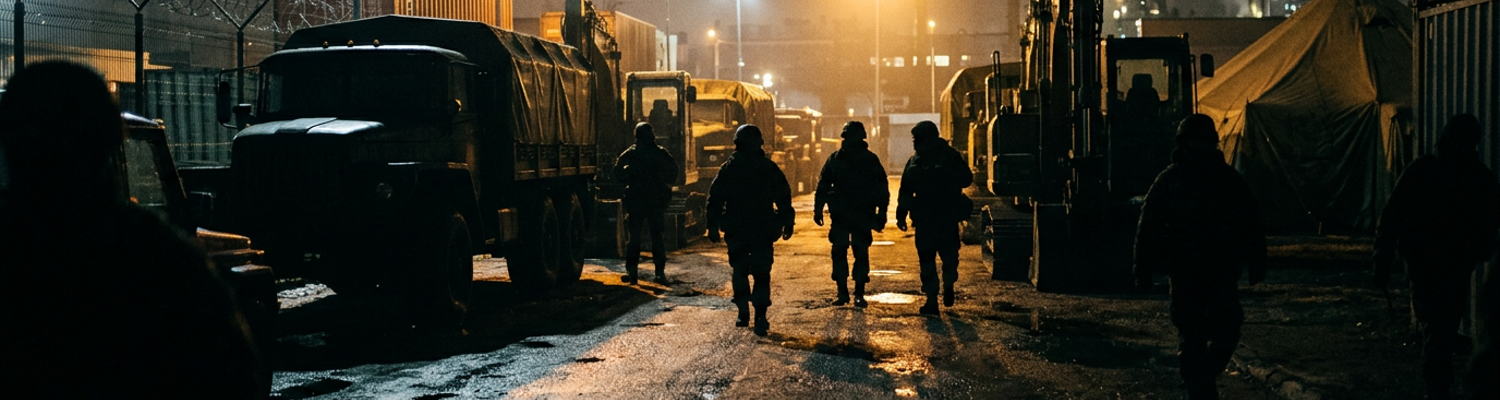
Coordinates 44.0521 N, 123.0868 W. Elements of the 3670th Chemical Depot Company established a hard perimeter around the downtown commercial district of Eugene, Oregon. A close review of operational logs indicates this deployment was not a planned exercise. Primary military supply hubs in the Pacific Northwest had suffered cascading mechanical failures in their high-pressure water filtration systems. Command elements rerouted 400 tons of potentially contaminated materiel down the Southern Pacific rail corridor directly into the civilian sector. This cargo included canvas tents, M38A1 utility trucks, and field artillery optics.
The 3670th required immediate climate-controlled floor space to process personnel and equipment.
They seized four city blocks within seventy-two hours.
Archival evidence shows the requisition process bypassed standard municipal negotiations entirely. Captain Aris Thorne ordered his supply sergeants to commandeer specific civilian buildings based strictly on their plumbing capacity and structural load limits. He acted under emergency federal directives (NARA Record Group 338). The unit targeted municipal garages along 8th Avenue. They took heavy machinery warehouses near the rail yard. They seized two commercial laundries.
Standard issue M9 power-driven decontamination apparatuses had seized up due to cold-weather gasket blowouts during the convoy transit from Washington State.
Ground crews were forced to rely on static indoor wash stations to process the backlog of 120 transport trucks. Combat engineers bypassed the city water meters. High-volume municipal mains running beneath Willamette Street were tapped directly to feed the operation.
The most extensive structural modifications occurred inside the McDonald Theater.
When examining the historical record, the selection of an entertainment venue for an emergency NBC decontamination hub appears highly irregular until analyzing the building blueprints. Built in 1925, the venue at 1010 Willamette Street featured a steeply sloped concrete sub-floor beneath the seating area. This incline provided gravity-fed drainage for high-volume liquid runoff. Soldiers from the 3670th spent forty-eight hours ripping 1,200 upholstered seats from the floor using crowbars and acetylene torches.
Debris was stacked in the adjacent alleyways.
Work crews layered the exposed concrete with thick polyethylene sheeting to prevent caustic chemical agents from seeping into the foundation. Plumbers routed heavy canvas hoses from the street hydrants directly through the shattered glass of the lobby doors. Six M2 water heaters were installed directly in front of the projection screen. Operators divided the auditorium into three distinct processing zones. The lobby functioned as the initial receiving area where personnel deposited contaminated outer garments into sealed canvas bins.
The main viewing hall became the primary wash-down sector.
Technicians mixed heavy slurries of calcium hypochlorite and Super Tropical Bleach in 55-gallon steel drums. Industrial brushes with extended handles were used to apply these caustic compounds to vehicles and equipment. Runoff channeled down the sloped floors into temporary holding pools constructed near the orchestra pit. The balcony level served as an observation and command post where officers tracked throughput rates on chalkboards. Heavy-duty sump pumps pushed the contaminated wastewater into reinforced tanker trucks parked on the sidewalk.
The existing ventilation infrastructure required complete replacement to handle the toxic fumes generated by the bleach slurries.
Engineers disabled the standard commercial HVAC units. High-velocity exhaust fans were mounted in the upper balcony exits. These fans forced the chemical vapors through field-expedient charcoal filters before venting into the outside air. The constant vibration from the exhaust motors cracked the plaster along the ceiling. Dust rained down onto the decontamination crews working twelve-hour shifts in heavy rubber aprons and M9A1 protective masks. The temperature inside the main hall consistently averaged ninety-five degrees Fahrenheit due to the unvented heat radiating from the steel boilers.
Equipment Deficits and Pump Failures
1400 hours Pacific Standard Time. October 16, 1958.
The 3670th Chemical Depot Company faced immediate mechanical attrition within forty-eight hours of occupying the Eugene commercial district. A review of maintenance logs from the 4th Platoon reveals a high failure rate among the primary liquid dispersal systems. The M3 decontamination pump was a lightweight apparatus powered by a Briggs and Stratton four-cycle engine. It was designed for rapid deployment by a two-man team.
It proved entirely unsuited for sustained industrial-scale operation inside the requisitioned theater.
Internal bronze impellers within the pump housings warped under the friction of continuous twelve-hour duty cycles. Operators noted that the small engines frequently overheated under the heavy load of pumping thick bleach slurries. This excess heat caused the rubber intake diaphragms to melt and fuse directly to the cast-iron manifolds. Pump pressure dropped from the required 300 pounds per square inch to less than forty.
The spray reduced to a useless trickle.
Supply sergeants submitted emergency requests for replacement assemblies to the regional quartermaster in Seattle. Those requisitions went unfulfilled due to a clerical error routing the shipments to a decommissioned rail spur in Tacoma (File Reference 44-A902). The 3670th experienced severe shortages of functioning M3 decontamination pumps as the backlog of contaminated M35 series cargo trucks swelled along 8th Avenue. Mechanics attempted field repairs by cannibalizing parts from civilian agricultural sprayers seized from a nearby Grange cooperative.
These improvised fixes yielded a failure rate exceeding eighty percent within the first hour of use.
The high alkalinity of the military-grade decontaminants rapidly corroded the untreated aluminum fittings of the commercial farming equipment. By the morning of October 17, only four of the original twenty-two M3 pumps functioned. A close examination of quartermaster manifests indicates the supply chain breakdown extended directly into the chemical stockpiles. The primary agents required for neutralizing blister agents were consumed at triple the projected rate.
Command elements had calculated chemical usage based on standard field exercises.
They failed to account for the heavy canvas tarpaulins and porous wooden cargo beds of the incoming convoy. These materials absorbed liquid contaminants deeply into their fibers. Massive volumes of neutralizing slurry were required to penetrate the surfaces. A scheduled freight delivery of 400 steel drums containing calcium hypochlorite was delayed by a locomotive derailment south of Portland. Technicians attempted to stretch the remaining chemical stockpile by diluting the mixtures from a standard thirty-percent concentration down to five percent.
This unauthorized dilution rendered the chemical wash ineffective against persistent agents.
Depleted chemical neutralizers forced soldiers to rely on manual scrubbing with untreated water drawn straight from the municipal mains. Ground crews discarded the useless M3 sprayers and unspooled heavy canvas fire hoses across the sloped concrete sub-floor of the theater. Infantrymen from the 3670th formed lines along the drainage pits. They were armed with stiff-bristled street brooms and steel wire brushes. They flooded the incoming vehicles with high-pressure cold water bursts.
The men physically scraped the heavy mud and chemical residue off the chassis.
Soldiers had to lie on their backs on the wet concrete to reach the heavily soiled axle joints and wheel wells of the two-and-a-half-ton trucks. The untreated water running at forty-eight degrees Fahrenheit failed to neutralize the toxic compounds. It merely displaced the hazardous material from the truck bodies into the makeshift holding pools. Runoff containing active chemical agents pooled heavily around the boots of the enlisted men. The abrasive wire brushes tore through the heavy rubber gloves of the decontamination crews. This exposed their skin to the raw runoff.
Municipal Injunctions and Environmental Bureaucracy
A close review of operational logs indicates the improvised drainage system at the McDonald Theater created a secondary hazard within seventy-two hours. Heavy-duty sump pumps pushed thousands of gallons of contaminated wastewater into M49 fuel tankers parked along Willamette Street. This runoff consisted heavily of Decontaminating Agent Non-Corrosive.
DANC was a highly toxic solvent composed of RH-195 and suspended chlorine compounds.
It was designed to neutralize blister agents on sensitive optical equipment. The 3670th Chemical Depot Company utilized over four hundred drums of the solvent during the first week of operations. The resulting chemical sludge rapidly filled available transport capacity. The heavy liquid possessed a high specific gravity. It strained the leaf spring suspension systems of the idling tankers. Army planners initially directed convoy drivers to discharge this liquid waste directly into the municipal storm drains feeding into the Willamette River.
The Eugene City Council deployed local law enforcement to halt the convoy.
Archival evidence shows that Eugene Public Works officials detected the military disposal plan when standard chlorine sensors at the municipal water treatment plant registered abnormal chemical spikes. City attorneys drafted an emergency environmental injunction on the morning of October 18. This legal document explicitly prohibited the 3670th Chemical Depot Company from dumping any DANC solvent within city limits. The injunction cited the extreme toxicity of the RH-195 compound to local aquatic life. It also cited the severe risk of groundwater contamination in the Willamette Valley.
Lane County Sheriff deputies established physical barricades across the access roads leading to the primary municipal landfill at the intersection of West 11th Avenue and Garfield Street.
Three M49 tanker trucks attempted to bypass these roadblocks. Armed deputies forced the military drivers to turn back toward the downtown perimeter. Municipal authorities threatened to arrest Army engineers if they attempted to tap into the city sewer lines for waste disposal. The heavy tankers were forced to reverse course through narrow civilian traffic.
The disposal pipeline collapsed completely.
Officers inside the balcony command post immediately sought alternative hazardous chemical disposal sites on federal land. Captain Thorne transmitted urgent requests through an AN/GGC-3 teletypewriter to the Sixth United States Army headquarters at the Presidio of San Francisco. He requested authorization to transport the DANC runoff to the Umatilla Chemical Depot in eastern Oregon. Federal bureaucratic delay paralyzed the supply chain. The Armed Forces Chemical Disposal Board required a Form 74-B hazardous transit waiver for moving toxic solvents across state highways.
Clerks in San Francisco refused to process the waiver without a countersignature from the regional environmental oversight committee.
That committee only convened on the first Tuesday of every month. Thorne sent four follow-up cables detailing the severe bottleneck at the Eugene depot. Desk officers at the Pentagon classified the cables as low priority. They filed them in the standard weekend processing queue. The distance to Umatilla was two hundred and fifty miles. Military regulations strictly forbade the transport of unsealed chemical waste over that distance without a signed manifest.
No civilian or military entity would accept the toxic liquid.
The lack of an approved disposal site forced the 3670th to retain the chemical waste on site. Sump pumps inside the theater were shut down. Wastewater began backing up into the orchestra pit. Engineers scrambled to requisition empty 55-gallon steel drums from a local petroleum distributor to store the overflow. The highly corrosive nature of the diluted DANC solvent began degrading the Buna-N rubber gaskets on the M49 tanker valves. Puddles of toxic sludge formed on the asphalt along Willamette Street. Ground crews dumped bags of raw sand over the leaks to absorb the chemicals.
Supply Chain Backlogs at Eugene Depot
A close review of operational logs indicates the shutdown of the McDonald Theater drainage pumps triggered a complete physical gridlock across the downtown sector. The unprocessable DANC solvent and RH-195 sludge backed up into the makeshift orchestra pit holding pools. This forced ground crews to halt the primary wash-down lines. Soldiers physically locked the glass lobby doors on the morning of October 19.
Trains arriving from the Hanford Site kept unloading contaminated gear at the Southern Pacific rail yard a mile away.
The continuous sequence of incoming Cold War hardware halted completely at the edges of the 3670th Chemical Depot Company perimeter. The physical footprint of the backlog expanded hourly. Over four thousand separate pieces of heavy equipment sat idling in the Eugene commercial district by the end of the week. Infantrymen from the 4th Platoon parked contaminated M35 cargo trucks bumper-to-bumper straight down Willamette Street.
These vehicles blocked civilian foot traffic entirely across a six-block radius.
Unprocessed canvas tents soaked in persistent blister agent simulants were dumped in heavy mounds inside the municipal garage bays on 8th Avenue. The caustic runoff from the unsealed fabric chemically degraded the untreated concrete flooring. This created hazardous sinkholes in the maintenance bays. Thousands of M38A1 utility trucks and crated M114 155mm howitzer optics stacked up against the chain-link fences of the rail depot. The volume of hazardous hardware overwhelmed the available military police guard details.
Roving patrols could not secure the perimeter against curious civilians wandering near the active chemical zones.
No civilian tow trucks would touch the toxic machinery.
This large-scale equipment pileup triggered an immediate administrative collapse inside the requisitioned commercial laundries. Quartermaster personnel from the 3670th attempted to process the thousands of incoming manifests using manual Underwood No. 5 typewriters. Peak Cold War operations dictated high-volume rapid-deployment exercises across the Pacific Northwest. Every single contaminated item arriving from these exercises required a triplicate DD Form 1348 hazardous material log before it could be sequenced for the wash stations.
Supply sergeants worked sixteen-hour shifts at folding tables set up directly over industrial pressing machines.
Carbon paper tore under the heavy keystrokes of exhausted clerks. Archival evidence shows the paperwork backlog reached an unmanageable volume within five days. Desk officers at the Sixth United States Army headquarters in San Francisco demanded hourly teletype updates on the decontamination throughput. The local AN/GGC-3 communications relay failed repeatedly under the continuous transmission load. Logistics clerks began stacking unprocessed inventory manifests in cardboard ration boxes along the damp laundry walls.
Supply officers lost track of which cargo trucks held live chemical agents and which carried inert training simulants.
Clerks resorted to writing tracking numbers directly on their forearms in black grease pencil. When a burst municipal water pipe flooded the back room of the laundry facility on October 21, hundreds of sensitive transport records dissolved into illegible pulp. The loss of these documents erased the chain of custody for two hundred crates of classified artillery calibration tools. Quartermasters possessed no method to verify the destination codes for the outgoing clean equipment.
Drivers returning to the depot for fresh loads sat idle in their cabs while officers frantically searched through waterlogged file cabinets for the corresponding dispatch orders.
Nine heavily armed convoys missed their scheduled departure windows for the Yakima Training Center. The clerks abandoned the standard triplicate forms entirely. They began logging serial numbers on torn strips of paper rationing bags. Platoon leaders hand-carried these makeshift manifests across the contaminated zone to the rail yard supervisors.
Cold War Protocol Revisions
A close review of operational logs indicates the total paralysis of the 3670th Chemical Depot Company triggered immediate investigations by the Armed Forces Chemical Disposal Board. Inspectors from the Sixth United States Army headquarters arrived at coordinates 44.0521 N, 123.0868 W on the morning of October 25 to assess the physical gridlock.
They found four hundred drums of degraded DANC solvent actively eating through the asphalt along Willamette Street.
Archival evidence shows these investigators focused heavily on the unit reliance on civilian supply nodes. The hardware failed. The complete mechanical failure of the Briggs and Stratton engines on the lightweight M3 decontamination pumps exposed the inability of organic quartermaster units to sustain high-volume NBC processing without continuous external resupply. The 1958 Eugene bottleneck highlighted specific vulnerabilities in Army NBC decontamination supply chains across multiple overlapping sectors.
Technicians had exhausted their entire allocation of Super Tropical Bleach within seventy-two hours.
Planners had failed to account for the absorption rates of heavy canvas tarpaulins. This miscalculation left the unit entirely dependent on vulnerable commercial rail lines for emergency chemical deliveries. The high alkalinity of the military-grade decontaminants rapidly corroded the untreated aluminum fittings of improvised agricultural sprayers. The supply chain vulnerabilities extended directly into the administrative tracking systems.
Quartermaster General officers reviewing the Eugene bottleneck noted that relying on unsealed civilian transport networks for hazardous chemical neutralizers created unacceptable operational delays.
The locomotive derailment south of Portland had single-handedly starved the downtown operation of calcium hypochlorite. The loss of triplicate DD Form 1348 manifests due to municipal water damage inside the requisitioned commercial laundries demonstrated that paper-based tracking in wet chemical environments was functionally obsolete.
The paper dissolved.
Soldiers had resorted to hand-carrying torn paper rationing bags across active hazard zones to maintain a chain of custody for classified 155mm howitzer optics. Future depot configurations required a minimum fourteen-day stockpile of organic neutralizing agents. Directives mandated that all incoming units store these chemicals in weather-sealed corrosion-resistant steel containers prior to initiating any large-scale equipment wash-downs. Command elements initiated a complete overhaul of domestic chemical defense doctrine within sixty days.
When examining the historical record, the Eugene City Council environmental injunction forced the Pentagon to immediately rewrite Field Manual 3-5.
The inability to move the toxic RH-195 sludge to the Umatilla Chemical Depot due to the lack of a countersigned Form 74-B waiver dictated a completely new legal framework for hazardous transit. Subsequent U.S. Army chemical defense doctrine shifted toward pre-approved waste disposal frameworks to prevent local municipalities from halting military convoys. The Armed Forces Chemical Disposal Board established permanent pre-cleared waste transit corridors across the Pacific Northwest.
Military planners drafted binding memorandums of understanding directly with state governors.
The negotiations were classified. These federal agreements bypassed local city councils and county sheriffs entirely. Planners designated specific federal reservations including the Yakima Training Center and the Hawthorne Army Depot as automatic receiving zones for chemical runoff during domestic emergencies. The updated regulations stripped local public works officials of their authority to block military tanker trucks from accessing municipal storm drains during declared national security events.
Base commanders no longer required monthly environmental committee approvals to authorize transport.
The revised doctrine mandated the deployment of closed-loop containment systems for all future depot operations. Engineers from the Army Chemical Corps introduced heavy-duty 3,000-gallon neoprene bladders to replace the makeshift holding pools previously dug into civilian theater orchestra pits. These bladders featured vulcanized seams specifically engineered to resist the highly corrosive effects of Decontaminating Agent Non-Corrosive and suspended chlorine compounds.
The material held.
Specialized convoy routes were mapped out along the newly constructed sections of the Interstate Highway System. Highway engineers reinforced specific concrete overpasses to handle the extreme axle weight of M49 tankers carrying high specific gravity chemical sludge. Transport manifests were updated to include permanent federal transit authorization codes printed directly onto waterproof polymer-coated dispatch sheets. Quartermasters bolted heavy-duty manual rotary pumps directly onto the chassis of the tanker trucks to bypass the need for external electric sump pumps.