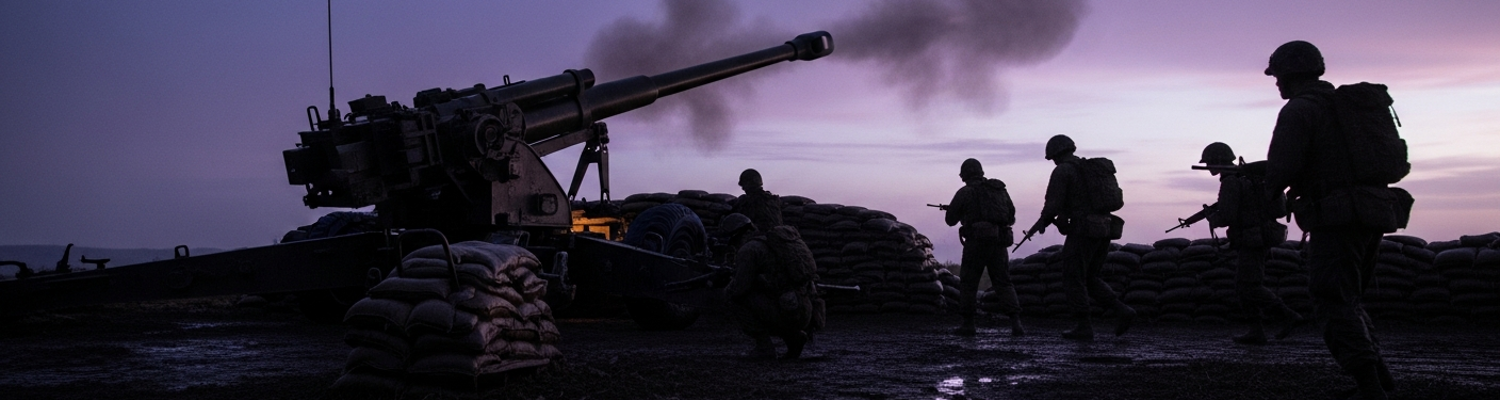

The silence that fell over a 3rd Battalion, 11th Marines (3/11) gun position after a major fire mission in August 1968 was a deceptive calm. Operations like Allen Brook and Mameluke Thrust placed a relentless demand on the battalion’s M101A1 howitzers. As the final high-explosive round slammed into a target coordinate in the hills southwest of Da Nang, the physical battle for the gun crews paused. An unseen struggle began immediately within the Fire Direction Center (FDC). There was no respite. The fleeting quiet was the start of a countdown, a period of data collection essential for the unit’s survival and its capacity to support the infantry on the following day.
This was the shift from active combat to high-stakes accounting. A review of operational logs from this period reveals a standardized process that began within minutes of a cease fire order. Personnel in the FDC, working in dimly lit, sandbagged bunkers, transitioned from calculating firing solutions to compiling raw data. The information was transmitted from each of the battery’s six guns. Every piece was vital. Gun chiefs reported the exact number of rounds expended, broken down by type: HE (High Explosive), WP (White Phosphorus), and Illumination. They relayed propellant charge usage, a key indicator of barrel wear, and noted the physical state of their howitzers. Any malfunction, from a faulty breech to a sluggish recoil system, was recorded. Archival evidence shows that specific reports from batteries, such as H Battery, meticulously logged these details. One report noted the expenditure of 506 HE, 12 WP, and 4 Illumination rounds for a total of 522 rounds on observed and unobserved fire missions. This data was not for a distant historical record; it was a near-real-time inventory of the battery’s ability to continue the fight.
The numbers were for survival.
The purpose of these initial after-action reports, often scribbled on standardized forms under intense time pressure, was twofold: tactical assessment and logistical forecasting. The data flowed from the battery FDCs to the battalion headquarters, where the S-3 (Operations) and S-4 (Logistics) officers waited. For the S-3, the reports answered a burning question: could the battalion’s batteries provide the necessary fire support for infantry operations planned for the next 12 to 24 hours? A battery that had experienced multiple mechanical failures or had expended a high percentage of its on-hand ammunition was a liability. The structure of the reports was designed for speed, containing fields for target numbers, round counts, observed bomb damage assessment (BDA) if available from a forward observer, and an equipment status update. For the S-4, this information was the trigger for a demanding logistical chain. Based on these immediate expenditure reports, resupply convoys were requested, carrying the specific types and quantities of ammunition needed to replenish the gun positions. A report indicating low levels of propellant or a cracked firing pin on a howitzer initiated an urgent request for parts. This process could mean the difference between a fully operational battery and one silenced by mechanical failure. This frantic analysis in the quiet hours after an engagement ensured that the battalion could continue its mission.
Repelling an enemy assault often masked a looming logistical crisis for the artillery batteries of the 3rd Battalion, 11th Marines. Operational logs from August 1968, particularly during the final phases of Operation Allen Brook, reveal a recurring and dangerous pattern of 105mm ammunition shortages that directly impacted combat effectiveness. The strain on the supply chain was not a gradual erosion but a series of acute deficiencies. Archival evidence points to several documented periods during that month when 3/11 batteries were forced into rationing protocols. These were not suggestions; they were strict orders from the 1st Marine Division to conserve a dwindling stockpile. During these periods, fire missions were heavily scrutinized. Priority was given exclusively to infantry units in direct contact with the enemy, forcing the cancellation of most harassing and interdiction (H&I) fire plans.
This was a fight on two fronts.
The discrepancy between authorized ammunition expenditure rates and the actual rounds available at the gun line became a source of constant friction between artillerymen and higher command. Fleet Marine Force, Pacific (FMFPac) doctrine established a basic daily load and a prescribed rate of fire intended to sustain prolonged operations, but these figures often existed only on paper. The authorized expenditure for a 105mm howitzer battery was designed to allow for robust harassing fires, counter-battery missions, and direct support. The logistical pipeline in the I Corps Tactical Zone was fragile. Enemy interdiction of Highway 1, the primary ground artery, and the ever-present threat to major ammunition dumps like the one at Da Nang, created bottlenecks that prevented resupply convoys from reaching forward firebases in a timely manner. A report from early 1968 noted that a single enemy rocket attack on the Khe Sanh combat base destroyed approximately 1,500 tons of munitions, representing 98% of the base’s total supply. This catastrophe highlighted the vulnerability of large, centralized depots. For the crews of 3/11, the theoretical availability of ammunition was irrelevant; the only number that mattered was the physical round count at their position, a figure that was often dangerously low.
The consequences of this scarcity were immediate. Specific instances of fire mission curtailment are scattered throughout command chronologies and after-action reports from August 1968. On multiple occasions during Operation Allen Brook, forward observers calling for artillery support on suspected enemy positions were denied. Fire Direction Centers were forced to triage requests, prioritizing a squad pinned down by machine-gun fire over a company commander who wanted to shell a treeline where enemy movement was suspected. This rationing had a direct tactical impact. It ceded the initiative to the enemy during nighttime hours when H&I fires were most effective at preventing infiltration and repositioning. The inability to expend rounds freely meant that enemy forces could prepare for dawn assaults with less fear of disruption. The strain was not just on high-explosive rounds. The shortages extended to illumination and white phosphorus rounds, limiting the battalion’s ability to light up the battlefield or screen friendly movements. Each denial of a fire mission was a calculated risk, a gamble that the un-shelled target would not become a threat that would cost Marine lives later.
While shortages of 105mm rounds presented a persistent tactical problem, a more operationally significant crisis was developing around the supply of 155mm ammunition for the M114 howitzers of the 11th Marine Regiment. These heavier guns formed the foundation of the division’s long-range fire support, providing the reach necessary for effective counter-battery fire and deep interdiction missions that the shorter-ranged 105mm pieces could not accomplish. Command chronologies and logistical reports from August 1968, during the high-expenditure periods of Operations Allen Brook and Mameluke Thrust south of Da Nang, reveal a scarcity of these essential rounds. The problem was not merely one of low stockpiles; it was compounded by the physical condition of the available ammunition. One report from August 1968 noted that the 1st 155mm Gun Battery was firing extremely old propelling charges. These had absorbed so much moisture they produced a massive muzzle flash, compromising gun positions at night and temporarily blinding the crews. The supply of this powder was nearly gone, and the gun carriages themselves were so worn that obtaining repair parts had become almost impossible.
A logistical failure with severe tactical consequences.
The impact of the 155mm round deficit was felt most acutely in the degradation of long-range fire missions. The M114 howitzer, with a range extending beyond 14 kilometers, was the primary tool for striking enemy artillery positions, command posts, and supply concentrations deep behind their front lines. Counter-battery fire, a reactive and time-sensitive mission, depends on the immediate availability of heavy artillery to silence enemy guns before they can inflict further damage on friendly forces. With 155mm rounds being rationed, Fire Direction Centers were forced to deny or postpone these missions. Archival records show that priority for all artillery was increasingly given to infantry units in direct contact, a necessary but costly trade-off. This policy effectively granted enemy artillery and rocket crews a greater degree of freedom from reprisal. They could fire on Marine positions with a reduced fear of immediate and overwhelming counter-fire, a reality that had tangible effects on the security of firebases and infantry camps across the I Corps Tactical Zone. The inability to conduct robust, pre-planned interdiction fires also meant that enemy units could maneuver and resupply with greater ease, particularly at night.
As a direct result of these supply deficits, fire support plans for major operations had to be fundamentally altered. The operational design for campaigns like Allen Brook, which involved clearing the heavily fortified Go Noi Island area, initially called for extensive preparatory and deep fires to disrupt NVA command and control and soften defensive positions. The scarcity of 155mm rounds forced a significant curtailment of these plans. Instead of shaping the battlefield from a distance, the burden shifted almost entirely to direct air support and the shorter-range 105mm batteries. This change had a cascading effect on tactics. Marine infantry units were often compelled to assault well-prepared enemy positions without the benefit of sustained, long-range artillery preparation. Reports from engagements during Allen Brook describe instances where Marine companies were pinned down by heavy fire, with air and artillery support being of limited effect due to the close proximity of the opposing forces. The rationing forced a shift in targeting priorities. Instead of proactively destroying enemy capabilities, the heavier guns were held in reserve, waiting for a Troops In Contact situation to justify the expenditure of a precious 155mm high-explosive round. This reactive posture ceded the initiative and placed a greater strain on both aviation assets and the already-taxed 105mm gun crews.
Operational logs from August 1968 reveal that the artillery battalions of the 1st Marine Division, including 3/11, were caught in a systemic logistical breakdown. This was not a simple matter of low ammunition stockpiles but a more complex erosion of the entire supply chain. The Force Logistic Command (FLC), headquartered at Red Beach near Da Nang, was the principal organization managing the flow of all supplies into the I Corps Tactical Zone. This command was responsible for a colossal undertaking, handling over half-a-million tons of cargo monthly through the port of Da Nang alone. This centralized hub was itself a point of failure. The entire system relied on a fragile network of road, air, and sea transport that was under constant threat. Highway 1, the main north-south ground artery, was frequently interdicted by enemy action, forcing a greater reliance on helicopter resupply. This aerial dependency was problematic; CH-46 helicopters, the workhorses of logistical support, faced their own maintenance and availability issues, while all aircraft were subject to weather limitations and enemy anti-aircraft fire. The massive ammunition supply points (ASPs) at Da Nang were tempting, high-value targets for enemy rocket and sapper attacks. The destruction of nearly all of the Khe Sanh combat base’s ammunition in a single 1968 attack served as a constant, grim reminder of how quickly a unit’s fighting capacity could be annihilated by a single lucky enemy strike on a concentrated depot.
The process for handling resupply requests became a bureaucratic battleground that exacerbated the physical shortages at the gun line. A request for ammunition began with a gun chief’s report, which flowed through the battery Fire Direction Center to the battalion S-4 (Logistics) officer. From there, the request ascended the chain to the 1st Marine Division G-4 and ultimately to the FLC. In theory, this system prioritized units based on operational necessity. In practice, it was often sluggish and unresponsive to the immediate needs of forward-deployed batteries. A command chronology from a sister battalion in June 1968 noted that even basic items like bayonets and first aid kits were in short supply, indicating deep, systemic issues beyond just ammunition. Routine replenishment requests for H&I rounds were frequently downgraded or ignored in favor of conserving stock for emergencies. The only requests that received immediate, high-priority attention were for units in direct, heavy contact with the enemy. This reactive posture meant that artillery batteries were often prevented from proactively engaging targets of opportunity or conducting preventative fire missions, forced instead to wait until a friendly infantry unit was already under attack. The disconnect between the logisticians at the rear echelon depots and the urgent reality of the forward firebases created significant friction and a growing lack of confidence in the supply system’s ability to sustain them.
The cumulative effect of these vulnerabilities and shortages on the readiness and morale of artillery units like 3/11 was corrosive. A battery’s combat readiness is measured not just by the condition of its howitzers but by its on-hand supply of ammunition. As stockpiles dwindled and rationing orders became the norm, the ability of the battalion to execute its full range of fire support tasks degraded sharply. The cancellation of H&I fires, a direct consequence of ammunition conservation, ceded the nighttime initiative to the enemy, allowing them greater freedom to maneuver, emplace heavy weapons, and stage for future attacks. For the gun crews themselves, the inability to fire was a deeply demoralizing experience. These artillerymen, trained for the express purpose of providing rapid and overwhelming fire support, were often reduced to silent observers. This forced inaction bred frustration and a sense of helplessness, as they listened to radio traffic from infantry units under pressure, knowing they lacked the rounds to effectively intervene. The constant denial of fire missions damaged the intricate relationship between the forward observers, the FDCs, and the gun pits, a relationship built on trust and the certainty that when fires were called for, they would be delivered.
Operational logs from the 11th Marine Regiment during the summer of 1968 reveal a persistent and deeply problematic aspect of artillery employment in the Vietnam War: the infliction of non-combatant casualties. The nature of the conflict, a counter-insurgency fought in and among a civilian population, made such events a statistical probability. Artillery fire, by design an area weapon system, was often directed at grid coordinates where enemy forces were believed to be operating, frequently in or near populated hamlets. Command Chronology entries from this period document these incidents with a detached, procedural tone. A typical entry from 3/11’s parent regiment notes an incident where a fire mission, intended to interdict suspected Viet Cong movement, resulted in unintended civilian deaths and injuries. The immediate assessment often categorized these events as unavoidable consequences of combat, a result of the enemy’s tactic of embedding themselves within the civilian population.
These were not isolated failures.
The initial reports filed from the Fire Direction Center would trigger a formal investigation process, but determining direct culpability was nearly impossible. The chain of events leading to a civilian casualty was complex. A forward observer could misidentify a target or provide an inaccurate grid coordinate. The FDC could make a fractional error in calculating the firing solution. A worn howitzer tube or a faulty propellant charge could send a round astray. Enemy intelligence could be faulty, leading to the shelling of a location long after enemy forces had departed. A 1968 statistical report from the South Vietnamese Ministry of Health indicated that over a third of all civilian hospital admissions were due to artillery or bombing. Each incident was recorded, investigated, and archived, but the immediate pressure of ongoing operations meant that the focus was on tactical necessity rather than a deeper reckoning with the strategic cost of these tragedies.
Beyond the loss of life, the extensive use of artillery fire caused widespread property damage throughout the 3/11 area of operations south of Da Nang. During Operation Allen Brook, which involved clearing the heavily fortified Go Noi Island, entire hamlets were systematically leveled by preparatory fire. Reports from Civil Affairs units attached to the 1st Marine Division document numerous claims filed by village chiefs for destroyed homes, killed livestock, and ruined crops. A single 105mm high-explosive round could obliterate a family’s hooch, and a sustained fire mission could render a rice paddy unusable. These claims were methodically processed, with monetary payments sometimes offered as solatium, a gesture intended to soothe local anger. The operational tempo and the sheer volume of destruction often overwhelmed the capacity of Civil Affairs teams to properly assess and compensate for the damage. The strategic hearts and minds campaign, a stated goal of American intervention, was directly undermined every time an errant shell or a pre-planned bombardment destroyed the livelihood of a non-combatant. The convoluted Rules of Engagement, designed in part to protect civilians, often proved ineffective in the chaotic conditions of a firefight where artillery was called in under extreme duress.
An analysis of operations in the 3/11 Marines’ area of responsibility during the summer of 1968, particularly Operation Allen Brook, reveals that large-scale civilian displacement was not an unintended consequence of fire support missions but an integral component of the operational plan. The primary objective on Go Noi Island, a known Viet Cong and NVA stronghold south of Da Nang, was to deny the area to the enemy. This was accomplished by systematically eliminating every structure and feature that could offer concealment or support. Marine infantry battalions, supported by the 105mm howitzers of units like 3/11, were tasked with clearing the island hamlet by hamlet. The process involved the forced relocation of the civilian population before the area was subjected to intense artillery bombardment and then leveled by engineers. Command chronologies document that on the first day of the operation in early May, ground units evacuated approximately 220 civilians from the Go Noi area to the district capital.
This was population control by artillery.
Recorded attempts to warn non-combatants prior to these systematic bombardments relied on a standardized toolkit of psychological operations. A review of 1st Marine Division procedures shows that these efforts included leaflet drops from aircraft and loudspeaker broadcasts from both helicopters and ground-based teams. These messages would inform the population of the impending military action and instruct them to move to designated collection points for evacuation. The effectiveness of these methods was severely limited. In a region controlled by the Viet Cong for years, a deep-seated distrust of official proclamations often made villagers hesitant to comply. The tight operational timelines between the warning and the commencement of fire missions frequently left insufficient time for families to gather belongings and travel to the evacuation points. Reports from Civil Affairs units show that the primary effort was the physical removal of the population by infantry units on the ground, who would sweep through a village and consolidate the inhabitants for relocation. The warning was often less a choice and more a notification that evacuation was imminent.
Post-incident reporting on these mitigation efforts was procedural and focused on quantifiable metrics rather than strategic effectiveness. Civil Affairs and infantry unit logs would dutifully record the number of civilians evacuated from a given grid coordinate, as seen with the 229 people noted as removed in one entry for Operation Allen Brook. Failures were often attributed to the enemy’s practice of embedding within the population or to the inherent difficulties of communication in a contested, rural environment. The success of a mitigation effort was judged by the number of people moved, not by the impact on their lives or their perception of the government. Reports on civilian casualties resulting from subsequent artillery fire in these newly-created free-fire zones were investigated, but culpability was difficult to assign. With a complex chain involving forward observers, fire direction centers, and gun crews, any error was often lost in the fog of war. For the leadership of the 1st Marine Division, the clearing of Go Noi was a tactical success, preventing a potential enemy assault on Da Nang. The reports reflected this, framing the displacement as a necessary step to achieve a military objective.
The 3rd Battalion, 11th Marines’ command chronologies from August 1968 reveal a starkly dispassionate lexicon used to document supply deficits. The language was intentionally sterile, designed to convert the life-or-death realities of a gun-line running dry into data points for a logistical summary. A battery low on high-explosive rounds was not described as being on the verge of impotence. Instead, the S-4 logistics officer would report the condition using formulaic terminology. Archival reporting structures show that these deficits were noted as a negative variance in Ammunition Supply Rate (ASR) or a situation where on-hand stocks of 105mm HE M1 have fallen below prescribed levels. This clinical phrasing was the established dialect of the logistical machine, a necessary shorthand for a system stretching from the Da Nang depots to the most forward firebases.
It was the language of managed decay.
Operational logs from the period show specific entries where units reported expenditure of illumination rounds restricted to direct support of troops in contact, a bureaucratic admission that the ability to light up the battlefield at will was gone. When a specific lot of propellant was found to be faulty or exhausted, the report would not detail the frantic efforts of gun crews to make do; it would state propellant charges, Lot number X-##, unavailable for issue. This simple fact could silence a six-gun battery. This detached reporting served a purpose, removing emotion to allow for systematic analysis by division-level G-4 planners, but it masked the tactical emergency unfolding at the battery level. The gun crews knew they lacked the rounds to perform their mission, while the official record simply noted a deviation from the authorized inventory.
When these supply shortages directly prevented the execution of a mission, the language of failure was equally oblique. Marine Corps doctrinal reporting avoided blunt admissions of defeat. An infantry company’s assault that faltered because preparatory fires were denied was not a failure of the artillery. A review of after-action reporting conventions indicates the event would be recorded with phrasing like objective not secured by ground element followed by a separate entry noting fire missions curtailed due to ordnance conservation directives. The cause and effect were separated, recorded as two distinct events in different parts of a report. This created a bureaucratic firewall, accurately documenting events without assigning direct culpability to any single part of the chain. A forward observer’s urgent call for fire on a suspected enemy mortar position that was denied would be logged with the simple annotation request negated. The subsequent enemy mortar attack minutes later would be logged as a separate, new incident. This practice of disassociating action, or the lack thereof, from its immediate consequence was a hallmark of the reporting system, preserving a record of events while sidestepping the direct language of mission failure.
The system for requesting emergency resupply was the direct antithesis of this slow, layered reporting. When a battery was in imminent danger or was supporting an infantry unit in a desperate firefight, a speed handle request was transmitted over secure radio nets, bypassing the entire standard logistical chain. A review of urgent message formats from the period, like the 9-Line MEDEVAC request, provides the template for these life-or-death logistical demands. The Fire Direction Center or battalion S-4 would transmit a highly compressed data burst. There was no room for explanation. An urgent request for 105mm rounds would follow a rigid structure: line one for the pickup site grid coordinate, line two for the requesting unit’s call sign and frequency, line three for the number of patients by precedence, a format adapted to specify ammunition type and quantity. The transmission would be given an immediate precedence, using pro-words like FLASH or IMMEDIATE. A typical urgent dispatch would be a string of brevity codes and numbers, a raw data packet signifying extreme danger: Line 4: 105 HE, 400 rounds. Line 5: Propellant Green Bag, 400 units. Line 6: LZ is hot. Line 9: ICO TIC. This was the language of last resort, where ICO TIC (In Case Of Troops In Contact) was the ultimate justification for activating the emergency response.
After-action reports and command messages from 3/11 Marines and its parent 11th Marine Regiment following the summer of 1968 reveal a deliberate effort to reframe logistical failures as unavoidable operational realities. Internal memorandums did not speak of ammunition shortages; they documented a negative variance against the authorized Ammunition Supply Rate (ASR). The inability to provide preparatory fire for an infantry assault was not recorded as a logistical breakdown. Instead, mission logs would note the fire mission was negated due to ordnance conservation directives, a sterile justification that divorced the cause from its potentially lethal effect. This bureaucratic language served a purpose: it provided a formal justification for operational limitations without assigning direct culpability to the strained supply system. A request for harassing fire that was denied would be logged, but the subsequent enemy mortar attack it might have prevented was recorded as a separate, unrelated event.
These reports meticulously documented how units were forced to triage fire support, creating a clear record that justified the withholding of artillery. Priority was given exclusively to units in direct, sustained contact with the enemy, a policy that had to be justified up the chain of command. Reports from the period show that even requests for illumination rounds were often restricted, a decision that ceded the night to the enemy but was formally defended as a necessary conservation measure. The justification was simple: the limited on-hand supply had to be preserved for a Troops in Contact emergency. This created a body of official evidence demonstrating that command decisions to limit fire were not arbitrary but were based on a systemic scarcity of resources, effectively shielding logistical and command echelons from charges of failing to adequately support the frontline units.
The recorded lessons learned in the immediate aftermath of operations like Allen Brook focused intensely on the fragility of the artillery supply chain. After-action debriefings and S-4 logistical summaries identified the near-total reliance on helicopter resupply as a vulnerability. The frequent enemy interdiction of key ground routes like Highway 1 and Route 4 meant that convoys from the 11th Motor Transport Battalion were unreliable. This forced a dependency on CH-46 and CH-53 helicopters to deliver ammunition, but this air bridge was subject to its own failures, including maintenance downtime, weather, and enemy anti-aircraft fire. A key lesson repeatedly documented was the risk posed by large, centralized Ammunition Supply Points (ASPs). The January 1968 destruction of 98% of the Khe Sanh combat base's 1,500-ton ammunition stockpile in a single rocket attack served as a definitive lesson that was cited in subsequent logistical planning. Reports argued that concentrating massive amounts of ordnance in one location, even a rear-echelon depot like the one at Da Nang, created a high-value, high-risk target.
A primary proposal emerging from 1968 after-action reports was the immediate need for greater dispersal of ammunition stocks. Instead of concentrating supplies at massive depots, recommendations called for the establishment of multiple, smaller, and better-protected forward ammunition supply points closer to the artillery batteries they supported. This would decentralize the risk and shorten the final, most dangerous leg of the supply journey. Another recommendation focused on improving the ordnance itself and the equipment that fired it. Reports from 155mm gun batteries noted the use of extremely old powder charges that had absorbed moisture, creating massive muzzle flashes that compromised their positions at night. This led to urgent calls for better management of ordnance stockpiles to ensure older lots were used or disposed of, and for a more responsive system for delivering repair parts for worn-out gun carriages. There was also a strong push to streamline the request process. The introduction of the Field Artillery Digital Automatic Computer (FADAC) was intended to speed up the calculation of firing data, but its initial reception was poor. Lessons learned stressed that technology alone was insufficient without a corresponding reform in the human-driven logistics chain to ensure that once a fire mission was calculated, the rounds were physically present to be fired.