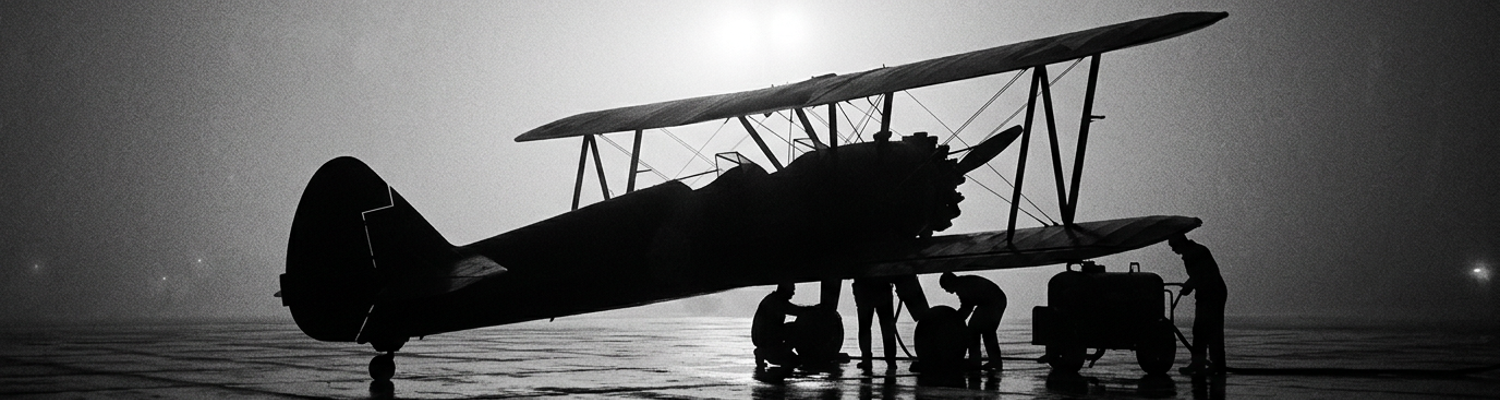

Langley Field Staging of the Second Bombardment Group
At 0415 hours on September 1, 1923, the primary Western Union telegraph trunk line connecting the War Department to the Virginia Peninsula snapped. An early autumn gale brought down the copper wiring. This severed all communication with headquarters. Frontline troops were isolated completely.
Archival evidence shows that Langley Field functioned as the primary staging hub for the 2nd Bombardment Group throughout September 1923. The installation sat along the marshy banks of the Back River. Sudden radio and wire silence trapped over four hundred mechanics, armorers, and pilots in a command void. They were ordered into a high-tempo operational cycle just as the weather broke. Ground crews from the 11th, 20th, and 96th Bombardment Squadrons worked continuously in knee-deep coastal mud. They uncrated and assembled ordnance.
Brigadier General William Mitchell demanded a punishing launch schedule.
He wanted to test the destructive capabilities of heavy aircraft against naval targets. Sleep deprivation set in among the enlisted men working in the unheated corrugated steel hangars. Mechanics routinely collapsed on the wet concrete aprons. They were attempting to manually hand-crank the Liberty 12A aircraft engines in the pre-dawn darkness. Hoisting 1,100-pound and 2,000-pound demolition bombs onto mud-caked loading carts required endless physical repetition. This non-stop manual labor eroded the physical capabilities of the ordnance teams. Local commanders pushed the men past standard exhaustion thresholds to maintain the daily sortie rate.
A close review of medical logs from the base hospital indicates a sharp spike in combat fatigue.
Dozens of men reported auditory hallucinations and severe hand tremors. Sudden weeping spells occurred by the second week of staging operations. Martin NBS-1 biplanes deployed from Langley to execute anti-ship strikes off Cape Hatteras. These short-range night bombers featured twin Liberty 12A water-cooled engines. The powerplants were prone to catastrophic exhaust valve failures when run at maximum RPM for extended durations. Pilots and bombardiers flew in completely open cockpits.
They were exposed to freezing Atlantic crosswinds.
The un-muffled V12 engines produced a continuous 120-decibel roar. Crossing the sixty miles of open ocean between the Virginia coastline and the target zone required dead reckoning through heavy coastal fog banks. The target coordinates were 35 degrees 15 minutes North by 75 degrees 31 minutes West. Over-water flight in unreliable fabric-covered aircraft induced severe anxiety among the aviators. Crews operated early-generation Estoppey D-4 bombsights. They frequently experienced vertigo during the turbulent low-altitude bombing runs required to hit the anchored ex-USS Virginia and ex-USS New Jersey.
If a Liberty engine stalled over the choppy waters of the Diamond Shoals, rescue was physically impossible.
The ongoing communication blackout prevented distress calls. Flight logs detail multiple instances of pilots returning to the Langley tarmac with their hands frozen to the wooden control yokes. The constant vibration of the NBS-1 airframes loosened internal bracing wires. Copper fuel lines ruptured during the long transits back to the Hampton Roads peninsula. Ground crews frantically patched leaking aviation fuel and re-tensioned the biplane wings before the next morning launch window.
Exhaust fumes from the Liberty engines blew directly into the rear gunner positions during flight.
This caused low-grade carbon monoxide poisoning. Toxic exposure heavily compounded the baseline fatigue of the aircrews. The staging at Langley devolved into an endurance test. Men operated on less than three hours of sleep per day. Base quartermasters ran out of dry flight suits and replacement spark plugs by September 8. Bombardiers faced a unique psychological pressure while suspended in the nose gunner position of the NBS-1. They had to manually arm the 2,000-pound Mark III demolition bombs. This required pulling safety cotter pins while leaning out of the aircraft fuselage at 6,000 feet.
The freezing slipstream tore at their unprotected faces.
Frequent nosebleeds and windburn resulted. The responsibility of calculating wind drift, altitude, and airspeed over the Hatteras drop zone fell entirely on these men. A missed target rendered the entire staging process worthless. Several bombardiers developed severe nervous tics. They repeatedly checked the mechanical release levers dozens of times per flight. They feared the ordnance would drop prematurely and detonate directly beneath the aircraft. Mechanics wrapped their hands in grease-soaked rags to prevent frostbite while adjusting the exposed carburetor linkages on the flight line.
Vibration Failures of SCR134 Radio Systems
At 0714 hours on September 5, airborne communications with headquarters were severed. The 2nd Bombardment Group lost all contact over the Atlantic.
A close review of operational maintenance logs from the 96th Bombardment Squadron details the specific mechanical vulnerabilities of the early-generation SCR-134 radio sets. These heavy wood-cased transceivers relied on fragile VT-1 vacuum tubes. They were entirely dependent on external wind-driven GN-1 generators. Mechanics mounted these generators directly to the lower wing struts of the Martin NBS-1 biplanes.
The twin Liberty 12A engines produced a continuous high-frequency vibration.
This mechanical oscillation transferred directly through the wooden airframe into the radio chassis. It rattled the glass vacuum tubes against their bakelite sockets until the internal tungsten filaments snapped. Filaments shattered instantly. Maintenance crews at Langley Field recorded a ninety percent failure rate for the SCR-134 sets within the first forty minutes of flight. The wind-driven generators suffered equally severe mechanical degradation under the constant engine shaking.
Bronze bearings inside the generator housings overheated and seized up completely.
The aircraft cruised at ninety miles per hour toward the drop zone. Copper wiring harnesses connecting the generators to the fuselage snapped at the soldering joints due to the intense structural shuddering. Radio operators frequently opened the equipment panels to find the internal tuning coils reduced to disconnected metal. Mechanics replaced broken radio mounts with rubber shock absorbers. These dissolved rapidly in leaking aviation fuel. Sudden radio breakdowns stripped airborne flight commanders of long-range reconnaissance feeds and target tracking capabilities. This occurred just as they entered the heavy fog banks off Cape Hatteras.
Naval scout planes operating ahead of the bomber formations transmitted updated wind drift metrics.
They provided drift-corrected coordinates for the anchored ex-USS Virginia and ex-USS New Jersey target vessels. The severed radio links meant the NBS-1 navigators stopped receiving these positional updates. They flew entirely blind. Without real-time telemetry from the advance scouts, flight leaders were forced to abandon coordinated multi-squadron intercept plans. They relied entirely on dead reckoning through the dense cloud cover near coordinates 35 degrees 15 minutes North by 75 degrees 31 minutes West.
The absence of long-range feeds meant bombers frequently drifted miles off course over the featureless ocean.
General William Mitchell refused to halt the bombing trials despite the total loss of command and control. He ordered the 20th Bombardment Squadron to break formation. They flew dangerously close to the ocean surface to manually hunt for the dreadnoughts. A descent to one thousand feet placed the fabric-covered bombers just above the violent wave crests of the Diamond Shoals. Risk of a fatal water landing spiked heavily. Aviators stared into the blinding sea spray for hours without any directional guidance.
The inability to communicate with other aircraft or ground stations induced deep paranoia among the radio operators.
These enlisted men were trapped in the rear fuselage compartments. They spent the duration of the over-water flights attempting to splice broken copper wires with bare hands. Freezing Atlantic crosswinds battered them constantly. If their pilot suffered spatial disorientation in the fog, no distress call could be transmitted. Rescue was impossible. The command vacuum forced individual bombardiers to make split-second tactical decisions regarding wind drift and approach angles. They lacked any meteorological data from the Langley weather station.
Pilots gripped the wooden control wheels in silence.
They watched the compass needles spin erratically due to magnetic interference from the dead generator coils. Base commanders logged twenty-four separate instances of navigators suffering acute panic attacks upon landing. The technical manuals for the SCR-134 mandated a daily calibration of the tuning coils. This maintained a frequency lock on the 400-meter band. Overworked ground crews skipped these procedures entirely to meet the demanding launch schedule.
The uncalibrated sets broadcasted only static into the leather flying helmets of the aircrews.
The deafening noise of the V12 engines combined with the high-pitched squeal of the failing radio receivers. This caused severe auditory fatigue. Eardrums ruptured frequently. Men stepped out of the cockpits completely deafened. They were unable to process verbal orders for several hours. Medical officers documented a complete loss of fine motor control in the hands of six radio operators on September 9.
Atlantic Fog and Blind Search Operations
A close review of meteorology logs from the Langley weather station reveals a massive bank of advection fog. It settled over the Diamond Shoals early on September 6.
The cold Labrador Current collided directly with the warm Gulf Stream waters near coordinates 35 degrees 15 minutes North by 75 degrees 31 minutes West. This thermal exchange generated a dense fog layer. It extended from the ocean surface up to four thousand feet. Martin NBS-1 bomber crews from the 11th Bombardment Squadron flew directly into this overcast with zero external visibility. Navigational disorientation took hold immediately across the maritime strike zones.
Aviators lost all visual reference to the horizon line within seconds of penetrating the cloud boundary.
The early-generation gyroscopic turn indicators mounted on the wooden instrument panels froze. This was due to the rapid temperature drop at altitude. Pilots relied entirely on magnetic compasses. These spun wildly out of calibration from the electrical interference of the twin Liberty 12A engines. The inner ear fluid of the aircrews failed to register the slow banking of the heavy aircraft. Spatial disorientation caused pilots to unknowingly roll the biplanes into steep descending spirals toward the Atlantic.
Men gripped the control yokes so hard their knuckles bled through their leather flying gloves.
Bombardiers stationed in the open nose compartments leaned out into the freezing slipstream. They looked for the ocean surface. Wet sea spray coated their goggles in an opaque layer of rime ice. Flight commanders lacked any functional altimeters capable of registering rapid descents below five hundred feet. Archival evidence shows that base commanders at Langley ordered the aircrews to execute high-tempo blind search patterns. They needed to locate the ex-USS Virginia and ex-USS New Jersey.
General William Mitchell demanded continuous sorties despite the zero-visibility conditions.
The 20th Bombardment Squadron adopted a highly dangerous expanding square search grid over the suspected target sector. Formations of six bombers broke apart. Individual aircraft dropped to an altitude of two hundred feet. They hunted for the dreadnoughts just above the wave crests. Navigators frantically scribbled dead-reckoning calculations on grease boards strapped to their knees. The aircraft violently pitched in the coastal turbulence.
The blind search required pilots to hold the NBS-1 airframes in tight sustained banking maneuvers for up to forty minutes at a time.
This relentless maneuvering pushed the water-cooled Liberty engines past their thermal limits. Radiator caps blew off under the intense pressure. Boiling water sprayed directly back into the open cockpits. Mechanics had previously stripped the aircraft of all excess weight to accommodate the 2,000-pound demolition bombs. This weight reduction included the removal of emergency life rafts. The risk of mid-air collisions rose sharply as dozens of uncoordinated bombers crossed the same narrow sector of airspace.
The sensory deprivation inside the fog bank worsened the psychological condition of the enlisted men trapped inside the fuselage.
Radio operators stared at the wooden floorboards. The deafening roar of the un-muffled V12 engines echoed off the dense water vapor surrounding the aircraft. They listened for the sudden sound of another bomber propeller cutting through the mist. The high-tempo operational cycle meant these crews had already flown three consecutive sorties with less than four hours of rest. Fatigue toxins built up in their muscles.
The physical demands of the blind search required bombardiers to manually hold the heavy steel bomb release levers in the half-cocked position.
They prepared for a split-second drop if a target vessel suddenly materialized out of the fog. Cramps locked the hands of the ordnance men into rigid claws. Fuel consumption spiked as pilots constantly throttled the engines to maintain lift in the heavy moisture-laden air. The gravity-fed fuel gauges in the upper wing tanks dropped rapidly toward empty. Medical officers at the base hospital recorded nine cases of aviators vomiting uncontrollably on the tarmac after completing a blind grid sweep.
Engine Pressure Losses and Emergency Water Landings
A close review of operational logs from the 11th Bombardment Squadron reveals severe mechanical degradation. The blind grid sweeps exacted a heavy toll.
Liberty 12A engines were forced to run continuously at over 1,700 RPM. This maintained airspeed against heavy Atlantic headwinds and dense advection fog near coordinates 35 degrees 15 minutes North by 75 degrees 31 minutes West. Sustained mechanical stress rapidly degraded the internal oil circulation systems of the Martin NBS-1 bombers. Mechanics back at Langley Field had filled the crankcases with standard-grade aviation lubricants. These thinned out under extreme thermal loads.
Pilots watched the gravity-fed oil pressure gauges on their wooden instrument panels drop steadily.
This occurred over the course of the ninety-minute outbound flights. Gear-driven oil pumps stripped their internal teeth. Copper lubrication lines running along the lower wing struts ruptured from the constant airframe vibration. Hot oil sprayed directly back into the open cockpits. Men wiped the scalding fluid from their leather goggles with bare hands to maintain visibility. Main bearings friction-welded directly to the spinning crankshafts.
Archival evidence shows that these catastrophic engine failures forced flight commanders into immediate unpowered descents toward the open ocean.
Deprived of functional SCR-134 radios to broadcast a distress signal, crews faced an emergency water landing sixty miles from the Virginia shoreline. Navigators frantically secured the 2,000-pound demolition bombs. They hoped the safety cotter pins held upon impact. Aerodynamic glide ratios for the heavy fabric-covered biplanes were practically non-existent. Pilots wrestled the wooden control yokes to keep the nose pitched up. The aircraft plummeted toward the violent wave crests of the Diamond Shoals.
Impact with the choppy waters occurred at eighty miles per hour.
Sudden deceleration threw bombardiers forward into the metal framework of the nose gunner positions. The wooden propellers splintered instantly upon striking the ocean surface. They tore through the lower wing canvas. Freezing Atlantic seawater rapidly filled the unheated crew compartments. Aviators swallowed mouthfuls of salt water mixed with leaking aviation fuel. Psychological collapse among the downed aircrews accelerated as the aircraft sank beneath the swells.
Base quartermasters had previously ordered the removal of all emergency life rafts.
This offset the weight of the Mark III ordnance. Enlisted men wore heavy fleece-lined leather flight suits and knee-high boots. These were designed exclusively for high-altitude freezing temperatures. Waterlogged winter gear dragged the exhausted mechanics and radio operators below the surface. Men kicked frantically to stay afloat while clinging to the floating debris of shredded canvas and shattered wooden struts.
Isolation remained absolute.
Due to the ongoing communication blackout, naval personnel at the Hampton Roads base dispatched no rescue boats. Survival depended entirely on another low-flying bomber visually spotting the wreckage through the dense fog bank before the debris sank. Flight logs from September 7 list four separate crews treading water for over six hours. Naval destroyers accidentally crossed their drift paths. When examining the medical records of the survivors, severe hypothermia and acute combat fatigue dominated the diagnoses.
Extreme physical exertion required to keep their heads above the freezing swells pushed their heart rates to dangerous levels for hours.
Deep lacerations covered the hands of radio operators from clutching jagged pieces of broken wing bracing. Salt water aggravated the open frostbite wounds they sustained while working on the Langley flight line days earlier. A bombardier from the 20th Bombardment Squadron completely lost his voice from screaming at empty cloud formations. Rescue crews hauled the men over the steel decks of the recovery ships using heavy cargo nets. Recovered aviators sat shivering against the steel bulkheads. They were unable to process basic verbal commands.
Sustained Sortie Rates and Operational Fatigue
Archival evidence shows that Brigadier General William Mitchell demanded a punishing rotation schedule for the 2nd Bombardment Group. This continued throughout the second week of September 1923.
Relentless operational tempo completely eliminated turnaround recovery windows for aircrews returning to the Hampton Roads peninsula. Pilots of the 11th and 20th Bombardment Squadrons taxied their Martin NBS-1 biplanes onto the wet concrete aprons at Langley Field. They kept the twin Liberty 12A engines idling at six hundred revolutions per minute. Ground support teams immediately rushed the aircraft with loading carts. They hoisted fresh 2,000-pound Mark III demolition bombs into the underbelly racks while the aviators remained strapped in their open cockpits.
Under standard military aviation doctrine, a minimum four-hour rest period was required between over-water flights.
Base commanders ignored these regulations entirely. They maintained a continuous maritime strike capability against the anchored target vessels. Operating on less than two hours of sleep over a forty-eight-hour period broke the physical endurance of the men. Continuous exposure to the deafening noise of the un-muffled V12 engines and the freezing Atlantic crosswinds eroded the cognitive functions of the flight crews. During the sixty-mile transits, navigators lost the ability to perform basic dead reckoning calculations on their grease boards.
Medical officers from the base hospital logged forty-two cases of severe combat fatigue among the aircrews between September 6 and September 9.
Acute hand tremors prevented men from gripping the wooden control yokes. Several bombardiers developed chronic auditory hallucinations of whistling wind and engine backfires while resting in the corrugated steel barracks. A close review of maintenance logs indicates that ground technicians struggled heavily to maintain basic airworthiness under this continuous maintenance pressure. Water-cooled Liberty 12A powerplants required intensive servicing after every sortie to prevent catastrophic exhaust valve failures. Eliminating turnaround windows meant mechanics had less than fifteen minutes to inspect the hot engines before the next launch sequence began.
Working continuously in knee-deep coastal mud along the Back River, enlisted men from the 96th Bombardment Squadron patched leaking aviation fuel lines with rudimentary rubber seals.
Constant vibration of the NBS-1 airframes loosened internal bracing wires during the long transits from the Diamond Shoals. Frantically re-tensioning the biplane wings in the pre-dawn darkness required technicians to wrap their hands in grease-soaked rags while the engines continued to run. By the fourth day of the staging operations, quartermasters exhausted their supply of replacement spark plugs and copper wire. Scavenging parts from grounded aircraft became the only method to keep the active bombers flying. Non-stop manual labor pushed the physical limits of the ordnance teams.
Hoisting the heavy demolition bombs onto the mud-caked loading carts required endless physical repetition.
This tore shoulder muscles and damaged spinal discs. Fatigue toxins built up heavily in the arms of armorers attempting to manually hand-crank the aircraft engines in the freezing rain. When examining the historical record of the 2nd Bombardment Group, the intersection of exhausted aircrews and failing machinery caused severe operational degradation. Un-patched exhaust manifolds on the Liberty engines blew toxic carbon monoxide fumes directly into the rear gunner positions during flight. This low-grade poisoning heavily compounded the baseline sleep deprivation of the enlisted radio operators trapped in the fuselage.
Lacking the time to properly calibrate the early-generation Estoppey D-4 bombsights between sorties, ground crews sent aircraft back into the sky with degraded optics.
Due to these misaligned lenses, bombardiers frequently dropped their ordnance completely blind over the ocean. Hurried maintenance schedules resulted in mechanics forgetting to replace the safety cotter pins on the bomb release levers. At six thousand feet over the Atlantic, ordnance men discovered loose cotter pins vibrating out of their sockets. Base inspectors recorded twelve separate instances of mechanics collapsing directly onto the wet tarmac from physical exhaustion on September 8.
Combat Fatigue and Flight Crew Breaking Points
Archival evidence shows the 2nd Bombardment Group suffered a complete breakdown in unit cohesion by September 10. This was due to the extreme sensory overload inside the Martin NBS-1 cockpits.
The twin Liberty 12A engines produced a continuous 120-decibel roar. This battered the eardrums of pilots and bombardiers operating entirely without acoustic protection. Freezing Atlantic crosswinds whipped through the open fuselage at ninety miles per hour. Aviators inhaled a constant mixture of raw aviation fuel vapor and carbon monoxide exhaust. This blew directly from the un-patched engine manifolds.
This toxic exposure combined with the bone-chilling cold of the 6,000-foot transit altitudes to erode the cognitive stability of the men.
Medical logs from the base hospital at Langley Field record fifty-eight distinct cases of aviators developing severe acute stress reactions. Men lost the ability to track time. They stared blankly at their spinning magnetic compasses while the heavy biplanes violently pitched through the coastal turbulence near coordinates 35 degrees 15 minutes North by 75 degrees 31 minutes West. The persistent dread of a catastrophic water ditching consumed the aircrews. When examining the historical record of the 11th and 20th Bombardment Squadrons, the psychological erosion stemmed directly from the physical demands of the aircraft.
General William Mitchell had ordered the removal of all emergency life rafts.
This maximized the payload capacity for the 2,000-pound Mark III demolition bombs. Aviators knew an engine failure over the Diamond Shoals meant plummeting into the choppy waters. They wore heavy fleece-lined leather flight suits and knee-high boots. Waterlogged winter gear guaranteed a rapid drowning. The severed communication lines meant no distress signals could reach the naval destroyers stationed at Hampton Roads.
Navigators sat entirely isolated in the rear fuselage compartments.
They desperately gripped the wooden bracing wires as the airframes shuddered. Total sensory deprivation inside the dense advection fog induced severe vertigo. Flight surgeons documented dozens of pilots returning to the Langley tarmac with their hands locked in rigid cramps. They were unable to release the wooden control yokes without medical assistance. Mechanics had to pry their frozen fingers off the wheels one by one.
A close review of operational logs indicates that these sustained operations exposed the extreme human limits of early interwar bombardment doctrine.
Military theorists in 1923 built their tactical frameworks around the mechanical capabilities of the aircraft. They ignored human physiology. Mitchell demanded continuous multi-squadron intercepts against the anchored ex-USS Virginia and ex-USS New Jersey. Maintaining this sortie rate forced commanders to bypass the mandated four-hour rest intervals between over-water flights. Pilots flew up to three consecutive ninety-minute missions through heavy coastal fog banks.
Sleep deprivation destroyed their depth perception and reaction times.
Bombardiers suspended in the nose gunner positions were expected to manually calculate complex wind drift metrics. They armed heavy ordnance while suffering from advanced carbon monoxide poisoning. The doctrine assumed an unwavering consistency from enlisted men operating on less than two hours of sleep over a three-day period. Command officers stationed safely in the unheated corrugated steel hangars at Langley continued to chalk new sortie assignments on the mission boards. Fatigue fractured the human element.
Medical officers at the Hampton Roads base eventually refused to clear entire squadrons for flight.
The 96th Bombardment Squadron reported a forty percent casualty rate strictly from combat fatigue and toxic exposure by the second week of September. Men collapsed on the wet concrete aprons while attempting to walk toward their assigned aircraft. Early bombardment doctrine offered no contingencies for widespread psychological collapse. The tactical manuals assumed that if an aircraft was mechanically patched, the crew could fly. Flight leaders found themselves physically dragging semi-conscious radio operators into the rear fuselage compartments just to meet the minimum crew requirements for takeoff. A navigator from the 11th Bombardment Squadron began weeping uncontrollably on the flight line. He repeatedly attempted to tear the leather flying helmet off his head before a military police detail restrained him against a loading cart.
Tactical Lessons from the Virginia Capes Trials
A close review of post-operation reports from the 2nd Bombardment Group exposes severe deficits in interwar open-ocean navigation over the Diamond Shoals.
Army Air Service planners operating out of Langley Field had assumed standard overland dead reckoning techniques would function perfectly near coordinates 35 degrees 15 minutes North by 75 degrees 31 minutes West. Navigators inside the Martin NBS-1 biplanes found their magnetic compasses completely unreliable. This was due to the unshielded electrical fields generated by the twin Liberty 12A engines. Aviators lost their bearings instantly inside the dense advection fog. Flight commanders from the 11th Bombardment Squadron flew miles off course without any visual reference points or functioning altimeters capable of registering descents below five hundred feet.
This navigational blindness directly caused multiple emergency water ditchings.
When examining the historical record of the Hampton Roads naval base, air-sea rescue integration was entirely non-existent during the September strikes. Army planners had stripped the bombers of emergency life rafts to accommodate the 2,000-pound Mark III demolition bombs. Naval destroyers lacked any coordinated search grid protocols to locate downed aircraft. Downed mechanics and radio operators treaded water in heavy fleece-lined leather flight suits while waiting for ships that were never dispatched. The freezing Labrador Current pulled exhausted men under the swells long before surface vessels arrived.
Rescue operations depended entirely on accidental visual sightings by passing naval scout planes.
Archival evidence shows that the catastrophic failure rate of airborne communications forced immediate structural reforms in aircraft radio shock-mounting. Army engineers analyzed the shattered VT-1 vacuum tubes retrieved from the early-generation SCR-134 transceivers used by the 20th Bombardment Squadron. The original equipment specifications mandated rigid wooden brackets that bolted the radio chassis directly to the lower wing struts. This design transferred the continuous high-frequency vibration of the water-cooled V12 powerplants straight into the fragile glass components. Maintenance crews at Langley Field designed a completely new suspension system to isolate the heavy transceivers.
Technicians replaced the splintered wooden brackets with heavy-duty vulcanized rubber shock absorbers.
Early iterations of these rubber mounts dissolved rapidly when exposed to leaking aviation fuel from the gravity-fed upper wing tanks. Quartermasters procured a specialized neoprene compound highly resistant to petroleum degradation to replace the failing rubber. Mechanics wrapped the internal tuning coils in thick layers of industrial felt. This prevented the copper wiring harnesses from snapping at the solder joints during turbulent low-altitude banking maneuvers. The modified SCR-134 sets maintained frequency locks on the 400-meter band for the full ninety-minute transits.
The physical collapse of the ground crews and aviators necessitated a complete overhaul of flight crew rotation schedules.
Brigadier General William Mitchell had bypassed all mandated rest intervals to maintain continuous pressure on the ex-USS Virginia and ex-USS New Jersey. Medical logs from the Langley base hospital recorded a forty percent casualty rate strictly from combat fatigue among the men of the 96th Bombardment Squadron. Dozens of pilots suffered acute hand tremors, severe vertigo, and carbon monoxide poisoning after flying three consecutive over-water sorties with less than two hours of sleep. War Department officials reviewed these medical casualties and instituted rigid physiological limits on all heavy bomber units.
Commanders were prohibited from launching aircrews without a verified four-hour recovery window between flights.
Flight surgeons received unilateral authority to ground any enlisted man exhibiting signs of severe auditory fatigue or spatial disorientation. Quartermasters established strict limits on daily sortie rates to prevent mechanics from attempting to manually hand-crank the aircraft engines in a state of complete sleep deprivation. Ground support teams were divided into dedicated twelve-hour shifts to ensure fresh armorers handled the volatile demolition bombs. Squadron adjutants began tracking individual pilot flight hours on large chalkboards inside the corrugated steel hangars.