
A Fragile Peace and a Digital Linchpin
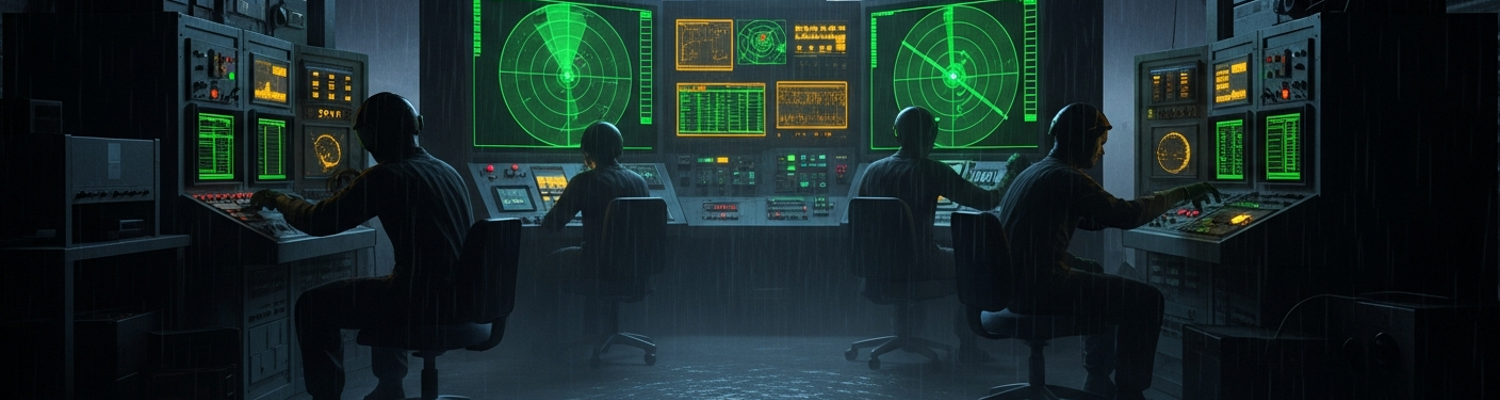
The task assigned to United States Marines in the northern sector of South Vietnam in early 1973 was defined by contradiction. The Paris Peace Accords, signed January 27, 1973, mandated a full cessation of hostilities and the withdrawal of American combat forces. Archival evidence, however, indicates multiple North Vietnamese Army divisions remained intact and entrenched south of the Demilitarized Zone, particularly within the I Corps Tactical Zone. The ceasefire was a political fiction. For the men remaining, it was a shift in the rules of a war that had not ended. American strategy now hinged on the threat of punitive airpower, a responsibility that fell heavily on the units left behind. While most ground troops departed, a small detachment from Marine Air Control Squadron 4 (MACS-4) remained on Monkey Mountain, east of Da Nang. These Marines were tasked with maintaining a data link between Air Force and Navy assets, an electronic linchpin for the region’s defense. The squadron’s main body, with its comprehensive Marine Tactical Data System (MTDS), had already departed in 1971. The remaining detachment was responsible for a component of this network, the AN/TYQ-3 Tactical Data Communications Central, ensuring different service branches could still share a common air picture.
This technical capability was foundational to the post-1973 American strategy. The massive bombing campaigns of 1972 had demonstrated the potential of American airpower. Post-accord planning moved away from widespread bombing toward a focus on surgical decapitation strikes. The intent was not to re-fight the war but to deter treaty violations by holding high-value North Vietnamese assets at risk. Planners identified command-and-control bunkers, supply depots, and specific leadership locations as primary targets. Executing such a strategy required a flawless and rapid sensor-to-shooter capability. Intelligence would identify a target, the radar network managed by elements like the MACS-4 detachment would locate and track it, and that data needed to be transmitted instantly and securely to strike aircraft. The entire architecture of the peace accord rested on the integrity of this electronic data stream.
The AN/TSQ-29 Tactical Data Interface
The electronic architecture supporting the 1973 ceasefire depended on the aging Marine Tactical Data System. Operational logs from the MACS-4 detachment on Monkey Mountain show the introduction of a highly experimental and classified system intended to augment the core MTDS functions. This was not a replacement but a bolt-on capability designated the AN/TSQ-29 Tactical Data Interface (TDI). It consisted of a single proprietary processing module integrated into the detachment’s AN/TYQ-3 Tactical Data Communications Central and a new software package that ran parallel to the main MTDS operating system. The TDI’s purpose was singular. Speed. Developed under a classified project by Litton Industries, the TDI was designed to bypass several of the MTDS’s slower, sequential processing steps. Where the standard system required an operator to manually correlate a track before passing it through the joint-service interface, the TDI was built to automate this process for pre-approved target types, reducing latency in the data chain.
The system was a direct response to the new strategic environment. The TDI’s primary function was to provide near real-time targeting updates for punitive air strikes. In the event of a treaty violation, planners envisioned launching surgical strikes against North Vietnamese command posts. This required a drastically compressed sensor-to-shooter loop. The TDI formatted a minimalist data packet containing only target coordinates, elevation, a timestamp, and a classification code. It broadcast this packet on a dedicated, encrypted UHF frequency. The signal could be received directly by F-4 Phantoms and A-6 Intruders equipped with a corresponding AN/ARQ-38 receiver and decoder set, which displayed the information on a small cathode-ray tube display in the cockpit.
The TDI’s most ambitious feature was its secondary role in supporting tactical airlift. Archival records show the system was also designed to support high-risk aerial resupply and troop transport missions by C-130 Hercules aircraft. This was a departure from typical data-link applications, which focused on fighters and bombers. The TDI could generate a dynamically updated safe corridor for transport aircraft transiting areas with known anti-aircraft artillery threats. The system would receive threat location updates from ground teams or radar tracks, process these against a pre-planned flight route, and continuously transmit adjustment vectors to the C-130. Inside the transport’s cockpit, the specialized receiver translated this data into a simple graphical overlay on the navigator’s station. This capability was intended for operations under the restrictive post-ceasefire rules. The entire concept rested on the uninterrupted flow of data.
Unstable Integration and Hardware Strain
The physical and software marriage of the AN/TSQ-29 TDI to the existing MTDS architecture was dangerously rushed. A review of operational logs from the MACS-4 detachment reveals a litany of problems. Litton contractors, under pressure to complete the classified installation before the final drawdown of technical personnel, implemented undocumented field modifications. The TDI’s processing module, a proprietary Litton P-44/a unit, used a different power standard than the AN/TYQ-3 Tactical Data Communications Central. Technicians fabricated custom wiring harnesses and bypassed several military-specification power regulators, creating a persistent risk of voltage irregularities. The new module also generated a thermal load that the AN/TYQ-3 shelter’s existing air conditioning system was not designed to handle. Maintenance records show repeated failures of the primary cooling unit. Operators were forced to run the system with the shelter doors open, exposing sensitive electronics to the extreme humidity and salt air of the Monkey Mountain environment.
Instability was not merely a consequence of hardware mismatches; it was built into the software architecture. Declassified reports indicate the TDI’s operating software ran as a parallel process alongside the main MTDS tracking and display programs. This design choice prioritized speed over stability. The two systems constantly competed for the AN/TYQ-3’s limited computational resources. This frequently led to processor timing conflicts and memory allocation errors that would cause the entire data system to freeze. An operator attempting to vector a C-130 into a safe corridor could suddenly find their console unresponsive, the screen locked on a static image. The only remedy was a hard reboot of the entire AN/TYQ-3. This procedure could take up to twenty minutes. During that time, all data-link capabilities for the sector were completely offline. More insidiously, the TDI software would sometimes write erroneous data packets into the MTDS’s main track file. This generated ghost targets on radar screens or corrupted the location data of legitimate friendly aircraft. Command authorities, desperate for the near-real-time targeting capability the TDI promised, accepted these substantial risks.
An Environment Hostile to Signals
The airspace over South Vietnam’s northern provinces in 1973 was one of the most saturated electromagnetic environments of the conflict. The sky was screaming with signals. North Vietnamese Army air defense formations, re-equipped by the Soviet Union, operated a dense network of early-warning and fire-control radars. Soviet-made P-12 Spoon Rest radars, operating in the VHF band, constantly swept the air, their powerful emissions creating harmonic interference that could bleed into higher frequency bands. On top of this was the chaotic spectrum of friendly forces. US Air Force, Navy, Army, and ARVN units each operated their own distinct communications nets, all competing for clear frequencies. The Da Nang area alone was home to dozens of high-power military radio relays and tactical air navigation beacons. The AN/TSQ-29 TDI was designed to function in a contested battlespace, but its designers had not accounted for the sheer density of overlapping signals present in I Corps.
This electronic chaos was compounded by severe physical and atmospheric factors. The MACS-4 detachment’s position on Monkey Mountain provided a commanding view over the Gulf of Tonkin, but its line-of-sight transmission was compromised in other directions. To the west and south, the Annamite Cordillera, a rugged spine of jungle-covered mountains, created immense radio shadows. The AN/TRC-97A radio set used to broadcast the TDI’s data operated on a UHF frequency that required a direct, unobstructed path. A C-130 transport attempting a low-level supply mission through one of these valleys would lose the safe corridor data feed the moment it descended below the ridgeline.
Weather was an even more persistent enemy. During the monsoon season, the air was saturated with extreme humidity. Torrential downpours were a daily occurrence. This high moisture content caused significant attenuation of the UHF signal, reducing the AN/TRC-97A’s broadcast range by as much as forty percent in heavy rain. A pilot could have a perfect signal lock on a clear day but find the system unusable under the exact overcast conditions that favored concealed air operations.
Rain could blind the system.
Documented Mission Failures in the Field
Declassified after-action reports from early 1973 reveal the immediate consequences of the AN/TSQ-29 TDI’s instability. The system’s data corruption errors transformed its safe corridor function for C-130 transports into a liability. During a simulated high-risk resupply mission for a reconnaissance team operating west of Da Nang, the TDI software suffered a memory allocation error just as it transmitted a flight path update. Instead of generating a sync error in the cockpit, the corrupted data packet was accepted by the C-130’s AN/ARQ-38 receiver as a valid command. The navigator’s display showed a sudden, inexplicable vector to a new landing zone, coordinates shifted by several kilometers. Trusting the new automated system, the flight crew began a descent toward the false location. This trajectory took them directly over a river valley known to host multiple North Vietnamese anti-aircraft artillery positions. The mission was aborted only when the pilot visually identified terrain features that did not match his briefing materials, recognizing the danger moments before the aircraft would have been exposed to ground fire.
The data was a lie.
For ground teams, the TDI’s failures were measured in minutes of delayed fire support. Archival logs document an incident where a Marine Force Reconnaissance patrol, designated Codbill, came into heavy contact with a North Vietnamese Army unit in the hills south of the Hải Vân Pass. The patrol leader made an urgent request for close air support. On Monkey Mountain, the MACS-4 operator received the coordinates and attempted to pass them directly to a section of F-4 Phantoms orbiting on station. At that moment, the AN/TYQ-3 console froze, a victim of a processor timing conflict between the TDI software and the main MTDS operating system. The screen was locked. The only available recourse was a hard reboot, a procedure that took twenty minutes to complete. For those twenty minutes, the entire data-link for the sector was offline. The F-4 pilots, deprived of their digital targeting feed, were forced to rely on cluttered voice communications to have the ground team talk them onto the target. The promised seconds of the sensor-to-shooter cycle had become an agonizing liability.
The Psychological Toll on Air and Ground Crews
The AN/TSQ-29 TDI did not just fail on a technical level. A review of personnel logs from 1973 reveals a profound psychological toll on the men forced to operate it. For the MACS-4 detachment on Monkey Mountain, the system was a source of intense cognitive dissonance. In the quiet, air-conditioned dark of the AN/TYQ-3 shelter, operators were presented with a screen that promised an omniscient view of the battlespace. This created a powerful illusion of control. That illusion was repeatedly shattered. The simulated resupply mission where the TDI transmitted corrupted coordinates, directing a C-130 toward an AAA cluster, was a defining moment. The system did not just fail to provide a safe corridor; it actively created a false one. This transformed the operators from controllers into potential accessories to a catastrophe, a traumatic reversal of their role.
This was not a secret known only to the controllers. The erosion of trust spread from the operators to the aircrews, poisoning the operational chain. For the F-4 Phantom crews tasked with executing punitive strikes, the TDI was a dangerous gamble. The system’s predictable failure mode, working perfectly on approach and then cutting out during the critical high-G maneuver of an attack run, became a known feature. Pilots were being asked to trust a system that was guaranteed to abandon them at the moment of maximum vulnerability. This bred a deep distrust not only of the technology but of the leadership that mandated its use. The operators on Monkey Mountain logged repeated complaints from aircrews. These reports were passed up the chain of command. Yet, the directive remained: prioritize the TDI. For the men on the ground and in the air, it appeared that command was willing to accept the risk of their lives for the promise of a functional data-link.
An Erosion of Trust in the Chain of Command
The final point of failure was the AN/ARQ-38 receiver in the aircraft. Prone to synchronization errors, the receiver often struggled to maintain a lock on the encrypted data stream, a problem made worse by signal attenuation and the chaotic electromagnetic environment. After-action reports from F-4 crews describe the tactical consequence with stark clarity. A pilot would have a perfect target track on approach, only to have the display flash a NO SYNC error the moment they initiated a high-G turn for the final attack run. The sudden maneuver, combined with minor power fluctuations in the aircraft’s systems, was enough to break the fragile lock. To reacquire the signal, the pilot had to abort the attack, level out, and fly a predictable flight path. This sacrificed surprise and exposed the aircraft to AAA. For a C-130 crew flying a low-level insertion, the loss of the safe corridor feed meant they were suddenly flying blind into a potential AAA trap, their one technological advantage having vanished completely.
This systemic unreliability created a pervasive sentiment that the advanced technology, far from being a force multiplier, was an active impediment to survival. The psychological impact was severe, fostering a sense of helplessness and betrayal among men who felt their lives were being staked on a failed experiment. The overestimation of what the technology could deliver led to unrealistic expectations. When the system failed, the psychological fallout was devastating. Confidence in the technology was gone. Soon, confidence in the chain of command that forced its use began to break down as well.
Strategic Failure of a Punitive Deterrent
The direct failure of the post-ceasefire deterrence strategy is clear in operational records. The central pillar of this strategy, the punitive air strike, was rendered ineffective by the AN/TSQ-29 TDI’s unreliability. During one simulated decapitation mission in March 1973, a section of F-4 Phantoms was tasked with targeting a mock-up of a North Vietnamese command bunker. The MACS-4 detachment transmitted the target coordinates via the TDI. The lead aircraft received the data perfectly on its approach. As the pilot banked hard to begin his attack run, his AN/ARQ-38 cockpit display went blank, showing a NO SYNC error. The high-G maneuver had caused the receiver to lose its fragile lock on the UHF signal. The pilot was forced to abort the attack profile, pull up, and circle in a predictable pattern to reacquire the data. The element of surprise was gone. The entire tactical advantage promised by the high-speed data-link was nullified at the moment of execution. The mission shifted from a high-speed digital strike to a clumsy, voice-controlled affair.
The threat of surgical strikes had become a technical bluff. This systemic failure of the data-link directly undermined the strategic efficacy of American forces in the conflict’s concluding phase. The entire American strategy rested on a credible threat of rapid, punitive airpower to enforce the Paris Peace Accords. With the TDI proving to be unreliable, that threat lost its credibility. North Vietnamese Army intelligence, adept at electronic surveillance, would have noted the pattern of aborted high-speed attack runs and the reversion to slower, voice-vectored air support. They did not need to jam the data-link; they only needed to observe its inherent instability. This knowledge that the American high-speed strike capability was fundamentally flawed allowed NVA field commanders to act with increasing boldness. The inability to effectively hold North Vietnamese assets at risk with surgical strikes permitted an unchecked logistical buildup in the months following the ceasefire. Supply lines were reinforced and troop positions were consolidated within South Vietnam, setting the stage for future large-scale offensives. The failure of this one system component created a strategic opening for the North Vietnamese Army.