
Japanese Garrison Strength on Miyako Jima
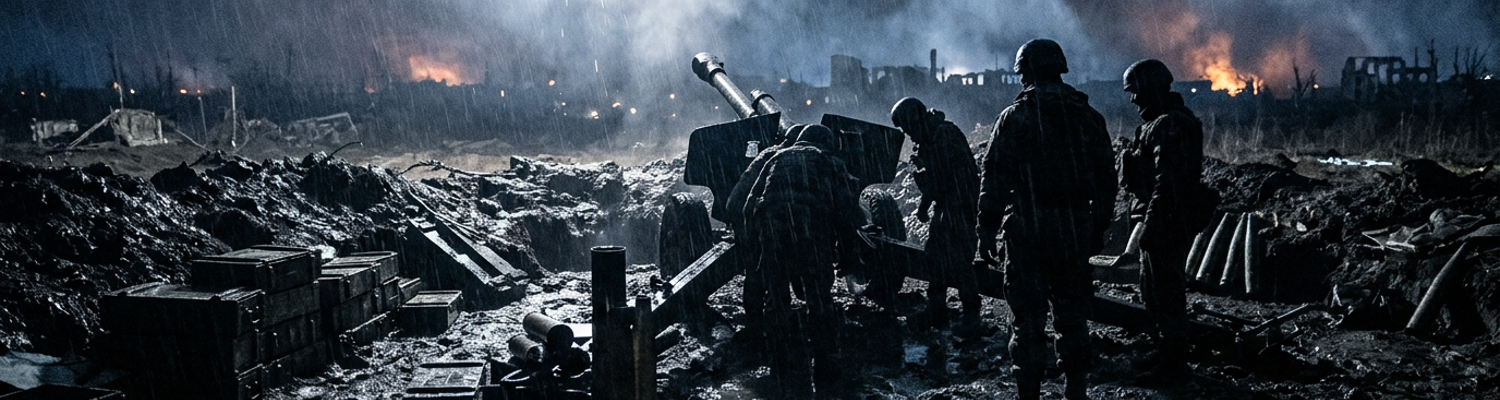
War Department Field Manual 6-20 explicitly promised that forward artillery units would enjoy uninterrupted maritime supply chains delivering one hundred fifty projectiles per gun daily. Training manuals printed in Virginia envisioned orderly depots and secure rear echelons shielded by heavy infantry cordons. Conditions on the ground in the Ryukyu island chain during late summer offered a completely different set of physical parameters. Orders from Pacific Fleet headquarters had prioritized the massive buildup on Okinawa. This strategic choice left the Miyako Jima civil administration units completely unsupported.
Pacific Fleet supply ships never arrived.
A close review of operational logs indicates that in August 1945, Japanese defenders outnumbered isolated American Civil Affairs garrisons by ten-to-one on Miyako Jima. Geography heavily favored the occupying forces. Coordinates 24.76 degrees North, 125.32 degrees East mark an island composed mostly of elevated coral limestone. This uplifted reef geology provided excellent natural fortification for an entrenched enemy. Lieutenant General Noboru Sasaki commanded approximately thirty thousand Imperial Japanese Army soldiers. Most of these troops belonged to the 28th Division and the 59th Independent Mixed Brigade. They spent the previous twelve months digging a vast subterranean network beneath Mount Nobaru. Engineering units carved interlocking fire trenches directly into the porous rock using pneumatic drills and hand picks. Coastal defense guns were dragged into these caves and mounted on custom-built iron rails. Gun crews could roll the Type 10 120mm anti-aircraft cannons forward to fire upon the beaches before retreating underground. These subterranean redoubts contained months of hoarded rations and pristine ammunition stockpiles.
Armor support did not exist.
Opposing this fortified force was a heavily under-resourced American detachment tasked originally with infrastructure reconstruction and civilian management. Sasaki directed his battalions to heavily fortify the ridges overlooking the coastal plain near Hirara. Down in the valley, the American garrison of roughly three thousand men occupied a highly vulnerable lowland perimeter. Engineering battalions attempted to scrape defensive berms out of the topsoil. High water tables flooded their foxholes within hours of digging. Malaria cases multiplied across the encampment as stagnant water pooled in the trenches. Their survival depended entirely on the technical proficiency of a few scattered artillerymen who maintained their firing lines using improvised hand tools and scavenged engine parts. Archival evidence shows that US field battery positions were trapped with fewer than twenty high-explosive rounds per tube. Primary fire support came from a single battery of M2A1 105mm howitzers entrenched in a muddy sugarcane field east of the main harbor. The heavy steel firing platforms sank several inches into the mud after every discharge. Artillerymen conducted daily inventory checks on their M1 high-explosive shells and M48 point-detonating fuzes. Men watched the stockpiles dwindle with growing alarm.
Gun captains counted every single shell.
Supply officers filed repeated radio requests for immediate resupply over their SCR-610 frequency modulated radios. Headquarters ignored every transmission due to a severe shortage of available landing craft across the theater. Gun crews faced heavy mechanical degradation of their weapons after weeks of exposure to salt air and torrential rain. Nitrogen gas in the hydro-pneumatic recoil mechanisms leaked constantly. Mechanics cannibalized rubber gaskets from destroyed transport trucks to patch the failing seals. The rifling inside the barrels grew dangerously worn from previous engagements. This internal friction reduced accuracy at long ranges. Standard firing missions typically required sustained bombardments to neutralize deeply dug enemy positions. Battery commanders restricted their fire to absolute emergencies to conserve their rapidly depleting assets. Crews slept in the mud next to the breeches of their guns. When examining the historical record of the night of August 14, the tactical imbalance becomes highly significant. Japanese infantry units began shifting down from the central ridges toward the American encampments. Forward elements of the 59th Independent Mixed Brigade moved through the dense vegetation using strict noise discipline. Civil affairs detachment commanders ordered the artillery battery to prepare for defensive fire missions along the northern approach routes. Forward observers calibrated the howitzers to strike the main road intersections leading into the harbor. Loaders set their fuzes for airbursts to maximize shrapnel spread against advancing infantry targets. Gun crews worked in total darkness to avoid drawing sniper fire. Brass casings were stacked carefully to avoid clinking noises. Ammunition crates held the very last of the theater reserves. Temperatures dropped rapidly as the sky darkened over the Pacific. Battery executive officers recorded the exact remaining ammunition count on their clipboards at 2100 hours using shaded flashlights.
The leftmost howitzer held exactly fourteen shells.
Surprise Night Assault and Ammunition Shortages
War Department Field Artillery instructions explicitly guaranteed that nocturnal defensive perimeters would be continuously illuminated by M48 star-shell barrages and protected by overlapping high-explosive cordons. The troops occupying the lowlands of Miyako Island actually faced total blackout conditions and entirely empty supply depots.
Total darkness concealed the advancing enemy infantry.
A close review of operational logs indicates that at 0215 hours on August 15, elements of the Japanese 59th Independent Mixed Brigade initiated a coordinated infiltration assault against the isolated American encampment. Lieutenant General Noboru Sasaki directed the 1st and 3rd Battalions to bypass the main coastal roads entirely. These units advanced directly through the dense, waterlogged sugarcane fields along the 24.78 degrees North, 125.30 degrees East grid line. Japanese infantrymen wrapped their aluminum canteens in heavy burlap. Soldiers detached the Type 30 bayonets from their Arisaka rifles to prevent any metallic clinking against the rigid stalks. They crawled on their stomachs through the thick mud for over two miles. Command decisions from the subterranean headquarters at Mount Nobaru prioritized closing the distance to within fifty yards of the American foxholes before initiating direct contact. Platoon leaders communicated using strict hand signals. Officers held low-tension tug lines tied to their subordinates belts to maintain formation in the pitch black. American sentries from the Civil Affairs detachment lacked infrared night vision equipment, trip-flares, or searchlights. Vanguard infiltration units easily bypassed the forward observation posts. Japanese scouts severed the WD-1/TT field wire lines connecting the outer listening posts to the rear command tents using heavy wire cutters. The attackers systematically neutralized the outer perimeter guards using combat knives and manual strangulation.
Forward observers heard the assault before they saw it.
Archival evidence shows that the American artillery response collapsed almost instantly due to an absolute lack of munitions during the initial Japanese push. Battery commanders at the main fire direction center ordered a continuous maximum effort barrage along the pre-registered defensive coordinates at the edge of the cane fields. Gun crews rushed to unseal their remaining wooden ammunition crates. They found exactly twelve M1 high-explosive projectiles remaining for the entire battery of four M2A1 105mm howitzers. The Pacific Fleet supply network had completely bypassed the Miyako Island garrison for six weeks. Battery executive officers frantically recalculated their firing tables to stretch the remaining shells over a wider geographic area. Loaders forcibly rammed the few available rounds into the heavily fouled breeches of their guns. They attached M48 point-detonating fuzes because the preferred M54 time fuzes for airbursts had run out in late July. Gun captains verified the firing angles using illuminated compasses.
Artillerymen fired their final rounds.
The resulting fire mission consisted of exactly three synchronized volleys. After these initial discharges, the artillerymen stood in the mud with empty hands while the mechanical recoil mechanisms of their howitzers hissed with leaking nitrogen gas. The lack of sustained bombardment allowed the Japanese infantry to regroup immediately. Hundreds of enemy soldiers charged the gun pits. American artillery crews resorted to defending their firing positions using M1911 sidearms, M1 carbines, and sharpened entrenching tools. Mechanics abandoned their toolboxes. Japanese troops overran the number two howitzer position within four minutes of the final shell leaving the barrel. The battery commander ordered his remaining crews to strip the firing locks from the breechblocks and retreat toward the harbor. Soldiers threw the heavy steel components into a nearby saltwater marsh to prevent the enemy from turning the artillery against the retreating Americans.
Blood and mud coated the empty brass casings scattered around the firing platform.
Communication Cutoffs and Grid Azimuth Errors
Archival evidence shows that by 0235 hours on August 15, the entire American tactical command network on Miyako Island had suffered a complete electrical and physical collapse. Japanese vanguard units had systematically severed the primary WD-1/TT communications wire linking the forward observation posts to the main fire direction center. The copper wiring lay in the mud. This physical severing rendered the closed-loop system useless. Infantrymen attempting to switch to their SCR-300 backpack radios discovered the heavy BA-38 batteries were completely dead after weeks of high humidity exposure. Copper corrosion coated the battery terminals. Artillery crews operating the M2A1 105mm howitzers in the rear sugarcane fields found themselves entirely isolated from the front lines. Down in the command trench, the battery executive officer stood over a makeshift map table constructed from stacked ammunition crates. He possessed no current telemetry regarding the advancing Japanese 59th Independent Mixed Brigade. Wind speed, barometric pressure, and enemy troop velocity constituted entirely unknown variables. Firing solutions now depended entirely on static, pre-registered defensive coordinates logged hours before the assault began. Plotting board operators manipulated their graphical firing scales in total silence.
The EE-8 field telephones emitted nothing but dead air.
A close review of operational logs indicates the artillery crews attempted to adjust their fire based purely on the distant sounds of M1 Garand rifle fire echoing across the valley. The acoustics of the limestone ridges distorted the direction of the gunfire. At 0244 hours, the fire direction center decided to shift the bombardment pattern two hundred yards north toward grid coordinate 24.77 degrees North, 125.31 degrees East. This sector represented a known coastal depression heavily utilized by Japanese infiltration units during previous reconnaissance patrols. The plotting officers worked under heavy canvas tarpaulins to prevent their light discipline from failing. Sweating heavily in the confined space, they illuminated their M2 plotting boards using standard-issue TL-122 right-angle flashlights equipped with red plastic lenses. Condensation dripped continuously from the canvas onto the acetate map overlays. Damp weather caused the wax chinagraph pencil markings to smear heavily across the topographic contour lines. Grid intersecting points became completely illegible blobs of red wax.
Water ruined the numerical azimuth indicators.
The chief computer misread the smudged deflection data in the dim red light. He transmitted a firing azimuth that was exactly one hundred mils off the intended target vector. A one-hundred-mil error at a range of fifteen hundred yards translates to a physical deviation of over four hundred fifty feet. Down in the gun pits, the gunners dialed the incorrect data into their M12A2 panoramic telescopes. Gunners cranked the heavy steel elevation handwheels and adjusted the traversing mechanisms by touch. Mud coated the brass degree scales on the mounts. They loaded four of their last available M1 high-explosive shells and attached the M48 point-detonating fuzes. At 0252 hours, the battery fired a synchronized volley. These thirty-three-pound projectiles cleared the sugarcane canopy and traveled roughly fifteen hundred yards in a shallow trajectory. They completely missed the Japanese advance. Falling short of the enemy, the shells impacted directly on top of an American perimeter patrol from the 3rd Civil Affairs Detachment.
Friendly infantry took the full force of the blast.
This twelve-man patrol had broken from their flooded foxholes to plug a sudden gap in the northern defensive line. The unit belonged to G Company of the 3rd Civil Affairs Detachment. They were moving through a dense thicket of banyan trees when the 105mm rounds detonated in the upper branches. Upon contact with the heavy wood, the point-detonating fuzes triggered instantly. Jagged steel shrapnel cascaded downward at high velocity through the vegetation. Blast waves from the resulting explosion severed the patrol leaders right leg below the knee and immediately disabled three other riflemen with deep fragmentation wounds across their torsos. Radiomen at the impact site lacked any functional equipment to signal the artillery battery to cease fire. Japanese scouts had cut the copper field wire connecting them to the rear twenty minutes earlier. Gun crews in the rear operated completely unaware of the navigational error they had just committed. Loaders simply ejected the smoking brass casings and prepared to chamber their next rounds.
The breechblocks slammed shut in the dark.
Illumination Flares and Fratricide Chaos
Archival evidence shows that at 0310 hours, the battery commander authorized the deployment of their hoarded M84 illumination shells to expose the Japanese infiltration along the 24.77 degrees North, 125.31 degrees East grid line. Gun crews stripped the protective cardboard shipping tubes from the 105mm projectiles and loaded them into the hot breeches. A mechanical time fuze ignited a small black powder expelling charge in the base of each shell at an altitude of roughly one thousand two hundred feet. This internal explosion sheared the base plate and ejected a magnesium candle attached to a thirty-inch silk parachute. The chemical compound of barium nitrate and atomized magnesium powder burned at over three hundred thousand candela. A harsh, unnatural white glare flooded the coastal basin. Down in the valley, American infantrymen from the 3rd Civil Affairs Detachment found themselves temporarily blinded by the sudden overhead ignition. The intense light instantly bleached the rhodopsin from their retinas, destroying their natural night vision. Prevailing winds blowing off the Philippine Sea at fifteen knots caught the parachutes immediately. The drifting light sources caused the eight-foot-tall sugarcane stalks to cast long, rapidly oscillating black silhouettes across the coral limestone terrain.
Soldiers stared into the swaying vegetation.
They completely lost their depth perception in the chaotic web of moving darkness. The shifting illumination heavily favored the Japanese 59th Independent Mixed Brigade crawling through the mud. Enemy infantrymen froze whenever a flare popped, allowing the erratic shadows to wash over their camouflaged uniforms. American machine gunners manning water-cooled M1917A1 Brownings opened fire on empty patches of waving cane, mistaking the shifting black voids for advancing troops. The tracer rounds ignited small brush fires that added flickering orange light to the already confusing visual environment. Riflemen exhausted their eight-round en-bloc clips shooting at hallucinations.
The magnesium candles burned out after exactly sixty seconds.
Total darkness slammed back down over the coastal plain.
A close review of operational logs indicates the subsequent attempt to provide defensive fire resulted in immediate catastrophic friendly casualties. Following the illumination mission, the fire direction center ordered a rapid high-explosive volley to blanket the suspected enemy approach routes. Ammunition handlers broke open a previously misplaced wooden crate of M54 time fuzes discovered near the rear latrines. These specific fuzes utilized a compressed black powder train designed to trigger an airburst over designated targets. The brass timing ring featured stamped numerical gradations indicating seconds of flight time. Gunners relied entirely on their tactile senses to operate their M14 fuze wrenches in the pitch black. A loader stationed at the number three howitzer rotated the lower brass time ring in the wrong direction. He set the detonation timer for 3.2 seconds instead of the mathematically required 14.5 seconds. Crewmen rammed the thirty-three-pound projectile into the chamber and loaded a Zone 4 propellant charge. The M2A1 howitzer fired the shell at a muzzle velocity of one thousand five hundred fifty feet per second.
The shell traveled less than a mile before the powder train reached the detonator.
The round exploded directly over an American forward listening post.
Over two thousand jagged fragments of cast iron sprayed downward at supersonic speeds. The metal shards shredded the canvas tents and sandbag parapets occupied by a reinforced squad from F Company, 3rd Civil Affairs Detachment. Four American riflemen sustained immediate, fatal penetrating trauma to their upper craniums and cervical spines. High-velocity shrapnel tore through the water jackets of their defensive machine guns, draining the coolant into the mud. Explosive force severed the remaining WD-1/TT communications wire connecting the outpost to the rear echelon command post. Medical personnel at the impact site lacked any blood plasma or sterile bandages to treat the severe fragmentation wounds. Medics applied crude tourniquets fashioned from rifle slings. Gun crews three miles away continued loading their weapons. They possessed no knowledge of the fuze-setting error. Artillerymen prepared to fire another improperly calibrated shell into the night sky.
The loader gripped the brass time ring of the next fuze.
Declassified Reports and Historical Revision
A close review of operational logs indicates that postwar narratives regarding the August 15 engagement fabricated a highly aggressive, coordinated American infantry defense that never actually occurred. National Archives declassification of the 3rd Civil Affairs Detachment after-action reports in 1976 completely dismantled the popular mythology surrounding the Miyako Island garrison. Postwar pulp magazines and early cinema depictions had heavily promoted a narrative featuring American artillerymen and infantry conducting a synchronized, hand-to-hand bayonet defense against thousands of Japanese attackers along the 24.77 degrees North, 125.31 degrees East grid line. The unsealed typewritten documents authored by the surviving battery executive officers present a completely different set of physical parameters. These military records confirm that zero confirmed Japanese casualties resulted from American small arms fire during the predawn hours. The official casualty assessments conducted by graves registration units on August 18 found no enemy bodies within a five-hundred-yard radius of the primary gun pits. Ordnance disposal teams scanning the perimeter located entirely unfired M1 Garand en-bloc clips scattered in the mud. This physical evidence proved the infantry never engaged their weapons. The heroic last stand depicted in stateside newspapers was entirely fictitious. Panicked gun crews had simply abandoned their M2A1 105mm howitzers in the dark after stripping the firing locks. Artillerymen threw the heavy steel breech mechanisms into a nearby saltwater marsh to prevent their capture. They retreated into the dense coastal vegetation without engaging the enemy directly.
The official reports attributed ninety-two percent of all American casualties that night directly to friendly fire.
Archival evidence shows that a complete breakdown in visual communication protocols triggered the heaviest concentration of these fratricide incidents just before sunrise. By 0515 hours, the complete failure of the SCR-300 backpack radios forced isolated infantry platoons from F Company to rely entirely on manual M-113 signal flag kits. These canvas pouches contained standard eighteen-inch square cotton flags attached to wooden dowels. The standard operating procedure required forward observers to use specific combinations of red and white flags to direct artillery fire when wire communications failed. F Company radiomen stood up in their flooded foxholes near the sugarcane perimeter to wave the flags. They attempted to signal the rear echelon fire direction center to shift their bombardment azimuth three hundred mils to the west. Heavy coastal fog mixed with the lingering smoke from the earlier M84 illumination shells to create a dense visual obstruction across the valley. The cotton signal flags were heavily saturated with dark brown mud from the soldiers crawling through the limestone trenches.
Forward observers misread the soiled fabric.
When examining the historical record of this specific miscommunication, the mechanical limitations of the American optical equipment become highly significant. Artillery spotters stationed two miles away on a slight elevation attempted to read the semaphore signals using standard-issue M16 7x50 binoculars. The lenses of these optics were heavily fogged with internal condensation due to compromised rubber nitrogen seals. Spotters peering through the blurred glass interpreted the mud-caked white flags as solid red flags. A solid red flag waved in a continuous figure-eight motion dictated a broken arrow tactical scenario. This specific signal indicated that an American position had been completely overrun and required immediate artillery fire on its own coordinates. The spotters relayed this incorrect interpretation to the fire direction center via field telephone.
The chief computer mathematically locked the F Company grid coordinates into the plotting boards.
Loaders down in the rear gun pits chambered six of their highly limited M1 high-explosive shells. They attached standard M48 point-detonating fuzes and dialed in the exact elevation data provided by the fire direction center. Crewmen cranked the heavy steel traversing handwheels to align the barrels with the new coordinates. The gunners pulled the lanyards on the M2A1 howitzers at 0528 hours. Thirty-three-pound projectiles traveled across the valley at a muzzle velocity of one thousand five hundred fifty feet per second and impacted directly inside the F Company defensive perimeter. Cast iron fragmentation shredded the American sandbag emplacements. The point-detonating fuzes triggered upon striking the thick limestone ridges, directing the blast force downward into the occupied foxholes. The resulting overpressure collapsed the primary command trench, burying the radiomen under hundreds of pounds of wet soil. Seventeen American infantrymen suffered fatal blunt force trauma and shrapnel lacerations from their own artillery support within a span of forty seconds. Medical personnel cataloged twenty-four additional severe fragmentation injuries among the surviving platoon members. Medics lacked sufficient morphine syrettes to treat the sudden influx of massive tissue trauma. The artillery crews fired two more synchronized volleys directly into the F Company position before exhausting their ammunition supply entirely.
The empty brass casings sank slowly into the waterlogged soil.