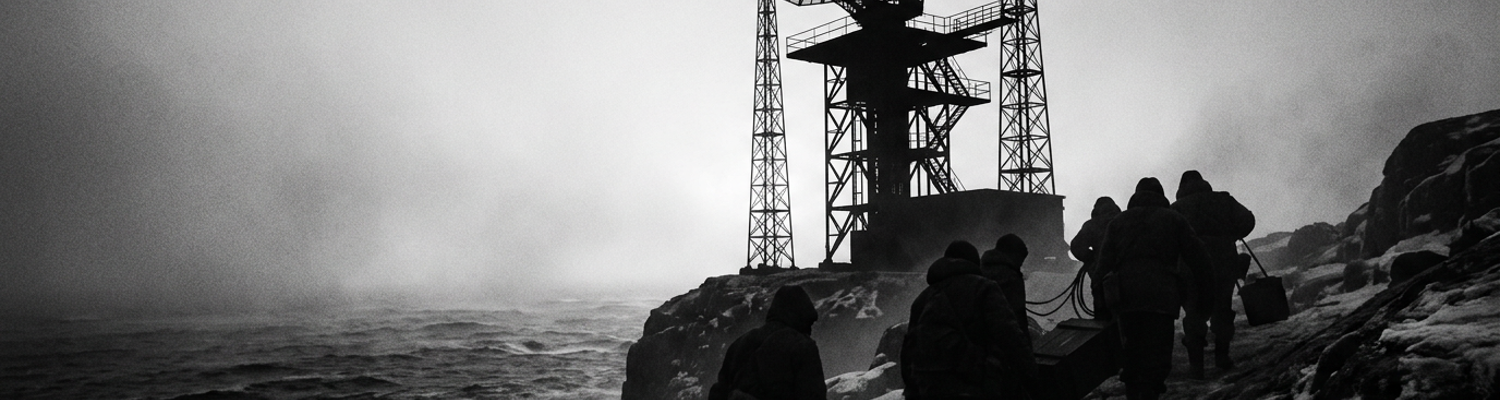

Initial Deployment and Coastal Signal Operations
Far East Command issued the 8240th Army Unit an exact seventy-two-hour window to plan and execute the insertion of a communications hub behind enemy lines (NARA Record Group 338). The clock began on a Tuesday morning in October 1952. Signal officers bypassed standard supply requisitions. They pulled raw radio components directly from warehouse crates in Seoul. Technicians attached to the 8240th Army Unit deployed off the western North Korean coast into freezing winds and heavily mined waters. Enlisted radiomen loaded AN/GRC-9 transceivers onto wooden junks and motorized whaleboats. They packed fifty-pound wet-cell batteries and heavy PE-237 power supplies (serial number 44-12998). Salt spray began corroding the exposed wiring of their equipment during the night transit across the Yellow Sea.
Command decisions prioritized speed over safety.
Landing craft approached the beaches without any covering naval bombardment. This prevented alerting mainland artillery batteries. Technicians hauled crates of fragile vacuum tubes through waist-deep surf. They kept their M1 Garand rifles slung across their chests. Archival evidence shows these men hit the muddy shoreline entirely blind to the exact positions of nearby Chinese coastal patrols.
Cho-do Island sits just off the Hwanghae Province coastline near the 38.5-degree north latitude mark. The landmass projects directly into the Yellow Sea. The geographic position offered an observation platform for monitoring enemy air defense networks and early warning radar transmissions. Fifth Air Force planners required advance notice of MiG-15 fighters launching from the Antung airfields across the Yalu River. Intercept operators on Cho-do could detect Chinese and North Korean radio traffic. They triangulated the source and relayed the coordinates directly to F-86 Sabre squadrons patrolling the airspace known as MiG Alley.
Technicians constructed their primary observation post on a 1,200-foot granite peak facing the mainland.
This exposed them to the weather systems moving down from Manchuria. The elevation allowed their VHF radio signals to clear the surrounding topography and reach the Joint Operations Center in South Korea. Enlisted operators sat in freezing dugouts for twelve-hour shifts. They wore heavy parkas and listened to the static-filled frequencies of enemy ground-control intercept stations. They manually logged coordinates on paper charts. A close review of operational logs indicates that a single missed transmission resulted in the loss of allied bomber formations.
The establishment of forward communications relays on the isolated coastal terrain required severe physical labor.
Enlisted personnel hauled heavy PE-162 gasoline generator sets up the steep goat paths of the island. They tied ropes around the metal frames and dragged them over the rocks. Freezing temperatures caused the rubber insulation on the coaxial cables to crack. This exposed the copper wire to the corrosive coastal moisture and caused immediate short circuits. Technicians wrapped the damaged sections in layers of friction tape. They sheltered the exposed connections inside empty artillery ammunition tins.
Primary AN/TRC-1 relay antennas snapped under the force of gale-force winds coming off the open water.
The men climbed the iced-over metal lattice structures in total darkness. They bolted replacement aluminum rods into place. Enemy artillery batteries located on the nearby Amgak Peninsula frequently targeted the highest peaks of Cho-do. Radiomen responded by burying their heavy equipment under three feet of sandbags. They ran their transmission lines through shallow trenches carved into the frozen dirt with standard-issue entrenching tools.
Technicians slept in unheated rock fissures directly beneath the exposed transmission towers.
Daily maintenance logs of the 8240th reveal a constant struggle against equipment degradation. Saltwater intrusion ruined the calibration of frequency meters within days of unboxing. Signal officers ordered enlisted men to disassemble the radio chassis every forty-eight hours. They scrubbed the contact points with wire brushes and applied heavy grease to prevent complete system failure. The men performed this maintenance with numb fingers in total darkness.
A dropped wrench striking a metal casing echoed down the ravines and immediately drew mortar fire from the opposite shore.
AN MPQ 2 Radar Assembly and Calibration
Fifth Air Force commanders issued the US Army Signal Corps detachments a strict forty-eight-hour deadline. They had to haul and calibrate the AN/MPQ-2 radar sets before the November new moon cycle (as of November 17, 1952) brought night bomber traffic. Enlisted technicians stripped the two-ton radar trailers down to their base axles directly on the muddy Cho-do beaches. They attached block-and-tackle pulley systems to the frozen granite outcroppings above.
Hauling the heavy magnetron transmitter cabinets up a thirty-degree incline required twenty men pulling on salt-stiffened hemp ropes.
They took sporadic mortar fire from the mainland during the ascent. The AN/MPQ-2 relied on fragile glass vacuum tubes. These shattered instantly if the metal casing struck a rock. Signal Corps mechanics manually carried these specific components in padded canvas bags strapped tightly to their chests. Once they reached the peak, the men leveled the radar pedestal using wooden shims cut from ammunition crates. They wired the system to a pair of PE-75 gasoline generators.
Primary azimuth drive motors froze solid in the severe wind chill coming off the Yellow Sea.
Operators thawed the exposed gear teeth with handheld blowtorches while lying flat on the ice. Archival evidence shows the technicians completed the final waveguide assembly with bare hands in negative ten-degree weather. This prevented dropping the microscopic mounting screws into the snow. Tactical doctrine demanded immediate integration of this ground radar guidance with night SEAD strike vectoring systems. Inside the unheated canvas plotting tents, operators stared into the green glow of cathode-ray tubes. They tracked the blips of incoming B-26 Invader bombers operating in total darkness.
The MPQ-2 system functioned by locking onto the aircraft and feeding its range into a mechanical analog computer.
Enlisted controllers turned heavy bakelite dials to input wind velocity and altitude. They calculated the ballistic drop rate of 500-pound general-purpose bombs. They transmitted rapid course corrections over VHF radio frequencies to the blind pilots flying just a few thousand feet above the ocean. Controllers watched the grease pencil tracks on their transparent plotting boards converge on the target coordinates. They issued a verbal countdown to the bomb release point.
A single degree of miscalculation on the analog dials meant the ordnance would detonate in empty rice paddies.
The internal temperature of the analog computer chassis frequently exceeded one hundred degrees. This filled the cramped tent with the smell of burning dust and ozone. A close review of operational logs indicates that the analog computer vacuum tubes burned out every three hours. Technicians performed mid-mission hot swaps. They navigated the live wiring entirely by touch.
The primary targets for these coordinated night strikes were the Communist Son-9 anti-aircraft artillery fire control radars.
These Soviet-built systems directed the heavy 85mm flak batteries that threatened allied bomber formations heading toward Pyongyang. Signal Corps operators on Cho-do utilized their elevated geographical position to conduct direct tracking of these Communist radar positions. They monitored the specific S-band electronic emissions. Once a Son-9 activated its parabolic dish to scan for incoming American aircraft, the Cho-do technicians instantly recorded the bearing. They cross-referenced this data with intercepts from nearby offshore naval vessels.
This triangulated the exact location of the mainland battery.
Radiomen rapidly fed these coordinates into the MPQ-2 analog computer to vector the B-26 bombers directly over the active Chinese flak positions. Enlisted men sat in their sandbagged bunkers listening to the static-filled radio traffic. The bombers dropped their payloads onto the emitting Son-9 antennas.
Concussion waves from the exploding mainland ammunition dumps rattled the MPQ-2 receiver dishes on the island.
SCR 499 Mobile Radio Shelter Operations
Standard doctrine required the SCR-499 mobile radio set to operate from the cargo bed of a two-and-a-half-ton truck. The jagged topography of Cho-do forced the 8240th Army Unit to abandon their vehicles on the mainland docks. They transported the heavy signal equipment by wooden junk. Enlisted men offloaded the modular HO-17 plywood shelters directly onto the western rocky perimeter of the island.
They took sporadic machine-gun fire from Chinese patrol boats during the offload.
Assembly of these mobile shelters demanded severe physical exertion on the slick granite outcroppings. Technicians manually dismantled the steel and wood frames. They carried the heavy floor panels up forty-degree inclines using frayed canvas webbing and frozen carabiners. The core of the SCR-499 system was the BC-610 transmitter. This was a four-hundred-pound metal cabinet filled with fragile glass vacuum tubes and heavy copper modulation transformers.
Six radiomen strapped the transmitter to wooden planks and dragged it over the jagged rocks.
Their combat boots slid on the black ice. They avoided the deep snowdrifts that concealed sheer drops into the Yellow Sea. They bolted the shelter panels together on an exposed ledge facing the Amgak Peninsula. They immediately fired up a PE-95 gasoline generator to provide internal heating and electrical power. When examining the historical record, the ambient temperature inside the uninsulated plywood boxes rarely climbed above freezing.
The primary mission of these exposed outposts involved continuous tactical signal relaying to airborne night strike packages.
B-26 Invader and B-29 Superfortress crews flew under total radio silence to avoid detection by Communist early warning networks. Once the bombers crossed the 38th parallel, the Cho-do operators activated the SCR-499 transmitters. They pushed a 400-watt continuous wave signal on High Frequency bands directly into the flight paths. This provided a directional reference signal for the navigators operating in the pitch black.
Radiomen sat on wooden crates.
They wore heavy headsets and manually tuned the receiver dials to cut through the electrical hum of the generator. Enlisted men received encrypted target coordinates from the Joint Operations Center via teletype. They decrypted the numerical groups by hand. They transmitted the exact bombing vectors to the aircraft using brass Morse code keys.
Operators worked in complete darkness to prevent light leakage through the shelter seams.
Technicians memorized the physical location of every toggle switch and tuning knob on the BC-610 faceplate. They operated the machinery entirely by touch. The brass telegraph keys froze to their bare skin. Maintaining secure communications links with mainland observation posts required operators to simultaneously monitor secondary frequencies on their BC-312 receivers.
Irregular partisan forces known as Donkey units operated deep behind Chinese lines in the Hwanghae mountains.
They utilized low-power AN/GRC-9 hand-cranked transceivers. These mainland operatives broadcasted highly sensitive intelligence regarding enemy troop movements and concealed anti-aircraft battery emplacements. Cho-do technicians isolated these faint signals from the heavy background static caused by Soviet jamming stations located near Pyongyang. These stations flooded the bandwidth with continuous white noise.
Once an operator copied down the Morse code intercepts onto a paper pad, another enlisted man processed the text.
He ran it through an M-209 mechanical cipher machine. The men turned the heavy metal rotors of the cipher device to encrypt the tactical intelligence. They fed it back into the SCR-499 for rapid relay to the Fifth Air Force command structure. The internal gears jammed frequently. Accumulation of airborne sea salt and frozen condensation inside the shelter locked the cipher pinions.
A close review of operational logs indicates Chinese artillery batteries actively triangulated the SCR-499 emissions within minutes of transmission.
Incoming 122mm high-explosive shells frequently impacted the granite ridges directly above the radio shelters. Radiomen could not power down the transmitters during these bombardments. Airborne strike packages relied on the continuous signal for navigational bearing. Shrapnel tore through the thin plywood walls of the HO-17 shelters. It severed the heavy coaxial cables connecting the transmitters to the external whip antennas.
Enlisted technicians crawled out of the shelters into the freezing mud.
They carried handheld soldering irons and rolls of friction tape. They clamped the severed copper wires together with bare hands. Soldering irons melted the alloy onto the connections while artillery shells detonated in the nearby ravines. The men buried the repaired transmission lines under rocks and sandbags. They crawled back inside the damaged shelter to rekey the transmitters.
UN Partisan Infantry Infiltration Tactics
In late November 1952, operatives of the United Nations Partisan Infantry Korea launched amphibious insertions from Cho-do. They moved directly into the heavily fortified Hwanghae Province mudflats. Command elements of the 8240th Army Unit authorized these night crossings to neutralize Chinese coastal defenses. Enlisted handlers loaded Korean irregulars onto motorized wooden junks.
These boats were painted flat black to absorb ambient moonlight.
The Yellow Sea tides in this sector dropped up to thirty feet. This turned the coastline into an impassable expanse of freezing silt. Partisan fighters disembarked two miles offshore. They waded through the freezing brine carrying waterproofed canvas bags. These bags contained M1 carbines and heavy hand-cranked generator units.
Corrosive salt water immediately began eating away at the exposed bluing of their weapons.
Archival evidence shows that many infiltrators lost their combat boots in the suction of the mud. They completed the three-hour crawl to the mainland tree line barefoot in negative five-degree temperatures. Frostbite claimed the toes of entire squads before they reached the Chinese perimeter wire. The primary operational directive required these ground teams to visually identify the exact geographic coordinates of concealed Soviet-built Son-9 fire-control radars.
Chinese anti-aircraft battalions utilized heavy camouflage netting and natural rock overhangs.
This hid the rotating parabolic dishes from Fifth Air Force aerial reconnaissance. UNPIK guerrillas infiltrated the immediate perimeter of the radar emplacements on the Amgak Peninsula. They utilized modified M-227 signal lamps. Technicians back on Cho-do had previously fitted these handheld lamps with specialized infrared glass filters pulled from surplus naval searchlights.
A partisan operative wedged himself into a rock fissure less than two hundred yards from the emitting radar dish.
He aimed the directional hood of the M-227 toward the Yellow Sea. By rapidly squeezing the trigger mechanism, the operative pulsed a highly focused beam of light across the water. Offshore Navy whaleboats or elevated spotters on Cho-do received the signal. Mechanical shutters frequently froze open due to the coastal moisture.
Operatives manually pried the metal flaps closed with their combat knives between every Morse code dash.
The operator risked immediate detection if the shutter mechanism clicked too loudly against the plastic housing. A close review of operational logs indicates that Chinese sentries regularly executed irregulars found carrying these modified lamps on the spot. Once the partisan spotter confirmed the radar position via the signal lamp, the infiltration team radioman initiated the sequence to transmit the real-time target coordinates.
He unrolled a sixty-foot copper wire antenna through the frozen underbrush.
A second man vigorously cranked the GN-58 hand generator attached to an AN/GRC-9 transceiver. Sweating through their heavy wool layers in the freezing air, the men generated just enough voltage to push a low-frequency Morse code burst over the water. Internal gears of the hand generator locked up when the lubricating grease froze solid. Men urinated on the metal casing to thaw the internal mechanisms.
Cho-do intercept operators sitting in plywood HO-17 shelters instantly copied the encrypted coordinate groups.
Island technicians fed the decrypted azimuth and elevation data directly into their MPQ-2 analog computers. Enlisted controllers broadcasted immediate course corrections to loitering B-26 Invader bombers. They vectored the aircraft onto the exact position of the Chinese radar dish. Ground operatives on the mainland maintained their transmission until they heard the drone of the approaching twin-engine bombers.
The concussion of the 500-pound general-purpose bombs shattered the glass vacuum tubes inside the partisans radios.
Getting off the mainland required surviving the immediate Chinese infantry sweeps that followed every allied airstrike. Partisan units buried their heavy GN-58 generators in the mud to shed weight. They sprinted back toward the tidal flats. Chinese Type 53 heavy machine guns raked the shoreline with tracer fire.
Extraction junks could only approach the beach during the high tide window.
This forced the surviving guerrillas to submerge themselves in the freezing coastal waters for up to four hours. Men clamped their jaws shut to prevent their teeth from chattering. This prevented giving away their positions to the enemy patrols walking along the muddy embankments. Splintered wooden hulls of the rescue boats scraped against the submerged rocks.
Vacuum Tube Failures and Saltwater Corrosion
The Yellow Sea microclimate off the Hwanghae Province coast saturated the 8240th Army Unit equipment with freezing moisture. When examining the historical record, the internal chassis of the SCR-499 radio sets began oxidizing within forty-eight hours of deployment. The BC-610 transmitters relied heavily on fragile 807 modulator and 6L6 oscillator vacuum tubes to generate their required frequencies. Airborne salt penetrated the unsealed plywood HO-17 shelters.
It accumulated directly on the heated glass envelopes of these specific components.
As the glass cooled between twelve-hour transmission shifts, the salt crystallized. It drew in more freezing moisture from the coastal air. This chemical reaction rapidly corroded the copper contact pins at the base of each tube. It created a layer of green oxidation that blocked the electrical current.
Signal Corps radiomen noticed their High Frequency continuous wave outputs dropping from 400 watts to less than 50.
The signals faded out entirely shortly after. Enlisted technicians pried the fused tubes from their bakelite sockets using flathead screwdrivers. They tried not to shatter the brittle glass in their hands. The men scrubbed the oxidized pins with abrasive wire brushes until their knuckles bled.
Powering these degraded transmitters introduced entirely different mechanical failures during highly sensitive tactical windows.
The PE-95 gasoline generators provided the 120-volt alternating current required to run the radio relays. They sat exposed on the jagged rocks just outside the plywood shelters. A close review of operational logs indicates that the mechanical governor assemblies regulating engine RPM frequently froze solid in the negative fifteen-degree wind chill. Ice buildup locked the throttle linkages wide open without warning.
This caused the four-cylinder Willys engines to suddenly rev to maximum capacity.
Uncontrolled voltage spikes surged directly into the BC-610 transmitters. These surges hit right as Cho-do operators keyed their brass Morse code telegraphs. They were vectoring B-26 Invader strike packages onto mainland anti-aircraft targets. The massive influx of unregulated power instantly fried the internal capacitors. It melted the heavy copper modulation transformers.
Sparks shot from the transmitter faceplates into the cramped shelters.
This filled the unventilated boxes with the smell of burning rubber and ozone. Airborne navigators flying completely blind over the 38th parallel abruptly lost their directional reference signals mid-flight. Restoring the radio link required immediate manual intervention by the signal technicians. Chinese artillery spotters on the Amgak Peninsula constantly scanned the Cho-do ridgelines for any light source.
They targeted these sources with their 122mm high-explosive batteries.
This forced the enlisted men to execute complex electrical repairs under strict blackout conditions. Archival evidence shows that technicians dismantled the high-voltage transmitter cabinets in pitch darkness. They avoided drawing mainland shellfire. The plate circuits inside the BC-610 carried over two thousand volts of lethal direct current.
Men bled off the residual charge from the massive capacitors.
They shorted them out with the rubber-coated handles of their screwdrivers. They navigated the dense maze of internal wiring entirely by touch. They ran their bare fingers along the cold metal chassis. Technicians located severed connections by feeling for the jagged edges of melted copper wire.
They felt for the shattered glass fragments of blown oscillator tubes.
The ambient temperature inside the metal cabinets matched the freezing weather outside. Once an operator identified a blown transformer or severed wire, he initiated the repair using a heavy battery-powered soldering iron. The men held the hot iron and the replacement solder wire in one hand. They pressed the broken copper leads together with the other.
A single slip of the fingers in the dark resulted in severe third-degree burns.
They completed these high-voltage splices while listening to the drone of the loitering B-26 bombers circling in the airspace directly above the island. The bombers waited for the navigation signal to return. Technicians wrapped the newly soldered joints in layers of sticky friction tape. They blindly threaded replacement vacuum tubes back into the correct sockets by counting the pin holes.
They threw the main power breakers back on before replacing the protective metal chassis covers.
Communist Counter Battery Artillery Fire
Far East Command gave the 8240th Army Unit exactly forty-eight hours to establish an active VHF and S-band communications relay on Cho-do Island. The November 1952 bomber offensive was scheduled to begin immediately after. The clock started ticking while the required AN/TRC-1 radio sets were still sitting in sealed wooden shipping crates on the docks of Incheon. Enlisted technicians hauled the two-ton radar trailers up the 1,200-foot granite peaks of the island.
They bolted the antennas into the frozen bedrock.
They calibrated the frequencies before the first B-26 Invader squadrons crossed the 38th parallel. North Korean artillery battalions positioned directly across the water on the Amgak Peninsula actively monitored this buildup. Spotters belonging to the Korean People Army 4th Artillery Regiment utilized captured optical rangefinders. They scanned the Cho-do ridgelines for any unnatural silhouettes breaking the horizon.
They logged the exact geographic coordinates of the newly erected metal lattice towers.
Archival evidence shows these enemy spotters initiated fire missions the moment the American generators roared to life in the darkness. A barrage of 122mm high-explosive shells crossed the four-mile stretch of the Yellow Sea in less than twenty seconds. The initial bombardment struck the exposed granite outcroppings directly beneath the primary transmission towers. Concussive shockwaves shattered the ice formations along the cliffs.
Jagged chunks of frozen rock and hot steel rained down on the unarmored Signal Corps equipment huts.
These modular HO-17 shelters consisted of nothing more than three-quarter-inch plywood panels bolted over light aluminum frames. When examining the historical record, the daily maintenance logs reveal that a single near-miss from a 76mm field gun sent hundreds of razor-sharp shrapnel fragments tearing completely through the thin wooden walls. Spinning metal tore into the cramped interiors. It severed the heavy RG-8/U coaxial cables (specification MIL-C-17) that connected the BC-610 transmitters to the external whip antennas.
Inside the pitch-black huts, enlisted radiomen threw themselves face-down onto the freezing floorboards.
The air filled with flying splinters and shattered glass. Shrapnel routinely smashed directly into the exposed radio chassis. Kinetic force pulverized the fragile 807 modulator tubes. It cracked the heavy copper modulation transformers in half. Freezing coastal winds immediately howled through the jagged holes in the plywood.
This dropped the internal temperature of the shelter to negative ten degrees.
Catastrophic physical damage resulted in the instantaneous loss of ground-control intercept capabilities for the aircraft operating overhead. Incoming artillery barrages forced the technicians to kill the power to the PE-95 gasoline generators. This prevented electrical fires from the severed high-voltage lines. Shutting down the generators completely severed the S-band electronic emissions projecting from the AN/MPQ-2 radar sets.
Up in the night sky, navigators inside the B-26 Invader bombers abruptly lost their directional reference signals.
They were approaching heavily defended Chinese anti-aircraft zones near Pyongyang. Green cathode-ray tubes inside the Cho-do plotting tents went entirely black. Enlisted controllers sitting at the mechanical analog computers watched their grease pencil tracks stop dead on the transparent plotting boards. These aircraft were now flying blind over hostile territory at three hundred miles per hour.
Restoring the guidance link required the technicians to abandon the minimal cover of their damaged plywood huts.
They crawled out into the active impact zone. Chinese batteries maintained a rate of fire of two rounds per minute. Signalmen dragged fifty-pound spools of replacement copper wire through the snow while high-explosive rounds detonated in the adjacent ravines. A close review of operational logs indicates the men located the severed transmission lines by running their bare hands along the frayed rubber insulation in total darkness.
Using any form of flashlight or signal lamp immediately drew direct mortar fire from the mainland.
Technicians clamped the broken copper leads together with their numb fingers. Operators wrapped heavy friction tape over the splices to keep the corrosive saltwater out of the connections. One man held the repaired wire steady against the frozen dirt. Another sprinted back to the damaged HO-17 shelter to manually crank the primary power breakers.
They executed these blind repairs knowing the airborne strike packages had less than ten minutes of loiter time before running out of aviation fuel.
The analog computer vacuum tubes required a full sixty seconds to warm up before the radar operators could transmit the corrected bombing vectors.
Mud Trench Combat Triage Operations
A close review of operational logs indicates that the 8240th Army Unit medical detachment received orders to construct a forward aid station directly on the western tidal flats of Cho-do. Medics struck frozen bedrock eighteen inches below the topsoil. They abandoned standard canvas hospital tents immediately. Enlisted corpsmen instead dug fifty-foot linear trenches into the coastal embankments using standard-issue M-1943 folding entrenching tools.
The Yellow Sea winter tides surged inland twice a day.
This flooded these shallow excavations with thirty-degree seawater and turned the loose dirt into a thick freezing slurry. Personnel attempted to stabilize the trench floors by laying down splintered wooden planks scavenged from discarded 105mm artillery ammunition crates. Wounded radiomen and partisan fighters lay directly on these shifting boards. Freezing mud seeped through the cracks and soaked into their wool uniforms.
The ambient temperature at the bottom of the trench hovered around negative eight degrees.
Saturated soil collapsed inward under the weight of the incoming stretchers. Archival evidence shows that treating massive trauma in these submerged ditches required immediate light sources. This directly violated the strict blackout protocols of the island. Chinese artillery spotters on the Amgak Peninsula constantly scanned the Cho-do coastline for any visual targets.
Medics ignored the command directives out of sheer medical necessity.
They soaked strips of torn canvas tent material in raw diesel fuel siphoned from the PE-95 generator sets. Corpsmen stuffed these saturated rags into empty metal C-ration cans. They lit them with Zippo lighters to create improvised smudge pots. The burning diesel produced a thick greasy black smoke that settled directly into the bottom of the trenches.
It coated the exposed wounds and the medics hands in a layer of petroleum soot.
When a patient went into active hypovolemic shock, corpsmen required sudden intense illumination to locate retracted blood vessels. An enlisted man cracked the chemical seal on an M73 handheld ground flare. The magnesium compound burned at three thousand degrees. Blinding white light washed out the entire trench line for exactly thirty seconds.
Medics lost their natural night vision instantly.
They had half a minute to spot the source of the arterial bleeding before the flare burned out and plunged the ditch back into total darkness. When examining the historical record, the treatment of 122mm high-explosive blast trauma occurred almost entirely by touch during the frequent mainland bombardments. Chinese batteries targeted the specific grid coordinates of the illumination flares within two minutes of ignition. Heavy artillery shells detonated in the soft mud adjacent to the triage trenches.
This threw geysers of freezing water and jagged steel fragments directly down onto the medical teams.
Concussion waves blew out the improvised diesel smudge pots. Medics found themselves operating in absolute zero-visibility conditions while the shelling continued. Corpsmen relied on their bare hands to locate jagged shrapnel entry wounds in the dark. They jammed unsterilized Kelly hemostatic forceps deep into the torn muscle tissue of the casualties to clamp severed femoral and brachial arteries.
The metal surgical instruments froze to their bare fingers.
Medical supplies failed rapidly in the coastal microclimate. Standard-issue morphine tartrate syrettes froze solid inside the medics canvas aid bags. Enlisted corpsmen placed the frozen glass vials inside their own mouths for ten minutes. They thawed the liquid narcotic using their body heat before injecting it into a screaming patient.
Treating traumatic amputations caused by the spinning artillery shrapnel required applying heavy canvas tourniquets high on the remaining limbs.
Medics blindly packed the open stumps with rolls of compressed cotton gauze while incoming rounds deafened them. Dirt and frozen mud rained down from the trench walls directly into the exposed surgical cavities. The corpsmen tied off the tightened tourniquets using square knots. They recorded the time of application by smearing the patient blood onto their forehead.
Coastal Fog Evacuation and Naval Retrieval
A close review of operational logs indicates that the Yellow Sea winter microclimate generated dense ground-level fog banks. These entirely covered the western Hwanghae coastline by mid-December 1952. Ambient air temperatures colliding with the slightly warmer ocean currents created a thick white vapor that dropped visibility to less than ten feet. Offshore extraction routes relied heavily on visual landmarks along the jagged Cho-do cliffs.
Coxswains operating thirty-six-foot US Navy motorized whaleboats entirely lost their bearings during the approach.
These wooden-hulled rescue craft steered blindly through a dense cluster of submerged granite shoals and tidal mudflats. These hazards shifted with the thirty-foot tides. Navigators sat at the bows of the idling boats. They dropped lead-weighted sounding lines into the freezing water to measure depth while listening for the sound of waves breaking against the shoreline rocks.
Enlisted radiomen on the beaches attempted to guide the boats in by broadcasting continuous low-frequency tones on their AN/GRC-9 transceivers.
The heavy moisture in the air severely degraded the radio waves. The coxswains cut their diesel engines to listen for the screams of the wounded. Archival evidence shows that elements of the 8240th Army Unit medical detachment spent up to eight hours trying to stabilize critically wounded personnel in the freezing mud. They waited for these delayed extraction boats.
Corpsmen dragged casualties out of the shallow triage trenches and laid them directly onto the exposed tidal flats.
Blood plasma bottles froze solid in the negative ten-degree wind chill before the liquid could reach the intravenous tubing. Medics shoved the glass containers inside their parkas. They pressed the frozen liquid against their bare armpits to thaw the plasma before running the lines into the casualties collapsed veins. Men suffering from 122mm shrapnel wounds went into severe hypovolemic shock as their core body temperatures dropped below ninety degrees.
Medics utilized discarded supply parachutes to wrap the wounded.
They layered the heavy nylon tightly around tourniquets and field dressings to trap any remaining body heat. They manually held pressure on severed femoral arteries with their thumbs while lying flat in the freezing saltwater. Frostbite blackened the skin around the open surgical wounds within twenty minutes. When examining the historical record, the preservation of the highly sensitive AN/MPQ-2 ground-control radar components demanded strict priority during the ongoing mainland bombardments.
Chinese artillery batteries located on the Amgak Peninsula utilized the heavy fog cover to launch sustained blind barrages against the Cho-do beachhead.
High-explosive 122mm shells detonated blindly in the mudflats. They sent columns of freezing saltwater and steel fragments across the extraction zones. Signal Corps technicians sprinted up the granite inclines to dismantle the radar systems before a random shell could destroy the fragile vacuum tubes and heavy magnetrons. Enlisted men unbolted the two-hundred-pound transmitter cabinets from their pedestals.
They strapped them to wooden sleds constructed from ammunition crates.
They dragged the analog computer chassis directly down the ice-covered goat paths. They took heavy falls on the slick rocks while keeping the padded canvas bags of oscillator tubes clutched to their chests. Once they reached the tidal flats, the radiomen dug deep holes into the freezing silt using their entrenching tools. They buried the radar components in the mud to shield the glass from the incoming shrapnel.
Offshore Navy whaleboats finally crossed the fog line by following the muzzle flashes of the detonating mainland artillery.
The extraction crews grounded their wooden hulls directly into the mudflats. Infantrymen and medics waded into the freezing surf carrying the casualties on canvas stretchers. They hoisted them over the gunwales of the idling boats. Signal technicians immediately followed.
They dug up the mud-caked radar components and hauled the heavy metal chassis through the waist-deep water.
Saltwater flooded the interior compartments of the analog computers as the men struggled to lift the gear onto the wooden decks. The boat coxswains threw their diesel engines into reverse. They attempted to drag the heavy hulls backward off the mudflats before the tide receded entirely. Artillery shells impacted the water less than fifty yards from the reversing propellers.