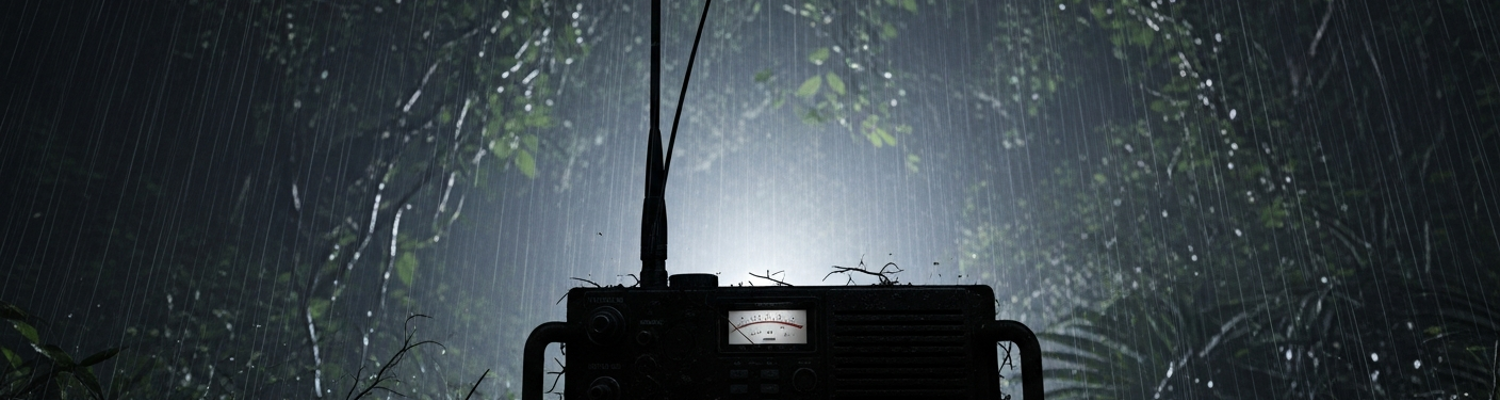

Intelligence reports for the I Corps Tactical Zone in November 1965 were grim. The 1st Viet Cong Regiment, a main force unit, was consolidating power south of Da Nang. They were not a phantom guerrilla force. They were a conventional one, armed, organized, and operating with increasing boldness. For the recently arrived American forces, the adversary held a clear numerical advantage across the rugged terrain. The VC owned the night. They were beginning to contest the day.
Operational logs from the 3rd Marine Division (NARA Record Group 127) detail the assignment of Hotel Company, 2nd Battalion, 9th Marines. The battalion had been in-country since July, transitioning from the security of the Da Nang airbase to the perilous realities of the surrounding countryside. Hotel Company was a standard rifle company of the period, a force of approximately 200 men organized into three rifle platoons and a weapons platoon. Their personal weapon was the heavy M14 rifle, a tool designed for a different war that was often cumbersome in dense vegetation. Platoon sergeants fought to keep the new M60 machine guns clean in the mud and humidity. Communication, the lifeline for a unit expecting to find trouble, depended on the PRC-25 radio, a 23-pound burden carried by a Marine who was a primary target for enemy snipers. The order delivered to the company command post was for a reconnaissance-in-force.
This was not a mission of stealth.
A reconnaissance-in-force was a violent act of discovery. The tactical theory was a brutal form of mathematics. Risk a smaller unit to locate and fix a much larger enemy formation. Once the enemy was engaged, they would be annihilated by a disproportionate response from assets held in reserve. This meant 105mm and 155mm howitzer batteries, pre-plotted on the map, waiting for a grid coordinate. It meant A-4 Skyhawks and F-4 Phantoms on standby, loaded with napalm, high-explosive bombs, and 20mm cannon rounds. The company’s objective was to be the bait in a very large trap, advancing deliberately until it was struck. The inherent gamble was that the bait would not be swallowed whole before the trap could be sprung.
The axis of advance for Hotel Company pointed directly toward a collection of hamlets in the contested area south of the airbase, a region riddled with tributaries of the Thu Bồn River. This was a known Viet Cong strongpoint. Marine intelligence indicated the villages were a logistical hub for elements of the VC 1st Regiment. The terrain itself was the enemy’s greatest ally. The advance began across a wide expanse of flooded rice paddies, the dikes offering the only solid footing and channeling the Marines into predictable, exposed files. Beyond the paddies lay a labyrinth of dense green hedgerows that compartmentalized the battlefield into a series of potential kill zones. Each hamlet was a fortress, with fighting positions dug into the field boundaries and interconnected by a network of tunnels. As Hotel Company stepped off, they were not moving into an unknown environment. They were knowingly marching toward a fortified position engineered to kill them.
The physical environment confronting Hotel Company was an active, hostile participant in the battle. This was the tail end of the northeast monsoon, a period where weather was not an inconvenience but a force that dictated the terms of engagement. The rain was a constant, driving downpour that turned the ground into a liquid enemy. Operational logs from units in I Corps during this period consistently note the degradation of movement and equipment. The terrain of rice paddies and hedgerows south of Da Nang dissolved into a uniform expanse of mud and fouled water. Paddies that might have been ankle-deep became chest-high swamps. Their retaining dikes transformed into slick, treacherous balance beams that exposed the advancing Marines to fire. The advance slowed to a torturous crawl, each step a fight against the sucking mud. This had a direct effect on the individual Marine, whose combat load became a water-logged anchor. The M14 rifle's wooden stock was prone to swelling in the constant dampness. The M60 machine guns, the bedrock of platoon firepower, required ceaseless attention to prevent mud and water from causing catastrophic stoppages.
This environmental hell was compounded by a severe intelligence failure. The entire premise of the reconnaissance-in-force rested on the assumption that Hotel Company would encounter a manageable enemy force. Archival evidence from the 3rd Marine Division’s G-2 intelligence summaries shows a consistent underestimation of Viet Cong strength. Relying on intermittent aerial reconnaissance, often hampered by the same monsoon weather, and reports from Army of the Republic of Vietnam (ARVN) sources, the G-2 section assessed the likely threat as scattered local force guerrilla platoons. The possibility that the regiment’s main body had consolidated in the hamlets directly in Hotel Company’s path was dismissed. This miscalculation cascaded down to the tactical level. Hotel Company’s command group planned its ammunition distribution, casualty evacuation points, and fire support requests based on the expectation of a brief, sharp engagement. They were marching into a regimental fortress, but their maps and briefings were for a skirmish.
The plan was breaking.
This collision of extreme weather and faulty intelligence created a logistical vortex. The primary means for resupply and medical evacuation for a forward-deployed rifle company was the helicopter. In November 1965, this meant the workhorse UH-34 Seahorse and the newer UH-1 Huey. Both aircraft were severely constrained by the monsoon. The torrential rain and low cloud ceilings often reduced visibility to a few hundred feet, making flight operations a high-risk gamble. For the pilots of Marine Helicopter Squadrons, finding a small landing zone in a hostile jungle environment was difficult in clear weather; in a downpour, it was nearly impossible. When a helicopter could get through, the LZs became mud traps, threatening to bog down the aircraft. As Hotel Company became decisively engaged, burning through ammunition at a rate far exceeding projections, the calls for emergency resupply became desperate. The same helicopters were needed to evacuate the growing number of wounded. After-action reports from this period reveal a recurring pattern. Units in heavy contact would be cut off, their radio calls for ammunition and medevac answered with the news that all birds were grounded due to weather. For the Marines of Hotel Company, the lifeline was severed. They were running low on 7.62mm ammunition, M79 grenade rounds were scarce, and corpsmen were rationing morphine and battle dressings.
The axis of advance took Hotel Company away from the relative openness of the rice paddies and into a far more difficult environment. The terrain feature noted on topographical maps as the Thach Tru riverbed was, on the ground, a wide, waterlogged depression choked with a near-impenetrable wall of vegetation. Progress was measured in feet. Marines used their K-Bar knives and sheer body weight to force paths through thorny bamboo thickets and triple-canopy jungle that blotted out the sky. The constant rain transformed the ground into a slurry of mud and rotting leaves. Unit cohesion began to break down. Squads were compressed into single-file columns on barely visible trails, creating perfect, channelized targets. The physical burden on the individual Marine became extreme. For the company’s radio telephone operators, the situation was worse; the 23-pound AN/PRC-25 radio became a leaden anchor, its metallic frame catching on vines with every step.
The attack came without warning.
It was not the harassing potshots of a local guerrilla force but a coordinated volley of automatic weapons fire from prepared positions. Elements of the 1st Viet Cong Regiment had dug in along the military crest of a low hill, concealed by the same vegetation that was slowing the Marines. The torrential rain acted as a suppressor for both sound and vision. The distinct, high-pitched report of the VC’s AK-47 rifles was distorted into a dull roar by the downpour, making it nearly impossible for the pinned-down Marines to pinpoint enemy firing positions. Bullets cracked overhead and churned the mud around them as the lead platoon was caught in a well-designed L-shaped ambush. The M60 machine gun teams struggled to find stable firing platforms in the muck.
In the company command post group, chaos converged on a single point of failure. The RTO, taking cover behind a fallen log, was desperately trying to make contact with battalion headquarters. The AN/PRC-25, the primary link to artillery and air support, was dead. The intense humidity of the monsoon season was notorious for draining the radio’s BB-386/PRC-25 nickel-cadmium batteries. Water could easily penetrate the seals on the handset connector or the battery box, causing a short. More critically, the PRC-25 was a VHF line-of-sight radio. The combination of dense, water-soaked jungle canopy and the rolling, hilly terrain created a formidable barrier to its signal. The RTO would have frantically worked through his procedures, switching to the secondary frequency, checking the antenna seating, and swapping the standard antenna for the long-range whip antenna. Nothing worked.
The company was electronically deaf. The smaller, squad-level AN/PRC-6 radios, with their much shorter range, could not reliably connect the company commander with his own platoon leaders, separated by only a few hundred meters of dense jungle and the noise of the firefight. Every pre-plotted artillery fire mission, every on-call air strike, was rendered useless without a voice on a radio to transmit the target’s grid coordinates.
With the ambush sprung, the company commander’s immediate priority became a desperate attempt to re-establish contact with his battalion headquarters. This effort was an exercise in futility. The AN/PRC-25 radio was silent. This electronic severing created a condition of absolute tactical isolation. The Marine captain was now entirely disconnected from the battalion command structure that was the source of his mission and his support. He could not transmit his situation report, that he had located the Viet Cong 1st Regiment’s main body and was decisively engaged. He could not report his casualty count, which was mounting by the minute. He could not relay his platoon leaders’ panicked reports of dwindling 7.62mm ammunition for the M14 rifles and M60 machine guns. The entire command and control apparatus had been decapitated at the company level. All decisions now fell on this single, isolated officer, whose knowledge of the battle was limited to what he could see in the mud and hear over the din of the firefight.
Support was a fiction.
The direct consequence of this communications failure was the complete inability to access the overwhelming firepower that was the central pillar of the reconnaissance-in-force concept. A battery of 105mm howitzers from the 3rd Battalion, 12th Marines, sat waiting for fire missions that would never come. Their gun crews had pre-plotted fire concentrations on their maps, but without a grid coordinate and an adjustment call from Hotel Company’s forward observer, they were useless. At the Da Nang Air Base, pilots from Marine Attack Squadrons sat in their A-4 Skyhawks, armed with bombs and napalm, on standby for a scramble order contingent on a radio call. The crucial intelligence that Hotel Company had paid for in blood, the exact location of a regimental-sized enemy force, was trapped with them in the ambush. The pre-planned medical evacuation helicopters, likely UH-34 Seahorses from squadrons like HMM-261, remained grounded, not only by the monsoon but by the absence of a secure landing zone or even a request for their presence.
After-action debriefings from the engagement reveal the company commander was faced with a tactical problem that had no doctrinal solution. His company was pinned, isolated, and being systematically dismantled by a numerically superior enemy fighting from prepared fortifications. Ammunition was critically low. Casualties were mounting in the mud. The monsoon rain showed no sign of abating, making any hope of reinforcement or extraction before morning an impossibility. Standard operating procedure dictated forming a 360-degree defensive perimeter, conserving ammunition, and attempting to hold out until relieved. The commander’s analysis of the situation, however, concluded this was a recipe for certain annihilation. To stay in place was to offer his unit up for a slow, grinding death through the night.
He made a decision.
The first element of the commander’s plan was a direct violation of established infantry tactics for a unit in contact. He ordered a feigned retreat. This was not a simple fallback; it was a complex piece of battlefield theater executed in the middle of a chaotic firefight without radio communication. Platoon leaders and squad leaders passed the order by word of mouth and hand signals. The plan required two of the three rifle platoons to break contact under the covering fire of the third. They were instructed to move backward with deliberate noise, crashing through vegetation and shouting, creating the audio signature of a panicked and disorganized unit falling apart. This was a psychological gambit. The commander was betting that the Viet Cong regimental commander, flushed with success, would react with predictable aggression, sending his troops out of their well-defended bunkers to pursue and destroy the supposedly broken American force. The risk was enormous. If the VC forces failed to take the bait, Hotel Company would be split and destroyed in detail.
The ruse worked. The volume of fire from the VC positions slackened, then shifted, as their commanders redirected their men to chase the fleeing Americans. Archival analysis of Viet Cong tactics shows a doctrinal emphasis on aggressive pursuit to complete the annihilation of an enemy force. The VC soldiers, believing the firefight won, abandoned the tactical advantage of their fortified positions and pushed forward into the dark, rain-swept jungle. This was the moment the Marine commander had gambled on. As the VC pursuit force moved into the open, the two “retreating” Marine platoons went silent, melting into the jungle off the axis of their own noisy withdrawal. The third platoon, which had provided the base of fire, also ceased shooting and began its own quiet displacement to a pre-designated rally point. For a few minutes, the battlefield fell into an eerie silence, broken only by the rain and the sounds of the Viet Cong crashing through the undergrowth. Reconstituted as a single, coherent force on the enemy’s flank, the company commander gave the order for the second, and most audacious, phase of his plan.
A full-scale, unsupported frontal assault in the dead of night.
This final act was a complete refutation of conventional military wisdom. The company was to attack a numerically superior force, at night, across unfamiliar terrain, with no hope of supporting fires. The attack was launched not with a preparatory barrage of mortars or machine guns, ammunition for which was nearly exhausted, but with a sudden, coordinated rush from the dark. A review of Marine infantry training from the period shows the emphasis on fire and maneuver, using superior firepower to suppress an enemy before closing with them. Hotel Company’s commander inverted this principle, relying on shock, surprise, and the close-quarters violence of the bayonet. The men fixed bayonets to their M14s in the dark. The attack was initiated by a single flare, which briefly illuminated the shocked faces of the Viet Cong soldiers caught in the open, their backs to their own empty fortifications. The gamble was that the psychological impact of a sudden, ferocious counterattack by a force they believed to be defeated would shatter their morale.
The battlefield had descended into a state of absolute blackness, punctuated only by the driving monsoon rain. The fading light that had hampered the initial ambush was now gone, replaced by a disorienting darkness that hid the terrain and the enemy alike. For the exhausted, rain-soaked troopers of Hotel Company, the psychological effect of the unseen enemy's encirclement was a palpable weight. They were a small island of American firepower, surrounded by the main force of the 1st Viet Cong Regiment, whose soldiers were now moving from their prepared bunkers to hunt them in the jungle. The company was no longer fighting as part of a larger plan; it was fighting to see the sunrise.
The commander’s feigned retreat had lured the Viet Cong forces out of their fortifications. This transformed the tactical situation. The enemy’s greatest strength, a network of mutually supporting, well-concealed fighting positions, was nullified. Their soldiers were now disoriented and exposed in the same dark, unfamiliar jungle as the Marines. A close analysis of the assault plan indicates the target was not a geographical point, but this newly formed body of disorganized VC pursuers. The perceived weakest flank was not a static position on a map, but a mobile, psychological vulnerability. The company commander had correctly assessed that the VC, believing the Americans were broken and fleeing, would be mentally and tactically unprepared for a sudden, ferocious blow from an unexpected direction.
The assault was initiated by a single M49 tripflare.
Its brilliant, magnesium-white glare lasted less than a minute, but it was enough. The light seared an after-image of chaos: scores of VC soldiers, caught in the open, their backs to their own empty bunkers, their faces turned in shock toward the source of the light. Before the flare died, Hotel Company struck. This was not an attack by fire and maneuver. It was a single, violent, coordinated rush. With ammunition for their M14s and M60s nearly gone, the attack was carried out with the M6 bayonet. The Marines crashed into the surprised VC formation, the weight and momentum of the charge intended to shatter their cohesion completely. The fighting devolved instantly into a brutal, close-quarters melee. In the near-total darkness that followed the flare, the battle became a series of desperate, individual struggles.
The objective was not to destroy the enemy regiment, but to punch a hole through it. Every Marine understood the purpose of the assault was to break contact and move. They were not fighting to hold ground but to carve a path to safety. The ferocity of the bayonet charge carried the company through the first line of stunned VC soldiers. A review of similar night actions shows that the psychological shock of such an attack, especially by a force thought to be defeated, could be devastating. The Marines did not stop to consolidate. Squad leaders, using whistles and shouts, kept their men moving forward, stabbing and firing their last rounds as they pushed through the disorganized enemy mass. They left a trail of chaos behind them as they broke out of the encirclement, moving with disciplined urgency toward a pre-designated rally point on higher ground, a place to count their losses and prepare for the dawn.