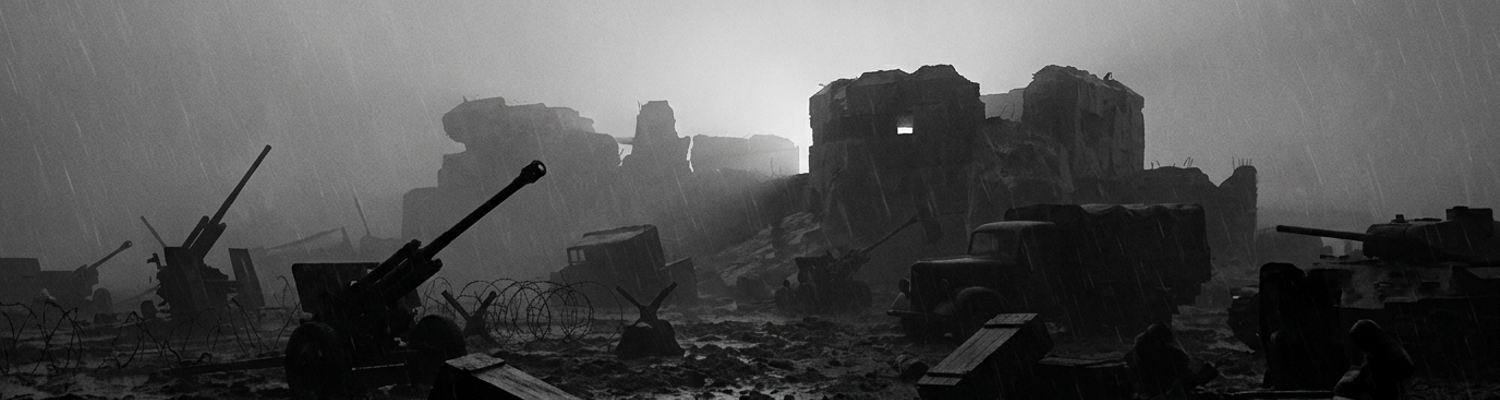

Amphibious Assault Mechanics at Constantine Harbor
Subzero ocean swells and horizontal sleet lashed the northern coastline of Amchitka Island. Across the harbor, knee-deep liquid mud buried the approaches beneath dense subpolar fog. When examining the historical record of Task Group 8.6, the physical environment dictated operational failure from the first transport wave. On January 12, 1943, roughly 2,100 troops boarded Higgins boats.
These units comprised the 18th Combat Engineers and the 111th Infantry Regiment.
Water temperatures hovered near thirty degrees Fahrenheit. Breakers drove landing craft onto hidden volcanic shoals. Wooden hulls capsized. Pack-laden infantrymen fell directly into the surf. Inside the harbor entrance, the destroyer USS Worden struck a subsurface pinnacle. She was maneuvering to shield the landing line. The impact sheared off a propeller shaft. Heavy seawater flooded through ripped hull plating. The warship drifted uncontrollably into outer rocks. Fourteen crewmen drowned. Moments later, the commercial transport ship Arthur Middleton ran hard aground on an uncharted reef. Essential road graders, crane machinery, and combat rations remained trapped under rising bilge water.
Hypothermia claimed combat personnel within ten minutes of full water immersion.
Archival evidence shows that surviving engineer companies reached shore without dry clothing. They lacked shelter halves. They possessed no functional earthmoving bulldozers. Beneath their boots, the terrain consisted of muskeg. This spongy layer of decayed sphagnum moss sat directly over permanently frozen clay. Standard trench lines collapsed immediately. Water pooled into every freshly cut depression. The 18th Combat Engineers excavated hundreds of frozen tundra saps across the harbor perimeter. They used hand shovels, pickaxes, and det-cord blasting charges. Infantry detachments sliced the dense tundra into interlocking sod bricks. This material formed subterranean turf revetments. Measuring four feet in thickness, these sod embankments stabilized firing positions. They insulated living shelters against sub-freezing gales. Runoff from higher volcanic ridges continuously filled the low-lying excavation pits. Riflemen worked through eighteen-hour shifts in drenched wool coats. They conducted round-the-clock bucket bailing. All mechanized equipment sat submerged in saltwater near the reef. Revetment construction relied entirely on manual labor.
Drainage trenches required constant recutting to prevent earthen walls from liquefying.
A close review of operational logs indicates that Japanese reconnaissance discovered the Constantine Harbor beachhead within twelve days. Imperial Japanese Navy air units initiated recurring bombing strikes from bases on Kiska Island. Kiska sat fifty nautical miles to the northwest. Nakajima A6M2-N Rufe floatplane fighters swept low across the harbor. Pilots dropped fifty-kilogram general-purpose bombs directly into the muskeg. Cannon fire raked exposed working parties. No concrete bunkers existed. Riflemen fired Browning Automatic Rifles and M1917 machine guns directly from sod-lined tundra saps. Defensive anti-aircraft fire relied on a handful of towed 37mm guns. Crews mounted these weapons on sod platforms. Gunners struggled to track fast-moving aircraft through low-hanging cloud ceilings. Between January 24 and mid-February, Japanese air sorties struck the harbor installation nine times. Explosions cratered the surveyed airfield runway. Shrapnel tore through unarmored supply dumps along the shoreline.
The final strafing run on February 18 destroyed three fuel bladders. Ground fire then drove the floatplanes back toward Kiska.
Command Isolation and Atmospheric Interference
The physical distance between headquarters and active work parties was less than four miles. Command posts operated in complete ignorance of front-line engineering efforts.
Archival evidence shows that field telephone wire laid across the muskeg failed almost immediately. Signal Corps detachments ran standard rubber-insulated WD-110 communication lines. They routed these from the Constantine Harbor command dugout toward Company B of the 18th Combat Engineers at the Fox Creek runway site. Acidic peat water and abrasive volcanic gravel stripped the outer casing within forty-eight hours. This grounded the copper conductors directly into saturated clay. Terminal posts on EE-8 field telephones corroded under constant oceanic salt spray. Tactical wireless communications proved equally useless. Sub-freezing temperatures degraded the wet-cell lead-acid batteries of SCR-284 radio sets. Transmitter output dropped to a fraction of operating capacity after ninety minutes of use. Severe auroral disturbances and atmospheric scatter across the Aleutian ridge blocked high-frequency voice transmission. This interference disrupted signals over distances as short as two thousand yards. Forward engineer platoons grading the frozen drainage ditches at the airstrip worked without receiving revised construction directives. They received no tactical air raid warnings. Engineering equipment requisitions from rear headquarters went unanswered for days at a time.
Radio batteries froze solid inside their frames.
A close review of operational logs indicates that staff officers lost all visual contact with the forward zone whenever williwaw winds swept across the Bering Sea. These violent downslope gusts routinely peaked between eighty and one hundred knots. The wind tore canvas hangars from shore anchors. It grounded the few available Piper L-4 Grasshopper observation monoplanes and Navy OS2U Kingfisher floatplanes. With aerial reconnaissance eliminated, the command post relied exclusively on foot runners dispatched from the 111th Infantry Regiment. Crossing the island on foot proved mechanically punishing. Messengers carried waterproofed oilcloth pouches containing handwritten status queries. They navigated three miles of trackless tundra. Runners sank waist-deep into liquid peat mires. They clambered over razor-edged volcanic berms against hurricane-force gales. A one-way courier transit between the harbor operations tent and the forward earthworks consumed four to seven hours. Messengers repeatedly succumbed to hypothermia en route. They dropped in low-lying sags. Rescue teams found them hours later with frozen extremities. In one documented instance on January 19, a runner carrying orders to halt blasting operations on Runway No. 1 arrived six hours late. Engineer squads had already expended four cases of dynamite in the wrong drainage axis.
Wind shear pinned runners to the tundra.
Directional control collapsed entirely when subpolar advection fog settled over the island. Visibility dropped to five paces across the treeless terrain. Senior officers attempting to conduct ground inspections could neither see the coastline nor identify surveyed reference stakes. Magnetic compasses proved dangerously unreliable. Basaltic volcanic rock across the central plateau produced localized magnetic anomalies. These anomalies deflected needle bearings by up to twenty-five degrees. Staff officers moving inland lost sight of Constantine Harbor within two minutes of leaving their sod-lined dugouts. They repeatedly wandered into uncharted tidal sloughs. They misidentified their positions on 1935 hydrographic charts. Field maps failed to show the dynamic shifts of the thawing muskeg. The charts designated dry ridges where eighteen-inch-deep mud slurry actually flowed. Pickets from the 111th Infantry lost their bearings in the dense whiteout. They mistook their own returning reconnaissance details for Japanese amphibious raiders. Sentries opened rifle fire across unmapped sector boundaries. Senior commanders directing the placement of coastal defense artillery positioned three 37mm anti-aircraft guns into an impassable marsh southwest of the harbor. They discovered three days later that the pieces were stranded five hundred yards away from the surveyed firing lanes.
Tactical Field Wire Degradation
Serrated volcanic stone severed the landlines within hours of installation.
When examining the historical record of the 111th Infantry Signal Company, the physical ground itself dismantled every hardwired communications circuit on Amchitka. Wire teams dragged standard two-conductor W-110-B field wire from the harbor command dugout toward outlying coastal artillery sectors. They unspooled lines directly over sharp basalt ridges. Violent gale winds caused unanchored lines to lash against the abrasive volcanic rock. This friction wore through the external cotton-and-rubber jacket down to bare metal. Subsurface movement in the active muskeg created an even more destructive mechanical hazard. Freezing and thawing cycles expanded the peat moss beds. This expansion pulled field lines taut. Internal copper and steel strands snapped under sheer tensile strain. Ground moisture accelerated the breakdown. Acidic water pooled across the saturated tundra. The liquid penetrated every hairline fracture in the rubberized casing. It drained battery current from EE-8 field telephones straight into the soil. Signalmen carrying heavy RL-39 reels trudged across exposed terrain to locate electrical breaks. They spliced together severed wires with friction tape. Adjacent segments snapped during the next ground shift.
Lines grounded out faster than repair crews could splice them.
A close review of operational logs indicates that wireless signal networks disintegrated under atmospheric moisture and terrain barriers. High-frequency communication between harbor command posts and forward operating detachments relied on SCR-284 man-pack transmitters and vehicle-mounted SCR-193 sets. Natural topography neutralized these systems immediately. Towering basalt bluffs surrounding Constantine Harbor created physical radio shadows. These rock formations blocked direct-line ground waves. They reflected high-frequency signals out into open sea lanes instead of across inland plateaus. Inside the equipment housings, extreme humidity worked alongside sub-freezing cold to trigger mechanical breakdown. Salt-laden fog seeped through canvas set covers. It coated electrical transformers in moisture. This condensation froze into ice sheets when temperatures fell overnight. High-voltage vacuum tubes cracked from rapid thermal contraction whenever operators engaged transmitters in sub-zero air. Archival evidence shows that quartz frequency crystals inside BC-654 receiver units fractured under sudden freeze shocks. This damage shifted tactical radio nets dozens of kilocycles off assigned channels. It terminated Morse transmissions mid-sentence. At signal huts along the beachhead, tuning dial gears froze solid inside aluminum housings. Manual frequency recalibration became impossible.
Moisture inside the transceiver casings turned tuning coils into solid blocks of ice.
Perimeter Fratricide and Nighttime Engagements
Forward bunker outposts guarding the rocky headlands operated in complete operational isolation. Detachments of eight infantrymen stationed in sod-revetted firing positions at South Bight and East Cape went three consecutive days without receiving a single tactical situation report from Task Group 8.6 headquarters. Isolated rifle squads possessed zero information regarding enemy activity or incoming friendly resupply runs. Tactical radio nets remained silent. Telephone wires lay dead across the rocks. Bunker garrisons received no early warnings when Imperial Japanese Navy floatplanes took off from Kiska. Lookouts had to detect incoming Nakajima A6M2-N aircraft visually. They opened fire with water-cooled M1917 machine guns only after bombs had already begun falling into the surf. Operational headquarters maintained no accurate records of which forward positions remained manned. They did not know which units had succumbed to exposure. Auxiliary signaling protocols failed just as thoroughly. Outpost sentries fired red M17 illumination flares to signal ground alerts. Low-hanging sea fog swallowed the pyrotechnic bursts within forty yards of launch. Forward gun crews rationing damp K-rations held their triggers through freezing nights. They remained uncertain if approaching shadows were Japanese assault units or lost American patrols.
On January 21, the three-man listening post at Kirilof Point exhausted its dry-cell battery stores. This left the western harbor approach without any link to the command bunker.
When examining the historical record of the 111th Infantry Regiment, defensive excavations systematically destroyed the natural drainage barrier of the island. The top layer of decayed sphagnum moss acted as a dynamic hydraulic sponge. It rested above an impermeable substratum of glacial clay and volcanic ash. Sinking defensive works three feet into the tundra penetrated this perched water table. Pressurized subsurface runoff bubbled up through dugout floors at rates exceeding fifteen gallons per minute per dugout. Soil walls collapsed inward without warning. Acidic water saturated the fibrous sod bricks. Reinforced fighting bays dissolved into liquid mud within forty-eight hours. Engineer squads attempted to counter the inundation by digging hand-cut lateral drainage ditches sloped toward the Fox Creek basin. Overnight ground freezes caused ditch margins to heave and slough shut. Combat troops slept on platforms made of salvaged wooden shipping crates and telephone crossarms. They elevated these platforms six inches above the pooling bilge. Sump pits dug in the corners of living bunkers required manual bailing every two hours with empty five-gallon ration cans.
Peat sludge filled sleeping pits to the floorboards by morning.
Muskeg Engineering and Subterranean Turf Fortifications
Archival evidence shows that the 18th Combat Engineers had to discard standard War Department field fortification blueprints within seventy-two hours of coming ashore at Constantine Harbor. Above-ground revetments blew apart under ninety-knot williwaw gusts. Timber revetment lumber remained trapped in the flooded holds of the grounded transport Arthur Middleton. Company commanders directed squads to cut the upper vegetation crust into interlocking sod blocks. These blocks measured twelve inches wide by twenty-four inches long. Working parties excavated rectangular pits forty inches deep into the volcanic soil. They stacked double-thickness sod walls around the perimeters. This earthwork absorbed fifty-kilogram bomb splinters dropped by Kiska-based Nakajima A6M2-N floatplanes. Driftwood stringers gathered from rocky high-tide flats formed the primary roof beams. Over these logs, soldiers stretched rubberized poncho fabric. They layered eighteen inches of living peat turf directly across the upper decking. This established thermal insulation against subarctic winds. Inside these subterranean sod cells, body heat from twelve combat infantrymen raised interior temperatures to forty degrees Fahrenheit while exterior readings plunged well below freezing.
Shovels broke against buried basalt strata.
A close review of operational logs indicates that fear of Imperial Japanese Navy air raids forced quartermasters to abandon orderly supply depots. Landing parties rolled several thousand 55-gallon drums of eighty-seven-octane aviation fuel and seventy-two-octane motor gasoline off surf-swept lighters. They dispersed them by hand across three miles of undulating tundra between Constantine Harbor and South Bight. Working parties deposited the drums in groups of two or three within natural swales and low-lying muskeg pockets. They covered them with loose moss to defeat aerial reconnaissance cameras. Ammunition details scattered wooden crates of .30-06 rifle cartridges and 60mm mortar shells in identical fashion. They omitted surveyed compass references or range stakes to speed up offloading. Perimeter defense units from the 111th Infantry simultaneously strung tripwires. They connected these wires to Mk II fragmentation grenades and M10 warning flares across open terrain corridors. This guarded against Japanese night counter-landings. Sleet storms and blowing volcanic silt drifted over the perimeters within twelve hours. The weather completely masked wire locations and surface reference markers.
No central map recorded where the explosives lay.
Archival evidence shows that supply parties attempting to retrieve combat stores during a strafing attack on January 26 spent four hours searching for buried ammunition caches. They scoured a fifty-yard sector near the harbor mouth without locating a single crate. Forward rifle companies ran low on small-arms munitions. Hundreds of thousands of rounds lay sunken beneath six inches of frozen tundra water. Movement across the defensive lines after dark became suicidal for American personnel. On the night of January 29, a four-man reconnaissance detail returning to Company G positions struck an unmapped tripwire. The wire sat two hundred yards outside the surveyed perimeter boundary. The resulting detonation of a fragmentation grenade killed one infantryman and wounded two others.
Postwar Ordnance Hazards and Environmental Remediation
Rusted steel drum casings and live high-explosive ordnance settled deep into the Aleutian peat as soon as combat operations ceased.
When examining the historical record of the Constantine Harbor perimeter, decades of severe subpolar weathering broke down thousands of field-expedient material dumps across the island. Abandoned munitions details left behind live 37mm high-explosive anti-aircraft shells. They abandoned fuzed 60mm mortar bombs and M20 white-phosphorus rifle grenades. These weapons scattered throughout the tundra between Fox Creek and South Bight. Annual freeze-thaw cycles in the saturated muskeg created hydraulic frost-heaves. This geological action steadily lifted buried brass casings and corroded iron projectiles back to the surface. Nearby, hundreds of dispersed field caches holding 55-gallon carbon-steel drums succumbed to coastal salt spray and acidic peat moisture. These unlined drums initially held 87-octane aviation fuel, 72-octane motor gasoline, and leaded lubricants. They suffered structural seam separation as internal pressure shifts warped thin sidewalls. Hydrocarbon liquids bled continuously into standing marsh pools. This created toxic petroleum slicks that choked low-lying watercourses draining into the Bering Sea. Unmarked defensive minefields and tripwire runs strung with corroded Mk II fragmentation grenades lingered in high-grass swales. Deteriorating striker springs and unstable fulminate-of-mercury primers turned routine walking paths into active detonation traps.
Corroded fuzes degraded into hair-trigger detonators.
Archival evidence shows that rapid structural failure inside subterranean bunkers triggered widespread environmental collapse across former defensive sectors. The 18th Combat Engineers had constructed hundreds of below-ground living spaces and ammunition storage chambers. They used unpeeled driftwood logs covered with green sod bricks. Without constant manual bailing and timber replacement, these subterranean roof supports rotted out under the weight of waterlogged moss. Deep turf roofs dropped into the hollows beneath. This transformed reinforced fighting positions into open, water-filled sinkholes that collected toxic wartime refuse. Sump waters inside the sunken positions dissolved lead plates and electrolyte pastes from cracked wet-cell radio batteries. This contaminated the surrounding permafrost lens with heavy metals. Working parties from the island garrison had discarded burned vehicle chassis. They dumped chlorinated degreasing agents and PCB-filled electrical transformers directly into unrecorded muskeg trenches flanking Kirilof Bay and the Constantine Harbor headlands. Surface water running across the impermeable glacial clay subsoil carried these chemical compounds into intertidal flats. The runoff poisoned marine foraging areas used by Aleutian sea otters and nesting waterfowl.
Acid runoff carved permanent toxic gullies through the peat.
A close review of operational logs indicates that comprehensive remediation efforts did not commence until May 1992. The U.S. Army Corps of Engineers completed a formal environmental survey and hazard assessment across the entire island. Operating under the Defense Environmental Restoration Program for Formerly Used Defense Sites, assessment teams from the Alaska District mapped 116 square miles of remote terrain. They identified abandoned infrastructure hazards. Technical specialists located and recorded hundreds of open bunker sinkholes, unexploded artillery shells, and deteriorating drum dumps situated around the World War II runways. Field teams collected core samples from unlined disposal trenches near Fox Creek. They documented severe soil saturation from volatile aromatic hydrocarbons, arsenic, and transformer dielectric fluids. The 1992 assessment cataloged sixty-one discrete high-hazard zones. These areas contained unexploded ordnance, unstable high-explosive fuzes, and leaking fuel distribution infrastructure. The sites required heavy earthmoving equipment to neutralize. Technicians flagged specific coastal artillery sectors near East Cape where deteriorating high-explosive ordnance sat directly atop eroding sea cliffs.
The Corps designated 1,400 discarded fuel barrels along the South Bight drainage for immediate excavation and disposal.