
AEF Siberia and the Suchan Valley Coalfields
The wind through the taiga ceased entirely. A heavy quiet settled over the railyard just seconds before the first Bolshevik mortar round impacted the tree line.
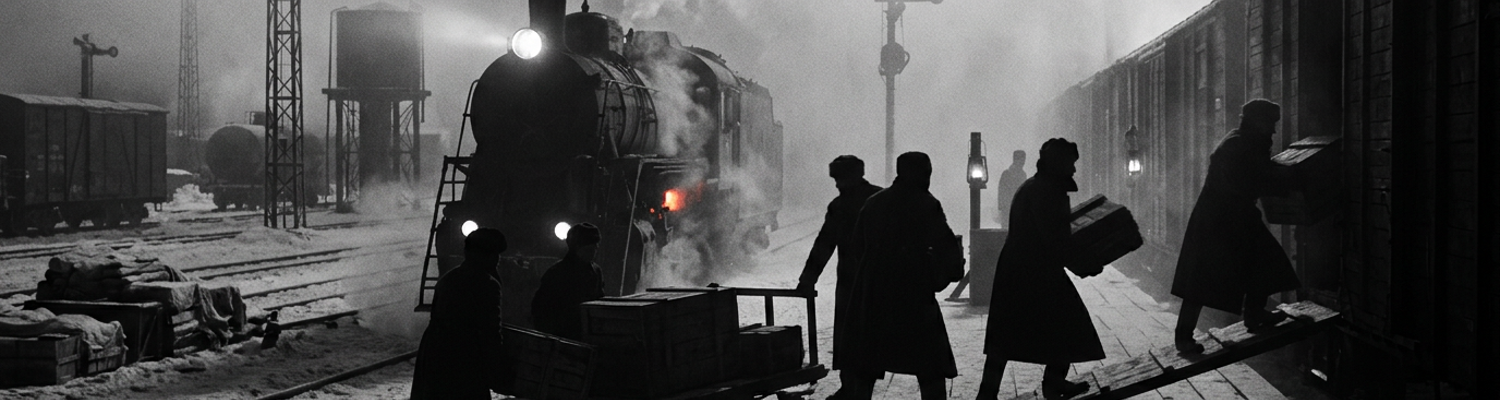
When examining the historical record of the American Expeditionary Forces Siberia, the command structure operated in a state of near-total sensory deprivation. Major General William S. Graves sat at his desk in Vladivostok. He stared at topographic maps detailing the forty-third degree of latitude. He was seventy miles away from the kinetic engagements. Field commanders relied on copper telegraph wires strung along the right-of-way. Local partisan fighters routinely severed these lines with heavy iron bolt cutters. In November 1919, American troops secured specific coal transport routes along the Suchan Valley railway line. This operation required companies from the 27th Infantry Regiment to garrison isolated blockhouses spaced at five-mile intervals along the single-track gauge. The men manned Lewis machine guns behind sandbags that froze solid in the negative thirty-degree temperatures. Baldwin 2-10-0 locomotives hauled hopper cars full of bituminous coal out of the mines at Partizansk. These trains provided the only fuel source for the Trans-Siberian Railway operating east of Lake Baikal.
A severed telegraph line meant headquarters learned about a derailed coal train three days late. The locomotive crew had already frozen to death.
Archival evidence shows the sheer mechanical strain of keeping this infrastructure operational under constant ambush. Roving bands of miners aligned with the Red Army frequently removed heavy steel rail spikes. They unbolted joint bars near sharp curves. A train hitting these sabotaged sections derailed immediately. The front pilot wheels dropped off the rails and drove the boiler directly into the frozen mud. Commanders in Vladivostok tried to counter this by mandating slow-moving armored pilot trains to run ahead of the coal shipments. These pilot trains consisted of a single flatcar loaded with sandbags and a detachment of riflemen pushing ahead of the main engine. The officers drafted these daily orders in heated administrative buildings. Couriers carried the typed directives to the Vladivostok train station. Engineers loaded them into mailbags for a twelve-hour transit up the spur line to the Suchan coalfields. A local captain at a remote switching station read the directive. The track conditions had entirely changed by that point.
AEF intelligence officers initiated a multi-national psychological campaign to maintain regional control. G-2 branch personnel stationed at the headquarters compound realized that kinetic force alone could not secure the seventy miles of vulnerable track. They drafted hundreds of thousands of Russian-language leaflets. The text explicitly outlined American neutrality based on the original 1918 Aide-Memoire. It warned local civilians that the 27th Infantry would only shoot if the railway was directly threatened. The G-2 staff had to coordinate with Japanese Military Intelligence and Czechoslovak Legion commanders. These allied units occupied overlapping sectors of the Primorsky Krai region. Staff officers held endless coordination meetings in Vladivostok. They wanted to ensure the translated messaging did not contradict the aggressive anti-Bolshevik propaganda simultaneously distributed by the Japanese 12th Division.
The printing presses ran continuously in a requisitioned commercial basement on Svetlanskaya Street.
A close review of operational logs indicates the physical distribution of these leaflets faced immediate environmental failure. Intelligence officers instructed infantry patrols to scatter the paper bundles from the side doors of moving boxcars. The Siberian winter caused the cheap paper stock to freeze into solid bricks. Soldiers threw these rigid blocks out of the railcars. The bundles impacted the snowbanks and failed to separate. Local peasants walking along the right-of-way found intact cubes of paper instead of readable individual fliers. The headquarters staff continued to order daily print runs of fifty thousand sheets. They tracked the supposed psychological pacification on a large corkboard using blue pushpins to mark leaflet drop zones. The final invoice for the November production run totaled four hundred pounds of ink and twenty-two crates of substandard pulp paper.
The 48-Hour Rail Clearing Mandate
Archival evidence (NARA Record Group 338) shows the origin of the clearing directive within the isolated command structure. Staff officers at the base of the Golden Horn Bay drafted General Order 41 under intense administrative pressure from Washington. This mandate demanded the complete pacification of the Suchan railway spur within exactly forty-eight hours. Commanders sitting in steam-heated offices evaluated the seventy-mile corridor on flat map projections. They calculated troop movements based on standard marching speeds of three miles per hour. These calculations completely ignored the three feet of accumulated snow blocking the mountain pass at Novitskaya. The math failed entirely. General Order 41 directed companies E and F of the 27th Infantry Regiment to immediately push out from their fortified blockhouses. Ground troops had to sweep the adjacent ridgelines for partisan camps and secure the right-of-way. Planners expected these heavily encumbered units to locate and neutralize mobile insurgent bands led by local Bolshevik commander Sergey Lazo. Headquarters allocated just two days for this operation. The coal reserves at the Vladivostok switching yards had dropped below a four-day supply. The entire eastern section of the Trans-Siberian Railway would shut down if the Baldwin 2-10-0 locomotives stopped arriving from Partizansk. The rigid forty-eight-hour timeline offered zero tactical flexibility to the lieutenants on the ground.
A close review of operational logs indicates the telegraph operators at the Shkotovo relay station received this transmission during a blinding whiteout.
The timeline forced ground units into immediate advances into the taiga. Infantrymen stepped out of their heated barracks into negative thirty-five-degree wind chills. They wore standard-issue canvas leggings that provided zero insulation against the snowpack. These patrols floundered in the drifts. The intelligence apparatus back at the base attempted to supplement the infantry sweep with an aggressive psychological operation. G-2 staff recognized that shooting partisan fighters would not solve the underlying labor strikes at the coal pits. They initiated a rapid drafting process to create specific Russian-language propaganda leaflets targeting the local miners and insurgent factions.
Translators working in the requisitioned commercial basement on Svetlanskaya Street converted English directives into Cyrillic text over a frantic twelve-hour shift. Written appeals explicitly addressed the railway workers and the armed factions holding the hills around the Suchan mines. The text promised that the American forces had no intention of interfering with local Russian political structures or municipal governance. It stated the military only wanted uninterrupted access to the bituminous coal necessary for running the regional rail network. Drafted language offered guarantees of safe passage and fair wages for any striking miner who returned to the deep-shaft pits at Partizansk. Intelligence officers bypassed standard military requisition channels to maximize output. They sourced cheap newsprint from civilian vendors operating near the Vladivostok docks. Heavy iron presses stamped out seventy-five thousand copies of these appeals using a low-viscosity black ink. This ink smeared easily when exposed to high humidity. Physical production required non-stop operation of three rotary machines. Local civilian contractors manned these presses and frequently sabotaged the output by loosening the drive belts. The gears jammed constantly. Staff officers eventually packed the freshly printed stacks into wooden crates and loaded them onto the next outbound supply train heading north toward the contested valley.
The crates sat uninsulated in the freezing boxcars for fourteen hours.
When examining the historical record of this psychological campaign, the disconnect between the command center and the operational environment becomes highly visible. The drafted appeals relied on complex political arguments regarding international neutrality and labor rights. Most of the targeted miners and peasant insurgents possessed very low literacy rates. They could not read the densely packed Cyrillic paragraphs. Officers at headquarters assumed the insurgent factions would read the leaflets and voluntarily cease their sabotage of the rail lines. They plotted the expected pacification zones on their corkboards with total confidence. The deadline expired while the infantry patrols were still bogged down less than two miles from their starting positions at the blockhouses. A local captain at the Shkotovo garrison recorded that his men found three severed telegraph poles and absolutely no trace of the partisan fighters.
Mechanical Failures in Arctic Flight Conditions
Archival evidence shows the aviation annex of the psychological campaign collapsed almost immediately under environmental stressors. Headquarters failed to anticipate these atmospheric conditions. Staff officers stationed inside the steam-heated command buildings in Vladivostok expanded their distribution strategy to include aerial drops. They wanted to bypass the sabotaged rail lines entirely. They issued daily flight manifests to a provisional detachment of De Havilland DH.4 biplanes operating out of a cleared dirt strip near the Golden Horn Bay. The typed directives instructed pilots to fly seventy miles north and scatter the Cyrillic propaganda directly over the heavily fortified partisan camps along the Suchan railway line. Planners looking at flat topographic maps assumed the aircraft could complete a round trip in under two hours. These calculations completely ignored the dense maritime weather systems pushing off the Sea of Japan and funneling into the mountain passes. A claustrophobic arctic fog settled permanently over the Primorsky Krai region during the third week of November. Visibility across the flight routes dropped below two hundred yards.
The ground crew recorded morning temperatures of negative thirty-eight degrees Fahrenheit.
When examining the historical record of these specific sorties, the physical failure of the mechanical leaflet dispensers becomes highly visible. Mechanics had modified standard bomb racks on the lower wings of the DH.4s to hold custom-built wooden hoppers. Each hopper contained four thousand tightly packed paper fliers and relied on a spring-loaded steel trapdoor for release. Pilots flying blindly through the claustrophobic arctic fog accumulated thick layers of rime ice across every exposed surface of their aircraft. The severe freezing conditions caused the high-moisture fog to instantly crystallize upon contact with the external metal components. Ice fused the steel hinges of the trapdoors to the wooden frames. Pilots reached their designated drop zones over the Novitskaya rail junction. They pulled the manual release cables located in the cockpit. The frozen hinges refused to yield. The heavy gauge wire cables snapped under the tension.
Pilots returned to the airstrip with their entire payload of leaflets frozen solid inside the jammed hoppers.
The environmental degradation of the aircraft extended directly into the primary propulsion systems. Pilots had to drop their altitude to less than four hundred feet above the tree line to maintain visual contact with the single-track railway gauge in the blinding fog. This low-altitude flight profile over the Suchan line exposed the Liberty L-12 V-12 water-cooled engines to a continuous intake of supercooled vapor. Extreme cold caused rapid carburetor icing inside the dual Zenith carburetors mounted between the cylinder banks. The massive twelve-cylinder engine drew in the freezing air. The pressure drop inside the carburetor venturi lowered the internal temperature by an additional thirty degrees. Solid ice formed rapidly on the brass butterfly valves that regulated the fuel mixture. This accumulation physically blocked the atomized gasoline from entering the intake manifolds.
A close review of operational logs indicates engine RPMs frequently dropped from fourteen hundred to less than eight hundred in a matter of seconds.
Commanders isolated in their administrative bubble continued to order back-to-back sorties despite repeated mechanical aborts and missing crews. Headquarters demanded continuous aerial presence over the coalfields. They were completely unaware of the aerodynamic physics occurring seventy miles away in the mountains. The carburetor icing forced pilots into a desperate series of manual adjustments just to keep the Liberty engines firing above the hostile terrain. Aviators attempted to lean out the fuel mixture using cockpit levers to compensate for the restricted airflow. The ice buildup eventually blocked the intake entirely. Engines sputtered and died directly over the heavily timbered taiga. Unaware of the atmospheric mechanics destroying their aircraft, staff officers at the base marked the missing biplanes on their corkboards with red pushpins. A recovery patrol dispatched from the Partizansk garrison found one downed DH.4 (serial number 44-12998) nose-first in a frozen peat bog at coordinate 43.15 North. The mechanics who dismantled the wreckage documented a solid two-inch block of ice completely sealing the carburetor throat.
Manual Leaflet Dispersal in Mountain Passes
Archival evidence shows the immediate tactical pivot headquarters mandated following the total failure of the mechanical hoppers. Commanders drafted updated directives inside the warm Vladivostok administrative buildings after reading telegraph reports of the jammed trapdoors. They refused to halt the psychological campaign. Planners scheduled a new series of aerial drops between 2200 and 0300 hours to avoid the daytime arctic fog banks. The orders forced the provisional detachment of De Havilland DH.4 biplanes back into the air under entirely different operational parameters. Without functioning external release mechanisms, the physical burden of distribution fell directly on the rear-seat aerial observers. These enlisted men had to manually throw the heavy bundles of Cyrillic propaganda out of the open cockpits into pitch-black mountain passes.
The slipstream ripped through the gunner stations at ninety miles per hour.
A close review of operational logs indicates the extreme physical toll this manual dispersal extracted from the aircrews. Observers wedged their knees against the wooden floorboards to prevent falling out during sudden evasive maneuvers. The ambient temperature at two thousand feet dropped to negative forty-five degrees Fahrenheit over the Sikhote-Alin range. Men wore heavy leather flying coats and thick wool mittens that severely restricted their hand movements. Headquarters instructed them to cut the thick jute twine binding the leaflet bundles just seconds before throwing them over the side. Trying to handle a standard-issue combat knife with frozen fingers in total darkness resulted in frequent lacerations. Once severed, the observer had to heave the loose stacks of newsprint over the fuselage directly into the propeller wash. The violent aerodynamic forces often blew the wet paper straight back into the empennage. Sheets plastered against the rudder and elevator control cables. Pilots fought sudden control stiffness as the freezing moisture fused the paper to the external steel flight wires.
One observer from the 9th Aero Squadron accidentally dropped an entire intact crate through the floorboards.
Navigating the mountain gorges in absolute darkness stripped the aviators of their standard spatial orientation. The staff officers sitting seventy miles away plotted these night routes using basic compass headings drawn with wooden rulers across flat topographic maps. They expected crews to fly directly up the narrow valley toward the Novitskaya rail junction using basic dead reckoning. Archival records reveal that sporadic ground flares lit by isolated outposts provided the only visual navigation points for flying crews at night. Detachments of the 27th Infantry Regiment stationed at remote blockhouses received orders via telegraph to ignite 55-gallon steel drums filled with kerosene at specific intervals. Sergeants from Company E trudged through waist-deep snowpack to position these makeshift beacons along the right-of-way. Aviators flew blindly through the frozen void of the taiga until they spotted these faint orange pinpricks on the valley floor.
The fires frequently blew out in the high winds.
When examining the historical record of these nighttime operations, the fatal flaw in the headquarters navigation strategy becomes highly visible. Officers sitting in the steam-heated base compound assumed straight-line flight paths were easily maintainable at night. The burning oil drums offered zero depth perception to a pilot descending into a pitch-black ravine. Aviators had no way to judge their exact altitude relative to the sheer granite walls rising on both sides of the single-track railway. They banked their heavy biplanes toward the sporadic magnesium parachute flares fired by the ground patrols. A partisan unit severing the telegraph wire earlier in the day meant the outposts never received the order to light the signals. The aircrews arrived at the designated coordinates and found nothing but an unbroken expanse of black timber. Pilots circling at four hundred feet rapidly lost their orientation as engine exhaust blinded their night vision. A recovery team located the wreckage of a DH.4 scattered across a ridgeline three miles north of the Shkotovo relay station. The altimeter dial in the shattered cockpit was frozen permanently at two hundred and ten feet.
Partisan Assaults on Frozen Railway Outposts
Archival evidence shows the command structure in Vladivostok drafted static defense doctrines that completely ignored the tactical mobility of local insurgent factions. Staff officers pinned defensive perimeters onto flat maps. They ordered Company G of the 27th Infantry Regiment to garrison a series of isolated timber blockhouses near the Kangauz rail junction. They mandated a strict watch schedule across the entire seventy-mile right-of-way. These directives forced small twelve-man detachments to man exposed sentry posts at coordinate 43.18 North. Commanders sitting in steam-heated offices assumed the deep snowpack would deter enemy movement. They evaluated the terrain using basic geometric lines drawn with wooden rulers. The geography of the Suchan Valley consisted of steep, timbered ridges that restricted the rail line into narrow, highly vulnerable corridors. Planners expected the ground troops to maintain visual control over these ravines from their fixed positions.
Local Bolshevik commander Sergey Lazo exploited this static positioning by launching coordinated nighttime raids against the isolated garrisons.
A close review of operational logs indicates the partisans timed their assaults for the coldest hours of the early morning. Insurgent fighters wearing white canvas smocks crawled over the frozen crust of the snowdrifts. They completely bypassed the cleared kill zones headquarters had plotted on their corkboards. The attackers struck the Romanovka switching station at 0200 hours on November 28. They severed the copper telegraph wires with heavy iron shears. They opened fire with Mosin-Nagant rifles. Ground troops inside the timber blockhouses scrambled to man their defensive positions in negative forty-two-degree wind chills. The isolation was absolute. Soldiers stepped out of their heated barracks and immediately lost feeling in their extremities. They waded through waist-deep drifts to reach the exterior firing pits. The heavy winter boots issued by the quartermaster lacked proper traction for the icy inclines. Men slipped and fell into the dark trenches.
Environmental degradation immediately neutralized the American defensive hardware. Standard-issue M1903 Springfield rifles failed during the initial volley. The ordnance department in Vladivostok had coated the internal bolt mechanisms with Cosmoline. Planners seventy miles away never issued orders to strip this heavy rust-preventative grease for winter operations. At forty degrees below zero, the petroleum-based compound hardened into a rigid adhesive. Infantrymen pulling the triggers found the striker springs lacked the kinetic energy to drive the firing pins forward. The cold physically altered the viscosity of every lubricant issued to the frontline units. Soldiers resorted to urinating on the bolt assemblies in a desperate attempt to thaw the moving parts. The moisture froze again seconds later. The men had to manually hammer the bolt handles open using wooden trench clubs.
The firing pins struck the brass primers with a dull click instead of detonating the powder charges.
The mechanical failure extended directly to the heavy support weapons. Garrison commanders attempted to suppress the partisan tree lines using Lewis machine guns mounted behind the perimeter sandbags. The extreme temperatures severely compromised the clockwork-style mainsprings housed inside the circular gear casings of these weapons. Metal fatigue caused by the deep freeze made the steel components highly brittle. Gunners racked the charging handles. The internal operating rods snapped in half. The gas-operated action seized completely after firing fewer than ten rounds. Headquarters had allocated these specific machine guns to provide overlapping fields of fire across the railyard. Officers back at the base compound assumed a single Lewis gun could hold off an entire company of advancing infantry. They never tested the weapon systems in sub-zero maritime climates. Planners expected the standard cyclic rate of five hundred rounds per minute to break any frontal assault.
The defensive perimeter failed entirely.
Archival records reveal the physical fortifications headquarters ordered built proved completely useless against the sudden kinetic assaults. Staff officers had mandated the construction of standard sandbag parapets around every switching station to absorb incoming small arms fire. The high moisture content in the local river sand caused the bags to freeze into solid blocks of ice within hours of placement. Incoming 7.62mm rounds from the partisan rifles did not safely embed into the material. The bullets shattered the frozen sandbags upon impact.
High-velocity ice shrapnel ripped through the defensive trenches.
Soldiers suffered severe facial lacerations from the disintegrating fortifications. The men had no medical supplies capable of treating deep tissue wounds in the freezing environment. Blood froze to their canvas uniforms before medics could apply standard field dressings. Officers back at the base compound continued to dispatch standard resupply manifests via the next available armored pilot train. They loaded wooden crates of standard petroleum-based gun oil onto the flatcars. The garrison at Kangauz never received the shipment. A telegraph operator at a relay station ten miles south recorded that the train hit a removed section of track at 0600 hours. The boiler ruptured instantly against the frozen mud.
Telegraph Relays and Vladivostok Headquarters Isolation
Archival evidence shows the command structure operating the psychological campaign existed in total physical detachment from the combat environment. Major General William S. Graves and his senior coalition staff occupied a requisitioned three-story commercial building on Svetlanskaya Street in downtown Vladivostok. Steam radiators kept the interior administrative offices at a constant sixty-eight degrees Fahrenheit. Officers drafted leaflet distribution orders while sitting at heavy oak desks. They evaluated the Suchan Valley coalfields on flat topographic maps. Headquarters sat over seventy miles south of the active engagement zones. The command staff attempted to track the movements of the 27th Infantry Regiment and local Bolshevik partisan units using blue and red pushpins pressed into large corkboards. Planners calculated enemy positions based on these static markers. They assumed the terrain represented on their paper charts accurately reflected the physical ground conditions holding the troops. The actual geography consisted of steep mountain passes buried under three feet of snow. Officers in the headquarters compound never experienced the negative thirty-five-degree wind chills freezing the primary weapon systems of their frontline units. They issued daily directives demanding aggressive leaflet drops without stepping outside the base perimeter.
A standard courier trip from the Vladivostok train station to the forward blockhouses required fourteen hours of travel.
When examining the historical record of this communication network, the severe mechanical vulnerabilities of the telegraph relays become highly visible. Field commanders relied entirely on a single line of 8-gauge copper wire strung along the right-of-way of the Trans-Siberian Railway spur. This physical tether connected the remote blockhouses directly to the telegraph receivers in the Svetlanskaya Street headquarters. Insurgent factions aligned with Sergey Lazo targeted this specific infrastructure nightly. Partisan fighters wearing white canvas smocks climbed the wooden poles at coordinate 43.18 North and used heavy-duty iron shears to sever the copper lines. They frequently removed hundred-yard sections of wire to prevent rapid splicing by American repair crews. This physical sabotage created large intelligence blind spots for the senior decision-makers sitting in their steam-heated offices. A severed line instantly cut off all real-time operational data from the Kangauz and Romanovka switching stations. The intelligence apparatus back at the base compound continued to issue leaflet drop coordinates based on their outdated map pins.
Telegraph operators at the Shkotovo relay station frequently spent six hours trying to route a single Morse code transmission through secondary junction boxes.
A close review of operational logs indicates these delayed telegraph relays created highly dangerous lags in operational intelligence. A local captain stationed at the Novitskaya rail junction drafted a situation report detailing a heavy partisan buildup near the primary coal pits. He handed the written dispatch to a signalman who keyed the message into a standard Type J military telegraph set. The severed copper wires north of Shkotovo stopped the electrical current from reaching Vladivostok. The signalman had to wait for an armed track repair crew to locate the break, splice the 8-gauge wire, and restore the circuit. Headquarters received the transmission exactly forty-six hours after the captain initiated the send. During that lag, senior commanders blindly ordered a provisional detachment of De Havilland DH.4 biplanes to drop fifty thousand Cyrillic leaflets over an empty ridgeline.
The partisan fighters had already relocated ten miles south and ambushed a coal train.
The hardware inside the relay stations also failed under the extreme environmental stressors. Operators relied on standard wet-cell batteries to generate the electrical voltage required to push the Morse signals down the seventy-mile copper line. The uninsulated timber construction of the forward blockhouses offered zero protection against the arctic maritime weather systems blowing off the Sea of Japan. Ambient temperatures inside the signal rooms routinely dropped below zero degrees Fahrenheit. The liquid electrolyte solution inside the glass battery jars crystallized and froze solid. This chemical reaction completely halted the electrical output. Signalmen attempted to thaw the glass jars by placing them directly next to cast-iron wood stoves. The rapid temperature change caused the thick glass to shatter. Highly acidic electrolyte spilled across the wooden floorboards.
The Vladivostok receivers recorded nothing but dead static from the northern sector for three consecutive days.
Command Miscalculations and Strategic Blindness
When examining the historical record of the American Expeditionary Forces Siberia, the command structure in Vladivostok operated in a state of total physical detachment from the combat zone. Staff officers occupying the steam-heated commercial buildings on Svetlanskaya Street miscalculated both the severe ground weather conditions and the tactical mobility of partisan forces along the Suchan rail corridor. Commanders evaluated the seventy-mile right-of-way using flat map projections and basic wooden rulers. They drafted operational timelines based on standard summer marching speeds of three miles per hour. These calculations completely ignored the maritime weather systems pushing off the Sea of Japan. These storms had dumped four feet of snow across the mountain passes near Novitskaya. The infantrymen of the 27th Regiment found themselves trapped in waist-deep drifts. They were unable to advance more than a few hundred yards an hour while carrying sixty-pound canvas rucksacks and M1903 Springfield rifles. Back at the base compound, planners assumed this deep snowpack would equally restrict enemy movement. Archival evidence shows this assumption was entirely wrong. Local insurgent factions aligned with Sergey Lazo utilized traditional hunting skis and wide-framed snowshoes to move directly over the frozen crust. Partisan fighters wearing white canvas smocks easily bypassed the static American blockhouses. They traveled at speeds exceeding eight miles per hour through the heavy timber. Headquarters expected a slow, conventional enemy bound to the valley floor.
The insurgents instead traversed the steep ridgelines with zero resistance.
A close review of operational logs indicates this geographical disconnect directly resulted in blind strategic decisions issued based on outdated situational reports from distant outposts. Field intelligence relied on copper telegraph wires that the highly mobile partisans severed nightly using heavy iron shears. A local captain at the Kangauz switching station identified a massing of Bolshevik fighters near coordinate 43.18 North. He handed a written dispatch to his signalman. The operator found the primary circuit dead. The wet-cell batteries had frozen solid inside their glass jars during the night. Repair crews took forty-eight hours to locate the physical break in the 8-gauge wire and restore electrical current to the line. The transmission finally reached the receivers in Vladivostok two days after the initial sighting. Officers sitting at their oak desks read the decoded Morse transcript and immediately issued aggressive combat directives. They ordered Company F of the 27th Infantry Regiment to leave their fortified blockhouses and sweep the designated grid square to neutralize the reported threat.
The telegraph operators pushed the paper order back up the repaired wire during a blinding whiteout.
Commanders tracked this offensive maneuver on large corkboards using colored pushpins. They were completely unaware that the tactical data was forty-eight hours old. Ground troops stepped out of their barracks into negative thirty-five-degree wind chills to execute the sweep. They marched heavily encumbered into the specified ravine expecting a static insurgent camp. The partisan fighters had already relocated twelve miles south to ambush a derailed coal train. Senior decision-makers back in the coastal city continued to issue follow-up orders based on the assumption that Company F was actively engaging the enemy at the original coordinates. The intelligence apparatus demanded 75mm artillery barrages and low-altitude leaflet drops over empty stretches of taiga. Planners plotted these pacification zones with total confidence while staring at static paper maps. They actively directed their aviation assets to scatter thousands of Cyrillic fliers over abandoned fire pits. A recovery patrol later found the frozen remains of a telegraph operator who had attempted to run a physical update down the tracks to correct the grid coordinates. His standard-issue canvas leggings offered zero insulation against the snowpack. His body was located three miles from the nearest relay station.
Psychological Warfare Outcomes in Siberia
Archival evidence shows the physical reception of the airdropped propaganda directly contradicted the optimistic projections pinned to the corkboards in Vladivostok. Officers at the Svetlanskaya Street headquarters drafted complex political arguments outlining labor rights and international neutrality. They printed these messages on heavy five-by-eight-inch rectangular sheets of cheap commercial pulp. Planners assumed the civilian coal miners at the Partizansk deep-shaft pits would read these densely packed Cyrillic paragraphs and abandon their strike. The targeted demographic possessed a literacy rate of less than twelve percent.
Local workers who found the frozen paper bundles scattered along the right-of-way used the heavy newsprint to insulate their boots against the negative forty-degree wind chills.
A close review of operational logs indicates the insurgent factions actively repurposed the psychological campaign for their own survival. Sergey Lazo's partisan fighters operating out of the Sikhote-Alin mountain range gathered the thousands of dropped leaflets from the snowdrifts near coordinate 43.15 North. The high-moisture paper stock proved highly effective as tinder for starting warming fires in the damp taiga. Insurgents also rolled the rectangular fliers into crude cigarettes using locally scavenged tobacco. The cheap black ink sourced from civilian vendors smeared across their hands and faces during this process. The intelligence apparatus back at the base compound recorded these missing paper bundles as successful psychological pacifications. Staff officers pushed blue pins into their flat map projections to mark areas they believed were completely neutralized by the written messaging. The actual ground conditions revealed a highly fractured response from the civilian population. A small group of six striking miners attempted to surrender at the Romanovka switching station on December 4. They approached the fortified timber blockhouse. They held intact copies of the American leaflet above their heads. Sentries from Company G of the 27th Infantry Regiment had never received briefings regarding the translated propaganda.
The guards opened fire with Lewis machine guns at a range of forty yards. They expended two full forty-seven-round pan magazines of .30-06 caliber ammunition into the unarmed group.
When examining the historical record of this operation, the total collapse of the distribution network exposes the severe limits of remote command structures. Major General William S. Graves and his senior staff attempted to direct the Arctic psychological campaign through a highly vulnerable copper telegraph network. The 8-gauge wire strung along the single-track railway served as the only physical link between the steam-heated administrative buildings and the remote blockhouses. Partisan fighters wearing white canvas smocks routinely climbed the wooden poles near the Novitskaya rail junction to snip these lines with heavy iron shears.
A cut wire instantly blinded the intelligence officers sitting seventy miles away in Vladivostok.
This communication blackout forced the command staff to make blind strategic decisions regarding their aviation assets. Headquarters continued to dispatch De Havilland DH.4 biplanes to drop new crates of leaflets over zones that were entirely vacant. Planners evaluated the seventy-mile corridor using basic wooden rulers and outdated situation reports delayed by the severed telegraph relays. A local captain at the Kangauz garrison dispatched a runner through waist-deep snow to report a massive partisan relocation away from the primary coalfields. The messenger took three days to reach a functioning Type J military telegraph set at the Shkotovo relay station. He found the signalmen attempting to thaw their glass wet-cell batteries next to a cast-iron wood stove after the liquid electrolyte froze solid during a negative thirty-degree night. During that seventy-two-hour lag, commanders in the coastal city ordered continuous flight sorties over the abandoned ridges. Mechanics loaded custom-built wooden hoppers with seventy-five thousand freshly printed Cyrillic fliers weighing over six hundred pounds. Pilots flew blindly through dense maritime fog pushing off the Sea of Japan. They navigated entirely by dead reckoning to reach the assigned drop zones. They pulled the manual release cables over coordinate 43.18 North while fighting rapid carburetor icing in their Liberty L-12 engines. The trapdoors opened. The entire payload of substandard pulp paper scattered into an empty granite gorge.
The final operational report for the December campaign documented fifty-two missing aircraft and zero confirmed partisan surrenders.