
Photostat Operations and the Defense Information Center
Photostat duplication machines operating in the damp basement vaults of the Palace of Justice broke down repeatedly under the strain of continuous copying runs. These heavy mechanical units relied on fragile glass optical plates, wet chemical developing baths, and internal feed rollers that routinely seized up when cheap porous paper absorbed moisture from the unheated rooms. Supply officers in the US Army communications zone failed to anticipate the scale of paper consumption, leaving clerical pools without replacement drive belts, exposure lamps, or fresh rolls of photographic paper. Army quartermasters prioritized the distribution of vehicle parts and rations to occupation troops over administrative supplies, which provoked bitter arguments with civilian court officials who needed document processing equipment immediately. Mechanical failures accumulated each day as prosecutors delivered truckloads of captured German records to the basement printing rooms, overwhelming the few working machines that remained.
Attorneys submitted these overwhelming printing requests because Tribunal Charter Article 16 and Article 24 required the prosecution to supply defendants with relevant German language records before opening defense statements. These governing legal rules gave judges the power to halt court sessions if defense counsel could not inspect original evidence or review authentic copies in their native language. Prosecution lawyers had gathered hundreds of thousands of official German files across Europe, but they kept those original papers locked inside guarded vaults to protect them from theft and mishandling. German defense counsel filed daily formal complaints to the tribunal bench, protesting that Allied prosecutors had unfair access to the files while the defense received only fragmented excerpts. Court operations threatened to stop completely unless military administrators and tribunal leaders created an official agency to reproduce, verify, and distribute the seized records.
Officers from the International Military Tribunal General Secretariat and the US Army organized the Defense Information Center inside the Palace of Justice in early 1946 to resolve this administrative breakdown. These planners commandeered Room 230 on the second floor of the court building, installing wooden service counters, wire mesh document cages, and rows of metal filing cabinets. German defense attorneys entered the room under the supervision of American military police guards to request specific exhibit files, examine evidentiary binders, and submit official orders for document reproduction. US Army administrative personnel staffed the service desk alongside tribunal civilian clerks, but friction between the two groups delayed daily operations as military personnel demanded strict adherence to Army property regulations while civilian supervisors demanded speed above all else. This shared document center struggled from its first morning of operations because the physical equipment required to produce the requested documents simply did not exist in the building.
Logistics personnel faced critical shortages of photostat machinery, carbon copy stock, and qualified bilingual translators to meet trial deadlines. Military intelligence sections throughout the European theater retained most of the competent bilingual linguists to conduct strategic interrogations, leaving the Nuremberg legal staff with a tiny pool of translators who could accurately process intricate German technical terms and military jargon. Typists attempted to produce multiple copies of defense petitions using worn carbon paper, but the stock tore apart after two or three runs and left blurred, unreadable impressions on the onionskin sheets. Supply sergeants drove weapons carriers through the bombed ruins of Nuremberg to salvage undamaged heavy duty typewriters, bulk paper reams, and brass mechanical parts from abandoned municipal offices. Clerks rationed carbon paper to five uses per sheet, repaired broken photostat gear with scavenged copper wire, and delivered hand assembled file folders directly to defense holding cells late at night.
Captured High Command Archives and Allied Control
Folders delivered to these cells contained only fragmented excerpts because Allied military intelligence units seized and controlled millions of Reich military records across isolated European depots. Specialized document exploitation teams and field counterintelligence detachments had impounded these papers from subterranean salt mines, remote mountain redoubts, and camouflaged forest compounds during the final collapse of the German front lines. Military intelligence officers placed immediate top secret classifications on these captured files, sealing them behind barbed wire and armed guard posts to preserve operational secrets and support their own postwar intelligence evaluations. Court administrative personnel traveling from Nuremberg faced stubborn garrison commanders who refused to honor International Military Tribunal credentials or permit outside civilian lawyers to inspect impounded paper stocks. Intelligence colonels prioritized their own service investigations over the document requests of the courtroom, arguing that civilian defense lawyers had no right to sift through unvetted enemy military archives. Tribunal couriers sent to retrieve these records returned empty handed in muddy transport trucks, bringing back formal written rejections instead of the evidentiary files needed for trial preparations.
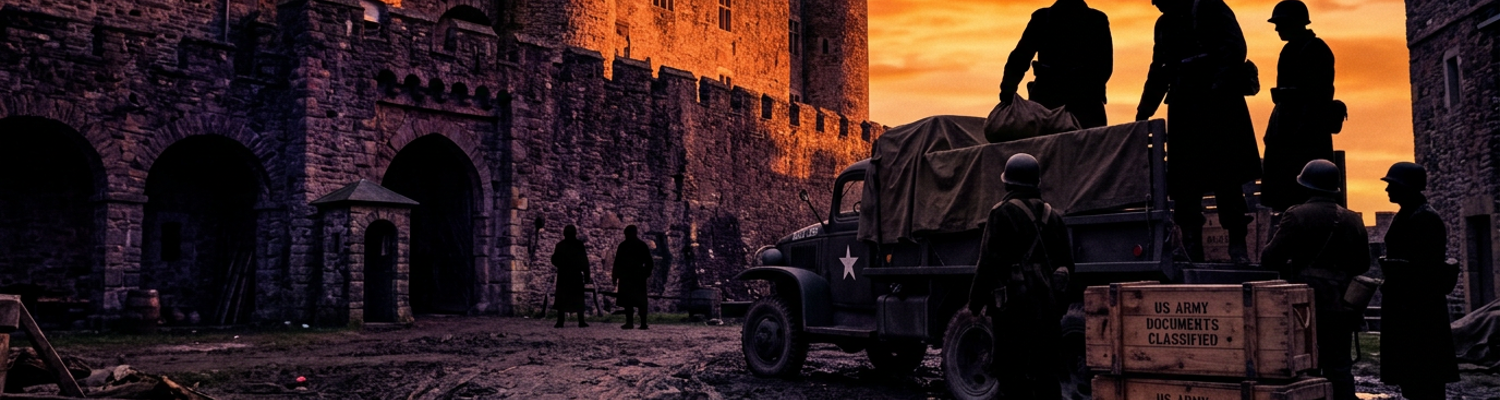
Sentries turned away these tribunal couriers at Schloss Tambach near Coburg, where the primary Kriegsmarine naval archive was impounded under joint British Admiralty and US naval intelligence oversight. British and American naval intelligence teams guarded sixty thousand files inside the castle rooms, including complete collections of submarine operational logs, War Staff diaries, and personal command directives from Grand Admiral Erich Raeder and Grand Admiral Karl Doenitz. Defense lawyers representing the German admirals submitted emergency requests for original war diaries to prove that submarine commanders complied with international maritime treaties, but the castle administrators locked the file rooms. British naval officers claimed full custody over the papers as sovereign war prizes and refused to let US Army clerks photograph any pages without specific clearance from the Admiralty in London. American naval intelligence personnel clashed repeatedly with their British counterparts over document access and custody rights, while crates of critical operational diaries sat untouched in castle hallways. Courier drivers from Nuremberg spent days stranded in cold castle courtyards before returning southward without a single microfilm spool or photostat negative.
Drivers diverted west to Frankfurt am Main ran into an equally strict checkpoint because the Ministerial Collecting Center at Fechenheim held vast repositories of civilian, diplomatic, and military administrative paperwork under US Third Army guard. Third Army combat troops patrolled the chemical warehouses and industrial storage halls where quartermasters had dumped hundreds of tons of bound Reich Chancellery records, carbon copied Foreign Ministry telegrams, and heavy Wehrmacht transportation ledgers. Staff officers from Third Army headquarters viewed these files as occupation property and refused to let outside civilian clerks remove or copy paperwork without specialized tactical passes. Defense researchers sent to uncover diplomatic memos or economic directives were stopped at the front gate by armed soldiers who had orders to turn away anyone without Third Army division paperwork. Logistics officers managing the warehouses refused to commit labor detachments to open and sort the dusty containers, leaving defense requests buried beneath uncataloged crates of municipal tax files and civilian agency correspondence. Trucks assigned to haul records back to the Nuremberg printing basement idled empty outside the Fechenheim gates while headquarters clerks exchanged angry telegrams over jurisdictional authority.
Telegrams detailing these depot standoffs landed on the desks of Nuremberg administrators, confirming that transport operations between the depots and the court had completely halted. Defense attorneys stood before the International Military Tribunal bench each morning to protest that Allied armies possessed complete evidence vaults while German legal teams had received zero operational records. Tribunal judges threatened to postpone scheduled hearings unless military authorities opened the impounded archives and produced the requested original files for defense inspection. Theater commanders intervened to break the bureaucratic deadlock by appointing special liaison officers to bypass depot checkpoints and supervise document release. Army quartermasters assigned dedicated cargo trucks to establish direct supply runs between the guarded depots and the Palace of Justice. Armed couriers loaded selected wooden file crates onto these convoy vehicles under strict military escort, delivering the seized records southward to the photostat rooms in the Nuremberg basement.
Document Clearance and Bureaucratic Hurdles
Crates of captured records stacked along the Palace basement corridors remained padlocked while Allied staff officers argued over who had the authority to break the transport seals. British custodians and US Army command echelons repeatedly barred German defense couriers from directly screening operational war diaries, insisting that defeated enemy personnel could not handle active military intelligence files. Defense couriers carrying court approved search lists traveled directly to collection centers across the western occupation zones, only to find armed military police barring the entrances to the records rooms. Depot commanders informed these German civilian couriers that theater security regulations took precedence over tribunal administrative passes, forcing the couriers to turn back without examining a single operational ledger. Command echelons demanded that defense teams submit written queries through multiple headquarters layers instead of conducting direct physical searches, cutting lawyers off from original military records that documented command structures and tactical movements.
Intelligence officers received these written queries and immediately placed the targeted files into mandatory security quarantine. Lengthy declassification reviews by military intelligence officers severely delayed delivery of exculpatory records requested by German defense counsel, because censors examined every single page by hand to safeguard Allied code breaking secrets and operational methods. Review officers worked through large stacks of Wehrmacht files very slowly, stamping each sheet with red ink and blacking out sections that mentioned technical specifications or radio traffic. Weeks dragged on while intelligence sections debated whether documents describing troop deployments and high level naval orders could be declassified for open court proceedings. Exculpatory battle logs and staff messages that could demonstrate a defendant acted under direct tactical orders or lacked command authority remained impounded in clearance offices while defense trial preparation deadlines expired.
Attorneys representing the defendants faced empty exhibit tables and looming court sessions as intelligence depots held back dozens of requested evidence packages. Defense attorneys submitted multiple formal petitions to the judges protesting systemic delays and logistical impediments imposed by Allied military depots. Petitions detailed how occupation gatekeepers and security boards refused to release naval navigation logs, staff correspondence, and headquarters teletype ribbons that were essential to cross examining prosecution witnesses. Attorneys stood before the tribunal bench to explain that their clients were being forced into court hearings without having seen the operational war records needed to refute Allied criminal charges. Counselors warned the four Allied judges that the persistent refusal of depot officers to clear seized files made a fair and balanced trial operationally impossible.
Judges presiding over the tribunal reviewed these formal complaints and summoned Allied military liaison officers to explain the persistent delivery delays. British and American command echelons resisted outside judicial pressure, maintaining that depot screening rules existed to protect national security rather than assist civilian defense strategies. Staff officers at regional depots continued to withhold disputed containers, demanding written authorizations bearing higher military command signatures before letting couriers load file drawers onto trucks. Military police at storage gates turned defense trucks around in the depot yards, sending empty transport beds back to Nuremberg while courtroom calendars advanced toward opening arguments.
Nimitz Interrogatory and Inter Service Tensions
Defense attorney Otto Kranzbuhler watched the empty transport trucks return to Nuremberg and realized that impounded military depots would never release the operational records needed to defend Grand Admiral Karl Doenitz. Kriegsmarine defense counsel Kranzbuhler bypassed the locked European storage vaults entirely by drafting court sanctioned interrogatories addressed directly to US Fleet Admiral Chester W Nimitz. Kranzbuhler formulated specific questions regarding American naval tactics, aiming to prove that United States forces had practiced the exact same submarine measures that prosecutors labeled as war crimes against the German naval staff. Tribunal judges approved the defense petition despite prosecution objections and instructed administrative staff to transmit the questions across the Atlantic. Kranzbuhler delivered the finalized questionnaire forms to the court secretariat to begin formal processing through military courier channels.
Documents containing the interrogatory traveled across the Atlantic to Washington, where the document request triggered substantial institutional friction between the US Navy Department, State Department liaisons, and the Nuremberg court staff. Court officials in Nuremberg insisted that the trial charter gave them clear legal authority to collect relevant testimony, but Navy Department leaders objected to placing an active American fleet commander under cross examination by a German lawyer. State Department liaisons intervened in the dispute, warning naval officers that blocking the questionnaire would damage the credibility of the tribunal and produce accusations of unfair judicial bias. Naval command staff resisted this diplomatic pressure, arguing that releasing operational directives would compromise military security and damage the public reputation of American submarine operations. Navy Secretary James Forrestal and his legal aides evaluated the inter agency impasse for several weeks before finally forwarding the interrogatory sheets directly to the Chief of Naval Operations.
Admiral Nimitz studied the forwarded interrogatory sheets at his desk and chose to answer every question with direct operational facts. Admiral Nimitz submitted sworn responses acknowledging that the US Navy had conducted unrestricted submarine warfare throughout the Pacific Theater from day one. His sworn answers confirmed that American submarines attacked Japanese merchant vessels without warning, enforced declared combat zones, and refrained from rescuing survivors whenever surface conditions or enemy air patrols endangered the attacking boat. Nimitz explained that these operational practices followed clear naval directives issued immediately after the Pearl Harbor attack to destroy enemy supply lines. Nimitz signed the completed document under oath before a naval notary, attached the official service certification stamp, and handed the papers to military couriers for return transport across the Atlantic.
Couriers delivered the signed affidavit packet to the Palace of Justice, where clerical staff duplicated the text for immediate distribution to the courtroom tables. Kranzbuhler carried the verified pages before the tribunal bench and read the American admiral statements into the official record during the naval defense phase. Tribunal judges listened as the defense proved that Allied naval forces had executed the same tactical submarine policies that prosecutors charged as war crimes against Doenitz. The introduction of Nimitz sworn answers compelled the judges to exclude unrestricted submarine warfare against armed merchant vessels from the criminal penalties assessed against the German admiral. Clerks stamped the verified interrogatory as official defense exhibit number one hundred and filed the physical papers permanently inside the courtroom evidentiary vault.
International Document Discovery and Administrative Precedents
Steel filing drawers inside the courtroom vault rattled shut over exhibit one hundred as military administrators confronted a backlog of hundreds of outstanding defense requests for Allied and captured German records. Tribunal judges warned military liaisons that trial calendars faced indefinite paralysis unless Allied command echelons established a dependable pipeline for exculpatory military papers. General staff officers recognized that piecemeal courier requests and ad hoc diplomatic questionnaires such as the Nimitz interrogatory could not resolve the systemic supply breakdown. The document supply crisis forced the US Army to overhaul archival classification workflows and field transmission channels for military tribunals. Army staff planners replaced fragmented depot screening boards with a centralized clearance desk under US European Command in Frankfurt, stripping regional garrison commanders of their unilateral authority to impound tribunal evidence. Intelligence sections received direct orders from theater headquarters to implement streamlined screening guidelines, allowing officers to redact sensitive communications codes while releasing underlying operational battle reports to defense attorneys.
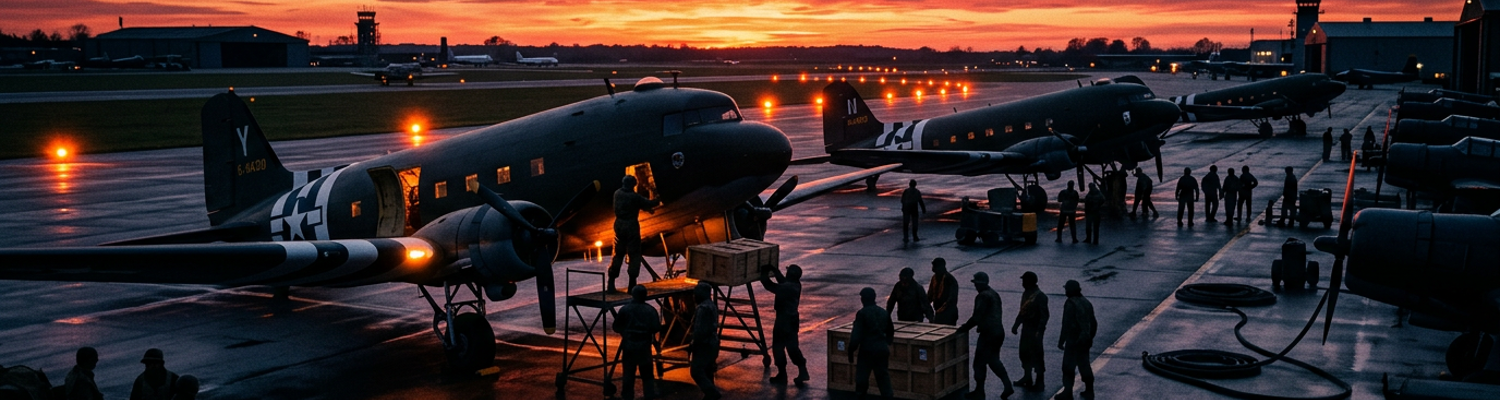
Transport detachments mobilized across the western occupation zones to carry these newly approved operational battle reports into field transmission channels. Dedicated cargo trucks equipped with armed escorts ran continuous shuttles between remote collection points and the Palace of Justice, hauling heavy padlocked wooden crates along cleared mud slicked military highways. Field clearance teams stationed inside the Ministerial Collecting Center and the naval archive at Schloss Tambach worked through stacks of impounded Wehrmacht and Kriegsmarine records, stamping release authorizations across entire operational folders rather than vetting documents line by line. Military police along transit routes inspected standardized clearance manifests signed by theater headquarters and waved the supply trucks through depot checkpoints without administrative delay. Drivers backed these loaded transport vehicles up to the Palace receiving ramp, wheeling heavy wooden file boxes directly into the basement print shops.
Photostat cameras in the subterranean workshops hummed under heavy electrical loads as print technicians tackled the surging volume of released records. Quartermasters delivered fresh shipments of optical glass plates, exposure bulbs, and continuous rolls of sensitized paper, keeping the mechanical duplicators operating alongside newly installed chemical drying drums. Clerical pools of German typists, bilingual linguists, and enlisted soldiers organized continuous shifts to match incoming file crates against pending defense discovery petitions. Workers assembled verified German language transcripts, bound photostat copies, and cross referenced index cards into uniform document books for each defense counsel. The Defense Information Center ultimately processed millions of photostatic pages prior to final defense summations in mid 1946. Defense attorneys collected these thick exhibit binders from basement distribution counters each morning, carrying the authenticated records directly to the courtroom tables to challenge prosecution evidence.
Judges inspected these newly introduced defense binders from the bench, finding that equal access to seized operational papers fundamentally altered the balance of the trial. Allied military commanders, naval authorities, and civilian prosecutors had fiercely guarded their institutional prerogatives, but judicial pressure forced them to surrender unilateral control over war archives. The inter service operational compromises forged at Nuremberg defined lasting evidentiary standards for document disclosure in international law. Military legal departments codified these joint clearance protocols into standard field operating procedures, printing new field manuals that instructed intelligence officers on proper evidence handling. Staff officers distributed these updated logistics manuals to military tribunals in Tokyo, where clerks immediately began building neutral document centers and loading verified photographic copies onto transport trucks for delivery to accused combatants.