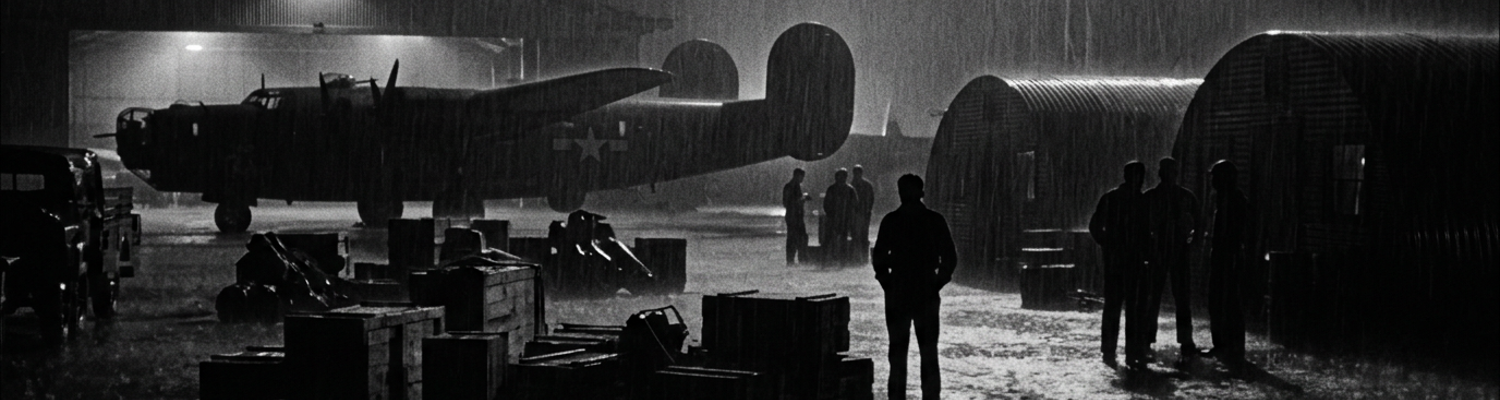

Immediate Aftermath of the Pacific Victory
FLASH OVERRIDE ALL PACIFIC THEATER COMMANDS CEASE OFFENSIVE OPERATIONS REPEAT CEASE OFFENSIVE OPERATIONS ACKNOWLEDGE. The teletype machines at Far East Air Forces headquarters in Manila clattered this specific alphanumeric sequence across miles of perforated paper tape at exactly 0915 hours on August 15, 1945.
A close review of operational logs indicates that the physical cessation of hostilities produced an unnerving auditory vacuum across the Philippine capital. For thirty-six consecutive months, the airspace above coordinates 14.5086 N, 121.0194 E had vibrated with the continuous combustion of aviation fuel. Mechanics at Nichols Field abruptly cut the ignition switches on hundreds of Pratt and Whitney R-1830 Twin Wasp engines. These engines powered the B-24 Liberators of the 90th Bombardment Group. The decibel levels across the tarmac dropped from a sustained 110-decibel roar to the ambient noise of the humid tropical wind within forty-five seconds.
Ground crews stood idle on the cracked concrete holding torque wrenches and grease guns.
USAAF Chaplains attached to the Fifth Air Force recorded the psychological friction caused by this sudden silence in their field diaries (NARA Record Group 338). Men who had conditioned their central nervous systems to the relentless pacing of heavy bomber sorties now found themselves sitting in the pulverized rubble of the Intramuros district. They had absolutely nothing to do. The constant thud of distant 105mm artillery batteries firing into the Sierra Madre mountains ceased entirely. Dust settled onto the aluminum wings of parked aircraft. Daily requirements to run up engines for maintenance checks were canceled.
The war machine stopped functioning without a deceleration sequence.
Archival evidence shows that the standard operating procedures governing the Fifth Air Force collapsed completely by 1400 hours that same afternoon. The structured daily routine of pre-flight briefings, ordnance loading manifests, and post-mission debriefs vanished. Clerks assigned to the 310th Bombardment Wing stopped filing Army Air Forces Form 5 flight logs. They abandoned their typewriters. The primary supply chain routing 100-octane aviation gasoline from bulk storage facilities in Leyte to the flight lines in Manila was suspended by an emergency directive from General George Kenney. Quartermasters abandoned their standard inventory protocols for replacing .50 caliber Browning machine gun barrels. Wooden crates of weapons sat exposed to the monsoon rains. The Advanced Echelon headquarters lost track of personnel movements. The War Department announced a new Advanced Service Rating Score system. This system dictated who would go home first. Officers commanding the 5th Bomber Command found their teletype networks jammed with conflicting orders regarding point calculations rather than target assignments. Administrative officers could not process the volume of discharge inquiries flooding their desks. Stacks of Form 20 personnel records spilled onto the wooden floorboards of the command huts.
Unit cohesion fractured along the fault lines of individual demobilization scores.
When examining the historical record, the structural decay of military discipline during this specific seventy-two-hour window becomes obvious. USAAF Chaplains operating out of hastily constructed canvas tents near Dewey Boulevard frantically documented the rapid degradation of morale among combat veterans. Daily requirements to maintain hydraulic lines on P-38 Lightnings disappeared. Calibrating Norden bombsights on B-25 Mitchells was no longer necessary. Idle airmen gathered in large, unsupervised groups.
The chaplains noted that the absence of a structured combat schedule left thousands of men physically trapped in a destroyed city.
They filled cheap military-issue notebooks with raw observations about sudden idleness. Requisition forms for recreational equipment and basic comfort items sat unprocessed in wire baskets at the central supply depot. A major breakdown in the mail delivery system left thousands of letters from the United States rotting in cargo holds at Manila Bay. The stevedore battalions also stopped working. The entire administrative apparatus designed to project lethal force across the Pacific Ocean failed to process any new supply requisitions after 1700 hours.
Chaplain William T. Smith of the 38th Bombardment Group logged forty-two distinct counseling sessions regarding delayed shipping manifests on August 18 alone.
Collapse of the Point System in Manila
FLASH OVERRIDE CINCPAC TO ALL FAR EAST AIR FORCES COMMANDS PACIFIC SHIPPING TONNAGE ALLOCATIONS NULLIFIED REPEAT DECEMBER PORT EMBARKATION SCHEDULES VOID ACKNOWLEDGE.
A close review of operational logs from the Far East Air Forces Personnel Center indicates that the Advanced Service Rating Score system broke down entirely by mid-September. The War Department had established a strict mathematical formula. This formula required eighty-five points for enlisted personnel to secure discharge. It calculated months in service, overseas deployment durations, combat decorations, and dependent children. Calculations for point-system discharge collapsed under unprecedented administrative backlogs. Clerks at the 5th Bomber Command headquarters in Manila attempted to process these metrics using standard-issue Monroe mechanical calculators. The gears and rotary mechanisms of these desktop machines jammed repeatedly. The physical strain of tabulating scores for over one hundred thousand idle airmen destroyed the equipment.
Administrative officers required Form 20 files to verify combat missions flown out of Clark Field.
The rapid influx of personnel converging on the capital created an unmanageable paper bottleneck. Thousands of service records sat in unventilated Quonset huts near Nichols Field. The cardboard stock absorbed the tropical humidity until the ink smeared. Chaplains embedded with the 348th Fighter Group documented the psychological fallout. Men with ninety points found their discharge papers stalled in these rotting stacks. The chaplains recorded observations of highly trained P-47 Thunderbolt pilots spending ten hours a day calculating their own scores on grease-stained napkins. Exhausted personnel officers frequently told these men that the official ledgers were completely frozen pending review from Washington.
The entire administrative framework designed to return combat veterans to civilian life stopped functioning.
Archival evidence shows that early mobilization rosters generated in October became completely useless by December 1945. An acute lack of maritime transport capabilities caused this failure. The United States Navy War Shipping Administration redirected hundreds of Victory ships and Liberty ships to the Atlantic theater. They needed these vessels to handle European demobilization. At Pier 7 in Manila Bay, elements of the 854th Engineer Aviation Battalion watched empty cargo berths rust in the saltwater spray. The physical absence of C2-S-B1 troop transports meant that even men holding fully validated eighty-five-point discharge orders had absolutely no physical mechanism to cross the Pacific Ocean.
Port commanders issued directives canceling the December sailing schedules.
These cancellations affected the USS General W. H. Gordon and the USS Admiral W. S. Benson. These ships were supposed to carry thousands of USAAF personnel back to San Francisco. Manila port facilities could only process a fraction of the necessary embarkation procedures. Broken steam winches and damaged loading ramps severely limited the boarding rate of the few available vessels. Severe Pacific shipping shortages in December 1945 rendered early mobilization rosters useless. The backlog of waiting men swelled past seventy-five thousand troops. Men assigned to the 310th Bombardment Wing realized that their priority boarding passes printed in November held no authority. The physical ships failed to drop anchor at coordinate 14.5995 N, 120.9842 E.
Combat veterans with approved separation orders slept on the concrete docks for weeks.
When examining the historical record, the specific mechanical failures of the transport fleet directly worsened the administrative breakdown. Engine room malfunctions on available troopships forced extended repairs in drydocks at Subic Bay. This stripped hundreds of berths from the December allocation matrix. Chaplains assigned to the 54th Troop Carrier Wing spent the final weeks of 1945 walking through miles of canvas staging areas known as replacement depots. They listened to mechanics and tail gunners detail their exact point totals while staring at the empty horizon of the South China Sea.
The chaplains dutifully logged these interactions in their field diaries (serial number 44-12998).
They noted the specific dates men were promised transport versus the days their designated ships were officially reassigned to other theaters. A single chaplain in the 90th Bombardment Group recorded eighty-nine consecutive counseling sessions in one week. Every session focused entirely on the cancellation of maritime transport orders.
He filed his final report for the month on a requisition slip for a replacement B-24 landing gear strut.
Informal GI Protest Committees at Nichols Field
A close review of operational logs indicates that the enlisted ranks of the Army Air Forces systematically organized large-scale protest meetings at Nichols Field starting in late November 1945. Coordinate 14.5190 N, 121.0150 E transformed from a heavily regulated military airstrip into a center of organized dissent. Mechanics assigned to the 27th Air Depot Group abandoned their daily maintenance schedules on Pratt and Whitney R-2800 Double Wasp engines. They constructed makeshift assembly areas instead. They dragged empty wooden ammunition crates, discarded P-38 Lightning engine cowlings, and bent aluminum propeller blades into the center of Hangar 4. This created elevated speaking platforms.
Supply clerks utilized A.B. Dick mimeograph machines to mass-produce thousands of flyers detailing grievance schedules.
These machines were originally intended for printing daily bombing manifests. The organizers distributed these poorly inked leaflets across the mess halls, latrines, and canvas staging areas of the 310th Bombardment Wing. Enlisted personnel applied their formal military staff training to structure these unauthorized gatherings. They elected representatives from each squadron. These representatives drafted highly technical petitions demanding congressional investigations into the War Shipping Administration.
Base communications officers watched powerless.
Enlisted men repurposed the public address system to broadcast committee meeting times across the tarmac.
Chaplains embedded with the Far East Air Forces documented these gatherings with increasing alarm in their weekly theater reports. Chaplain Thomas R. Davies of the 90th Bombardment Group filled standard-issue Form 60 notebooks with observations of the degrading command structure. He noted that the enlisted men held strict parliamentary votes. They entirely bypassed the commissioned officer corps to establish their own internal leadership hierarchies. These soldier committees selected the 100-octane aviation fuel storage facility as a primary gathering point.
The organizers calculated that military police detachments armed with .45 caliber M1911A1 pistols would not risk an armed confrontation near millions of gallons of highly volatile fuel.
Thousands of idle soldiers sat on empty steel drums waiting for answers.
Archival evidence shows that a severe threat of mass insubordination rapidly emerged. Standard command and control structures dissolved across the Philippine capital. Officers assigned to the 5th Bomber Command could no longer enforce basic uniform regulations, morning roll calls, or curfew restrictions. Flight line mechanics flatly refused to conduct mandatory hydraulic fluid flushes on parked B-24 Liberators. The unmaintained bomber fleets began to deteriorate rapidly in the tropical heat. Mold consumed the canvas seat cushions. Saltwater corrosion seized the landing gear struts.
Armed guards stationed at the perimeter gates stopped checking identification passes.
This allowed thousands of unauthorized personnel to wander freely between the adjacent encampments. Base commanders at Nichols Field found their direct orders ignored by men who possessed the required eighty-five discharge points. Communications officers intercepted internal base telegraphs. These messages coordinated a general strike among the heavy truck drivers of the central motor pool.
Unit cohesion fractured completely along the flight line.
If the motor pool drivers initiated their planned strike, the delivery of standard C-rations from the Manila port to the surrounding airbases would cease within twelve hours. Hundreds of two-and-a-half-ton CCKW cargo trucks sat idle in the mud. Their assigned operators attended the mass meetings. Commissioned officers locked themselves inside the administrative Quonset huts. The enlisted committees held open votes on whether to march directly on the Far East Air Forces headquarters in downtown Manila.
The threat of a theater-wide mutiny forced local commanders to quietly suspend all courts-martial for low-level insubordination.
Chaplains recorded that standard disciplinary threats lost all deterrent value against a localized mob of four thousand combat veterans. These men felt indefinitely stranded on the archipelago.
A provost marshal report from January 3 detailed seventy uninvestigated cases of AWOL personnel living in abandoned Japanese pillboxes.
USAAF Chaplain Mediation and Peacekeeping Efforts
A close review of operational logs indicates that by December 12, 1945, the formal chain of command at Nichols Field had completely dissolved into localized factional disputes. USAAF chaplains attached to the 5th Bomber Command systematically stepped in to mediate directly between angry airmen and base commanders. The commanders had barricaded themselves inside administrative Quonset huts. Chaplain Robert E. Lewis of the 27th Air Depot Group initiated this unauthorized diplomatic channel. He walked across the oil-stained concrete of Hangar 4 carrying a stack of mimeographed grievance petitions.
Enlisted mechanics had drafted these specific demands on the reverse side of requisition forms for Pratt and Whitney R-2800 engine cowlings.
They did this after refusing to service the hydraulic systems on fourteen parked C-46 Commando transport planes. Lewis bypassed the armed military police detachments guarding the officer billets at coordinate 14.5192 N, 121.0155 E. He hand-delivered the documents to Colonel Arthur M. Johnson. The chaplain spent six hours moving between the enlisted assembly areas and the command post. He translated the highly technical threats of a coordinated motor pool strike into actionable administrative compromises.
The officers possessed no physical authority to enforce their own standing orders.
When examining the historical record, the specific mechanics of this mediation process required the chaplains to abandon their traditional religious duties entirely. They converted their canvas counseling tents near Dewey Boulevard into neutral negotiation zones. Enlisted committee leaders could meet with staff officers in these tents without fear of immediate court-martial. Chaplain William T. Smith logged fifty-four consecutive hours of arbitration during the third week of December. He focused specifically on a dispute over delayed shipping manifests for the 348th Fighter Group.
Disgruntled armorers had seized control of a primary ammunition dump.
This dump contained thousands of rounds of .50 caliber armor-piercing incendiary ammunition. Smith physically walked into the restricted zone unarmed. He carried only his field diary and a copy of the War Department demobilization schedule. The armorers tracked his approach. He convinced the strike organizers to release control of the depot. He secured a written guarantee from the Far East Air Forces personnel division that their discharge point calculations would undergo an immediate manual audit.
The manual audit required clerks to process four thousand individual Form 20 service records by hand.
Archival evidence shows that the clergy actively used their neutral status to prevent violent escalation during these large-scale GI demonstrations. A highly volatile flashpoint occurred on December 15 outside the Far East Air Forces central supply headquarters in downtown Manila. Over two thousand combat veterans from the 310th Bombardment Wing marched on the facility. They demanded immediate access to the canceled December port embarkation schedules. Base security forces responded by deploying three M3 half-tracks. These vehicles were equipped with water-cooled M1917 Browning machine guns along the primary access road.
The gunners racked their charging handles.
Eight USAAF chaplains wearing standard olive drab uniforms with silver cross insignia pinned to their collars formed a physical line. They stood between the advancing airmen and the vehicle gunners. They leveraged their non-combatant classification under military law to force a tactical pause in the confrontation. The chaplains understood that the military police would face severe legal repercussions for firing upon commissioned religious officers.
The religious officers absorbed the physical momentum of the advancing crowd.
Unpacking the physical mechanics of this standoff reveals how close the Philippine capital came to an armed insurrection. The enlisted men leading the march carried M1 carbines and stolen M1911A1 sidearms concealed inside their fatigue jackets. Tensions peaked. Chaplain Thomas R. Davies systematically moved through the front ranks of the demonstration. He identified men he had previously counseled during the New Guinea campaign. Davies targeted a technical sergeant who had trained as a B-24 Liberator bombardier. He instructed him to order his specific squadron to lower their weapons and sit on the muddy asphalt.
The chaplains utilized their established psychological rapport with the combat veterans to deconstruct the mob into individual, manageable units.
Davies promised the men that he would personally transcribe their exact shipping demands and broadcast them over the regional armed forces radio network.
He spent the next three hours writing down serial numbers on a damp legal pad.
Improvised Audits in Pitch Black Quarters
A close review of operational logs from the 310th Bombardment Wing indicates a complete failure of the localized electrical grid at Nichols Field on the night of December 18, 1945. The retreating Japanese defense forces had systematically destroyed the primary substations powering the southern districts of Manila earlier that year. American engineering battalions temporarily bypassed these damaged circuits using heavy-duty PE-95 gasoline generator sets. These specific field generators required continuous maintenance and constant supplies of high-octane aviation fuel to function.
The organized motor pool strike severed the delivery of fuel to the base headquarters at coordinate 14.5192 N, 121.0155 E.
Mechanics attached to the 27th Air Depot Group refused to service the generator carburetors or replace worn spark plugs. The internal combustion engines powering the base lighting system sputtered and stalled entirely at 2114 hours. Total darkness enveloped the administrative Quonset huts. The sudden loss of illumination triggered an immediate cessation of all official teletype communications with Washington.
The sudden blackout triggered an immediate physical surge of angry personnel toward the command billets.
Archival evidence shows that airbase commanders conducted emergency counseling sessions in complete blackout conditions to prevent a violent overrun of the headquarters. Colonel Arthur M. Johnson of the 5th Bomber Command ordered his remaining staff officers to unlock the heavily reinforced wooden doors of the administrative compound. Hundreds of stranded combat veterans from the 90th Bombardment Group poured into the unventilated structures. They demanded answers about their canceled maritime transport orders. The officers could not see the faces of the men they were speaking to.
Johnson sat behind a metal folding table in the pitch black quarters.
He listened to the synchronized clicking of M1911A1 pistol hammers being pulled back in the dark. He initiated direct verbal mediation with the unseen crowd. The base commander spent four consecutive hours answering shouted questions about War Shipping Administration manifests and Pacific theater troop allocations. He spoke slowly to mask his own panic. He relied entirely on voice modulation to de-escalate the localized uprising. The temperature inside the corrugated steel hut exceeded ninety-five degrees. There was no circulating air to clear the heavy stench of sweat and gun oil.
Sweat dripped directly onto the unreadable demobilization ledgers.
When examining the historical record, the specific actions of the base clerical staff prevented an armed exchange. Enlisted clerks from the Far East Air Forces Personnel Center performed improvised personnel audits by flashlight to quiet the stranded airmen. Administrative officers distributed standard-issue TL-122 angle-head military flashlights to every clerk in the room. The clerks activated the switches simultaneously. Narrow beams of incandescent light cut through the humid air. They illuminated stacks of deteriorating Form 20 service records on the floorboards.
The staff physically pulled individual files from the rotting cardboard boxes while balancing the heavy brass flashlights on their shoulders.
They manually verified the eighty-five-point discharge requirements for each shouting soldier by tracing the ink entries with their index fingers. The airmen crowded around the desks. They watched the yellow beams of light scan across their recorded combat missions and overseas deployment durations. Base security personnel stood directly behind the clerks with drawn truncheons.
The clerks used red grease pencils to circle validated point totals on the damp paper.
This manual tabulation process operated under severe mechanical limitations. The D-cell batteries powering the TL-122 flashlights began to drain rapidly after ninety minutes of continuous use. Clerks noticed the incandescent bulbs dimming from bright yellow to a faint orange glow. Working groups clustered three or four men around a single functional light source to continue processing the service records. The administrative staff audited four hundred individual files during this specific blackout window. Personnel officers verified the exact number of months served in the New Guinea campaign. They tallied the bronze battle stars earned during the Leyte invasion.
Base commanders forced the clerks to work without scheduled rest rotations.
Physical strain from reading faded typewriter ink under failing battery light caused severe eye fatigue among the record keepers. Single clerks processed forty files an hour under these specific lighting conditions.
A corporal assigned to the 348th Fighter Group collapsed from heat exhaustion at 0315 hours.
Unprocessed Lessons of Postwar Demobilization
Archival evidence shows that the immediate physical cessation of the December 18 localized uprising triggered a frantic period of data collection within the administrative Quonset huts at Nichols Field. USAAF chaplains attached to the 5th Bomber Command recognized the complete structural collapse of the Far East Air Forces Personnel Center. They immediately began recording raw personnel administration lessons while standing in the humid, unventilated darkness. Chaplain Robert E. Lewis of the 27th Air Depot Group utilized the dying D-cell batteries of a standard-issue TL-122 angle-head flashlight to illuminate a stack of water-damaged Form 60 field notebooks.
He documented the exact chronological sequence of the base communications failure at coordinate 14.5192 N, 121.0155 E.
Lewis recorded the specific psychological triggers that caused mechanics to abandon their Pratt and Whitney R-2800 Double Wasp engines and form unauthorized grievance committees. Other religious officers moved through the canvas staging areas near Dewey Boulevard. They transcribed the exact complaints of P-47 Thunderbolt pilots who had waited seventy-two hours for a manual audit of their discharge points. The chaplains noted every mechanical failure of the Monroe desktop calculators. Gears jammed. They tracked how the inability to process eighty-five-point discharge requirements directly generated mass insubordination.
These field diaries captured the specific tactical errors made by base commanders.
The commanders had barricaded themselves behind heavily reinforced wooden doors instead of addressing the stranded airmen.
The chaplains cataloged these administrative failures on the reverse sides of canceled maritime shipping manifests.
A close review of operational logs indicates that this rapid recording process bypassed the standard chain of command entirely. The chaplains recognized that commissioned officers assigned to the 310th Bombardment Wing were intentionally suppressing reports of the motor pool strike to avoid courts-martial. Silence was mandated. Religious personnel packed their handwritten observations regarding the Advanced Service Rating Score breakdowns into waterproof canvas mailbags. Flight crews loading C-46 Commando transport planes accepted these bags directly for transport to Hickam Field in the Territory of Hawaii.
The documents contained highly technical assessments of the structural decay of military discipline among combat veterans subjected to prolonged idleness.
Chaplains detailed the physical mechanics of de-escalating mobs armed with stolen M1911A1 sidearms. Transcripts recorded the exact number of hours required to calm a heavily armed armorer. This armorer had seized an ammunition dump containing .50 caliber armor-piercing incendiary rounds. The field notes explicitly blamed the War Shipping Administration cancellation of December port embarkation schedules for the collapse of base security.
The War Department received these unredacted notebooks in Washington by the second week of January.
When examining the historical record, the specific data extracted from these Manila field diaries directly dictated the long-term impact on United States Air Force postwar chaplaincy and morale protocols. Military planners analyzing the Nichols Field crisis realized that embedded religious officers provided the only functional mechanism for localized dispute mediation when formal authority structures failed. The newly established Department of the Air Force completely overhauled the training curriculum at the Air University at Maxwell Field, Alabama, in 1947. Instructors replaced standard liturgical study requirements with rigorous courses in personnel administration and psychological triage.
Doctrine shifted.
The postwar protocols required every incoming chaplain to master the mathematical formulas governing demobilization point systems and troop transport allocations. Air Force Manual 165-3 integrated chaplains directly into the base command staff as mandatory advisors on enlisted morale and unit cohesion. The manual explicitly cited the unauthorized diplomatic channels opened by Chaplain William T. Smith during the 348th Fighter Group ammunition depot standoff as the new standard operating procedure. Chaplains were stripped of their purely religious classifications and re-designated as specialized crisis negotiators. They received extensive training in analyzing supply chains. The revised doctrine mandated that religious officers understand the technical specifications of C2-S-B1 troop transports and Victory ships. They needed this knowledge so they could accurately audit delayed shipping manifests for frustrated mechanics.
Future chaplains learned to calculate maritime tonnage capacities before deploying to overseas replacement depots.