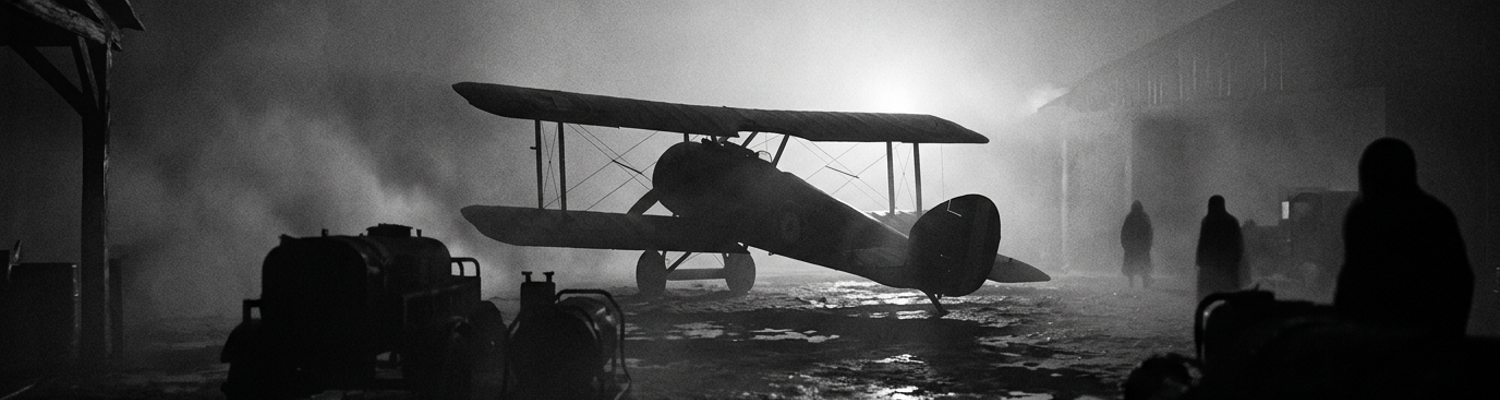

First Aero Squadron Reconnaissance Operations at Meuse Argonne
At 0225 hours, the damp grass of the Remicourt aerodrome absorbed a heavy silence. Ground crews stood motionless beside the canvas and wood fuselages of Salmson 2 A2 observation aircraft. Cold fog hung low over the dirt runway. The airmen sat strapped in their open cockpits. They stared into the absolute blackness of the pre dawn sky. They waited for the synchronized watches of the American Expeditionary Forces to hit the designated zero hour.
Not by choice. By direct order.
This quiet anticipation carried a heavy physical weight. Muscles locked tight against the chill. Adrenaline spiked heart rates well before the first Canton Unne 9z water cooled radial engines coughed into life. On September 26, 1918, the AEF First Aero Squadron launched low altitude dusk reconnaissance missions. These flights pushed the human nervous system to its absolute limits. They navigated by compass heading. Ground reference points barely registered in the fading twilight.
Archival evidence shows these aircrews operated under severe sleep deprivation before the propellers even began turning.
Flight logs reveal that pilots descended below 500 meters to visually identify enemy troop concentrations (Air Service AEF File 452.1). At this altitude, the Salmson aircraft became a slow moving target for German Maxim MG 08 machine gunners positioned along the trench networks. The pilots flew into a dark void. They had no instrument lighting. The blinding flash of their own engine exhaust ruined their night vision.
Observers sitting in the rear cockpits strained their eyes through the gloom to map localized strongpoints.
They sketched coordinates onto paper pads strapped to their knees. The constant vibration of the 260 horsepower engine numbed their extremities. Fear of mid air collisions in the unlit sky forced constant vigilance. The sustained tension of scanning the ground for hostile muzzle flashes while simultaneously checking the airspace for German Fokker D.VII fighters caused acute combat fatigue.
Pilots gripped the control sticks until their fingers cramped into rigid shapes.
Operations commenced during the opening assault phase of the Meuse Argonne Offensive. The First United States Army unleashed a massive artillery bombardment along a twenty mile front stretching from the Meuse River to the dense woods of the Argonne Forest. Nine American divisions prepared to assault the German defensive network known as the Hindenburg Line. The First Aero Squadron received direct orders to track the progress of these advancing infantry units. Ground commanders needed accurate reports on the location of friendly front lines.
These positions shifted rapidly across the cratered terrain.
Aircrews flew directly through the trajectories of friendly artillery shells passing overhead. The concussive shockwaves from 155mm howitzer rounds detonating below violently buffeted the fabric covered wings of the Salmson aircraft. Navigating this chaotic airspace required continuous concentration.
Every passing minute in the cockpit rapidly degraded basic motor function.
A close review of operational logs indicates that the tempo of these opening phase missions allowed almost no recovery time. Crews landed at the Remicourt strip only to refuel, rearm, and immediately take off again. Mechanics rapidly patched bullet holes in the wings with fabric and dope while the engines were still hot. The observers handed their hastily scribbled maps to intelligence officers on the flight line.
There was no rest period.
The continuous cycle of intense fear followed by brief landings eroded the mental stability of the aviators. Some men reported seeing phantom aircraft in the darkness. Others lost the ability to process basic flight instruments. The physical breakdown manifested in violent tremors and an inability to digest food. First Lieutenant Arthur Coyle led his flight over the burning ruins of Varennes at an altitude of just 200 meters.
Ground fire severed the left rudder control cable on his aircraft.
Zero Visibility Flight Operations Over Fog Drenched Sectors
A dense mixture of natural radiation fog and heavy cordite smoke completely blanketed the Meuse River valley at dawn on September 27, 1918.
When examining the historical record, meteorological reports from the First United States Army indicate that a thick temperature inversion trapped the exhaust of millions of detonating artillery shells directly over the French trench sectors near Malancourt and the pulverized hill of Vauquois. This atmospheric condition severely restricted visibility for the First Aero Squadron. Salmson 2 A2 observation crews attempting to map the boundary between the American V Corps and the French XVII Corps flew into an opaque gray fog bank.
The heavy moisture suspended in the air mixed with pulverized soil and white phosphorus smoke from the ongoing creeping barrage.
This created a blinding smog that reduced aerial visibility to less than thirty meters. Pilots lost all visual reference to the horizon. The standard ground signaling methods failed completely. Infantry units in the trenches below ignited Bengal flares and staked large white cloth identification panels to the muddy earth. The thick overcast absorbed the light and obscured the canvas markers entirely.
The saturated air choked the carburetors of the Canton Unne 9z radial engines.
Without artificial horizon instruments, aviators relied entirely on their vestibular systems to maintain level flight. The lack of visual cues inside the fog bank quickly induced spatial disorientation. Pilots gripped the wooden control sticks with white knuckled intensity as their inner ears fed them false sensations of banking or diving. The psychological toll of flying blind through this contested airspace accelerated combat fatigue. Men stared into the churning gray mist until their eyes watered and their vision blurred.
Moisture accumulated on their leather flying goggles.
It froze into a thin layer of rime ice that required constant wiping with frozen fingers. Major Ralph Royce, commanding the First Aero Squadron, issued direct orders to locate the shifting front lines regardless of the weather conditions. Ground commanders at the V Corps headquarters desperately needed firing coordinates for the German defensive strongpoints stalling the infantry advance.
Archival evidence shows that flight commanders authorized descents to extremely low altitudes to reestablish visual contact with the terrain.
Pilots executed hazardous low altitude flights directly beneath the thick overcast layers to locate enemy positions. To spot the German trench networks, aviators pushed the noses of their Salmson aircraft down, dropping from 1,000 meters to below 75 meters. Some crews leveled off at just 40 meters above the shattered tree canopies of the Argonne Forest. This severe drop in altitude placed the unarmored biplanes directly inside the effective range of concentrated small arms fire.
The overcast layer compressed the navigable airspace.
It forced the American aircraft into a narrow corridor between the cloud deck and the ground. German infantrymen armed with Mauser Gewehr 98 rifles and Maxim MG 08 heavy machine guns directed converging fire upward into the low flying targets. Observers standing in the rear cockpits leaned entirely out of the fuselage to visually identify hostile troop concentrations near the village of Cheppy. They exposed their unprotected torsos to the ground fire while rapidly marking coordinates on their map boards.
The heavy wooden control columns required constant manipulation to prevent the aircraft from colliding with the sloping terrain.
A close review of operational logs indicates that the mechanical systems of the aircraft rapidly degraded under these extreme low level conditions. The damp fog penetrated the unsealed magneto housings, causing intermittent ignition failures. Cylinders misfired, sending violent shudders through the airframes and spraying unburned aviation fuel across the exhaust stacks. Pilots fought the heavy torque of the sputtering engines while simultaneously kicking the rudder pedals to jink away from incoming tracer rounds.
The physical exertion of wrestling the aircraft at tree top level spiked crew heart rates for hours at a time.
The constant threat of flying into a sudden hillside or an unseen church spire compounded the terror of the incoming ground fire. First Lieutenant William Schauffler piloted his Salmson through a dense smoke column over the Aire River valley at an altitude of 50 meters. A burst of 7.92mm machine gun fire struck the underside of his aircraft.
It severed the primary elevator control wire and shattered the wooden floorboards beneath his boots.
Signal Logistics Failures in Mud Choked Terrain
A close review of operational logs indicates that the ground support apparatus completely collapsed under the environmental conditions of the Meuse River valley. Heavy September rains turned the pulverized soil between the Remicourt aerodrome and the forward trenches into a continuous bog.
Elements of the 318th Field Signal Battalion and attached engineer units attempted to move heavy mobile winch generators forward to establish advanced radio direction stations.
These machines weighed over two tons each. They consisted of large gasoline engines mounted on wooden chassis with narrow steel wheels. Engineers struggled to support mobile winch generators across waterlogged shell craters that dominated the terrain near Cheppy. The narrow wheels sank directly to the axles in the wet clay. Draft horses broke their legs in the deep mud. Soldiers had to physically push the machinery using wooden levers and thick hemp ropes.
The physical exertion required to move a single generator fifty meters took hours.
Men operated entirely without sleep while under harassing fire from German 77mm field guns. Muscles tore. Spines compressed under the strain of lifting the heavy steel frames out of the suction of the mud. The constant physical failure eroded the basic mental stability of the engineer details.
Equipment sank completely out of sight in the deeper craters.
Archival evidence shows that this total transportation breakdown severed communication between the First Aero Squadron and the advancing infantry divisions. Signal Corps detachments received direct orders from V Corps headquarters to establish secure communication lines right behind the leading assault waves. Mud choked roads prevented the deployment of field telephone grids to frontline positions. Trucks carrying heavy wooden spools of insulated copper wire bogged down immediately upon leaving the paved Route Nationale near Clermont en Argonne.
The dirt tracks leading toward Montfaucon had been completely destroyed by four years of concentrated artillery bombardments.
Signalmen attempted to carry the eighty pound wire spools on their backs. They sank up to their knees with every step. The thick mud pulled the boots right off their feet. Men abandoned their footwear and walked barefoot through the freezing debris of the battlefield. The failure to string these telephone lines meant that forward observation posts could not transmit target coordinates back to the artillery batteries or the airfields.
Commanders lost all contact with their forward elements.
When examining the historical record, the absence of a functioning ground communication network shifted the entire burden of battlefield intelligence onto the exhausted aircrews. First Aero Squadron pilots had to fly continuous sorties to drop weighted message cylinders directly onto the brigade command posts. The lack of field telephones meant these drops were the only way to deliver tactical updates from the rear echelons to the engaged infantry.
Aviators descended into the concentrated small arms fire of the German trench lines multiple times per hour.
The physical danger increased exponentially with every pass over the front. Ground commanders laid out white cloth panels to signal the aircraft, but the mud quickly stained the canvas brown, rendering it invisible from the air. Pilots circled the same coordinates repeatedly. They pushed the Canton Unne engines to their thermal limits while searching for any sign of friendly forces. The knowledge that thousands of infantrymen relied entirely on their visual reconnaissance weighed heavily on the aviators.
Men stopped speaking in the mess tents between flights.
Observers developed severe nervous tics. Hands shook so violently that intelligence officers could not read the handwritten coordinates on the dropped message pads. Mechanics reported physically pulling pilots from their cockpits after they froze at the controls. First Lieutenant Stephen Noyes flew his Salmson 2 A2 down to thirty meters to drop a message cylinder near the ruins of Very.
A German machine gun bullet passed directly through his instrument panel and shattered the glass face of his altimeter.
Tactical Isolation of Aerial Observation Outposts
Archival evidence shows that the airborne communication grids failed entirely during the morning sorties of September 27. First Aero Squadron Salmson 2 A2 aircraft carried SCR 73 spark gap radio transmitters mounted directly behind the observer cockpit.
These heavy battery powered units relied on a three hundred foot braided copper antenna wire unspooled beneath the fuselage to broadcast Morse code signals back to American lines.
The dense radiation fog completely saturated the unsealed wooden radio casings. Moisture seeped into the primary induction coils. This caused violent electrical short circuits that shocked the observers through their thick leather flying gloves. High velocity winds and aggressive evasive maneuvers over the Varennes sector whipped the trailing antenna wires violently against the aircraft empennage.
The thin copper strands snapped.
They fell uselessly into the pulverized forest canopy below. The sudden severing of these communication grids left observation units completely isolated in zero visibility conditions. Without transmitting capabilities, the aircrews flew in absolute acoustic isolation. The impenetrable gray smog of the Meuse valley blocked all visual contact with adjacent squadron members.
Pilots stared into the swirling mist with no ground control direction to guide their headings.
The psychological weight of this total sensory deprivation rapidly broke down the mental endurance of the aviators. Observers frantically tapped dead telegraph keys, their hands shaking uncontrollably as panic set in. Mechanics later found the telegraph keys bent out of shape from the sheer force of the frantic repeated keystrokes.
A complete blackout descended over the V Corps airspace.
A close review of operational logs indicates that ground units lost all access to aerial spotter intelligence just as the infantry assault reached the heavily fortified slopes of Montfaucon at coordinate 314.2. Elements of the 79th Division advanced into a dense network of interlocking German Maxim MG 08 machine gun nests positioned behind thick concrete pillboxes. American artillery batteries from the 311th Field Artillery Regiment sat idle in the mud near Avocourt.
Gun commanders stood beside their French made 75mm field guns waiting for target coordinates that never arrived.
The SCR 54 ground radio receiving stations deployed by the Signal Corps picked up nothing but heavy static interference generated by the atmospheric inversion. Artillery officers required precise grid references from the airborne observers to adjust their firing solutions. The destruction of the airborne transmitters severed this data link entirely. Infantry battalions took heavy casualties from enfilading fire because the supporting artillery could not blindly saturate the German defensive lines without risking friendly fire incidents.
The lack of incoming intelligence created a paralyzing vacuum of information at the brigade command posts.
The stress of listening to the distant machine gun fire while unable to authorize artillery support caused artillery commanders to experience acute nervous breakdowns. Runners dispatched to visually confirm the front line coordinates were frequently shot by German snipers before reaching the forward trenches.
The advancing riflemen fought without any overhead support.
Ground units found themselves entirely unable to transmit target updates upward to the isolated aircraft. Standard operating procedures dictated that infantrymen use large geometric white canvas panels to mark their forward progress and identify hostile strongpoints for the overhead aviators. The relentless September rains had turned the trenches around Cheppy into deep pools of liquid clay. Soldiers dragged the heavy cloth panels through the flooded craters, immediately coating the white fabric in a thick layer of brown sludge.
The markers blended seamlessly into the surrounding devastated terrain.
Aircrews flying at fifty meters could not distinguish the muddy panels from the thousands of flooded shell holes dotting the valley floor. Frontline officers attempted to fire Bengal flares to signal the circling Salmsons. The dense wet fog absorbed the chemical light within ten meters of the ground. Aviators stared downward until their eyes burned, seeing only a uniform gray void.
The inability to locate friendly forces forced pilots to fly in dangerously tight circles over heavily defended sectors.
The constant exposure to ground fire while searching for invisible signals shattered the nerves of the aircrews. Men vomited over the side of the fuselage from the extreme stress. First Lieutenant John Jeffers flew his aircraft until the fuel tanks ran completely dry trying to locate a single infantry signal panel near the ruins of Charpentry.
His engine sputtered and died at an altitude of forty meters.
Continuous Operational Tempos and Mechanical Breakdown
Archival evidence shows that by the morning of September 28, 1918, the First Aero Squadron had entered a continuous forty eight hour operational tempo without a single pause in flight scheduling. Major Ralph Royce issued direct orders requiring uninterrupted aerial reconnaissance over the rapidly shifting front lines between the Argonne Forest and the Meuse River.
Aircrews and ground personnel operated entirely without sleep cycles to meet the demands of the V Corps headquarters.
Mechanics at the Remicourt aerodrome worked through the freezing night under heavy canvas tarpaulins. They used dim red lens flashlights to avoid detection by German night bombers patrolling the sector. Ground crews patched bullet riddled fabric and refueled the Salmson 2 A2 biplanes the exact second the aircraft wheels touched the muddy dirt runway. Pilots remained strapped inside their open cockpits while the mechanics turned wrenches on the hot engine blocks directly in front of them.
Flight logs record men experiencing severe physical and cognitive degradation.
Aviators heard nonexistent voices calling their names over the deafening roar of the 260 horsepower engines. Observers lost the fine motor skills required to reload the heavy drum magazines on their twin Lewis machine guns. Their fingers blistered and bled from repeatedly gripping the frozen steel charging handles at altitude.
Blood soaked through their leather flying gloves and froze to the metal.
Men collapsed directly onto the oil stained dirt beside the runway.
A close review of operational logs indicates that this sustained equipment strain led to widespread mechanical breakdowns across the entire aircraft fleet. The Canton Unne 9z water cooled radial engines were designed for short highly regulated flight durations. Operating them continuously for forty eight hours completely destroyed their internal brass and steel components. Castor oil lubricants broke down under the extreme thermal load generated by the constant full throttle climbs over the Montfaucon ridge.
This thermal breakdown caused the primary engine cylinders to overheat and permanently seize mid flight.
Mechanics accidentally stripped the threaded bolts on the aluminum engine cowlings because their hands shook uncontrollably from severe sleep deprivation. The unsealed Bosch magnetos accumulated thick hardened layers of carbon fouling from the constant combustion cycles. Spark plugs misfired in unpredictable patterns. These misfires sent violent asymmetrical vibrations through the wooden airframes.
The shaking snapped the high tension steel bracing wires connecting the upper and lower wings.
Ground crews rapidly depleted their inventory of spare parts. They lacked the replacement wooden propellers needed to fix the damage caused by heavy rocks and mud kicked up from the degraded airfield surface. Personnel resorted to scavenging salvaged components from destroyed aircraft that had crash landed just beyond the American trench lines near the heavily contested village of Baulny.
Only four of the eighteen original squadron aircraft held airworthy status by nightfall.
When examining the historical record, the intersection of profound human fatigue and cascading mechanical failure created a highly lethal environment for the aviators flying over coordinate 294.3 near the Bois de Cheppy. Exhausted armorers working in total darkness accidentally loaded defective oversized ammunition belts into the mechanical synchronization gears of the forward firing Vickers machine guns. Pilots diving at steep angles to strafe German infantry positions squeezed their triggers and immediately shot off their own wooden propeller blades.
The severed splintered shards tore directly through the canvas wings and damaged the control cables.
Aircraft plummeted uncontrollably into the pulverized terrain below. Observers sitting in the rear cockpits attempted to manually pump aviation fuel into the carburetors when the primary mechanical fuel lines ruptured from the intense engine vibration. They pumped the brass handles until their shoulder joints partially dislocated from the repetitive physical strain. The heavy Salmson aircraft became completely unresponsive to stick inputs.
First Lieutenant Arthur Coyle authorized his ground crews to bypass all standard safety and maintenance inspections just to get the planes back into the contested airspace.
Engines sputtered violently on takeoff as raw unburned aviation fuel leaked directly out of the cracked fuel lines and onto the blistering hot exhaust manifolds.
Flames engulfed the fuselages before the aircraft even cleared the tree line.
Combat Fatigue and Psychological Erosion Among Aircrews
Archival evidence shows that by the third day of the Meuse Argonne offensive, First Aero Squadron personnel had operated continuously for seventy two hours without designated sleep cycles. Pilots flying the Salmson 2 A2 observation aircraft executed up to six low altitude sorties per day over the contested airspace of the V Corps sector.
This relentless flight schedule induced severe psychological exhaustion across the entire unit at the Remicourt aerodrome.
Aviators ingested large quantities of black coffee and chewed on raw coffee beans to stay awake during the constant drone of the 260 horsepower Canton Unne 9z engines. Sleep deprivation rapidly degraded their central nervous systems. Men began experiencing intense auditory and visual hallucinations while navigating the dense fog above the Aire River valley. First Lieutenant Arthur Coyle reported seeing phantom German Fokker D.VII fighters flying in formation directly off his wingtips.
He initiated aggressive violent evasive maneuvers against empty airspace.
The lack of rapid eye movement sleep severely impaired basic depth perception and spatial awareness. Observers in the rear cockpits lost the ability to distinguish between friendly artillery flashes and hostile ground fire. They recorded highly inaccurate coordinate data on their map boards while staring blankly into the gray overcast.
Aviators frequently fell asleep while banking their aircraft at altitudes below two hundred meters.
When examining the historical record, medical officers attached to the squadron documented a complete collapse of cognitive function among the flight crews. Pilots forgot standard operating procedures for basic engine management. They failed to adjust the fuel mixture controls during rapid descents, flooding the carburetors and causing the radial engines to stall directly over enemy trench networks near Baulny.
The constant threat of ground fire combined with zero recovery time flooded their bodies with adrenaline until their adrenal glands depleted entirely.
Men developed a permanent vacant stare. They sat motionless in the mess tents between sorties. Nobody spoke. The deafening roar of the aircraft engines continued to ring in their ears long after they cut the ignition switches.
Hands shook so violently that men could not bring tin coffee cups to their mouths without spilling the scalding liquid over their uniforms.
A close review of operational logs indicates that ground crews and pilots reached extreme human breaking points due to this sustained operational stress. Mechanics at the Remicourt strip worked in freezing mud under constant pressure from V Corps headquarters to keep the heavily damaged fleet airborne. These enlisted men suffered from severe frostbite and chemical burns caused by exposure to unrefined castor oil and aviation fuel.
Riggers lost all feeling in their extremities.
They attempted to splice broken high tension steel bracing wires using pliers clutched in numb bleeding fingers. The physical pain compounded the psychological trauma of watching their pilots return dead or severely wounded in the cockpits. Armorers responsible for reloading the heavy drum magazines for the twin Lewis machine guns developed hysterical paralysis. Their hands cramped into rigid claws that required physical manipulation by medical orderlies to pry open.
The high tempo output demanded by Major Ralph Royce pushed the squadron far past standard physiological limits.
Flight surgeons recorded multiple instances of aviators vomiting uncontrollably before climbing into the aircraft.
The psychological erosion manifested in acute combat fatigue that stripped away all self preservation instincts. Observers stopped wearing their heavy leather flying coats, choosing to freeze in the open cockpits rather than expend the energy required to put the garments on. Pilots flew directly into concentrated Mauser Gewehr 98 rifle fire over the Montfaucon ridge without taking any evasive action.
They held the heavy wooden control columns completely steady while 7.92mm bullets shredded the fabric wings around them.
First Lieutenant Stephen Noyes landed his Salmson 2 A2 after a two hour reconnaissance mission over the Argonne Forest. He cut the engine and sat entirely paralyzed in his seat.
Ground personnel had to physically unbuckle his leather flight harness and lift his rigid body out of the fuselage.
Mounting Triage Casualties and Operational Aftermath
Archival evidence shows that Field Hospital 112, established within the partially collapsed walls of a stone church at Clermont en Argonne, rapidly exceeded its maximum bed capacity by the morning of September 29. Ford Model T ambulances continuously transported infantrymen suffering from jagged shrapnel lacerations alongside First Aero Squadron aviators pulled directly from their shattered Salmson 2 A2 cockpits.
Medical orderlies worked relentlessly on mud covered stone floors.
They amputated crushed limbs using standard issue carbon steel surgical saws under the dim flickering light of acetylene lamps. The sheer volume of incoming wounded forced surgeons to perform emergency triage on the muddy grass directly outside the hospital tents. Aviators arrived with severe facial burns caused by pressurized castor oil spraying from ruptured engine lines. Shrapnel from German 77mm anti aircraft shells tore through the thin leather flying suits, embedding hot steel fragments deep into the thighs and torsos of the pilots.
Blood pooled in the mortar joints.
The smell of raw ether mixed constantly with the sharp chemical odor of unburned aviation fuel.
When examining the historical record, triage officers found themselves entirely unequipped to manage the simultaneous influx of acutely traumatized personnel exhibiting severe psychiatric collapse. Pilots and observers frequently arrived without any visible puncture wounds or burns. These men shook violently on canvas stretchers. They suffered from profound combat fatigue brought on by sustained low altitude flying through heavy Mauser Gewehr 98 rifle fire.
Flight surgeons documented multiple cases of hysterical blindness among the aircrews (Medical Dept Report 1918).
Observers who had stared into the blinding exhaust flashes of their Canton Unne engines for hours suddenly lost all pupillary response to light. Orderlies had to physically restrain ground mechanics who wandered into the triage ward clutching broken aircraft altimeters and severed control cables. These enlisted men wept uncontrollably while attempting to repair the smashed instruments with trembling bloodstained fingers. Doctors administered heavy liquid doses of morphine sulfate just to stop the violent physical convulsions spasming through the exhausted muscles of the aviators.
Ward masters strapped the most erratic patients directly to the wooden frames of their cots using thick leather belts.
Some aviators stared at the canvas ceiling in a catatonic state for three consecutive days.
A close review of operational logs indicates that the chaotic aftermath exposed severe doctrine gaps regarding night observation protocols within the American Expeditionary Forces. The official aviation training manuals printed in early 1918 contained zero standardized procedures for conducting low level reconnaissance in zero visibility conditions. Planners at the First United States Army headquarters had assumed aerial observation would occur exclusively during daylight hours.
They issued no directives for shielding engine exhaust manifolds to protect pilot night vision.
Squadron commanders possessed no tactical guidelines for coordinating night time artillery spotting with the advancing infantry brigades. Aircrews flew into the darkness relying solely on improvised methods developed hours before takeoff. The lack of formalized training meant pilots had no instruction on maintaining level flight by vestibular sensation when heavy fog obscured the horizon line. Ground crews lacked standardized checklists for weatherproofing the heavy SCR 73 radio transmitters against the relentless September rains.
Technicians guessed at mechanical protocols.
They applied heavy grease to the magnetos to block out the moisture. Entire flights launched into the contested airspace without any contingency plans for communication failures.
The operational debacle forced V Corps staff officers to document the complete failure of existing signal support doctrine. Infantry battalions deployed to the Meuse Argonne sector carried white canvas identification panels designed specifically for clear weather communication. The field manuals provided no alternative signaling methods for heavily forested terrain or thick temperature inversions. When liquid clay stained the panels brown, ground troops had no authorized secondary signaling devices to contact the overhead aircraft.
Supply depots held no specialized illumination flares capable of penetrating the thick radiation fog covering the Aire River valley.
Signal Corps detachments found that the prescribed methods for laying heavy copper telephone wire completely ignored the physical constraints of pulverized waterlogged soil. Officers drafted urgent memorandums. They demanded immediate revisions to the frontline field manuals. First Lieutenant William Schauffler submitted a detailed after action report noting that his observer dropped fourteen consecutive weighted message cylinders into the Bois de Cheppy without receiving a single acknowledged ground signal in return.
His aircraft returned to base with forty two separate bullet holes in the fabric fuselage.