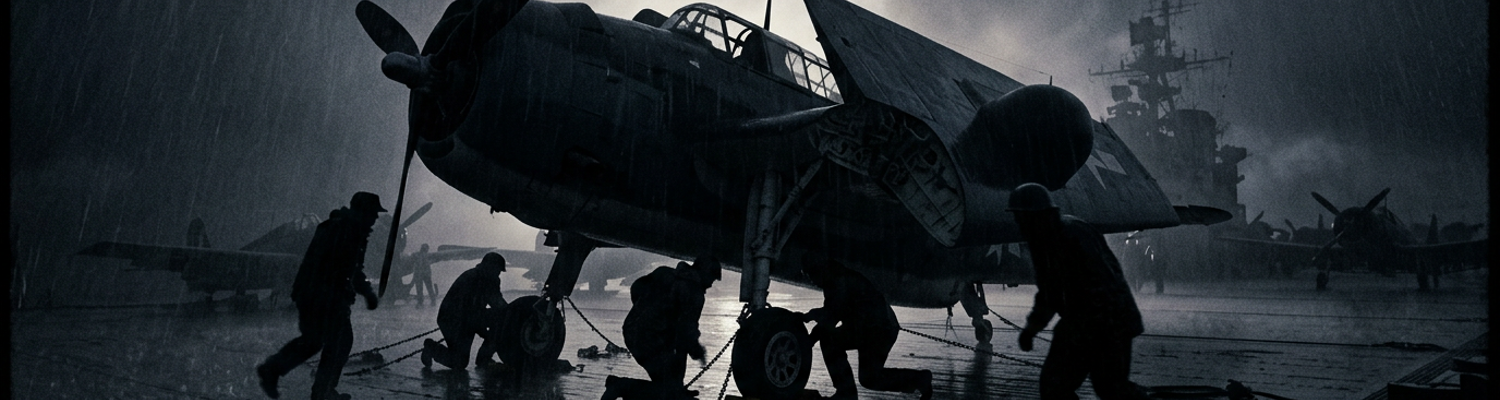

Development and Field Adaptation of AN/APS-3 Radar
A close review of operational logs indicates that the United States Navy demanded a functional 3-centimeter wavelength microwave radar system for blind bombing operations. The AN/APS-3 radar suite underwent troubled laboratory development before field adaptation for naval use could even be considered. At the Radiation Laboratory at the Massachusetts Institute of Technology, engineers struggled constantly with the core components of the X-band system. The 725A cavity magnetron generated sustained extreme heat during operation. Early prototypes melted their own internal solder joints within minutes of activation. High-voltage arcing in the pulse modulator frequently destroyed adjacent wiring harnesses. The resulting localized electrical fires on the test benches delayed production schedules by weeks. The cathode-ray tubes used for the primary display proved entirely too fragile for the violent vibrations associated with carrier landings. Technicians recorded failure rates exceeding sixty percent during initial bench tests in late 1943.
The system required a highly stabilized power supply to function correctly.
Standard aircraft generators produced voltage spikes. These surges instantly fried the sensitive receiver crystals inside the transmit-receive box. Engineers replaced the standard silicon crystals with specialized germanium diodes to prevent constant burnout. Taking this delicate equipment from a controlled laboratory environment to the high-humidity flight decks of the Pacific Fleet required aggressive mechanical intervention. Naval technicians modified TBF-1D Avenger airframes to house primitive radar components in cramped compartments. The installation process fundamentally altered the aircraft center of gravity and aerodynamic profile. Mechanics mounted a fiberglass radome containing the 18-inch parabolic antenna directly on the leading edge of the starboard wing. This asymmetrical drag required pilots to constantly maintain left rudder trim during flight just to fly in a straight line.
Inside the fuselage, the physical constraints were severe.
The bulky transmitter-receiver unit was bolted into the radioman compartment just aft of the bomb bay. There was barely enough room for the crewman to sit upright with his parachute pack attached. The electronic equipment generated ambient temperatures exceeding 120 degrees Fahrenheit inside the unventilated metal hull during daytime sorties. Sweat dripped directly onto exposed high-voltage terminal blocks. When examining the historical record regarding these field modifications, the volume of rerouted wiring stands out. Maintenance crews drilled dozens of new holes through the main structural bulkheads. They routed heavy coaxial cables from the wing-mounted antenna to the display scopes in the rear cockpit. These cables were highly susceptible to moisture ingress. A single drop of saltwater inside the coaxial shielding caused complete signal attenuation. The radar became entirely useless. Mechanics wrapped every connector in layers of rubberized tape coated with heavy aviation grease to seal out the corrosive sea air.
The radioman monitored the primary Plan Position Indicator scope. He simultaneously adjusted a series of manual gain dials.
This action filtered out sea clutter from the radar returns. The five-inch cathode-ray tube sat inches from his face in the darkened compartment. The power supply unit rested directly beneath his seat. It emitted a constant low-frequency hum that interfered with the aircraft internal intercom system. During a typical catapult launch, the sudden acceleration slammed the heavy magnetron against its shock mounts. This force frequently sheared the aluminum brackets. Flight line armorers began fabricating replacement brackets from scrapped steel plating. The operational deployment to the Pacific theater forced these improvised platforms into an unforgiving physical environment. The AN/APS-3 required constant recalibration using external test sets. These test sets were in short supply across the fleet. Ground crews at forward bases spent hours manually turning the radar antenna by hand. This ensured the servo motors engaged properly with the azimuth drive gears.
The synchro transmitters that relayed the antenna position to the display scope frequently drifted out of alignment.
Drastic temperature changes between the tropical surface heat and the freezing altitudes at 15,000 feet caused this drift. Mechanics resorted to packing the gear housings with specialized low-temperature lubricants shipped in small batches from stateside supply depots. A standard pre-flight check required the radar operator to power up the system twenty minutes before engine ignition. The vacuum tubes needed this time to reach operating temperature.
Airborne Command Deployment During Operation Hailstone
Archival evidence shows that Vice Admiral Marc Mitscher ordered Task Force 58 to launch a specialized night strike against the Caroline Islands on February 17, 1944. This action initiated Operation Hailstone. Deck crews aboard the USS Enterprise (CV-6) positioned twelve field-modified TBF-1D Avengers on the flight deck at 0200 hours. The carrier was steaming at twenty-five knots into a harsh headwind to generate sufficient lift over the deck. Located at exactly 7 degrees 25 minutes North and 151 degrees 47 minutes East, the target was the heavily fortified Japanese naval anchorage at Truk Lagoon. Launching these aircraft in total darkness presented immediate mechanical hazards. Asymmetrical drag from the starboard-mounted fiberglass radome forced pilots to apply heavy left rudder the instant their wheels left the wooden deck. Prior to engine ignition, mechanics spent six hours replacing blown fuses in the AN/APS-3 radar suites. The corrosive salt air had degraded the primary power relay switches. Torpedo Squadron 10 (VT-10) led this initial wave into the pitch-black sky. Navigating solely by compass heading, the pilots held steady. The radar operators in the rear compartment waited for the magnetrons to reach their operational temperature.
The ambient humidity at sea level caused immediate condensation on the internal glass of the cathode-ray tubes.
These radar-equipped TBF-1D Avengers acted as rudimentary airborne command assets. They directed deep penetration strike formations into the lagoon. Standard doctrine required strike packages to maintain radio silence. The modified Avengers broke this rule. They operated as active pathfinders. Inside the rear fuselage, the radar operator stared into the glowing five-inch Plan Position Indicator scope. He manually filtered out the heavy sea return caused by the barrier reef surrounding the atoll. He identified the large landmass of Dublon Island and the adjacent Eten Anchorage. Japanese logistics vessels were moored in these locations. The AN/APS-3 lacked an integrated Identification Friend or Foe system. The operator had to memorize the expected speed and altitude of the friendly fighters. This prevented him from directing fire onto his own wingmen. The Avenger crew used a standard AN/ARC-5 VHF radio set. They transmitted specific heading and altitude adjustments to a trailing formation. This trailing group consisted of standard non-radar-equipped TBF-1C torpedo bombers and F6F Hellcat fighters.
This setup transformed a single aircraft into a localized command center.
The pilot adjusted his airspeed to 140 knots. He kept the strike package tightly grouped. The radioman constantly cross-referenced the glowing green blips on his screen with standard naval charts strapped to his thigh. The unshielded radar modulator generated heavy electromagnetic interference. This interference routinely drowned out the pilot voice transmissions with a high-pitched electronic squeal. When examining the historical record of the attack sequence, the physical workload placed on the lead TBF-1D crews becomes apparent. The formation approached the initial release point three miles south of Dublon. The command aircraft initiated the target marking phase. The radioman disengaged his eyes from the radar scope. He manually armed a series of Mk 4 magnesium parachute flares housed in the aft bomb bay. The pilot dropped to a shallow dive at 5,000 feet. He opened the bay doors. He released the ordnance directly over the suspected anchorage based entirely on the provided coordinates. Thirty trailing strike aircraft used the sudden blinding white illumination to visually acquire the Japanese merchant vessels and destroyers anchored below.
Airborne command protocols broke down frequently during this chaotic phase.
Dense smoke generated by anti-aircraft fire from the defending ships obscured visual contact with the pathfinder Avenger. The radar operator constantly adjusted the gain dials on the AN/APS-3 receiver. This action prevented the blooming radar returns of exploding vessels and rising water columns from washing out the entire display screen. He tracked the retreating strike planes on the scope. He issued egress vectors over the radio. He simultaneously monitored the voltage regulator to ensure the sudden drop in engine RPM during evasive maneuvers did not trip the main electrical breaker.
Combat Photographic Unit 8 Flight Conditions
A close review of operational logs indicates that documenting the effectiveness of the experimental AN/APS-3 radar over Truk Lagoon required placing specialized personnel in highly dangerous flight environments. Naval command staff attached embedded photographers from United States Navy Combat Photographic Unit 8 directly to the modified TBF-1D Avengers of Torpedo Squadron 10. These cameramen received strict orders to record both the internal radar displays and the external strike formations during the night and early morning sorties over the Caroline Islands. Physical constraints of the Grumman Avenger airframe dictated that the photographer squeeze into the unpressurized radioman compartment located directly aft of the internal bomb bay. Engineers originally designed this space for a single crewman.
Space was non-existent.
Field installation of the bulky AN/APS-3 receiver consumed nearly all available internal volume. The massive power supply and primary cathode-ray tube display took up the remaining floor area. Wedged between the port fuselage ribbing and the high-voltage pulse modulator, the cameraman carried a heavy Fairchild K-20 aerial camera. He wore multiple spare film magazines strapped to his chest. Above 10,000 feet, the complete lack of cabin pressurization forced both the radioman and the photographer to rely on standard A-14 oxygen masks. These masks connected to a rudimentary shared manifold system. The rubber hoses frequently snagged on exposed coaxial cables when the aircraft banked violently to evade anti-aircraft fire. Capturing usable images of the radar displays proved technically demanding. Emitting a faint green phosphorescent glow, the five-inch Plan Position Indicator scope required long exposure times to register on standard Kodak Super-XX aero film.
The photographer braced his elbows against the vibrating aluminum bulkheads. He held the camera perfectly still.
The radioman adjusted the gain dials to resolve the Japanese vessel anchorages at Dublon Island. Continuous localized heat radiated from the electronic equipment. The metal hull baked. Ambient temperatures inside the unventilated compartment pushed well past 120 degrees Fahrenheit during low-altitude target runs. The 725A cavity magnetron and the voltage regulators generated this thermal load. Personnel suffered severe heat exhaustion and tropical dehydration. They wore heavy canvas flight suits designed for high-altitude cold weather protection. Sweat pooled in the rubber facepieces of their oxygen masks. Archival evidence shows that dehydration severely impacted fine motor skills during these extended operational flights. Cramping fingers made it difficult for the photographers to turn the manual film advance cranks on their K-20 cameras after hours in the air.
Mission parameters required them to transition rapidly.
They moved from photographing the darkened radar scope to documenting the external strike formations executing their attack runs. The cameraman unclipped his safety harness to accomplish this maneuver. He physically crawled over the glowing AN/APS-3 receiver unit to reach the small curved Plexiglas blister window on the starboard side of the fuselage. The aircraft bucked constantly in the turbulent air. The heavy camera lens repeatedly struck the fragile glass vacuum tubes protruding from the radar chassis. Documenting the external strike packages over the Caroline Islands subjected the cameramen to extreme physical punishment. The pilot pushed the heavy TBF-1D into a steep dive to mark targets for the trailing F6F Hellcats. Sudden negative G-forces lifted the unharnessed photographer entirely off the metal deck plates. He wedged his heavy leather flight boots under the bomb bay door actuators just to maintain his position at the blister window.
Outside, anti-aircraft tracers illuminated the dark sky.
Sea-level tropical humidity instantly fogged both the aircraft windows and the internal glass elements of the camera lenses the moment the aircraft descended. Frantic wiping with bare hands was the only way to clear the condensation. The cameraman captured the detonation of 500-pound general-purpose bombs among the moored Japanese logistics vessels in Eten Anchorage. Salt air corrosion and the heavy mechanical shock of the carrier catapult launches earlier in the mission frequently jammed the shutter mechanisms on the K-20 cameras mid-roll. Maintenance logs later recorded that three out of five cameras returned to the USS Enterprise with stripped focal plane shutter gears.
Environmental Degradation and Equipment Failure Rates
A close review of operational logs indicates that the physical climate of the central Pacific destroyed the AN/APS-3 radar systems faster than Japanese anti-aircraft fire. The aircraft operated at coordinates near 7 degrees 25 minutes North and 151 degrees 47 minutes East around Truk Atoll. The ambient humidity routinely hovered above ninety percent. This saturated air proved highly destructive to the unsealed electronic architecture of the X-band microwave sets. Saltwater vapor penetrated the fragile transmitter-receiver boxes mounted in the rear compartments of the TBF-1D Avengers. Inside these units, the high-voltage pulse modulators required absolute dryness to function without arcing. Microscopic salt crystals accumulated directly on the exposed terminal strips and the glass envelopes of the vacuum tubes. Operators powered up the systems. The 725A magnetrons demanded thousands of volts to generate the necessary 3-centimeter radio waves.
The accumulated salt and moisture created unintended conductive paths across the circuit boards.
Massive electrical shorts instantly fried the delicate germanium diodes within the receiver crystals. Archival evidence shows that during the first week of February 1944, Torpedo Squadron 10 reported a complete failure of primary radar capabilities on over half their modified airframes before the aircraft even launched from the USS Enterprise. The coaxial cables running from the fuselage out to the starboard wing radome deteriorated rapidly. Corrosive sea air ate through the braided copper shielding. Mechanics documented severe delamination of the fiberglass radomes mounted on the starboard wings. The constant bombardment of salt spray and high-speed wind stripped the protective resin. Moisture soaked directly into the parabolic reflector dish. This altered the shape of the radar beam. Severe ghosting appeared on the Plan Position Indicator scopes.
Signal attenuation rendered the displays entirely blank.
When examining the historical record regarding maintenance protocols, ground crews and aviation machinist mates resorted to aggressive unsanctioned physical interventions to keep these units active. The tropical sun heated the metal flight decks of the Essex-class carriers to temperatures exceeding 130 degrees Fahrenheit. Down in the unventilated hangar bays, mechanics from Carrier Aircraft Service Units stripped the heavy outer casings off the radar modules to access the internal wiring. They worked shirtless in the suffocating heat. Sweat poured from their faces directly onto the exposed high-voltage capacitors as they spliced new wiring harnesses by hand. Standard naval supply chains did not stock replacement waveguides or specialized X-band receiver components. Technicians scavenged parts from crashed or severely damaged Avengers. They cannibalized shattered radar sets to build working hybrids.
Tools became too hot to hold bare-handed.
Mechanics wrapped their wrenches in canvas rags just to tighten the mounting bolts on the heavy power supply units. The physical exhaustion of wrestling eighty-pound transmitter boxes out of the cramped fuselage access panels led to a high rate of hand injuries among the maintenance crews. Radiomen stole heavy dielectric grease from the ship engineering department to combat the relentless moisture intrusion. They heavily coated every single coaxial connector, vacuum tube socket, and exposed solder joint with thick layers of this petroleum-based compound. The grease trapped ambient heat inside the already overheating chassis. Keeping the AN/APS-3 operational required constant physical manipulation by the aircrews during active combat sorties. Radar operators flying in the cramped aft compartments experienced severe heat exhaustion while attempting to manually tune the equipment.
The jury-rigged cooling systems consisted of nothing more than small rubber hoses.
These hoses routed air from the aircraft exterior slipstream directly into the transmitter housing. At low altitudes over the Caroline Islands, this simply blasted hot humid air directly onto the glowing vacuum tubes. The heavy electrical load demanded by the degraded components frequently overwhelmed the standard aircraft generators. Pilots monitored their voltage regulators constantly. They watched the needles dip dangerously low every time the magnetron pulsed. Crews bypassed the factory-installed safety breakers to prevent a total electrical fire. They replaced them with thick copper wire that forced the system to run regardless of the thermal overload. Mechanics on the USS Enterprise began baking the spare receiver crystals in the ship galley ovens at low temperatures. This drove out the trapped moisture before installing them in the aircraft.
They fabricated custom moisture traps out of empty brass shell casings.
Mechanics packed these casings with silica gel and taped them directly to the main power supply vents. During flight, the operator constantly adjusted a series of manual gain dials. This compensated for the failing receiver sensitivity as the heat degraded the internal wiring. The azimuth drive motors jammed frequently due to salt accumulation on the servo gears. The radioman had to reach behind the display scope and physically strike the motor housing with a heavy wrench to free the mechanism. Maintenance logs recorded twenty-two shattered cathode-ray tubes caused by blunt force impact.
Legacy and Early Warning Control Doctrine
Archival evidence shows that operational data gathered during Operation Hailstone established the technical baseline for Navy Airborne Early Warning and Control doctrine. Following the night strikes on February 17, 1944, over Truk Lagoon, intelligence officers aboard the USS Enterprise collected handwritten flight logs from the radiomen of Torpedo Squadron 10. These documents contained specific altitude versus detection range metrics for the experimental AN/APS-3 system. Crews noted that at an altitude of 5,000 feet, the unmitigated sea return on the five-inch Plan Position Indicator washed out any distinct target signatures within a two-mile radius of the aircraft. Radiomen recorded the exact sweep delay settings required to filter out the barrier reef surrounding Dublon Island. They tracked the decay rate of the phosphorescent blips on the cathode-ray tube as the strike aircraft banked away from the Japanese logistics vessels moored in Eten Anchorage.
Vice Admiral Marc Mitscher staff analyzed these physical limitations.
They forwarded the raw telemetry directly to the Bureau of Aeronautics in Washington. The data proved that an aircraft could actively pathfind for a strike package in total darkness. Planners immediately recognized that the standard AN/ARC-5 VHF radio lacked the bandwidth and clarity to vector multiple fighter squadrons simultaneously. The unshielded pulse modulator in the Avenger generated severe electromagnetic interference that drowned out complex voice commands with a high-pitched squeal. Directing large-scale fleet defense required a dedicated airborne Combat Information Center separated from the heavy workload of a single-engine strike bomber. The raw telemetry reports from the Caroline Islands initiated Project Cadillac later that spring.
When examining the historical record regarding hardware evolution, wartime TBF-1D radar improvisations directly informed the post-war transition to specialized airborne radar platforms.
The physical punishment endured by the Avenger aircrews demonstrated that cramped torpedo bombers could not safely function as permanent command centers. Squeezing the 725A cavity magnetron and its heavy power supply into the unventilated aft compartment resulted in routine equipment failure and severe human heat exhaustion. The asymmetric drag caused by the starboard-mounted fiberglass radome forced engineers to abandon wing-mounted arrays entirely for future airborne warning designs. Naval designers recognized that the delicate germanium diodes and glass cathode-ray tubes required climate-controlled environments to survive extended deployments. By early 1945, engineers at the Naval Air Modification Unit in Johnsville, Pennsylvania, began installing the much larger AN/APS-20 radar system into the modified TBM-3W airframe. The AN/APS-20 transmitted at a lower frequency but generated one megawatt of peak power. This output far exceeded the capabilities of the AN/APS-3.
They moved the eight-foot rotating antenna into a large teardrop-shaped fiberglass housing.
Engineers mounted this housing directly beneath the fuselage center of gravity to eliminate the heavy left rudder trim requirement that plagued the Truk Lagoon pilots. This power increase required heavy electrical shielding to prevent the radar pulses from interfering with the aircraft own engine magnetos. The new ventral placement required an extended tailwheel strut just to provide ground clearance for the radar housing during carrier landings. Naval procurement documents reveal that the specific mechanical failures logged during the Truk Lagoon sorties dictated the internal layout of the next generation of multi-engine radar picket aircraft. The TBF-1D radioman had attempted to monitor the primary scope, adjust manual gain dials, and operate the radio simultaneously while squeezed against a 120-degree high-voltage modulator. Post-war doctrine mandated multi-crew radar stations housed within large airframes.
The Navy procured heavily modified B-17G heavy bombers.
They designated these aircraft PB-1W. These four-engine platforms provided the necessary internal volume to house dedicated auxiliary power units. The standard engine-driven generators of the Grumman Avenger had repeatedly failed to supply the steady voltage required by the X-band transmitters. This caused the receiver crystals to overload and short circuit. Inside the PB-1W, engineers installed specialized 28-volt direct current generators driven by independent gasoline engines located in the former bomb bay. This isolated electrical grid ensured that sudden changes in aircraft throttle settings did not cause voltage spikes in the primary radar receiver. Mechanics installed heavy steel shock mounts to protect the vacuum tubes from the constant engine vibration. Two dedicated radar operators sat at specialized consoles in a pressurized cabin. Heavy bulkheads completely isolated these technicians from the extreme temperature fluctuations and ambient humidity that had previously destroyed the exposed terminal blocks on the TBF-1D. Mechanics routed thick bundles of shielded coaxial cable beneath the aluminum floorboards to prevent accidental damage from crew boots.