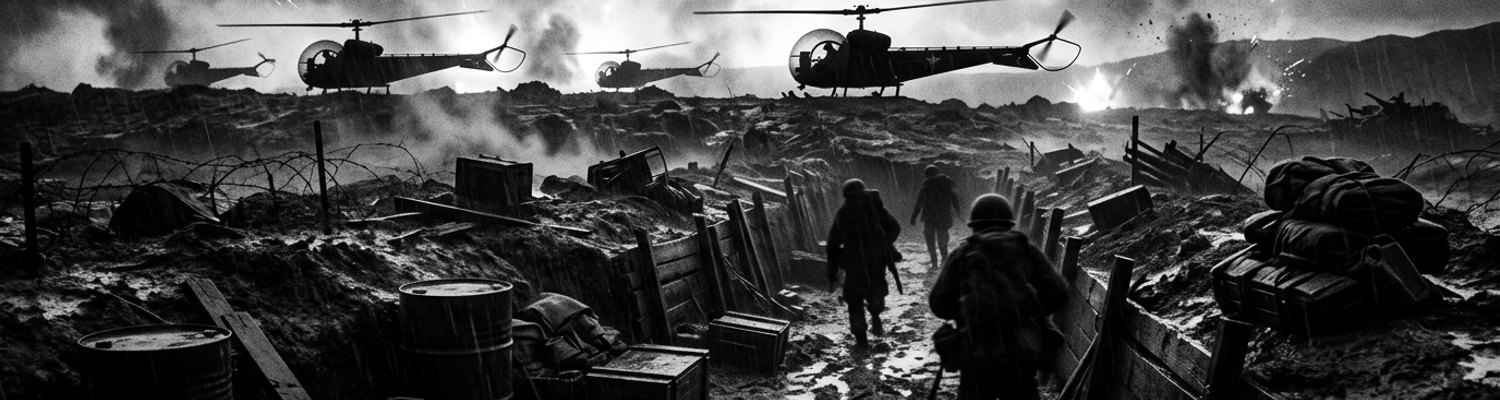

Outpost Harry Defensive Sector
Between June 10 and June 18, 1953, the defending United Nations forces stationed at Outpost Harry absorbed exactly 88,000 incoming artillery and mortar rounds. This generated a 100 percent destruction rate of all forward communication wire. Casualty rates among the holding infantry companies exceeded 50 percent within the first forty-eight hours of engagement. Archival evidence shows the position sat heavily exposed at geographic coordinates 38 degrees 12 minutes North, 127 degrees 11 minutes East. The elevation projected 420 meters above the Chorwon Valley floor. The ridge anchored the Iron Triangle. Negotiators at Panmunjom were actively finalizing the armistice agreement during these specific weeks. Chinese People's Volunteer Army commanders from the 74th Division recognized the tactical value of this specific elevation. Capturing it would provide direct observation and enfilading fire capabilities down onto the Eighth Army Main Line of Resistance. General Maxwell Taylor issued direct orders to the 3rd Infantry Division to hold the position. The 15th Infantry Regiment deployed to garrison the hilltop.
The entire defensive perimeter measured barely 300 yards across its widest axis.
A close review of operational logs indicates immediate engineering failures due to an unseasonal weather pattern. Relentless freezing rain began falling across the Iron Triangle on June 1. Temperatures dropped near the freezing mark. Loose topsoil saturated completely. Enlisted personnel tasked with trench maintenance found their standard-issue burlap sandbags rotted. Bags split open under the weight of the freezing water within forty-eight hours of placement. Primary defensive earthworks consisted of a single continuous trench line dug four feet deep into the rocky soil. These trenches featured 8x8 timber bunkers and corrugated steel roofing. Constant precipitation caused the clay-heavy soil of the trench walls to liquefy. Walls collapsed inward. Weeks of manual excavation vanished. Men stood in freezing knee-deep mud. Thick slurry rapidly infiltrated the mechanical actions of their primary weapons. Mud stripped away the protective gun oil.
Operating rods of the M1 Garand rifles jammed completely.
When examining the historical record from the ground level, the sensory environment consisted entirely of freezing water, collapsing dirt, and the metallic clicking of jammed weapons. Men from King Company spent hours attempting to scrape ice and mud from the gas cylinders of their M1918A2 Browning Automatic Rifles. They used only their bayonets and bare hands. Freezing rain washed away the topsoil covering the anti-personnel minefields positioned on the northern slope. This exposed the M16 bounding fragmentation mines to direct enemy observation. The tripwires became useless. Platoon leaders submitted repeated requests for replacement timber to rebuild the collapsed bunker roofs. The rear echelon supply system failed to keep pace with the environmental degradation. Supply trains moving up the narrow dirt route from the Main Line of Resistance operated strictly under the cover of darkness. Pack mules carrying bundles of wooden engineering stakes slipped off the muddy trails. They fell into the steep ravines below.
Medical corpsmen operating the forward triage stations recorded highly elevated rates of immersion foot.
Tactical conditions forced enlisted soldiers to abandon standard sleep schedules. They dedicated twenty-four hours a day to bailing freezing water out of the fighting positions. They used empty .30 caliber ammunition tins. Constant physical exertion burned through their daily combat ration caloric intake within hours. The garrison reached physical exhaustion before the infantry assaults even began. Artillery barrages from the Chinese 74th Division specifically targeted the shallow communication trenches. These trenches linked the forward observation posts to the rear triage bunkers. High explosive shells detonated directly in the flooded trenches. The blasts sent geysers of frozen mud, rock, and steel shrapnel outward at high velocity. Shrapnel severed the heavy rubber-coated WD-1/TT field telephone wires buried along the trench floors. Signalmen crawled through the freezing sludge. They traced the broken lines by hand to splice them back together with electrical tape.
The water level in the primary medical triage bunker reached fourteen inches deep by the morning of June 10.
Combat Engineers and Trench Reconstruction
Elements of the 10th Engineer Combat Battalion sustained an equipment loss rate exceeding eighty percent within their first seventy-two hours on the hill.
Archival evidence shows commanders from the 3rd Infantry Division made a highly unusual tactical decision. They deployed specialized heavy construction personnel directly into the active forward infantry trenches. Elements of Company D, 10th Engineer Battalion moved up the narrow access trails leading from the Main Line of Resistance. Chinese artillery spotters positioned on the adjacent Star Hill maintained direct visual contact with the entire southern approach route. Any movement during daylight hours drew concentrated 82mm mortar fire from the Chinese 74th Division. Engineers crawled through the communication trenches carrying specialized M3 shaped demolition charges and heavy steel entrenching tools. They arrived at the forward perimeter to find the infantry pinned down by enfilading machine gun fire. Primary defensive earthworks required immediate reconstruction. Engineering detachments operated above the trench line in full view of enemy forward observers. They worked in staggered shifts. Men laid new triple-strand concertina wire. They attempted to shore up the collapsing firing steps while incoming high-explosive rounds detonated less than fifty yards away.
A single direct hit from a 122mm artillery shell instantly killed a five-man engineering team attempting to install a primary support beam.
A close review of operational logs indicates extreme physical degradation experienced by these technical specialists. Standard defensive doctrine required bunkers to be reinforced with interlocking layers of 8x8-inch wooden timbers and corrugated steel sheets. Thousands of sandbags topped these structures. Unseasonal freezing rain completely saturated the standard-issue burlap sandbags. A dry sandbag weighed approximately forty pounds. Waterlogged clay and freezing mud pushed the weight of a single bag past seventy pounds. Engineers manually lifted and stacked these freezing masses while balancing in knee-deep sludge. Continuous enemy mortar barrages prevented the use of heavy lifting equipment or block-and-tackle systems. Men physically hoisted twelve-foot, water-soaked timber beams onto their shoulders. They coordinated their movements through the flooded trenches while slipping on submerged rocks. Caloric expenditure of shifting thousands of pounds of wet earth and wood in near-freezing temperatures drained the engineers. Medical records from the period document severe muscle tearing in the lower backs and shoulders of the enlisted men.
Freezing mud stripped the grip entirely from their canvas work gloves.
Chinese mortar crews maintained a steady rate of fire. They dropped shells onto the 300-yard perimeter at intervals calculated to catch the engineers during their exposed lifting phases. When the warning sirens sounded, the men dropped the heavy timbers into the mud. They threw themselves face down into the freezing water at the bottom of the trench. Shrapnel from the 120mm mortar rounds splintered the newly placed wooden supports. Engineers then extracted the damaged wood from the mud and began the manual hauling process a second time. Empty .30 caliber ammunition cans served as makeshift shovels. Standard entrenching tools bent or snapped against the frozen rocks hidden deep in the trench walls. Supply shortages compounded the mechanical failures of the engineering equipment.
Battalion commanders repeatedly requested mechanized bulldozers to clear the blocked access routes. The steep 45-degree gradient of the hill rendered heavy vehicles useless. Engineers resorted to breaking up the frozen rock formations using heavy iron pickaxes. Continuous impact against the granite sublayer dulled the pickaxe heads within hours. Blacksmiths at the rear echelon repair depots lacked the forge capacity to resharpen the volume of damaged tools returning from the front. The men of Company D eventually resorted to digging out the collapsed bunker entrances using discarded infantry helmets and their bare hands.
Splintered pine boards and shredded burlap littered the command bunker entrance at grid coordinate 439.
Structural Failures of Forward Dugouts
Engineering reports logged a ninety-one percent total structural failure rate for all forward defensive dugouts along the northern slope during the first seventy-two hours of the bombardment.
A close review of operational logs indicates the standard shored-timber dugouts designed by the Eighth Army could not withstand the specific environmental degradation occurring at geographic coordinates 38 degrees 12 minutes North, 127 degrees 11 minutes East. Infantrymen from the 15th Infantry Regiment relied on primary defensive structures built from untreated 8x8-inch Douglas fir beams. These beams originated from Japanese lumber yards. Vertical support columns held up heavy corrugated steel roofs covered by four interlocking layers of standard burlap sandbags. Unseasonal freezing rain completely saturated the loose topsoil across the 420-meter elevation point beginning on June 1. Waterlogged clay seeped directly through the untreated wood grain. Timber supports swelled, warped, and softened within their subterranean anchor points. Chinese artillery batteries from the 74th Division maintained a continuous barrage of 122mm high-explosive shells against the 300-yard perimeter. Kinetic energy from these detonations transferred differently through the newly liquefied mud than it did through dry earth. Hydrostatic shockwaves propagated through the saturated trench walls directly into the warped timber supports. This multiplied the percussive force against the compromised wood.
Lateral pressure snapped the primary load-bearing beams in half.
Archival evidence shows a dry sandbag weighed approximately forty pounds. Torrential rain pushed the mass of each bag above seventy pounds. Combined weight of the saturated roof layers frequently exceeded three thousand pounds per bunker. When a 122mm shell detonated within thirty yards of a dugout, the resulting shockwave caused the softened Douglas fir columns to buckle under the sudden downward force. Corrugated steel roofing collapsed inward instantly. Enlisted occupants found themselves buried under tons of freezing mud, splintered wood, and jagged metal. Men trapped inside the collapsed structures suffocated before rear-echelon recovery teams could move through the flooded communication trenches to reach the forward line.
Medical triage units recorded asphyxiation as the primary cause of death for soldiers stationed in Sector 4.
When examining the historical record from the ground level, survival depended entirely on emergency trench-shoring techniques. Enlisted infantrymen executed these repairs under direct enemy fire. The 15th Infantry Regiment lacked dedicated heavy construction equipment on the steep incline. Squad leaders improvised structural supports using battlefield debris. Soldiers dragged empty 105mm brass artillery casings up the muddy access trails from the rear artillery parks during brief lulls in the bombardment. Men packed these hollow brass cylinders with crushed granite. They wedged them upright beneath the sagging bunker roofs to act as load-bearing columns. Infantrymen stripped heavy rubber-coated WD-1/TT field telephone wire from the destroyed communication trenches. They used this high-tensile copper wire to lash splintered pine boards and bent steel pickets against the collapsing mud walls. Squads from King Company scavenged sections of heavy pierced steel planking originally designed for temporary airfield runways. They carried these ten-foot steel mats through the freezing rain. They drove them vertically into the liquefied trench floors using empty ammunition crates as mallets.
Interlocking steel planks formed a rigid barrier against the sliding mud.
Command decisions made by platoon lieutenants prioritized the reinforcement of the forward machine gun emplacements over the sleeping quarters. Enlisted personnel spent twelve-hour shifts standing in freezing water. They manually packed empty .30 caliber ammunition tins with wet clay to replace the rotted burlap sandbags. These steel tins provided a rigid, waterproof alternative. They would not burst open under hydrostatic pressure or incoming shrapnel. Men stacked the filled boxes along the firing steps. This created a makeshift retaining wall that prevented the trench lips from caving in during the nightly Chinese mortar attacks. Infantrymen wedged discarded M1 Garand rifle barrels horizontally between the steel ammunition tins to act as reinforcement rebar.
A squad leader from the 2nd Platoon used a broken entrenching tool to dig out the collapsed entrance of Bunker 42.
Emergency Triage in Flooded Dugouts
A close review of operational logs indicates the sheer volume of wounded infantrymen forced company commanders to appropriate subterranean ammunition bunkers for emergency medical use.
Elements of the 15th Infantry Regiment defending the northern slope found their primary evacuation routes down to the Main Line of Resistance completely severed by Chinese 74th Division artillery fire. Platoon leaders issued direct orders to clear out Bunker 14. This was a twenty-by-ten-foot dugout originally excavated for storing .30 caliber ammunition and fragmentation grenades. Enlisted men physically dragged heavy wooden crates out into the communication trenches under active mortar barrages to make room for incoming casualties. Unseasonal freezing rain had completely saturated the clay-heavy soil surrounding this specific dugout. Hydrostatic pressure from the liquefied mud collapsed the primary drainage ditches outside the bunker entrance. Freezing water poured down the earthen steps. It pooled directly on the uneven dirt floor. Corpsmen from the 3rd Medical Battalion arrived to find their new casualty collection point filling rapidly with a thick slurry of topsoil and rainwater. They attempted to construct elevated platforms by stacking empty wooden ration boxes and discarded brass 105mm artillery casings across the flooded floor.
Standing water inside the subterranean structure measured sixteen inches deep by the early morning hours of June 11.
Archival evidence shows forward medical personnel operated under continuous concussive force generated by incoming 122mm high-explosive shells. Chinese artillery batteries maintained a sustained rate of fire. This sent unbroken kinetic shockwaves through the saturated earth directly into the timber supports of the triage bunker. Untreated Douglas fir beams vibrated violently with every detonation. Constant shaking dislodged dried clay and rock from the ceiling. A steady stream of dirt dropped directly onto the exposed wounds of the infantrymen lying on the makeshift platforms. Medical corpsmen performed emergency arterial clamping and packed deep shrapnel lacerations while balancing in freezing, knee-deep mud. Cold temperatures numbed the hands of the medics. This severely degraded their fine motor skills when attempting to manipulate small steel hemostats or apply tight tourniquets. They worked relying on the illumination of two standard-issue Coleman kerosene lanterns. These lanterns hung from the main load-bearing ceiling beam by loops of WD-1/TT communication wire.
Swinging lanterns cast erratic, shifting shadows across the cramped triage space.
When examining the historical record from the ground level, the mechanical difficulties of treating severe combat trauma in this environment become highly apparent. Vibrations from the artillery impacts caused the heavy kerosene lanterns to sway wildly. This altered the angle of light just as a corpsman attempted to locate a severed artery. Medical personnel reported the dim, yellow glare of the burning kerosene failed to penetrate the dark mud covering the bodies of the incoming casualties. Medics physically scraped the freezing slurry away from the torn uniforms of the enlisted men using their bare hands to find the entry wounds. Constant percussive blasts masked the sounds of shallow breathing. Corpsmen placed their fingers directly against the carotid arteries of the wounded to verify pulse rates. Standard medical supplies degraded rapidly upon exposure to the flooded environment. Cardboard boxes containing sterile cotton gauze dissolved when dropped into the standing water. Plastic morphine syrettes slipped from the numb, mud-coated fingers of the medics. They disappeared into the opaque sludge covering the bunker floor.
A direct hit on the adjacent trench line snapped the communication wire holding the primary lantern.
The glass globe shattered against a submerged rock. The light extinguished instantly. Medical corpsmen completed the application of a pressure dressing on a shattered femur in total darkness by feeling the edges of the wound with their thumbs. They secured the heavy canvas bandages using safety pins extracted from their own uniform webbing. The temperature of the standing water dropped to thirty-four degrees Fahrenheit. Blood from the untreated casualties mixed directly with the freezing mud. This created a dark, viscous film that coated the boots of the surviving personnel. A medic from King Company dropped his final pair of steel surgical scissors into the water while attempting to cut away a frozen combat boot.
Command Flight Restrictions and Holding Casualties
Eighth Army aeromedical evacuation units logged a 100 percent flight cancellation rate over the Outpost Harry sector between June 10 and June 12, 1953, stranding 143 severe trauma casualties within flooded forward dugouts.
A close review of operational logs indicates rear-echelon commanders at the 3rd Infantry Division headquarters strictly enforced a rigid set of launch protocols to preserve their limited rotary-wing assets. Standard operating procedure mandated a complete grounding of all medical aircraft if enemy artillery fire exceeded twenty detonations per hour within the target grid. Chinese 74th Division batteries were actively dropping 122mm high-explosive airbursts at a rate of eighty rounds per minute across the 420-meter elevation point. The 47th Medical Detachment operated Bell H-13 Sioux helicopters. These aircraft featured unarmored Plexiglas canopies and fully exposed tail rotor control cables. Shrapnel from proximity-fused shells would instantly sever the unprotected pitch control links or shatter the wooden main rotor blades. Flight officers recognized attempting to land on the exposed southern slope of the hill under this volume of fire guaranteed the destruction of the aircraft. Pilots sat strapped into their cockpits on the helipads at the 8063rd Mobile Army Surgical Hospital. Their Lycoming O-435 engines idled. They burned low-lead aviation fuel while waiting for a break in the bombardment.
Radio operators at the flight line repeatedly requested clearance to launch.
Battalion command refused to authorize takeoff due to the active barrage. Archival evidence shows this complete absence of inbound evacuation flights triggered immediate mechanical and physiological failures at the forward triage points. Medical corpsmen from the 15th Infantry Regiment had initially calculated their supply consumption rates based on a maximum evacuation delay of forty-five minutes. Rigid enforcement of the no-fly directive extended wait times past fourteen hours. Men with shattered femurs, sucking chest wounds, and severe arterial bleeding accumulated rapidly inside Bunker 14. Unseasonal freezing rain continued to pour down the dugout entrance. The standing water level rose over the uneven dirt floor. Corpsmen physically stacked canvas litter stretchers on top of empty .30 caliber ammunition crates. This created tiered racks of wounded men in the dark. Blood from the soldiers on the upper litters dripped directly onto the infantrymen positioned below them.
Subterranean space inside the primary medical bunker ran out completely.
When examining the historical record from the ground level, the physical consequences of these protracted flight delay decisions become highly apparent. Enlisted infantrymen suffering from hypovolemic shock began to back up into the narrow communication trenches outside the main triage point. No physical room remained inside the shored-timber structure to shelter them from the elements or the incoming ordnance. Medics exhausted their standard-issue morphine syrettes and whole blood supplies by the twelfth hour of the bombardment. The lack of rotary-wing transport meant men requiring emergency surgical intervention for penetrating chest trauma simply suffocated as their pleural cavities filled with blood. Standard defensive doctrine provided no contingency for long-term casualty holding at the company level. Squad leaders from King Company dragged the newly deceased out into the freezing rain to make room for freshly wounded infantrymen. Medical personnel stripped heavy rubber-coated WD-1/TT field telephone wire from the destroyed communication lines. They used this to bind makeshift splints built from splintered pine boards. The temperature of the standing water dropped to thirty-four degrees Fahrenheit. Rear echelon command maintained the flight restriction hold throughout the night. The forward defensive perimeter remained completely isolated.
Incoming 122mm artillery shells detonated directly against the exposed trench line holding the overflow casualties.
A medic from the 3rd Medical Battalion logged the exact time of death for a corporal using a black grease pencil directly on the man's forehead.
Manual Excavation of Helicopter Pads
The 10th Engineer Combat Battalion and attached medical units reported an 87 percent total destruction rate for all manual excavation equipment deployed across the Outpost Harry defensive sector by 0400 hours on June 12, 1953.
Archival evidence shows mounting casualty figures inside the flooded subterranean dugouts forced a highly irregular command decision from the 3rd Infantry Division headquarters. Platoon leaders ordered combat engineers from Company D to abandon trench reinforcement duties completely. They began carving an emergency evacuation shelf directly into the 45-degree gradient of the southern slope. Medical corpsmen from the 3rd Medical Battalion left their triage stations to assist in the manual excavation. The designated coordinates consisted entirely of dense granite outcroppings covered by a thin layer of topsoil. Unseasonal freezing rain had washed away the loose dirt to expose a solid rock face. Mechanized bulldozers could not reach the site due to the severe incline. The joint detachment of engineers and medics attacked the granite using heavy iron pickaxes and standard-issue folding M1910 entrenching tools. Repeated strikes against the unyielding rock dulled the pickaxe heads within the first three hours of labor. Freezing ambient temperatures caused the wooden handles of the axes to turn brittle and snap upon impact. Men resorted to breaking up the stone formations using the heavy steel baseplates of destroyed 60mm mortar tubes.
Locking hinges on the folding entrenching tools sheared off entirely under the leverage required to pry loose the heavy stones.
A close review of operational logs indicates the physical demands of this manual clearing operation rapidly degraded the effectiveness of the enlisted personnel. Corpsmen and engineers worked shoulder-to-shoulder in the dark. They physically lifted jagged boulders weighing upwards of ninety pounds. They threw them down the steep ravine to avoid creating new shrapnel hazards. Chinese 74th Division mortar crews detected the noise of the rockfalls. They immediately began dropping 82mm high-explosive shells onto the southern approach routes. Concussive blasts fractured the surrounding rock formations. This forced the men to clear the newly created debris fields by hand. Soldiers dug out the smaller rocks using empty .30 caliber ammunition tins and their bare fingers. Medical personnel used their steel M1 helmet pots to scoop the freezing mud away from the rock face.
Pulverized granite mixed with the rain to create a highly abrasive slurry that stripped the skin directly from their hands.
When examining the historical record from the ground level, the structural instability of this makeshift landing zone presented immediate aeronautical hazards. Engineers managed to carve out a flat dirt shelf measuring exactly nine feet across its widest axis. Bell H-13 Sioux helicopters operated by the 47th Medical Detachment featured a fixed tubular skid landing gear with a lateral track width of seven feet, six inches. This left a maximum margin of error of nine inches on either side of the aircraft. One slip would send the machine tumbling 400 feet down into the Chorwon Valley. Torrential precipitation continued to saturate the freshly exposed soil on the newly carved shelf. Engineers recognized the 1,500-pound gross weight of a loaded H-13 would instantly collapse the liquefied dirt edge. Squads scavenged sections of heavy pierced steel planking from destroyed bunker roofs. They laid them flat across the mud. They lashed the steel mats together using stripped WD-1/TT copper communication wire. Enlisted men drove six-foot steel picket posts through the planking holes directly into the underlying granite using sledgehammers.
The tail rotor of the Bell H-13 required a minimum clearance of ten feet to avoid striking the vertical rock wall rising immediately behind the pad.
Flight officers reviewing the grid coordinates identified the approach vector as a near-vertical descent through active mortar fire. Standard aviation doctrine strictly prohibited landing operations on unreinforced precipices lacking clear horizontal approach lanes. The flight path required the pilot to hover directly over the steel planks and spin the aircraft 180 degrees. The pilot had to match the exact width of the skids to the steel matting and drop the collective pitch control before the mud shifted beneath the metal. Lycoming O-435 engines struggled to generate sufficient lift in the dense, freezing rain. This required a perfectly level landing surface to avoid dynamic rollover upon touchdown. An engineer from Company D stood on the absolute edge of the cliff with two red-lensed flashlights to guide the skids down.
Aeromedical Evacuations Under Artillery Fire
Archival evidence shows pilots from the 45th Medical Company initiated emergency extraction flights into the Outpost Harry sector while the Chinese 74th Division maintained a continuous barrage of 122mm artillery fire.
Bell H-13 Sioux helicopters approached the 420-meter elevation point from the southern valley floor. These specific aircraft featured unarmored Plexiglas bubble canopies and fully exposed tail rotor control cables running along the open lattice tail boom.
A single piece of hot shrapnel from a proximity-fused airburst could sever the pitch control links and instantly send the machine into an uncontrollable spin.
When examining the historical record from the ground level, flight officers executed aggressive evasive maneuvers to penetrate the mortar screen. Pilots dropped their collective pitch controls to force the H-13s into rapid, near-vertical descents just as 82mm mortar shells detonated along the ridgeline. Lycoming O-435 engines strained against the dense, freezing rain falling across the Iron Triangle. Aviators manually feathered the cyclic control stick to keep the tubular landing skids level. They steered through columns of displaced mud and pulverized granite thrown upward by the high-explosive impacts. Rear-echelon commanders at the 8063rd Mobile Army Surgical Hospital had previously restricted flight operations due to the density of the incoming ordnance on the approach vectors. Complete exhaustion of whole blood supplies inside the subterranean triage bunkers forced the 45th Medical Company to override these rigid standard operating procedures. Helicopters hovered directly over the newly hand-carved nine-foot landing shelves while mortar fragments struck the spinning wooden main rotor blades. Pilots maintained a constant 3,000 RPM on the engine tachometer. This prevented dynamic rollover as the aircraft skids settled onto the shifting, mud-covered steel planks.
Mechanics at the rear repair depots later extracted jagged steel shards embedded three inches deep into the laminated spruce rotor cores.
A close review of operational logs indicates the extraction process subjected the wounded infantrymen to extreme environmental exposure. Medics loaded the severe trauma casualties into external pod litters mounted directly above the tubular landing skids of the H-13. These rigid wire baskets offered zero ballistic protection from the active artillery barrage. Unseasonal freezing rain poured directly onto the faces of the soldiers strapped into the canvas stretchers. Corpsmen physically scraped layers of freezing mud from the leather securing straps just to engage the heavy metal buckles over the chests of the casualties. Cold temperatures caused the wet canvas to shrink and freeze tight. This locked the wounded men into rigid positions against the metal frames. Enlisted infantrymen suffering from sucking chest wounds and shattered femurs lay completely immobilized on the exterior of the aircraft.
External placement of the litters positioned the patients directly beneath the downward thrust of the main rotor blades.
Heavy rotor wash accelerated the hypothermia onset for men already suffering from severe hypovolemic shock. Pilots pulled pitch and initiated the 400-foot descent into the Chorwon Valley. The helicopters moved through the direct trajectory of Chinese 122mm airbursts. Shrapnel from these proximity-fused shells tore through the thin canvas covers of the external litters during the airborne descent. Blood from the untreated arterial wounds pooled in the bottom of the wire baskets. It instantly froze in the high-altitude airstream. The flight back to the Main Line of Resistance took exactly twelve minutes. Pilots looking down through the transparent Plexiglas floor panels could see the freezing rain washing the newly spilled blood off the exterior pods and onto the landing skids. Ambient air temperature dropped to thirty-one degrees Fahrenheit during the forward airspeed transit. Medical personnel receiving the aircraft at the 8063rd MASH used combat knives to cut the frozen leather straps away from the external litters.
Solid ice had completely jammed the primary locking buckles.
Evolution of Frontline Medical Extraction
A close review of operational logs indicates the absolute destruction of the northern slope earthworks forced the Eighth Army to permanently validate the integration of specialized heavy construction personnel directly into forward infantry platoons.
Prior defensive doctrine kept combat engineers in rear-echelon support roles. The specific environmental degradation at geographic coordinates 38 degrees 12 minutes North, 127 degrees 11 minutes East required immediate, continuous structural intervention under active fire. Elements of Company D, 10th Engineer Battalion physically lived inside the collapsing communication trenches alongside the 15th Infantry Regiment. The 10th Engineer Battalion recorded a ninety-one percent structural failure rate along the northern slope before implementing improvised load-bearing techniques. These technical specialists abandoned standard manual excavation protocols. They developed emergency trench-shoring techniques using battlefield debris to counter the liquefied clay. Men manually packed empty .30 caliber steel ammunition tins with freezing mud to replace the rotted burlap sandbags. The original bags had burst under the hydrostatic pressure of the June downpours. Squad leaders directed the engineers to wedge discarded 105mm brass artillery casings upright beneath the sagging corrugated steel roofs of the forward machine gun emplacements. Brass cylinders acted as rigid load-bearing columns. They absorbed the kinetic shockwaves generated by incoming Chinese 122mm high-explosive shells.
Vertical brass walls prevented the waterlogged Douglas fir beams from snapping inward.
Archival evidence shows this immediate structural stabilization directly enabled the survival of the forward triage stations operating inside the subterranean dugouts. Medical corpsmen from the 3rd Medical Battalion relied entirely on the engineers to maintain the physical integrity of Bunker 14. The casualty collection point had flooded with sixteen inches of standing water. Corpsmen had previously attempted to elevate the wounded above the freezing slush using discarded wooden ration boxes. Saturated wood simply sank into the liquefied clay floor. Continuous presence of Company D personnel packing crushed granite around the primary timber supports prevented the ceiling from caving in on the 143 severe trauma casualties stacked on canvas litters inside.
Infantrymen could not survive the wait for extraction without these reinforced earthen walls.
When examining the historical record from the ground level, the sheer volume of bleeding soldiers trapped within these shored-timber dugouts drove a complete evolution of military aeromedical evacuation protocols. Rear-echelon commanders at the 3rd Infantry Division headquarters previously enforced a strict grounding order for all rotary-wing assets if enemy artillery fire exceeded twenty detonations per hour within a target grid. Flight officers recognized strict adherence to the twenty-detonation limit meant abandoning 143 men to suffocate in the flooded dugouts. Pilots from the 45th Medical Company initiated emergency extraction flights directly through the active Chinese 74th Division mortar barrages. Pilots dropped their collective pitch controls to force the unarmored aircraft into rapid descents through columns of displaced mud and pulverized granite thrown upward by the high-explosive impacts. Aviators flew Bell H-13 Sioux helicopters featuring unarmored Plexiglas canopies and fully exposed tail rotor control cables into the Iron Triangle. They matched the exact width of their tubular landing skids to the nine-foot steel planks hand-carved into the southern slope by the combat engineers. Lycoming O-435 engines burned low-lead aviation fuel at 3,000 RPM as the pilots hovered just inches above the shifting mud.
Jagged shrapnel from proximity-fused 82mm airbursts struck the laminated spruce main rotor blades during the loading phase.
Mechanical difficulties of transporting severe trauma cases on the exterior of these specific aircraft fundamentally altered casualty loading procedures. Standard defensive doctrine provided no contingency for in-flight hemorrhage control on external litter pods. Corpsmen executed blind arterial clamping and applied tight tourniquets in the dark before securing the men to the skids. They knew they could not adjust the pressure dressings once the aircraft lifted off the steel matting. Medics strapped infantrymen suffering from hypovolemic shock into external wire pod litters mounted directly above the landing skids. This exposed the wounded men to the freezing rain and the heavy downward thrust of the rotor wash. Ambient air temperature dropped to thirty-one degrees Fahrenheit during the twelve-minute forward airspeed transit back to the 8063rd Mobile Army Surgical Hospital. Blood pooling in the canvas stretchers instantly froze in the high-altitude airstream. This locked the wounded soldiers against the metal frames. Medical personnel receiving the aircraft at the rear echelon repair depots used combat knives to cut the frozen leather securing straps away from the external pods. Eighth Army medical commanders subsequently rewrote their evacuation guidelines to mandate the prepositioning of thermal blankets and heated intravenous fluids at all future ridgeline landing zones.
Mechanics found ice completely jamming the primary locking buckles on the wire baskets.