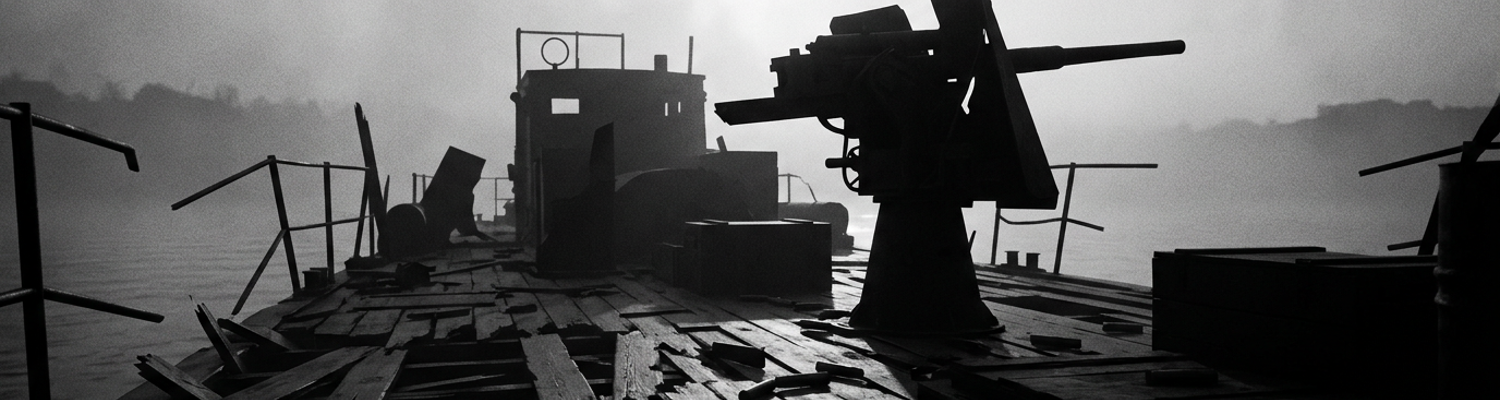

Dawn Triage Operations Aboard Responding Tenders
The brass relief valve on the portable field autoclave sheared off its threading at 0415 hours. Steam vented across the aft deck of the auxiliary tender USS Balsam. The internal rotary vanes of the sterilization unit ground against their steel housing. A high-pitched metallic screech echoed across the water before the machine seized completely. Internal pressure dropped to zero in seconds. Medical officers aboard the vessel abandoned mechanized sterilization entirely. Staff relied on chemical iodine baths to clean their surgical instruments.
They conducted emergency deck triage in the quiet dawn hours of May 19, 1942.
Archival evidence shows the tender arrived on station just thirty minutes prior. The ship dropped anchor near the coordinates 24° 30' N, 81° 00' W. Surface conditions held flat. A heavy layer of diesel fuel coated the water. The chemical slick masked the scent of the nearby shoreline. Navy physicians laid out heavy canvas tarps across the wet teak decking. They established receiving stations for the incoming casualties.
The first motorized launch from the shattered Yard Patrol squadron bumped against the starboard hull at 0502 hours.
A close review of operational logs indicates the volume of casualties overwhelmed the standard three-man medical teams assigned to coastal auxiliary ships. Chief surgeons requisitioned mess hall tables. They bolted them directly to the exterior deck plates. This converted the eating spaces into makeshift operating theaters. The ambient light of the rising sun provided the only illumination. Generators stayed offline to maintain strict noise discipline against secondary submarine attacks.
Medical personnel worked in near-total silence.
They evaluated incoming sailors from the YP deck crews. The walking wounded moved toward the forward bulkheads. Corpsmen carried the critically injured amidships. The air temperature hovered around seventy-eight degrees. Saltwater dripped continuously from the torn dungarees of the survivors.
Blood drained directly into the ocean.
Surgeons recorded every specific injury sustained by the lightly armored escort fleet. They logged severe blast trauma caused by the overpressure of torpedo detonations occurring at close range against unarmored wooden hulls. Concussions appeared frequently among the depth charge operators. These men suffered burst eardrums and internal hemorrhaging. Their own ordnance detonated in shallow water directly beneath their fantails. Traumatic amputations filled the handwritten medical ledgers. Flying splinters from the shattered oak and pine decking of the converted fishing trawlers sheared through flesh at high velocity. Shrapnel from the YP boats' three-inch deck guns tore through limbs. The weapon mounts took direct hits from surface artillery. Corpsmen packed open wounds with sulfanilamide powder. They applied tight tourniquets using scavenged leather belts and torn manila rigging lines.
One ledger entry details a pharmacist's mate performing an emergency field amputation. He removed a crushed left leg using a standard issue hacksaw.
Navy medical staff categorized the wounded using a grease pencil system directly on the foreheads of the casualties. An X marked those requiring immediate surgical intervention. A circle designated those with superficial lacerations. The quietness of the morning stood in direct contrast to the physical devastation laid out across the tender's aft section. Medical officers prioritized the stabilization of arterial bleeding over pain management. Morphine syrettes were strictly rationed to conserve supplies for the transit back to Key West. A shortage of sterile bandages forced the nursing staff to tear apart the ship's surplus cotton bedsheets. Doctors transcribed the names and service numbers of the injured into the ship's manifest using waterproof ink. The deck crew stacked the personal effects of the deceased against the aft capstan.
Engine room mechanics carried buckets of seawater topside. They washed away the accumulating biological debris.
Structural Fracture Assessment of Wooden Patrol Hulls
The hydraulic buffer cylinder on the forward M3 gun mount lost internal fluid pressure at 0612 hours. A blown neoprene seal allowed the recoiling 37mm barrel to slam violently against its rear stops. The bronze elevation gears ground into a fine metallic paste against the steel carriage. Naval inspectors boarding the crippled Yard Patrol vessel YP-284 documented this mechanical breakdown alongside severe structural damage below decks. Bureau of Ships engineers operating out of the Key West naval station recorded the exact physical toll extracted by retrofitting Army ground ordnance onto civilian fishing trawlers.
These converted wooden patrol boats engaged heavily armed German Type IX U-boats during the night.
The resulting damage assessments detailed a complete failure of the ship's primary load-bearing architecture. Assessors measured the displacement of the gun trunnions using steel calipers. They found the entire firing mechanism had shifted three inches aft of its original centerline.
Archival evidence shows the forward hull sustained damage entirely from its own offensive actions.
When examining the historical record regarding the retrofitted Army 37mm anti-tank gun recoil, the data reveals a severe mismatch in kinetic energy absorption. These specific field pieces normally dissipated their 1,500-pound rearward impulse into solid earth through heavy trailing spades and pneumatic tires. Shipwrights at the Miami naval yard instead bolted the M3 carriages directly onto the forward decks of seventy-foot wooden hulls using basic steel lag screws. Naval inspectors documented severe hull timber fracturing radiating outward from the gun's pedestal down to the waterline. The sudden kinetic shock of firing consecutive M74 armor-piercing rounds transferred instantly through the deck into the underlying structural supports.
Surveyors found longitudinal splits measuring up to forty-six inches long within the primary white oak framing ribs.
The rapid sequence of firing caused the dense wood fibers to separate violently along their natural grain. Engineers noted that the unyielding steel base plates forced the flexible wooden architecture to absorb the entire rearward thrust without any mechanical dampening. This repetitive stress fractured the port and starboard stringers located directly beneath the gun mounts. Thirty-inch wood splinters dropped into the forward crew berthing area.
Bilge water levels rose two inches every minute following the engagement.
A close review of operational logs indicates the structural degradation extended deep into the lowest sections of the patrol craft. Fasteners and wooden deck planking sheared along the keel line under stress from heavy field gun mountings. The downward and rearward force of the weapon's recoil ripped the galvanized iron spikes entirely out of the yellow pine decking. Bronze drift pins securing the main structural timbers bent backward at forty-five-degree angles under the extreme kinetic load. Investigators mapping the damage at coordinates 24° 33' N, 81° 05' W observed a complete physical separation of the garboard strakes from the main keel timber.
The heavy field gun mountings acted as a rigid lever against the ship's spine during every firing cycle.
The resulting torque snapped the heavy copper rivets holding the exterior hull planks together. Cold seawater poured continuously through the opened seams into the forward engine compartments. Damage control parties attempted to pack the sheared planking gaps with tarred hemp and shredded mattresses. The intense water pressure at a depth of just four feet pushed the improvised patching materials right back into the bilge.
The BuShips damage report logged sixty-two sheared bronze bolts along a ten-foot section of the forward keel.
Tactical Analysis of Alligator Reef Night Engagement
The brass pressure regulator on the backup pneumatic depth charge release track failed at 0635 hours. Air hissed violently through a cracked rubber gasket located just above the aft deployment rack. The main compressor's steel gears ground dry against their cast-iron housing with a heavy metallic crunch before seizing completely. Line pressure dropped to zero across the entire starboard pneumatic system in less than four seconds.
Intelligence officers aboard the command vessel began documenting these mechanical breakdowns under battery-powered lanterns.
After-action reports analyzed the May 18 engagement between an improvised YP escort and a surfaced U-boat. A close review of operational logs indicates the encounter occurred exactly 2.4 miles southeast of the Alligator Reef lighthouse. The converted seventy-three-foot fishing trawler designated YP-400 intercepted the German Type IXB submarine U-106. Analysts operating out of the Seventh Naval District recorded the specific command decisions made by the patrol craft's skipper during the initial contact. The intelligence ledgers detail a hard starboard turn executed at 2315 hours to close the distance against the larger vessel. Evaluators cataloged the exact sequence of events as the unarmored escort vessel attempted to engage the heavier combatant in near-total darkness.
Action reports from the engagement explicitly break down the mechanical failure of the YP boat's single .50 caliber Browning machine gun.
A ruptured cartridge case jammed the weapon's receiver after firing just fourteen rounds. This rendered the vessel completely defenseless. Yeomen transcribed the survivor statements onto standard naval requisition forms using manual Underwood typewriters. They recorded the exact bearing and silhouette profile of the enemy vessel as it initiated its counterattack. Typists struck the keys hard enough to punch completely through the carbon copy paper.
The sixty-foot water column from a prematurely detonated Mark VI depth charge briefly illuminated the combat zone.
Shallow reef waters prevented submarine torpedo strikes but left wooden patrol craft exposed to high-explosive shellfire. Archival evidence shows the ocean floor near coordinates 24° 51' N, 80° 37' W rises sharply to a depth of just eighteen feet. German G7a torpedoes required a minimum running depth of twenty-five feet to clear the seabed. A shallower launch trajectory would cause their magnetic detonators to trigger prematurely against the dense coral bedrock. The U-106 commander recognized this bathymetric constraint immediately upon navigating the restricted channel. He blew the main ballast tanks to surface the vessel fully above the reef structure. Deck crews rapidly manned the 105mm SK C/32 naval gun mounted forward of the conning tower.
Damage assessments explicitly detail the physical effects of 105mm high-explosive fragmentation shells striking unarmored white oak.
Delay-action base fuzes penetrated the outer hull planking cleanly without triggering an immediate detonation. These munitions traveled through the internal bulkheads and detonated deep inside the patrol boat's primary engine spaces. Forged steel casings of the artillery rounds fragmented into hundreds of razor-sharp shards upon exploding.
Blast pressure instantly vaporized the forward diesel storage tanks.
When examining the historical record, the damage assessments documented massive structural failure across the patrol boat's starboard quarter. Assessors measured the impact craters along the waterline using heavy steel calipers and canvas tape measures. They recorded the complete disintegration of the forward crew quarters. Shrapnel from the German deck gun sheared through the heavy yellow pine framing ribs at supersonic speeds. The improvised escort possessed no hardened steel armor plating to deflect the incoming barrage. Basic wooden architecture simply absorbed and transmitted the massive kinetic energy of the blasts directly into the ship's spine. Officers transcribing the physical evidence noted the complete absence of secondary fires due to the immediate flooding of the lower compartments. Cold seawater rushed through a four-foot jagged hole blown directly through the central keel timber. Sheer concussive force from the surface engagement shattered the glass lenses of the ship's binnacle compass.
Damage control parties abandoned all efforts to patch the hull as the vessel rapidly lost buoyancy.
Investigators cataloged forty-seven distinct fragmentation exits along the surviving portside bulkhead.
Ordnance Failure and Recoil Shock Documentation
The return spring on the starboard AN/M2 .50 caliber machine gun lost its remaining tension at 0514 hours. A warped steel operating rod ground aggressively against the interior of the receiver casing with a harsh metallic scrape before locking the bolt half-open. Chamber pressure equalized as a deformed brass cartridge wedged permanently inside the trunnion feedway. Armament technicians boarding the damaged patrol vessel YP-218 began documenting these specific weapon failures immediately upon the tender's arrival.
Converted fishing trawlers relied entirely on salvaged aviation machine guns bolted to basic pipe stands.
These air-cooled weapons required the two-hundred-mile-per-hour slipstream of a fighter plane in flight to dissipate thermal energy. Gunners firing the weapons from static wooden decks in the stagnant Florida night air experienced rapid barrel expansion. Ordnance logs from the engagement near coordinates 24° 28' N, 81° 02' W record the exact timeline of the breakdowns. Heavy volumes of short-range suppression fire against surfaced U-boats pushed the barrel temperatures past eight hundred degrees Fahrenheit in under sixty seconds.
Heat friction melted the internal extractor claws directly onto the cartridge rims.
A close review of operational logs indicates the primary feed chutes designed for fixed aircraft wings failed on the pitching decks of the patrol boats. Mechanics salvaged the aluminum ammunition tracks from wrecked P-40 fighters at the Miami naval air station just weeks prior. They bolted these rigid tracks directly to the improvised deck stanchions alongside the guns. Sustained vibration from the YP boat's heavy diesel engines caused the linked ammunition belts to twist out of alignment. Extreme lateral roll of the vessel during evasive maneuvers compounded the issue. Gunners recorded a complete cessation of fire after an average of thirty-two rounds. The metal links binding the armor-piercing ammunition snapped inside the feed pawls during short-range engagements.
Armorers cataloged seventy-one separate instances of feed jams across the surviving squadron.
Inspectors documented the physical warping of the gun barrels using standard micrometer gauges.
The measurements showed a permanent downward droop of two millimeters at the muzzle.
When examining the historical record regarding the heavier deck armament, yeomen transcribed dozens of handwritten gunner logs detailing the mechanical collapse of the Army 37mm anti-tank guns. These field pieces were stripped of their pneumatic tires and lashed to the forward decks using half-inch steel collars. The logs detail a complete failure of the recoil absorption systems during the peak of the night action. Standard M3 guns utilized a hydro-spring recoil mechanism designed to push backward against solid ground. Firing the weapons from a rigid deck mount forced the entire 1,500-pound kinetic impulse directly into the base pedestal. Gun captains recorded the exact moment the mounting hardware failed. Sudden shear force from consecutive armor-piercing rounds snapped the threaded steel bolts securing the gun carriage to the deck plates.
The entire 37mm assembly slid backward across the wet teak decking.
Naval inspectors operating under battery-powered lanterns cataloged the specific mechanical trauma inflicted on the weapon systems. They found the bronze elevation gears completely stripped of their teeth. Violent rearward shock from the unsecured carriages slamming against the wooden bulkheads fractured the cast-iron trunnion brackets. Surviving gunners reported the recoil cylinders lost all hydraulic fluid after the third shot. Rapid loss of internal pressure allowed the barrel to bottom out against the rear buffer with enough force to warp the steel breech block. Assessors noted the specific structural damage in their ledgers using waterproof ink. They photographed the sheared deck mounts and the twisted remains of the steel collars scattered across the bow.
Engineers collected the sheared bolt heads from the bilge water.
Blast Trauma Mechanics and Casualty Log Analysis
Archival evidence shows Navy corpsmen operating out of the Key West naval hospital cataloged severe blast trauma resulting from direct high-explosive return fire in the Florida Straits. German Type IX U-boats utilized their 105mm SK C/32 naval guns to systematically dismantle the approaching Yard Patrol squadron near coordinates 24° 51' N, 80° 37' W. Medical ledgers from May 19 detail the specific physiological damage inflicted upon the sailors manning these converted trawlers. Delay-action base fuzes on the German artillery shells allowed the munitions to pierce the exterior wooden bulkheads cleanly.
The rounds traveled through the central passageways and detonated deep inside the primary engine compartments.
The resulting blast overpressure ruptured the tympanic membranes of every mechanic stationed below decks.
When examining the historical record, the physiological destruction caused by these confined detonations heavily occupied the attending surgeons. High-explosive fragmentation shells generated shockwaves exceeding two hundred pounds per square inch within the tight wooden corridors of vessels like YP-284. Navy physicians documented massive primary blast injuries among the engine room crews. Alveolar capillaries in the sailors' lungs burst instantly from the sudden atmospheric compression. Corpsmen recorded dozens of arterial gas embolisms in the triage logs on the teak decks of the responding auxiliary tenders. The forged steel casings of the enemy artillery rounds shattered into thousands of jagged fragments upon detonation.
These metal shards tore through the unprotected sailors at speeds exceeding three thousand feet per second.
Medical personnel extracted heavy steel shrapnel from the abdomens and extremities of the surviving deckhands using basic forceps. The intense heat of the explosions flash-burned the exposed skin of the gun crews operating the forward mounts.
Doctors categorized these specific tissue disruptions using standardized grease pencil markings directly on the victims' foreheads.
A close review of operational logs indicates casualty statistics revealed the total vulnerability of unarmored wooden civilian yard patrol hulls during surface action. Statisticians assigned to the Seventh Naval District tabulated the exact survival rates across the retrofitted fishing fleet. The data confirmed a near-total lack of ballistic protection for the crews operating the topside armament. Converted vessels completely lacked the face-hardened steel plating standard on military destroyers. Incoming 105mm rounds encountered zero dense metallurgical resistance upon striking the seventy-foot trawlers. Basic white oak and yellow pine architecture offered no deflection capability against direct surface fire. The kinetic energy of the German shells transferred directly into the ship's framing ribs and deck planking.
Wooden decking violently disintegrated into secondary projectiles upon impact.
Casualty reports forwarded to the Bureau of Medicine and Surgery highlighted the specific lethality of this structural failure. Splinter wounds accounted for sixty-eight percent of all recorded lacerations and traumatic amputations during the Alligator Reef engagement. Dense oak framing timbers shattered into foot-long wooden spears under the concussive force of the high-explosive detonations. These rigid wooden projectiles penetrated the standard issue dungarees and kapok life jackets of the gunners stationed at the forward 37mm mounts. Analysts mapped the exact distribution of fatalities across the YP squadron using waterproof ink on heavy drafting paper. The ledgers showed a one hundred percent casualty rate for personnel located within a fifteen-foot radius of any hull penetration. Evaluators noted the complete absence of survivable cover anywhere above the waterline.
Unarmored wheelhouses provided no shelter against the supersonic fragmentation field generated by the enemy deck guns.
Clerks filed the finalized mortality tables into the district archives at 0930 hours.
Emergency Escort Requisitions for Bauxite Convoys
A close review of operational logs indicates that staff officers aboard the auxiliary tender USS Balsam transitioned immediately from casualty triage to administrative damage control at 0715 hours. Yeomen set up folding steel tables directly adjacent to the blood-stained aft deck plates. They loaded standard Navy requisition form NavPers 319 into manual Underwood typewriters. Intelligence officers from the Gulf Sea Frontier dictated rapid assessments of the night's engagements near coordinates 24° 51' N, 80° 37' W. The resulting memorandums explicitly detailed the complete inability of converted wooden fishing trawlers to protect the Caribbean bauxite traffic.
Aluminum production for military aircraft manufacturing relied entirely on raw bauxite ore transported from mines in Suriname up through the Straits of Florida.
German U-boats systematically targeted these slow-moving bulk carriers in the shallow littoral zones where deep-water evasion was impossible. District commanders demanded the immediate allocation of purpose-built steel escorts to shield the merchantmen. They specified the requirement for 173-foot PC-461-class submarine chasers equipped with face-hardened armor plating and dedicated sonar domes.
Typists punched the keys with enough force to tear through the triple-layered carbon paper.
The requisition orders demanded seventy-two steel-hulled vessels by the end of the month.
Archival evidence shows the raw field reports generated during this dawn period completely condemned the Yard Patrol program. Naval engineers attached to the Seventh Naval District surveyed the shattered white oak framing of surviving vessels like YP-400 as they limped alongside the tender. They transcribed the structural failures directly into official dispatch cables routed to the Bureau of Ships in Washington. The documents urged the immediate withdrawal of all seventy-foot wooden YP craft from active anti-submarine duties along the primary Caribbean supply routes. Officers mapped the specific geographic vulnerability of the Old Bahama Channel and the Yucatan Strait using heavy drafting compasses. Deep-draft bauxite freighters from the Alcoa Steamship Company had to navigate these narrow passages at speeds rarely exceeding ten knots. The field reports argued that assigning unarmored civilian trawlers to guard these strategic assets resulted directly in the night's heavy casualties. Evaluators noted the wooden hulls lacked the basic mass to absorb high-explosive return fire.
Planners calculated a thirty percent attrition rate for the unescorted ore carriers.
Supply officers recorded the names of specific merchant vessels lost during the previous week. They logged the sinking of the 5,000-ton freighter SS Norlindo and the resulting loss of its entire bauxite cargo to the ocean floor. Quartermasters calculated the exact drop in available aluminum tonnage for the Grumman aircraft factories in New York. The frantic pace of the documentation process left dark ink stains across the cuffs of the yeomen's khaki uniforms. Supply clerks required the purpose-built steel escorts to arrive before the next convoy departed Port of Spain on May 22.
Radio operators adjusted their frequency dials to bypass atmospheric interference.
When examining the historical record, the physical mechanics of the requested replacements contrast sharply with the destroyed YP squadron. Field officers dictated explicit technical specifications for the new convoy escorts under the ambient light of the rising sun. Planners required vessels built around a rigid steel keel capable of absorbing the kinetic shock of heavy Mark VI depth charge detonations without fracturing. The written reports mandated twin-screw diesel propulsion systems generating at least 2,880 brake horsepower to outrun surfaced Type IX U-boats during surface engagements. Commanders explicitly banned the further use of yellow pine deck planking and bronze lag screws in any frontline combat zone. Engineers requested welded half-inch steel decks to properly support the 1,500-pound rearward recoil impulse of Mark 22 three-inch naval guns. Outgoing dispatch cables detailed the exact routing of the South American bauxite ships. These freighters traveled from the port of Paramaribo to Trinidad. They moved up through the Windward Passage before entering the Florida Reefs. Staff officers calculated the exact fuel capacities needed for the steel escorts to maintain a continuous screen along this two-thousand-mile corridor without refueling. Telegraph operators transmitted the encoded requests via high-frequency radio directly to the naval communications annex in Maryland.
A junior lieutenant stamped the final page with red classified ink at 0842 hours.
Florida Straits Shipping Vulnerabilities and Logistics
The bronze reduction gear inside the primary ECM Mark II cipher machine sheared three of its drive teeth at 0422 hours. A warped steel mainspring ground aggressively against the internal aluminum housing with a high-pitched metallic screech before the mechanism seized completely. Line pressure from the attached hand-cranked generator dropped to zero in less than four seconds. Supply officers aboard the responding auxiliary tender abandoned the mechanical encryption device entirely. They relied on one-time paper pads to encode their emergency dispatches regarding the destroyed Caribbean supply convoys.
Archival evidence shows these clerks worked under battery-powered red lamps on the aft deck near coordinates 24° 35' N, 81° 08' W.
Calculators tabulated the exact drop in available aluminum ore tonnage.
A close review of operational logs indicates logistics staff evaluated severe disruptions to bauxite transit lines following the German submarine surge of May 1942. Evaluators operating out of the Gulf Sea Frontier documented a complete breakdown of the primary Caribbean supply routes connecting the mines in Suriname to the industrial ports of North America. Heavy bulk carriers normally transported raw bauxite ore up through the Windward Passage and directly into the Florida Straits. Draft reports generated during this dawn triage period recorded the loss of three deep-water freighters within a forty-eight-hour window. Planners calculated that the aluminum requirements for military aircraft manufacturing fell below sustainable levels when these slow-moving merchantmen sank into the shallow littoral zones. Clerks transcribed the specific cargo manifests of the destroyed vessels using manual Underwood typewriters. They noted that deep-draft ore carriers rarely exceeded eight knots while transiting the restricted channels near the Florida Reefs. This slow transit speed allowed German U-boats participating in Operation Drumbeat to systematically target the bauxite ships during the dark hours.
Supply officers tracked the resulting raw material deficits directly to the Grumman production lines in New York.
Yeomen mapped the exact geographic vulnerability of the Old Bahama Channel using heavy drafting compasses. The resulting ledgers detailed the exact tonnage of raw materials resting on the ocean floor at a depth of thirty feet.
Drafting compasses punched holes completely through the wet paper of the navigational charts.
When examining the historical record, escort commanders emphasized the speed deficit of improvised civilian conversions against surfaced German submarines. Post-action ledgers detail the specific mechanical limitations of the seventy-foot wooden fishing trawlers pressed into frontline anti-submarine duty. These retrofitted Yard Patrol craft relied on standard civilian marine diesels generating a maximum output of just one hundred and fifty horsepower. Engineering logs recorded the YP vessels topping out at nine knots even with their throttles pushed to absolute redline. German Type IXB submarines like U-106 utilized twin nine-cylinder supercharged MAN diesel engines capable of pushing their steel hulls to eighteen knots on the surface. Commanders transcribed this severe mathematical disadvantage onto standard naval requisition forms. They recorded specific instances where surfaced U-boats simply outran the pursuing wooden escorts during the night engagement near Alligator Reef. Enemy commanders utilized their superior surface speed to dictate the exact range and terms of the engagement. Submariners pulled away from the short-range .50 caliber machine guns of the patrol boats before turning to engage with their heavier 105mm deck artillery.
Escort leaders from the Seventh Naval District explicitly blamed this velocity gap for the destruction of their squadron.
They wrote detailed mechanical assessments condemning the heavy oak construction of the civilian trawlers for creating excessive hydrodynamic drag.
Officers logged the engine RPM maximums using waterproof India ink directly onto the damage control ledgers.
Coast Guard District Seven Doctrine Revisions
The brass cam on the primary Model 15 Teletype machine sheared its retaining pin at 0812 hours. A warped steel carriage return spring ground aggressively against the internal aluminum housing with a harsh metallic scrape before the printing mechanism seized completely. Line voltage from the backup generator dropped to zero in less than three seconds.
Coast Guard communications officers operating out of the DuPont Building in downtown Miami abandoned the automated receiver entirely.
A close review of operational logs indicates that District Seven officials integrated incoming raw engagement data directly into revised shallow-water escort directives. Evaluators analyzed the physical damage assessments forwarded via high-frequency radio from the auxiliary tender USS Balsam following the Alligator Reef surface action. The transcribed reports documented a one hundred percent casualty rate for topside gunners when wooden YP craft operated within a two-mile radius of surfaced German Type IX U-boats. Staff officers spread the blood-stained action reports across heavy oak drafting tables under battery-powered lamps. They calculated the exact turning radii of the seventy-foot converted trawlers compared to the enemy submarines. The resulting mathematical models proved the civilian hulls could not outmaneuver the heavy 105mm SK C/32 deck guns in the restricted waters near coordinates 24° 51' N, 80° 37' W. Planners drafted immediate tactical revisions using waterproof India ink on standard naval chart paper. The new directives explicitly banned single-vessel surface intercepts in depths less than thirty feet. Escort commanders received instructions to maintain a minimum standoff distance of four thousand yards while deploying visual flares to summon air support from the Naval Air Station at Key West. Analysts also incorporated the failure rates of the Mark VI depth charges. They dictated a strict prohibition against deploying heavy ordnance in waters shallower than twenty-five feet to prevent self-inflicted blast trauma to the wooden fantails.
Clerks stamped the revised tactical doctrine with red classified ink at 0844 hours.
When examining the historical record, the physical mechanics of the revised armament requirements contrast sharply with the destroyed Yard Patrol squadron. District commanders issued emergency orders mandating the immediate removal of all improvised Army field gun mounts from the surviving fleet. The directives required shipwrights at the Miami naval yard to replace the failed M3 37mm anti-tank guns with standardized 20mm Oerlikon naval anti-aircraft weapons. Archival evidence shows engineers explicitly banned the use of basic steel lag screws driven into yellow pine deck planking for these new installations. The installation protocols required half-inch steel base plates through-bolted directly into the primary white oak framing ribs using heavy bronze fasteners. These purpose-built naval mounts featured integrated hydraulic recoil cylinders designed to absorb the rearward kinetic shock of consecutive firing cycles without fracturing the underlying wooden architecture. Technicians stripped the air-cooled aviation machine guns from the forward stanchions. They installed heavy water-cooled Browning M2 .50 caliber machine guns equipped with continuous circulation pumps in their place.
Liquid cooling jackets prevented barrel temperatures from exceeding two hundred degrees Fahrenheit during sustained suppression fire.
Armorers cataloged the exact technical specifications for the new weapon systems on standard NavPers 319 requisition forms. The standardized Oerlikon mounts included half-inch face-hardened steel gun shields to deflect high-explosive fragmentation from incoming surface artillery. Mechanics utilized acetylene torches to weld rigid steel ammunition tracks directly to the base pedestals. This specific structural change eliminated the flexible aluminum feed chutes that had caused seventy-one separate weapon jams during the previous night's engagement. Draft reports generated during this morning period recorded the exact timeline for the mandatory refits across the Seventh Naval District. Supply officers calculated the required tonnage of structural steel needed to reinforce the forward decks of the remaining thirty-two patrol boats. They ordered the immediate delivery of one hundred and twenty heavy bronze drift pins to secure the new armament assemblies to the main keel timbers. Ordnance personnel logged the required clearance arcs for the new 20mm barrels using heavy drafting compasses.
Yard workers began tearing up the splintered teak decking of YP-218 at 0945 hours.