
Pre-War Design Flaws and Vulnerabilities
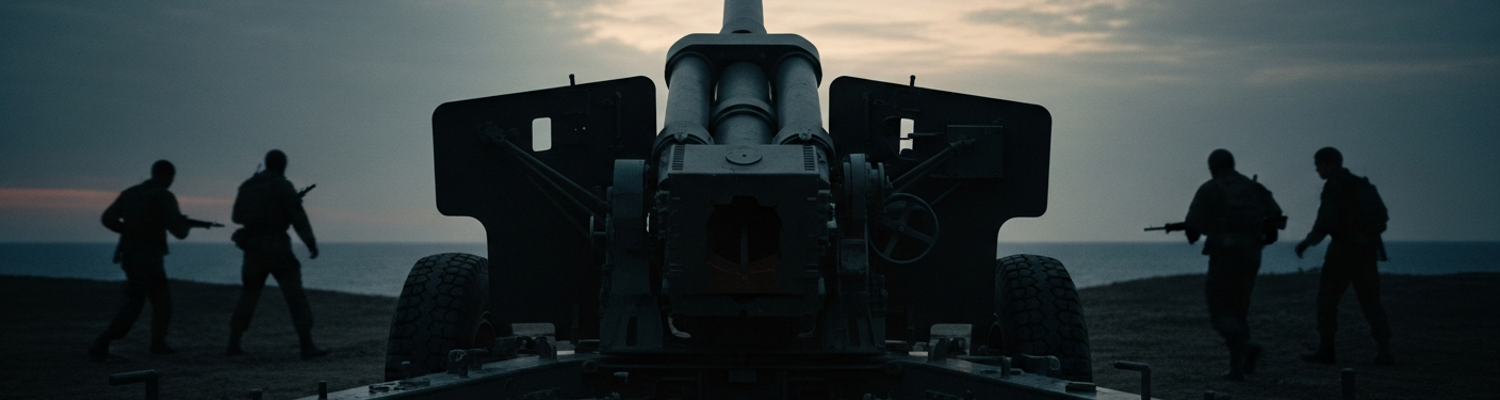
The teeth of the massive traverse rack for Battery Crofton’s number one gun began to shear with a scream of tortured metal. A design flaw, microscopic and hidden for decades within the cast steel, announced itself with finality. The 14-inch M1910 rifle, a 68-ton monster of coastal artillery, was now frozen, unable to aim. This specific mechanical failure during the siege was a symptom of a larger, systemic problem. The weapons of Fort Frank were magnificent, obsolete creations designed for a war they would not fight. They were built to duel battleships, not to withstand a protracted siege from land-based artillery.
A fundamental miscalculation was embedded in the fort’s primary armament. The two 14-inch guns at Batteries Crofton and Greer, along with the eight 12-inch mortars at Battery Koehler, were products of a defensive philosophy focused entirely on sea-based threats. These were coastal defense weapons, intended to fire a small number of heavy, armor-piercing shells at warships steaming into Manila Bay. They were mounted on M1907 disappearing carriages, complex mechanisms designed to allow the gun to recoil below the parapet for reloading, theoretically protecting it from direct counter-battery fire from the sea. This design had weaknesses in the face of a land-based siege. The rate of fire was slow and the traverse speeds glacial. The carriages were not designed for the high-angle fire needed to engage targets hidden in the terrain of Cavite. Most ammunition on hand was armor-piercing, ineffective against dispersed infantry or dug-in artillery positions. The open-top barbette emplacements, while offering a wide field of fire against ships, provided almost no protection against plunging artillery shells or aerial bombardment, a reality that became lethal in March 1942.
Carabao Island itself was a trap.
The island is a sliver of rock, roughly 44.5 acres, rising in sheer cliffs over 100 feet from the sea. It is dominated by the Pico de Loro Hills on the Cavite shoreline, just 500 yards away, which rise to an elevation of over 2,200 feet. Pre-war planning documents (NARA Record Group 338) noted this glaring vulnerability, stating that any enemy force emplacing artillery in those hills would render the fort’s rear slopes untenable. The original defensive plan for Manila Bay assumed a U.S. Army field force would defend the Cavite coast, preventing exactly this scenario. This component of the defense plan was never implemented, an oversight that allowed the Japanese to establish observation posts and emplace heavy 105mm, 150mm, and eventually 240mm howitzers with impunity. The small size of the island meant there was no possibility of defense-in-depth. Barracks, power plants, magazines, and command centers were all clustered together, creating one large, concentrated target.
Archival evidence shows the fort was conceived as a gun platform, not a self-sufficient bastion. Its ability to survive a long siege was compromised by its limited infrastructure. The fort’s primary water source was a pipeline running from a reservoir on the Japanese-held mainland. On February 16, 1942, a Japanese patrol found and severed this line. While the fort possessed a distillation plant, operating it consumed precious fuel also needed for generators that powered ammunition hoists and lighting. The power plant itself was another single point of failure. Food and ammunition stocks were predicated on the assumption of resupply by a U.S. Navy that still controlled the seas, an assumption that vanished in the first weeks of the war. Every decision made before the war, from the type of guns installed to the location of the water pipe, was based on a future that never arrived.
Logistical Strangulation
The existence of Fort Frank’s garrison depended on a fragile and dangerous supply line to Corregidor. This was not a system of organized convoys but a series of desperate, ad-hoc runs made by the small vessels of the Army Mine Planter Service and other local boats. A close review of operational logs shows these missions were executed under the cover of darkness, attempting to evade Japanese patrol craft and artillery fire from the Cavite shoreline. The vessels, never intended for combat resupply, would slip away from Corregidor carrying essentials: ammunition, medical supplies, food, and mail. Each successful run was a morale boost, but they were sporadic and insufficient. The Japanese blockade of Manila Bay was tightening. By late January 1942, Japanese artillery spotters in the Pico de Loro hills could direct fire with precision onto the water channels. The supply runs became a gauntlet. A boat lost to sea or intercepted meant not just the loss of its crew and cargo but a direct reduction in the fighting capability and sustenance of the men on Carabao Island.
This was not a sustainable defense.
Pre-war planning documents presented a misleading picture of the fort’s capacity, listing accommodations for its designated Coast Artillery garrison. These statistics were based on peacetime conditions, assuming regular rotation, functioning utilities, and access to off-island amenities. The siege inverted this. The garrison swelled with personnel from abandoned Fort Wint and other units, far exceeding the number of men the barracks were designed to hold. The reality of siege life was one of extreme overcrowding in the tunnels and bombproof shelters, which became the primary living quarters. Sanitation broke down. Water, once piped from the mainland, was cut off on February 16, 1942, forcing reliance on a distillation plant that consumed precious fuel. Rations were cut to half on January 5th. A soldier’s world shrank to the confines of a hot, humid, and perpetually damp tunnel, the air thick with the smell of unwashed bodies, latrine odors, and the constant fear of the next artillery barrage. Diseases like dysentery and malaria became as much of a threat as enemy shells. The ordered life of a pre-war garrison was replaced by a grim, subterranean existence focused on survival.
The fate of Fort Frank was sealed by the impossibility of reinforcement or large-scale resupply. While small boats from Corregidor provided a trickle of goods, they could not transport troops, heavy equipment, or the bulk supplies needed for a prolonged defense. War Plan Orange, the long-standing strategy for the defense of the Philippines, had assumed the U.S. Pacific Fleet would fight its way across the Pacific within six months to relieve the besieged garrisons. This was a strategic fantasy by 1942. The Japanese controlled the seas and skies around the Philippines. Any attempt to run the wider blockade with surface ships was suicidal. Submarines made a few daring runs into the southern Philippines and even to Corregidor, delivering specialized ammunition and evacuating key personnel, but these missions could not deliver the volume of supplies needed to alter the strategic situation for the thousands of defenders in Manila Bay. The Japanese had established an overwhelming cordon of naval and air power, complemented by the heavy artillery batteries in Cavite and later Bataan, which could now target any vessel in the bay’s channels. For the men on Fort Frank, the realization slowly dawned that no help was coming.
The Psychological Siege
The psychological siege of Fort Frank began on February 6, 1942. A special Japanese artillery unit, the Kondo Detachment, opened fire from prepared positions near Ternate on the Cavite mainland. Commanded by Major Toshinori Kondo, this unit initially consisted of four 105mm guns and two 150mm cannons, tasked with neutralizing the bay forts. Pre-war American planning had assumed a US field army would defend the Cavite shore, an oversight that left the garrison on Carabao Island completely exposed. From observation posts in the Pico de Loro Hills, Japanese spotters had a direct, unobstructed view of the fort. The daily bombardment became a grinding routine. The open-topped barbette carriages of the American batteries, designed for dueling ships, offered no protection from the plunging, high-angle fire of Japanese howitzers. Gunners served their weapons knowing that each shell from the mainland was precisely aimed. In mid-March, the Japanese brought up their deadliest ordnance: 240mm howitzers, which began systematically smashing the fort’s installations. A direct hit on a tunnel near the infirmary on March 21st resulted in the single deadliest day of the siege, killing 28 men and wounding 46. This event shattered the garrison’s sense of security within their own fortifications.
There was no true safety on the island.
This erosion of morale was compounded by the depletion of resources. A close review of operational records shows a garrison facing a systemic breakdown. The fort’s primary water source, a pipeline from the mainland, was severed by a Japanese patrol on February 16th. The fort possessed a distillation plant, but it was vulnerable to shellfire and consumed large amounts of fuel, a resource also needed for the generators that powered the ammunition hoists. The commander ordered a 15-man team to try and repair the line, but they were driven back. For weeks, water was severely rationed. The breakdown in sanitation was immediate. Overcrowded tunnels, thick with the humid tropical air, became rife with the stench of unwashed bodies and overflowing latrines. Sickness became an enemy as dangerous as the Japanese. Diseases like dysentery spread rapidly through the garrison, incapacitating soldiers and straining the meager medical supplies brought in by boat from Corregidor. The infirmary, under the direction of Major Lloyd Goad, was overwhelmed with not just combat casualties but a rising tide of sick men for whom he had dwindling reserves of medicine.
The men of the 59th Coast Artillery were strategically abandoned. War Plan Orange was predicated on the US Pacific Fleet fighting its way to the Philippines within months, a strategic fantasy after Pearl Harbor. The men on Carabao Island could see their enemy on the Cavite shore, a constant visual reminder of their encirclement. The sporadic, nighttime supply runs from Corregidor were the garrison’s only link to the outside world, bringing ammunition, food, and mail. Each successful trip was a temporary boost, but the tightening Japanese blockade made every run a near-suicidal gauntlet. As Japanese artillery gained dominance over the bay’s channels, these small boats became easier targets. A missed run meant an immediate cut to rations and a deepening sense of isolation. They were on their own, trapped on a 44-acre rock, with a determined enemy just 500 yards away and an ocean at their back.
The Death-Watch
The air in the tunnels of Fort Frank became toxic. A close review of medical and operational logs from early 1942 reveals a rapid, catastrophic breakdown in sanitation. These tunnels, never intended as permanent living quarters for hundreds of men, were hot, poorly ventilated, and perpetually damp. After the Japanese severed the fort’s primary water pipeline from the mainland on February 16, 1942, the situation became untenable. Water for drinking, cooking, and basic hygiene was strictly rationed, dependent on a vulnerable and fuel-hungry distillation plant. Latrines overflowed. The confined spaces filled with the thick stench of unwashed bodies, human waste, and decay. This was a perfect breeding ground for disease.
An internal enemy began to claim more men than Japanese shells.
Archival evidence from the period points to a major outbreak of dysentery that swept through the overcrowded tunnels. This was a debilitating illness characterized by severe abdominal pain, fever, and bloody diarrhea that left men too weak to stand, let alone serve a 14-inch gun. Without adequate clean water or medicine, the sickness spread uncontrollably. The infirmary, under Major Lloyd Goad, was quickly overwhelmed. He was fighting a multi-front war, treating not just the steady stream of shrapnel wounds from the daily bombardments but also a rising tide of men incapacitated by disease. Malaria and various skin infections festered in the humid, unsanitary conditions. For every man hit by enemy fire, several more were effectively removed from the line by sickness.
Parallel to the spread of disease was the systematic starvation of the garrison. On January 5, 1942, the command had already cut daily allowances to half-rations. A soldier’s diet became a grim, monotonous rotation of dwindling staples. By March, records show the per-man allowance had been slashed to a fraction of peacetime needs, sometimes consisting of little more than a few ounces of rice and 1.2 ounces of canned meat. The fresh meat from carabao, a key protein source, became increasingly scarce. The effect was predictable. Malnutrition weakened immune systems, making the men more susceptible to the very diseases spreading through the tunnels. Soldiers lost significant body weight, becoming gaunt and lethargic. This physical decay fed the psychological collapse.
The daily shelling from Major Toshinori Kondo’s artillery on the Cavite shore was a form of psychological torture. There was no safety on the island. The open gun pits offered none, and the tunnels were a known target. The direct hit on a tunnel near the infirmary on March 21st, which killed 28 men and wounded 46 as they lined up for shots, proved that nowhere was safe. This event shattered what little sense of security remained. The men existed in a state of perpetual tension, listening for the incoming whistle of a 105mm or the terrifying rumble of a 240mm round, a condition soldiers of the era dubbed shell shock. Trapped on a tiny rock, sick, starving, and abandoned, the men of Fort Frank could only wait, listen, and watch as their world disintegrated.
Final Hours and Defensive Collapse
The order to begin the final destruction of Fort Frank’s remaining functional coastal defenses arrived via a coded radiogram from General Wainwright’s headquarters on Corregidor on May 6, 1942. For Colonel Napoleon B. Boudreau and the exhausted garrison of the 59th Coast Artillery, this was the inevitable conclusion to a siege that had rendered their position untenable. The primary military objective was now to deny the Japanese any serviceable heavy ordnance. Demolition teams, prepared for this eventuality, moved to disable the fort’s primary armament. This was a deliberate process of destruction. For the massive 14-inch guns of Batteries Crofton and Greer, the procedure involved destroying the recoil mechanisms. Draining the hydraulic recoil cylinders and then firing a round would have shattered the gun’s systems. Another method was to place explosive charges directly on the traversing and elevating gears. For the twelve 12-inch mortars of Battery Koehler, the process was simpler: demolition charges were placed in the breeches and down the barrels to render them useless. Every piece of equipment, from range-finding instruments to the power generators, was targeted for destruction with sledgehammers, axes, and explosives.
A complete breakdown in verifiable communication defined the last days of the Harbor Defenses. While Fort Frank received the surrender order from Corregidor, the flow of tactical information had long since ceased. In the weeks leading up to the fall, communications between the island forts were sporadic and unreliable. Japanese artillery, directed by spotters in the Pico de Loro Hills, constantly severed the submarine telephone and telegraph cables connecting Fort Frank to Fort Hughes, Fort Drum, and the command center on Corregidor. Repair crews worked at night, often under fire, to splice the damaged lines, but by early May, the network was effectively gone. This left the garrisons isolated, unable to coordinate defensive fire or share intelligence. Radio communication was the only remaining link, but it was fraught with problems. Transmitters were fragile, antennas were frequently destroyed by shellfire, and the limited number of frequencies made them vulnerable to Japanese interception. A review of signal corps logs from Corregidor (File Ref: SC-PHIL-42) reveals that by May 5th, most transmissions were one-way, broadcasting orders into a void with no confirmation of receipt. The men on Fort Frank were functionally deaf.
The pressure to prevent the Japanese from capturing usable military hardware was high. American military planners were aware that the heavy guns of the Manila Bay forts, if turned around, could be used to defend the bay against a future American liberation attempt. This fear was not unfounded. The Japanese had a documented history of repairing and repurposing captured ordnance. The demolition orders were therefore not just a final act of defiance but a strategic necessity. Colonel Boudreau was responsible for ensuring that the tons of steel and intricate machinery at Batteries Crofton, Greer, and Koehler would be of no value to the Imperial Japanese Army. This extended beyond the guns themselves. Stockpiles of ammunition, particularly the valuable powder charges, were destroyed. Archival records from other surrendering garrisons show that a common method was to flood the powder magazines with seawater, ruining the propellant. The same fate befell fire control equipment, searchlights, and the machine tools in the fort’s workshops.
The Reality of Surrender
A close review of operational logs from Corregidor in the days leading up to the May 6, 1942 surrender reveals a command decision that, while strategically sound in a vacuum, was devastating for the outlying forts. General Wainwright, facing the imminent fall of the central bastion, ordered the systematic destruction of supplies to deny them to the Japanese. This included the torching of massive quantities of quartermaster stores, food, and the dumping of millions of silver pesos into the bay. For the men on Fort Frank, who could see the smoke rising from Corregidor, this act was a clear signal of the end. Their own rations had been cut to near-starvation levels for months. The sight of these supplies being deliberately annihilated rather than distributed was a catastrophic blow to morale. The strategic logic was to prevent the Japanese from fueling their war machine with captured American assets, but for a soldier on Carabao Island subsisting on a few ounces of rice, the fires on Corregidor burned away the last vestiges of hope.
This was a self-inflicted wound born of desperation.
The chaos was not limited to logistics. The fog of war descended with brutal effect in the form of misdirected artillery. Following the collapse of the American and Filipino lines on Bataan on April 9, retreating artillery units were ordered to expend their remaining ammunition stocks on Japanese positions. In the confusion of the withdrawal, with communications breaking down and accurate coordinates becoming a luxury, these final barrages were often poorly aimed. Shells intended for Japanese forces on the southern tip of Bataan fell dangerously close to the harbor forts. Analysis of ordnance reports from the period shows that shells from friendly batteries on Bataan landed in the waters around Corregidor and threatened the channel approaches to Fort Frank. For the garrisons of the island forts, already under constant, accurate bombardment from Japanese batteries in Cavite, these incidents added a terrifying element of uncertainty. Lacking reliable communication with the mainland, the men on Fort Frank had no way to distinguish the source of incoming fire.
Every incoming round was assumed to be from the enemy.
Ultimately, the surrender of Fort Frank was dictated by a complete information vacuum. Colonel Boudreau’s command was functionally deaf and blind. The submarine cables connecting the forts had been repeatedly severed by Japanese artillery, and radio was the only, highly unreliable, link to Wainwright’s headquarters. The final order to surrender, received via a faint radiogram from Corregidor, was an order given into a void, with no real-time tactical picture available to either commander. The prior destruction of supplies and the misdirected artillery had already demonstrated a fatal breakdown in command and control across the harbor defenses. Boudreau’s decision to surrender was therefore not based on a tactical assessment of his own fort’s capabilities but on his duty to obey the last authenticated order from his superior officer. The arrival of a Japanese landing party hours later was a formality; the fort had already been defeated by starvation, isolation, and a command structure that had been forced to turn on itself in its final moments.