
Amphibious Assault Across Yellow Beach Barrier Reefs
Soldiers of the 102nd Medical Battalion endured days of extreme heat inside the steel holds of Navy attack transports before their landing orders arrived. Strict water rationing and spoiled canned meat drained the men of their physical strength while the convoy idled in the heavy ocean swell off the southern coast of Saipan. Marine commanders running the amphibious corps kept the Army division floating offshore in reserve, creating severe friction between Army officers and Navy vessel commanders over foul living conditions in the overcrowded troop compartments. Sickness and heat exhaustion spread through the platoons as company aid men lay on canvas bunks stacked five high, surrounded by crates of blood plasma, splints, and litters locked beneath cargo bulkheads. Dehydration left the troops dizzy and weak, forcing company doctors to share their remaining personal canteen water with delirious enlisted men. Deck officers finally swung out the cargo nets on the morning of June 17, 1944, ordering the exhausted medical detachments down rope ladders into flat-bottomed landing craft bound for Yellow Beach.
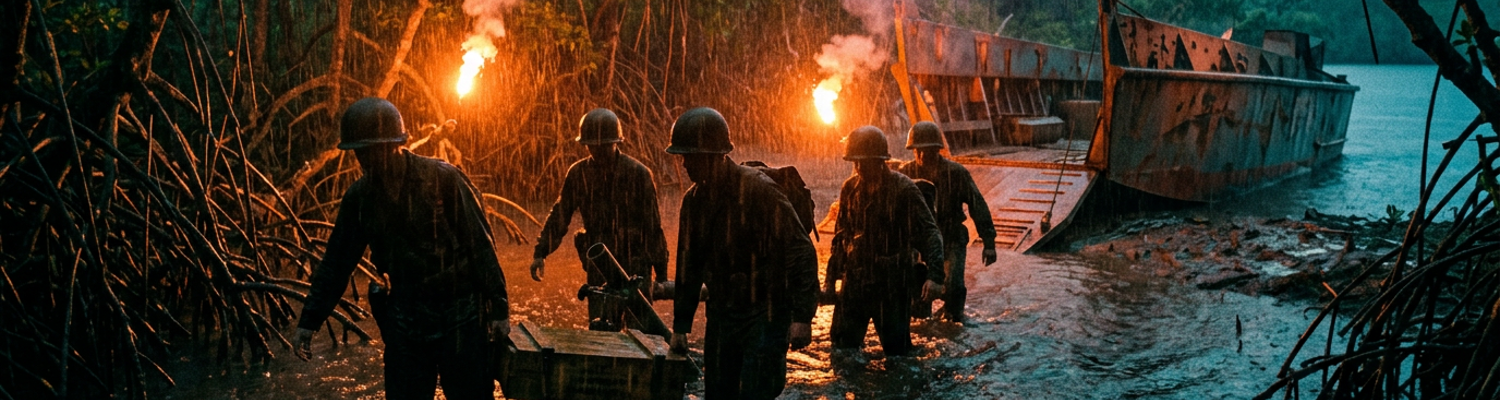
Hulls of landing craft carrying elements of the 102nd Medical Battalion grounded hard on the jagged barrier reefs of Yellow Beach on June 17, 1944, stranding the men under sustained Japanese artillery and mortar fire. Japanese gunners stationed on the high ridges fired high-explosive shells directly into the surf, breaking up the coral shelf and spraying the stalled vessels with sharp rock fragments. Marine control craft circling outside the reef refused to send tracked amphibious vehicles to assist the Army units, prioritizing rifle ammunition and combat infantry replacements over medical supplies. Medics responded by jumping over the landing ramps into chest-deep water, hauling wooden equipment chests and heavy stretchers across the slippery rock shelves by hand. Wading troops repeatedly stumbled into deep coral potholes while mortar bursts struck the water around them, soaking whole cartons of bandages and ruining delicate surgical instruments. Stretcher teams dragged the surviving medical gear through the breakers and scrambled onto the narrow, shell-torn sand of Yellow Beach under continuous machine-gun fire.
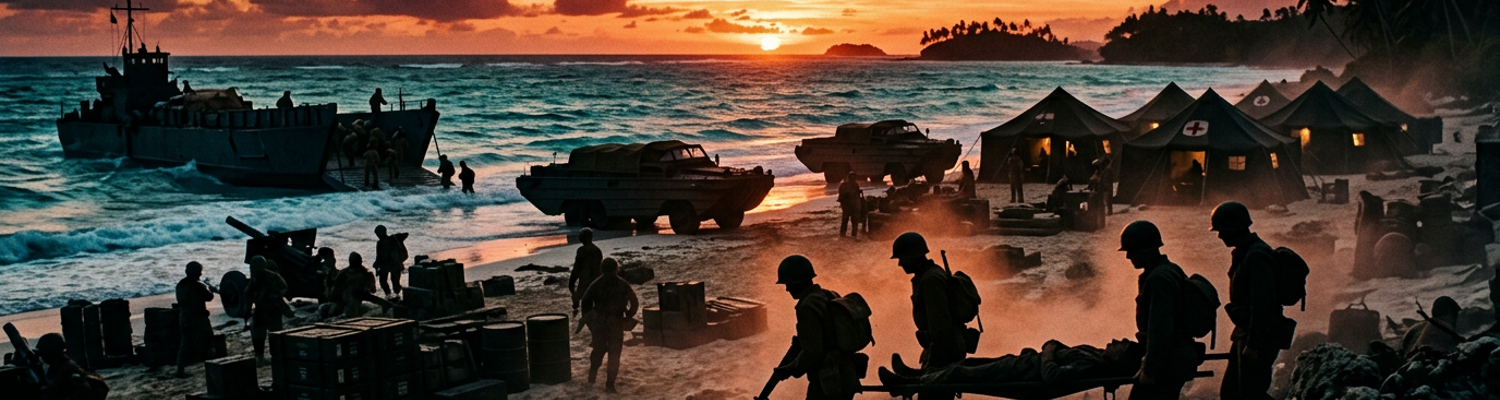
Medics from the forward collecting companies deployed across the open sand to establish beachhead casualty holding points under direct observation from Japanese spotters on the high ground. Artillery shells plunged into the sand around the initial markers, throwing soil across the beach and forcing doctors to work on their knees without any physical protection. Marine beachmasters added to the confusion by repeatedly ordering Army aid stations to pack up and move, insisting that medical litters obstructed tank lanes through the coastal brush. Battalion physicians rejected these demands and treated dozens of mangled infantrymen where they lay, applying tourniquets and running plasma lines while loose sand blew into open surgical incisions. Navy boat crews offshore refused to bring evacuation craft in to the reef line without written orders from their own naval beach party commanders, leaving scores of critically wounded soldiers stranded on the tidal flat. Company surgeons adapted to the administrative standoff by pulling patients into captured Japanese slit trenches, keeping the wounded alive with basic field dressings while waiting for naval officers to clear the evacuation channel.
Casualty Clearing Stations in the Sugar Cane Fields
Stretcher bearers hauled groaning casualties out of those cramped dirt trenches as soon as combat engineers bulldozed a narrow track inland through the coastal scrub. Officers of the 102nd Medical Battalion directed the clearing company of the 27th Infantry Division to erect its treatment tents in the humid sugar cane fields just west of Aslito airfield. Enlisted corpsmen swung machetes against the thick green stalks to clear receiving wards, operating areas, and supply depots while dust and chopped cane fibers clung to their sweaty skin. Stifling tropical heat trapped stagnant air beneath the heavy canvas, driving interior temperatures past one hundred degrees by midday. Dense swarms of biting gnats and blowflies rose from the damp earth and decaying vegetation, swarming over exposed bloodstains and landing directly on sterile surgical trays. Corpsmen used folding cardboard fans and hand pumps filled with kerosene and insecticide to drive the insect swarms away from open abdominal wounds and freshly severed limbs.
Surgeons worked stripped to the waist beneath the canvas roofs, struggling to clean out contaminated flesh and tie off severed arteries while sweat dripped off their chins onto patient dressings. Marine liaison officers stationed at the beachhead headquarters repeatedly diverted Army supply trucks carrying replacement plasma and fresh surgical gauze to their own regimental aid stations, claiming that naval beachmasters designated the supplies for Marine units. Battalion doctors had to conserve their dwindling stores of intravenous fluid by mixing distilled water with saline tablets in boiled five-gallon metal cans. Concussive blast wounds from Japanese mortar barrages and knee-mortar shells tore through muscle tissue and pulverized bone, filling the clearing station with dozens of mangled infantrymen every hour. Exhausted medical officers administered ether anesthesia through wire-mesh face masks while enlisted technicians applied board splints, tightened canvas tourniquets, and stitched torn muscle groups under flickering battery-powered lanterns.
Orderlies clicked off those battery lanterns and pulled canvas blackout flaps over the tent entryways as darkness settled over the cane fields. Japanese infiltration squads crept through the unharvested stalks around the perimeter every night, probing for gaps in the division lines and attempting to throw knee-mortar shells and fragmentation grenades into the crowded hospital wards. Marine command posts to the west refused to detach infantry squads to guard the Army medical area, insisting that all combat troops belonged on the active front line. Medical officers responded by assigning off-duty technicians and slightly wounded infantrymen to man two-man foxholes dug every twenty yards along the edge of the cane. Armed with carbines, submachine guns, and bandoliers of rifle grenades, these medical perimeter guards monitored the rustling stalks and returned fire against enemy infiltration parties throughout the night. Flash-blinded doctors inside the tents kept operating by the dim red glow of shielded battle lanterns, clamping blood vessels with one hand while holding a loaded pistol with the other.
Litter squads crawled through the foxhole line between firefights to carry newly wounded sentries back inside the operating tents for emergency surgery. Traumatic blast wounds from Japanese artillery bursts and booby traps shredded arterial networks, requiring surgeons to perform multiple amputations while rifle fire cracked through the overhead canvas. Corpsmen administered shots of morphine tartrate and typed whole blood drawn from walking wounded volunteers to combat deep hemorrhagic shock. Marine beachmasters continued to reject night evacuation requests over the field radio, refusing to guide offshore Higgins boats through the reef until morning daylight returned. Company surgeons stabilized over two hundred shock cases on floor litters until dawn, using rolled canvas bags as pillows and holding pressure dressings firmly against torn arteries until transport trucks finally arrived to clear the station.
Naval Beachmaster Priorities and Logistical Bottlenecks
Trucks carrying those stabilized soldiers arrived at the narrow apron of Yellow Beach only to run headlong into an impassable gridlock of tracked vehicles, splintered crates, and churning sand. Navy beachmasters waving red signal paddles immediately diverted the incoming ambulances away from the water line, refusing to allow Army vehicles onto the crowded landing lanes. Marine shore party directors backed the naval officers, arguing that assault battalions driving into the interior required every square foot of firm ground for bulldozers and gun tractors. Operational clashes erupted on the open sand as Army medical officers confronted the Navy beachmasters and Marine shore party directors over surf lane access. Battalion doctors pointed to rows of suffering casualties and demanded that empty landing craft pull straight into the shallows to evacuate the wounded to offshore hospital transports. Naval beach commanders rejected these demands on the spot, citing fleet orders that reserved every operational boat lane for incoming logistics rather than outward medical traffic.
Pallets loaded with artillery ammunition received absolute unloading priority across every open reef channel, while inbound empty casualty evacuation craft were ordered to hold position miles out to sea. Naval beachmasters guided flat-bottomed landing craft directly into the shallow breakers, forcing work details to dump thousands of rounds of high-explosive shells onto the damp sand alongside waiting combat engineers. Empty Higgins boats fitted with interior litter brackets stayed stranded outside the coral barrier because naval logistics officers feared that loading stretchers would slow down the turnaround time of the transport fleet. Army medical officers protested that keeping empty boats beyond the surf line condemned men with penetrating chest wounds and severe blood loss to die on the open sand. Marine shore party crews ignored these pleas and kept waving heavy cargo barges through the marked gaps in the reef, leaving litter cases baking under the tropical sun. Winch crews and shore parties stacked the incoming ammunition boxes several layers high directly across the beach exits, sealing off the direct pathways between the field aid stations and the tide line.
Corpsmen carrying wounded infantrymen had to navigate those towering walls of boxed artillery munitions by wading waist-deep into the salt water around the supply dumps. Salt spray soaked through fresh cotton bandages and contaminated open abdominal wounds, forcing company aid men to replace dressings while standing in the crashing breakers. Naval beachmaster sentries threatened Army doctors with court-martial when medical crews attempted to flag down empty supply lighters casting off to return to the transport fleet. Medical officers of the 102nd Battalion responded by bypassing the regulated boat lanes entirely, hauling buoyant rubber rafts and wooden litters into the surf to push dying patients toward offshore vessels. Navy coxswains running empty Higgins boats occasionally took pity on the wounded and cut their throttles along the outer reef, allowing Army medics to hoist critically injured men over the armored gunwales before beachmaster officers noticed the transfer. Marine shore party directors retaliated by impounding the medical battalion utility trailers on the high-water mark, claiming the parked equipment obstructed turning circles for tracked ammunition carriers.
Medics stripped of those impounded utility trailers hauled shock victims across the burning coral sand on bare hand litters, stumbling past stacks of unopened shell crates under the midday heat. Swarms of blowflies and thick clouds of diesel exhaust coated the sweat-soaked bodies of the casualties as hours slipped away without an authorized hospital craft touching the sand. Captains of the 102nd Medical Battalion established an unsanctioned casualty holding pen inside a shattered concrete Japanese bunker near the water, sheltering over fifty critical patients from enemy shrapnel and heavy vehicle tires. Navy beachmasters radioed orders to clear the bunker entrance when the gathering crowd of stretchers began spilling into the primary tank exit, but Army physicians drew their service pistols and refused to abandon the position. Mortar batteries from the high ridges of Mount Tapochau broke the standoff at twilight by dropping high-explosive shells directly into the shoreline supply parks, scattering the naval beach crews into nearby foxholes. Battalion physicians seized that brief collapse of naval beach control to drag forty litter cases through the dark surf, hoisting them into the hulls of retreating ammunition barges before dawn.
Reefhead DUKW Gridlock and Denied Transfer Lanes
DUKW amphibious trucks plunged into the receding surf at daybreak, taking over casualty evacuations after the last ammunition barges chugged away toward the open sea. Each six-wheel-drive truck carried up to a dozen stretchers secured to wooden racks across the open cargo bay, along with medical technicians who held plasma bottles steady over shivering infantrymen. Trouble struck along the outer reef as the morning low-tide cycle pulled several feet of water off the shelf, exposing jagged coral heads that tore into vehicle undercarriages. Heavy steel hulls crashed onto the razor-sharp coral outcrops, stranding five loaded Army DUKWs atop the exposed reef crest while their propellers churned uselessly in frothing foam. Technicians jumped over the gunwales into knee-deep tidal surge to inspect punctured hulls and shattered drive shafts, fighting to keep tilted stretchers level while hot exhaust fumes blew over open bullet wounds. Drivers rigged hand winches to nearby coral boulders and gunned their transfer cases, but the falling tide left the heavy vehicles wedged tight across the southern reef line.
Drivers who steered loaded trucks through deeper reef pockets reached open water, only to confront an administrative blockade manned by naval control craft. Navy patrol vessels and primary control sub-chasers circled the perimeter of Yellow Beach, enforcing rigid fleet orders that halted all outward traffic from the coral shelf. Naval control officers blared electronic bullhorns and brandished semaphore flags, refusing to clear offshore transfer corridors to hospital transports and attack transports anchored three miles out. Fleet commanders reserved those deep-water approach lanes exclusively for battleships repositioning for shore bombardment and landing craft ferrying artillery batteries to the beaches. Deck officers on the control vessels rejected pleas radioed from the amphibious trucks, ordering the Army craft to heave to and drift outside the main boat lanes until the scheduled afternoon logistics run cleared the channel.
Surgeons aboard the drifting trucks waved bloodstained bedsheets and held up glass saline flasks to show the naval crews that men were dying in the cargo holds. Choppy ocean swells tossed the unarmored DUKWs violently against each other, snapping litter straps and throwing soldiers with fractured spines against the ribbed steel decks. Armed sailors on the control boats held their positions across the designated sea lanes, threatening to report any Army coxswain who violated the security perimeter for disciplinary action. Company surgeons running the aid detachment realized that waiting for naval paperwork would kill every abdominal casualty in the holds, prompting them to break radio silence and transmit direct distress calls to individual transport captains. Merchant Marine skippers and Navy hospital crews on the outer transport line finally heard the unauthorized transmissions, swinging their cargo booms out to prepare stretcher nets while the naval control vessels continued to deny official passage through the reef corridor.
Coxswains rammed their throttles forward across the forbidden boat lines, ignoring bullhorn warnings from the naval control craft to reach the towering steel flanks of the transports. Navy control craft dispatched picket boats to intercept the rogue trucks, but the amphibious vehicles reached the cargo nets of an attack transport before the patrol crews could physically block them. Sailors high on the transport decks dropped wire-basket litters directly into the cargo bays of the DUKWs, hauling mangled infantrymen up the hull plates while battalion surgeons stabilized remaining shock cases below. Coxswains dumped their empty medical trucks back into the surf to return to the grounded reef head, where stranded medics were still wrestling broken vehicles off the drying coral. Battalion mechanics worked waist-deep in the tidal pools with sledgehammers and tow ropes, freeing grounded hulls one by one so the evacuation loop could resume before the next high tide rolled into the bay.
Friendly Fire Casualties in Death Valley
Trucks rolling off the freed reef heads hurried casualties toward offshore hospital transports, but fresh orders immediately diverted elements of the 102nd Medical Battalion inland to support the 27th Infantry Division advance into Death Valley beneath Mount Tapochau. Soldiers pushing into the narrow, limestone-walled corridor walked directly into interlocking machine-gun and mortar fire from entrenched Japanese positions. High limestone ridges flanked the valley on both sides, allowing enemy spotters on Mount Tapochau and Purple Heart Ridge to direct plunging fire onto the exposed Army battalions. Marine corps commanders running the joint campaign demanded rapid forward movement across the valley floor, pressing the Army infantry into exposed draws without waiting for coordinated flanking maneuvers on the heights. Dense mass-casualty events quickly overwhelmed the forward infantry companies as riflemen were pinned down in rocky gullies and sugarcane patches under concentrated crossfire. Stretcher bearers from the 102nd Medical Battalion crawled into the rocky draws to pull dozens of bleeding soldiers back to dry streambeds and sunken roadbeds where forward aid stations were trying to dig in.
Artillery batteries firing from the division rear misjudged their elevation angles over the jagged crest of Mount Tapochau, dropping misplaced salvos directly into those shallow aid stations. Naval gunfire liaison teams assigned to coordinate offshore cruiser bombardments simultaneously transmitted conflicting sector boundaries, sending heavy naval shells plunging into Army assembly areas instead of enemy positions on the clifftops. Giant explosions ripped through rock outcroppings, sending razor-sharp stone fragments and hot steel casing shards tearing through medical supply crates and already wounded men. Company medics treated traumatic concussive injuries and severe internal hemorrhaging as blast waves from five-inch naval shells ruptured eardrums, collapsed lungs, and threw doctors across the ground. Corpsmen applied thick field dressings to extensive shrapnel wounds while company officers screamed into field radios to halt the friendly fire, only to find their emergency cancellations delayed by rigid Marine Corps fire-control channels. Naval gunners miles offshore continued their timed bombardment programs for nearly half an hour because corps headquarters required multi-level administrative verification before silencing the naval batteries.
Surgeons of the 102nd Medical Battalion scrambled across smoking shell craters to treat dozens of soldiers mangled by their own supporting weapons once the offshore guns finally fell silent. Litter bearers brought in infantrymen suffering from blast-induced concussive shock, shattered pelvic bones, and severed limbs caused by steel shell fragments that tore through cotton uniforms. Doctors ran out of sterile sulfa powder and blood plasma within hours as friendly fire victims piled up alongside men shot by Japanese snipers firing from the high limestone caves. Army medical captains urgently requested armored halftracks and tracked ambulances from the corps motor pool to evacuate the wounded, but Marine staff officers refused the requests, claiming all armored vehicles were needed to support Marine thrusts along the coastal flanks. Marine commanders simultaneously blamed the Army division for stalling in Death Valley, ignoring the reality that short rounds and intense crossfire had crippled the infantry units and filled every aid station to capacity. Battalion doctors improvised litter carriers out of standard cargo trucks, lining the wooden truck beds with canvas tarps and sandbags to provide basic fragmentation shielding against continuing mortar bursts.
Drivers loaded those improvised trucks with critical blast cases and steered down the single narrow dirt trail leading out of Death Valley under persistent sniper fire. Traffic control sentries from the Marine military police halted the medical convoy at the southern exit of the pass, refusing to let the Army ambulances cross the main supply route because priority belonged to Marine ammunition convoys heading north. Heated arguments broke out between Army medical escort officers and the Marine sentries over right of way while soldiers with punctured chests and traumatic brain injuries suffered in the open truck beds. Medical officers pushed past the roadblocks on their own authority, forcing their vehicles into the supply lanes and delivering the friendly fire casualties to the division clearing stations near the airfield. Division surgeons immediately mobilized extra surgical tables to extract jagged shell fragments and relieve traumatic concussive pressure, operating through the night as more wounded continued to arrive from the mountain gorge.
Frontline Surgical Rationing and Shellfire Triage
Steel surgical litters quickly ran out as stretcher bearers laid dozens of newly arrived infantrymen directly onto the dirt floor of the clearing tents. Japanese counter-battery fire from hidden artillery positions in the hills targeted the nearby airfield, sending high-explosive concussions rocking the fragile medical compound. Relentless artillery bursts pulverized the supply roads, severing the tenuous link to the coastal dumps where Navy and Marine supply officers hoarded medical reserves for their own forward units. Medical supply sergeants reported that stocks of dried blood plasma and half-grain morphine syrettes had dropped to critical levels after hours of unceasing trauma care. Battalion doctors instituted emergency rationing across the triage line, cutting morphine dosages in half and reserving plasma bottles exclusively for casualties with undetectable pulses or catastrophic vascular collapse. Shivering shock victims waited on canvas stretchers while corpsmen dissolved what little plasma powder remained using contaminated distilled water ampoules, screening each patient to determine who could survive without treatment.
Triage officers denied morphine to soldiers with superficial flesh wounds and shattered forearms so that dying abdominal cases could receive minimal pain relief before entering surgery. Marine supply liaisons at the sector depot dismissed urgent radio requests for supplementary morphine and plasma crates, claiming Army logisticians had failed to file the correct corps-level requisition manifests before the morning push. Navy medical depots at the shoreline similarly refused to dispatch emergency resupply jeeps without direct written authorization from the naval beachmaster, leaving Army clearing stations completely isolated beneath the falling artillery shells. Corpsmen sprinted between shuddering tents to scavenge unused syrettes from the web gear of the dead, collecting crushed tubes to squeeze out single remaining drops of painkiller for screaming casualties. Shell fragments ripped through the perimeter canvas every few minutes as Japanese guns zeroed in on adjacent American battery positions, showering triage tents with soil and razor-sharp metal. Orderlies and enlisted technicians covered open plasma flasks with their own bodies whenever deafening blasts rattled the wooden tables, shielding the sterile liquid from falling dust and flying shrapnel.
Surgeons worked continuously beneath these trembling canvas tarps, performing lifesaving amputations and extensive wound debridement while shell fragments whined through the fabric above their heads. Torn limbs mangled by artillery bursts required rapid guillotine amputations to halt gangrene and control bleeding, forcing doctors to saw through bone and ligate severed vessels by the dim glow of gasoline lanterns. Hot metal fragments sliced through the overhead tarps and severed tent ropes during several near-miss explosions, dropping heavy canvas directly onto open surgical fields. Enlisted assistants held up sagging canvas poles with their bare shoulders and used flashlights to guide scalpel blades as doctors cut away necrotic muscle and pulverized bone fragments from shredded thighs. Surgical instruments dropped into the mud had to be dipped in boiling water over field stoves and immediately reused without proper chemical sterilization, creating severe risks of fatal infection for every soldier on the table. Operating teams continued cutting and clamping through the concussions, applying tourniquets to fresh stumps and packing massive tissue gaps with sulfa powder before moving to the next litter.
Litter bearers hauled amputees and debrided patients out to the holding areas to make room for another wave of mangled riflemen arriving from the front. Marine shore party officers sent messenger jeeps to inspect the clearing station, only to accuse the Army battalion of hoarding evacuation space and exaggerating casualty counts to demand naval air support. Company commanders of the 102nd Medical Battalion showed the Marine staff officers piles of severed limbs and empty, discarded plasma cartons beside the tent flaps, demanding immediate passage for transfer ambulances. Marine officers refused to yield right of way on the primary coastal road, insisting that their own division ammunition trucks held absolute operational priority until the northern ridges fell. Battalion surgeons ignored the administrative threats and loaded thirty critical amputees into open cargo trucks, ordering Army drivers to bypass the Marine checkpoints by navigating through unmapped sugar cane ditches toward the southern shoreline.